fbpx

MindFlex chemistry Tuition

Chemistry Tuition in Singapore:
1-to-1 Home Tutors for All Levels

Chemistry can become challenging when unfamiliar concepts, calculations and application questions start building on one another. MindFlex connects students with one-to-one Chemistry tutors in Singapore who can provide personalised support across Secondary, O-Level, IP, IB and JC levels, with lessons tailored to each student’s weaker topics, learning pace, school syllabus and examination goals.


Free Request For Chemistry Tutor

Chemistry Tutor Conducting A Lesson
Challenges Faced While Learning Chemistry

What Are The Challenges Faced By Chemistry Students in Singapore?

Key Challenges:

  • Difficulty in Understanding and Applying Chemistry Concepts to unfamiliar examination questions.
  • Struggling to Interpret Experimental Data, Graphs and Results accurately.
  • Inability to Use Correct Chemistry Keywords and Scientific Terminology, leading to unnecessary loss of marks.
  • Difficulty in Understanding Practical Chemistry and Experimental Procedures, including observations, variables and sources of error.
  • Struggling to Keep Up With Secondary School Chemistry, particularly when foundational knowledge is weak or topics become increasingly complex.
Read more

chemistry Tuition Singapore

How Our Chemistry Tutors Support Your Child’s Learning Journey

Build a Stronger Understanding of Chemistry Concepts

Our Chemistry tutors identify learning gaps and provide personalised explanations to help your child strengthen foundational concepts and understand difficult Chemistry topics.

Learn How to Apply Chemistry Concepts to Unfamiliar Questions

Our tutors guide your child through different question types, helping them identify relevant Chemistry principles and apply their knowledge accurately.

Work Through Chemistry Calculations Step by Step

Our tutors break down complex calculations into manageable steps, helping your child select appropriate formulas, organise information and improve calculation accuracy.
Improve Data, Graph and Results Interpretation Skills

Our tutors teach your child to interpret graphs, identify trends, analyse experimental results and draw conclusions using relevant Chemistry concepts.

Use the Correct Chemistry Keywords in Answers

Our tutors review written answers and guide your child in using accurate scientific terminology, relevant Chemistry keywords and clear explanations.

Develop Stronger Examination Answering Skills

Our tutors use examination papers and targeted practice to address common mistakes, improve answering techniques and strengthen your child’s examination preparation.

Strengthen Practical and Experiment Skills

Our tutors reinforce practical Chemistry concepts by guiding your child through experimental procedures, observations, variables and sources of error.

Should You Choose a Chemistry Tuition Centre or Home Tuition?

MindFlex’s one-to-one home tuition offers personalised guidance, flexible lesson pacing and targeted support based on your child’s individual Chemistry learning needs.

Getting a Chemistry Tutor From MindFlex

MindFlex matches your child with suitable Chemistry tutors based on their academic level, learning needs, preferred schedule, location and tuition budget.

Effective chemistry Home Tuition

What Are The Topics And Skills Covered By MindFlex’s Chemistry Tutors?

 
SECONDARY
Topics Covered

Secondary 3


Secondary 3
Secondary 3 introduces students to more specialised Chemistry concepts as they build their foundation in the subject. Tutors can help students understand key principles, connect related concepts and develop the skills needed to apply their knowledge to calculations, structured questions and experimental contexts.

​
+
Chemistry
MATTER – STRUCTURES AND PROPERTIES
  • Experimental Chemistry (not taught in G1)
    • Experimental design; methods of purification and analysis
  • The Particulate Nature of Matter (not taught in G1)
    • Kinetic particle theory and atomic structure
  • Chemical Bonding and Structure (not taught in G1)
    • Ionic, covalent and metallic bonding; structure and properties of materials
CHEMICAL REACTIONS
  • Chemical Calculations (not taught in G1)
    • Formulae, equations, the mole concept and stoichiometry
  • Acid-Base Chemistry
    • Acids, bases, oxides and preparation of salts
  • Redox Chemistry (not taught in G2 and G1)
    • Oxidation and reduction; reactivity series and metals
  • Patterns in the Periodic Table (not taught in G1)
    • Periodic trends and properties of selected groups
  • Rate of Reactions (not taught in G2 and G1)
    • Collision theory, activation energy, catalysts and rate investigations
+Combined Chemistry
MATTER – STRUCTURES AND PROPERTIES
  • Experimental Chemistry (not taught in G1)
    • Experimental design; methods of purification and analysis
  • The Particulate Nature of Matter (not taught in G1)
    • Kinetic particle theory and atomic structure
  • Chemical Bonding and Structure (not taught in G1)
    • Ionic and covalent bonding; structure and properties of materials
CHEMICAL REACTIONS
  • Chemical Calculations (not taught in G1)
    • Formulae, equations, mole concept and stoichiometry
  • Acid-Base Chemistry
    • Acids, bases, oxides and salts
  • Patterns in the Periodic Table (not taught in G1)
    • Periodic trends and selected group properties
  • Chemical Energetics (not taught in G2 and G1)
    • Exothermic and endothermic reactions and energy profiles

Secondary 4


Secondary 4
Secondary 4 Chemistry builds on earlier concepts while placing greater emphasis on applying knowledge across different topics and question types. Tutors can help students strengthen weaker areas, consolidate important concepts and practise the answering and problem-solving skills needed for school and national examinations.

​
+
Chemistry
CHEMICAL REACTIONS
  • Qualitative Analysis (not taught in G1)
    • Tests for gases, cations and anions
  • Redox Chemistry (not taught in G2 and G1)
    • Electrochemical cells, electrolysis, corrosion and rusting
  • Chemical Energetics (not taught in G2 and G1)
    •  Enthalpy changes, energy profile diagrams and bond energy changes
CHEMISTRY IN A SUSTAINABLE WORLD
  • Organic Chemistry (not taught in G1)
    • Fuels and crude oil; hydrocarbons; alcohols, carboxylic acids, esters and polymers
  • Maintaining Air Quality (not taught in G1)
    • Air pollutants, greenhouse gases and sustainable chemical choices
+Combined Chemistry
CHEMICAL REACTIONS
  • Qualitative Analysis (not taught in G1)
    • Tests for gases, cations and anions
  • Redox Chemistry (not taught in G2 and G1)
    • Oxidation and reduction, reactivity series, corrosion and rusting
  • Rate of Reactions (not taught in G2 and G1)
    • Collision theory, catalysts and rate investigations
CHEMISTRY IN A SUSTAINABLE WORLD
  • Organic Chemistry (not taught in G1)
    • Fuels, crude oil, hydrocarbons, alcohols, carboxylic acids and polymers
  • Maintaining Air Quality (not taught in G1)
    • Air pollutants, greenhouse gases and sustainability
 
IGCSE
Topics Covered

IGCSE Year 10

IGCSE Year 10
IGCSE Year 10 establishes the foundations students need for more advanced Chemistry topics. Tutors can support students in understanding core concepts, working through chemical calculations and interpreting experimental information while developing the application skills required by the IGCSE curriculum.
Chemistry
STATES OF MATTER
  • Particle Model
    • Solids, liquids and gases; changes of state and diffusion
ATOMS, ELEMENTS AND COMPOUNDS
  • Atomic Structure and Bonding
    • Elements, mixtures, compounds, atoms, ions and isotopes
    • Ionic, covalent and metallic bonding and structure
STOICHIOMETRY
  • Chemical Calculations
    • Formulae, equations, relative masses, moles and reacting quantities
ELECTROCHEMISTRY
  • Electrolysis
    • Electrolytes, products and applications of electrolysis
CHEMICAL ENERGETICS
  • Energy Changes
    • Exothermic and endothermic reactions; bond energies
CHEMICAL REACTIONS
  • Rates and Equilibria
    • Physical and chemical changes, rates, reversible reactions and redox

IGCSE Year 11

IGCSE Year 11
IGCSE Year 11 builds on the concepts introduced earlier while expanding into additional areas of inorganic, organic and practical Chemistry. Tutors can help students connect topics, strengthen experimental and analytical skills and apply their knowledge more confidently to IGCSE examination questions.

​
Chemistry
ACIDS, BASES AND SALTS
  • Acid-Base Chemistry
    • Properties, pH, neutralisation and preparation of salts
THE PERIODIC TABLE
  • Periodicity
    • Trends, Group I, Group VII and transition elements
METALS
  • Reactivity and Extraction
    • Properties, reactivity series, extraction, alloys and corrosion
CHEMISTRY OF THE ENVIRONMENT
  • Air and Water
    • Water treatment, air composition, pollutants and climate effects
ORGANIC CHEMISTRY
  • Carbon Compounds
    • Fuels, homologous series, reactions and polymers
EXPERIMENTAL TECHNIQUES AND CHEMICAL ANALYSIS
  • Practical Chemistry
    • Apparatus, separation, purification and qualitative analysis
 
JC
Topics Covered

JC 1


JC 1
JC 1 Chemistry introduces students to more advanced concepts and a greater level of quantitative and analytical thinking. Tutors can help students adjust to the increased depth of H1 or H2 Chemistry, strengthen foundational topics and develop a systematic approach to calculations and application questions.

​
+
H1 Chemistry
CORE IDEA 1: MATTER
  • Atomic Structure
    • Subatomic particles, electronic structure and ionisation energy
CORE IDEA 2: STRUCTURE AND PROPERTIES
  • Chemical Bonding
    • Ionic, covalent and metallic bonding; structure and properties
  • Theories of Acids and Bases
    • Brønsted–Lowry acids and bases
  • The Periodic Table
    • Periodicity and Group 2 and Group 17 trends
CORE IDEA 3: TRANSFORMATION
  • The Mole Concept and Stoichiometry
    • Formulae, equations and quantitative calculations
  • Chemical Energetics: Thermochemistry
    • Enthalpy changes and Hess’ Law
+H2 Chemistry
CORE IDEA 1: MATTER
  • Atomic Structure
    • Electronic configuration and ionisation energies
CORE IDEA 2: STRUCTURE AND PROPERTIES
  • Chemical Bonding
    • Bonding, structure, shape and intermolecular forces
  • The Gaseous State
    • Ideal gases and the ideal gas equation
  • The Periodic Table
    • Periodicity and selected group chemistry
CORE IDEA 3: TRANSFORMATION
  • The Mole Concept and Stoichiometry
    • Quantitative chemical calculations and redox equations
  • Chemical Energetics: Thermochemistry and Thermodynamics
    • Enthalpy, entropy and Gibbs free energy
  • Reaction Kinetics
    • Rate equations, mechanisms and activation energy
  • Chemical Equilibria
    • Equilibrium constants and Le Chatelier’s Principle
EXTENSION TOPIC: ORGANIC CHEMISTRY
  • Introduction and Isomerism
    • Formulae, nomenclature and structural and stereoisomerism
  • Hydrocarbons
    • Alkanes, alkenes and arenes

JC 2


JC 2
JC 2 Chemistry extends earlier concepts into more advanced areas while requiring students to integrate knowledge across multiple topics. Tutors can support students in consolidating difficult concepts, tackling higher-level application questions and strengthening their examination skills as they prepare for the A-Level examinations.

​
+
H1 Chemistry
CORE IDEA 3: TRANSFORMATION
  • Reaction Kinetics
    • Rates, collision theory and activation energy
  • Chemical Equilibria
    • Dynamic equilibrium and Le Chatelier’s Principle
EXTENSION TOPIC: MATERIALS
  • Nanomaterials
    • Properties, applications and risks of nanomaterials
  • Polymers
    • Polymerisation, properties, uses and environmental impact
+H2 Chemistry
CORE IDEA 2: STRUCTURE AND PROPERTIES
  • Theories of Acids and Bases
    • Brønsted–Lowry theory and acid–base behaviour
EXTENSION TOPIC: CHEMISTRY OF AQUEOUS SOLUTIONS
  • Acid–Base Equilibria
    • pH, buffer solutions and titration curves
  • Solubility Equilibria
    • Solubility products and precipitation
EXTENSION TOPIC: ORGANIC CHEMISTRY
  • Halogen Derivatives
    • Reactions and mechanisms of halogenoalkanes
  • Hydroxy Compounds
    • Alcohols and phenols
  • Carbonyl Compounds
    • Aldehydes and ketones
  • Carboxylic Acids and Derivatives
    • Acids, acyl chlorides, esters and amides
  • Nitrogen Compounds
    • Amines, amino acids and proteins
EXTENSION TOPIC: ELECTROCHEMISTRY
  • Electrochemistry
    • Electrode potentials, cells and electrolysis
EXTENSION TOPIC: TRANSITION ELEMENTS
  • An Introduction to the Chemistry of Transition Elements
    • Complexes, colours, catalysis and redox chemistry
 
IB
Topics Covered

IB Y1


IB Y1
IB Y1 Chemistry introduces students to foundational concepts and skills required for the IB Chemistry curriculum. Tutors can support students in building a strong understanding of key topics, applying concepts to different question types and developing the analytical and practical skills needed for later parts of the course.

​
+
Chemistry (SL)
STRUCTURE
  • Models of the Particulate Nature of Matter
    • Particulate matter, nuclear atom, electron configurations, mole and ideal gases
  • Models of Bonding and Structure
    • Ionic, covalent and metallic models; models to materials
  • Classification of Matter
    • Periodic table and organic functional groups
REACTIVITY
  • What Drives Chemical Reactions?
    • Enthalpy changes, energy cycles and fuels
EXPERIMENTAL PROGRAMME
  • Practical and Inquiry Skills
    • Experimental techniques, technology and mathematics
    • Explore and design; collect, process, conclude and evaluate
+Chemistry (HL)
STRUCTURE
  • Models of the Particulate Nature of Matter
    • Particulate matter, atomic structure, electron configurations, mole and gases
  • Models of Bonding and Structure
    • Ionic, covalent and metallic models with extended quantitative treatment
  • Classification of Matter
    • Periodicity, organic functional groups and deeper structure-property analysis
REACTIVITY
  • What Drives Chemical Reactions?
    • Enthalpy changes, energy cycles and fuels
    • Entropy, spontaneity and advanced energetic analysis
EXPERIMENTAL PROGRAMME
  • Practical and Inquiry Skills
    • Advanced experimental design, mathematical analysis and evaluation

IB Y2


IB Y2
IB Y2 Chemistry builds on earlier concepts while requiring students to apply and integrate knowledge across more advanced topics. Tutors can support students in consolidating difficult concepts, tackling higher-level application questions and strengthening their examination skills as they prepare for their IB Chemistry assessments and examinations.

​
+
Chemistry (SL)
REACTIVITY
  • How Much, How Fast and How Far?
    • Amount of chemical change, reaction rates and equilibrium extent
  • Mechanisms of Chemical Change
    • Proton transfer and electron transfer reactions
    • Electron sharing and electron-pair sharing reactions
STRUCTURE
  • Integrated Structure-Reactivity Applications
    • Relate particulate, bonding and classification models to reaction behaviour
EXPERIMENTAL PROGRAMME
  • Scientific Investigation
    • Design and complete the individual scientific investigation
    • Collaborative sciences project, data analysis and full-syllabus review
+Chemistry (HL)
REACTIVITY
  • How Much, How Fast and How Far?
    • Advanced stoichiometry, kinetics and equilibrium analysis
  • Mechanisms of Chemical Change
    • Proton transfer and electron transfer reactions
    • Electron sharing and electron-pair sharing mechanisms in greater depth
STRUCTURE
  • Integrated Structure-Reactivity Applications
    • Synthesize particulate, bonding, periodic and organic models
EXPERIMENTAL PROGRAMME
  • Scientific Investigation
    • Complete the individual investigation and collaborative sciences project
    • Evaluate complex data, uncertainty and the full HL syllabus

MindFlex’s Chemistry tutors follow the relevant syllabus closely when planning lessons, selecting practice questions and guiding students through level-appropriate Chemistry topics. This helps ensure that tuition remains relevant to what students are learning in school while allowing tutors to spend more time on individual concepts and skills that require additional support.

View MOE Secondary School Syllabuses

View MOE A-Level Curriculum and Subject Syllabuses

Learn More About the MOE Integrated Programme

Affordable chemsitry Tuition

Chemistry Tuition Rates Singapore

Our Chemistry home tuition rates are constantly updated in real-time based on rates quoted by home tutors in Singapore. These market rates are based on the volume of 10,000+ monthly tuition assignment applications over a pool of 60,000+ active home tutors.

Part-Time
Tutors

Full-Time
Tutors

Ex/Current
MOE Teachers

Pre-School

$25-$35/h

$40-$50/h

$55-$70/h

Primary 1-4

$25-$35/h

$40-$45/h

$55-$70/h

Primary 5-6

$30-$40/h

$40-$55/h

$60-$80/h

Sec 1-2

$30-$45/h

$45-$55/h

$60-$85/h

Sec 3-5

$35-$45/h

$45-$65/h

$70-$95/h

JC

$40-$55/h

$65-$90/h

$90-$130/h

IB

$40-$55/h

$65-$90/h

$90-$130/h

IGCSE / International

$30-$55/h

$45-$85/h

$60-$120/h

Poly / Uni

$40-$65/h

$60-$95/h

$100-$130/h

Adult

$30-$45/h

$40-$65/h

$70-$100/h

Why Choose MindFlex For Your Chemistry Tuition?

Tutors Matched to Your Chemistry Learning Needs

Qualified Tutors Familiar With the Relevant Chemistry Syllabus

Clear Explanations That Build Chemistry Understanding

A Free Tutor Recommendation Within 6 Hours

No Agency Fees

Flexible 1-to-1 Home Or Online Chemistry Lessons

Hear From Other Parents & Students

Testimonials About Our Chemistry Home Tuition

Thank you MindFlex for providing me with multiple candidates to be my son’s Chemistry tutor, and helping me connect Ms Elena for my child. She was very patient with my son despite his initial refusal to put in the effort for Chemistry again, and managed to help him find interest in the subject. Furthermore, she helped him improve from a fail to A for his O Levels! So grateful for MindFlex and Ms Elena for their help!

Ms Worsa Lee, Mum of Sec 4 Express Student
(E8 to A1)


Hi MindFlex, thank you for connecting Ms Hanisah with my daughter! She used to hate Chemistry when she first started Secondary school, and after going for tuition lessons with Ms Hanisah, she managed to improve to A2 by the end of the year. We never expected such great results, and she has become much more confident when tackling Chemistry and other subjects as well! Thank you so much.

Ms Izzah, Mum of Sec 1 NA Student
(E8 to A2)


Would just like to thank MindFlex and my Chemistry Tutor, Mr Tan! He is very motivated and responsible in teaching me Chemistry, even though he was also studying in university at the same time. Thank you, Mr Tan for all the explanations and providing me with more papers and notes to help me improve.

Mr Augustine Chow, JC2 H1 Chemistry Student
(E to B)


I always thought Chemistry is like an alien topic that I could never understand. After connecting with Ms Amy through MindFlex, she has helped me to understand difficult Chemistry concepts, such as Mole concept. Thank you for being so patient with me and for helping me improve my results to B3!

Mr Kong Zhi Hao, Sec 2 Student
(C7 to B3) 


Convinient & Accessible chemistry Tuition

Chemistry Tuition Near Me? 

Enjoy Chemistry Tuition at the convenience of your home today. MindFlex provides Chemistry Home Tuition all across Singapore. Learn in a safe & comfortable environment today with us.

REQUEST FOR A TUTOR


Frequently Asked Questions About Chemistry Tuition in Singapore

Thinking of Chemistry Tuition?

Is Chemistry a difficult subject?

Chemistry can become challenging because students need to understand concepts, perform calculations and apply their knowledge to unfamiliar questions. As students progress, topics also become increasingly interconnected, so gaps in foundational knowledge can affect their understanding of later chapters.

Why do students struggle with Chemistry?

Students may struggle with Chemistry when they rely heavily on memorisation without understanding how concepts are connected. Common difficulties include applying concepts, completing calculations, interpreting graphs and experimental results, using the correct Chemistry keywords and answering practical questions.

How do I know if my child needs help with Chemistry?

Your child may benefit from additional support if they repeatedly struggle with the same Chemistry topics, have difficulty applying concepts or lose marks despite studying consistently. Reviewing schoolwork, tests and teacher feedback can help you identify whether the difficulty is conceptual, examination-related or limited to particular topics.

How can Chemistry tuition help my child?

Chemistry tuition provides additional time to revisit weaker topics and practise skills that may be difficult to address fully during school lessons. With 1-to-1 home tuition, the tutor can adjust lessons according to your child’s pace and focus on areas such as concepts, calculations, data interpretation, Chemistry keywords and practical questions.

When should my child start Chemistry tuition?

There is no single ideal time to begin Chemistry tuition. Some students start when they first encounter persistent difficulties, while others seek additional support before important school or national examinations. Starting when learning gaps become noticeable can give your child more time to address them before later Chemistry topics build on those foundations.

Should I choose home tuition or a Chemistry tuition centre?

A Chemistry tuition centre may suit students who enjoy learning in a group and are comfortable following a fixed class schedule and pace. Home tuition provides more individual attention, allowing the tutor to spend additional time on your child’s particular learning gaps and adjust lessons according to their progress.

Getting a Tutor

How do I request a Chemistry tutor from MindFlex?

You can submit your Chemistry tuition requirements to MindFlex, including your child’s academic level, preferred schedule, location, budget and tutor preferences. You can also contact us if you need assistance with your tutor request.

What types of tutors are available?

MindFlex offers three main tutor categories: part-time tutors, full-time tutors and current or former MOE teachers. Rates vary according to the student’s academic level and tutor category, so you can review the latest tuition fees when considering your options.

How are tutors matched to my child?

MindFlex considers the requirements provided in your tuition request when identifying suitable tutor profiles. These can include your child’s academic level, subject needs, preferred schedule, location, budget and other tutor preferences.

Can I request a specific tutor or tutor profile?

You can state your tutor preferences when submitting your request, such as preferred tutor category, experience or other relevant requirements. MindFlex can take these preferences into account when identifying suitable profiles, although availability will depend on tutors who match your requirements.

How quickly can I get a tutor?

MindFlex can typically provide suitable tutor profiles within 6 hours through its tutor-matching process. After receiving the profiles, you can review the available options before confirming a tutor.

Can one tutor teach more than one subject or child, such as siblings?

This may be possible if the tutor has the relevant subject knowledge, experience and availability. If you require tuition for multiple subjects or siblings, include these requirements when making your request so MindFlex can consider them during the matching process.

Lessons

Where are the lessons conducted?

Home tuition is generally conducted at the location provided by the family unless another arrangement has been agreed upon. This allows your child to receive 1-to-1 Chemistry support in a familiar learning environment.

Are online Chemistry lessons available?

Yes. MindFlex also offers online tuition for students who prefer to learn remotely. Online 1-to-1 lessons can provide an alternative for families who prefer greater location flexibility or do not require a tutor to travel to their home.

How long and how frequent should lessons be?

The suitable lesson duration and frequency depend on your child’s academic level, learning needs, concentration and examination schedule. A student who needs regular support with schoolwork may require a different arrangement from someone seeking intensive preparation before an examination, so the schedule can be discussed with the tutor.

Can lessons follow my child's school syllabus and assessments?

Yes. Chemistry lessons can be planned around your child’s academic level, current school topics and upcoming assessments. This allows tutors to reinforce what your child is learning while spending additional time on concepts and skills that require more attention.

Can I postpone or reschedule lessons?

Yes, lesson schedules can be rearranged directly with the tutor after the first lesson. If the first lesson needs to be postponed or cancelled, MindFlex requires at least four hours’ notice; otherwise, 50% of the first lesson fee may apply, subject to its terms and consideration of emergencies.

Can I change or stop lessons if the tutor is not suitable?

If the arranged tutor is not suitable, you can request a tutor change after the first conducted lesson. MindFlex’s current terms provide a general guideline of allowing about one month to assess suitability, although tuition can be cancelled if it is deemed unsuitable and fees for lessons already conducted remain payable.

Others

How much does Chemistry tuition cost?

Chemistry tuition fees depend on factors such as the student’s academic level and whether you engage a part-time tutor, full-time tutor or current/former MOE teacher. You can check MindFlex’s latest tuition fees to compare the current rate ranges for different levels and tutor categories.

Are there any agency or commission fees?

MindFlex does not charge clients agency fees for its standard tutor-matching service, as the commission is generally levied on the tutor. Tuition fees and applicable payment arrangements still apply once lessons commence.

Are there any contracts or minimum commitments?

MindFlex’s current client terms use a general guideline of about one month before deciding whether a tuition arrangement is suitable. If you want to stop lessons earlier or have special circumstances, check the applicable terms for your assignment because fees may apply depending on when the cancellation occurs.

How do I pay for lessons?

Under MindFlex’s current payment arrangement, clients generally pay the first two weeks of lesson fees to MindFlex after completing two weeks of lessons, unless otherwise stated in the confirmation note. Available payment methods include PayNow, bank transfer, PayLah and cheque, while subsequent payments may be arranged directly with the tutor.

How do I give feedback about my tutor?

You can contact MindFlex if you would like to provide feedback about your Chemistry tutor or raise concerns about the tuition arrangement. MindFlex welcomes feedback about the tutoring experience and can assist when issues between the client and tutor need to be addressed.

Questions Answered? Request a Tutor

chemistry multimedia learning

Chemistry Tuition Video Resources
Singapore GCE O levels Pure Chemistry : An introduction to the Periodic Table
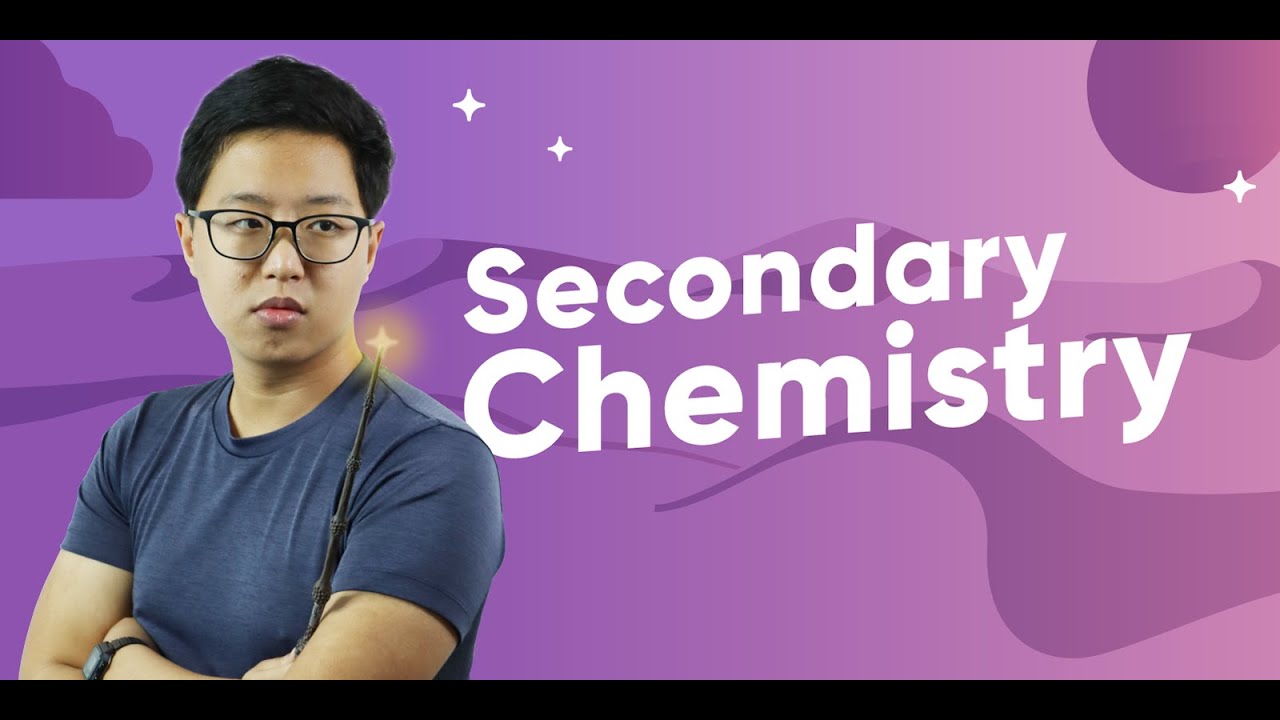
Secondary Chemistry Singapore | EP 1: Elements, Compounds, Mixtures
Affordable Tuition Rates

Home Tuition Rates Singapore 2026

Part-Time
Tutors

Full-Time
Tutors

Ex/Current
MOE Teachers

Pre-School

$25-$35/h

$40-$50/h

$55-$70/h

Primary 1-4

$25-$35/h

$40-$45/h

$55-$70/h

Primary 5-6

$30-$40/h

$40-$55/h

$60-$80/h

Sec 1-2

$30-$45/h

$45-$55/h

$60-$85/h

Sec 3-5

$35-$45/h

$45-$65/h

$70-$95/h

JC

$40-$55/h

$65-$90/h

$90-$130/h

IB

$40-$55/h

$65-$90/h

$90-$130/h

IGCSE / International

$30-$55/h

$45-$85/h

$60-$120/h

Poly / Uni

$40-$65/h

$60-$95/h

$100-$130/h

Adult

$30-$45/h

$40-$65/h

$70-$100/h


Our home tuition rates are constantly updated based on rates quoted by Home Tutors in Singapore. These market rates are based on the volume of 10,000+ monthly tuition assignment applications over a pool of 60,000+ active home tutors.