


Primary English Tuition in Singapore: 1-to-1 Home Tutors for All Levels
Primary School English can be challenging for students who need additional support in areas such as grammar, composition, comprehension and oral communication. MindFlex connects families with suitable Primary English tutors who provide personalised one-to-one lessons based on each child’s learning needs and pace.
Parents can choose from MindFlex’s pool of over 6,000 tutors, including part-time tutors, full-time tutors and current or former MOE teachers. Tutor recommendations are based on the student’s level, schedule, location, preferred lesson format and budget.
From Primary 1 English tuition to focused support from a P6 English tutor, lessons can be conducted at home or online. MindFlex also provides a free tutor-matching service with no agency fees, together with coordinator support seven days a week.
Free Request For Maths Tutor




What Are The Challenges Faced By English Primary School Students in Singapore?
Key Challenges:
-
Difficulty identifying main ideas and supporting details in passages
-
Struggling to understand unfamiliar words from context
-
Difficulty answering comprehension questions accurately
-
Limited ideas or weak organisation in composition writing
-
Recurring grammar mistakes and limited vocabulary
-
Difficulty applying new vocabulary naturally in writing
-
Losing track of key details during listening comprehension
-
Feeling nervous during reading aloud or oral communication
-
Difficulty understanding English concepts despite completing regular practice
-
Struggling with components such as comprehension cloze, synthesis and transformation, visual text and situational writing
-
Poor time management during English assessments
-
Difficulty revising systematically across different English components
-
Low confidence or interest in reading, writing and speaking in English
-
Difficulty adjusting to the requirements of the Primary English syllabus
-
Difficulty finding a tutor suited to the child’s learning needs, schedule and budget
english Tuition Singapore
How Our Primary English Tutors Support Your Child’s Learning Journey

One-to-One Lessons Tailored to Your Child’s English Challenges
Tutors can identify whether your child needs more support with reading comprehension, composition writing, listening, oral communication, grammar or vocabulary. Lesson time can then be directed towards these weaker components instead of following the same pace and content as a large group class.

Structured Guidance for Creative and Composition Writing
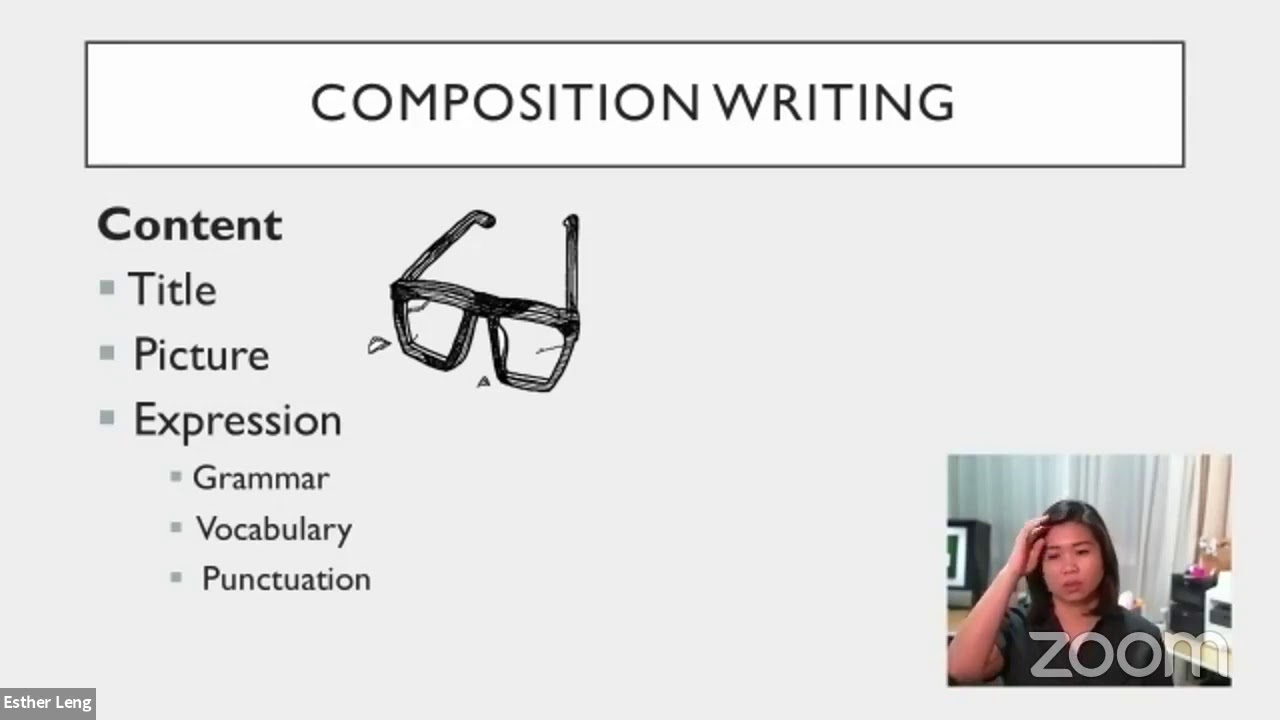
Tutors can help students who find it difficult to generate ideas, organise a storyline or develop their paragraphs. Lessons may cover composition planning, characterisation, setting, sentence variety, vocabulary, paragraph flow and editing so students can express their ideas more clearly.

Focused Grammar and Vocabulary Development
Recurring grammar errors and limited vocabulary can affect both writing and comprehension. A tutor can identify common mistakes in the student’s work, provide targeted exercises and introduce useful words in context rather than asking the child to memorise long vocabulary lists without application.

Guided Listening Comprehension Practice
Students who lose track of spoken information or miss important details can practise listening for names, numbers, reasons, sequences and changes in meaning. Tutors can also teach note-taking and checking techniques to help students process audio passages more accurately.

Individual Oral Communication Practice
Students who feel nervous when reading aloud or answering stimulus-based questions can practise privately with their tutor. Immediate feedback on pronunciation, pacing, expression and sentence structure can help the child communicate ideas more confidently and develop fuller spoken responses.

Clear Explanations for Difficult English Concepts
Completing more worksheets may not help if the student does not understand why an answer is wrong. MindFlex tutors can break down grammar rules, comprehension techniques and writing methods into smaller steps, allowing students to ask questions and revisit explanations at their own pace.

Targeted Exercises and Primary English Papers
Tutors can select exercises based on the student’s weaker areas, including comprehension cloze, synthesis and transformation, visual text, situational writing and continuous writing. School examination papers and PSLE-style questions can also help students become familiar with common formats.

Better Examination Time Management
Students who struggle to finish their English papers can practise allocating time across writing, language use and comprehension components. Tutors may conduct timed exercises and teach planning and checking routines so the student can work more efficiently without rushing through answers.

Consolidated Notes and Revision Materials
Tutors may prepare or recommend notes covering grammar rules, useful vocabulary, writing structures, comprehension techniques and common mistakes. These resources help students revise more systematically instead of relying on scattered worksheets or trying to remember every classroom explanation.
Lessons That Build Confidence and Interest in English
Repeated mistakes can make students reluctant to read, write or speak in English. A tutor can use age-appropriate passages, stories and topics that match the child’s interests while setting manageable goals, helping the subject feel less intimidating over time.
Support That Follows the Primary English Syllabus
Lessons can be planned around the student’s Primary level, schoolwork and current assessment requirements. This helps ensure that the tutor addresses the English skills needed in class while preparing the child progressively for more demanding Upper Primary and PSLE components.
Should You Choose an English Tuition Centre or English Home Tuition?
Both English tuition centres and home tuition can support a child’s learning, but they offer different lesson environments. A tuition centre usually follows a fixed curriculum, class schedule and sequence of worksheets. Students learn alongside their peers and may benefit from group discussions, shared ideas and classroom interaction.
However, a group tutor must divide attention among several students. The lesson may move on even when one child still struggles with a comprehension technique, grammar rule or writing task. Quieter students may also hesitate to ask questions or practise oral communication in front of their classmates.
English home tuition provides one-to-one attention. The tutor can assess the child’s performance across reading, writing, listening and speaking before deciding which areas need more lesson time. The pace can also be adjusted without affecting other students.
For example, a child who reads well but struggles with inference questions can focus on comprehension strategies and textual evidence. Another student may spend more time planning compositions, correcting grammar or practising stimulus-based conversation.
Home tuition can also be arranged around the family’s schedule and removes regular travel to a centre. However, students who enjoy group participation and learn well from their peers may prefer a tuition centre.
Parents should consider the child’s confidence, attention span, learning pace and specific English challenges. The more targeted the support required, the more useful a one-to-one arrangement may be.
Getting a Primary English Tutor From MindFlex
Parents can submit a tutor request with details such as the child’s Primary level, current results, weaker English components, preferred lesson schedule, location and budget. Stating the exact areas of concern helps MindFlex identify tutors with relevant experience.
Tutor choices may include part-time tutors, full-time tutors and current or former school teachers. Parents can review the available profiles and compare qualifications, teaching experience, rates and familiarity with the Primary English syllabus.
After tuition begins, the tutor can review the student’s schoolwork, compositions, comprehension answers or examination papers to identify recurring mistakes. This provides a clearer basis for planning future lessons.
A younger Primary student may initially need support with phonics, sentence construction, reading fluency and vocabulary. An Upper Primary student may require more focused preparation for composition, comprehension, synthesis and transformation, oral communication or PSLE time management.
The lesson plan can be adjusted as the student progresses. Skills that have improved may require less revision, allowing the tutor to spend more time on new or persistent challenges.
MindFlex’s tutor-matching service allows parents to review suitable options before confirming an arrangement. Lessons may be conducted at home or online, depending on the family’s preference and tutor availability.
Do You Need an English Tutor for Primary School?
Not every Primary student requires tuition. Additional support may be useful, however, when English difficulties continue despite classroom teaching, independent practice and help at home.
Possible signs include persistent problems with reading fluency, incomplete comprehension answers, limited vocabulary, frequent grammar mistakes, weak composition structure or reluctance to speak in English.
Tuition may also be helpful when the student understands concepts during lessons but cannot apply them consistently in tests. A tutor can identify where marks are being lost and provide practice targeted at those areas.
Younger students may benefit from early support with phonics, reading, spelling and sentence construction. Upper Primary students may need more specialised guidance with composition, comprehension, oral communication and PSLE examination techniques.
Before arranging tuition, parents can review the child’s schoolwork and speak with their school teacher. This can help distinguish between a skills gap, insufficient practice, low confidence, poor learning habits or difficulty understanding instructions.
The purpose of tuition should be clear. Rather than adding more worksheets without direction, lessons should address specific challenges and help the child become more confident and independent in using English.
Effective PRIMARY ENGLISH Home Tuition
What Are the Topics and Skills Covered by MindFlex’s Primary English Tutors?
MindFlex’s Primary English tutors can support students from Primary 1 to 6 across reading, writing, speaking, listening, grammar and vocabulary. Lessons can be adjusted according to the student’s school level, current ability and areas that require more attention.
- PRIMARY 1 ENGLISH
- PRIMARY 2 ENGLISH
- PRIMARY 3 ENGLISH
- PRIMARY 4 ENGLISH
- PRIMARY 5 ENGLISH
- PRIMARY 6 ENGLISH

MindFlex’s Primary English tutors follow the relevant MOE Primary curriculum and subject syllabuses closely when planning lessons. Tutors can also refer to the student’s school materials, assessment format and learning progress to keep each lesson aligned with classroom expectations while addressing individual areas of difficulty.
How Much Does Primary School English Tuition Cost
The average rates for Primary English Tuition tend to vary depending on what tutor you opt to engage for your child. Typically, the tuition rates range from $25 to $70 for 1 to 1 home tuition, depending on various factors such as the qualifications and experience of the tutor. Rates also tend to be more expensive for Upper Primary Tuition compared to Lower Primary Tuition. Tuition centres also offer group rates for P1 English at around $160-$400/month, depending on the quality and reputation of the centre.
 |  |  | |
Part-Time | Full-Time | Ex/Current | |
P1 | $25-$35/h | $40-$45/h | $55-$70/h |
P2 | $25-$35/h | $40-$45/h | $55-$70/h |
P3 | $25-$35/h | $40-$45/h | $55-$70/h |
P4 | $25-$35/h | $40-$45/h | $55-$70/h |
P5 | $30-$40/h | $40-$55/h | $60-$80/h |
P6 | $30-$40/h | $40-$55/h | $60-$80/h |
Why Choose MindFlex for Your English Tuition?

Tutors Matched to Your Child’s Needs

Qualified Tutors Aligned With the Latest MOE English Syllabus

Clear Explanations That Build Real Understanding

A Free Tutor Recommendation Within 6 Hours

No Agency Fees, Ever

Flexible 1-to-1 Home or Online Lessons
Frequently Asked Questions About English Tuition in Singapore
Thinking of English Tuition?
Is English a difficult subject?
Why do students struggle with English?
How do I know if my child needs help with English?
How can English tuition help my child?
When should my child start English tuition?
Should I choose home tuition or a Primary English tuition centre?
Getting a Tutor
How do I request an English tutor from MindFlex?
What types of English tutors are available?
How are English tutors matched to my child?
Can I request a specific tutor or tutor profile?
How quickly can I get an English tutor?
Can one tutor teach more than one subject or child?
Lessons
Where are English tuition lessons conducted?
Are online English lessons available?
How long and how frequent should English tuition lessons be?
Can lessons follow my child’s school syllabus and assessments?
Can I postpone or reschedule lessons?
Can I change or stop lessons if the tutor is not suitable?
Others
How much does English tuition cost?
Are there any agency or commission fees?
Are there any contracts or minimum commitments?
How do I pay for English tuition lessons?
How do I give feedback about my English tutor?
Testimonials from P1 English Students
My son’s English Tutor Ms Tan was so helpful in ensuring that he understood all the vocabulary and words. Whenever he had any questions, she would take the time to answer them. When Gregory didn’t understand any words or phrases, she would patiently explain and made sure that he fully understand before moving on.
Rachel Lim (Parent of Gregory Soh)
P4 Student from Kuo Chuan Presbyterian Pri
Before starting English tuition, Jia Tong could not form proper sentences and was always struggling with his essay and situational writing. However, with the patient guidance from his tutor Ms Si Hui, she managed to guide him in his understanding of the language. Thanks to her help, my son managed to improve to an A within only 5 months!
Jia Jie Tan (Parent of Jia Tong Tan)
P5 Student from Queenstown Pri
Jennifer’s English Tutor has been helpful in guiding me in the subject. She would patiently guide her through her English essays and give tips on how to improve. With her help, my daughter managed to score an A in her most recent school test!
Benjamin Leong (Parent of Angela Leong)
P6 Student from Da Qiao Pri
Mr Tan, is very helpful. My son have always struggled with English but with Mr Tan’s patience, he have made a lot of improvements in his English Essay Writing, even getting an A in his English exams! I am very happy with his improvement, thank you Mr Tan!
Philip Low (Parent of Xavier Low)
P3 Student from Nan Chiau Pri
Primary School English Video Resources
Helpful English Resources for Students

Top 10 IB HL English Tuition Centres in Singapore
This listicle helps parents and IB students compare HL English tuition options by course fit, lesson format, feedback style and writing support. Shortlist providers for English A: Language and Literature or Literature, with help for commentary, comparative essays, Individual Oral preparation and exam technique.

Top 10 IB SL English Tuition Centres in Singapore
This guide reviews 10 IB SL English tuition centres in Singapore plus a flexible home tuition option. Compare course fit, class size, feedback quality, lesson formats, locations and fees to choose whether a centre’s approach will strengthen essay structure, textual analysis, Paper 1 and Individual Oral performance.

Top 10 IB English Tuition Centres in Singapore
This guide reviews ten IB English tuition centres in Singapore plus one home tuition platform, comparing programme fit, class size, tutor experience, lesson modes, fees and feedback. It helps parents and students choose between small-group, hybrid and one-to-one options tailored to IB Language and Literature or Literature needs.

Top 10 SEC English Tuition Centres in Singapore
This guide reviews 10 SEC English tuition centres across Singapore, comparing class format, teaching style, feedback, location and price. It highlights specialist providers, small-group options and centre reputations so parents can match a centre to their teen’s G1, G2 or G3 English level and learning needs.

Top 10 PSLE English Tuition Centres in Singapore
A practical guide comparing 10 PSLE English tuition centres in Singapore, covering teaching approach, class size, price, locations and strengths such as writing, comprehension and oral. Use it to shortlist centres that match your child’s weakest PSLE English components and scheduling needs.

Top 10 O Level English Tuition Centres in Singapore
A practical guide comparing 10 O Level English tuition centres in Singapore, including specialist and multi-subject providers. We assess teaching approach, class size, feedback, locations, fees and suitability for different exam gaps so parents can shortlist the right centre for their child’s Sec 4 preparations.

What Is SAQ? How Singapore Students Should Answer
Explains SAQ and offers practical tips for Singapore students to write clear, high-scoring short answers.

What Happens If You Fail O Level English?
Explore the consequences of failing O-Level English, retake options, and practical next steps for education and pathways.

How To Improve O Level English At Home
Simple, useful strategies parents and students can use at home to boost O Level English marks and confidence.

FREE Secondary Test Papers
Available For Download!
Consistent practice is important for students preparing for Secondary A Maths tests and examinations, especially when topics such as algebra, trigonometry, differentiation, and integration require strong accuracy and clear working steps. To support revision, MindFlex provides free secondary test papers that students and parents can download for additional practice at home.
These test papers can help students review weaker topics, become more familiar with exam-style questions, and identify areas that may need further guidance from a suitable A Maths tutor.