fbpx

MindFlex Secondary school Tuition

Secondary School Tuition Singapore: 1-to-1 Home Tutors for Sec 1 to Sec 5

Secondary School brings a heavier subject load, more complex concepts and higher examination demands, so small gaps can quickly become harder to manage. MindFlex connects families with one-to-one Secondary School tutors from Sec 1 to Sec 5 who can provide focused support across subjects, adapt lessons to the student’s pace and weaker areas, and help them prepare more systematically for school and national examinations.

Free Request For Secondary School Tutor

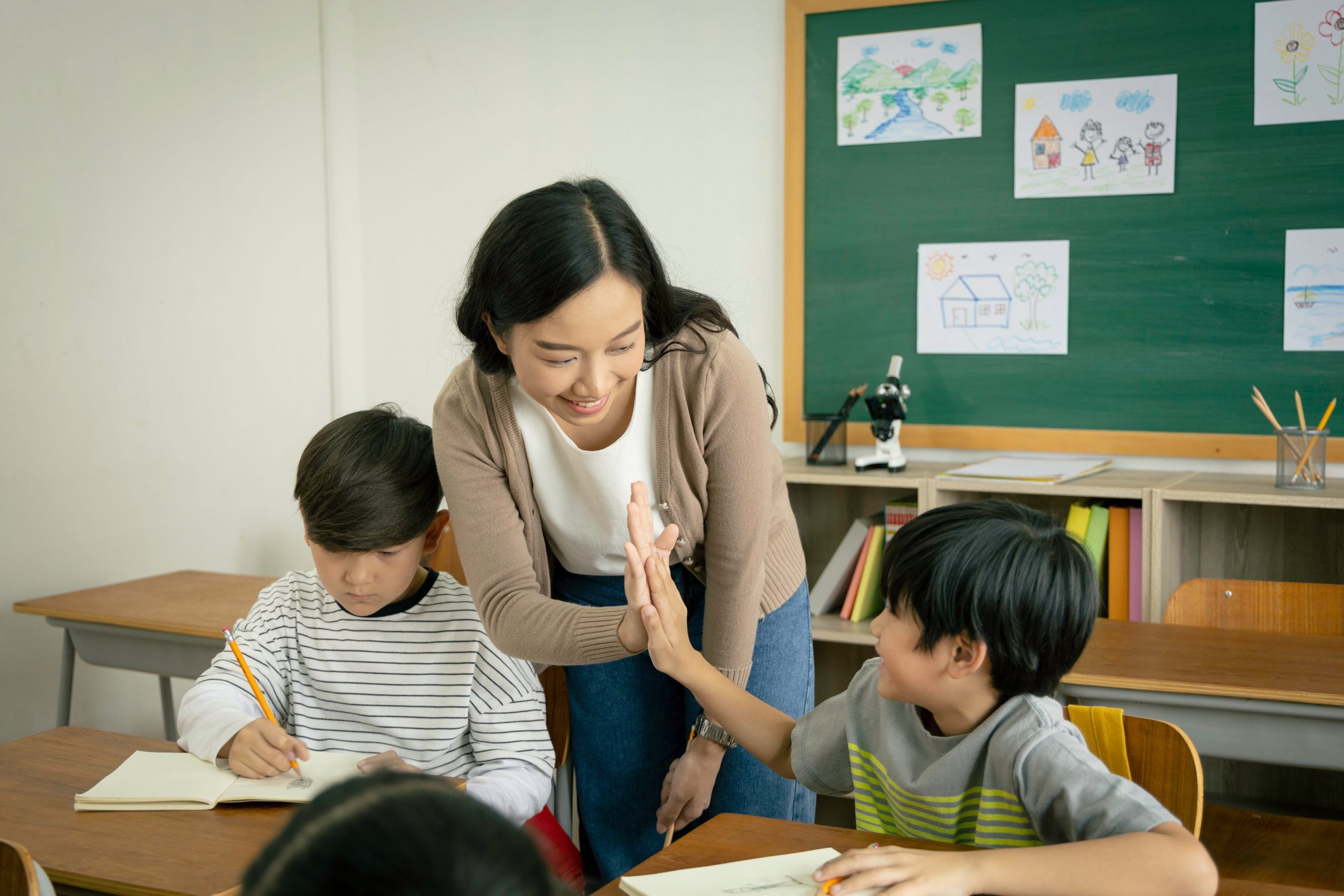
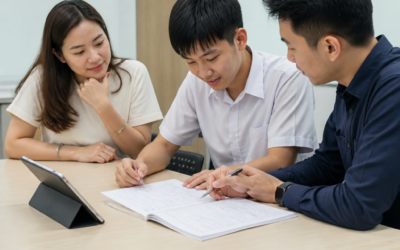
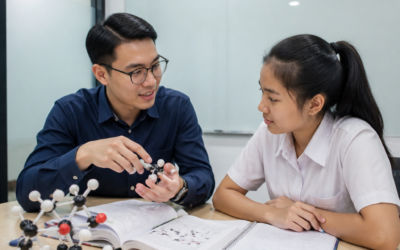
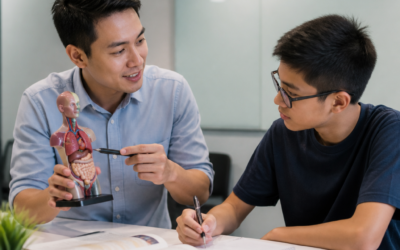
Secondary School Tutor Conducting A Lesson
Challenges Faced While Learning Secondary School

What Are The Challenges Faced By Secondary School Students in Singapore?

Key Challenges:

  • Accumulation of Uncleared Doubts and Questions from Secondary School classes
  • Difficulty in Applying Concepts Learnt in Class when Answering Questions
  • Experiencing A Critical Growing Phase, causing students to be lost about their personal life and distracted from academic life
  • Facing Numerous Distractions in both academic and non-academic aspects, resulting in students losing focus on their academics
  • Facing Problems Memorising Overwhelming Content for Secondary School subjects
  • Fear of Asking and Answering Questions during Secondary School classes
  • Struggling to Answer and Describe Well to Gain Marks when answering questions
  • Struggling to Follow and Understand Secondary School Classes
  • Unable to Complete Examination Paper due to poor time management strategies

Secondary school Tuition Singapore

How Our Secondary Tutors Support Your Child’s Learning Journey

One-to-One Support for Learning Gaps

A tutor can identify concepts that the student has not fully understood and spend more time revisiting them. This helps students who have accumulated unanswered questions or are struggling to keep up with the pace of school lessons.

Guidance on Subjects and Study Approaches

Tutors can show students how to organise notes, revise by topic and approach different question types. These strategies can support students who feel overwhelmed by several subjects or find it difficult to manage academic and non-academic distractions.

Clear Explanations of Difficult Concepts

Complex ideas can be broken into smaller steps and explained using examples suited to the student’s current understanding. This supports students who struggle to follow classroom explanations or apply concepts when answering questions.

Additional Notes and Targeted Practice

Depending on the tutor, students may receive summary notes, topical worksheets and examination questions for further revision. These materials can make content-heavy subjects more manageable and help students practise recalling key facts, formulas and processes.

Preparation for School and National Examinations

Tutors can use timed practices, past papers and mock examinations to familiarise students with examination conditions. This can help students who struggle to complete papers on time or lose marks because they are unfamiliar with common question formats.

Support With Difficult Schoolwork

Students can use tuition time to clarify homework questions and understand the methods behind the answers. This prevents doubts from building up and reduces frustration when assignments involve unfamiliar or challenging concepts.

Engaging Lessons That Support Focus

Tutors can vary explanations, examples and practice activities to keep lessons more interactive. This may help students who are easily distracted or have lost interest because they find a subject difficult or repetitive.

Structured Support for Academic Progress

Regular lessons allow tutors and students to review recurring mistakes, monitor weaker areas and set manageable goals. As students become more confident in applying concepts and explaining answers clearly, they may make steadier progress in school.

A Secondary Tutor Matched to the Student’s Needs

MindFlex considers the student’s level, subjects, learning needs, preferred schedule, location and budget when recommending tutors. Parents can review suitable profiles before confirming lessons, helping them choose a tutor with relevant Secondary teaching experience.

Effective Secondary School Home Tuition

What Subjects and Topics Are Covered by MindFlex’s Secondary School Tutors?

Overview
Secondary 1 students adjust to a broader subject load and more demanding concepts after Primary School. Tuition can help them strengthen their foundations, develop consistent study habits and become more confident with new question formats.
Topics and Skills Covered

English

English
Listening and Viewing
  • Listening and Viewing Closely with a Positive Disposition
    • Listening and Viewing Attitudes and Behaviour
    • Listening and Viewing to Recognise Sounds and Words in Context
    • Listening and Viewing for Understanding
  • Listening and Viewing Critically
    • Listening and Viewing for Critical Evaluation
  • Listening and Viewing Extensively
    • Listening and Viewing Extensively for Understanding and Enjoyment
Reading and Viewing
  • Reading and Viewing Closely
    • Beginning Reading and Viewing
    • Close Reading and Viewing
  • Reading and Viewing Critically
    • Critical Reading, Viewing and Appreciation
  • Reading and Viewing Widely and Extensively
    • Wide Reading and Viewing
    • Extensive Reading and Viewing
Speaking and Representing
  • Knowledge Base for Speaking and Representing
    • Features of Spoken Language
    • Accuracy and Fluency
  • Speaking and Representing Confidently and Effectively
    • Planning Processes: Individual, Collaborative
    • Speaking and Representing to Fulfil Different Purposes
    • Self-Monitoring
Writing and Representing
  • Acquiring the Mechanics of Writing
    • Handwriting
    • Spelling
  • Writing and Representing Creatively and Critically
    • Generation, Selection and Organisation of Ideas
    • Development, Organisation and Expression of Ideas
    • Review, Revision and Editing
Grammar
  • Use of Terms
    • Metalanguage
  • Grammar at Word, Phrase and Sentence Levels
    • At Word and Phrase Levels
    • At Sentence Level
Vocabulary
  • Developing Rich Vocabulary Knowledge
    • Use of Metalanguage
    • Development of Rich Vocabulary
  • Using Vocabulary
    • Use of Appropriate Vocabulary

Mathematics

Mathematics
Number and Algebra
  • Numbers and their operations
  • Ratio and proportion
  • Percentage
  • Rate and Speed (not taught in G1)
  • Algebraic expressions and formulae
  • Functions and graphs (not taught in G2 and G1)
  • Equations and inequalities (not taught in G1)
GEOMETRY AND MEASUREMENT
  • Angles, triangles and polygons
  • Mensuration
STATISTICS AND PROBABILITY
  • Data handling and analysis

Chinese

Chinese
LANGUAGE SKILLS
  • Receptive Skills
    • Listening: derive underlying messages from dialogues, speeches and reports
    • Reading: understand underlying messages and appreciate texts of varied genres
  • Productive Skills
    • Speak fluently and clearly about familiar topics and viewpoints
    • Write coherently using varied vocabulary and sentence structures
  • Interactive Skills
    • Interact fluently in physical and virtual settings
    • Exchange views using appropriate language and expressions
CULTURE AND CONNECTION
  • Cultural Understanding
    • Appreciate the culture and history of Mother Tongue communities
    • Respect diverse cultural backgrounds, worldviews and perspectives
  • Contemporary Issues
    • Understand and discuss local and global current affairs
CRITICAL AND INVENTIVE THINKING
  • Critical Thinking
    • Develop perspectives, assess options and make sound decisions
    • Evaluate the accuracy, credibility and relevance of information

Malay

Malay
LANGUAGE SKILLS
  • Receptive Skills
    • Listening: derive underlying messages from dialogues, speeches and reports
    • Reading: understand underlying messages and appreciate texts of varied genres
  • Productive Skills
    • Speak fluently and clearly about familiar topics and viewpoints
    • Write coherently using varied vocabulary and sentence structures
  • Interactive Skills
    • Interact fluently in physical and virtual settings
    • Exchange views using appropriate language and expressions
CULTURE AND CONNECTION
  • Cultural Understanding
    • Appreciate the culture and history of Mother Tongue communities
    • Respect diverse cultural backgrounds, worldviews and perspectives
  • Contemporary Issues
    • Understand and discuss local and global current affairs
CRITICAL AND INVENTIVE THINKING
  • Critical Thinking
    • Develop perspectives, assess options and make sound decisions
    • Evaluate the accuracy, credibility and relevance of information

Tamil

Tamil
LANGUAGE SKILLS
  • Receptive Skills
    • Listening: derive underlying messages from dialogues, speeches and reports
    • Reading: understand underlying messages and appreciate texts of varied genres
  • Productive Skills
    • Speak fluently and clearly about familiar topics and viewpoints
    • Write coherently using varied vocabulary and sentence structures
  • Interactive Skills
    • Interact fluently in physical and virtual settings
    • Exchange views using appropriate language and expressions
CULTURE AND CONNECTION
  • Cultural Understanding
    • Appreciate the culture and history of Mother Tongue communities
    • Respect diverse cultural backgrounds, worldviews and perspectives
  • Contemporary Issues
    • Understand and discuss local and global current affairs
CRITICAL AND INVENTIVE THINKING
  • Critical Thinking
    • Develop perspectives, assess options and make sound decisions
    • Evaluate the accuracy, credibility and relevance of information

Science

Science
THE SCIENTIFIC ENDEAVOUR
  • Scientific Inquiry
    • Nature of scientific knowledge, evidence and applications
    • Laboratory safety, measurement, investigations and communication
DIVERSITY
  • Exploring Diversity of Matter by its Physical Properties
    • Conductivity, melting and boiling points, strength, hardness, flexibility and density
  • Exploring Diversity of Matter by its Chemical Composition (not taught in G1)
    • Elements, compounds, mixtures, solutes, solvents and solutions
  • Exploring Diversity of Matter using Separation Techniques
    • Magnetic attraction, filtration, evaporation, distillation and paper chromatography
MODELS
  • Ray Model of Light (not taught in G1)
    • Light rays, reflection, refraction and image formation
  • Model of Cells – the Basic Unit of Life
    • Plant and animal cell models; tissues, organs and systems
  • Model of Matter – the Particulate Nature of Matter (not taught in G1)
    • Particle arrangement, states of matter, heating, cooling and diffusion
  • Model of Matter – Atoms and Molecules (not taught in G1)
    • Atoms, molecules and representations of elements and compounds

Geography

Geography
SUSTAINABLE RESOURCE USE AND MANAGEMENT
  • Introduction to Geography
    • Physical and human geography; space, place, environment and scale
    • Geographical inquiry and investigation
  • Water (not taught in G1)
    • Spatial distribution, water cycle and availability
    • Relationships with people and the environment; pollution and sustainable management
  • Tropical Rainforests and Mangroves
    • Distribution, characteristics and plant adaptations
    • Environmental importance, human impacts and sustainable management
GEOGRAPHICAL INVESTIGATION
  • Water Investigation
    • Frame questions; collect, present and analyse data
    • Draw conclusions and evaluate methods

History

History
THE SINGAPORE STORY
  • From Temasek to Singapore (1299-Early 1800s) (not taught in G1)
    • Trading networks; rise and decline of early Singapore
    • Anglo-Dutch rivalry and establishment of a British trading post
  • Singapore’s Development as a Port City Under the British (1819-1942)
    • British rule, communities, trade and industry
    • World War II and the Fall of Singapore
  • G3 Extensions (not taught in G2)
    • Piracy, public health, rubber and tin industries, and the Great Depression
HISTORICAL INQUIRY
  • Source-Based Investigation
    • Ask historical questions and examine evidence from varied sources
    • Compare perspectives and communicate reasoned conclusions

Literature

Literature
EXPERIENCING LITERARY TEXTS
  • Poetry
    • Explore local and global poems
    • Experience mood, setting and atmosphere
  • Prose
    • Understand plot, character, setting and atmosphere
APPRECIATING WRITER’S CRAFT
  • Literary Features
    • Examine writers’ choices of form, structure and language
    • Explain how these choices shape meaning
INTERPRETING AND RESPONDING
  • Themes and Personal Response
    • Interpret themes and connect texts to self and world
    • Construct sensitive, informed responses using evidence
Overview
Secondary 2 students deepen their Lower Secondary foundations while preparing for subject choices at the Upper Secondary level. Tutors can help them consolidate core concepts and identify areas that require attention before Secondary 3.
Topics and Skills Covered

English

English
Listening and Viewing
  • Listening and Viewing Closely with a Positive Disposition
    • Listening and Viewing Attitudes and Behaviour
    • Listening and Viewing to Recognise Sounds and Words in Context
    • Listening and Viewing for Understanding
  • Listening and Viewing Critically
    • Listening and Viewing for Critical Evaluation
  • Listening and Viewing Extensively
    • Listening and Viewing Extensively for Understanding and Enjoyment
Reading and Viewing
  • Reading and Viewing Closely
    • Beginning Reading and Viewing
    • Close Reading and Viewing
  • Reading and Viewing Critically
    • Critical Reading, Viewing and Appreciation
  • Reading and Viewing Widely and Extensively
    • Wide Reading and Viewing
    • Extensive Reading and Viewing
Speaking and Representing
  • Knowledge Base for Speaking and Representing
    • Features of Spoken Language
    • Accuracy and Fluency
  • Speaking and Representing Confidently and Effectively
    • Planning Processes: Individual, Collaborative
    • Speaking and Representing to Fulfil Different Purposes
    • Self-Monitoring
Writing and Representing
  • Acquiring the Mechanics of Writing
    • Handwriting
    • Spelling
  • Writing and Representing Creatively and Critically
    • Generation, Selection and Organisation of Ideas
    • Development, Organisation and Expression of Ideas
    • Review, Revision and Editing
Grammar
  • Use of Terms
    • Metalanguage
  • Grammar at Word, Phrase and Sentence Levels
    • At Word and Phrase Levels
    • At Sentence Level
  • Listening and Viewing Extensively
    • Cohesion in Texts
    • Language Features of Types of Texts
Vocabulary
  • Developing Rich Vocabulary Knowledge
    • Use of Metalanguage
    • Development of Rich Vocabulary
  • Using Vocabulary
    • Use of Appropriate Vocabulary

Mathematics

Mathematics
Number and Algebra
  • Ratio and proportion
  • Algebraic expressions and formulae
  • Functions and graphs
  • Equations and inequalities
GEOMETRY AND MEASUREMENT
  • Congruence and similarity
  • Pythagoras’ theorem and trigonometry
  • Mensuration
STATISTICS AND PROBABILITY
  • Data handling and analysis
  • Probability

Chinese

Chinese
LANGUAGE SKILLS
  • Receptive Skills
    • Listening: derive underlying messages from dialogues, speeches and reports
    • Reading: understand underlying messages and appreciate texts of varied genres
  • Productive Skills
    • Speak fluently and clearly about familiar topics and viewpoints
    • Write coherently using varied vocabulary and sentence structures
  • Interactive Skills
    • Interact fluently in physical and virtual settings
    • Exchange views using appropriate language and expressions
CULTURE AND CONNECTION
  • Cultural Understanding
    • Appreciate the culture and history of Mother Tongue communities
    • Respect diverse cultural backgrounds, worldviews and perspectives
  • Contemporary Issues
    • Understand and discuss local and global current affairs
CRITICAL AND INVENTIVE THINKING
  • Critical Thinking
    • Develop perspectives, assess options and make sound decisions
    • Evaluate the accuracy, credibility and relevance of information

Malay

Malay
LANGUAGE SKILLS
  • Receptive Skills
    • Listening: derive underlying messages from dialogues, speeches and reports
    • Reading: understand underlying messages and appreciate texts of varied genres
  • Productive Skills
    • Speak fluently and clearly about familiar topics and viewpoints
    • Write coherently using varied vocabulary and sentence structures
  • Interactive Skills
    • Interact fluently in physical and virtual settings
    • Exchange views using appropriate language and expressions
CULTURE AND CONNECTION
  • Cultural Understanding
    • Appreciate the culture and history of Mother Tongue communities
    • Respect diverse cultural backgrounds, worldviews and perspectives
  • Contemporary Issues
    • Understand and discuss local and global current affairs
CRITICAL AND INVENTIVE THINKING
  • Critical Thinking
    • Develop perspectives, assess options and make sound decisions
    • Evaluate the accuracy, credibility and relevance of information

Tamil

Tamil
LANGUAGE SKILLS
  • Receptive Skills
    • Listening: derive underlying messages from dialogues, speeches and reports
    • Reading: understand underlying messages and appreciate texts of varied genres
  • Productive Skills
    • Speak fluently and clearly about familiar topics and viewpoints
    • Write coherently using varied vocabulary and sentence structures
  • Interactive Skills
    • Interact fluently in physical and virtual settings
    • Exchange views using appropriate language and expressions
CULTURE AND CONNECTION
  • Cultural Understanding
    • Appreciate the culture and history of Mother Tongue communities
    • Respect diverse cultural backgrounds, worldviews and perspectives
  • Contemporary Issues
    • Understand and discuss local and global current affairs
CRITICAL AND INVENTIVE THINKING
  • Critical Thinking
    • Develop perspectives, assess options and make sound decisions
    • Evaluate the accuracy, credibility and relevance of information

Science

Science
INTERACTIONS
  • Application of Forces and Transfer of Energy
    • Effects of forces; work, kinetic and potential energy, and energy conservation
  • Transfer of Heat Energy and its Effects
    • Conduction, convection, radiation and thermal expansion
  • Chemical Changes (not taught in G1)
    • New substances, word equations, conservation of mass and common reactions
  • Interactions within Ecosystems (not taught in G1)
    • Biotic and abiotic factors, relationships, energy flow and human impacts
SYSTEMS
  • Electrical Systems
    • Current, potential difference, resistance, circuits, effects and electrical safety
  • Human Digestive System
    • Organs, digestion, enzymes, end-products and healthy choices
  • Transport Systems in Living Things (not taught in G1)
    • Human blood vessels, plant transport, diffusion and osmosis
  • Human Sexual Reproductive System
    • Fertilisation, heredity, puberty, reproductive organs and health decisions

Geography

Geography
SUSTAINABLE CITIES
  • Cities
    • Characteristics, rural-urban relationships and environmental and social impacts
    • Strategies for sustainable urban development
  • Housing
    • Formal and informal housing, spatial distribution and location factors
    • Relationships with people and the environment; sustainable housing management
  • Transport Systems (not taught in G1)
    • Characteristics, nodes and reasons for urban transport systems
    • Impacts on people and the environment; sustainable management
GEOGRAPHICAL INVESTIGATION
  • Housing Investigation
    • Collect and present primary and secondary data
    • Analyse relationships, draw conclusions and evaluate methods

History

History
THE SINGAPORE STORY
  • Singapore’s Struggle for Independence (1942-1965)
    • Japanese Occupation; post-war recovery and self-government
    • Merger and Separation
  • Surviving as an Independent Nation-State (1965-Late 1970s)
    • Sovereignty, defence and diplomatic relations
    • Economic and social transformation
  • G3 Extensions (not taught in G2)
    • Vietnam War, home-grown defence industry and healthcare
HISTORICAL INQUIRY
  • Source-Based Investigation
    • Gather, select and evaluate sources
    • Explain change, continuity, cause, consequence and significance

Literature

Literature
EXPERIENCING LITERARY TEXTS
  • Poetry
    • Study local, global and unseen poems
  • Drama (not taught in G1)
    • Understand plot, character, setting and atmosphere in performance
APPRECIATING WRITER’S CRAFT
  • Literary Features
    • Analyse form, structure, language and dramatic methods
    • Explain how writers create effects
INTERPRETING AND RESPONDING
  • Themes and Personal Response
    • Interpret themes and multiple perspectives
    • Write passage-based and essay responses using evidence
Overview
Secondary 3 students begin more specialised Upper Secondary subjects and work towards N-Level or O-Level requirements. Tuition can support the transition by reinforcing new concepts, subject-specific answering techniques and regular examination practice.
Topics and Skills Covered

English


English
Listening and Viewing
  • Listening and Viewing Closely with a Positive Disposition
    • Listening and Viewing Attitudes and Behaviour
    • Listening and Viewing to Recognise Sounds and Words in Context
    • Listening and Viewing for Understanding
  • Listening and Viewing Critically
    • Listening and Viewing for Critical Evaluation
  • Listening and Viewing Extensively
    • Listening and Viewing Extensively for Understanding and Enjoyment
Reading and Viewing
  • Reading and Viewing Closely
    • Beginning Reading and Viewing
    • Close Reading and Viewing
  • Reading and Viewing Critically
    • Critical Reading, Viewing and Appreciation
  • Reading and Viewing Widely and Extensively
    • Wide Reading and Viewing
    • Extensive Reading and Viewing
Speaking and Representing
  • Knowledge Base for Speaking and Representing
    • Features of Spoken Language
    • Accuracy and Fluency
  • Speaking and Representing Confidently and Effectively
    • Planning Processes: Individual, Collaborative
    • Speaking and Representing to Fulfil Different Purposes
    • Self-Monitoring
Writing and Representing
  • Acquiring the Mechanics of Writing
    • Handwriting
    • Spelling
  • Writing and Representing Creatively and Critically
    • Generation, Selection and Organisation of Ideas
    • Development, Organisation and Expression of Ideas
    • Review, Revision and Editing
Grammar
  • Use of Terms
    • Metalanguage
  • Grammar at Word, Phrase and Sentence Levels
    • At Word and Phrase Levels
    • At Sentence Level
  • Listening and Viewing Extensively
    • Cohesion in Texts
    • Language Features of Types of Texts
Vocabulary
  • Developing Rich Vocabulary Knowledge
    • Use of Metalanguage
    • Development of Rich Vocabulary
  • Using Vocabulary
    • Use of Appropriate Vocabulary

Mathematics


Mathematics

Elementary Mathematics

+
Elementary Mathematics
Number and Algebra
  • Numbers and their operations
  • Functions and graphs
  • Equations and inequalities
Geometry and Measurement
  • Congruence and similarity
  • Properties of circles (not taught in G1)
  • Pythagoras’ theorem and trigonometry
  • Mensuration
  • Coordinate geometry (not taught in G1)

Additional Mathematics

+
Additional Mathematics
Algebra
  • Quadratic functions (not taught in G1)
  • Equations and inequalities (not taught in G1)
  • Surds (not taught in G1)
  • Polynomials and partial fractions (not taught in G1)
  • Binomial expansions (not taught in G2 and G1)
  • Exponential and logarithmic functions (not taught in G2 and G1)

Chinese


Chinese
LANGUAGE SKILLS
  • Receptive Skills
    • Listening: derive underlying messages from dialogues, speeches and reports
    • Reading: understand underlying messages and appreciate texts of varied genres
  • Productive Skills
    • Speak fluently and clearly about familiar topics and viewpoints
    • Write coherently using varied vocabulary and sentence structures
  • Interactive Skills
    • Interact fluently in physical and virtual settings
    • Exchange views using appropriate language and expressions
CULTURE AND CONNECTION
  • Cultural Understanding
    • Appreciate the culture and history of Mother Tongue communities
    • Respect diverse cultural backgrounds, worldviews and perspectives
  • Contemporary Issues
    • Understand and discuss local and global current affairs
CRITICAL AND INVENTIVE THINKING
  • Critical Thinking
    • Develop perspectives, assess options and make sound decisions
    • Evaluate the accuracy, credibility and relevance of information

Malay


Malay
LANGUAGE SKILLS
  • Receptive Skills
    • Listening: derive underlying messages from dialogues, speeches and reports
    • Reading: understand underlying messages and appreciate texts of varied genres
  • Productive Skills
    • Speak fluently and clearly about familiar topics and viewpoints
    • Write coherently using varied vocabulary and sentence structures
  • Interactive Skills
    • Interact fluently in physical and virtual settings
    • Exchange views using appropriate language and expressions
CULTURE AND CONNECTION
  • Cultural Understanding
    • Appreciate the culture and history of Mother Tongue communities
    • Respect diverse cultural backgrounds, worldviews and perspectives
  • Contemporary Issues
    • Understand and discuss local and global current affairs
CRITICAL AND INVENTIVE THINKING
  • Critical Thinking
    • Develop perspectives, assess options and make sound decisions
    • Evaluate the accuracy, credibility and relevance of information

Tamil


Tamil
LANGUAGE SKILLS
  • Receptive Skills
    • Listening: derive underlying messages from dialogues, speeches and reports
    • Reading: understand underlying messages and appreciate texts of varied genres
  • Productive Skills
    • Speak fluently and clearly about familiar topics and viewpoints
    • Write coherently using varied vocabulary and sentence structures
  • Interactive Skills
    • Interact fluently in physical and virtual settings
    • Exchange views using appropriate language and expressions
CULTURE AND CONNECTION
  • Cultural Understanding
    • Appreciate the culture and history of Mother Tongue communities
    • Respect diverse cultural backgrounds, worldviews and perspectives
  • Contemporary Issues
    • Understand and discuss local and global current affairs
CRITICAL AND INVENTIVE THINKING
  • Critical Thinking
    • Develop perspectives, assess options and make sound decisions
    • Evaluate the accuracy, credibility and relevance of information

Science


Science

Chemistry

+
Chemistry
MATTER – STRUCTURES AND PROPERTIES
  • Experimental Chemistry (not taught in G1)
    • Experimental design; methods of purification and analysis
  • The Particulate Nature of Matter (not taught in G1)
    • Kinetic particle theory and atomic structure
  • Chemical Bonding and Structure (not taught in G1)
    • Ionic, covalent and metallic bonding; structure and properties of materials
CHEMICAL REACTIONS
  • Chemical Calculations (not taught in G1)
    • Formulae, equations, the mole concept and stoichiometry
  • Acid-Base Chemistry
    • Acids, bases, oxides and preparation of salts
  • Redox Chemistry (not taught in G2 and G1)
    • Oxidation and reduction; reactivity series and metals
  • Patterns in the Periodic Table (not taught in G1)
    • Periodic trends and properties of selected groups
  • Rate of Reactions (not taught in G2 and G1)
    • Collision theory, activation energy, catalysts and rate investigations

Biology

+
Biology
CELLS AND THE CHEMISTRY OF LIFE
  • Cell Structure and Organisation (not taught in G1)
    • Plant and animal cells, organelles and cell specialisation
  • Movement of Substances (not taught in G1)
    • Diffusion, osmosis and active transport
  • Biological Molecules (not taught in G1)
    • Carbohydrates, fats, proteins, DNA and enzyme action
THE HUMAN BODY – MAINTAINING LIFE
  • Nutrition in Humans
    • Digestive system; physical and chemical digestion, absorption and assimilation
  • Transport in Humans
    • Circulatory system, blood, heart and blood vessels
  • Respiration in Humans
    • Aerobic and anaerobic respiration and gaseous exchange
  • Excretion in Humans (not taught in G2 and G1)
    • Deamination, urea formation, kidneys, nephrons and dialysis
  • Homeostasis, Co-ordination and Response in Humans (not taught in G2 and G1)
    • Internal environment, temperature control and blood glucose regulation

Physics

+
Physics
MEASUREMENT
  • Physical Quantities, Units and Measurement
    • SI units, measuring instruments, scalars and vectors
NEWTONIAN MECHANICS
  • Kinematics
    • Speed, velocity, acceleration and motion graphs
  • Dynamics
    • Forces, Newton’s laws, mass, weight and density
  • Turning Effect of Forces (not taught in G2)
    • Moments, equilibrium and centre of gravity
  • Pressure (not taught in G1)
    • Pressure in solids, liquids and gases
  • Energy
    • Work, energy stores and transfers, power and efficiency
THERMAL PHYSICS
  • Kinetic Particle Model of Matter (not taught in G1)
    • States of matter, particles and internal energy
  • Thermal Processes
    • Conduction, convection and radiation
WAVES
  • General Properties of Waves
    • Wave motion, transverse and longitudinal waves, and sound
  • Electromagnetic Spectrum
    • Properties, applications and effects of electromagnetic waves
  • Light (not taught in G2)
    • Reflection, refraction and thin converging lenses

Combined Chemistry

+
Combined Chemistry
MATTER – STRUCTURES AND PROPERTIES
  • Experimental Chemistry (not taught in G1)
    • Experimental design; methods of purification and analysis
  • The Particulate Nature of Matter (not taught in G1)
    • Kinetic particle theory and atomic structure
  • Chemical Bonding and Structure (not taught in G1)
    • Ionic and covalent bonding; structure and properties of materials
CHEMICAL REACTIONS
  • Chemical Calculations (not taught in G1)
    • Formulae, equations, mole concept and stoichiometry
  • Acid-Base Chemistry
    • Acids, bases, oxides and salts
  • Patterns in the Periodic Table (not taught in G1)
    • Periodic trends and selected group properties
  • Chemical Energetics (not taught in G2 and G1)
    • Exothermic and endothermic reactions and energy profiles

Combined Biology

+
Combined Biology
CELLS AND THE CHEMISTRY OF LIFE
  • Cell Structure and Organisation (not taught in G1)
    • Plant and animal cells and cell specialisation
  • Movement of Substances (not taught in G1)
    • Diffusion and osmosis
  • Biological Molecules (not taught in G1)
    • Carbohydrates, fats, proteins and enzyme action
THE HUMAN BODY – MAINTAINING LIFE
  • Nutrition in Humans
    • Digestive system, digestion, absorption and assimilation
  • Transport in Humans
    • Circulatory system, blood, heart and blood vessels
  • Respiration in Humans
    • Aerobic and anaerobic respiration and gaseous exchange
  • Infectious Diseases in Humans
    • Pathogens, transmission, immunity and vaccination
LIVING TOGETHER – PLANTS, ANIMALS AND ECOSYSTEMS
  • Nutrition and Transport in Flowering Plants
    • Plant structure and photosynthesis

Combined Physics

+
Combined Physics
MEASUREMENT
  • Physical Quantities, Units and Measurement
    • SI units, measuring instruments, scalars and vectors
NEWTONIAN MECHANICS
  • Kinematics
    • Speed, velocity, acceleration and motion graphs
  • Force and Pressure (not taught in G1)
    • Contact and non-contact forces, mass, weight, density and pressure
  • Dynamics
    • Newton’s laws and resistive forces
  • Turning Effect of Forces (not taught in G2)
    • Moments, equilibrium and centre of gravity
  • Energy
    • Work, energy stores and transfers, power and efficiency
THERMAL PHYSICS
  • Kinetic Particle Model of Matter (not taught in G1)
    • States of matter, particles and internal energy
  • Thermal Processes
    • Conduction, convection and radiation
WAVES
  • General Wave Properties
    • Wave motion, transverse and longitudinal waves, and sound
  • Electromagnetic Spectrum
    • Properties, applications and effects of electromagnetic waves
  • Light (not taught in G2)
    • Reflection, refraction and thin converging lenses

POA


POA
KEY UNDERSTANDING 1: ACCOUNTING AND NON-ACCOUNTING INFORMATION IS USED TO SUPPORT AND FACILITATE DECISION-MAKING
  • Accounting and Its Role in the Stakeholders’ Decision-Making Process (not taught in G1)
    • Roles of accounting and accountants
    • Stakeholders and their decision-making needs
KEY UNDERSTANDING 2: ACCOUNTING IS A LANGUAGE USED TO REPRESENT BUSINESS ACTIVITIES
  • Types of Businesses (not taught in G1)
    • Trading and service businesses
  • Forms of Business Ownerships (not taught in G2 and G1)
    • Sole proprietorship, limited liability partnership and private limited company
  • Measurement and Presentation of Business Activities (not taught in G1)
    • Elements of financial statements and the accounting equation
    • Statements of Financial Position and Financial Performance
    • Revenue, other income, cost of sales and other expenses
    • Cash, inventories, trade payables and introductory non-current assets
    • Trial balance and financial statements with adjustments
KEY UNDERSTANDING 3: ACCOUNTING IS AN INFORMATION SYSTEM TO MEASURE BUSINESS ACTIVITIES
  • Accounting Assumptions and Principles (not taught in G1)
    • Accounting theories and their application
  • Accounting Information System and Accounting Cycle (not taught in G1)
    • Accounting information system, source documents and accounting cycle
    • Double-entry recording, journals, ledgers and trial balance
    • Internal controls, cash records and bank reconciliation

Geography


Geography

Geography

+
Geography
GEOGRAPHY IN EVERYDAY LIFE
  • Thinking Geographically (not taught in G2 and G1)
    • People-nature relationships, sense of place and neighbourhood organisation
  • Sustainable Development (not taught in G2 and G1)
    • Ecosystem services, hazards and sustainable urban neighbourhoods
  • Geographical Methods (not taught in G2 and G1)
    • Design fieldwork; collect, process, analyse and present data
TOURISM
  • Tourism Activity (not taught in G2 and G1)
    • Tourism systems, growth and destination development
  • Tourism Development (not taught in G2 and G1)
    • Economic, social and environmental trends and impacts
  • Sustainable Tourism Development (not taught in G2 and G1)
    • Stakeholders, approaches and future sustainability
CLIMATE
  • Weather and Climate (not taught in G2 and G1)
    • Temperature, precipitation, wind and global variation
  • Climate Change (not taught in G2 and G1)
    • Natural variability, human causes and impacts on natural and human systems
  • Climate Action (not taught in G2 and G1)
    • Risk, mitigation, adaptation and community resilience

Combined Geography

+
Combined Geography
GEOGRAPHY IN EVERYDAY LIFE
  • Thinking Geographically (not taught in G1)
    • People-nature relationships, sense of place and neighbourhood organisation
  • Sustainable Development (not taught in G1)
    • Urban ecosystems, ecosystem services, hazards and community resilience
  • Geographical Methods (not taught in G1)
    • Design fieldwork; collect, process, analyse and present data
TECTONICS
  • Plate Tectonics (not taught in G1)
    • Earth structure, plate movement, evidence and plate boundaries
  • Earthquakes and Volcanoes (not taught in G1)
    • Processes, magnitude, distribution, hazards, impacts and benefits
  • Disaster Risk Management (not taught in G1)
    • Disaster risk, resilience, response and recovery strategies

History


History

History

+
History
PAPER 1: EUROPEAN CONTROL AND CHALLENGES TO DOMINANCE, 1870s-1942
  • Extension of European Control in Southeast Asia (not taught in G2 and G1)
    • British Malaya; Dutch Indonesia or French Vietnam
  • After World War I (not taught in G2 and G1)
    • Paris Peace Conference and its immediate impact on Europe
  • Rise of Authoritarian Regimes (not taught in G2 and G1)
    • Nazi Germany and Militarist Japan
  • War in Europe and the Asia-Pacific (not taught in G2 and G1)
    • Developments leading to World War II and reasons for its end
HISTORICAL THINKING
  • Source and Essay Skills (not taught in G2 and G1)
    • Inference, comparison, reliability, utility and evaluation
    • Explain and weigh causes, consequences and significance

Combined History

+
Combined History
THE MAKING OF THE 20TH CENTURY MODERN WORLD, 1910s-1991
  • After World War I  (not taught in G1)
    • Paris Peace Conference, Treaty of Versailles and collective security
  • Rise of Authoritarian Regimes (not taught in G1)
    • Nazi Germany and Militarist Japan
  • War in Europe and the Asia-Pacific (not taught in G1)
    • Developments leading to World War II and reasons for its end
HISTORICAL THINKING
  • Source-Based and Essay Skills (not taught in G1)
    • Inference, comparison, purpose, reliability, utility and evaluation
    • Explain and weigh causes, consequences and significance

Literature


Literature

Literature

+
Literature
G3 LITERATURE IN ENGLISH
  • Prose (not taught in G2 and G1)
    • Close study of plot, character, setting and themes in a set text
  • Poetry (not taught in G2 and G1)
    • Analyse local, global and unseen poems
  • Drama (not taught in G2 and G1)
    • Study dramatic presentation, character and themes
LITERARY ANALYSIS
  • Writer’s Craft (not taught in G2 and G1)
    • Analyse how form, structure and language shape meaning
    • Explore ambiguity and multiple interpretations
PERSONAL RESPONSE
  • Evidence-Based Interpretation  (not taught in G2 and G1)
    • Communicate sensitive, informed responses clearly and coherently
    • Support interpretations with textual evidence

Combined Literature

+
Combined Literature
PROSE STUDY
  • Set Text Foundations (not taught in G1)
    • Plot, character, setting, relationships and central concerns
  • Writer’s Craft (not taught in G1)
    • Form, structure, language and stylistic effects
LITERARY ANALYSIS
  • Close Reading  (not taught in G1)
    • Analyse passages and connect details to the whole text
  • Personal and Critical Response  (not taught in G1)
    • Develop informed interpretations supported by textual evidence

Social Studies


Social Studies
ISSUE 1: EXPLORING CITIZENSHIP AND GOVERNANCE
  • Citizenship and Belonging (not taught in G1)
    • Legal status, identity, shared values and civic participation
  • Functions and Roles of Government (not taught in G1)
    • Maintain order, protect citizens and national interests, and manage resources
  • Citizens and Government Working for the Good of Society (not taught in G1)
    • Complementary roles, public decision-making and sense of belonging
ISSUE 2: LIVING IN A DIVERSE SOCIETY
  • Identity and Diversity (not taught in G1)
    • Factors shaping identity and contributing to diversity
  • Experiences and Effects of Diversity (not taught in G1)
    • Cultural exchange, prejudice, misconceptions and competition for resources
  • Responding to Diversity (not taught in G1)
    • Citizen and government responses to socio-cultural and socio-economic diversity
SOCIAL STUDIES INQUIRY
  • Source-Based and Structured Response Skills (not taught in G1)
    • Inference, purpose, comparison, reliability and evaluation
    • Propose feasible responses and construct well-reasoned arguments
Overview
Secondary 4 students focus on consolidating the full syllabus and preparing for school preliminary examinations and national examinations. Lessons can prioritise weaker topics, examination techniques, timed practice and careful review of recurring mistakes.
Topics and Skills Covered

English


English
Listening and Viewing
  • Listening and Viewing Closely with a Positive Disposition
    • Listening and Viewing Attitudes and Behaviour
    • Listening and Viewing to Recognise Sounds and Words in Context
    • Listening and Viewing for Understanding
  • Listening and Viewing Critically
    • Listening and Viewing for Critical Evaluation
  • Listening and Viewing Extensively
    • Listening and Viewing Extensively for Understanding and Enjoyment
Reading and Viewing
  • Reading and Viewing Closely
    • Beginning Reading and Viewing
    • Close Reading and Viewing
  • Reading and Viewing Critically
    • Critical Reading, Viewing and Appreciation
  • Reading and Viewing Widely and Extensively
    • Wide Reading and Viewing
    • Extensive Reading and Viewing
Speaking and Representing
  • Knowledge Base for Speaking and Representing
    • Features of Spoken Language
    • Accuracy and Fluency
  • Speaking and Representing Confidently and Effectively
    • Planning Processes: Individual, Collaborative
    • Speaking and Representing to Fulfil Different Purposes
    • Self-Monitoring
Writing and Representing
  • Acquiring the Mechanics of Writing
    • Handwriting
    • Spelling
  • Writing and Representing Creatively and Critically
    • Generation, Selection and Organisation of Ideas
    • Development, Organisation and Expression of Ideas
    • Review, Revision and Editing
Grammar
  • Use of Terms
    • Metalanguage
  • Grammar at Word, Phrase and Sentence Levels
    • At Word and Phrase Levels
    • At Sentence Level
  • Listening and Viewing Extensively
    • Cohesion in Texts
    • Language Features of Types of Texts
Vocabulary
  • Developing Rich Vocabulary Knowledge
    • Use of Metalanguage
    • Development of Rich Vocabulary
  • Using Vocabulary
    • Use of Appropriate Vocabulary

Mathematics


Mathematics

Elementary Mathematics

+
Elementary Mathematics
Number and Algebra
  • Set language and notation (not taught in G2 and G1)
  • Matrices (not taught in G2 and G1)
Geometry and Measurement
  • Vectors in two dimensions (not taught in G2 and G1)
STATISTICS AND PROBABILITY
  • Data handling and analysis
  • Probability

Additional Mathematics

+
Additional Mathematics
GEOMETRY AND TRIGONOMETRY
  • Trigonometric functions, identities and equations (not taught in G1)
  • Coordinate geometry in two dimensions (not taught in G1)
  • Proofs in plane geometry (not taught in G2 and G1)
CALCULUS
  • Differentiation and integration (not taught in G1)

Chinese


Chinese
LANGUAGE SKILLS
  • Receptive Skills
    • Listening: derive underlying messages from dialogues, speeches and reports
    • Reading: understand underlying messages and appreciate texts of varied genres
  • Productive Skills
    • Speak fluently and clearly about familiar topics and viewpoints
    • Write coherently using varied vocabulary and sentence structures
  • Interactive Skills
    • Interact fluently in physical and virtual settings
    • Exchange views using appropriate language and expressions
CULTURE AND CONNECTION
  • Cultural Understanding
    • Appreciate the culture and history of Mother Tongue communities
    • Respect diverse cultural backgrounds, worldviews and perspectives
  • Contemporary Issues
    • Understand and discuss local and global current affairs
CRITICAL AND INVENTIVE THINKING
  • Critical Thinking
    • Develop perspectives, assess options and make sound decisions
    • Evaluate the accuracy, credibility and relevance of information

Malay


Malay
LANGUAGE SKILLS
  • Receptive Skills
    • Listening: derive underlying messages from dialogues, speeches and reports
    • Reading: understand underlying messages and appreciate texts of varied genres
  • Productive Skills
    • Speak fluently and clearly about familiar topics and viewpoints
    • Write coherently using varied vocabulary and sentence structures
  • Interactive Skills
    • Interact fluently in physical and virtual settings
    • Exchange views using appropriate language and expressions
CULTURE AND CONNECTION
  • Cultural Understanding
    • Appreciate the culture and history of Mother Tongue communities
    • Respect diverse cultural backgrounds, worldviews and perspectives
  • Contemporary Issues
    • Understand and discuss local and global current affairs
CRITICAL AND INVENTIVE THINKING
  • Critical Thinking
    • Develop perspectives, assess options and make sound decisions
    • Evaluate the accuracy, credibility and relevance of information

Tamil


Tamil
LANGUAGE SKILLS
  • Receptive Skills
    • Listening: derive underlying messages from dialogues, speeches and reports
    • Reading: understand underlying messages and appreciate texts of varied genres
  • Productive Skills
    • Speak fluently and clearly about familiar topics and viewpoints
    • Write coherently using varied vocabulary and sentence structures
  • Interactive Skills
    • Interact fluently in physical and virtual settings
    • Exchange views using appropriate language and expressions
CULTURE AND CONNECTION
  • Cultural Understanding
    • Appreciate the culture and history of Mother Tongue communities
    • Respect diverse cultural backgrounds, worldviews and perspectives
  • Contemporary Issues
    • Understand and discuss local and global current affairs
CRITICAL AND INVENTIVE THINKING
  • Critical Thinking
    • Develop perspectives, assess options and make sound decisions
    • Evaluate the accuracy, credibility and relevance of information

Science


Science

Chemistry

+
Chemistry
CHEMICAL REACTIONS
  • Qualitative Analysis (not taught in G1)
    • Tests for gases, cations and anions
  • Redox Chemistry (not taught in G2 and G1)
    • Electrochemical cells, electrolysis, corrosion and rusting
  • Chemical Energetics (not taught in G2 and G1)
    • Enthalpy changes, energy profile diagrams and bond energy changes
CHEMISTRY IN A SUSTAINABLE WORLD
  • Organic Chemistry (not taught in G1)
    • Fuels and crude oil; hydrocarbons; alcohols, carboxylic acids, esters and polymers
  • Maintaining Air Quality (not taught in G1)
    • Air pollutants, greenhouse gases and sustainable chemical choices

Biology

+
Biology
THE HUMAN BODY – MAINTAINING LIFE
  • Homeostasis, Co-ordination and Response in Humans (not taught in G2 and G1)
    • Nervous and hormonal co-ordination, reflexes and the eye
  • Infectious Diseases in Humans
    • Pathogens, transmission, immunity, vaccination and antimicrobial resistance
LIVING TOGETHER – PLANTS, ANIMALS AND ECOSYSTEMS
  • Nutrition and Transport in Flowering Plants
    • Plant structure, photosynthesis, transpiration and translocation
  • Organisms and their Environment (not taught in G2 and G1)
    • Energy flow, food webs, carbon cycle, human impacts and conservation
CONTINUITY OF LIFE
  • Molecular Genetics (not taught in G2 and G1)
    • DNA structure, genes, protein synthesis and genetic engineering
  • Reproduction (not taught in G2 and G1)
    • Asexual and sexual reproduction, cell division, flowering plants and humans
  • Inheritance (not taught in G2 and G1)
    • Genes, alleles, monohybrid inheritance, variation and natural selection

Physics

+
Physics
THERMAL PHYSICS
  • Thermal Properties of Matter (not taught in G2 and G1)
    • Heat capacity, specific heat capacity and latent heat
ELECTRICITY AND MAGNETISM
  • Static Electricity (not taught in G2 and G1)
    • Electric charge, fields, hazards and applications
  • Current of Electricity
    • Conventional current, e.m.f., potential difference and resistance
  • D.C. Circuits
    • Series and parallel circuits and circuit components
  • Practical Electricity
    • Electrical power, energy, hazards and household safety
  • Magnetism (not taught in G2 and G1)
    • Magnetic properties, fields and laws of magnetism
  • Electromagnetism (not taught in G2 and G1)
    • Magnetic effect of current, forces and the d.c. motor
  • Electromagnetic Induction (not taught in G2)
    • Induction, a.c. generators and transformers
RADIOACTIVITY
  • Radioactivity (not taught in G1)
    • Atomic structure, radioactive decay, hazards and applications

Combined Chemistry

+
Combined Chemistry
CHEMICAL REACTIONS
  • Qualitative Analysis (not taught in G1)
    • Tests for gases, cations and anions
  • Redox Chemistry (not taught in G2 and G1)
    • Oxidation and reduction, reactivity series, corrosion and rusting
  • Rate of Reactions (not taught in G2 and G1)
    • Collision theory, catalysts and rate investigations
CHEMISTRY IN A SUSTAINABLE WORLD
  • Organic Chemistry (not taught in G1)
    • Fuels, crude oil, hydrocarbons, alcohols, carboxylic acids and polymers
  • Maintaining Air Quality (not taught in G1)
    • Air pollutants, greenhouse gases and sustainability

Combined Biology

+
Combined Biology
LIVING TOGETHER – PLANTS, ANIMALS AND ECOSYSTEMS
  • Nutrition and Transport in Flowering Plants
    • Transpiration and translocation
  • Organisms and their Environment (not taught in G2 and G1)
    • Energy flow, food webs, carbon cycle, human impacts and conservation
CONTINUITY OF LIFE
  • Molecular Genetics (not taught in G2 and G1)
    • DNA, genes, protein synthesis and genetic engineering
  • Reproduction in Humans (not taught in G2 and G1)
    • Human reproductive systems, fertilisation, pregnancy and sexually transmitted diseases
  • Inheritance (not taught in G2 and G1)
    • Genes, alleles, monohybrid inheritance and variation

Combined Physics

+
Combined Physics
ELECTRICITY AND MAGNETISM
  • Electric Charge and Current of Electricity
    • Electric charge, current, e.m.f., potential difference and resistance
  • D.C. Circuits
    • Series and parallel circuits and circuit components
  • Practical Electricity
    • Electrical power, energy, hazards and household safety
  • Magnetism and Electromagnetism (not taught in G2 and G1)
    • Magnetic fields, magnetic effect of current and applications
RADIOACTIVITY
  • Radioactivity (not taught in G1)
    • Atomic structure, radioactive decay, hazards and applications

POA


POA
KEY UNDERSTANDING 1: ACCOUNTING AND NON-ACCOUNTING INFORMATION IS USED TO SUPPORT AND FACILITATE DECISION-MAKING
  • Analysis of Financial Statements for Decision-Making (not taught in G2 and G1)
    • Profitability, liquidity and efficiency of inventory and trade receivables management
    • Comparison across time and between businesses using absolute values and financial ratios
KEY UNDERSTANDING 2: ACCOUNTING IS A LANGUAGE USED TO REPRESENT BUSINESS ACTIVITIES
  • Measurement and Presentation of Business Activities (not taught in G1)
    • Trade receivables, impairment loss and allowance for impairment
    • Non-current assets, depreciation and sale of non-current assets
    • Long-term borrowings and interest expense
    • Capital, share capital, drawings, retained earnings and dividends
    • Financial statements with year-end adjustments
  • Correction of Errors (not taught in G1)
    • Errors not revealed by the trial balance, correcting entries and effects on financial statements

Geography


Geography

Geography

+
Geography
TECTONICS
  • Plate Tectonics (not taught in G2 and G1)
    • Earth structure, plate movement, evidence and plate boundaries
  • Earthquakes and Volcanoes (not taught in G2 and G1)
    • Processes, magnitude, distribution, hazards and benefits
  • Disaster Risk Management (not taught in G2 and G1)
    • Risk variation, resilience, response and recovery strategies
SINGAPORE
  • Small Island City-State (not taught in G2 and G1)
    • Natural and human characteristics, vulnerabilities and resilience
  • Opportunities and Challenges (not taught in G2 and G1)
    • Climate change, tectonic hazards and tourism impacts
  • Sustainable and Resilient Singapore (not taught in G2 and G1)
    • Integrated planning, governance and environmental, economic and social resilience

Combined Geography

+
Combined Geography
TOURISM
  • Tourism Activity (not taught in G1)
    • Tourism systems, motivations, growth and destination development
  • Tourism Development (not taught in G1)
    • Global trends and economic, social and environmental impacts
  • Sustainable Tourism Development (not taught in G1)
    • Stakeholder roles, place-specific strategies and future sustainability
GEOGRAPHICAL APPLICATION
  • Data Response and Evaluation (not taught in G1)
    • Interpret maps, photographs, graphs and geographical information
    • Explain relationships and evaluate sustainable strategies

History


History

History

+
History
PAPER 2: THE POST-WORLD WAR II WORLD, 1940s-1991
  • The Cold War (not taught in G2 and G1)
    • Origins and development in Europe
    • Korean War, Vietnam War and superpower rivalry
  • End of the Cold War (not taught in G2 and G1)
    • Collapse of communist governments and decline of the USSR
  • Decolonisation in Southeast Asia (not taught in G2 and G1)
    • British Malaya; Dutch Indonesia or French Vietnam
    • Local responses and establishment of independent states
HISTORICAL THINKING
  • Source and Essay Skills (not taught in G2 and G1)
    • Analyse perspectives, context and corroboration
    • Construct and evaluate historical explanations

Combined History

+
Combined History
THE COLD WAR
  • Origins and Development in Europe (not taught in G1)
    • Ideological rivalry, superpower relations and the division of Europe
  • Extension of the Cold War Outside Europe (not taught in G1)
    • Korean War and Vietnam War
  • End of the Cold War (not taught in G1)
    • Thawing and renewed tensions, decline of the USSR and end of bipolarity
HISTORICAL THINKING
  • Source-Based and Essay Skills (not taught in G1)
    • Analyse perspectives, context and corroboration
    • Construct and evaluate historical explanations and judgements

Literature


Literature

Literature

+
Literature
G3 LITERATURE IN ENGLISH
  • Prose and Drama Consolidation (not taught in G2 and G1)
    • Revisit set texts through close analysis
    • Connect character, setting, themes and writer’s craft
  • Unseen Poetry (not taught in G2 and G1)
    • Interpret unfamiliar poems and analyse language and form
CRITICAL RESPONSE
  • Passage-Based and Essay Writing (not taught in G2 and G1)
    • Develop coherent arguments and evaluate writers’ choices
    • Use precise textual evidence and consider multiple interpretations
SYNTHESIS AND REVISION
  • Integrated Literary Understanding (not taught in G2 and G1)
    • Consolidate prose, poetry and drama knowledge
    • Refine personal response, clarity and accuracy

Combined Literature

+
Combined Literature
PROSE CONSOLIDATION
  • Passage-Based and Essay Response (not taught in G1)
    • Analyse set-text passages and construct coherent thematic arguments
    • Evaluate how writers’ choices shape meaning and response
UNSEEN POETRY
  • Interpretation and Analysis (not taught in G1)
    • Read unfamiliar poems closely for voice, mood, imagery and themes
    • Analyse form, structure and language using precise evidence
SYNTHESIS AND EXAMINATION SKILLS
  • Sensitive and Informed Response (not taught in G1)
    • Refine personal response, organisation, clarity and textual support

Social Studies


Social Studies
ISSUE 3: BEING PART OF A GLOBALISED WORLD
  • Living in a Globalised World (not taught in G1)
    • Developments in transport, multinational corporations and technology
  • Economic Impacts and Responses (not taught in G1)
    • Opportunities, tensions and responses of countries, companies and individuals
  • Cultural Impacts and Responses (not taught in G1)
    • Cultural exchange, homogenisation and responses to cultural change
  • Security Impacts and Responses (not taught in G1)
    • Transnational threats, vulnerabilities and responses by states and citizens
SOCIAL STUDIES INQUIRY
  • Source-Based and Structured Response Skills (not taught in G1)
    • Corroborate and evaluate sources from multiple perspectives
    • Make recommendations and balanced judgements on societal issues
Overview
Secondary 5 students prepare for the national examinations after completing Secondary 4. Tuition can help consolidate earlier content, close remaining gaps and build confidence in answering techniques within a single intensive year.
Topics and Skills Covered

English

LISTENING AND VIEWING
  • Listening and Viewing Closely with a Positive Disposition
    • Listening and Viewing Attitudes and Behaviour
    • Listening and Viewing to Recognise Sounds and Words in Context
    • Listening and Viewing for Understanding
  • Listening and Viewing Critically
    • Listening and Viewing for Critical Evaluation
  • Listening and Viewing Extensively
    • Listening and Viewing Extensively for Understanding and Enjoyment
READING AND VIEWING
  • Reading and Viewing Closely
    • Beginning Reading and Viewing
    • Close Reading and Viewing
  • Reading and Viewing Critically
    • Critical Reading, Viewing and Appreciation
  • Reading and Viewing Widely and Extensively
    • Wide Reading and Viewing
    • Extensive Reading and Viewing
SPEAKING AND REPRESENTING
  • Knowledge Base for Speaking and Representing
    • Features of Spoken Language
    • Accuracy and Fluency
  • Speaking and Representing Confidently and Effectively
    • Planning Processes: Individual, Collaborative
    • Speaking and Representing to Fulfil Different Purposes
    • Self-Monitoring
WRITING AND REPRESENTING
  • Acquiring the Mechanics of Writing
    • Handwriting
    • Spelling
  • Writing and Representing Creatively and Critically
    • Generation, Selection and Organisation of Ideas
    • Development, Organisation and Expression of Ideas
    • Review, Revision and Editing
GRAMMAR
  • Use of Terms
    • Metalanguage
  • Grammar at Word, Phrase and Sentence Levels
    • At Word and Phrase Levels
    • At Sentence Level
  • Grammar at Text Level
    • Cohesion in Texts
    • Language Features of Types of Texts
VOCABULARY
  • Developing Rich Vocabulary Knowledge
    • Use of Metalanguage
    • Development of Rich Vocabulary
  • Using Vocabulary
    • Use of Appropriate Vocabulary

Mathematics

Elementary Mathematics

+
NUMBER AND ALGEBRA
  • Functions and graphs
  • Equations and inequalities (not taught in G1)
  • Set language and notation (not taught in G2 and G1)
  • Matrices (not taught in G2 and G1)
GEOMETRY AND MEASUREMENT
  • Congruence and similarity
  • Vectors in two dimensions (not taught in G2 and G1)

Additional Mathematics

+
ALGEBRA
  • Binomial expansions (not taught in G2 and G1)
  • Exponential and logarithmic functions (not taught in G2 and G1)
GEOMETRY AND TRIGONOMETRY
  • Coordinate geometry in two dimensions (not taught in G1)
  • Proofs in plane geometry (not taught in G2 and G1)
CALCULUS
  • Differentiation and integration (not taught in G1)

Chinese

LANGUAGE SKILLS
  • Receptive Skills
    • Listening: derive underlying messages from dialogues, speeches and reports
    • Reading: understand underlying messages and appreciate texts of varied genres
  • Productive Skills
    • Speak fluently and clearly about familiar topics and viewpoints
    • Write coherently using varied vocabulary and sentence structures
  • Interactive Skills
    • Interact fluently in physical and virtual settings
    • Exchange views using appropriate language and expressions
CULTURE AND CONNECTION
  • Cultural Understanding
    • Appreciate the culture and history of Mother Tongue communities
    • Respect diverse cultural backgrounds, worldviews and perspectives
  • Contemporary Issues
    • Understand and discuss local and global current affairs
CRITICAL AND INVENTIVE THINKING
  • Critical Thinking
    • Develop perspectives, assess options and make sound decisions
    • Evaluate the accuracy, credibility and relevance of information

Malay

LANGUAGE SKILLS
  • Receptive Skills
    • Listening: derive underlying messages from dialogues, speeches and reports
    • Reading: understand underlying messages and appreciate texts of varied genres
  • Productive Skills
    • Speak fluently and clearly about familiar topics and viewpoints
    • Write coherently using varied vocabulary and sentence structures
  • Interactive Skills
    • Interact fluently in physical and virtual settings
    • Exchange views using appropriate language and expressions
CULTURE AND CONNECTION
  • Cultural Understanding
    • Appreciate the culture and history of Mother Tongue communities
    • Respect diverse cultural backgrounds, worldviews and perspectives
  • Contemporary Issues
    • Understand and discuss local and global current affairs
CRITICAL AND INVENTIVE THINKING
  • Critical Thinking
    • Develop perspectives, assess options and make sound decisions
    • Evaluate the accuracy, credibility and relevance of information

Tamil

LANGUAGE SKILLS
  • Receptive Skills
    • Listening: derive underlying messages from dialogues, speeches and reports
    • Reading: understand underlying messages and appreciate texts of varied genres
  • Productive Skills
    • Speak fluently and clearly about familiar topics and viewpoints
    • Write coherently using varied vocabulary and sentence structures
  • Interactive Skills
    • Interact fluently in physical and virtual settings
    • Exchange views using appropriate language and expressions
CULTURE AND CONNECTION
  • Cultural Understanding
    • Appreciate the culture and history of Mother Tongue communities
    • Respect diverse cultural backgrounds, worldviews and perspectives
  • Contemporary Issues
    • Understand and discuss local and global current affairs
CRITICAL AND INVENTIVE THINKING
  • Critical Thinking
    • Develop perspectives, assess options and make sound decisions
    • Evaluate the accuracy, credibility and relevance of information

MindFlex’s Secondary School tutors follow the MOE syllabus closely when planning lessons, selecting materials and guiding students. This helps keep tuition aligned with school requirements while allowing tutors to focus on the individual topics and skills each student needs to strengthen.

View Full MOE Primary School Syllabus

Affordable secondary school Tuition

Secondary School Tuition Rates Singapore

Our Secondary School home tuition rates are constantly updated in real-time based on rates quoted by home tutors in Singapore. These market rates are based on the volume of 10,000+ monthly tuition assignment applications over a pool of 30,000+ active home tutors.

Part-Time
Tutors

Full-Time
Tutors

Ex/Current
MOE Teachers

Sec 1

$30-$45/h

$45-$55/h

$60-$85/h

Sec 2

$30-$45/h

$45-$55/h

$60-$85/h

Sec 3

$35-$45/h

$45-$60/h

$60-$95/h

Sec 4

$35-$45/h

$45-$60/h

$60-$95/h

Sec 5

$35-$45/h

$45-$60/h

$60-$95/h

Why Choose MindFlex For Your Secondary School Tuition?

Tutors Matched to Your Child’s Needs

Flexible One-to-One Home or Online Lessons

Tutors Familiar With the Current Secondary MOE Syllabus

Clear Explanations That Build Understanding

A Free Secondary Tutor Recommendation Within 6 Hours

No Agency Fees

Hear From Other Parents & Students

Testimonials About Our Secondary School Home Tuition


History is a really difficult subject for me even though I really enjoy studying it. The endless dates and details of the history events are so overwhelming, and I always do poorly in my essays. Being quite worried for my O Levels, I decided to find myself a tutor in Secondary 4 through MindFlex, who connected me with Ms Samantha! With her special ways of memorising History content and good essay writing skills, she helped me so much for my history papers. 

Ms Teresa Lee, Secondary 4 History Student
(D7 to B3) 

I really like the smooth and easy requesting process for a tutor, and the fact that I get to choose the most suitable tutor from the profiles of tutors recommended by MindFlex. My son was not doing so well for his E and A Maths at the start, so I went to find a tutor for him. I am very happy with Ms Sophia who would answer his questions even after lessons when it was nearing his exams. Thank you for helping my son ace his Maths examinations!

Ms Li JieMin, Mum of Secondary 2 Maths Student
(E8 to A2) 

MindFlex is a great tuition agency with fantastic service. They were very detailed in asking for my requirements in finding a tutor and sent in profiles of tutors that matched my criteria. They also explained a lot of things to me so that I can have a better understanding of the process. My daughter is happy with her tutor and scored good grades for her exams. Thank you! 

Mr Teng, Father of Secondary 3 English Student
(C6 to B3) 

Thank you MindFlex for your good service and help in finding a tutor for my son. My son really likes the lessons and has been showing improvements in his Science Exams after going for tuition classes. We will continue with Mr Vignesh next year as well. Will recommend MindFlex and Mr Vignesh!

Mr Gurmeet, Father of Secondary 3 Combined Science Student
(E8 to B4)  

Convinient & Accessible SECONDary School Tuition

Secondary School Tuition Near Me? 

Enjoy Secondary School Tuition at the convenience of your home today. MindFlex provides Secondary School Home Tuition all across Singapore. Learn in a safe & comfortable environment today with us.

REQUEST FOR A TUTOR


Frequently Asked Questions About Secondary Tuition

Thinking of Secondary Tuition?

Is Secondary tuition necessary for every student?

Not every student needs tuition. It may be helpful when a student has persistent learning gaps, struggles to keep pace with school, needs more structured revision or benefits from additional one-to-one guidance.

Why do some Secondary students struggle with their subjects?

Common reasons include weak foundations, heavier subject loads, difficulty applying concepts, limited revision time and uncertainty about how to answer examination questions effectively.

How do I know if my child needs Secondary tuition?

Look for recurring difficulties rather than one poor result. Signs may include repeated mistakes, difficulty completing homework independently, falling behind in one or more subjects or struggling to explain concepts taught in school.

How can Secondary tuition help my child?

A tutor can revisit weaker topics, explain difficult concepts differently, provide targeted practice and help the student develop more consistent study and examination habits.

When should my child start Secondary tuition?

The right time depends on the student's foundations and academic needs. Some begin in Secondary 1 to adjust to the increased subject load, while others seek support later when preparing for subject combinations, N-Level or O-Level examinations.

Should I choose home tuition or a Secondary tuition centre?

Home tuition offers one-to-one attention and greater scheduling flexibility, while a Secondary tuition centre may suit students who prefer learning in a group environment. The better fit depends on the student's learning style, attention span and preferred pace.

Getting a Tutor

How do I request a Secondary tutor from MindFlex?

Share the student's level, subjects, learning needs, preferred schedule, location and budget with MindFlex. Suitable tutor profiles can then be shortlisted for your review.

What types of tutors are available?

Parents can choose from part-time tutors, full-time tutors and current or former MOE teachers. Rates vary according to tutor category, experience and the student's level. You can review current tuition fees before deciding which option suits your budget.

Can I request a tutor experienced with the Secondary syllabus?

Yes. MindFlex can recommend tutors with relevant experience teaching Secondary subjects and familiarity with the current MOE syllabus and examination requirements.

How are tutors matched to my child?

The matching process considers the student's level, subjects, weaker areas, preferred schedule, location, budget and any tutor preferences shared by the family.

How quickly can I get a tutor?

MindFlex typically sends suitable tutor profiles within 6 hours after receiving the required details, subject to tutor availability and the specificity of the request.

Can one tutor teach multiple subjects or siblings?

Some tutors can teach more than one Secondary subject or work with siblings at different levels. Availability depends on the tutor's subject coverage, experience and schedule.

Lessons

Where and how are Secondary tuition lessons conducted?

Lessons can be arranged at home or online, depending on the tutor and family's preferences. One-to-one tuition gives the tutor more flexibility to adjust the lesson around the student's pace and subject needs.

Are online Secondary tuition lessons available?

Yes. Online lessons may be arranged when suitable tutors are available, and the student is comfortable learning through video-based lessons.

How long and how frequent should Secondary tuition lessons be?

Many Secondary students attend one or two lessons each week, with lesson duration adjusted according to the subject, academic workload and student's needs. The tutor can recommend a suitable schedule after assessing the student.

Can lessons follow my child's school syllabus and examinations?

Yes. Tutors can align lessons with the student's school syllabus, weighted assessments, preliminary examinations and, where relevant, N-Level or O-Level preparation.

Can I postpone or reschedule lessons?

Rescheduling arrangements are typically discussed directly with the tutor. Families should give as much notice as possible and agree on a replacement timing that works for both parties.

Can I change the tutor if the tutor is not suitable?

Yes. If the tutor is not suitable, please contact us and share your concerns so another tutor profile can be considered.

Other Questions

How much does Secondary tuition cost?

Rates depend on the student's level, subject and the tutor's experience and qualifications. Part-time tutors generally charge less than full-time tutors or current and former MOE teachers. Check the latest tuition fees for the current rate ranges.

Are there any agency fees?

No. MindFlex does not charge parents agency fees for the tutor-matching service.

Are there contracts or minimum commitments?

Tuition arrangements depend on the agreed lesson schedule and the tutor selected. Families should confirm any notice or cancellation expectations before lessons begin.

How do I pay for lessons?

Payment arrangements depend on the tuition arrangement and instructions provided when the tutor is confirmed. Clarify the payment schedule before the first lesson if you have any questions.

How do I give feedback about my tutor?

You can contact us to share feedback about your tutor or request support with the tuition arrangement. Parents and students can also explore our blog for subject and examination guidance.

Secondary School Multimedia Learning

Secondary School Tuition Video Resources
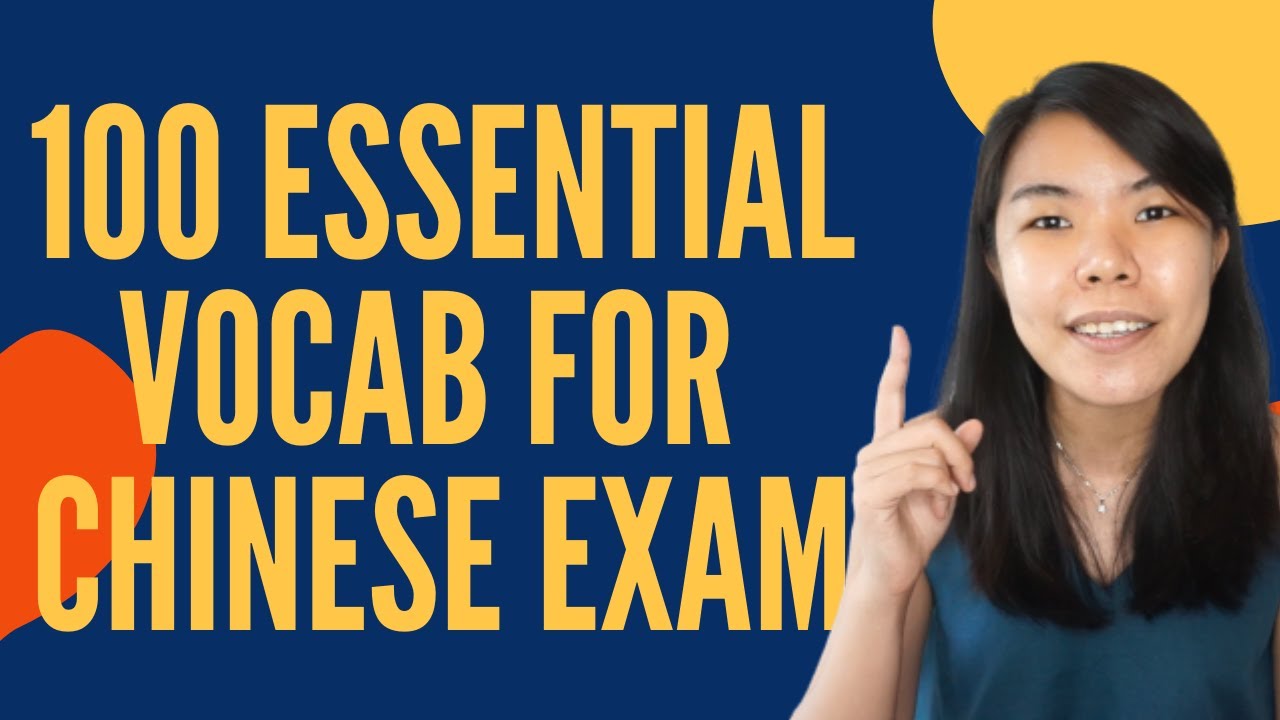
O Level Chinese Exam : 100 Essential Vocab  (and how YOU can come up with them!)  O 水准华文考试词汇
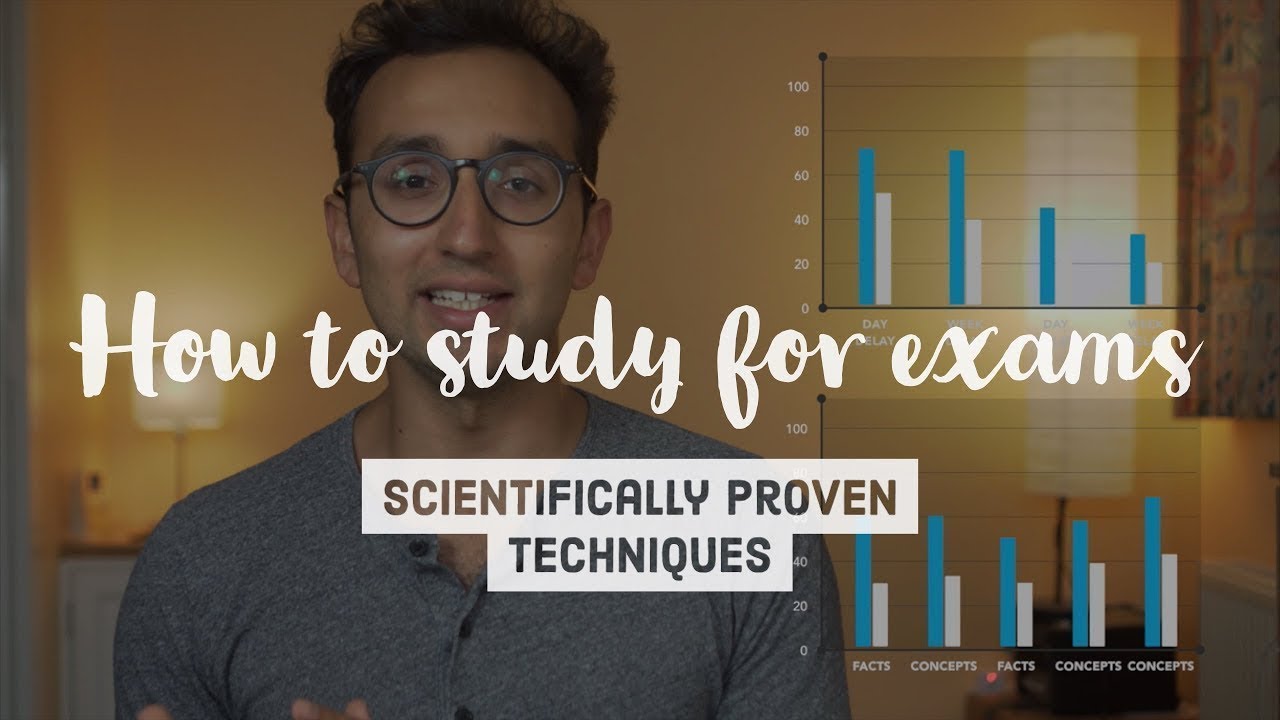
How to study for exams - Evidence-based revision tips

Helpful Secondary Resources for Students
SECONDARY FREE Test Papers
Available For Download!

MindFlex has specially curated Exam Papers from Top Schools to download & practice. All Levels & Subjects Available.

100% FREE, Updated & Reliable!

practice free test papers with your tutor
Affordable Tuition Rates

Home Tuition Rates Singapore 2026

Part-Time
Tutors

Full-Time
Tutors

Ex/Current
MOE Teachers

Pre-School

$25-$35/h

$40-$50/h

$55-$70/h

Primary 1-4

$25-$35/h

$40-$45/h

$55-$70/h

Primary 5-6

$30-$40/h

$40-$55/h

$60-$80/h

Sec 1-2

$30-$45/h

$45-$55/h

$60-$85/h

Sec 3-5

$35-$45/h

$45-$65/h

$70-$95/h

JC

$40-$55/h

$65-$90/h

$90-$130/h

IB

$40-$55/h

$65-$90/h

$90-$130/h

IGCSE / International

$30-$55/h

$45-$85/h

$60-$120/h

Poly / Uni

$40-$65/h

$60-$95/h

$100-$130/h

Adult

$30-$45/h

$40-$65/h

$70-$100/h


Our home tuition rates are constantly updated based on rates quoted by Home Tutors in Singapore. These market rates are based on the volume of 10,000+ monthly tuition assignment applications over a pool of 60,000+ active home tutors.