


Introduction
You have probably seen this before. Your child sits down to revise English, flips past composition and comprehension quite calmly, then gets stuck at a question asking for an email, letter, report, or speech. Suddenly the confidence disappears. “I know what I want to say, but I don’t know how to write it.”
If you have ever wondered, what is situational writing, you are definitely not alone. Many Singapore parents understand the broad parts of an English paper, but situational writing can feel less familiar because it is not just about writing well. It is about writing the right thing, in the right way, for the right person.
In simple terms, situational writing is a functional writing task. Students must write for a clear purpose, to a specific audience, in an appropriate format and tone. In Singapore English exams, it is not enough to produce grammatically correct sentences. Students also need to read the question carefully, identify what is required, and cover every task detail. That is why a child can have decent English and still lose marks here.
This guide explains what situational writing is, how it is tested in Singapore, and how students can approach it more confidently at both primary and secondary levels.
Key Takeaways
- Situational writing is practical writing with a purpose. Students are asked to write something realistic, such as an email, letter, report, or speech, based on a given situation and audience. The task is meant to test communication in context, not creative storytelling.
- Marks are often lost through misunderstanding the task, not weak English alone. A student may write fluent sentences but still do badly if they miss bullet points, use the wrong tone, or choose the wrong format. This is why careful reading matters as much as language ability.
- The question tells you almost everything you need. The purpose, audience, context, and required content are usually clearly stated, but many students rush and overlook small details. A missed instruction can affect the whole response.
- PSLE and secondary expectations are different. Upper primary students are usually expected to handle common formats clearly and accurately, while secondary students face broader task types and more nuanced tone control. The core skill is the same, but the demands increase with level.
- Format matters, but content coverage matters even more. Knowing where to place the subject line or sign-off helps, but strong marks depend on addressing all required points meaningfully. A neat format cannot make up for missing content.
- Memorising model answers is not enough. Many students can copy a format from memory, yet freeze when the scenario changes slightly, because they have not learnt how to adapt to purpose and audience. Flexible thinking is more useful than rigid recall.
- Regular practice with feedback makes a visible difference. When students review why marks were lost, especially for tone, omission, and weak elaboration, situational writing becomes much more manageable. Focused correction is often more effective than doing many worksheets blindly.
What Situational Writing Means In Singapore Exams
What is situational writing in simple terms?
When parents ask what situational writing means for primary or secondary school English, the clearest answer is this: it is writing based on a real-life context. Instead of asking students to invent a story, the exam gives them a situation and a task.
A student may need to write:
- An email to a teacher explaining a class activity.
- A letter to the principal suggesting an improvement.
- A report about an event.
- A speech for a school assembly.
- A proposal for a school project.
What makes this different from composition is simple. The student is not free to write anything they like. They must respond to the exact situation given, and that means purpose, tone, and content all matter.
Why schools and exams use it
Situational writing tests practical communication. In everyday life, we do not only write stories. We also write to inform, request, persuade, explain, or report. That is why the English syllabus in Singapore includes functional writing skills. You can read more about the broader English Language approach at MOE’s English Language and Literature page.
In school, this matters because students are being tested on more than language accuracy. They are also being tested on whether they can communicate appropriately in context. A child may know strong vocabulary, but if they write to a principal the way they would text a friend, marks will still be affected.
Why students often find it harder than expected
Situational writing looks short, and that can be misleading. Many students assume it is the easier part of the paper. In reality, it is often where avoidable marks are lost.

Tutors often notice the same pattern. A student starts quickly, feels quite sure of the answer, then realises near the end that one required point was never included. By then, the response may already be too cramped or messy to fix properly.
Another issue is confusion from mixed practice. One worksheet teaches letter format, another focuses on email writing, and a model answer from somewhere else uses a very different tone. Under exam stress, especially during PSLE revision or end-of-year exam season, everything can blur together.
How To Read The Question Before You Start Writing
Focus on purpose, audience, format, and task details
If you want to know how to answer situational writing questions well, the first skill is not writing. It is reading the question properly.
Every situational writing task gives clues about four things, and these four things shape the whole response.
Take a simple example. If the question says the student is writing to the school’s discipline master to explain an incident and suggest how to prevent it in future, the purpose is explanation plus suggestion, the audience is a school authority figure, and the tone should be respectful and clear.
Why bullet points matter so much
Many students treat bullet points as ideas to mention if possible. That is usually a mistake. In most school settings, those prompts are not optional. If the task asks for three reasons, one problem faced, and two suggestions, each one needs to appear clearly.
A common pattern among students is that they think they have covered a point, but on paper it only appears vaguely. They may imply that an event was badly organised, but never state one specific issue directly. The examiner cannot give full credit for something that is only hinted at.
A practical pre-writing habit
Before writing, spend one minute underlining:
- Who you are in the scenario.
- Who you are writing to.
- What format is required.
- What each bullet point is asking for.
That one minute can save far more marks than a few extra minutes of rushed writing later.
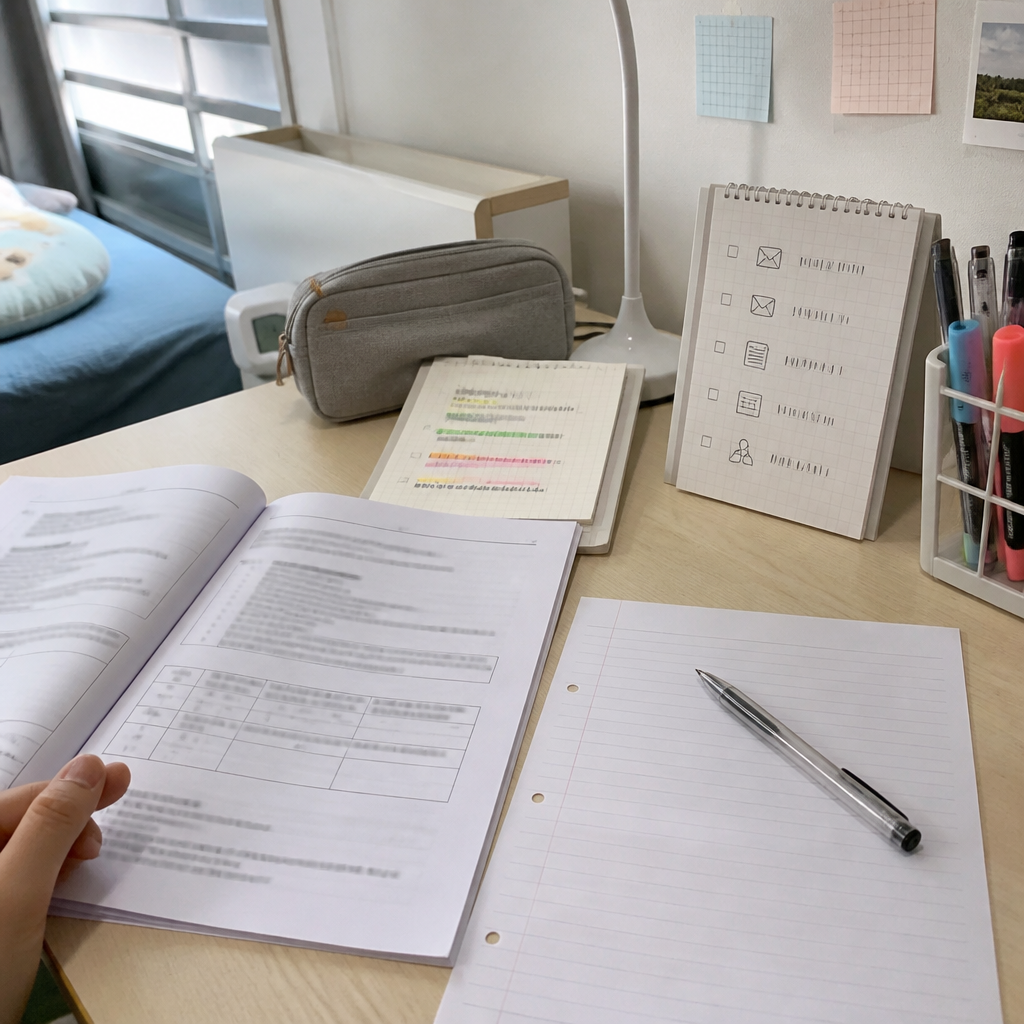
A useful extension is to jot a tiny plan beside the question. For example, if there are four content points, write one keyword for each. This reduces the chance of forgetting a point halfway through. It also helps students keep their paragraphs balanced instead of over-explaining the first idea and rushing the last one.
Situational Writing For Primary School And PSLE
What upper primary students are expected to do
When families ask about situational writing for primary school English in Singapore, they are usually thinking about Upper Primary, especially P5 and P6. At this level, the main expectation is clarity.
Students need to understand the scenario, use the correct format, cover all content points, and write in a tone that fits the audience. For PSLE preparation, students commonly practise writing emails and letters. School papers may also introduce other simple functional formats depending on the school’s internal assessment style. The exact paper structure should always be checked against current official information at SEAB’s PSLE page.
What format matters for PSLE
When parents search for the situational writing format for PSLE English, they are often hoping for a fixed template. That is understandable. A template feels safe.
Still, format helps only up to a point. It gives structure, but it does not automatically secure marks. For Upper Primary, students usually need to know how to present the opening, subject line where needed, body paragraphs, and suitable closing. But if a child depends too much on memorised lines, even a small change in the task can throw them off.
A neat greeting cannot make up for missing content. A correct sign-off cannot rescue weak task fulfilment.
A simple upper primary example
Task: You are the class monitor. Write an email to your form teacher about a class recycling project. Include:
- why the class started the project
- two activities done
- one problem faced
- how the teacher can help
Example response:
To: Mdm Lee
Subject: Our Class Recycling Project
Dear Mdm Lee,
I am writing to update you on our class recycling project. We started this project because many pupils noticed that paper and plastic bottles were being thrown away carelessly after recess. We wanted to keep the classroom cleaner and help the environment.
So far, our class has carried out two activities. First, we placed labelled recycling boxes at the back of the classroom. Second, we took turns reminding our classmates to separate recyclable items from general waste.
However, we faced one problem. Some pupils were unsure about what could be recycled, so they placed food wrappers and used tissues into the recycling boxes.
Could you please help us by giving a short explanation during form teacher period? This would help everyone understand the recycling rules better.
Thank you.
Yours sincerely,
Amir
This works because every bullet point is clearly covered, the purpose is easy to follow, and the tone suits a teacher. At primary level, that often matters more than fancy vocabulary.
A weaker version of the same answer would usually fail in predictable ways: it might mention recycling in general but forget the problem faced, or it might list activities without explaining why the project started. This is why primary students benefit from learning to check content coverage line by line before they hand in their work.
What Changes In Secondary School
Broader formats and stronger tone control
Secondary students often face a wider range of task types. Besides emails and letters, they may encounter reports, speeches, articles, proposals, or forum posts, depending on school level and assessment style.
At this stage, expectations rise in two main ways.
A task may ask students not only to describe an event, but also evaluate it and make recommendations. That shift catches many students off guard.
Common secondary-level struggles
One recurring issue is over-casual writing. A Secondary 1 or 2 student may understand the content but still sound too chatty for the audience. Another common problem is shallow elaboration. The point is mentioned, but not developed enough to feel complete or convincing.
Then there is the opposite problem. Some students become too stiff because they memorise formal phrases from model answers. The writing sounds polished on the surface, but unnatural or mismatched to the task. A speech for schoolmates should not sound like a formal complaint letter.
Secondary students also need to handle transitions more smoothly. Instead of simply listing points, they should show logical flow: what happened, why it mattered, what problem arose, and what should be done next. That extra layer of organisation often separates an average response from a stronger one.
How To Score Better In Situational Writing
Start with the situation, not your memory
A lot of students revise by memorising openings and sign-offs. That is understandable, especially when exams feel stressful. But memorised lines can become a trap when the question changes slightly.
A better starting point is this: What exactly is happening in this question? If the task is about writing to a teacher after a class event, the response should sound different from a speech to schoolmates encouraging participation. Same paper, different communication goal.
Build your response around the bullet points
The safest way to structure a response is to let each required point guide the body of the writing. If the task asks for a reason, activity, problem, and suggestion, those ideas should each appear clearly, usually in separate sentences or short paragraphs.
This keeps the response organised. It also helps students who tend to ramble or drift away from the task.
Match tone to the relationship
Tone depends on who is receiving the writing.
- Writing to a friend allows warmth and informality.
- Writing to a teacher requires respect without sounding awkwardly stiff.
- Writing to a principal, organisation, or public audience usually needs a more formal and polished style.
A useful check is this: would this sentence sound right if read aloud in front of that person? If not, it probably needs adjusting.
Leave time for a final check
One of the easiest ways to gain marks is to reserve two or three minutes at the end for checking. Students should ask themselves:
- Did I answer every bullet point?
- Does my tone suit the reader?
- Did I use the correct format?
- Are there any obvious grammar or spelling errors?
This final scan is especially helpful for catching missing details such as a forgotten subject line, an unclear suggestion, or a sentence that sounds too informal.
If your child keeps losing marks despite practising, targeted feedback can help more than more worksheets. A tutor who can spot recurring issues with tone, format, and content coverage may help them improve faster. You can learn more about our tutors if you want support focused on English writing skills.
Common Mistakes Students Make
Here are the mistakes that come up again and again in school papers:
Practical Tips To Improve
For families looking for realistic ways to improve situational writing in English exams, these strategies work well:
- Practise identifying task requirements before writing. Even a short question a few times a week helps. A child can identify format, purpose, audience, and content points without always writing the full answer.
- Review marked scripts for repeated mistakes. If the same issue keeps appearing, such as weak tone or incomplete content, that matters more than doing many fresh practices without reflection.
- Write short but complete responses first. A concise answer that covers every point is better than a long answer with gaps. This is especially helpful for students who write slowly.
- Compare stronger and weaker sample answers. This helps students notice what clear specifics, suitable tone, and proper structure actually look like.
- Practise realistic school-based topics. Topics about school events, VIA, CCA activities, class projects, or exam preparation tend to feel more familiar and easier to handle in Singapore exam contexts.
- Build a small bank of adaptable phrases. Instead of memorising full essays, students can learn flexible lines for thanking, requesting, suggesting, or reporting. These are easier to adapt across different scenarios.
Frequently Asked Questions
Is situational writing the same as composition?
No. Composition is usually more open-ended and imaginative or reflective. Situational writing is task-based and functional. It asks the student to respond to a given context, audience, and purpose.
How many formats must students know for situational writing?
Students should be familiar with the formats commonly taught at their level, such as email and letter in primary school, and a broader range like report, speech, or proposal in secondary school. Still, format alone is not enough. They also need to understand how tone and content change with the task.
What if my child has good English but still scores poorly for situational writing?
That happens more often than parents expect. The issue is usually not vocabulary or grammar alone. It may be missed bullet points, weak audience awareness, or misunderstanding the task. In many cases, the child needs more precise correction, not just more writing practice.
Should children memorise model answers?
Memorising a few useful phrases and knowing the structure can help, but full model answers often backfire. Once the exam task changes, the memorised response may no longer fit. It is usually better to learn how to adapt than to recite.
How can parents help at home without causing more stress?
Keep it simple. Ask your child who they are writing to, why they are writing, and what points must be included. That short conversation is often more helpful than correcting every grammar mistake immediately, especially on tired weekday evenings when everyone is already stretched.
Conclusion
So, what is situational writing? In Singapore exams, it is a practical writing task that tests whether students can respond clearly and appropriately to a specific situation. They need to understand the purpose, identify the audience, use the correct format, maintain the right tone, and cover every required point.
For Upper Primary and PSLE, the focus is often on clear format and full task coverage. For secondary students, expectations widen to more formats and more nuanced tone and elaboration. Across both levels, the biggest mark losses usually come from avoidable mistakes such as rushing the question, missing bullet points, or writing in a tone that does not fit.
The encouraging part is this. Situational writing becomes much less intimidating once students know what to look for. With focused practice, annotated examples, and careful review of common mistakes, they can learn to approach these questions with far more confidence. If your child needs clearer guidance and personalised support, you can learn more about our tutors or explore our English tuition options.