


Introduction
If your child keeps coming home saying comprehension is “so unpredictable”, that frustration will probably sound very familiar. Many Singapore students do the “right” things on paper. They revise vocabulary, complete assessment book practices, and still lose marks in English Paper 2. After a while, it starts to feel discouraging for everyone.
Usually, the issue is not laziness. It is how the revision is being done.
In Singapore exams, comprehension tests a mix of skills, including vocabulary in context, literal understanding, inference, language use, and for some levels, summary. That is why improvement rarely comes from last-minute drilling the night before a school exam, PSLE, or O-Level paper. A child may read the passage once, underline randomly, rush the questions, and assume checking the answer key is enough. Then the same mistakes appear again the next week.
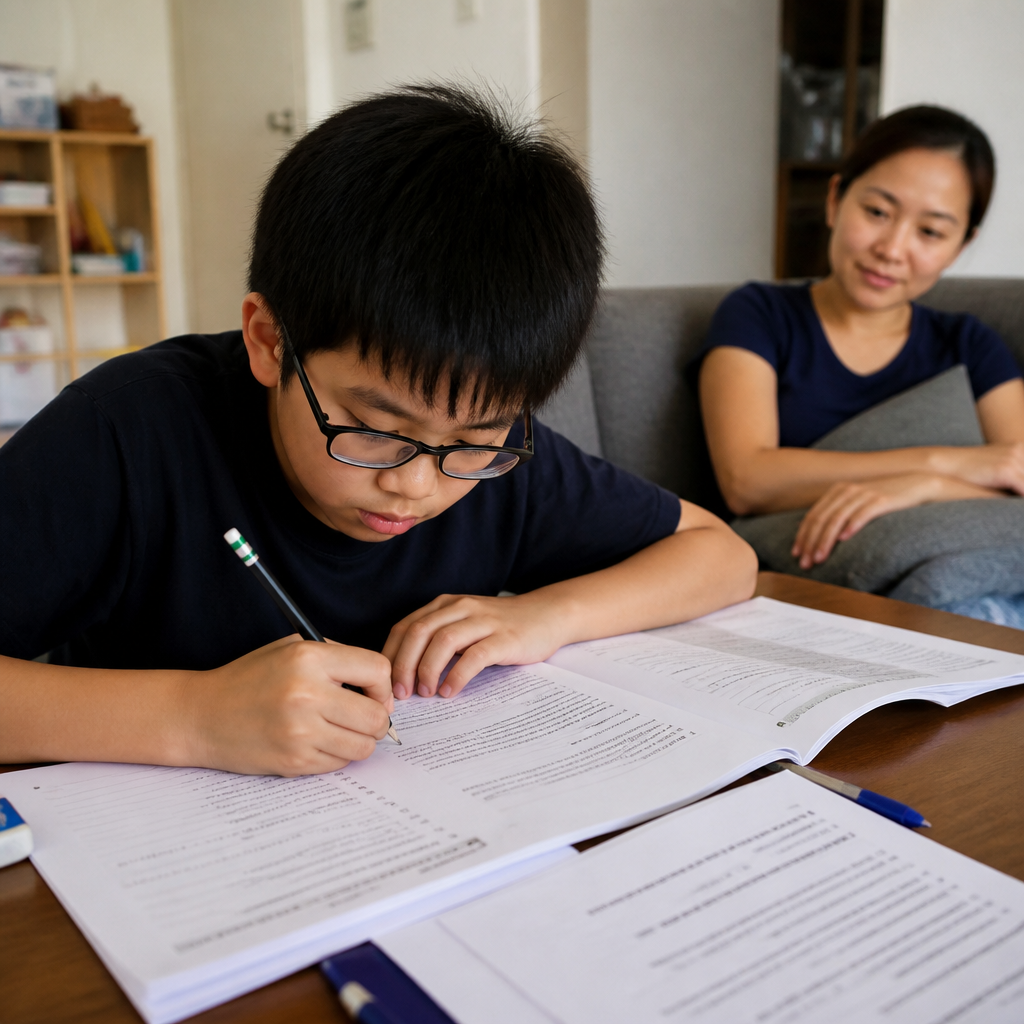
This guide focuses on practical ways to study and practise English comprehension at home in the Singapore context, so students and parents can build clearer routines, spot patterns in lost marks, and prepare with more confidence.
Key Takeaways
- Comprehension improves through review, not just exposure. Doing many passages without checking why marks were lost often leads to repeated mistakes. Real progress comes from analysing errors closely and noticing whether the issue is inference, careless lifting, weak vocabulary, or incomplete answers.
- Active reading matters more than passive reading. A student who circles clue words, tracks tone, and notices shifts in ideas usually understands the passage better than one who simply reads from start to end. This habit is especially useful in English Paper 2, where small details often affect marks.
- Question types reveal what skill is being tested. Literal, vocabulary, inference, language use, and summary questions require different kinds of thinking, even if they all come from the same passage. Recognising the question type helps students choose a better answering method.
- A mistake log can make revision less frustrating. Instead of saying “I always get comprehension wrong”, students can see whether the real issue is poor answer precision, missing keywords, weak inference, or not reading the question carefully enough.
- Primary and secondary students need different routines. Younger students often need shorter, guided practice, while older students need deeper review of answer precision, inference, and time management. A routine that suits the child’s level is usually more sustainable.
- Parents can support without turning revision into nightly conflict. The best help is often structure, calm discussion, and helping a child notice patterns, not hovering over every answer or correcting everything immediately.
- Targeted feedback can speed up improvement. When a student keeps making the same comprehension errors, a good tutor can help identify patterns and sharpen answer precision with personalised guidance.
Why English Comprehension Feels Hard For Singapore Students
English comprehension often feels harder than vocabulary spelling or grammar drills because the answers are not always obvious. A child may come out of school insisting, “But I understood the passage.” Then the script comes back with many marks lost. That gap can feel upsetting, especially when exams are near and everyone is already stretched by homework, CCA, and tuition.
What English Paper 2 comprehension is really testing
In Singapore English exams, comprehension is not just about reading a passage and knowing what happened. It tests whether the student can understand meaning accurately, identify details, infer unstated ideas, explain vocabulary in context, and sometimes summarise key points. At upper primary and secondary levels, open-ended comprehension also demands precise phrasing. A student may roughly know the idea but still lose marks for missing one key detail.
That is why improving English comprehension for exams is not the same as simply reading more books and hoping things will somehow click. Reading widely helps, but exam comprehension also requires close reading, disciplined answering, and careful review.
Why students struggle even when they practise
Tutors often notice the same pattern. Some students complete many passages, but they review far too quickly. They check the answers, see a tick or cross, and move on. Nobody pauses to ask what actually went wrong.
Was the answer incomplete? Did the student lift blindly? Was the tone misunderstood? Did they miss the word “why” and answer “what” instead?
Another common issue is false confidence. A student recognises the topic, feels familiar with the story, and assumes they understand everything. Then they miss contrast words like “however” or “despite”, even though those words completely change the meaning. In comprehension, one missed clue can affect several answers.
A further difficulty is that comprehension combines multiple micro-skills at once. A student may have decent vocabulary but weak inference. Another may understand the passage but write answers too vaguely. Because the weakness is not always obvious, revision can feel random unless the student learns to break performance down into smaller parts.
Read Passages Actively Before Answering
If you want to know how to study for English comprehension effectively, start with the reading itself. Many students lose marks before they even begin answering because they read too passively.
What active reading looks like
Active reading does not mean underlining every line until the page looks busy. It means noticing the structure and clues in the passage.
A student can mark:
- Names, places, or events that may appear in literal questions.
- Contrast words such as “but”, “yet”, and “although”.
- Emotional clues that reveal tone, such as “hesitated”, “snapped”, or “relieved”.
- Repeated ideas that may matter for theme or summary.
These clues are often where marks are won or lost.
A Primary 5 child might lightly circle words that show feelings. A Secondary 3 student might track how the writer’s attitude changes across the passage. The level is different, but the habit is the same. They are reading with purpose, not just moving their eyes across the page.
Annotate for meaning, not for decoration
Some students highlight half the passage and still cannot answer the questions. That usually happens when annotation becomes a colouring exercise instead of a thinking tool.
Better annotation is brief and useful. If a paragraph shows that a character first felt excited, then embarrassed, that shift should be marked. If a paragraph gives reasons for an action, note that. These are the details that often matter later.
For parents wondering about the best way to study English comprehension passages at home, one practical habit is to ask the child to pause after each paragraph and say, in one sentence, what just happened or what the main point was. If they cannot do that, the problem may not be the questions yet. It may be that the paragraph was not fully understood in the first place.
Recognise The Question Type And Answer Accordingly
A common pattern among students is that they treat all comprehension questions the same way. That is where trouble starts. Students do not need a rigid template for every question, but they do need to recognise what skill is being tested.
Learn the broad question categories
In Singapore exam papers, common comprehension question types include:
- Vocabulary in context, where students explain a word or phrase based on how it is used in the sentence.
- Literal questions, where the answer can be found directly in the passage.
- Inference questions, where the answer is suggested but not stated exactly.
- Language use questions, where students explain the effect of a phrase, image, or expression.
- Summary tasks, more common in higher levels, where students identify and reorganise key points clearly and concisely.

This is easier to scan when laid out clearly:
A child who answers every question with the same method will usually struggle. Blind lifting may work for a literal question, but it often fails badly for inference.
Read the command words carefully
This sounds basic, but many marks disappear here. “Why”, “how”, “what suggests”, “in your own words”, and “give two reasons” all require slightly different responses.
Very often, the student actually understands the passage. The marks are lost because the question was not fully answered. One correct reason is given, but the second is missing. The response addresses “what” when the question asked “why”.
That is why strong exam technique starts with reading the question accurately, not with memorising model phrases. If your child keeps losing marks this way, get them to underline the task words in every practice. It is a small habit, but it can prevent very avoidable mistakes.
Build Vocabulary And Inference Skills The Right Way
Vocabulary and inference are two areas that make comprehension feel “impossible” to many students. They read the sentence, recognise the words, and still do not fully grasp what the writer means.
Review vocabulary in context, not as isolated lists
Memorising long vocabulary lists often sounds productive, but it can be misleading. Comprehension questions test meaning in context, not just memorised definitions.
Instead of copying a dictionary meaning, students should notice how the word behaves in the passage. If “stared” appears in a sentence about a child waiting outside the principal’s office, the word may suggest anxiety or dread, not just the physical act of looking.
That kind of contextual sensitivity is what exam questions often reward. This is especially useful for primary school students, because younger learners usually understand words better when they are linked to emotions, actions, and situations.
Inference improves when students justify their thinking
Many students answer inference questions based on instinct. They sense the mood or idea, but they cannot explain why. That is where answers start sounding vague.
A stronger habit is simple. After giving an answer, the student should point to the clue in the passage that supports it.
If the answer is “The boy felt guilty”, the student should be able to identify clues such as avoiding eye contact, speaking softly, or hesitating before replying. Over time, this trains evidence-based reading instead of guesswork. It also helps students write answers that sound more precise.
One useful home exercise is to ask, “Which exact words made you think that?” Even if the child’s first answer is imperfect, this question trains the right habit. In many cases, inference improves not because the child suddenly becomes better at guessing, but because they become better at noticing textual evidence.
Analyse Answer Keys And Keep A Mistake Log
Doing practice is only half the work. Review is where the real learning happens. This is one of the clearest ways to improve English comprehension over time.
Do not just check right or wrong
A weak review sounds like this:
“I got 12 out of 20.”
Then the book closes.
A useful review sounds more like this:
“I lost 2 marks because I copied too much. I lost 1 mark because I missed the second detail. I lost 3 marks in inference because I gave a feeling without supporting evidence.”
That level of detail matters. It turns comprehension from something vague and frustrating into something diagnosable. Once students can name the problem, they are far more likely to fix it.
What to include in a mistake log
A simple notebook or digital document is enough. After each practice, record:
- The question type.
- What the student wrote.
- What the answer required.
- Why marks were lost.
- What to do differently next time.
Here is a simple way to organise it:
For some students, this is the moment revision starts feeling less frustrating. Instead of “I’m just bad at comprehension”, they begin to see a more accurate picture.
This is also where guided help can make a difference. If a student keeps repeating the same answer precision errors, personalised feedback from an English tutor can help them understand exactly what examiners are looking for. Families who want more structured support can learn more about our tutors or explore English tuition options for targeted comprehension guidance.
Create A Weekly Comprehension Routine That Works
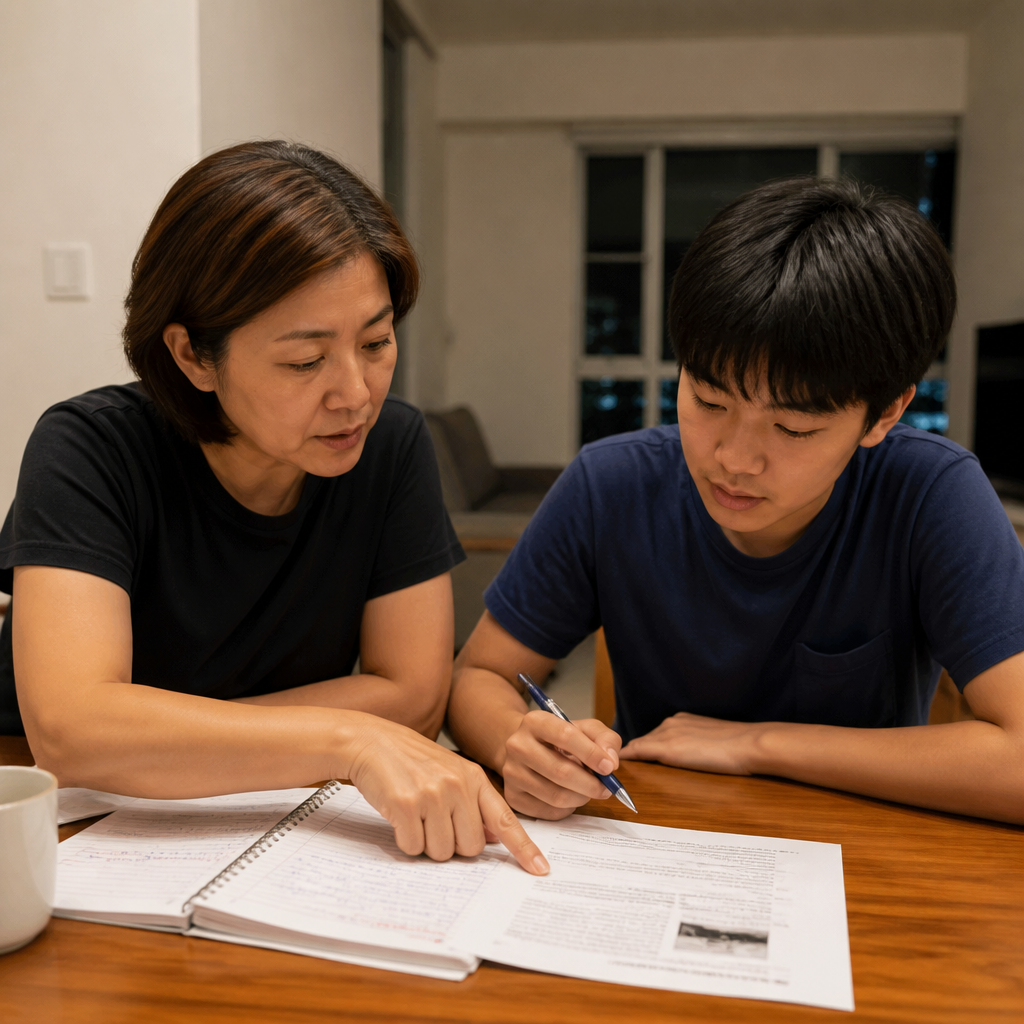
The best way to practise English comprehension at home is usually not through marathon sessions. Most children do better with a steady routine that fits their age, stamina, and school workload.
For primary school students
Primary school students often respond better to shorter, guided sessions. A workable weekly plan could include:
- One passage on a weekday, broken into read, annotate, and answer.
- One short vocabulary review session using words from that passage.
- One weekend correction session with a parent or tutor.
This keeps revision manageable. It also gives the child time to actually process mistakes instead of rushing through too much work at once.
For secondary school students
Secondary students usually need deeper review because the passages and questions become more demanding. A practical weekly routine might include:
- One timed practice for stamina and pacing.
- One untimed practice focused on close reading and annotation.
- One review session using a mistake log.
- One summary or vocabulary-in-context exercise.
By Secondary 3 or 4, many students are already tired from CCA, tests, and other subjects. At that point, forcing a full paper late at night may look disciplined, but it is not always productive. Sometimes a 25-minute focused review of one passage is far more realistic and useful than dragging through a full paper while exhausted.
A good routine should also leave room for redoing old mistakes. If a student got an inference question wrong last week, it is worth revisiting that question a few days later to see whether the reasoning has improved. This kind of spaced review is often more effective than constantly starting fresh with new passages.
Help Your Child Without Making Revision More Stressful
For many families, English comprehension revision becomes tense very quickly. A parent asks, “Why did you get this wrong?” The child shrugs, goes quiet, or gets defensive. Ten minutes later, everyone is frustrated.
If you are wondering how parents can help with English comprehension revision in Singapore, the answer is often to guide the process, not dominate it.
Ask better revision questions at home
Instead of asking, “Why are you so careless?”, try:
- “Which words in the question tell you what to look for?”
- “Can you show me the line that helped you answer this?”
- “Did you lose marks because you did not understand, or because the answer was incomplete?”
These questions shift the focus from blame to thinking. A child who feels attacked will usually shut down. A child who feels guided is much more likely to reflect honestly.
Know when help is becoming pressure
There is a fine line between support and over-management. Some parents end up reading every passage aloud, explaining every answer, and correcting every sentence. In the short term, the homework may look neater. In the long term, the child can become overly dependent.
A better approach is to step in gradually. Sit in for the review, but let the child explain their answer first. If they are stuck, give one clue instead of the whole solution. This often keeps weekday revision calmer and more sustainable.
Frequently Asked Questions
How often should my child practise English comprehension each week?
For most students, two to three focused sessions a week work better than daily drilling. A Primary student may need shorter sessions with more guidance, while a Secondary student may benefit from one timed practice and one deeper review session. What matters most is consistency with proper correction, not just doing more pages.
My child reads a lot but still scores poorly in comprehension. Why?
This is a very common concern. Reading widely helps with exposure to language and vocabulary, but exam comprehension also tests close reading, inference, and answer precision. A child may enjoy reading books and still struggle to identify exactly what a question is asking or how much detail an open-ended answer needs.
Should we keep doing assessment books?
Assessment books can be useful, but only if the review is strong. Problems start when students rush through passage after passage without understanding their mistakes. In many cases, doing fewer practices but reviewing them properly leads to better improvement than simply finishing more pages.
Is tuition necessary for English comprehension?
Not always. Some students improve well with structured home practice and careful review. But if a child keeps making the same mistakes, does not know how to analyse answer keys, or needs help with answer precision, tuition can help make those patterns clearer and revision more targeted.
Where can parents check the latest English syllabus or exam information?
For the latest curriculum information, parents can refer to MOE’s syllabus page. For national exam information, visit SEAB. This is useful when checking the broader exam context for comprehension-related components.
Conclusion
Learning how to study for English comprehension in Singapore is less about chasing quick tricks and more about building better habits. Read passages actively. Annotate with purpose. Recognise the question type. Review vocabulary in context. Practise inference using evidence. Most importantly, analyse every lost mark so the same mistake does not keep returning in the next paper.
For primary and secondary students, comprehension often feels unpredictable because the skill gaps are hidden. Once those patterns become visible through careful review and a realistic weekly routine, progress usually feels much more manageable. Parents do not need to become English teachers at home, but calm structure and better revision conversations can make a real difference.
If your child needs more personalised support, especially with spotting recurring mistakes and improving answer precision, you can learn more about our tutors.