


Introduction
When exams are coming and the mood at home starts to change, many parents know the signs straight away. A child is sitting at the desk, books are open, but nothing much is moving. Or perhaps the familiar line comes out, “I studied already,” yet the marks tell a different story.
That is why this question keeps coming up: how do you study for exams in a way that actually works?
In Singapore, this usually shows up in very real moments, after a weighted assessment goes badly, when prelims are getting close, or when a Primary 6 or Secondary 4 student suddenly realises time feels very tight. If your child does not know where to begin, it does not always mean laziness. Very often, it means they feel overwhelmed, unclear, or stuck in a revision routine that looks busy but is not helping.
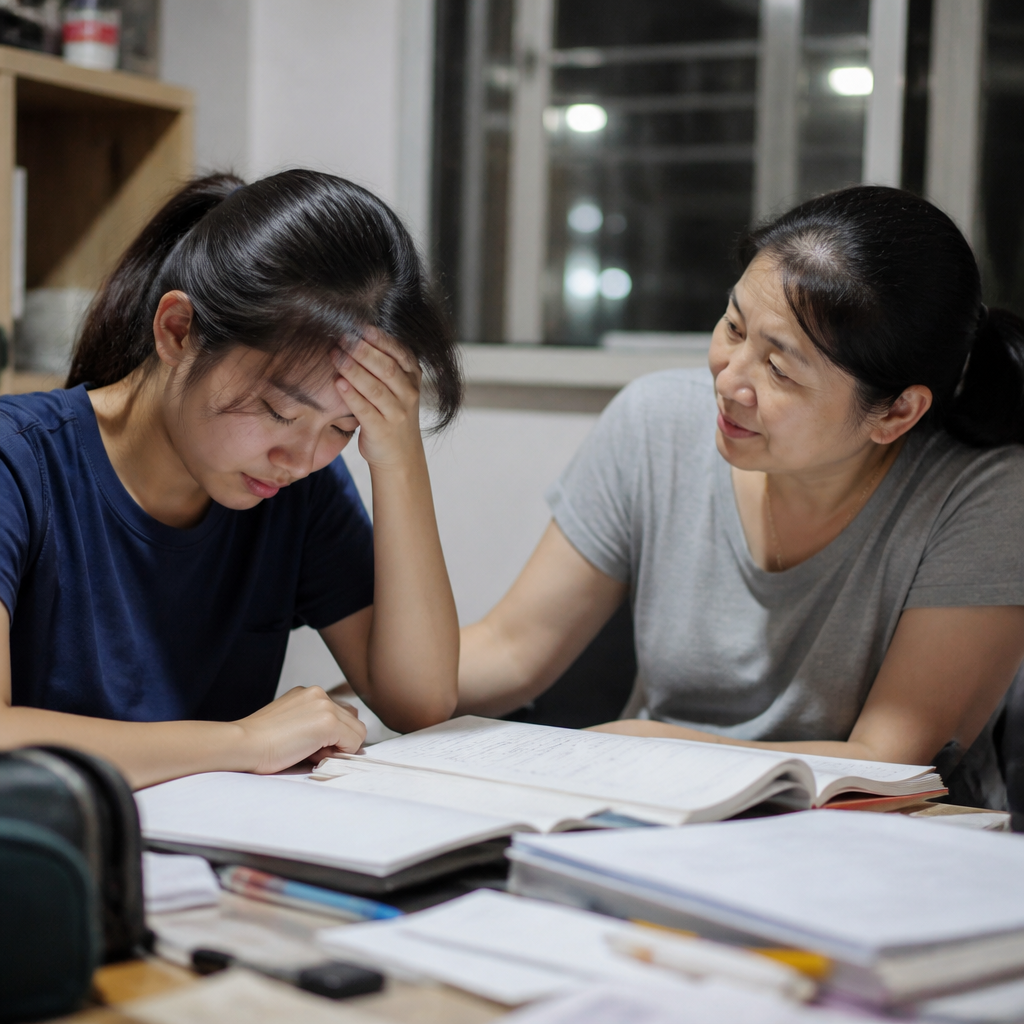
This guide is a practical look at exam revision for Singapore students, whether that means school tests, end-of-year exams, PSLE, or O-Levels. We will compare common revision approaches, show what tends to work better at home, and explain when extra support may help.
Key Takeaways
- Start with clarity, not panic. A good exam study plan begins by listing subjects, topics, and weak areas, not by randomly doing papers every night.
- Compare revision methods honestly. Reading notes feels comfortable, but reviewing mistakes and practising school-style questions usually gives better results.
- A realistic study routine matters more than a perfect timetable. Overloading weekdays often leads to burnout and resistance.
- Parents help most by guiding structure and emotional calm. Clear routines, shorter check-ins, and calm accountability tend to work better than nagging.
- School papers are valuable when used properly. Students need to review why marks were lost, not just collect papers.
- Stress management is part of exam preparation. A child who is anxious or exhausted may study for hours but retain very little.
- Tuition is one support option, not the first solution for every child. The key is matching the support to the actual problem.
Where To Start When Exam Revision Feels Overwhelming
A lot of students freeze at the starting line. Their files are messy, their notes are incomplete, and every subject suddenly feels urgent. In that state, telling a child to “just revise” usually makes things worse.
A better question is much simpler: what exactly should be revised first?
Random revision vs focused revision
Random revision often looks hardworking on the surface. A student flips through Science notes on Monday, does one Math paper on Tuesday, memorises Chinese 词语 on Wednesday, then by Thursday feels tired and lost because nothing feels connected.
Focused revision is quieter, but usually far more effective. It starts by sorting each subject into three groups: confident, shaky, and not understood.
For example, a Secondary 2 student may realise Algebra is manageable, but Geometry proofs and graph questions keep causing mistakes. That changes the revision plan straight away. Instead of repeating what already feels familiar, the student now knows where attention is actually needed.
This is one of the most practical answers to how to study for exams. Start by identifying weak topics, not by trying to cover everything at once.
“I studied already” vs evidence-based checking
Many students genuinely feel they have revised because they reread notes or watched explanation videos. The problem is that familiarity can feel like mastery when it is not.
Effective exam preparation needs some form of evidence. Can they do the question without help? Can they explain the concept clearly? Can they avoid making the same mistake again?
Even at home, parents can check this simply. After revision, ask your child to do five questions from that topic, or explain one concept out loud without looking at notes. That gives a much more honest picture than asking, “Finished studying?”
How To Organise Subjects And Weak Topics Before Exams
Once the starting point is clearer, the next challenge is deciding what to revise and in what order. This matters because many children either keep doing the subjects they already like, or keep avoiding the topics that make them uncomfortable.
Subject-by-subject planning vs urgency-based planning
A subject-by-subject plan is easy to understand. Monday for English, Tuesday for Math, Wednesday for Science. For organised students, this can work well.
But for many children, urgency-based planning is more useful. That means ranking topics by weakness and exam importance, not just by timetable.
Take a Primary 6 student preparing for PSLE. If Science open-ended questions and Math problem sums are both weak, those areas deserve earlier and repeated attention. Spending two full evenings rereading easier topics may feel productive, but it does not solve the actual problem.
Broad goals vs specific goals
“Revise Science” sounds fine, but it is too broad. Many children delay starting because they do not know what “revise” is supposed to mean.
Specific goals are much easier to act on:
- English: Correct the last comprehension worksheet and review why answers lost marks.
- Math: Redo eight fraction questions from the school file.
- Science: Revise one topic and complete one practice section.
Students usually procrastinate less when the task is small enough to start, but specific enough to finish.
How To Study At Home Without Wasting Time
Home revision sounds ideal in theory. In reality, it competes with screens, tiredness, unfinished homework, and family stress. By late evening, after school, CCA, dinner, and maybe tuition, even a motivated child may have very little energy left.
Long study hours vs a workable home routine
Long hours can look impressive, but they do not always lead to better learning. A child who sits at the desk for three hours while drifting in and out of focus is not revising well.
A realistic routine usually works better.
If you are trying to create a home study routine for exams, begin with the week as it really is. Mark out school days with CCA, tuition sessions, heavier homework nights, and family commitments. Then fit in shorter revision blocks around that.
For many students, 30 to 45 minutes of focused revision on one topic is more realistic than forcing a marathon every evening. A Secondary 3 student with CCA on Tuesday and Thursday may only manage a brief review on those nights, but can do deeper revision on Saturday morning and Sunday afternoon.
Passive revision vs active use of school materials
One of the best ways to improve exam revision at home is to use what the school has already given. This includes topical worksheets, corrections, class tests, weighted assessments, and teacher feedback.
Many students keep these papers but never really study them. That is a missed opportunity.
If your child keeps losing marks in similar ways, careless units in Science, missing keywords in Social Studies, weak explanation in English composition, then the school papers are already showing what needs work. A useful home routine is not just “do more papers”, but review old mistakes, then try similar questions again.
If that process still feels difficult to manage alone, some families choose to get structured support from a tutor who can help prioritise weak areas and keep revision on track. If you want to compare suitable support options, you can compare our tutors based on your child’s level and exam needs.
How Parents Can Support Exam Preparation Without Raising Stress
Parents care deeply, but when everyone is tired, care can easily come out sounding like frustration. The child hears nagging. The parent feels ignored. The whole evening becomes tense.
Monitoring everything vs guiding the process
When thinking about how parents can help children study for exams, more supervision is not always better. Some children shut down when every revision session starts to feel like an interrogation.
Guiding the process is usually more effective than monitoring every minute.
- Ask what they are revising tonight.
- Ask which topic feels hardest right now.
- Ask what they will check after finishing.
That kind of check-in builds accountability without turning revision into conflict.
Pressure vs structure
Pressure can create short bursts of studying, but over time it often weakens confidence. A child who keeps hearing, “If you continue like this, how?” may become more avoidant, not more disciplined.
Structure tends to work better. Keep revision materials in one place. Set a regular study slot. Reduce distractions during that time. If your child is in primary school, sitting nearby while they begin may help them settle. If they are older, a short check at the start and a quick review at the end may be enough.
How To Use School Papers And Practice Papers Effectively
When exams are near, many families immediately turn to assessment books and stacks of papers. Practice is useful, but not all practice helps in the same way.
Doing more papers vs learning from completed papers
Doing ten papers badly is less useful than doing three papers carefully and reviewing them properly. Students often rush through papers, mark them, feel upset by the score, then move on without understanding the errors.
A better approach is mistake review. If a child got a Math question wrong, was it because they did not know the concept, misread the question, forgot a method, or made a careless step? Those are different problems, so they need different responses.
Across subjects, the same idea applies:
- English comprehension: Check whether the answers were vague, unsupported, or copied without understanding.
- Science open-ended: Look at whether keywords or linking explanations were missing.
- Humanities: Ask whether the issue was content knowledge, paragraph structure, or time management.
Prelim papers vs school papers vs textbook revision
Prelim papers can be useful, especially for upper secondary students preparing for national exams. But they should not be the first thing for every student.
Some children jump into difficult papers too early, get discouraged, and start believing they are simply bad at the subject. School worksheets and corrected tests are often a better starting point because they are closer to what the student has already learned. Once the core gaps are smaller, broader practice papers become much more meaningful.
For exam formats and national assessment context, parents can refer to MOE’s assessment resources and the Singapore Examinations and Assessment Board.
How To Reduce Exam Stress For Students In Singapore
Revision is not only academic. It is emotional too. A child may know the content, but still underperform because of panic, exhaustion, or fear of failure.
Healthy concern vs damaging stress
A little tension before exams is normal. But when stress becomes constant, it gets in the way.
Warning signs include frequent tears, blanking out during practice, stomach aches before school, unusually short tempers, or avoiding revision altogether. When this happens, reducing exam stress cannot be treated as a separate issue. It is part of revision itself.
Sometimes the revision load needs to be simplified. Instead of saying, “You must finish all this tonight,” it may work better to say, “Let’s choose the two most important tasks.”
Reassurance alone vs practical emotional preparation
Reassurance matters, but on its own, it can feel empty. Saying “don’t worry” without helping the child organise their work often does not calm them much.
Practical emotional preparation usually looks like this:
- Packing the materials needed for the next day
- Sleeping at a reasonable hour
- Reducing last-minute cramming
- Keeping conversations calm on exam mornings
Sometimes the most effective exam help is not one more worksheet, but stopping earlier and protecting rest.
When Extra Help May Be Worth Considering
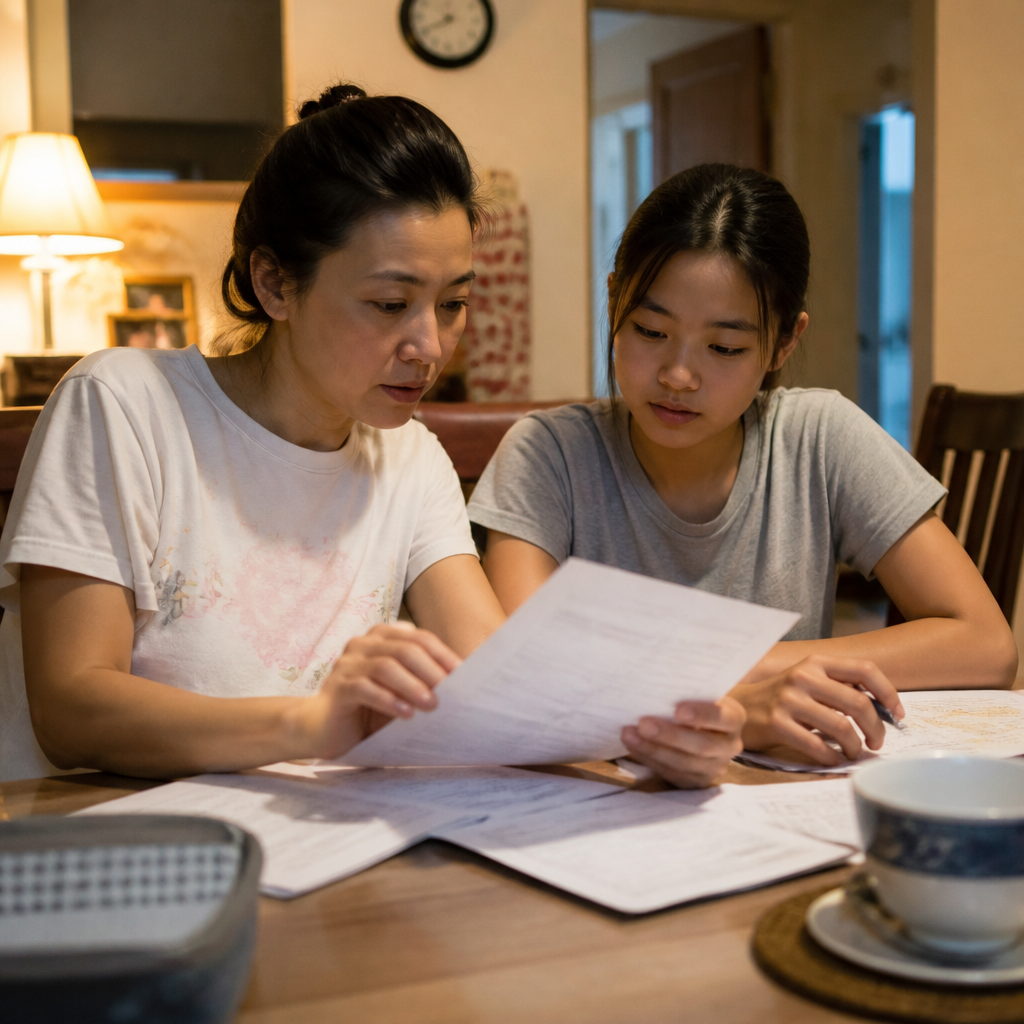
Not every child needs tuition for exam preparation. Sometimes a better home routine and a clearer revision plan are enough. But there are cases where support can make a real difference.
Signs your child may need extra help
A few patterns stand out:
- Your child studies but still cannot explain basic concepts.
- The same mistakes keep appearing across multiple tests.
- Revision sessions keep collapsing into avoidance or arguments.
- Results have been dropping over several assessments, not just one paper.
One disappointing score does not always mean a bigger problem. But when the same gaps keep returning, it is usually a sign that the issue has not been properly addressed.
Waiting it out vs getting targeted support
The more helpful question is whether the problem is persistent and patterned.
If you are wondering when to hire a home tutor for exam preparation in Singapore, a tutor may be useful when content gaps are ongoing, when a child needs one-to-one explanation, or when home revision has become too inconsistent. The goal is not to outsource parenting or guarantee grades, but to give the child clearer teaching and steadier support.
If you would like a practical comparison of suitable options, you can compare our tutors based on subject, level, and the kind of help your child needs.
Frequently Asked Questions
How early should my child start revising before exams in Singapore?
For regular school exams, starting lightly two to four weeks earlier is often more manageable than leaving everything to the last minute. For major exams such as PSLE or O-Levels, revision usually builds over a longer stretch. The exact timing matters less than whether your child has a consistent and realistic revision routine.
What if my child says they studied, but results still do not improve?
This usually means the revision method is not matching the exam demands. Many students read notes and feel familiar with the content, but cannot apply it under test conditions. If there is no clear answer about what they practised or reviewed, the issue may be ineffective revision, not necessarily lack of effort.
What are good exam preparation tips for primary school students at home?
Keep the routine simple. Focus on one or two weak topics at a time, use school worksheets before adding too many extra papers, and avoid very long revision sessions. Primary school children usually respond better to shorter, clearer tasks.
Should my child do many assessment books before exams?
Not necessarily. More materials do not automatically mean better preparation. If your child is not reviewing mistakes from school work, adding more books may just create more unfinished work and more stress.
Is tuition necessary for exam preparation?
Tuition is one option, not a requirement for everyone. It may be useful when there are persistent content gaps, weak discipline, or repeated confusion despite effort. Some children improve with better planning at home, while others benefit from structured external support and accountability.
Conclusion
So, how do you study for exams in a way that is practical, realistic, and less overwhelming?
Start small. Get clear on weak topics. Use school papers wisely. Build a weekly routine that fits real Singapore school life. Review mistakes instead of just counting study hours.
For parents, the goal is not to become a full-time tutor at home. It is to create structure, calm, and consistency.
Exams will always bring some pressure, especially around weighted assessments, prelims, PSLE, and O-Levels. But a child who knows what to revise, why they are revising it, and how to check progress is in a much stronger position than one who is simply studying blindly. If your child still seems stuck, has recurring content gaps, or needs more accountability than home revision can provide, extra support may be worth considering.
You can explore broader tuition support options at Singapore Tuition Teachers or compare our tutors to find a suitable match for your child’s exam preparation needs.