


Introduction
One moment your child is just talking about school, CCA, and the next class test. The next, a subject combination form lands in front of the family and suddenly everything feels bigger than it should. JC, poly, university, future careers, all of it seems to get squeezed into one Sec 2 decision.
If you have been asking what subject combination you should take, you are not overthinking it. In Singapore, upper secondary subject choices do matter. But they do not decide your child’s entire future in one shot.
For many families, the stress comes from not knowing what matters most. Should you choose what your child scores well in now, what keeps more pathways open, or what looks “better” on paper?
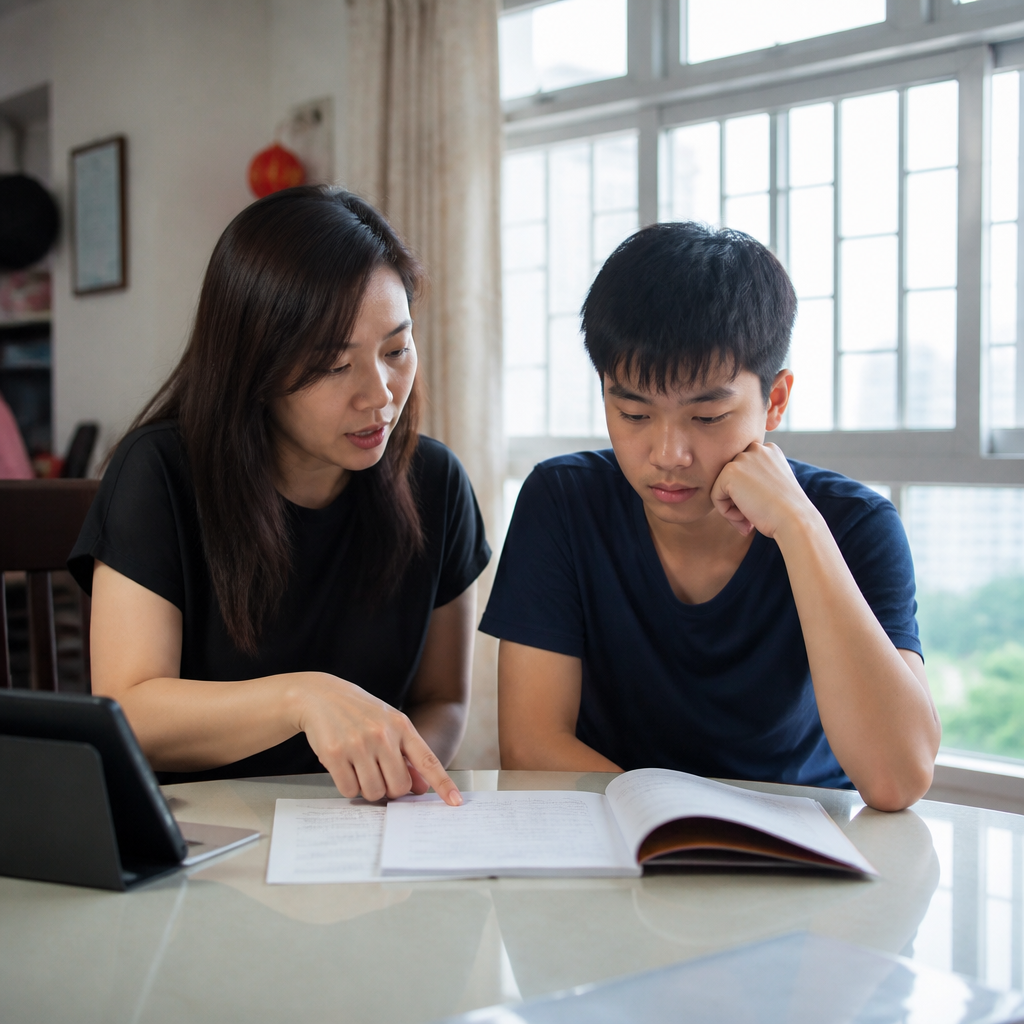
The honest answer is that there is no single perfect subject combination for every student. The best choice usually sits at the intersection of strengths, interest, subject prerequisites, workload tolerance, and school-based options.
This guide is for Secondary 2 students moving into Secondary 3, and for parents who want practical clarity without piling on more pressure. We will look at JC, poly, and “still not sure” situations, plus common mistakes and how to make a confident final choice.
Key Takeaways
- There is no single best subject combination for everyone. A strong fit matters more than copying top scorers or friends. The right combination is one your child can sustain and do well in over two years, not just one that sounds impressive during selection season.
- School-based options matter more than many parents realise. Not every secondary school offers the same combinations. The real decision is not just what looks ideal online, but what is realistically available in your child’s school and what criteria they must meet.
- Strengths and workload tolerance matter as much as ambition. A student may dream of a JC Science route, but if A-Math, Pure Sciences, and heavy memorisation become overwhelming, that choice can backfire and hurt confidence.
- Post-secondary goals should guide the decision, not drive panic. If a student is leaning towards JC, subject prerequisites may matter more. If poly is more likely, relevance and overall performance may matter more than choosing the “hardest” set.
- Pure Science versus Combined Science is not a prestige contest. It affects pace, depth, and future flexibility in some cases. The better option depends on how the student learns and performs, not what sounds more elite.
- Parents help most when they guide calmly. Teenagers usually respond better when parents ask thoughtful questions, compare trade-offs, and avoid turning every discussion into a future crisis.
Start With These 5 Decision Factors
Before looking at JC or poly routes, it helps to pause and answer the real question behind choosing a Sec 3 subject combination in Singapore. Most students do not make poor choices because they are careless. They make poor choices because they focus on only one factor, usually prestige, friends, or fear.

Strengths are not the same as “highest score once”
A common mistake is choosing based on one good exam result. A student may score well in Science in one term because the chapter felt familiar or was heavily drilled in tuition. That does not always mean Pure Science is the right long-term fit.
Look at patterns instead. Does your child usually cope well with abstract concepts? Can they manage both understanding and memorisation? Tutors often notice that students say they “like Science”, but confidence drops when upper secondary brings longer answers, practical skills, and more independent revision.
If you are wondering how to choose a Sec 3 subject combination based on strengths, focus on consistent performance, not one-off highs.
Interest matters because upper secondary is a long haul
Sec 3 and Sec 4 are not short sprints. Interest cannot replace discipline, but it does affect stamina. A student who genuinely enjoys History may push through essay practice and content review more steadily than one who chose it just because friends did.
This matters even more when motivation dips. By the middle of Sec 3, when the novelty wears off and tests start piling up, students usually cope better in subjects they still find meaningful. Interest also affects how willingly a student asks questions, revises on their own, and recovers after a poor result.
Workload tolerance is real
Some subject combinations look excellent on paper but feel crushing by Term 2 of Sec 3. Add CCA, tuition, school projects, and family expectations, and even capable students can start to feel stretched. A common pattern among students is that they do not struggle because they are weak, but because every week feels packed.
Workload tolerance is not laziness. It is about whether a student can manage the pace, revision load, and mental strain over time. A student who can handle one demanding subject may not cope as well when several heavy subjects peak at once.
Subject prerequisites and future pathways matter
This is where many parents become anxious, and understandably so. Some pathways are easier to access if certain subjects are taken earlier. A-Math, for instance, can matter for some JC subject options and can help with preparation for certain poly diplomas.
Still, taking it only because “it keeps doors open” is not always wise if the student is already barely coping in lower secondary Math. Keeping options open sounds safe, but if it comes at the cost of confidence and grades, the trade-off may not be worth it.
School constraints are part of the decision
Every school has its own available combinations, cut-off practices, and internal criteria. Always check the latest school information and official MOE pages such as MOE’s secondary school subject information. What sounds ideal online may not even be offered in your child’s school.
It also helps to read the school’s subject combination booklet carefully. Some schools package subjects in fixed blocks, which means choosing one subject may automatically affect another. That practical detail often matters more than broad online advice.
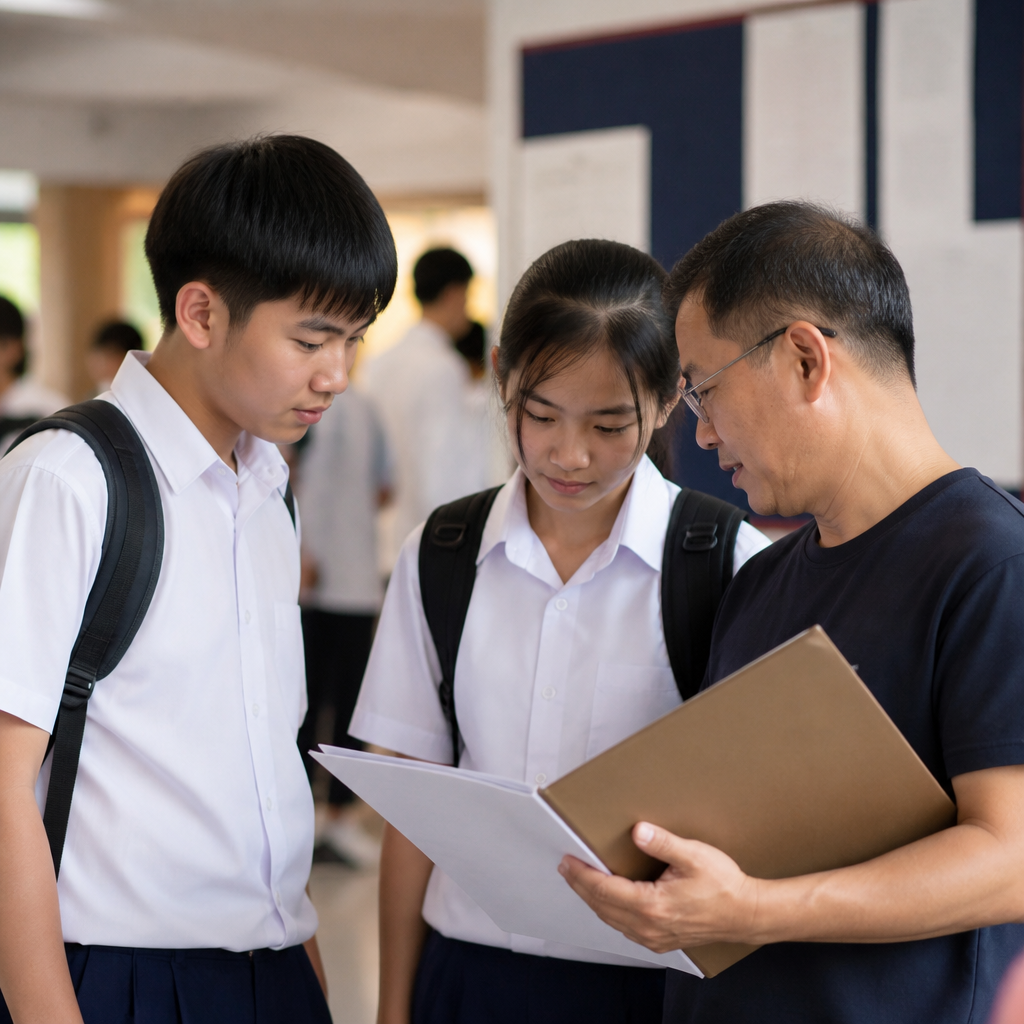
Common Subject Combination Examples In Singapore
Every school offers different combinations, so parents should always check the school’s own subject combination booklet. Still, many upper secondary options fall into a few broad patterns.
If You Are Aiming For JC
For students leaning towards junior college, the question becomes more specific. It is no longer just what subject combination to take, but what gives you a realistic bridge to later JC subject choices.
Choose a combination you can actually score well in
Many families assume the best subject combination for a JC pathway must be the most demanding one. That is not always true. JC admission through JAE depends on O-Level performance, and a subject combination only helps if the student can actually do well in it. You can review current admission details at MOE’s JAE information page.
A student aiming for JC Science often benefits from A-Math and stronger Science exposure, especially if they may want H2 Math or science subjects later. But benefits from is not the same as must blindly take everything difficult.
Pure Science versus Combined Science for JC plans
If your school offers both, this can feel like the biggest decision of all. For many families, this is also where pride quietly gets in the way.
Pure Science usually gives deeper content and can support students who may want a science-heavy route later. A student who enjoys experiments, handles formulas well, and does not mind revising detailed concepts may cope fine here.
Combined Science can still be a sensible route for students who want balance. A student who is decent in Science but clearly stronger in languages or humanities may perform better overall with Combined Science and a less overloaded set.
What often goes wrong is not ability, but ego. Some students take double Pure Science because it sounds stronger, then spend two years just trying to stay afloat. The better question is usually not “Which looks better?” but “Which gives my child the best chance of strong O-Level results?”
A-Math often matters, but only if the foundation is there
If a student is considering JC with Math-intensive options, A-Math can be very useful. But this is also one of the subjects many students underestimate.
In Sec 3, weak algebra basics quickly become a daily struggle. If lower secondary Math already involves frequent careless mistakes, slow manipulation, or panic during tests, A-Math needs careful thought. A-Math helps when it builds on a secure foundation. It becomes damaging when it turns into a constant source of stress.
Humanities still matter for JC applicants
Some students aiming for JC focus so much on Science and Math that they neglect Humanities. Yet upper secondary combinations still require balance. A student who is weak in writing-heavy subjects may need support early, rather than assuming those grades will somehow sort themselves out later.
If your child needs targeted support in a key subject before moving into a demanding combination, a suitable tutor can help close gaps early. You can learn more about our tutors if your family wants extra support without waiting until Sec 4 panic sets in.
If You Are Leaning Towards Poly
For poly-bound students, the decision often feels less rigid. But that does not mean anything goes. A better question is this: what subject combination gives me a manageable workload and supports the kind of diploma I may want later?
University goals and poly goals are not always served by the same combination
This is where many families get stuck. Some parents jump straight to the most “open-ended” academic combination because they are thinking far ahead to university. But if a student is more likely to go poly first, the better route may be one that supports stronger O-Level results and a better day-to-day fit.
A student interested in media, design, business, or hospitality may not need the heaviest Science combination. A student who is practical, project-oriented, and less drawn to theory-heavy academic routes may thrive with a more balanced set.
Relevance matters, but performance matters more
If your child is vaguely interested in engineering or applied science diplomas, stronger Math and Science can be useful. If they are leaning towards business, humanities and language strength may also matter a lot.
Still, no diploma becomes easier just because a student chose a combination that sounded more advanced. Tutors often notice students choosing based on imagined future careers that are still very vague. “I might want medicine” at age 14 is not wrong. But if the student dislikes Biology, struggles with Chemistry concepts, and avoids hard study, that dream alone should not dictate the subject form.
Practical fit beats status
Some combinations are simply more sustainable for students with long CCA hours, weaker exam stamina, or a need for more structured support. If a student regularly reaches 10pm exhausted after school, CCA, dinner, and homework, adding the heaviest available combination may not create opportunity. It may create daily discouragement.
For poly pathways, consistency matters a lot. A student who takes a manageable combination and performs strongly often ends up with better options than a student who chooses a prestigious set but struggles throughout Sec 3 and Sec 4.
If You Are Still Not Sure
A lot of Sec 2 students do not have a firm JC or poly plan yet. That is normal. You do not need a polished career roadmap at 14 to make a good upper secondary decision.
Keep reasonable options open without chasing every option
If you are unsure, a balanced subject combination often makes sense. This may include keeping Math options open where possible, choosing sciences that match your ability, and not dropping a subject just because it feels troublesome now.
The problem comes when “keeping options open” turns into overloading. Some students choose the broadest, toughest combination because they are afraid to close any door. Two months later, they are struggling across multiple subjects and losing confidence.
Ask what you can sustain for two years
A useful question is not “Can I survive this at the start of Sec 3?” but “Can I revise this steadily until O-Levels?” That is a very different test.
Think about your actual habits. Do you revise independently? Do you need lots of prompting? Do you already get stretched by English composition, Mother Tongue, or school projects? Honest answers matter more than idealised ones.
Get clarity on the subjects that will shape the workload
Sometimes uncertainty is really confusion about one or two key subjects. A student may be unsure about taking A-Math, not because they are lazy, but because their algebra foundation is shaky. Another may fear Pure Biology because lower secondary Science was mostly memorised without deep understanding.
Good subject combination advice for secondary school students in Singapore should be practical, not dramatic. Get clarity on the subjects that will define the workload, rather than debating the whole future in one emotional discussion.
How Parents Can Help Without Adding Pressure
Few school decisions create as much parent-child tension as subject combination selection. Parents worry because they care. Children sometimes pull away because every conversation starts to feel like an interview about their future.
Start with listening, not forecasting
The most helpful first question is often not “What job do you want?” but “Which subjects feel manageable, and which ones keep draining you?” That usually gives more usable information.
A parent may discover that the child is not avoiding Pure Science because they are unmotivated, but because they already feel lost in lower secondary Science explanations. Or the issue may be emotional, such as fear of disappointing the family if they do not choose the “better” combination.
Support the decision in a constructive way
A calm approach often works better than repeated reminders. Helpful support usually looks like this:
- Review report book patterns together, not just final grades. If Math has slipped across several terms while English remains stable, that tells you more than one class test result.
- Talk through weekly energy levels. A student with demanding CCA training several times a week may need a combination that is rigorous but still realistic.
- Check school briefing details carefully. Schools differ in what they offer, how they group students, and what criteria they use for Pure subjects or A-Math.
- Seek teacher feedback early. Current Math, Science, and humanities teachers often have the clearest view of a student’s work habits, resilience, and readiness.
What backfires at home
Pressure disguised as motivation often makes things worse. Statements like “Just choose the hardest one so you won’t regret it” can push a child into a combination they are not ready for. So can comparing siblings, cousins, or friends.
A better message is simple: let’s choose a combination that gives you a fair chance to do well and keep options open where sensible.
Common Mistakes To Avoid
The biggest mistakes are rarely about one subject alone. They usually come from poor decision logic.
Do not rely on hearsay from older students or random forum posts. School-based offerings, criteria, and pathway details can change. Always verify with your school and official sources such as MOE’s secondary school subject information and MOE’s JAE admissions page.
A Simple Checklist Before You Submit Your Choices
Before handing in the form, slow down and review the basics. This small step can prevent a rushed decision.
Academic fit
- Look at recent grades across several terms. Try to spot real patterns rather than reacting to one unusually good or bad paper.
- Check whether the foundation is secure. If choosing A-Math or Pure Science, shaky basics usually become more obvious, not less, in Sec 3.
- Consider the full subject load. A strong combination still needs balance across humanities and languages too.
Workload reality
- Think about the actual week. CCA, tuition, homework, and travel time all affect what is realistic.
- Think beyond January. Ask whether this combination will still feel manageable during exam periods.
Pathway awareness
- If leaning towards JC, check which subjects may support later JC choices.
- If leaning towards poly, match the combination to likely strengths and diploma interests.
- If unsure, choose balance over extremes.
School-specific checks
- Confirm that the combination is actually offered by your school.
- Check school criteria, cut-offs, and teacher recommendations.
- Read the school briefing or subject combination booklet carefully.
Support plan
- If one key subject already looks weak, plan support early. Early intervention is usually much easier than trying to recover in Sec 4.
- Consider whether extra help now could prevent bigger stress later. Families who want early academic support can learn more about our tutors before subject gaps grow wider.
Frequently Asked Questions
Is there a best subject combination for every student in Singapore?
No. There is no universal best subject combination. The right choice depends on the student’s strengths, interests, workload tolerance, school options, and likely post-secondary path.
Must I take Pure Science and A-Math if I want to go JC?
Not always, but they can be helpful for certain JC subject pathways, especially science-related ones. The real question is whether the student can cope well and score strongly, not whether the combination sounds the most advanced.
If I am not sure whether I want JC or poly, what should I do?
A balanced combination is often sensible. Try to keep reasonable options open without overloading yourself. Focus on combinations you can sustain and perform in, rather than choosing the broadest one out of fear.
Can parents decide based on what keeps the most doors open?
That may sound safe, but it can backfire if the child cannot handle the workload. Keeping doors open only helps if the student stays motivated, confident, and able to do well.
Does subject combination determine university chances?
Not by itself. Subject choices can affect later eligibility and options, but university outcomes depend on many later stages, including O-Level results, post-secondary route, and sustained academic performance.
What if I regret my subject combination later?
If you realise early in Sec 3 that the combination is a poor fit, speak to your form teacher or subject teachers as soon as possible. Some schools may allow changes within a limited window, but this depends on school policy, class availability, and whether the student can catch up. It is better to raise concerns early than to struggle silently for months.
Conclusion
If you have been asking what subject combination you should take in Singapore, the most reassuring truth is this: you are not looking for one perfect answer that fits every student. You are looking for the best-fit answer for this student, in this school, at this stage.
A strong decision usually comes from balancing five things: current strengths, genuine interest, workload tolerance, future pathway considerations, and school-based subject availability. For JC-leaning students, A-Math and stronger Science options may matter more. For poly-leaning students, relevance and realistic performance often matter more. For students who are still unsure, balance and sustainability are often wiser than overload.
Parents do not need to solve the whole future now. What helps most is calm guidance, careful checking, and honest conversations about fit. If your child is unsure whether they are ready for A-Math, Pure Science, or a more demanding upper secondary workload, early support can help identify and strengthen weak areas before Sec 3 begins. You can learn more about our tutors if your family wants guidance in key subjects before the transition becomes more stressful.