


Introduction
If you have ever looked at your child’s test paper after a long school day and wondered, “You studied, so why didn’t this stick?”, you are not alone. Many parents in Singapore reach this point after too many rushed evenings, repeated reminders, and the same careless mistakes showing up again. That is usually when the tuition question becomes more urgent, and small group tuition often comes up as one of the main options.
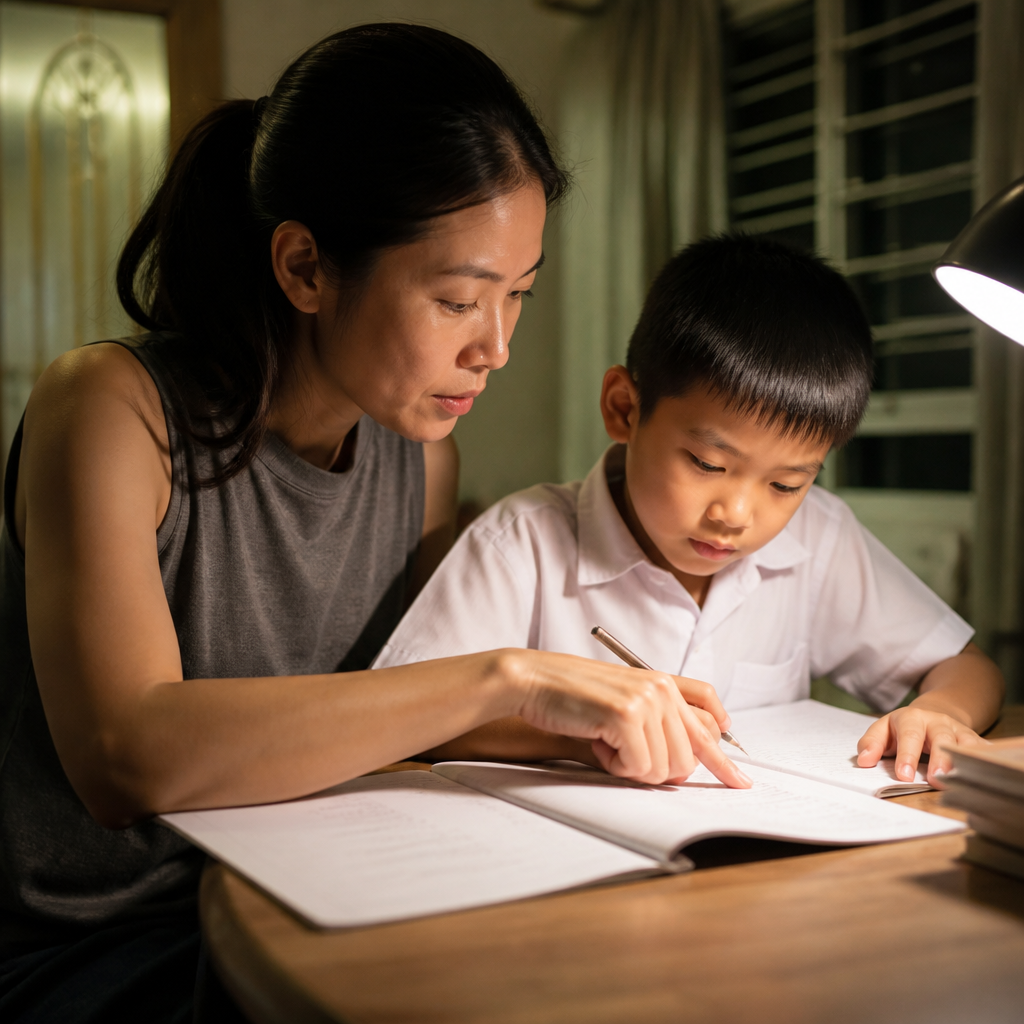
For many Primary and Secondary students, small group tuition offers a practical middle ground. It is more focused than a large class, but less intense and costly than one-to-one lessons. The format can give children the structure, discussion, accountability, and motivation they need, especially when they have average foundations, moderate gaps, or shaky confidence. At the same time, it is not the right fit for every child. Some students still need highly customised individual support.
Key Takeaways
- Small group tuition offers a useful middle ground. It gives children more attention than a large class, while still letting them learn through peer discussion, shared questions, and guided practice.
- Many students learn better when they are not studying alone. In a small group, they hear how others think, realise they are not the only one struggling, and often become more willing to participate.
- It can be especially effective for students with moderate gaps. A child who understands some basics but needs regular correction, revision, and confidence-building often benefits from this format.
- The format supports routine and accountability. Weekly lessons, homework checks, and group momentum can help children who keep delaying revision or lose focus at home.
- Cost matters, and small groups are often more sustainable. For families comparing tuition in Singapore, this is one reason the format appeals over several months.
- Small group tuition is not automatically better than one-to-one. Severe learning gaps, urgent exam rescue, strong anxiety, or highly uneven pacing may still call for individual tuition.
- Fit matters more than trends. The best question is not whether small group tuition is good in general, but whether your child learns better with some peer energy plus personal guidance.
Why Small Group Tuition Works For Students Who Need Attention And Group Energy
A common reason parents ask why small group tuition works is because they can already see two competing needs in their child. On one hand, the child clearly needs personal attention. On the other, studying alone with an adult every lesson can feel draining, pressurising, or simply too intense.
That is where the small group format often works well.
More personal than a large class
In a small group, the tutor can still spot recurring mistakes. Maybe your Primary 5 child keeps mixing up fractions in problem sums. Maybe your Secondary 2 child understands comprehension passages but cannot explain answers clearly. These patterns are easier to catch when the group is genuinely small and the tutor has time to observe each student.
Unlike a big class where weaker students can quietly disappear, a tutor in a small group usually has enough space to listen, question, and correct. That extra attention is often what stops the same mistake from repeating for months.
More lively than one-to-one
Some children do not do their best thinking when every silence feels exposed. In one-to-one lessons, a student who is unsure may freeze, guess, or shut down. In a small group, there is room to listen first, warm up slowly, and then join in.
This matters in Singapore’s academic setting, where many children are used to chasing model answers and worrying about being wrong. A group can soften that fear. When another student asks the same question your child was too embarrassed to raise, the emotional barrier drops immediately and participation feels safer.
A strong fit for students with moderate learning gaps
Not every child needs highly specialised intervention. A common pattern among students is that they sit somewhere in the middle. They are not failing badly, but they are inconsistent. They can do some questions, then struggle once the wording changes. They revise, but not effectively. They know content, but cannot apply it under exam pressure.
For these students, small group tuition can be the sweet spot. It gives enough support to strengthen weak areas without making every lesson feel heavy or overly intense.
How Peer Learning Builds Understanding And Confidence
One of the biggest reasons small group tuition works is simple. Children often learn from hearing other children think.
Students compare thinking, not just answers
This is especially useful in English, Science, and upper primary Math problem solving. A tutor may ask how a student arrived at an answer, and another student may explain it in a way that suddenly makes sense.
That moment matters. It is not just about the final answer. It is about seeing a thought process clearly.
A Secondary student may understand a science concept only after hearing a peer explain it in plain terms instead of textbook language. A Primary student may finally grasp synthesis and transformation because another child points out the clue word in the sentence. Tutors often notice that these moments are hard to force in a passive lesson, but they happen more naturally in a well-run small group.
Quiet students may open up more
Parents often ask whether small group tuition is better for shy students. In many cases, yes, but with some nuance.
A shy child is not always a child who learns best alone. Often, the issue is not lack of ability but fear of speaking too soon, sounding silly, or getting corrected too directly. In a small group, a shy student can observe first, then contribute when ready. Over time, many become more willing to answer because the environment feels safer than a large class and less exposing than one-to-one.
That said, if your child has very strong anxiety, shuts down around peers, or needs long processing time, one-to-one tuition may still be more suitable.
Discussion improves retention
Children remember more when they talk through work, explain mistakes, and hear repeated correction in context. This is one reason students sometimes seem “better” after tuition but still forget by the exam. If the lesson is too passive, the learning does not stick.
Small group tuition naturally creates more active recall and participation, which can improve retention without making the lesson feel like another lecture. For many students, active engagement is what turns short-term understanding into something more lasting.

Why It Works Well For Primary And Secondary Students
Not every weak result means a child needs the most intensive option available. Quite often, the issue is uneven understanding rather than a complete breakdown.
Primary students often need guided practice, not constant rescue
When looking at the benefits of small group tuition for primary students, one point is often missed. Younger students usually need routine correction, repetition, and encouragement more than endless reteaching from scratch.
A Primary 3 or Primary 4 child may know the concept when calm, then make careless mistakes once tired. A Primary 6 child preparing for PSLE may understand vocabulary and grammar separately but struggle to apply both during paper practice. These are familiar patterns. In a small group, the tutor can guide practice, revisit mistakes, and maintain engagement without making the child feel singled out every minute.
Secondary students benefit from structure and exam discipline
Secondary school brings a different problem. The content becomes heavier, school pace quickens, and students may look independent while quietly falling behind. By Secondary 2 or 3, many are not completely lost, but they are inconsistent. They memorise notes, copy corrections, and still underperform.
This is where small group tuition for secondary students can be a strong fit. The format can reinforce concepts, train answering technique, and keep revision moving. It can also reduce the common problem of students pretending to understand because they do not want to ask too many questions in school.
Routine matters more than intensity for some children
A child with moderate gaps often improves more from steady weekly tuition over six months than from short bursts of intense intervention. Small group lessons can support that consistency in a way that feels manageable for both learning and family budget.
For some families, this matters more than they first expect. A format that is sustainable over time often produces better results than one that feels impressive at the start but is difficult to maintain.
Subject-specific support can be easier to sustain
Another practical reason small group tuition works is that many students do not need help in every subject. A child may be coping well in English but struggling in Math, or doing fine in lower secondary Science but weak in composition and comprehension. In these cases, a small group focused on one subject can be a sensible way to get regular support without overloading the child’s schedule.
This matters in Singapore, where students often juggle school, CCA, enrichment, and family commitments. A tuition format that helps in the right subject, at the right level of intensity, is often more useful than adding too many hours of instruction.
How Small Group Tuition Supports Accountability And Better Study Habits
At home, many parents see the same frustrating pattern. The child sits at the table, flips notes, sharpens a pencil, takes a water break, and somehow an hour passes with almost nothing done. This is not always laziness. Sometimes the child simply lacks structure, momentum, or confidence.
The group creates healthy pressure
A small group often encourages students to come prepared. They know work may be checked. They know others are progressing. They know they may be asked to explain an answer. That social accountability can matter a lot.
A child who ignores corrections at home may suddenly start reviewing mistakes because they do not want to repeat the same error in front of peers in the next lesson. This kind of healthy pressure can improve follow-through without constant nagging.
Motivation improves when students feel less alone
Many students quietly assume they are the only ones struggling. This is common before major exams like PSLE or O-Levels, when school pressure builds and confidence drops. In a small group, they realise that others also forget formulas, misread questions, or panic during oral practice.
That matters emotionally. Relief can improve effort. Once a child feels, “Okay, I am not the only one,” resistance often softens and motivation becomes easier to rebuild.
Lessons can reduce parent-child revision tension
This is one of the less talked-about reasons small group tuition works. It can take some of the emotional friction out of home revision.
When a tutor handles explanation, correction, and practice, parents no longer have to be the nightly reminder, checker, and conflict manager all at once. If your evenings have turned into repeated arguments over incomplete homework or careless errors, the right small group arrangement can help reset that dynamic.
If you are trying to compare formats and want a clearer sense of fit, you can compare tutor options here and speak to someone about whether a small group or one-to-one setup makes more sense for your child.
Small Group Tuition vs One-To-One: What Parents Should Weigh
For many families, the real question is not whether small group tuition is good. It is how it compares with one-to-one tuition in Singapore.
A side-by-side view can make the decision clearer.
When small group tuition is often the better fit
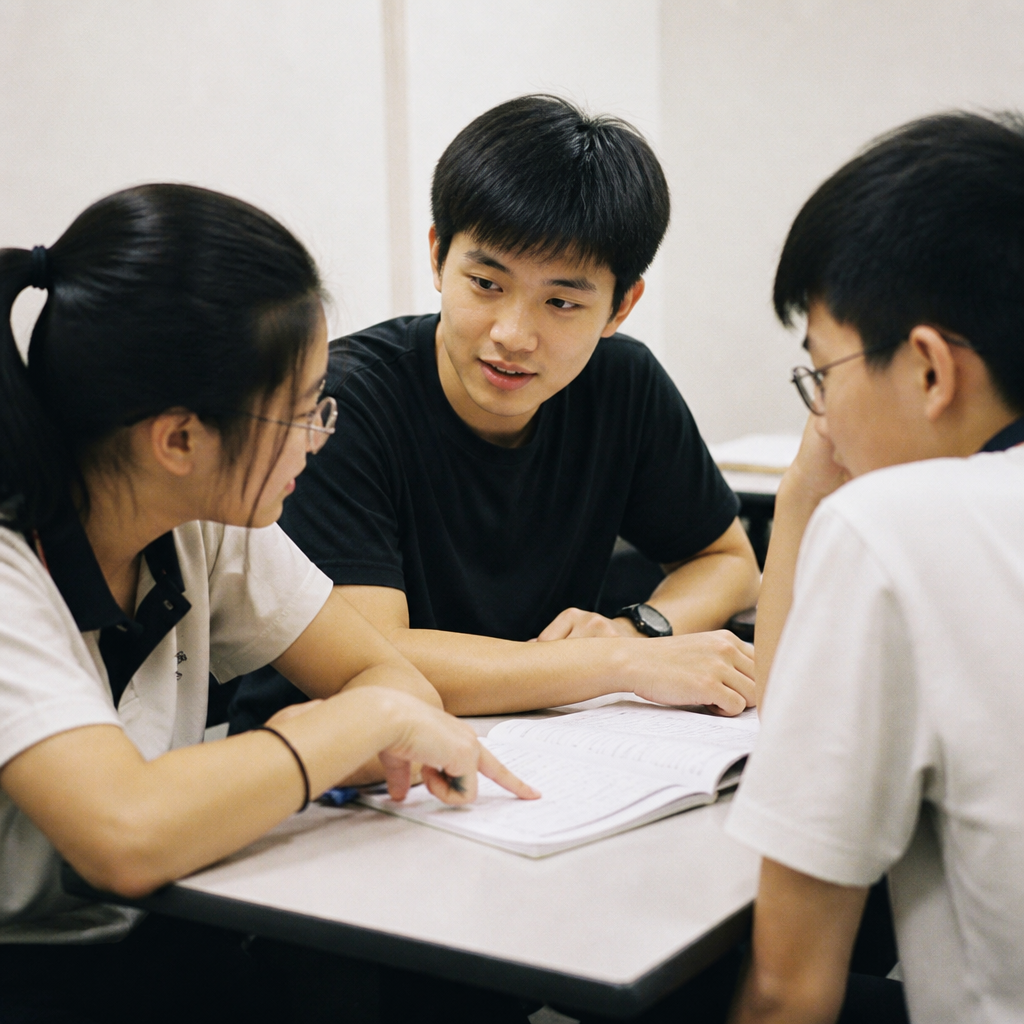
Small group tuition often works well when your child has average or decent foundations but needs reinforcement. A Secondary 1 student may understand most school lessons but perform poorly because of weak answering technique and inconsistent revision. In this case, regular correction and discussion may be more useful than fully customised teaching.
It also suits children who need confidence and participation. A quiet Primary 5 child may benefit from hearing others answer first, then building courage to contribute. For students who respond well to routine, the weekly reset, clear homework expectations, and follow-up on mistakes can be especially helpful.
For many families, there is also the question of sustainability. A format that can be maintained steadily is often the one that produces real progress.
When one-to-one may be better
Small group tuition is not ideal for every child. One-to-one may be more suitable when your child has severe foundational gaps, needs urgent exam intervention with very targeted pacing, or has strong anxiety and emotional shutdown around peers.
It may also be the better choice if your child learns much faster or much slower than a group can comfortably handle. When pacing is extremely uneven, a shared lesson can become frustrating rather than helpful. Some students simply need a more tailored approach, and there is nothing wrong with that.
Cost matters, but fit matters more
It is true that small group tuition is often the more budget-friendly option. But cheaper alone is not the reason to choose it. The better question is whether your child will actually benefit from the mix of tutor attention and peer learning.
Done well, small group tuition is not a compromise. It is a genuinely effective format for many learners in Singapore.
Choosing The Right Tuition Format For Your Child
Some parents choose tuition based on what sounds more premium. Others choose based on cost alone. Both can backfire.
Look at learning behaviour, not just marks
Two children can get the same score for completely different reasons. One may need intensive reteaching. The other may simply need better habits, more practice, and stronger confidence.
A child who keeps making similar mistakes but understands corrections quite quickly may do very well in a small group. A child who cannot follow even after repeated explanation may need one-to-one support first.
Watch what happens after correction
Experienced tutors often notice this pattern. Some students improve once they are made to explain, compare answers, and practise regularly. Others nod along but still cannot transfer the skill independently. The first group often thrives in small group tuition. The second may need more individual pacing.
This is why trial lessons, honest feedback, and close observation matter more than assumptions.
Consider emotional fit and energy level
After a long school day, CCA, and homework, not every child can handle a lesson that feels intense. Some actually do better in a small group because the environment feels less heavy and more engaging. Others arrive overstimulated and need a calmer one-to-one setting.
This is why the format should match the child’s actual behaviour, not just the parent’s ideal. For a broader look at local tuition support options, you may also browse Singapore Tuition Teachers. If you are deciding between formats, it helps to discuss your child’s subject needs, pace, and personality before locking into one arrangement.
Ask practical questions before committing
Parents can also save themselves a lot of frustration by asking a few direct questions upfront. How many students are in the group? Will homework be reviewed properly? Does the tutor group students by level, age, or school syllabus? How often will feedback be given to parents?
These details matter because “small group tuition” can mean very different things in practice. A well-run group with clear teaching goals, active participation, and regular correction can be highly effective. A loosely managed class that is small only in name may not give your child the support you expect.
Frequently Asked Questions
Is small group tuition enough for PSLE or O-Level preparation?
It can be, if your child already has workable foundations and mainly needs structured revision, answering practice, and regular correction. For students with major content gaps very close to the exam, one-to-one may be more effective because pacing can be adjusted more aggressively. Parents can also review broader education guidance at MOE Singapore and exam-related information at SEAB.
Is small group tuition better for shy students in Singapore?
Often yes, but not always. A shy child may feel safer speaking in a small group than in a large class, or even in a one-to-one lesson where all attention feels direct. But if the child has very strong anxiety or withdraws completely around peers, individual tuition may still be the better starting point.
What group size is considered small enough to work well?
There is no single perfect number, but “small” should still allow the tutor to know each student’s weaknesses and correct work meaningfully. If the group is so large that your child can stay silent for the whole lesson without being noticed, the benefits of small group learning start to weaken.
Are affordable small group tuition classes less effective than one-to-one?
Not necessarily. For many Primary and Secondary students, affordable small group tuition is effective precisely because it combines structure, discussion, and accountability at a sustainable price. The key issue is whether the student needs moderate support or highly customised intervention.
Conclusion
The reason small group tuition works for many Singapore students is not simply lower cost or convenience. It works because the format often matches how many children actually learn best, with enough personal attention to catch mistakes, enough peer interaction to build confidence, and enough routine to keep revision from falling apart.
For Primary students, the benefits often show up in guided practice, confidence, and better follow-through. For Secondary students, the format can strengthen discipline, discussion, and exam readiness without making every lesson feel high-pressure. Still, small group tuition is not automatically the best choice for every child. If your son or daughter has severe gaps, urgent exam issues, strong anxiety, or very specific pacing needs, one-to-one may be the better fit.
If you are weighing small group tuition against one-to-one tuition in Singapore, the most useful next step is to compare tutor options based on your child’s learning style, subject needs, and budget. You can speak with us here to find a small group or one-to-one tuition arrangement that suits your child more closely.