


Introduction
It is 9.30pm, your teen still has unfinished homework, the phone is in their hand, and somehow a simple reminder has turned into another argument. You ask about revision, they slam the door. You bring up school, they say you do not understand. If you are searching for how to deal with a rebellious teenager, you are probably not looking for neat, ideal parenting advice. You want something that works in a real Singapore home, where school pressure, tuition fatigue, O-Level worries, and everyday family stress can pile up very quickly.
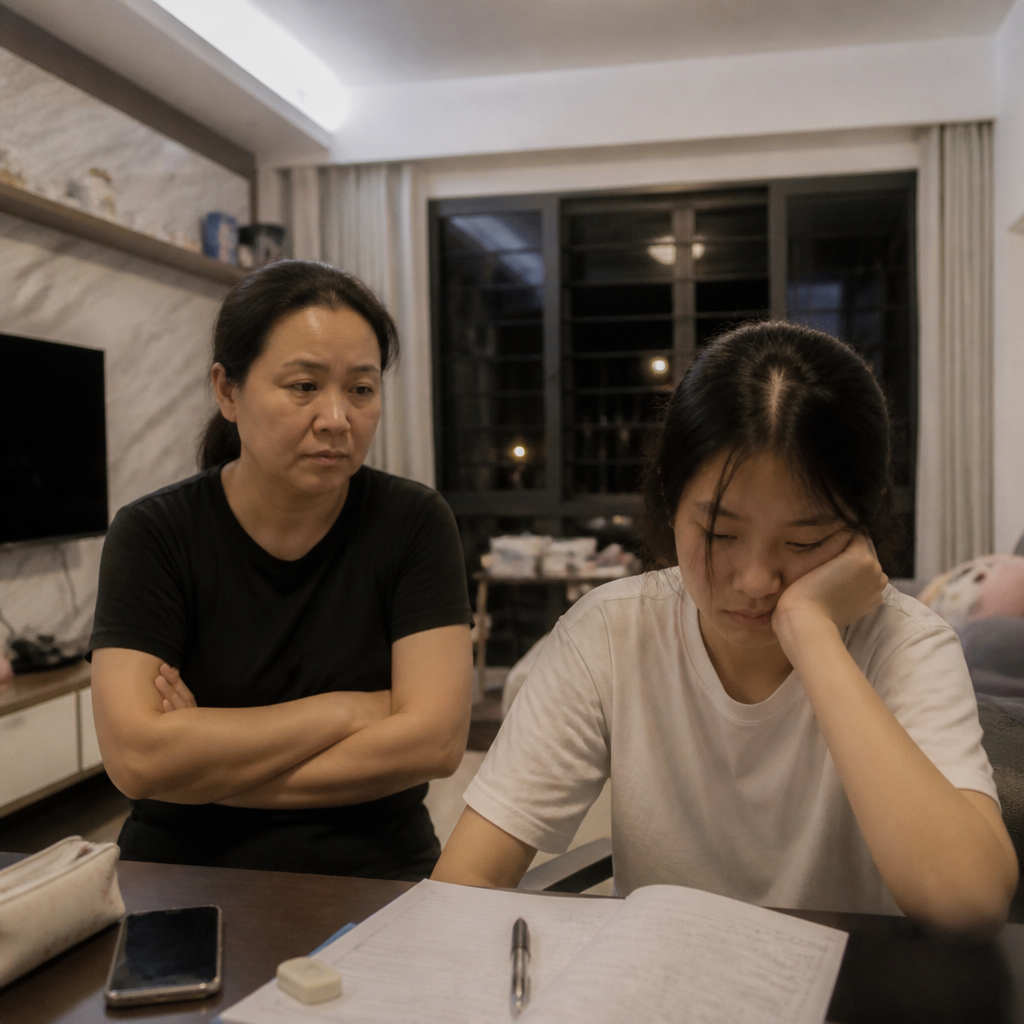
The hard truth is this: many teenagers who look “rebellious” are not just being difficult for no reason. Sometimes they are overwhelmed, ashamed of falling behind, angry about constant conflict, or desperate for more control over their own lives. That does not mean rude behaviour should be ignored. It means it helps to respond with more clarity. When parents deal with what is driving the defiance, study resistance often becomes easier to manage too.
Key Takeaways
- Look past the label. A teen who refuses to study or keeps arguing may be burnt out, discouraged, or afraid of failing, not just “rebellious”. The behaviour still needs to be managed, but the cause matters because the wrong response can make the conflict worse.
- Choose timing carefully. Serious conversations rarely go well in the middle of a shouting match. A calmer moment, such as during supper or a car ride, often leads to more honest answers and less defensiveness.
- Reduce lectures, increase clarity. Long speeches usually make teenagers switch off. Short, specific expectations like “phone outside room from 8pm to 9pm” are easier to follow and easier to enforce consistently.
- Use consequences consistently. Punishments that change daily confuse teens and fuel more arguments. A clear consequence linked to the behaviour, such as reduced gaming after repeated lying about homework, works better because it feels predictable rather than emotional.
- Watch for stress signals. Mood swings, withdrawal, refusal to revise, sleeping very late, and sudden loss of confidence can be signs your teenager is acting out due to stress, not just attitude. These patterns deserve attention, especially during exam periods.
- School conflict often sits underneath home conflict. Many teens who seem defiant are actually struggling with academic gaps, fear of teachers, exam pressure, or embarrassment about poor results. The argument at home may only be the visible part.
- Get support early if needed. If behaviour becomes unsafe, extreme, or prolonged, do not wait too long. Knowing when to seek help for rebellious teen behaviour in Singapore can protect both your child and your relationship.
Understand The Behaviour Before You React
Most parents naturally react to what they can see first: the shouting, lying, screen-time battles, or refusal to study. That is understandable. When your child rolls their eyes, ignores you, or talks back, it feels deeply disrespectful. But if every response becomes about winning that one moment, the bigger problem often grows quietly in the background.
Stop treating every incident like a character flaw
A teenager who says “I do not care” may actually care too much. This comes up often in Secondary 3, Secondary 4, JC, or Poly years, when expectations rise and the room for mistakes feels smaller. Some teens would rather act defiant than admit they feel lost in class. Others push back because they are tired of hearing that they are lazy when, in their mind, they have already been trying and failing.
Instead of saying, “Why are you always like this?”, try naming the situation more accurately. For example: “You have been avoiding your Math work all week. I want to understand whether this is about the subject, the workload, or something else.” That small shift can keep the door open and lower the chance of another power struggle.
Separate disrespect from distress
Not every rude moment is a mental health issue. At the same time, not every rude moment is simply bad attitude. A teen can be stressed and still speak in an unacceptable way. Both things can be true.
You can say, “I can see you are upset, but I am not going to continue this conversation while you are shouting.” That kind of boundary matters. It tells your child that feelings are allowed, but certain behaviour is not. Parents often get better results when they stop choosing between “be understanding” and “be firm”, and start doing both together.
Focus on patterns, not one bad night
One slammed door after a difficult test is very different from months of lying, skipping assignments, and refusing all conversations about school. Look for patterns around exams, tuition days, CCA schedules, friendship issues, or specific subjects. A common pattern among students is that the so-called rebellion starts after repeated failure in one area, and the home conflict is only the part everyone sees.
Find The Real Trigger Behind The Defiance
Parents often look for discipline strategies first. In reality, discipline works much better when you understand what is driving the behaviour. If the trigger is fear, shame, burnout, or bullying, pushing harder can make your teen dig in even more.
Academic gaps can look like laziness
This happens more often than many parents expect. A teen says they hate Science or refuse to do English essays. At home, it looks like poor attitude. In reality, they may be unable to follow what is going on in class. Once students feel far behind, avoidance becomes their coping method.
Tutors often notice this. A student who seems careless may actually freeze the moment an open-ended question appears because they do not know how to begin. They avoid work, delay revision, and then get labelled stubborn. The issue is not always effort alone. Sometimes there is a hidden skill gap underneath it.
If school stress is becoming a major source of conflict, some families find it helpful to get outside academic support from a calm, neutral adult. If that sounds familiar, you can learn more about supportive help here: private home tuition support in Singapore.
Burnout and over-scheduling are real
A teen can become resistant simply because their weekdays are packed beyond what they can handle. School, CCA, commuting, tuition, homework, and late-night revision leave very little emotional buffer. What looks like defiance at 10pm may actually be exhaustion.
This is especially common in Singapore homes where parents are trying their best to keep options open. Ironically, a teenager with too much structure may start fighting all structure. The refusal to study can become their only way of feeling in control.
Peer stress and fear of judgment
Some teens are not just worried about grades. They are worried about being seen as weak, slow, unpopular, or behind. If they are being mocked by classmates, excluded by friends, or compared constantly, the emotional spillover often shows up at home first.
That is why it helps to ask, “What is making school harder lately?” instead of only “Why are you not studying?” A better question often gets a better answer.
Talk In A Way That Lowers Defensiveness
When parents are worried, lectures usually get longer. Unfortunately, the more anxious the parent becomes, the less the teen hears. If you want to know how to handle rebellious teenager behaviour at home, communication is one of the first places worth adjusting.
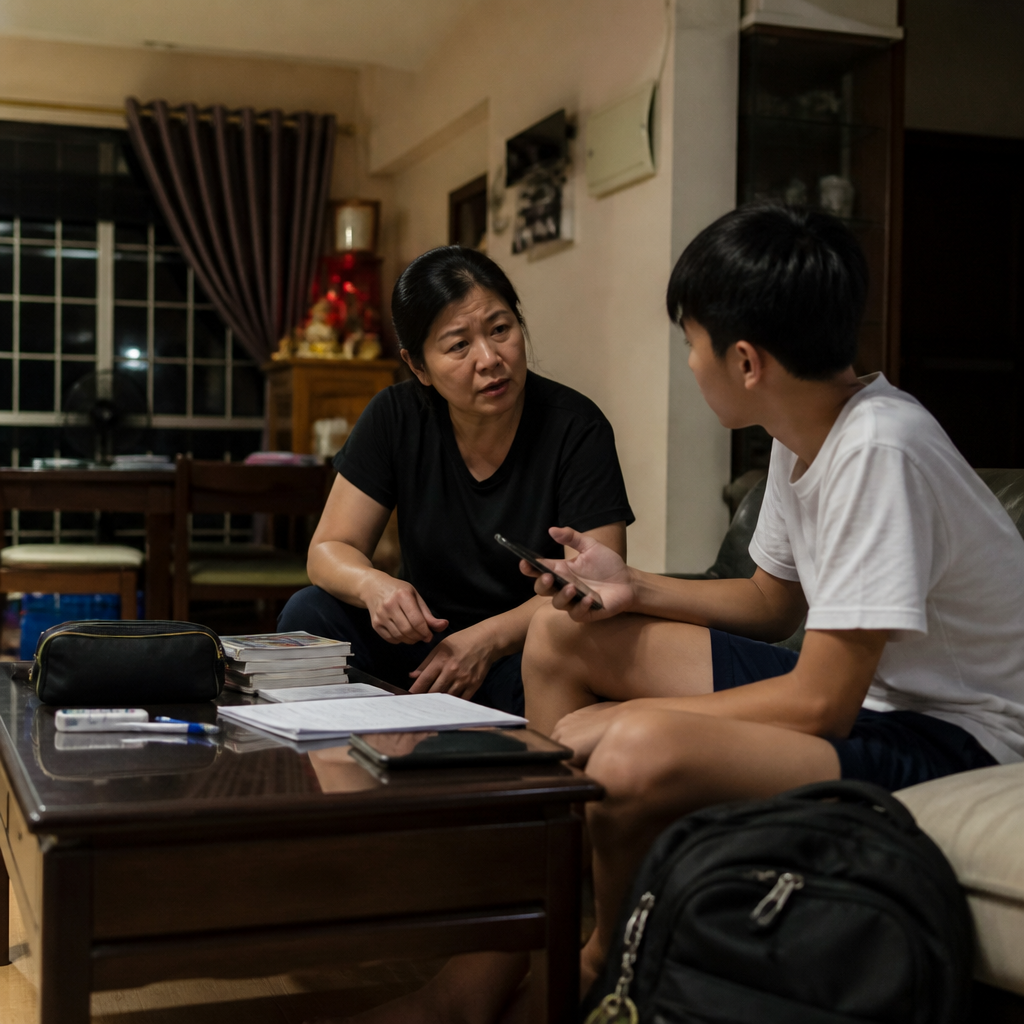
Pick a low-pressure moment
Do not start a serious conversation right after a failed test, during a phone confiscation, or when everyone is already angry. Better moments include a car ride, a quiet meal, or a weekend errand. Side-by-side conversations often feel less confrontational than face-to-face ones.
You can begin with something simple: “I know things have been tense at home. I do not want to fight again tonight. I just want to understand what has been hardest for you lately.”
Ask fewer questions, but better ones
Rapid-fire questioning can feel like an interrogation. Many teens shut down because they expect criticism after every answer. Ask one focused question, then pause.
Listen without immediately correcting
This does not mean agreeing with everything. It means resisting the urge to interrupt the moment your child says something unfair. If your teen says, “You only care about results,” your instinct may be to defend yourself straight away. Pause first.
“I know it feels that way. I do care about you, but I can see our conversations have become too focused on grades.”
That one sentence can lower resistance far more than ten minutes of explaining your intentions.
Set Boundaries That Are Clear And Calm
A teenager still needs limits. The difference is that older children respond poorly to vague threats and emotional punishments. If you are figuring out how to discipline a rebellious teenage son without shouting, or how to handle repeated defiance from a daughter at home, clarity matters more than intensity.
Define the non-negotiables
Not everything needs to become a battle. Choose a few boundaries that directly affect safety, school functioning, and family respect.
A long list usually fails. A short list that is enforced consistently has a much better chance.
Link consequences to the behaviour
Consequences work best when they make sense. If your teen lies about revision and spends the night gaming, the consequence could be losing gaming access the next evening until the missed work is completed. That is clearer than suddenly banning outings for two weeks.
When consequences are random or excessive, teens often focus on the unfairness instead of the lesson. Then the real issue gets lost.
Do not negotiate in the heat of anger
Once a boundary is set, avoid changing it because of tears, yelling, or sarcasm. Calm repetition is stronger than louder repetition. “I am not discussing the phone tonight. We already agreed it stays outside the room after 11pm.”
This matters for parents wondering how to handle a rebellious teenage daughter at home too. If every emotional reaction leads to a different rule, she may test harder because the system feels unstable. Predictability lowers power struggles.
Rebuild Study Routines Without Turning Every Evening Into A War
For many Singapore parents, the real concern is not just attitude. It is that the attitude is affecting school progress. Homework gets delayed, revision is avoided, tuition is resisted, and every reminder becomes another round of conflict.
Start smaller than you think
A teen who is already resistant will not suddenly accept a three-hour study timetable just because it is printed out nicely. Begin with one realistic block. For example, 35 minutes of focused work after dinner, followed by a short break, then one more block if possible.
Success matters more than ambition here. A teen who completes two short sessions consistently is in a better place than one who refuses an unrealistic plan every night.
Match support to the actual problem
If your child says they studied but still performs badly, look deeper. Did they only reread notes? Were they memorising model answers without understanding? Are they too embarrassed to admit they cannot do basic questions?
This is common before major exams. Some teenagers look unmotivated, but what is really happening is fear of failure. They would rather scroll their phone than face work that reminds them they are behind.
Build in recovery time
One practical step many families miss is rest. A teen who moves from school to tuition to homework with no breathing space may resist simply because every hour feels controlled. A short break after school, a proper dinner, or one lighter evening each week can reduce conflict more than another lecture about discipline.
This does not mean removing all expectations. It means recognising that tired brains argue more, focus less, and cope poorly with pressure. Sometimes a better routine is not stricter, but more sustainable.
Let school goals become more personal
Teens engage better when they can connect effort to something they care about. That does not mean every child has a clear dream career. Sometimes it is simply wanting enough grades to enter a course they do not hate, stay with certain friends, or avoid constant scolding at home.
If the study conflict is linked to confidence, motivation, or repeated arguments over homework, a supportive tutor can sometimes reduce friction because the parent no longer has to play teacher every night. You can explore options here: home tuition for struggling students.
Watch For Signs of Stress, Not Just Defiance
One of the biggest mistakes parents make is assuming all oppositional behaviour is attitude. Sometimes it is distress in disguise. Knowing the signs your teenager is acting out due to stress can help you respond earlier.
Behaviour changes that deserve closer attention
Look out for patterns like:
- Sudden refusal to attend school or tuition, especially if this happens repeatedly and not just after one bad day.
- Frequent headaches or stomach aches before school, which can sometimes signal anxiety rather than illness.
- Extreme irritability after exams or CCA, suggesting emotional overload rather than simple bad temper.
- Sleeping very late and struggling to wake up, which can worsen mood, concentration, and school attendance.
- Isolating in the room for long periods, especially if your teen used to be more engaged with family.
- Crying unexpectedly or becoming numb and flat, both of which can point to deeper emotional strain.
- Sharp drops in appetite, motivation, or hygiene, which should not be brushed off as laziness.
A teen may not say, “I am anxious” or “I am burnt out.” Many will simply become more argumentative, avoidant, or explosive.
Stress can hide behind aggression
Some teenagers, especially boys, do not present as obviously sad. They become angry, sarcastic, or shut down entirely. This is why parents searching for ways to discipline a rebellious teenage son without shouting often need more than discipline advice. A son who snaps at everyone may be covering embarrassment about poor results, bullying, or feeling like he can never meet expectations.
Family tension can be part of the loop
Even when school is the trigger, home reactions can intensify it. Constant comparisons, repeated criticism, or checking on revision every 20 minutes can turn a struggling teen into a defensive one. That does not mean parents are the cause of everything. It simply means the cycle needs to be broken somewhere.
For school-related support resources, you can refer to the Ministry of Education Singapore. For mental health support information, the Institute of Mental Health is another useful reference.
Know When To Seek Help In Singapore
Some situations can be managed at home with calmer communication and clearer routines. Others need outside support. Knowing when to seek help for rebellious teen behaviour in Singapore matters, especially if things are escalating.
Seek help earlier if behaviour is affecting safety or daily functioning
Do not wait too long if you notice:
- Threats of self-harm or talk of hopelessness, which should always be taken seriously.
- School refusal that continues beyond a short period, especially if your teen becomes increasingly withdrawn.
- Aggression that becomes physical, because safety must come first for everyone at home.
- Repeated running away or disappearing, which can quickly become dangerous.
- Severe sleep disruption, especially when it affects mood and functioning.
- Possible substance use, which needs prompt attention rather than denial.
- Drastic mood or personality changes, particularly if they appear suddenly.
In these situations, school counsellors, family service support, medical professionals, or mental health services may be appropriate. Start somewhere, even if you are unsure.
School-based support can be a good first step
If the behaviour is closely tied to school stress, contact the form teacher, year head, or school counsellor. Ask what they are observing in class. A teen who seems disrespectful only at home may be showing quiet distress in school, or the reverse.
Support does not mean you have failed
Many parents delay help because they fear judgment. They worry it means they were too strict, too soft, or not enough. In reality, asking for support is often what prevents things from worsening. Sometimes the most helpful person is not the parent or the child, but a calm third party who can lower the emotional temperature.
Frequently Asked Questions
Is my teenager really rebellious, or just stressed about school?
It can be both, but school stress is often a major driver. If your teen becomes more difficult around tests, tuition, report book periods, or subject-specific homework, stress may be sitting underneath the behaviour. Look for avoidance, negative self-talk, and sudden emotional reactions to revision.
How do I handle a teenager who refuses to study and keeps using the phone?
Start by reducing the nightly battle. Set one clear study block, place the phone outside the room during that period, and supervise less verbally. If the refusal is constant, ask whether the issue is distraction, burnout, or difficulty understanding the work. Phone problems are often amplified by deeper academic resistance.
How do I handle a rebellious teenage daughter at home without making things worse?
Avoid turning every emotional moment into a morality issue. Teenage girls who seem dramatic or oppositional may be carrying social stress, self-esteem struggles, or academic pressure they cannot express calmly. Keep boundaries firm, but make room for real conversation outside conflict.
What is the best way to discipline a rebellious teenage son without shouting?
Focus on consistency, calm boundaries, and consequences that fit the behaviour. Shouting may stop him for a moment, but it usually increases defensiveness. Calmly enforced limits, especially around lying, respect, and study routines, work better over time.
When should I get outside help in Singapore?
If the behaviour is prolonged, extreme, unsafe, or clearly affecting school attendance, sleep, mood, or family functioning, seek help. School staff, counsellors, and health professionals can guide the next step. For official resources, refer to the Ministry of Education Singapore and the Institute of Mental Health.
Conclusion
Learning how to deal with a rebellious teenager in Singapore is rarely about finding one perfect punishment or one magical conversation. More often, it is about seeing the full picture. Defiance at home may be tangled up with academic gaps, O-Level pressure, tuition fatigue, friendship issues, fear of failure, or a teenager’s growing need for independence.
Firm boundaries still matter, but they work best when paired with calm timing, less lecturing, and a genuine effort to understand what is underneath the resistance. Many parents only realise this after months of repeated reminders and nightly arguments. Once the dynamic changes, even slightly, the home often feels less tense.
If your teen’s behaviour is closely linked to school stress, low confidence, or repeated study conflict at home, outside academic support can sometimes ease the pressure on the whole family. If your teen is struggling with school stress, motivation, or homework-related conflict at home, learn more about our supportive private tutors in Singapore who can help reduce pressure and rebuild confidence.