


Introduction
If you are searching for what to do when your child refuses to do homework, chances are this is not about one forgotten worksheet. It is the familiar 6.30pm standoff. The tears after student care. The sudden stomachache when spelling starts. The endless “five more minutes” when you are already tired from work and just want the evening to move.
For many parents in Singapore, homework refusal quickly stops feeling like a small school problem. It starts affecting dinner, bedtime, and the mood at home. What makes it even harder is that the behaviour can look the same on the surface, even when the reason underneath is completely different.
The first thing to remember is homework refusal is not always laziness. A child may refuse because they are exhausted after school and CCA, confused by one subject, anxious about getting things wrong, or stuck in a power struggle after too many difficult evenings. Tutors often notice that when the reason is misunderstood, the battle usually gets worse.

This guide looks at what to do in the moment when your child refuses homework, how to work out what is really happening, and when it may be time to get extra support.
Key Takeaways
- Homework refusal is not always laziness. A child who stalls, cries, freezes, or bargains may be tired, confused, anxious, overwhelmed, or pushing against a pattern of conflict at home. Looking more closely at the behaviour helps you respond to the real issue instead of escalating the wrong one.
- Look at the type of refusal before reacting. A child who melts down after CCA needs a different response from one who keeps negotiating despite clearly knowing how to do the work. Matching your response to the situation often reduces conflict faster than using the same script every night.
- Separate “can’t” from “won’t”. If your child repeatedly avoids one subject, panics over specific tasks, or says “I don’t know” before even trying, there may be a learning gap rather than simple unwillingness. This is especially important for primary school children who may not yet know how to explain what they are struggling with.
- Use smaller starts to reduce resistance. “Let’s do the first two questions only” often works better than demanding the full worksheet at once, especially when a child feels overwhelmed. A smaller entry point makes the task feel possible and helps your child build momentum.
- Calm boundaries work better than long lectures. Limited choices, predictable consequences, and a steady tone usually reduce power struggles faster than shouting or threats. Children are more likely to cooperate when the adult sounds calm and clear rather than emotionally flooded.
- Avoid rescuing too quickly. Giving answers, doing the work for your child, or turning every worksheet into an argument can reinforce the refusal pattern instead of solving it. Support should help your child start and think, not remove all effort from the task.
- Get extra support when refusal becomes a pattern. If homework battles happen almost daily, one subject is always avoided, or family conflict is worsening, outside help may be needed to rebuild confidence and routine. Early support can prevent homework stress from affecting your child’s self-esteem and your relationship at home.
Identify The Real Reason Before You React
When a child refuses homework, many parents go straight to discipline. That is understandable. By evening, everyone is already running low. But the most useful first question is not “How do I make my child obey?” It is “What is driving this refusal tonight?”
Tiredness looks different from defiance
A tired child often falls apart quickly. This is common after a long school day, student care, enrichment, tuition, or CCA. The child may throw the pencil down, lie on the table, complain loudly, or cry over a worksheet they could usually handle.
In these moments, pushing harder often backfires. A short reset can change the whole evening. A snack, shower, 15 minutes to decompress, or starting with a lighter task may be enough. You might say, “You look tired. Take 10 minutes, wash up, then we will do just two questions first.”
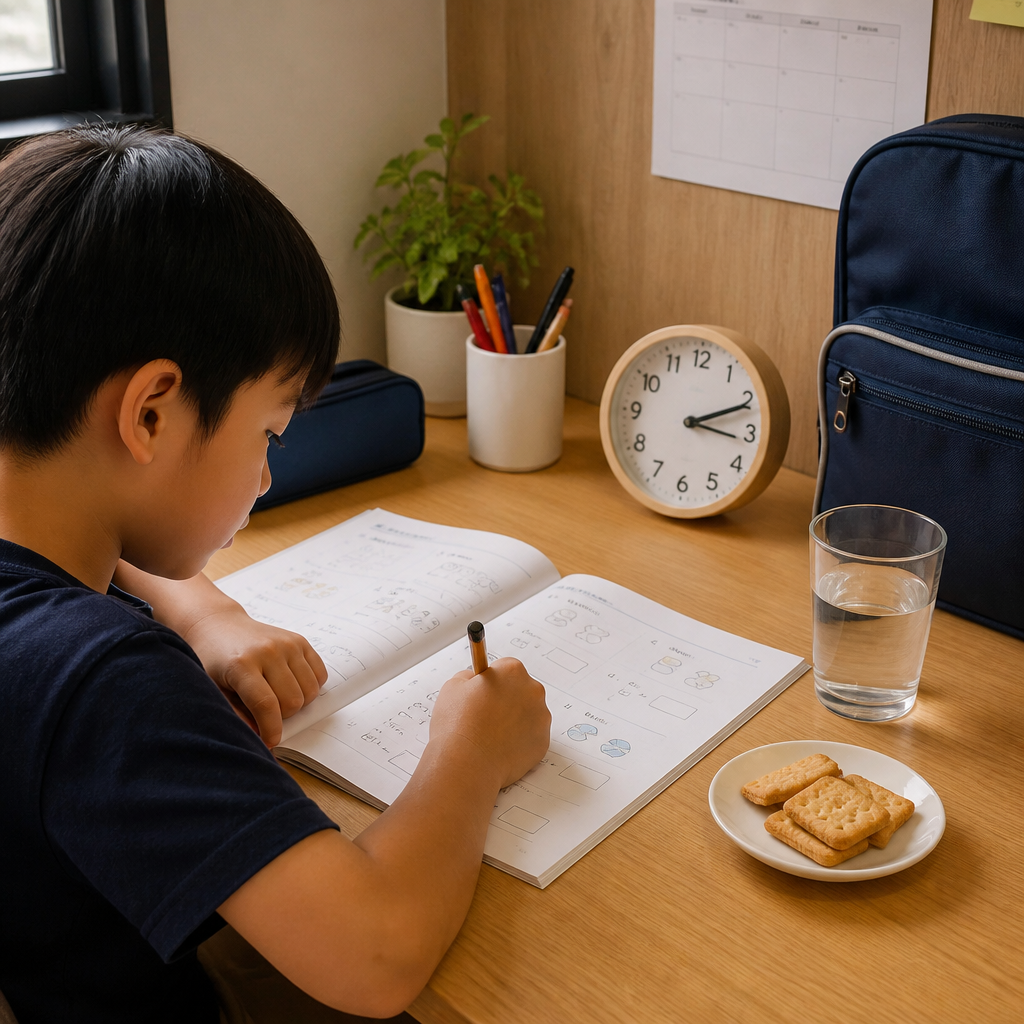
The important distinction is this, exhaustion is not the same as attitude. Homework may still need to be done, but a drained child often needs help settling first.
Confusion often hides behind “I don’t know”
Some children avoid only one subject. They may finish English quickly but drag out Math word problems. Or they may resist Chinese composition because they genuinely do not know how to begin.
Instead of “Why are you so lazy?”, try, “Show me which part you don’t understand.” That small shift matters. Many children calm down when they feel the adult is helping them find the problem, not judging them for having one.
A common pattern among students is that they are not refusing the whole worksheet. They are refusing the moment they realise they are lost.
Anxiety can look like stubbornness
An anxious child may erase repeatedly, cry over neatness, freeze at the first mistake, or say “I cannot” before even reading the question. Perfectionistic children often choose refusal over the risk of doing badly.
Here, lowering the pressure helps more than repeating instructions. Say, “It doesn’t need to be perfect. Just make one small attempt.” For some children, that feels much safer than hearing how much homework is left.
If your child is capable but still shuts down easily, anxiety may be a bigger factor than it first appears.
Sometimes the pattern is already emotional
After enough bad evenings, some children start resisting homework before they even look at it. They are reacting to the memory of conflict, not only the worksheet itself. You may notice the refusal starts the moment you mention homework, even on days when the load is light.
When that happens, it helps to change the tone of the routine. Keep instructions shorter. Start earlier if possible. Avoid beginning with criticism about yesterday. A child who expects a fight often walks into homework already defensive.
Handle After-School Homework Battles More Wisely
The timing of homework refusal matters. Many weekday battles are less about attitude and more about fatigue, poor timing, and a child who has nothing left in the tank.
After-school refusal is often a regulation problem first
A Primary 3 child who has been in school, then student care, then enrichment, may not be ready to sit down the moment they walk in. A parent coming home from work may understandably want homework settled quickly. But a child running on fumes may experience even a short worksheet as too much.
That does not mean giving up on homework. It means sequencing the evening more wisely. A brief transition can prevent a much bigger blow-up later. Think in short resets, not open-ended delays. Ten to fifteen minutes for a snack, water, shower, or quiet time is very different from disappearing into screens for an hour.
Start with the least threatening task
When children feel overwhelmed, the full pile of homework can make them shut down before they even begin. Reduce the visual load. Put aside the whole stack and start with one easy win.
- “Let’s do questions 1 to 3 only.”
- “Read the passage first, no need to answer yet.”
- “Circle the difficult words first, then we continue.”
These are small starts, but they matter. Once a child begins, resistance often softens.
Busy parents need a realistic routine, not a perfect one
Many parents feel guilty for not being able to sit beside their child for a full hour every night. But a workable routine matters more than an ideal one. Some evenings will be messy. Some will be rushed. The goal is not perfection. It is something your family can repeat without turning homework into a nightly war.
If you only have 20 focused minutes before dinner, use that for the hardest task and leave simpler work for later. Often, a short calm check-in with clear expectations works better than hovering beside a child who is already tense.
A simple routine can reduce arguments
Children usually cope better when homework happens in a predictable order. For example: snack, shower, 20 minutes of homework, short break, then finish the rest. The exact routine does not matter as much as consistency. When the sequence is familiar, there is less room for repeated bargaining.
What To Say In The Moment When Your Child Refuses Homework
Not every refusal needs the same response. This is where many battles escalate. The words have to match the problem.
If your child is tired
Keep your tone low and practical. This is not the moment for a lecture on responsibility.
You can say, “Have a snack first, then we start with the easiest page.” The key is a short reset followed by a clear restart, not a vague delay that stretches the whole evening.
If your child is confused
Confused children often get scolded for refusing work they do not know how to begin. That usually deepens the avoidance.
You might say, “Read the first question to me. Let’s just figure out the first step.” Tutors often notice that once the first step becomes clear, many children can continue with far less resistance.
If your child is anxious
Anxious children need the task to feel emotionally safer.
“Just write one sentence first” often works better than “finish the whole thing”. “Let’s attempt one sum together, then you try the next one” can also help a child regain confidence.
If your child cries, erases repeatedly, or panics over small mistakes, pressure-heavy lines like “You know this already” can make things worse.
If your child is testing limits
This looks different. The child can do the work but delays, bargains, or pushes to see whether homework is optional.
This is where calm boundaries matter more than anger. Not ten warnings. Not a new punishment every night. Just clear follow-through.
A useful script is, “Homework starts now. You can choose where to sit, but we are beginning.” That keeps the instruction simple and avoids getting pulled into a long debate.
Separate “Can’t” From “Won’t”
This is one of the most important parts of handling homework refusal. If a genuine learning gap is treated like bad attitude, resistance often grows.
Here is a simple way to look at it.
Look closely if your child avoids one subject repeatedly, panics over certain task types, or struggles despite obvious effort. A child who fights every Chinese worksheet may be embarrassed by weak vocabulary. A child who refuses Math homework may be stuck on one concept from months ago.
On the other hand, if your child understands the task, can do similar work elsewhere, but keeps delaying and negotiating, clearer structure may be needed. That does not mean harsher punishment. It means fewer repeated reminders and more predictable follow-through.
One practical test is to sit nearby for five minutes and watch what happens. If your child truly cannot start without help understanding the question, that points to a “can’t” issue. If they understand but keep shifting the topic, asking for snacks, or leaving the table, that is more likely a “won’t” pattern.
Break Homework Into Smaller Chunks
Sometimes refusal is simply a child’s way of saying, “This feels too big.” In that moment, shrinking the task psychologically often works better than repeating “Just finish everything”.
Shrink the start
Use one narrow target:
- Questions 1 to 3 first.
- One paragraph only.
- One spelling section, then pause.
- Read and underline first, answer later.
A child staring at three pages of corrections may shut down. A child told, “Let’s finish the first three and stop for two minutes” is much more likely to begin.
Use a short timer carefully
A 10-minute timer can help when the child feels overwhelmed but is still reachable. It creates a manageable finish line.
But there is a trade-off. Some anxious children get more stressed by countdowns. If your child keeps watching the timer instead of working, skip it and use question-based chunks instead.
Plan the break before the battle
A brief planned break is different from drifting off. “After these two sums, go drink water, then come back for the next two” is often easier for a child to accept because the pause is built into the process, not used as an escape.
Praise the start, not only the finish
Some children hear feedback only when they resist or when they finally complete everything. Try noticing the beginning instead. “You started faster today” or “You kept going even when that question was hard” reinforces the behaviour you want to see again.
What To Avoid During Homework Refusal
Parents usually know shouting is not ideal, but after a long day, it happens. The bigger issue is that some reactions accidentally strengthen the pattern.
Long lectures rarely fix refusal
When a child is already dysregulated, speeches about future exams, sacrifice, or how hard adults work usually do not land. The child either tunes out or feels even more overwhelmed.
Doing the homework for them creates a new problem
Sometimes stepping in feels faster. You are trying to save the evening. But if a child learns that crying or stalling leads to answers being fed quickly, refusal starts working for them.
Support the process, not the shortcut. Read the question aloud, help organise the page, or prompt the first step. Do not do the thinking for them.
Avoid unrelated threats
Cancelling a weekend outing because of one unfinished worksheet often feels too distant and too big. Consequences work better when they are immediate, proportionate, and clearly linked, such as delayed screen time.
Avoid turning every evening into a post-mortem
Once homework is done, let the night move on. Replaying the whole argument at bedtime usually keeps the stress alive. Save bigger conversations for a calm moment the next day if a pattern needs to be addressed.
When Extra Help Is The Right Next Step
Some families can reset the pattern with calmer responses and better structure. Others need outside support, and that is not a failure.
Signs the issue is no longer just a rough phase
Look out for these patterns:
- Homework refusal happens almost every day.
- One subject is repeatedly avoided.
- Written work leads to tears, panic, or shutdowns.
- Your child is falling behind in class.
- Homework is damaging the parent-child relationship.
- Your child works much better with another adult than with you.
These are strong signs your child may need a home tutor for homework support, especially if the emotional dynamic at home is already tense.
Why a neutral adult can help
Sometimes the child is not rejecting homework alone. They are reacting to the emotional history around homework at home. A neutral tutor can reduce that heat. The right tutor does not just push for completion. They help identify whether the issue is weak understanding, low confidence, or difficulty starting tasks.
If you are considering home tuition or homework support for a child who avoids homework, look for someone gentle but structured, not someone who simply adds more pressure. The goal is to rebuild confidence and make starting easier. You can also explore support options through Singapore Tuition Teachers or learn more about our home tutors for children who need calm, structured homework support.

For broader parent support and child development guidance, you may also find MOE’s parent resources and HealthHub’s child development guidance helpful.
Frequently Asked Questions
Is my child just being lazy if they refuse homework every day?
Not necessarily. Daily homework refusal can come from exhaustion, learning gaps, anxiety, or a power struggle that has built up over time. If the same subject keeps triggering the problem, or your child seems distressed rather than casually defiant, it is worth looking more closely before calling it laziness.
How can I handle homework refusal after school when Singapore weekdays are already so packed?
Keep the transition short but intentional. A snack, shower, or 10-minute reset often works better than demanding homework the moment your child comes home. Then start with one small task instead of the full stack, so beginning feels possible.
What if my child says “I don’t know” before even trying?
That often points to confusion or anxiety. Try asking, “Show me which part you don’t understand” or “Let’s read the first question together.” If this keeps happening with one subject, there may be a real foundation gap that needs more support.
How do I know whether I need outside help?
Consider extra support if refusal happens almost every day, homework leads to tears or panic, one subject is always avoided, or your relationship with your child is getting damaged by nightly battles. Those are common signs that a tutor or structured homework support may help.
Will a tutor solve the refusal completely?
Not always, and no one should promise that. But the right tutor can reduce stress by clarifying weak concepts, creating structure, and taking some of the emotional tension out of homework time. For some families, tuition support is less about marks at first and more about restoring calm.
Conclusion
When your child refuses homework, the fastest response is rarely the best one. What looks like defiance may actually be tiredness, confusion, anxiety, or overwhelm. And when it really is behavioural resistance, shouting usually strengthens the struggle instead of ending it.
The more effective response is often quieter and more specific. Identify the type of refusal. Lower the starting point. Use calm scripts. Separate “can’t” from “won’t”. Keep consequences clear and linked. Most of all, try not to let every worksheet become a test of your relationship.
If homework refusal is becoming a nightly pattern, or you can already see your child losing confidence in one subject, outside help may be the reset your family needs. If your child needs gentle, structured support with homework routines and subject understanding, learn more about our home tutors.