


Introduction
You open a blank document, type your name, then suddenly freeze. What exactly is supposed to go into a student CV when you have never had a “real job” before?
If that sounds familiar, you are not alone. Many students in Singapore feel stuck at this stage, especially when they compare themselves with others who seem to have internships, part-time jobs, or a longer list of achievements. But a CV is not only for people with formal work experience. At student level, it is often about translating school life into evidence of responsibility, reliability, and useful skills.
If you are trying to improve your CV as a student in Singapore, the good news is this, your page is probably not as empty as it feels. School activities, CCA roles, volunteering, projects, leadership positions, and NS responsibilities can all become strong CV content when written clearly. Whether you are applying for a retail shift, an F&B role, a polytechnic internship, a university opportunity, or a scholarship, the aim is the same, show what you have done, what you can handle, and why it matters.

This guide walks through what to include, how to tailor your CV, and how to strengthen it even if you feel you have very little to work with right now.
Key Takeaways
- Your CV is not empty just because you lack formal jobs. School projects, CCA roles, volunteering, competitions, leadership positions, and NS responsibilities can all become meaningful CV content when described properly. What matters is how clearly you explain your role and contribution.
- Tailoring matters more than listing everything. A CV for a café job should highlight punctuality, customer service, and availability, while one for an internship should focus more on projects, software, communication, and relevant coursework. The same student can have different strengths depending on the opportunity.
- Clear formatting makes you look more professional immediately. Even before anyone reads deeply, a neat one-page CV with strong headings and concise bullet points creates a better first impression. Good formatting also makes it easier for busy recruiters to scan your information quickly.
- Specific examples beat vague claims. “Helped organise a school event for 300 attendees” is much stronger than “good leadership and planning skills”. Concrete examples make your CV more believable and memorable.
- Different student stages require different emphasis. Secondary school students may lean on CCA and volunteering, while polytechnic and university students should make projects, modules, internships, and technical skills more visible. Your CV should reflect where you are now, not just everything you have ever done.
- Keyword matching can improve your chances. If the role asks for customer service, Excel, Canva, communication, or teamwork, use those relevant terms naturally if they genuinely reflect your experience. This helps your CV feel aligned with the job without sounding forced.
- A good CV opens doors, but it does not guarantee outcomes. Stronger applications improve your chances, but interview preparation, timing, grades, and competition still matter. Think of your CV as one important part of the bigger application process.
What Recruiters And Admissions Teams Actually Look For
Before changing your wording or layout, it helps to understand what the reader is usually scanning for. For student applications in Singapore, recruiters and admissions teams are rarely expecting a long career history. More often, they are looking for signs that you are dependable, trainable, and relevant.
Tutors often notice that students underestimate how much small responsibilities matter. A reader may not be impressed by a long list of vague claims, but they do pay attention when a student sounds organised, clear, and realistic.
What employers want for part-time jobs
For retail, F&B, admin, events, or tuition centre assistant roles, the first question is often a practical one. Can you turn up on time? Can you follow instructions? Can you speak politely to customers or colleagues? Can you handle simple tasks without constant supervision?
That is why a student CV for part-time jobs does not need to sound grand. In many cases, reliability and attitude matter more than impressive-sounding achievements.
If you were a class monitor who coordinated duties, or a CCA committee member who tracked attendance, that can support your application. If you helped during a school book fair or open house, that also counts. A student who writes “served as student ambassador during school open house, assisted visitors and answered questions” comes across much more clearly than someone who leaves the page almost blank.
What internship recruiters want
Internship recruiters usually want one layer more. They are not only asking whether you are reliable. They also want signs that you can learn quickly and contribute in a structured setting.
That is where projects, coursework, presentations, software tools, and problem-solving examples become important.
A diploma student in business might highlight a marketing project, survey findings, or presentation work. A computing student might mention Python, SQL, a simple app, or GitHub work. A university student applying for an operations internship might emphasise Excel, research, and group coordination.
What schools and scholarship panels notice
For university applications or scholarships, the focus often shifts again. Here, readers may pay more attention to consistency, growth, leadership, service, and depth of commitment.
A long list of random activities can look busy without looking meaningful. In contrast, a few sustained roles with clear contribution often feel stronger and more mature.
If you need help expressing your academic strengths more confidently, it can also help to build stronger subject foundations and communication skills over time. For students working on that, you can learn more about our tutors.
How To Build A Strong Student CV Without Work Experience
This is usually the biggest worry. Many students assume that “no work experience” means “nothing to write”. That is rarely true.
A common pattern among students is that they dismiss anything that happened in school as not serious enough. But that is exactly where many student CVs begin. At this stage, non-work experience can still show transferable skills.
What counts as valid experience
Plenty of things can strengthen your CV, even if you have never been formally employed.
The real issue is usually not lack of experience. It is vague wording. “Participated in CCA” tells the reader almost nothing. “Managed attendance and coordinated weekly training reminders for a 25-member CCA team” sounds much stronger because it shows action and ownership.
How to turn activities into stronger CV bullet points
One simple way to improve your content is to ask yourself three questions:
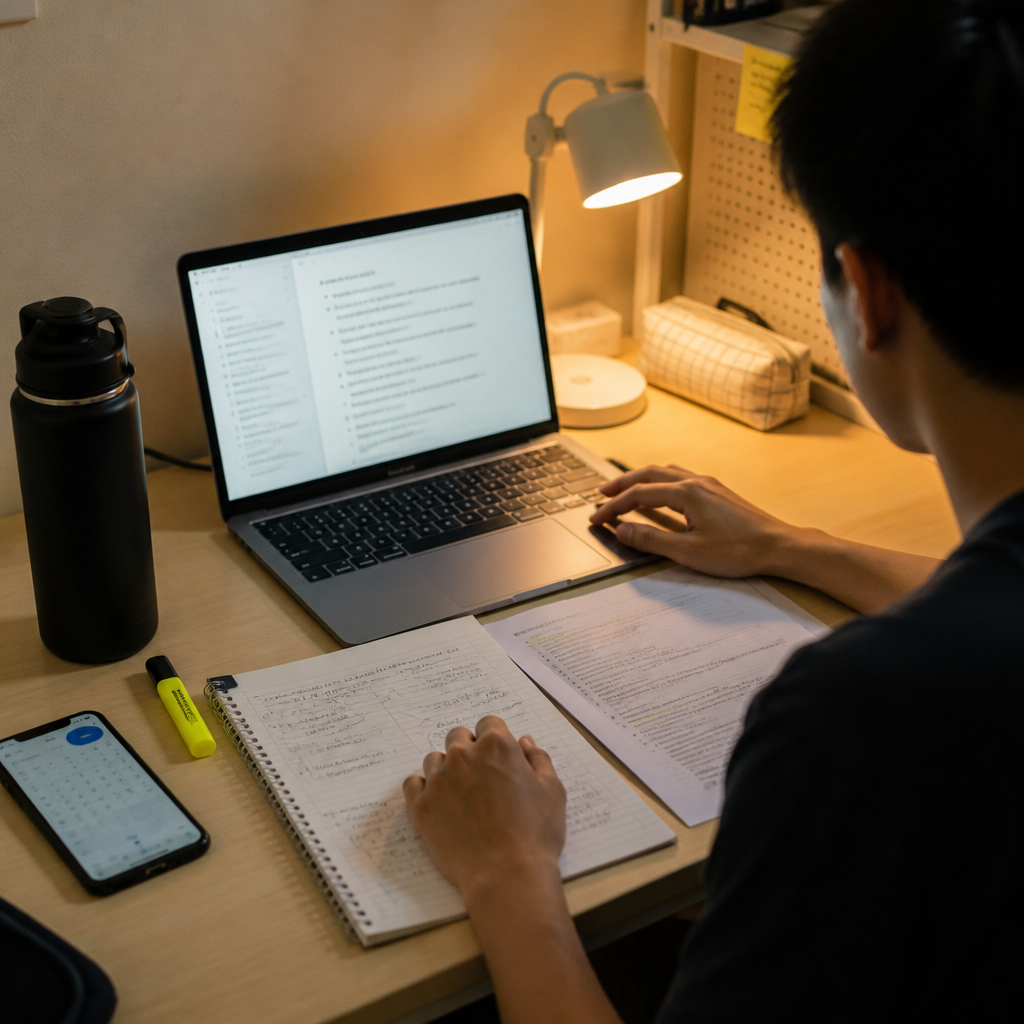
- What did I do?
- How did I do it?
- Why did it matter?
That shift alone can make your bullet points much more convincing.
Weak: “Volunteered at event”
Better: “Supported registration and crowd guidance for a community event, assisting attendees with directions and check-in throughout the day.”
Weak: “Did school project”
Better: “Worked in a four-member team to research consumer behaviour trends and present findings using PowerPoint and survey data.”
This is also one of the best ways to improve a resume for university students. Even older students sometimes list modules or projects without explaining what they actually contributed, which makes the experience feel thinner than it really is.
A useful extra tip is to add numbers where they are honest and relevant. You do not need dramatic achievements, but simple details such as “coordinated a team of 6”, “presented to 40 students”, or “handled registration for 120 attendees” make your experience easier to picture. Numbers give scale and help the reader understand the level of responsibility involved.
What To Include In A Student CV In Singapore
If you are unsure what to include in a CV as a student in Singapore, keep it practical. Most student CVs are stronger when they are clear, relevant, and easy to scan.
For many applications, one page is enough. Two pages can be acceptable for university students with more substantial experience, but many students improve their CV more by cutting clutter than by adding more content.
Core sections to include
A strong student CV in Singapore usually includes:
- Name and contact details, so employers can reach you easily.
- Short profile or objective, if it is tailored and useful.
- Education, including your current school, course, and expected graduation year if relevant.
- Relevant experience, including jobs, internships, projects, or practical responsibilities.
- CCA, leadership, volunteering, or projects, especially if they show initiative or teamwork.
- Skills, such as software, languages, customer service, research, or presentation skills.
- Awards or certifications, if they support the role.
Do not include your NRIC number, full home address, religion, race, or a passport-style photo unless specifically requested. In most cases, local CV expectations are cleaner and more straightforward than students assume.
Example of a useful profile summary
Sometimes the summary section becomes too generic to help. A line like “Motivated student seeking opportunities to learn and grow” sounds pleasant, but it says almost nothing.
A better summary gives context quickly:
“Year 2 polytechnic business student with experience in school event planning, team presentations, and customer-facing volunteer roles. Seeking a part-time retail or admin role where I can contribute strong communication and organisation skills.”
That version is easier to picture. It tells the reader who you are, what you have done, and what kind of role you are aiming for.
Make your skills section believable
This is where many student CVs become weaker without realising it. The skills section often gets filled with broad claims like “hardworking”, “leadership”, “team player”, or “multitasking”, but nothing else in the CV proves them.
A more convincing skills section uses specific, practical skills that are supported elsewhere. For example:
- Microsoft Excel for basic data entry, tables, and simple analysis
- PowerPoint for presentations and project slides
- Canva for publicity materials and simple design work
- Bilingual communication in English and Mandarin
- Customer service from volunteer or event roles
- Basic video editing for school or CCA content
- Event coordination through school activities or student leadership
If you claim Canva, show where you used it. If you claim Excel, mention budgeting, data entry, or project analysis. The strongest CVs feel consistent from top to bottom.
Tailor Your CV For Part-Time Jobs, Internships, And University Applications
One reason decent student CVs get ignored is that they are sent everywhere without adjustment. The content may not be wrong, but it may not feel relevant enough.
If you want to improve your student CV, tailoring is one of the highest-impact habits you can build.
For part-time jobs
For F&B, retail, events, reception, or admin work, focus on availability, punctuality, communication, customer interaction, and teamwork. These employers are often hiring for a fast-moving environment, so they need to know whether you can be trusted to show up and handle people well.
If you are applying for a café role, your debate competition may matter less than your open house duty, service experience, or volunteer role dealing with people. Even simple details like weekend or public holiday availability can matter because they answer a practical concern directly.
For internships
For internships, lead with relevant coursework, projects, technical tools, presentations, teamwork, and problem-solving. Recruiters usually want evidence that you can contribute while learning.
A polytechnic engineering student should not bury technical modules below a long list of secondary school achievements. A university social science student can highlight research writing, interviews, survey work, or data analysis. The closer your CV connects your studies to the role, the stronger it feels.
For university or scholarship applications
When applying for further studies or scholarships, highlight academic consistency, leadership, service, commitment over time, and intellectual interest. These applications often reward depth over variety.
“Peer tutor for lower secondary Mathematics” suggests competence and willingness to help. “Organised VIA activities across two years” suggests steady effort. That kind of continuity often stands out more than a long but scattered list.
A simple way to tailor faster is to read the application description and underline repeated words. If “customer service”, “teamwork”, and “weekend shifts” appear several times, those should be visible in your CV if they are true for you. If the internship mentions “research”, “Excel”, and “presentation”, move those items higher instead of hiding them near the bottom.
What to Emphasise at Different Student Stages
Different student stages call for different emphasis. A secondary school student should not copy a university CV template, and a final-year undergraduate should not rely too heavily on old school achievements.
Secondary school students
At this stage, your CV may be for DSA-related opportunities, leadership programmes, volunteer roles, enrichment applications, or a first part-time job. Lean on CCA participation, school events, prefect or student council work, volunteering, competitions, and strengths in specific subjects.
If you have responsibilities outside school, include them if they are relevant. Helping with family business operations on weekends can be useful if it involved customer interaction, stock handling, or simple admin work.
JC or IB students
JC and IB students often face heavy academic pressure and may not have a long list of external activities. That is perfectly fine. Focus on subject strengths, research or project work, leadership roles, service learning, event organisation, and tutoring or mentoring juniors.
Many JC students underrate presentation-heavy project work. But if you researched a topic, analysed sources, and presented clearly, that is already useful experience for internships, scholarships, and university applications.
Polytechnic, ITE, and university students
Polytechnic and ITE students often already have strong CV material, such as module projects, practical assignments, software tools, internships, labs, workshop tasks, and industry exposure. Make those applied skills visible.
University students should trim older achievements and bring recent, relevant experience to the front. Include internships, research assistance, leadership, freelance work, campus involvement, and technical or analytical strengths. For male students, NS can also be useful to include where relevant, especially if it involved admin support, logistics planning, training coordination, or section leadership.
Formatting, Keywords, And Common CV Mistakes
Even when the content is decent, presentation can quietly weaken your application. A recruiter who looks at your CV for 20 seconds will notice formatting problems immediately.
Keep formatting clean and professional
Use a simple professional font, consistent bullet points, clear headings, and reverse chronological order. British spelling is usually appropriate in Singapore, so words like “organised” and “programme” are generally preferred.
Save the file as a PDF unless the application asks otherwise. Name it properly, for example: `TanWeiMing_CV.pdf`. Small details like this shape first impressions faster than many students realise.
Use keywords naturally
If the role description mentions customer service, teamwork, Excel, administrative support, or content creation, and you genuinely have those experiences, reflect them in your CV. This helps the application feel aligned.
The key is not to copy and paste the job ad. It is to match real experience to real requirements. Natural phrasing always reads better than awkward keyword stuffing.
Common mistakes to avoid
A lot of CV problems come down to a few repeated habits. Here is a clearer way to spot them:
For students hoping to build both communication confidence and stronger academic profiles over time, resources such as Singapore Tuition Teachers may also support that broader growth.
Frequently Asked Questions
How long should a student CV be in Singapore?
For most students, one page is ideal. If you are in university and already have internships, projects, leadership roles, and certifications, two pages can be acceptable. Even then, relevance matters more than length, so do not stretch the document with weak or outdated content.
Should I include my PSLE or O-Level results?
Usually, include your highest or most relevant qualifications. Secondary school students may mention their current school and stronger academic areas. Polytechnic, ITE, and university students generally do not need to list older results in full unless the application specifically asks for them.
Can I include CCA and volunteering if I have no job experience?
Yes, absolutely. For many students, this is the strongest starting point. What matters is not just naming the activity, but explaining your role and contribution clearly so the reader can see the value.
Do I need different CVs for internships and part-time jobs?
Yes. You can start with one master CV, then adjust it for each application. A part-time job CV should emphasise reliability, service, and availability. An internship CV should focus more on projects, technical skills, and relevant coursework.
What should I do before sending my CV?
Read it once for relevance and once for errors. Check whether the top half of the page clearly matches the role, whether your bullet points sound specific, and whether your contact details are correct. If possible, ask a teacher, tutor, or trusted senior to review it before you apply.
Where can I check official education and skills information in Singapore?
For official education information, visit the Ministry of Education Singapore. For skills development and training resources, visit SkillsFuture Singapore.
Conclusion
Learning how to improve your CV as a student is often less about inventing experience and more about recognising what already counts. A school project can show research and teamwork. A CCA role can show discipline and leadership. Volunteering can show service and communication. NS can show structure and responsibility.
What matters most is how clearly you present those experiences and how well you match them to the opportunity in front of you.
If you are applying for part-time jobs, internships, or university opportunities in Singapore, keep your CV focused, tailored, honest, and easy to read. Start with what you already have, write it with more clarity, and refine it each time. A stronger student CV will not guarantee success, but it can absolutely help you get taken more seriously.
If you also want support in building the academic confidence, communication skills, and subject strengths that often feed into stronger applications, you can learn more about our tutors.