

Introduction
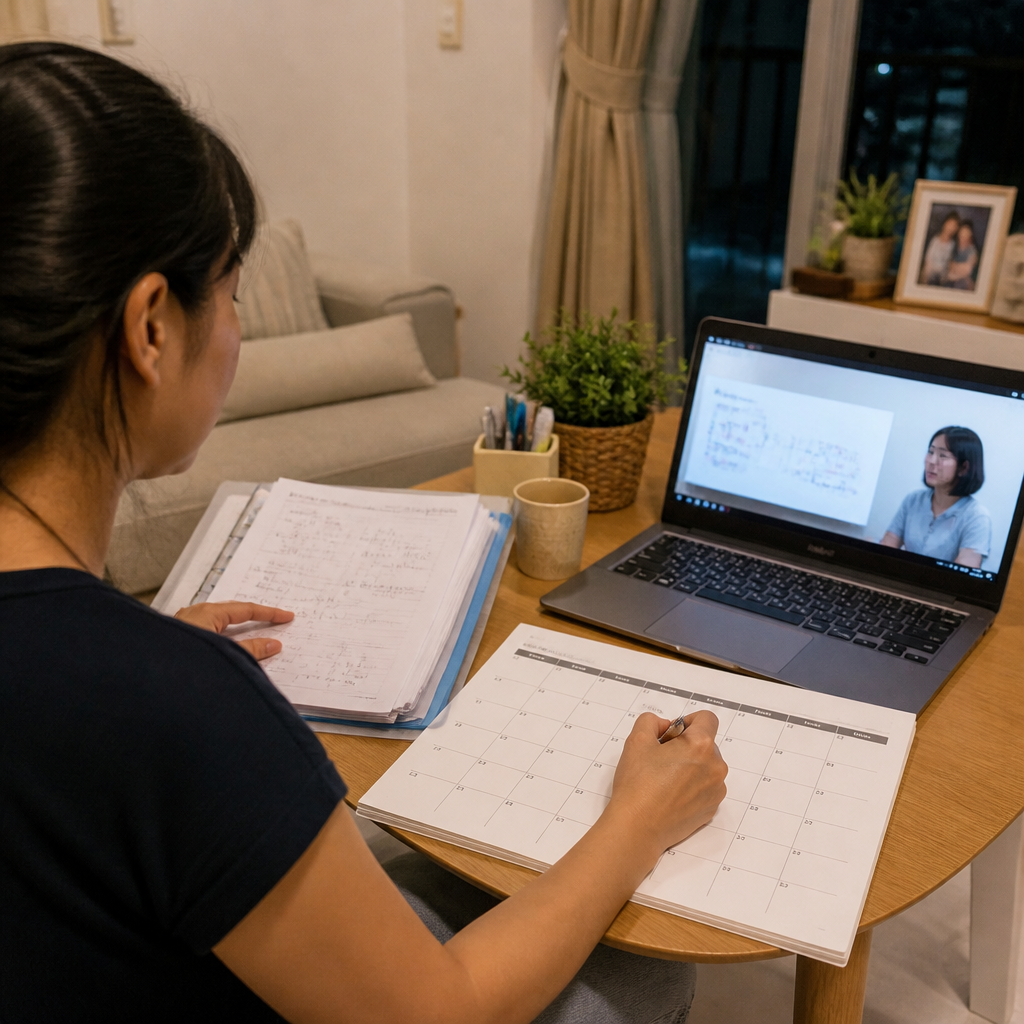
It usually starts with a familiar scene at home. The Math homework is still not done, the clock is creeping past 9.30pm, and everyone is getting tense. Your child says they “already studied”, but the mistakes keep coming. You are wondering whether to push harder, explain again, or just stop before the whole night turns into an argument.
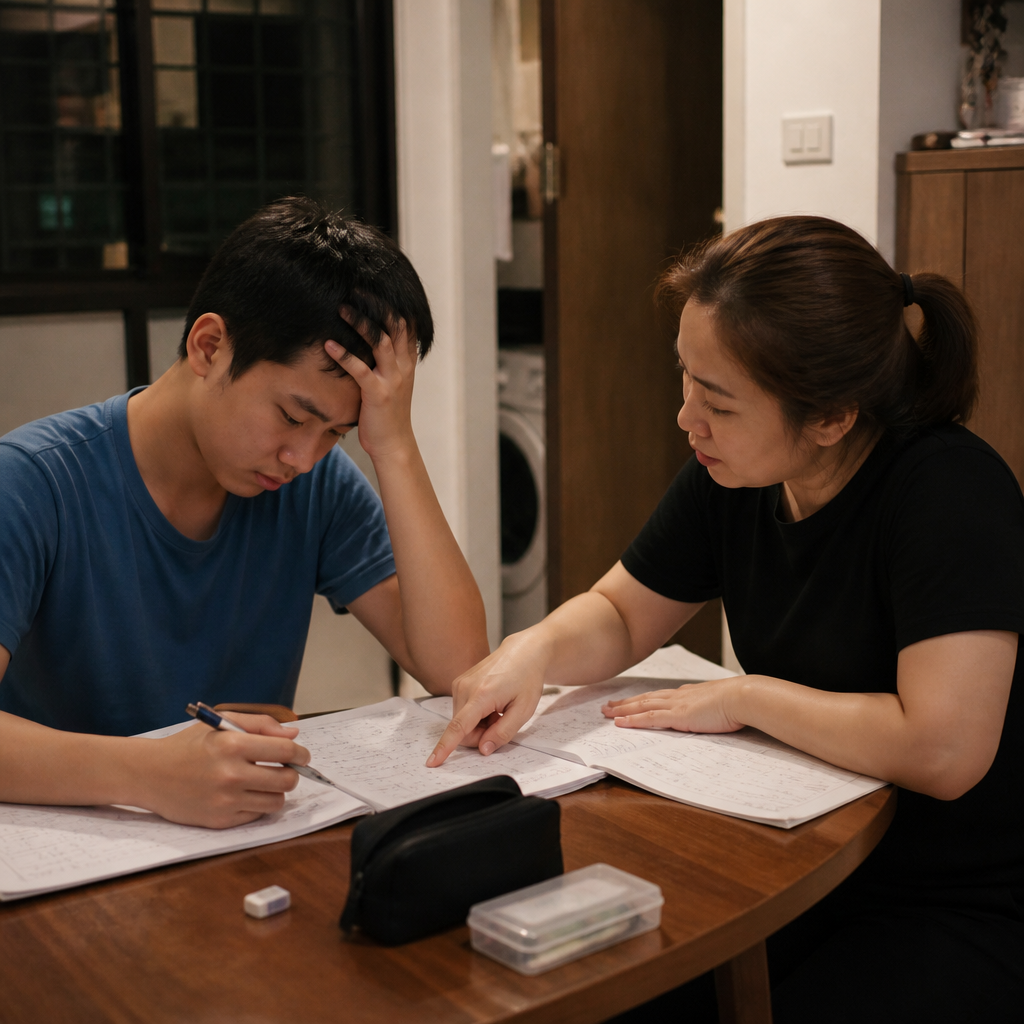
If you are trying to figure out how to study mathematics effectively in Singapore, you are not alone. Many students put in effort for Math and still feel stuck. A Primary 6 child may freeze at word problems. A Secondary 3 student may keep redoing TYS questions without really knowing why the answer works. A JC student may know the formula, but panic once the question looks unfamiliar.
The encouraging part is this, Math improvement is usually not about being “naturally good” at Math. More often, it comes down to using the right study system. In Singapore, where students prepare for weighted assessments and major exams such as PSLE, N-Level, O-Level, and A-Level Math, revision has to match the syllabus, question style, and school pace. This guide walks through how to study Math in a practical, step-by-step way so students can strengthen foundations, reduce careless mistakes, and build real problem-solving confidence.
Key Takeaways
- Build understanding before doing more papers. Many students keep drilling questions when the real issue is a weak concept, such as fractions, algebra manipulation, or graphs. Fixing the foundation first often improves speed and accuracy more than doing another ten pages of practice.
- Study by topic first, then move into exam practice. Topic-based revision helps students learn methods properly, while timed papers test whether they can apply those methods under pressure. Skipping straight to full papers too early often leads to frustration and shallow learning.
- Correcting mistakes matters more than counting worksheets. A student who reviews five wrong questions carefully can improve more than one who completes fifty questions mindlessly. The key is understanding exactly what went wrong and how to avoid it next time.
- Problem solving is a trainable skill. Fear of word problems is common in Singapore classrooms, especially when questions are phrased differently from school notes. Students get better when they learn to unpack information step by step at home.
- A realistic weekly routine works better than last-minute mugging. Between school, CCA, homework, and other subjects, Math revision needs structure. Short, regular sessions usually beat one long, exhausting weekend session.
- Parents can support without becoming the “revision police”. Children often shut down when every Math session turns into stress or comparison. Calm structure, clear expectations, and practical help usually work better than pressure.
- Tuition can help when it targets the right gap. Some students need help with revision habits, confidence, or specific topics, not just more homework. If that is your child’s situation, a focused tutor can be one useful support option.
Understand What Math Exams In Singapore Actually Test
Before deciding how to study for secondary school Math exams or major national exams, it helps to be clear about what students are really being tested on. Many children think Math is only about getting the final answer. In reality, Singapore Math exams usually test a mix of content knowledge, method, reasoning, and accuracy.
Different levels, similar study principles
Across levels, Math exams usually test more than formula recall. Students need to understand the concept, choose the right method, show clear working, and apply ideas accurately under time pressure. As students move from primary to secondary and JC, the questions usually become less direct and require more flexible problem solving.
Why this matters for revision
A common mistake is revising Math as if it were a content-heavy subject. Reading notes may feel productive, but for Math, improvement comes from active use. Students need to know the topic, recognise question patterns, and apply methods with confidence.
To stay aligned, check your school’s exam format and the latest subject information from MOE and SEAB. Syllabuses and assessment details can change, so revision should match the student’s current level and school requirements.
Fix Weak Foundations Before Chasing More Practice
When students say, “I studied but still cannot do,” the problem is often not effort. It is a shaky foundation. Tutors often notice this pattern very quickly. A child may be hardworking, but if one key concept is weak, more worksheets just create more frustration.
Find the exact gap, not just the weak subject
“Bad at Math” is too vague to fix. The more useful question is, where exactly is the breakdown?
One student may understand formulas but make mistakes when rearranging equations. Another may be fine with algebra, but cannot interpret word problems. A Primary 5 child may know multiplication facts, but struggle once fractions and ratios appear in the same question.
Start by looking through recent worksheets, test papers, and corrections. Group mistakes into patterns.
If a Secondary 2 student keeps getting linear equations wrong, look closely. Are they dropping negative signs, expanding brackets wrongly, or not understanding the balance of equations at all? Each problem needs a different fix.
Relearn small chunks before practising again
Once the weak area is clear, go back one step. Not ten topics, just one. Review the school notes, worked examples, and a few guided questions. Then redo easy and medium questions before trying harder ones.
This is especially helpful for weaker students. Many jump into difficult assessment books too early, then feel defeated. Small wins matter. They rebuild confidence and make later practice more meaningful.
Build A Weekly Math Study Routine That Actually Works
A good Math study routine in Singapore has to be realistic. Students are balancing school, CCA, homework, other subjects, and sometimes tuition too. The best study plan is not the most intense one. It is the one a student can actually sustain.
Use short, regular sessions
Math is easier to retain when practised consistently. Instead of one long four-hour Sunday session, many students do better with three to five focused sessions a week.
A practical routine might look like this:
- One session to review classwork and note unclear concepts. This helps students catch confusion early instead of letting it pile up.
- Two sessions for topic-based practice. These should focus on one area at a time, such as algebra, fractions, or trigonometry.
- One session for corrections and error review. This is often where the real learning happens.
- One timed mini-practice closer to exams. Short timed sets help build pacing without overwhelming the student too early.
A common pattern among students is waiting until the week before the exam, then trying to “catch up” with everything at once. That usually creates panic, not mastery.
Match the routine to the school calendar
Revision should shift with the season. During normal school weeks, focus on keeping up with current topics and fixing confusion early. Before WA, MYE, prelims, or national exams, move gradually towards mixed-topic and timed practice.
Many students preparing for secondary school exams spend too much time on familiar chapters and avoid the harder ones. A weekly plan helps prevent that.
If your child is consistently struggling to stick to a revision plan, extra support may help. For targeted help with habits, confidence, and topic practice, parents can explore our Maths tutors or contact us for private home tuition.
Use Topic Practice And Mistake Correction To Improve Faster
Doing many questions is not the same as studying well. One very common pattern is this, students finish a worksheet, check answers, circle the wrong ones, and move on. It feels efficient, but very little learning happens.
Practise by topic before mixing everything
Topic practice helps students recognise standard patterns. If a student is learning simultaneous equations, they need enough exposure to substitution, elimination, and question wording before mixed papers start making sense.
A useful sequence is:
- Do a few guided examples. This lets the student see the method clearly first.
- Complete easy and medium questions. These build accuracy and confidence.
- Attempt harder or unfamiliar variants. This is where deeper understanding starts to grow.
- Explain the method aloud or in writing. A student who can explain the choice of method usually understands it better.
That last step is often overlooked. It quickly shows whether the student understands the logic or is only copying a pattern.
Keep an error notebook that is actually useful
A good error notebook is not just a book full of random corrections. It should capture recurring mistakes and what to do differently next time.
For example, a student may note that they forgot to change the sign when moving a term across an equation, misread “at least” in a probability question, used the area formula instead of the volume formula, or failed to define variables clearly in a word problem. Those are not random slips. They are patterns.
Once students can see their own patterns, revision becomes much more efficient. Instead of repeating the same mistake for months, they start correcting the habit behind it.
Improve Math Problem Solving Skills At Home
Word problems can trigger panic very quickly. A student may be able to solve ten algebra questions, then freeze when the same algebra appears in a real-life context. That is why so many parents ask how to improve Math problem-solving skills at home.
Slow down the reading, not just the calculation
Many students rush because they are afraid of not knowing what to do. Ironically, that usually makes things worse. Encourage them to mark out key information, identify what is being asked, and rewrite the question in simpler language.
When a ratio problem confuses a Primary 6 student, ask:
- What do we know first?
- What changed?
- What stayed the same?
- What are we supposed to find?
These questions sound simple, but they help break the panic cycle. At secondary level, if a geometry or algebra word problem looks messy, getting the student to define variables clearly before calculating often helps them organise the information.
Build reasoning through small discussions
Problem solving improves when students talk through their thinking. Parents do not need to know advanced Math to help with this. Even asking, “Why did you choose this method?” can help a child reflect.
Tutors often notice that many students are too dependent on answer keys. They check too early, then imitate the model solution without understanding it. At home, it helps to let the student struggle productively for a few minutes before stepping in. Not so long that they shut down, but long enough for real thinking to happen.
If they are truly stuck, give a clue instead of the full solution. That keeps ownership of the thinking with the student.
Build Formula Recall, Speed, And Exam Confidence
Knowing the concept is one thing. Recalling it under pressure is another. This is where many students lose marks in school exams and national exams.
Memorise formulas through use, not just reading
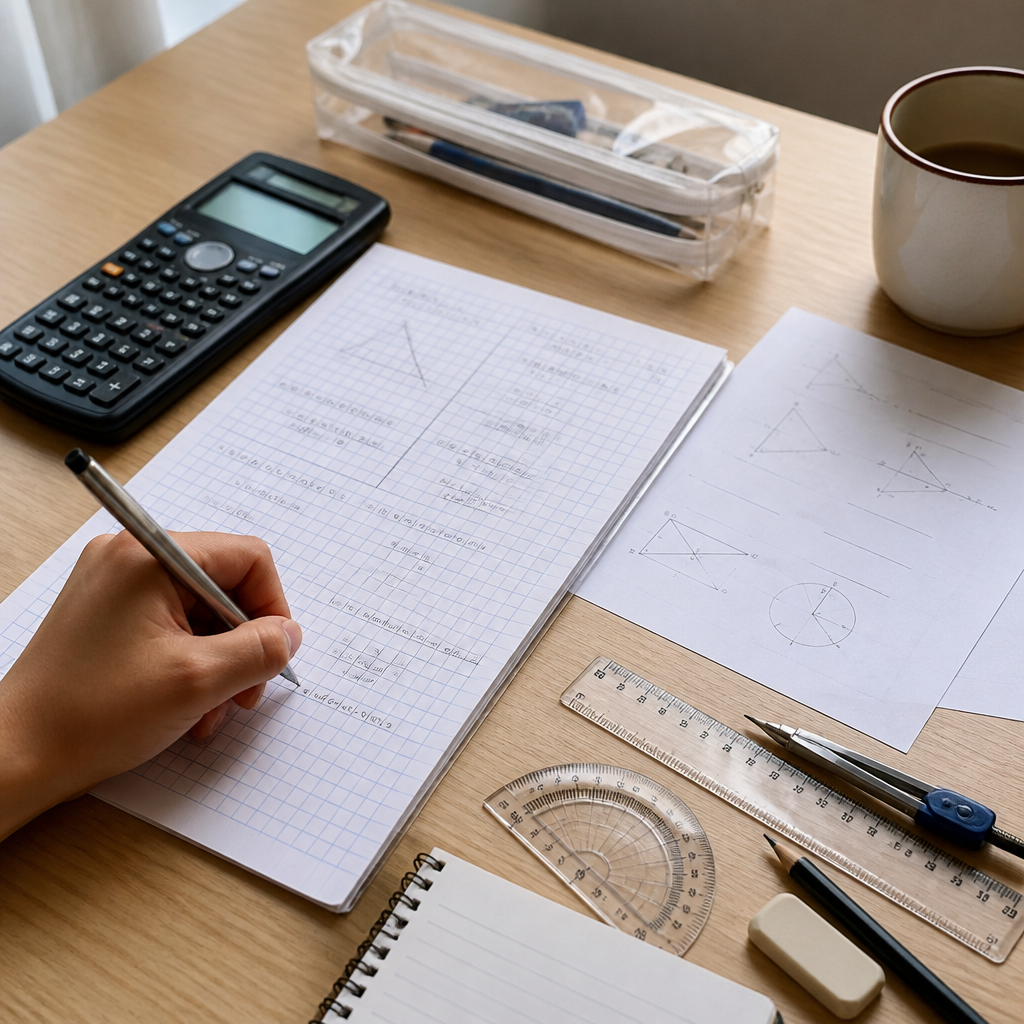
Formula recall improves when students use formulas repeatedly in context. Flashcards can help, but only if followed by questions. A Secondary student who keeps forgetting the quadratic formula or area and volume formulas should practise identifying when each formula is needed, not just reciting it.
For JC students, this matters even more. A-Level questions often test whether students can select the right method from several possibilities. Passive memorisation is not enough.
Add timed practice only after understanding
Timed practice is necessary, but starting too early can backfire. If a student does not understand the topic yet, timing them only increases anxiety. First build familiarity, then add light time pressure.
This is often when students finally see what effective Math revision really looks like. Exam performance is not only about knowledge. It is also about pacing, stamina, and staying calm after one difficult question.
How Parents Can Support Math Revision Without Creating More Stress
Parents usually mean well, but Math revision can become emotionally loaded very quickly. You may be worried because exams are close. You may feel guilty for not having enough time. You may also be unsure whether to supervise more closely or back off. That uncertainty is very common.
Support structure, not constant monitoring
When parents ask how to help with Math revision in Singapore, the answer is rarely “sit beside the child for two hours every night.” That often leads to arguments, especially if the child already feels ashamed or anxious.
A better role is to support routine and accountability:
- Set a regular revision slot.
- Make sure materials are organised.
- Ask what topic is being revised today.
- Check whether mistakes were corrected, not just whether pages were completed.
Sometimes a small change in wording helps too.
Instead of: “Why are you still weak in fractions?”
Try: “Show me which two fraction questions gave you trouble today.”
That keeps the conversation specific and calmer.
Know when extra help is needed
Sometimes the issue is no longer motivation. It may be a genuine learning gap, low confidence, or repeated misunderstanding that needs outside explanation. Tuition is not the only answer, but for some students, targeted support can make home revision much less stressful.
If your child needs extra support with revision habits, problem-solving practice, or building confidence in Math, you can contact us for private home tuition.
Frequently Asked Questions
How long should a student revise Math each week in Singapore?
It depends on the student’s level and current standard, but consistency matters more than marathon sessions. A student coping reasonably well may benefit from three to five short sessions a week. A weaker student may need more frequent review, but in shorter blocks so they do not burn out. The goal is steady practice, not exhaustion.
What is the best way to study Math before PSLE, O-Level, or A-Level exams?
Closer to major exams, revision should include topic review, error correction, and timed papers. Do not rely only on full papers. If a topic is still weak, go back and fix it first. Students should also align practice with their school level and check the latest exam information from MOE and SEAB.
My child keeps making careless mistakes. Is it just a focus issue?
Not always. “Careless” mistakes can come from rushing, weak working habits, poor question reading, or not checking units and signs. If the same type of mistake keeps happening, it is usually a pattern that can be corrected, not just a focus problem. Looking at the student’s error patterns is usually more useful than simply telling them to be careful.
How can weak students improve in Math without getting overwhelmed?
Start smaller than you think. Focus on one weak topic, review the concept clearly, practise a few manageable questions, and correct mistakes carefully. For many weaker students, steady progress comes from building confidence step by step, not from doing more and more difficult papers. A calm routine often works better than a heavy one.
Conclusion
Learning how to study mathematics effectively in Singapore is not about cramming harder or doing the most worksheets. It is about using a system that matches how Math is tested and how students actually learn. Build weak foundations first. Practise by topic before rushing into full papers. Review mistakes properly. Use formula recall and timed practice at the right stage. Most importantly, treat problem solving as a skill that can be trained, not a mysterious talent that some children simply have and others do not.
For parents, steady support often works better than pressure. For students, small consistent effort usually beats last-minute panic. If revision at home keeps ending in frustration, or your child needs more structured help with concepts, practice, and confidence, you can learn more about our Maths tutors or contact us here.