

Introduction
If you have been comparing preschool options in Singapore and somehow feel more confused after reading more, you are definitely not alone. Many parents start with one simple question, what is MOE Kindergarten? Then the real worries creep in. Will my child cope? Is it too structured? Not structured enough? Will it help with Primary 1, or just make our daily routine harder?
MOE Kindergarten, often called MK, is a preschool run by the Ministry of Education for children in K1 and K2. It is designed to support early literacy, numeracy, social skills, and positive learning habits before Primary 1. For some families, it feels like a reassuring bridge into formal schooling. For others, the shorter hours compared with full-day childcare raise very real practical concerns.
This guide explains what MOE Kindergarten is, who it may suit, what children do there, how the MK curriculum works, how it compares with childcare and other preschool options in Singapore, and what parents should check before applying. As policies, fees, and school-specific arrangements can change, always confirm the latest details with MOE and ECDA.
Key Takeaways
- MOE Kindergarten is a government-run preschool for K1 and K2 children. It focuses on school readiness through purposeful play, early language exposure, numeracy, and social development rather than pushing formal academics too early. This makes it a structured but age-appropriate option for many families.
- It is different from full-day childcare. The biggest difference usually comes down to programme hours, care arrangements, and daily routine. Parents who need longer supervision, meals, naps, and full-day care should compare these practical details carefully before deciding.
- The curriculum builds readiness for Primary 1 gradually. Children develop early literacy, numeracy, communication, self-management, and confidence in group settings. These foundations often matter just as much as academic skills when children enter primary school.
- It may suit children who benefit from a gentle introduction to school life. Because many MKs are located within or near selected primary schools, children can become familiar with a school environment, routines, and expectations before Primary 1 begins.
- Working parents need to think beyond curriculum. Transport, pick-up arrangements, after-school care, and the child’s energy levels all affect whether MK is a realistic fit for the family.
- Admissions follow official timelines and eligibility rules. Parents should check vacancies, age requirements, documents, and application windows directly through MOE rather than relying on old forum posts or second-hand advice.
- The best preschool choice is about fit, not reputation alone. A programme can be well-regarded and still not suit your child’s temperament or your household routine. The better question is whether your child is likely to feel secure, supported, and ready to grow there.
What MOE Kindergarten Is And Who It May Suit
When parents ask what MOE Kindergarten is, they are often trying to place it somewhere in their minds. Is it like childcare? Like a private preschool? Like a mini version of primary school?
The clearest answer is this, MOE Kindergarten is a government-run kindergarten programme for children in K1 and K2, designed to support holistic development and ease the transition to formal schooling.
A preschool with a school-readiness focus
MOE Kindergarten is not meant to turn five-year-olds into Primary 1 pupils ahead of time. That is an important distinction. Instead, it helps children build the foundations they will need later, such as listening, speaking, early reading awareness, basic numeracy concepts, self-management, confidence in group settings, and the ability to follow routines.
That matters more than many parents first realise. Some children do not struggle in Primary 1 because they lack ability. A common pattern among students is that the harder part is adjusting to instructions, transitions, waiting, turn-taking, or learning in a bigger group. A child may know letters and numbers, but still feel overwhelmed by the rhythm of school life. MK is meant to support that broader kind of readiness.
Which families may find it suitable
MOE Kindergarten often appeals to parents who want a structured preschool environment with a clear educational direction. It may feel especially reassuring if you want your child to become comfortable with a primary school setting, since many MKs are linked to selected primary schools.
Still, suitability is never only about the school itself. Some children thrive in a calm, predictable routine. Others still need longer care hours, naps, meals, and extended supervision. Tutors and educators often notice that when parents focus only on reputation, they can miss the bigger issue, whether the setup actually fits the child and the household.
What K1 And K2 At MOE Kindergarten Look Like
Parents often imagine one of two extremes. Either children are just playing all day, or they are sitting through something too academic for their age. In reality, the daily experience is usually much more balanced.
What children learn in K1
K1 is usually about settling in, building routines, and becoming comfortable with group learning. Children learn to listen to stories, express themselves, join songs and conversations, notice patterns and numbers, and manage simple classroom expectations.
A child in K1 may spend part of the morning listening to a story, then talking about the characters, then doing a hands-on activity linked to it. To some adults, that may not look “academic” enough. But it is building vocabulary, attention, sequencing, oral confidence, and comprehension. Those early foundations matter, even if they do not come in the form of thick worksheets.
What changes in K2
By K2, the same foundations continue, but children are usually expected to show a little more maturity. They may follow multi-step instructions more independently, take part in discussions, work with classmates, and handle slightly longer tasks. Early literacy and numeracy are strengthened, but still in age-appropriate ways.
This is also the stage when many parents start comparing. One child is reading fluently. Another is still sounding out simple words. One counts easily. Another hesitates. That comparison can create a lot of anxiety. But uneven development at this age is common, and it does not always predict how a child will do later. What matters more is whether the child is progressing steadily and building confidence along the way.
What school readiness really means
School readiness is not just about phonics or number bonds. It also includes practical and emotional skills, such as waiting for a turn, coping with mistakes, packing up after an activity, speaking to adults respectfully, and recovering after small setbacks.
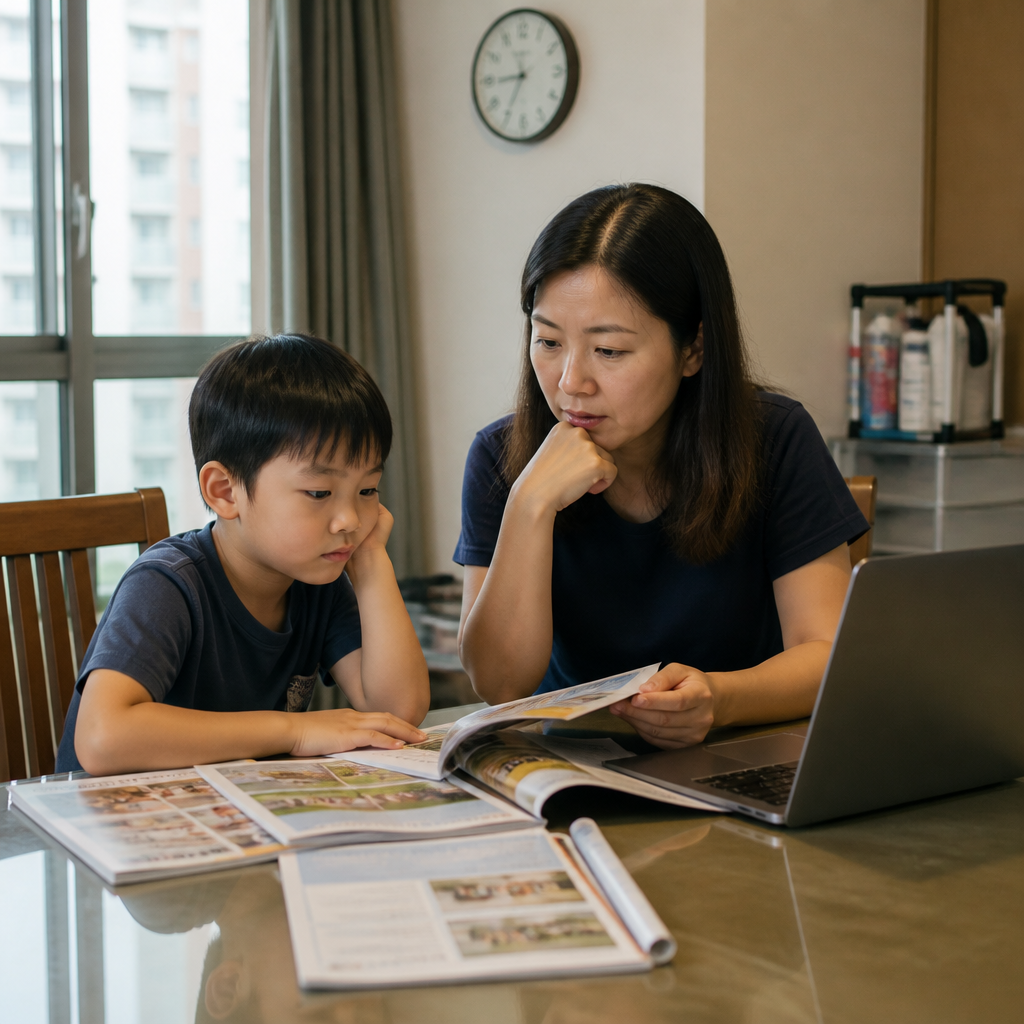
That is why a child who can complete enrichment worksheets at home may still struggle in a preschool setting, while another child with average academic skills but stronger independence may settle beautifully into Primary 1. Readiness is bigger than academics, and many parents only fully see that later.
How The MOE Kindergarten Curriculum Supports Early Learning
The MOE Kindergarten curriculum is built around holistic development, not narrow drilling. That phrase can sound vague at first, so it helps to look at what it means in practice.
Early literacy and language development
Children are exposed to stories, conversations, songs, shared reading, and language-rich activities. The goal is not only to learn letters and sounds, but also to understand how language works. They build vocabulary, listening skills, confidence in speaking, and enjoyment of books.
This matters more than it may seem in the preschool years. Later on, some children can decode words but struggle badly with comprehension because they learned to “read the sounds” without really connecting with meaning. A stronger language foundation in preschool supports later learning more naturally.
Early numeracy through understanding
Numeracy at this stage is not about endless number writing. Children learn counting, sorting, comparing quantities, recognising patterns, and understanding simple relationships between numbers.
A child arranging objects by size or noticing which group has more is doing meaningful mathematical thinking. In fact, when children are pushed too quickly into rote workbook practice, they may look advanced early on but become shaky when deeper understanding is needed later. Good preschool numeracy builds number sense, not just speed.
Social and emotional development
Preschool is where many children learn some of their hardest lessons, and not on paper. Sharing materials, handling disappointment, speaking up without shouting, joining group activities, and asking for help appropriately can be more demanding than tracing letters.
For parents, this part can feel surprisingly emotional. You may hear that your child cried during transitions, resisted group work, or struggled to sit with others. That does not automatically mean your child is not ready. Sometimes it simply means this is the season when those skills are still being built.
Learning through purposeful play
Purposeful play is often misunderstood as “just play”. In a strong preschool setting, play is used intentionally to develop language, thinking, cooperation, creativity, and curiosity. A pretend grocery shop can support vocabulary, counting, turn-taking, and confidence. A building activity can strengthen problem-solving, persistence, and spatial awareness.
This is one reason early childhood educators are often cautious about pushing formal academics too early. Young children usually learn best when ideas are connected to movement, conversation, stories, and hands-on exploration.
MOE Kindergarten vs Childcare In Singapore
For many families, this is the real decision. Not whether one option is good and the other is bad, but which model actually works for the child and the family.
Here is a simple side-by-side view.
Programme hours and care needs
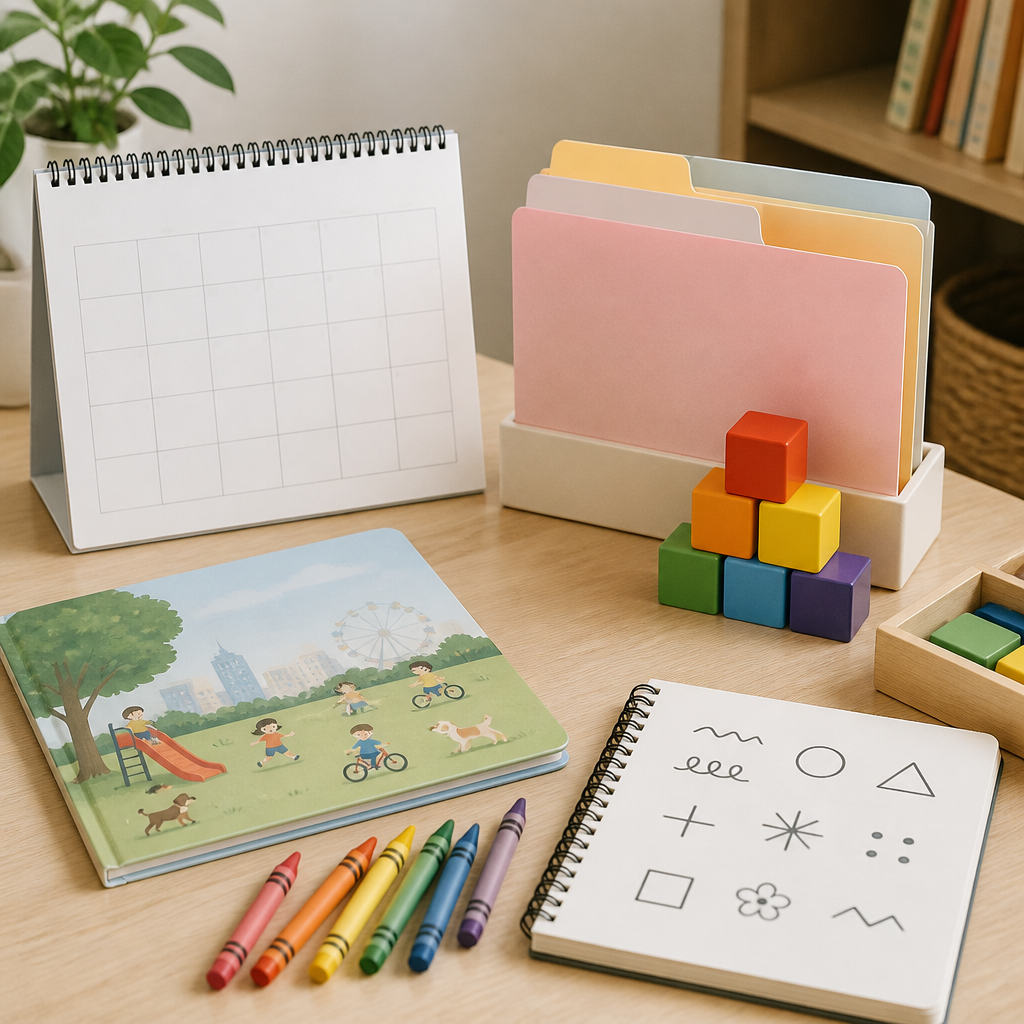
MOE Kindergarten is primarily an education-focused kindergarten programme, not a full-day care arrangement. For working parents, that is often the first major question. Not just “Is MK good?” but “Can our daily life actually support this?”
Childcare centres usually provide longer full-day coverage, often including meals, rest time, and extended supervision. For some households, that convenience is not a bonus. It is what makes the week workable.
Environment and daily structure
MKs are often located within or near selected primary schools. That can help children become familiar with a school environment and may make the transition to formal schooling feel less intimidating.
Childcare settings may vary more in style. Some are play-based, some more academic, some more care-oriented. That variety can be helpful, but it also means parents need to compare centres carefully rather than assuming all preschool options are broadly the same.
Which child may suit which setting
A child who is comfortable with shorter, focused learning sessions and has stable care support at home may do very well in MOE Kindergarten. A child who needs a full-day routine, rest time, and longer supervision may be better matched to childcare.
There is no prize for choosing the option that sounds more impressive if the daily reality leaves your child drained and your family under pressure. At this age, stability and emotional security matter a lot.
Is MOE Kindergarten Good For Singapore Families?
This is the question behind many searches. Is MOE Kindergarten good for K1 and K2 children in Singapore?
The honest answer is yes for some families, but not automatically for every child.
Why some parents value MK
Some parents appreciate the affordability, the MOE-linked framework, and the focus on school readiness. Others like that the environment feels less commercial and more connected to Singapore’s education system.
A child who benefits from routine, guided group experiences, and a gentle introduction to school norms may flourish here. Parents who want a balanced preschool experience, rather than one that feels aggressively academic, may also find MK appealing.
Why some parents hesitate
The hesitation is often not about educational quality. It is about family fit. If your child is not yet comfortable with shorter programme hours, or your work schedule depends on full-day care, the logistics can become stressful very quickly.
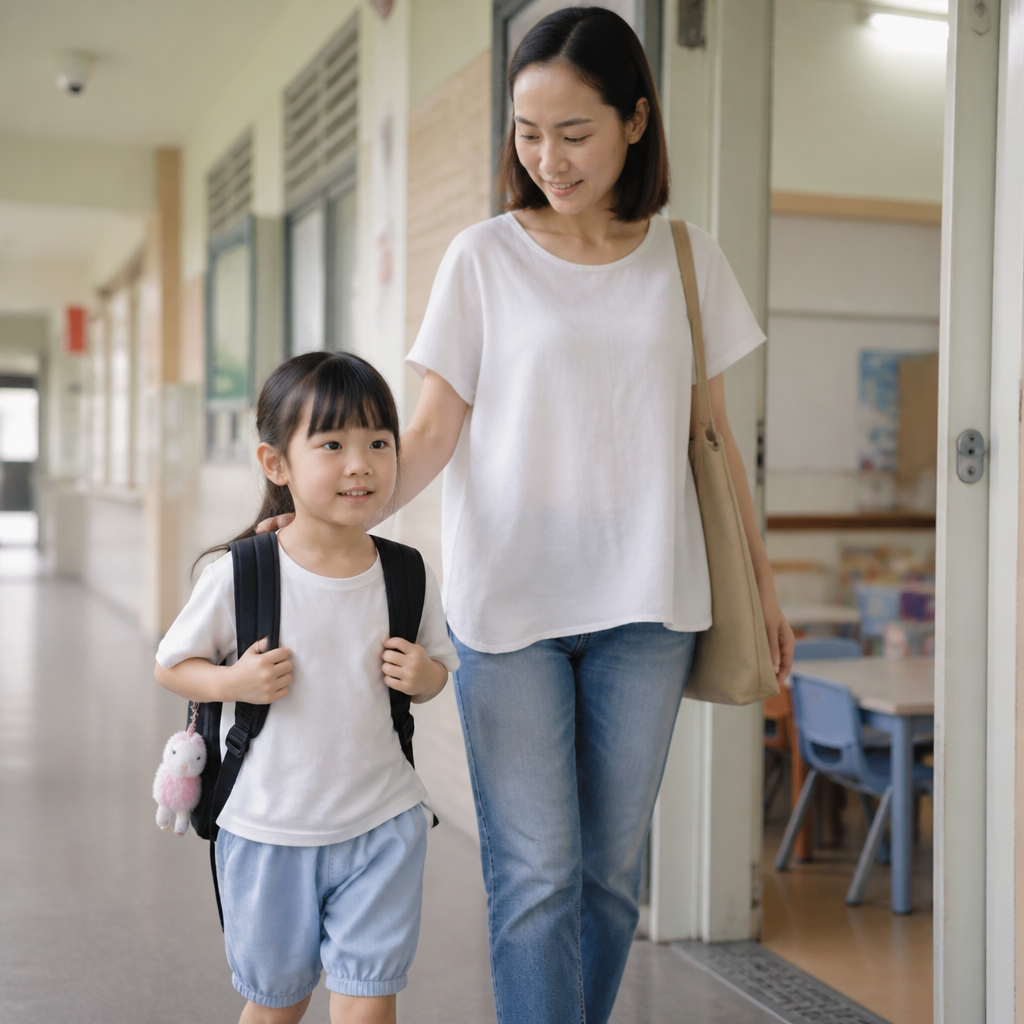
There is also an emotional layer many parents do not say out loud. Some worry they are not doing enough if they do not choose the more academic-looking option. Others feel guilty if MK seems suitable on paper but impossible in practice. In reality, a suitable preschool is one that supports both the child and the family.
A better question to ask
Instead of asking only whether MOE Kindergarten is good, it may help to ask:
- Will my child feel secure here?
- Will our routine be manageable?
- Will this setting help my child grow without adding unnecessary stress?
Those answers are often more useful than reputation alone.
What Parents Should Know About MOE Kindergarten Admission
The MOE Kindergarten admission process can feel intimidating at first, especially if this is your first child and every preschool decision feels high-stakes. Once you know what to check, it usually becomes much clearer.
How to apply
If you are looking into how to apply for MOE Kindergarten, start with the official MOE preschool pages and the specific MK’s information. Check eligibility, age group, application windows, vacancies, required documents, and whether the location is practical for your family.
Because timelines and details can change, it is best not to rely on old forum posts or second-hand advice. Always verify the latest information directly through MOE’s preschool pages.
What to prepare before applying
Before applying, look beyond the paperwork. Can your child manage the travel? Who will handle drop-off and pick-up? Is there a care arrangement before or after the programme? If your child needs more time to warm up in new settings, would a visit or orientation help?
These details often shape the experience more than parents expect. A preschool that looks ideal on paper may feel very different if every morning begins with a rushed commute and tears at the gate.
Fees, locations, and updates
Fees and locations matter, but it is wise not to assume they will stay exactly the same. Policies, subsidies, and operational arrangements may change. School-linked details may vary too.
If you want support beyond preschool selection, some families also look for gentle home help once children begin building early reading or number confidence. If that is relevant for your family, you can learn more about one-to-one support at home through Singapore Tuition Teachers.
Frequently Asked Questions
Is MOE Kindergarten the same as childcare?
No. MOE Kindergarten is not the same as full-day childcare. It is a kindergarten programme focused on preschool education and school readiness, while childcare usually includes longer care hours and broader daily care support such as meals, rest time, and extended supervision.
Will my child learn enough at MOE Kindergarten for Primary 1?
For many children, yes. The programme is designed to build early literacy, numeracy, social, and behavioural foundations needed for Primary 1. The aim is not to rush children into formal academics too early, but to prepare them in a developmentally appropriate way.
What if both parents are working full-time and MK hours seem too short?
This is one of the biggest practical concerns for families. MOE Kindergarten may still be possible if you have reliable care arrangements before or after the programme. For some households, though, full-day childcare is simply a better fit. It helps to be honest about what your daily routine can realistically support, rather than forcing an arrangement that creates constant stress.
Are all MOE Kindergartens the same?
They follow the same broad MOE approach, but parents should still check school-specific details such as location, operating arrangements, available support, and admissions information. The overall philosophy may be similar, but the day-to-day experience can still differ from one site to another.
Should I choose MOE Kindergarten just because it is linked to a primary school?
Not necessarily. The school-linked environment can be a plus, especially for children who benefit from becoming familiar with a school setting. Still, it should not be the only reason for your decision. Your child’s temperament, your family schedule, and the practical routine matter just as much.
Conclusion
So, what is MOE Kindergarten? It is a government-run K1 and K2 preschool option that helps children grow in language, numeracy, confidence, social skills, and readiness for primary school. For some Singapore families, it offers a reassuring and structured bridge into the school years. For others, the shorter hours and care arrangements may make another preschool model more suitable.
The right preschool choice is rarely about prestige alone. It is about whether your child feels secure, whether the programme supports healthy development, and whether your family can manage the routine without constant strain. As you compare preschool options in Singapore, pay attention to both the curriculum and the day-to-day reality.
Most importantly, check the latest admissions timelines, fees, eligibility rules, and school-specific details on MOE and ECDA, because these can change. If your child later needs extra support with early literacy, numeracy, or school-readiness skills, you can also explore gentle one-to-one help at home through Singapore Tuition Teachers.