


Introduction
When subject selection season comes around, many parents end up staring at a list of subject names that sound familiar, but not quite clear. POA is one of those subjects. It sounds serious, maybe even a bit intimidating, and many families wonder if it is only meant for students who are “good with numbers” or already thinking about accounting.
If you have been searching for what POA is in secondary school, the short answer is simple. POA stands for Principles of Accounts, and it teaches students how businesses record, organise, and interpret financial transactions in a structured way.
In Singapore, POA often comes up during subject selection in secondary school, especially when students are choosing between humanities, business-related subjects, or a more practical elective. For families trying to make sense of what Principles of Accounts means in a Singapore secondary school context, this guide breaks it down in plain language. We will look at what students learn, who may enjoy the subject, whether it is difficult, how it differs from accounting in the wider sense, and how students can score better in POA exams without turning revision into a nightly battle.
Key Takeaways
- POA is a structured business subject. It teaches students how to record financial transactions and understand basic business accounts. This means students are not just memorising definitions. They are learning a system with rules, logic, and clear formats.
- It is not only for future accountants. A student who likes organised thinking, spotting patterns, and understanding how money moves in a business may enjoy POA even if they have no intention of working in finance later on.
- The basics matter a lot. Many students find POA manageable once the foundation is clear. But when concepts like double entry or balancing accounts are shaky, later chapters can feel much harder than they really are.
- POA is different from professional accounting. In secondary school, the subject focuses on core principles. Students learn the logic behind accounts before moving into more advanced accounting ideas in later studies.
- Suitability matters more than trends. Some teenagers choose POA because friends are taking it, then struggle because they dislike precision-based work. Others do very well because they enjoy clear methods and definite answers.
- Exam success depends on accuracy and method. Students often lose marks through careless formatting, weak understanding of transaction flow, or memorising steps without knowing why they are doing them.
- School policies vary. POA may not be offered in every school or every subject combination. Always check the latest information on MOE’s subject offerings page and confirm details with your child’s school.
What POA Means In Secondary School
When parents first hear the subject name, they sometimes picture tax forms, office paperwork, or complicated adult finance terms. That is usually where the confusion begins. The easiest way to understand POA in secondary school is to see it as an introduction to how a business keeps track of money properly.
What students learn in simple terms
POA, or Principles of Accounts, teaches students the basic rules used to record business transactions. A student might learn how sales, purchases, expenses, assets, and liabilities are entered and organised. Over time, these records lead to financial statements that show how a business is performing.
That is why POA is not just about arithmetic. It is really about business logic. A student learns why one transaction affects two accounts, why records must balance, and why accuracy matters.
Common POA topics in Singapore secondary schools
Although the pace may differ from school to school, students commonly study topics like these:
For some teenagers, this feels satisfying because the rules are clear. For others, it feels frustrating at first because one transaction can affect multiple parts of the accounts. Tutors often notice that students who eventually do well are not always the fastest learners at the start. They are often the ones who slowly understand the logic and keep practising it.
Why POA feels different from other subjects
Unlike literature or history, POA is less about broad interpretation. Unlike mathematics, it is not only about calculation. Many students realise halfway through the term that POA is really a thinking subject disguised as a number subject.
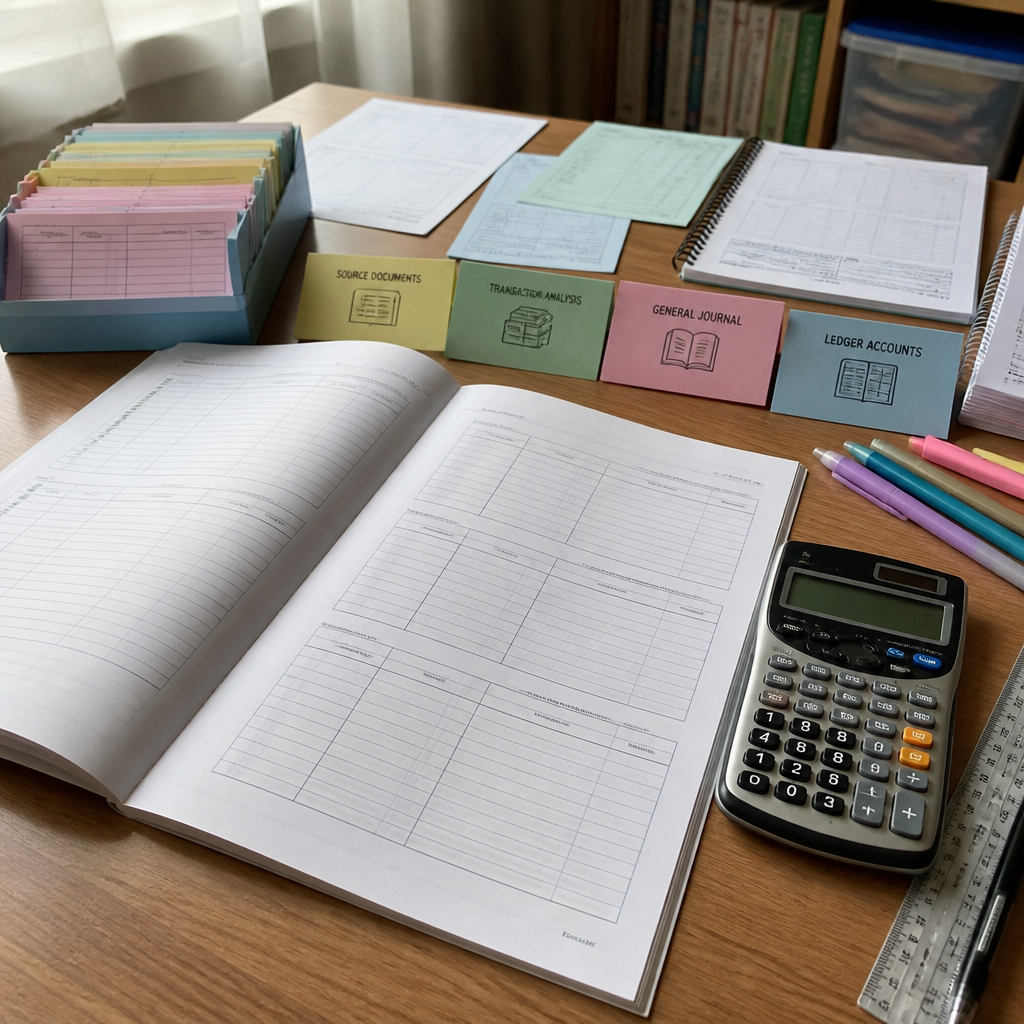
The numbers matter, but the deeper skill is classification and logic. If a student cannot tell whether something is an expense, asset, or liability, the arithmetic alone will not save them.
A helpful way to picture this is to imagine POA as a language with rules. Students are learning the grammar of business records. Once they understand the structure, the subject becomes much less mysterious. Without that structure, even simple questions can feel confusing.
Is POA Difficult For Secondary School Students In Singapore?
This is one of the most common questions families ask during subject selection. The honest answer is that POA difficulty depends more on learning style than raw intelligence.
Why some students find POA manageable
Some students take to POA quite naturally. They tend to like order, patterns, and step-by-step reasoning. They feel reassured when there is a clear method and a definite answer. For them, balancing accounts can feel almost like fitting puzzle pieces together.
These students often do well even if they are not top scorers in every subject. A teenager who enjoys checking whether things make sense may find POA more manageable than essay-heavy subjects.
Why others struggle even when they study hard
A child can spend hours revising POA and still score poorly. That does not always mean laziness. Very often, the problem is that the student is memorising formats without understanding the reason behind them.
A common pattern among students is this. They copy model answers, practise one familiar question type, feel quite confident, then freeze in the exam when the transaction is phrased differently. POA rewards understanding, not surface memorisation.
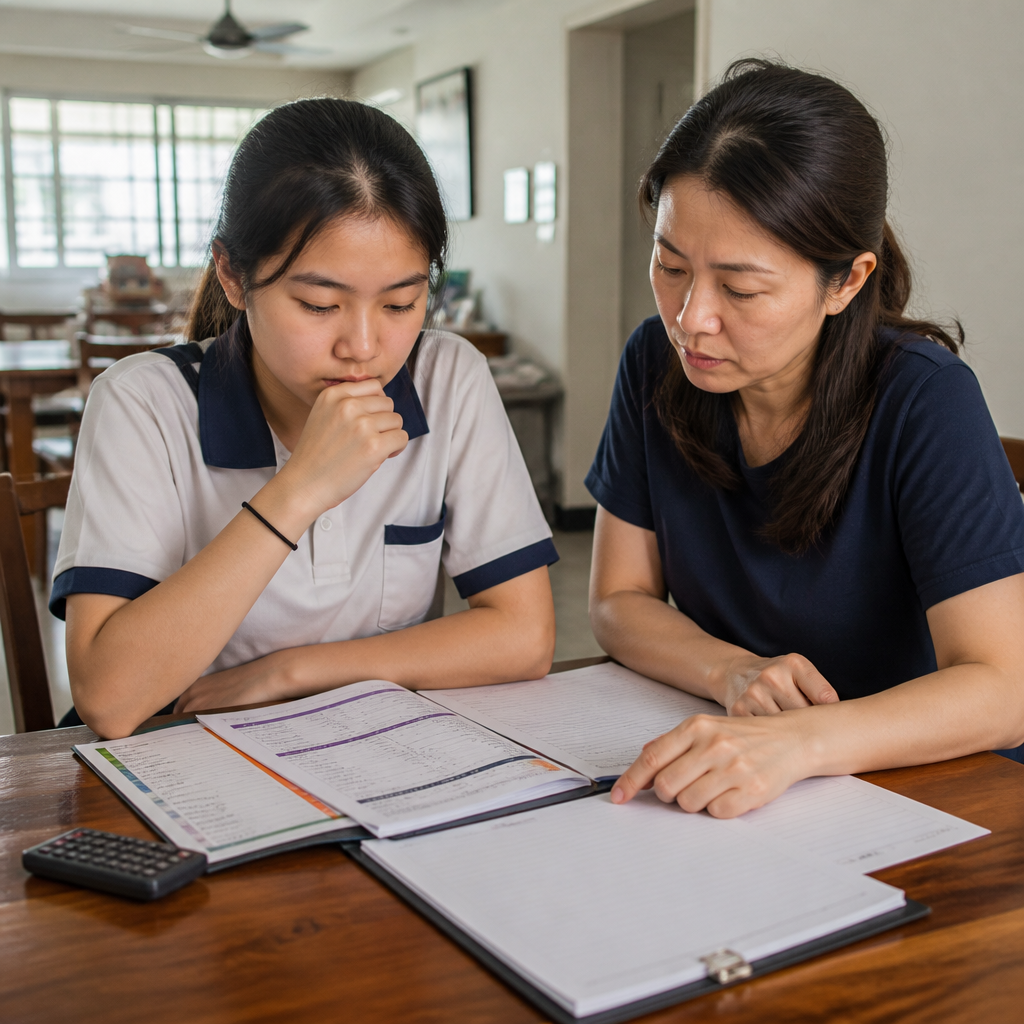
Another issue is weak foundations. If double entry is shaky in the first few chapters, later topics start piling on top of that confusion. By the time common tests or year-end exams arrive, the child is not just revising. They are trying to repair months of uncertainty.
Why POA can feel harder in Singapore school life
In Singapore, subject difficulty is rarely just about the subject itself. It is also about timing and workload. A Secondary 3 student may be juggling CCA, weighted assessments, Mother Tongue, science practical work, and a long weekday homework list. By the end of the night, even a manageable POA chapter can feel much harder than it really is.
That is why POA should be judged realistically. It is not a subject only for very strong students, but it does demand consistency. Small gaps can become big ones surprisingly quickly.
One practical tip for parents is to watch for early warning signs. If a child keeps saying, “I sort of get it,” but cannot explain a transaction clearly, that usually means the concept is not secure yet. Catching that early can prevent a lot of stress later.
Who Should Consider Taking POA?
The better question is not whether POA is useful in general. It is whether the subject suits the student’s interest, temperament, and future fit.
Students who may enjoy POA
POA often suits students who:
- Like clear structures and organised work. They usually feel more comfortable when there is a proper format to follow and a logical sequence to each step.
- Prefer right-or-wrong answers over open-ended essays. They may find relief in a subject where marks depend more on accuracy and method than on long written responses.
- Are curious about business, money flow, or entrepreneurship. Even at secondary school level, POA gives students a basic understanding of how businesses operate financially.
- Do reasonably well when steps build on each other. Students who can follow a process and see how one part connects to the next often adapt well.
- Do not mind checking for careless mistakes. POA rewards students who are willing to slow down, review entries, and make sure details are correct.
For some students, POA feels refreshing because the expectations are clearer. For others, it opens up business-related ideas in a way that feels practical rather than abstract.
Students who may need to think twice
POA may be less suitable if a student strongly dislikes detail, rushes through written work, or gives up quickly when a method is not immediately obvious. A careless student can understand the topic but still lose marks through wrong dates, omitted entries, or poor presentation.
That does not mean they should never take POA. It simply means they need to be honest about their habits. Some students choose POA because friends say it is scoring, then realise later that the subject demands more patience and precision than they expected.
A balanced way to decide
Before deciding, it helps to compare fit rather than follow trends.
Subject choice should not be based only on what sounds useful in future. A child with zero interest in how businesses record transactions may drag through two years of frustration. On the other hand, a student with moderate interest and decent discipline may grow into the subject and do well.
Since school offerings vary, families should check the latest subject information on MOE’s official website and confirm individual school combinations directly.
POA vs Accounting: What Is The Difference?
Many families hear the word “accounts” and assume POA is the same as full accounting. That is not quite accurate. The difference is mainly one of level and scope.
POA is a foundation subject
Secondary school POA introduces the principles behind accounting. It teaches students how transactions are recorded and why records must be accurate and balanced. The emphasis is on core concepts and standard formats.
This is a bit like learning grammar before writing a full essay. A student is not yet dealing with the broader and more complex responsibilities of professional accounting.
Accounting in the wider sense is much broader
When people talk about accounting outside school, they may mean auditing, taxation, financial analysis, budgeting, compliance, reporting standards, or business advisory work. That world is much more advanced than what secondary school students do in POA.
So if a parent worries that their child is not the office-job type, the answer may still be yes, POA can still be suitable. Studying POA does not lock a teenager into one career. It simply gives them business literacy and exposure to structured financial thinking.
Why this matters during subject selection
A student may enjoy POA without wanting an accounting career. Another may dislike POA but still later do well in business through marketing, management, or entrepreneurship. Subject choice should not be overread.
What POA can do is provide a useful base for business-related courses and help students understand how organisations track performance. It can also support later pathways in polytechnic courses linked to business, finance, or accountancy. For exam and qualification updates, students can refer to SEAB.
How POA Is Assessed And What Examiners Look For
Parents often feel calmer once they understand what the subject is actually testing. POA is not a mystery subject. In general, assessments focus on whether students can apply accounting principles accurately.
Skills tested in school and exams
Depending on school level and exam format, students may be tested on:
- Understanding accounting concepts and terminology. Students need to know what key terms mean and how they are used in context, not just repeat textbook definitions.
- Recording transactions correctly. This includes choosing the correct accounts, placing entries on the right side, and following proper format.
- Preparing ledger accounts and financial statements. Students must turn raw transaction data into organised accounting records and summaries.
- Interpreting errors or adjustments. This tests whether they can identify what went wrong and understand how corrections affect the accounts.
- Applying principles to business scenarios. Questions often require careful reading and sound judgement about how accounting rules apply.
A question may look straightforward at first glance but still require very careful reading. One missed detail can affect the whole answer.
Why students lose marks
From a tutor’s perspective, the same mistakes appear again and again. Some students know the topic but rush the wording of the transaction. Others can explain the concept aloud but cannot lay it out properly in account format. Then there are students who revise by reading notes only, which creates false confidence.
POA punishes half-understanding. A child may get the first line correct and then carry one wrong assumption through the rest of the question.
Why active practice matters
Reading through corrections is not enough. Students need to write full answers, balance accounts, and check their working carefully. That is why some families look for extra guidance when a child seems to understand the lesson in class but still cannot convert that into marks. If your child needs more support with concepts, structured practice, and confidence, you can learn more about POA tuition.
How To Score Better In Secondary School POA Exams
When families ask how to do well in POA, they are usually hoping for one simple trick. There is no magic shortcut, but there are a few habits that make a real difference.
Build the foundation early
The first chapters matter more than many students realise. Double entry, classification of accounts, and the logic of transactions form the base for everything else. If these are weak, later revision becomes frustrating because every question starts to feel unfamiliar.
A practical approach is to stop and fix confusion early. If a student cannot explain why cash goes out on one side and purchases appear on another, that gap needs attention before moving on.
Practise by writing, not just reading
POA is not a subject where highlighting notes late at night will carry a student very far. The hand needs practice too. Writing ledger entries, preparing statements, and correcting mistakes on paper trains both accuracy and speed.
A familiar scene in many Singapore homes goes like this:
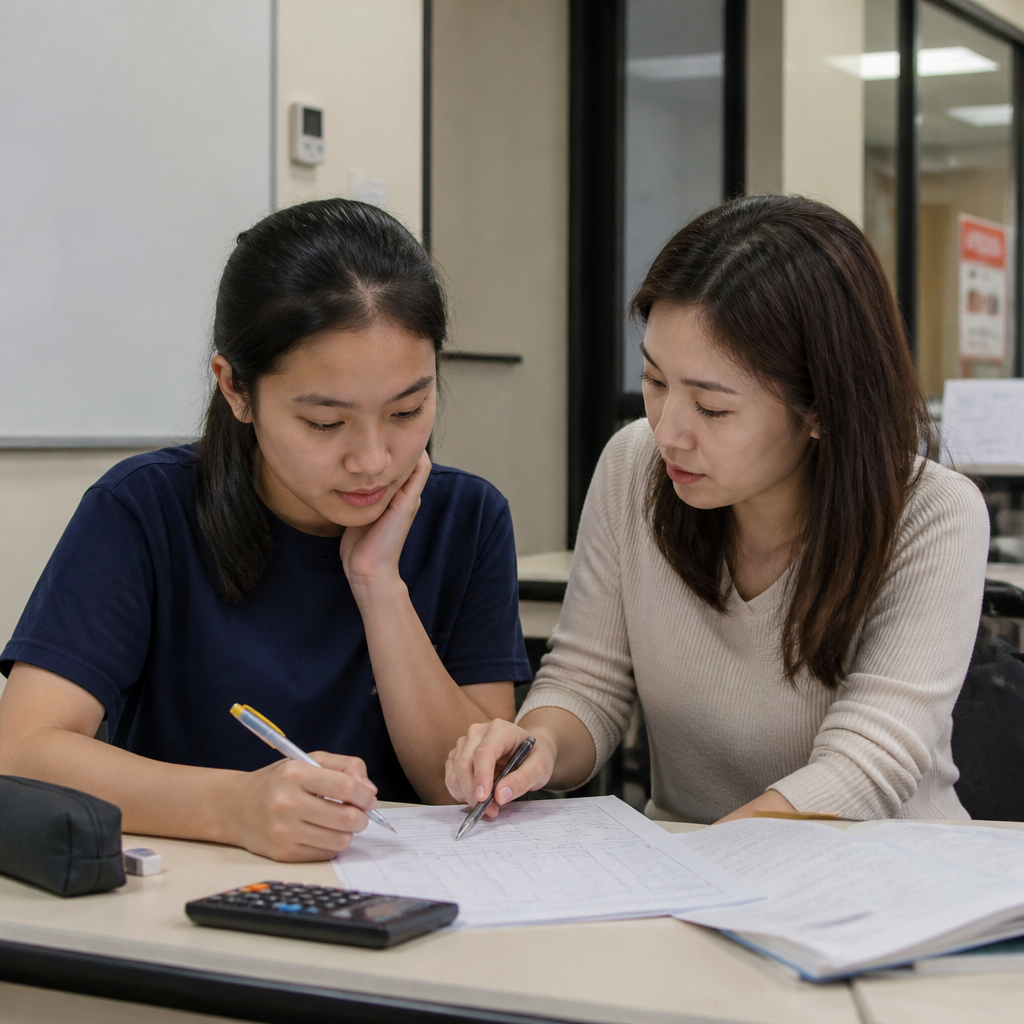
“I revised already.”
But what the student really did was read through examples without writing anything out.
In POA, revision only becomes solid when the student can reproduce the answer without looking.
Read the question carefully
Many avoidable mistakes happen because the student spots one familiar keyword and starts writing too quickly. Slow reading is a scoring skill in POA. Was the item bought on credit or for cash? Was it a return inward or outward? Was the transaction from the business viewpoint?
Those details decide marks. In many scripts, the issue is not lack of effort but careless interpretation.
Review mistakes by pattern
Instead of only correcting one wrong answer, look for the pattern. Is the student always confusing capital and revenue expenditure? Always losing marks in bank reconciliation? Always forgetting dates or labels?
Once the pattern is clear, revision becomes more focused and less draining. That matters a lot for students who already feel discouraged, because random practice can make them feel busy without helping them improve.
Use short, regular revision sessions
POA usually improves more with steady practice than with last-minute cramming. Even 20 to 30 minutes of focused work a few times a week can be more effective than one long, tired session on Sunday night. This is especially true for students who need time to absorb the logic behind entries.
Parents do not need to become POA experts to help. Sometimes the most useful support is simply making sure revision happens regularly and that mistakes are reviewed instead of ignored.
Frequently Asked Questions
Is POA only for students who want to become accountants?
No. POA introduces financial recording and business thinking, but many students take it simply because they like structured subjects or want exposure to business-related learning. It does not commit a teenager to one career path.
Can a student who is not strong in Math still do well in POA?
Yes. POA uses numbers, but success depends more on logic, accuracy, and understanding transaction flow than on advanced mathematics. A student can be average in Math and still perform well in POA if the concepts are clear.
Is POA easier than humanities subjects?
It depends on the student. Someone who dislikes essays may find POA more manageable because answers are structured and method-based. A student who hates detail or makes many careless mistakes may find humanities easier instead.
Will taking POA help with future studies in Singapore?
It can be useful for students considering business-related courses in polytechnic or for those who want stronger financial literacy. It may also make later exposure to accounting or commerce topics feel less intimidating. Future pathways vary, so it is still wise to check current course expectations and school guidance.
What if my child is already struggling with POA?
Do not assume too quickly that they are not suited for the subject. Quite often, the real issue is a missing foundation topic or too much memorisation without understanding. With targeted explanation and regular written practice, many students improve steadily.
Conclusion
So, what is POA in secondary school? In simple terms, it is a subject that teaches students how businesses record and organise financial information using clear accounting principles. In Singapore, it can be a valuable option for students who enjoy structured thinking, practical business concepts, and accurate written work.
At the same time, it helps to keep expectations balanced. POA is not only for future accountants, and it is not automatically easy just because there are numbers involved. The right fit depends on the student’s habits, interest, and willingness to build strong basics early. For families still deciding, it helps to look beyond hearsay and check the latest school subject offerings and combinations carefully.
If your child is taking POA and needs extra support with understanding, exam practice, or confidence, you can learn more about our POA tutors here.