


Introduction
If your child is finishing Primary 6, this question often comes up at a very tense time. PSLE results are out, posting is happening, emotions are running high, and suddenly a simple search like “is secondary school compulsory in Singapore” carries a lot more weight than it sounds. Most parents are not just asking about school. They are worrying about legal responsibility, the right next step, and what happens if their child is not coping.
The short answer is this: mainstream secondary school is the usual next step after Primary 6, but the bigger legal issue is whether your child continues receiving education through a recognised pathway. In practice, most children move from Primary 6 into a mainstream secondary school through the PSLE posting process. Some, however, may enter Special Education schools, approved homeschooling arrangements, or other pathways depending on their needs and approval status.
Because rules and eligibility can change, parents should always verify the latest details with MOE and, where relevant, the Singapore Statutes Online.
Key Takeaways
- Most children continue to secondary school after Primary 6. In Singapore, the expected pathway after PSLE is entry into a mainstream secondary school through MOE posting. For the average family, this is the normal and practical next step.
- The legal question is broader than just one school type. Parents often ask whether secondary school is compulsory, but the more accurate question is whether the child is continuing education in a recognised and lawful way. A child may not be in a standard mainstream school and still be on an approved pathway.
- Children generally cannot simply stop schooling after Primary 6. If you are wondering whether a child can skip secondary school in Singapore, the answer is not by casual parent choice alone. If there is no approved alternative, non-attendance can become a serious issue.
- There are different pathways for different needs. Some children may attend Special Education schools, continue under approved homeschooling, or follow another recognised route. These are not the same as dropping out or staying home without approval.
- If your child is not attending school, act early. Contact MOE, the posted school, or relevant support agencies quickly. Early communication often prevents a temporary difficulty from turning into a larger legal, emotional, or academic problem.
- Always check the latest official guidance. Admissions rules, exemptions, support arrangements, and pathway options can change. It is safer to confirm current requirements directly than to rely on old forum posts or hearsay.
Is Secondary School Compulsory In Singapore?
This question usually appears in the middle of stress. Your child is upset about the posted school. You are wondering if they can manage Secondary 1. Or there may be deeper concerns, such as anxiety, learning needs, or uncertainty about what is legally required.
For most families, the practical answer is yes, children are expected to continue their education after primary school. In mainstream cases, that usually means enrolling in secondary school after PSLE posting. So if your child has been posted to a secondary school, it is generally not something parents can treat as optional in the sense of “let’s just pause for a year and decide later.”
At the same time, the legal framework is not as narrow as “every child must sit in a mainstream secondary school no matter what.” Singapore recognises that some children may be educated through approved alternatives, such as certain Special Education settings or approved homeschooling arrangements.
That is why it helps to separate the issue clearly.
That distinction matters. It shifts the focus away from “Can my child avoid secondary school?” and towards the more useful question, “What is the correct and lawful educational pathway for my child now?”
What Happens After Primary School In Singapore For Most Children
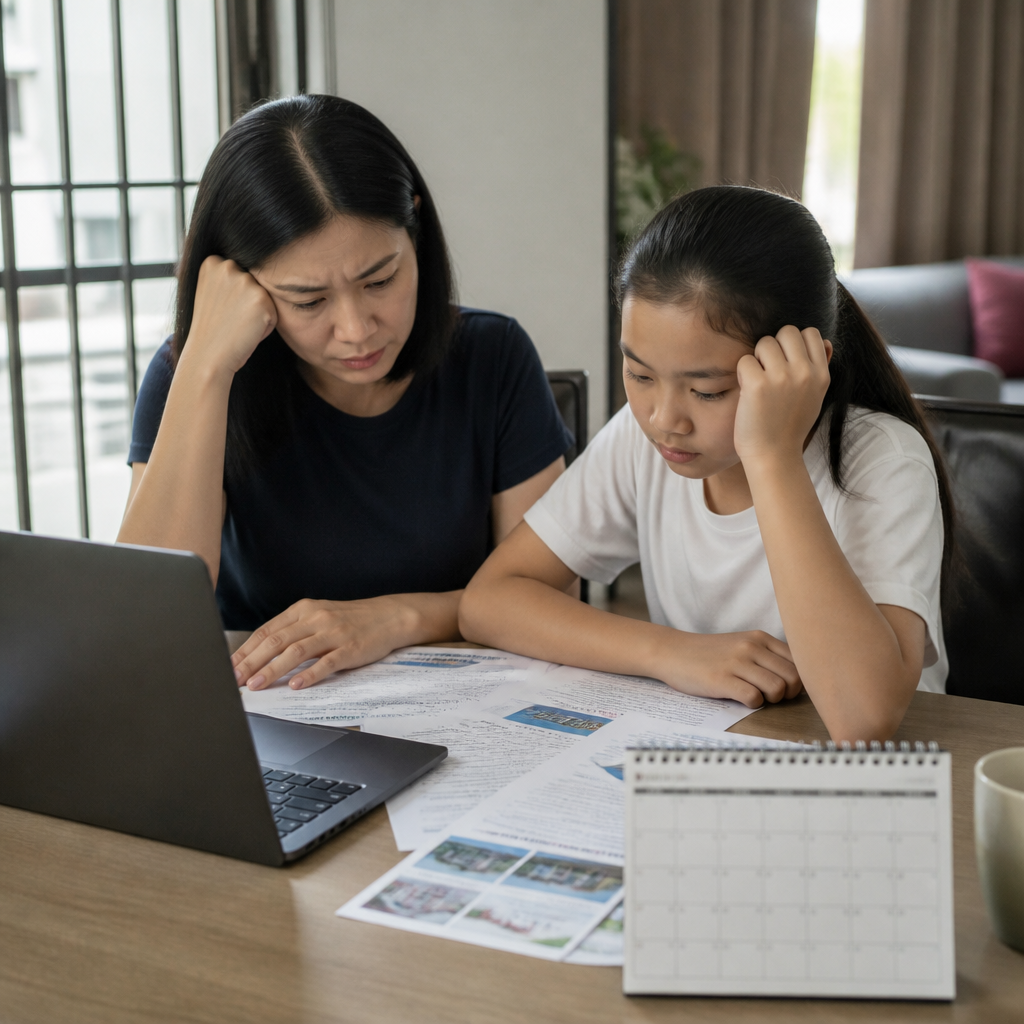
When parents ask what happens after primary school in Singapore, they are usually trying to understand both the process and the obligation. On paper, the route looks straightforward. In real life, especially when your child is anxious or resistant, it can feel anything but simple.
The usual route after PSLE
After Primary 6, students take the PSLE and go through the Secondary 1 posting process. Based on the posting outcome, they are offered a place in a secondary school. For most children, this is the formal move into mainstream secondary education.
Then the reality hits. New uniforms, orientation, different teachers, more subjects, more independence, and often a much heavier routine. Tutors often notice that students who seemed quite steady in primary school can wobble badly in the first few months of Secondary 1. It is not always about weak academics. Sometimes it is the sudden jump in structure, pace, expectations, and confidence.
That is why enrolment and attendance should not be treated lightly. A child who already feels uncertain can fall behind quickly if the start of Secondary 1 is shaky.
Not every child follows the same route
Some children do not move into the typical mainstream posting pathway. A child with significant learning needs may be in a Special Education setting. Another may be on an approved homeschooling pathway.
In these cases, the more useful question is not “Why is this child not in mainstream secondary school?” It is “Is this child in an approved educational arrangement?”
That difference is important. It is the line between a recognised pathway and an attendance problem.
Why the transition period matters so much
The weeks around posting and school opening are often when families make rushed decisions. A child may say they hate the posted school before even attending orientation. Parents may feel tempted to delay reporting while they consider appeals, transfers, or other options. But this transition period is exactly when communication matters most.
Even if you are exploring another arrangement, it is usually better to stay engaged with the school and MOE than to disappear from the process. Early contact shows that the family is trying to resolve the issue responsibly, not simply avoiding education.
How The Compulsory Education Act Affects Secondary School Decisions
Parents who search about the Compulsory Education Act and secondary school in Singapore are often worried they have missed something serious. The legal wording can sound intimidating, but the practical point is more straightforward than many parents expect.
The law is about making sure children receive education
Singapore’s compulsory education framework exists to make sure children of the required age are not left out of schooling. For families, that means you usually cannot decide, after Primary 6, that your child will simply stay home indefinitely because school is stressful or because you want more time to think.
If a child is in a recognised school or approved arrangement, that is very different from non-attendance without approval. The concern is not whether every child follows one identical route, but whether the child remains within a lawful education pathway.
Why “taking a break” can become risky
This is where emotions and practical reality often clash. If your child had a terrible PSLE year, is crying every night, or is refusing the posted school, it is very natural to think, “Maybe we should just let them rest first.”
Emotionally, that instinct makes sense. But in practice, an informal break can create bigger problems. A common pattern among students is that once routine disappears, returning becomes even harder. Anxiety grows. Administrative deadlines pass. What was meant to be temporary starts turning into a more serious attendance issue.
If your family is facing this kind of situation, it is far better to speak to MOE or the school early than to go quiet and hope things settle on their own.
Can Children Skip Secondary School In Singapore?
This is one of the clearest questions parents ask, especially when a child is unhappy, overwhelmed, or not fitting the standard route. In ordinary circumstances, the answer is no, not simply by choice.
Skipping school is not the same as following an approved alternative
A child cannot generally finish Primary 6 and then move straight into work, remain at home without approval, or postpone education indefinitely because the family is unhappy with a posting result. That would not be treated as a normal pathway.
Still, not every child needs to follow one identical route. If a child qualifies for a different educational setting or has an approved exemption or arrangement, that is not casually “skipping” school. It is following a lawful alternative.

Situations parents sometimes misunderstand
The confusion often comes from treating very different situations as if they are the same.
The safest mindset is simple, if your child is not entering mainstream secondary school, make sure the alternative is recognised and properly arranged.
What To Do If Your Child Is Not Attending Secondary School
This question usually comes from worry, not defiance. Sometimes a child refuses school after a difficult posting outcome. Sometimes there are mental health concerns. Sometimes a parent already senses that mainstream school may not be the right fit.
First, identify why your child is not attending
Not attending can mean very different things, and the response depends on the reason.
- The child has not enrolled at all after posting. This often happens when parents are still hoping to delay the decision, but delay without action can create complications quickly.
- The child enrolled but is refusing to go. In these cases, the issue may be emotional distress, social fear, bullying concerns, or anxiety about coping with Secondary 1 work.
- The child has special needs requiring a more suitable setting. Here, the focus should be on assessment, support, and placement rather than forcing a poor fit.
- The child is on an alternative approved pathway. If so, make sure approvals and communication are properly documented.
- The family wants homeschooling but has not clarified requirements. This is where assumptions can become risky. It is important to confirm what approval and compliance steps are needed.
Each of these situations needs a different response. A child with severe school refusal needs quick coordination and support. A child who may need a different educational placement needs formal guidance. A family considering homeschooling needs accurate information, not guesswork from forums or group chats.
What parents should do immediately
- Contact the posted or current school. If your child is missing orientation or the first weeks of Secondary 1, let the school know immediately. Schools are usually more helpful when parents communicate early instead of disappearing.
- Speak to MOE about pathway questions. If you are unsure whether your child’s situation fits a recognised alternative arrangement, ask directly.
- Document the reason for non-attendance. If there are medical, developmental, or psychological concerns, keep records and communicate clearly.
- Get support for the transition. Sometimes school refusal is made worse by fear of falling behind. A child may be terrified of Secondary 1 Math, science practical work, or English comprehension demands. If your child needs extra academic support while adjusting to new subject demands, you can learn more about our secondary school tutors or contact us here.
A child who feels less lost academically is often less resistant emotionally too.
A practical approach for worried parents
If your child is struggling, try to separate the problem into three parts: legal, emotional, and academic. The legal part is whether your child is properly enrolled or on an approved pathway. The emotional part is whether fear, stress, or social issues are blocking attendance. The academic part is whether the child feels unable to cope with the jump to secondary school work.
Parents often focus only on one part and miss the others. But in many real cases, all three are connected. Solving the issue usually requires calm communication, proper documentation, and support rather than delay.
Secondary School Enrolment Rules Parents Should Check
When it comes to secondary school enrolment rules in Singapore, most parents do not need to memorise every policy detail. What helps more is knowing what to check quickly and where assumptions can cause trouble.
What to check after posting
Once your child receives a secondary school posting outcome, confirm these points early.
If your child may not follow the standard route
In non-standard cases, check whether the pathway has formal approval, whether exemption documents are needed, whether assessments or specialist recommendations are required, and whether there are deadlines for applications, appeals, or support arrangements.
This is where broad internet advice can become misleading. Policies can change, and what applied to another family a few years ago may not apply to yours now. Always verify with MOE or the relevant school.
Myths And Facts About Secondary School In Singapore
Myth: After Primary 6, education becomes optional
Fact: For most children, education must continue after primary school. Mainstream secondary school is the normal route unless there is an approved alternative pathway or exemption.
Myth: If my child hates the posted school, we can just stay home first
Fact: Staying home without a proper arrangement can create attendance and legal issues. It can also make re-entry harder emotionally and academically.
Myth: Homeschooling after primary school is just a parent preference
Fact: Homeschooling is not simply an informal family choice if compulsory education requirements still apply. Parents need to check current approval requirements carefully.
Myth: Not entering mainstream secondary school means the child has dropped out
Fact: Not necessarily. Some children continue in approved non-mainstream settings that better suit their needs.
Frequently Asked Questions
Is secondary school compulsory in Singapore for every child?
For most children, continued education after primary school is expected, and mainstream secondary school is the usual route. However, some children may be on approved alternatives such as Special Education pathways or homeschooling arrangements. The exact position depends on the child’s status and approvals.
What happens after Primary 6 if my child does not want to go to the posted school?
Do not ignore the posting or wait too long without communicating. Contact the school and MOE as early as possible to discuss the situation. A child refusing school may need emotional support, placement clarification, or another formal arrangement, but simply staying home is rarely a safe way to handle it.
Can children skip secondary school in Singapore if they are academically advanced?
In ordinary circumstances, no. Being academically advanced does not usually mean a child can bypass schooling requirements by private family decision. If you believe your child has unusual educational needs, discuss official options with MOE rather than assuming skipping is allowed.
What are the options if my child does not attend secondary school because of special needs or severe anxiety?
The right next step depends on the reason. Some children may require Special Education settings, professional assessment, school-based support, or another approved pathway. Early communication with the school, MOE, and relevant professionals is important, especially before non-attendance becomes prolonged.
Where can parents confirm the latest secondary school enrolment rules in Singapore?
The safest sources are MOE, your child’s posted or current school, and official legal sources such as the Singapore Statutes Online. Since policies and pathway details may change, it is always safer to verify the latest requirements directly.
Conclusion
So, is secondary school compulsory in Singapore? For most families, the practical answer is that children are expected to continue in education after Primary 6, and mainstream secondary school is the standard route. It is usually not lawful or advisable to simply stop schooling after primary education.
At the same time, not every child must follow one identical path. Approved alternatives, including certain Special Education or homeschooling arrangements, may apply in specific cases. That is why the real issue is not just whether a child goes to a mainstream secondary school, but whether they remain in a recognised and lawful education pathway.
If your child is approaching Secondary 1 and you are unsure about enrolment, attendance, or whether a different pathway may be needed, do not wait until the problem grows. Check the latest guidance with MOE, speak to the school early, and get support if the transition feels shaky.
And if the move to secondary school is bringing academic stress, confidence issues, or adjustment struggles, you can contact us here to explore support options.