


Introduction
If your child has just entered JC, you may already have heard some version of this at home: “It’s only four subjects.” Then a few weeks pass, and suddenly there are lectures, tutorials, GP work, Project Work meetings, CCA, tests, and late nights that seem to come out of nowhere. For many Singapore parents, that is the real surprise.
If you are asking how many subjects in JC, the short answer is this: usually more than families first expect. On paper, many students appear to be taking “just four subjects”, but the real picture in Singapore junior colleges is broader than that. A typical student often takes 3 H2 subjects and 1 H1 content subject, plus General Paper, Project Work in JC1, and Mother Tongue if applicable. Some also take 4 H2 subjects.
That is why this question is not only about counting subjects. It is also about what those combinations feel like from week to week. A science combination, arts combination, or hybrid combination can create very different routines, stress points, and revision demands. For many parents and O-Level students, the surprise is not the subject list itself, but how quickly the workload builds once lectures, tutorials, tests, CCA, commuting, and independent study all start piling up.
Key Takeaways
- JC subject count is not just “four subjects”. Most students take a mix of H2 and H1 content subjects, plus GP, and in JC1 usually Project Work, with Mother Tongue for some students. The timetable and mental load are often heavier than the official count suggests.
- The common structure is 3 H2 plus 1 H1. When parents ask how many H2 subjects students usually take in JC, the usual answer is three. Some students take 4 H2 subjects, but that depends on school criteria, academic readiness, and whether the student can sustain the pace.
- Different subject combinations create different types of stress. Science students often juggle concept-heavy chapters and practical work, arts students handle more reading and essay preparation, and hybrid students switch between very different thinking styles across subjects.
- JC1 often feels like a shock, even for strong O-Level students. The pace is faster, the depth is steeper, and students are adjusting to GP, Project Work, CCA, and a less guided style of learning.
- JC2 may look lighter on paper but feel heavier mentally. Project Work may be over and Mother Tongue may no longer be part of the load for some, but timed practices, prelims, consultations, and A-Level revision usually intensify.
- Choosing a subject combination for prestige can backfire. A combination only works if the student can carry the workload for two years, not just admire the title of taking 4 H2 or a supposedly stronger stream.
- University options matter, but workload fit matters too. Some degree courses require specific H2 subjects, so families should check current school and official information. Still, it is rarely wise to choose a combination that overwhelms the student from Term 1.
How Many Subjects Do JC Students Really Take?
The biggest source of confusion is simple. Families hear “four subjects” and assume JC is four academic subjects plus school life as usual. In reality, it rarely feels that neat.
The usual JC subject structure
A typical JC student often takes:
- 3 H2 content subjects
These are the heavier academic subjects and usually form the core of A-Level preparation. They move quickly and need steady revision, not last-minute cramming.
- 1 H1 content subject
It may be lighter than an H2 in weighting, but it still comes with tutorials, tests, and exam preparation.
- General Paper (GP)
GP is not a subject most students can ignore until exams. It needs regular reading, stronger examples, clearer arguments, and ongoing comprehension practice.
- Project Work (PW) in JC1
PW takes time in a less obvious way. Meetings, drafting, editing, and presentation prep can easily spill into afternoons, evenings, and weekends.
- Mother Tongue, if applicable
For students who still need to take it, Mother Tongue adds another layer of preparation and assessment.
So when people ask how many subjects do JC1 students take, the answer is often not a neat single number. If you count everything a student is studying and being assessed in, the load is broader than four. Not every component carries the same weight, but all of them still demand time and mental space.
What about 4 H2 subjects?
Some students take 4 H2 subjects instead of the more common 3 H2 plus 1 H1 structure. Schools usually have their own eligibility expectations, so it is best to check the latest school-level details and official information at MOE and the relevant JC’s subject combination pages.
On paper, 4 H2 can sound attractive, especially to students coming out of O-Levels feeling strong and ambitious. But the real question is not whether a student can survive one heavy term. It is whether they can carry that load through lectures, common tests, CCA seasons, and the long build-up to the A-Levels.
Why The Common 3 H2 Plus 1 H1 Setup Still Feels Heavy
For most students, the standard JC subject combination is 3 H2 plus 1 H1. It is common across Singapore junior colleges, although exact subject combinations and school policies vary.
Why parents should not underestimate the standard load
Some parents feel relieved when they hear their child is not taking 4 H2. That reaction makes sense. Still, the standard structure is demanding in its own right. H2 subjects move at a depth and pace many students are not used to. Even capable students can suddenly seem constantly tired.
A familiar scene in many homes goes like this. It is 9.30pm, your child has come back late from CCA, still has two tutorials unfinished, and says they “studied the whole day” but cannot explain a Chemistry chapter confidently. That is not always poor time management. Sometimes it is simply the reality of JC workload.
Why the official count and actual workload are different
The number of subjects does not fully show what students are really carrying.
This is why JC can feel heavier than secondary school even if the subject count seems manageable. The challenge is cumulative. Miss one week of understanding, and the next few weeks often become much harder.
How Science, Arts, And Hybrid Combinations Feel In Real Life
Not all subject combinations create the same kind of pressure. Families often ask about subject count, but the more useful question is how the chosen subjects behave together.
Science combinations: concept-heavy and cumulative
For students taking a science combination, the workload often feels relentless because many topics build on earlier ones. If a student loses confidence in core topics early on, later chapters can become much harder.
Science combinations also often involve practical work. So understanding concepts is not enough. Students need to handle experimental questions, planning, data handling, and application under time pressure.
Arts combinations: reading, writing, and argument pressure
Arts combinations can look lighter to outsiders because there may be fewer practicals or fewer pages of calculations. In reality, the strain often comes from sustained reading, interpretation, and essay planning.
Subjects like History, Literature, Economics, or Geography can demand close reading, content organisation, and argument-building. A student may spend two hours “studying” and still feel they have little to show for it, because arts revision is not just memorising notes. It involves selecting evidence, forming judgments, and writing under pressure.
Hybrid combinations: flexible but mentally demanding
Hybrid combinations can suit students with mixed strengths, for example someone who is strong in Mathematics but also genuinely enjoys a humanities subject. They can be a practical middle ground rather than a compromise.
Still, availability depends on the school. Families should check the latest subject offerings and school-specific requirements rather than assuming every combination is possible. A common pattern is that hybrid combinations feel manageable at first, then mentally tiring later because revision habits have to switch between very different modes.
Why JC1 Often Feels Heavier Than Expected
This is the stage where many parents start worrying. Their child was motivated after O-Levels, entered JC with confidence, and then within two months seems permanently behind. That pattern is very common.
The first shock is adjustment, not laziness
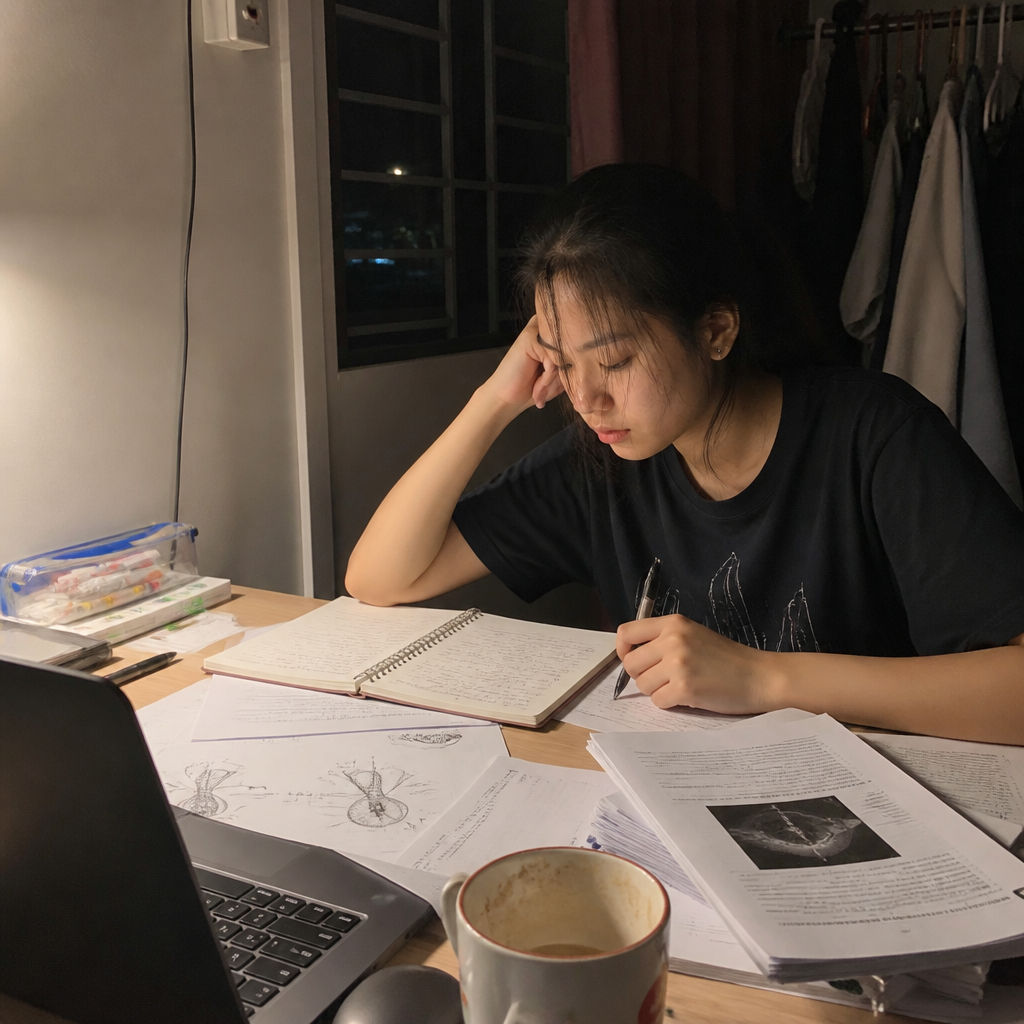
JC1 can feel overwhelming because several demands arrive at once:
- H2 depth is steeper than students expect. Topics move beyond secondary school familiarity very quickly.
- GP requires wider reading and clearer thinking. Students who were used to more guided language work often struggle with the independence GP demands.
- Project Work adds group coordination and deadlines. Even organised students can feel drained by managing both academic content and group dynamics.
- Mother Tongue may still be in the picture. This adds another subject during an already demanding transition period.
- CCA continues to take time and energy. Leadership roles, training, and events can make weekdays feel much longer than expected.
- Teachers may expect more independent catching up. In JC, students are often expected to identify weak areas and close gaps quickly.
Even academically strong students can feel shaken. One recurring pattern is that students say they understood during lecture, but cannot do tutorial questions independently later. That gap is one of the biggest JC1 shocks.
Why the first few months can dent confidence quickly
The speed of JC means confusion compounds fast. A student who misses one Math concept may still scrape through a worksheet. By the next topic, they are learning new content while trying to patch old gaps. The result is a quiet kind of panic, not always obvious until the first major test.
Parents sometimes respond by pushing harder straight away, cutting rest time or adding more revision hours. That can help in some cases, but it can also backfire if the real problem is weak conceptual understanding or the wrong study method for that subject.
If your child needs help adjusting to JC subject demands or building confidence in specific H1 or H2 subjects, learn more about our JC tutors for personalised academic support or explore our broader JC tuition options.
How The Workload Changes In JC2
Parents often assume JC2 should feel lighter because some components may be gone. In practice, the emotional pressure usually intensifies.
What may reduce by JC2
For some students, Project Work is already completed by then. Mother Tongue may also no longer be part of the workload, depending on the student’s situation. On paper, this can make the subject count look more manageable.
But that does not usually translate into a relaxed year. The freed-up time tends to be absorbed very quickly by exam preparation.
Why JC2 feels mentally heavier
JC2 often brings:
- More timed practices
Students begin working under stricter exam conditions.
- More revision tests
Schools increase the frequency of checks, so students are constantly revisiting old topics while learning new ones.
- Prelim preparation
Prelims become a major milestone, and many students feel pressure long before the actual exam period begins.
- Consultations with teachers
These are useful, but they also add to the sense that every weak topic now needs urgent attention.
- Recap of JC1 topics alongside new content
This is one of the hardest parts of JC2.
- Increasing awareness of A-Level stakes
Even calm students can become more anxious once the final exam starts to feel close and real.
This is where the A-Level workload becomes mentally heavy rather than just logistically busy. A student may no longer be rushing for PW meetings, yet still feel more stressed because every worksheet now seems connected to the final exam.
How To Choose A JC Subject Combination Realistically
This is where many families need a calm reset. Prestige can be seductive. So can the idea that “keeping more options open” always means taking the heaviest combination possible. It does not.
The best combination is the one the student can sustain
When parents ask for the best JC subject combination for university admission in Singapore, the honest answer is that there is no single best combination for everyone. Some university courses do require certain H2 subjects, so it is wise to check current prerequisites through official university sources, school advice, and updated MOE information. But subject choice should not be reduced to status.
A student taking a demanding combination they cannot manage consistently may end up with weaker grades across the board. Another student with a more suitable combination may perform far better and feel less burnt out over two years.
What families should check before deciding
Before finalising a subject combination, look at:
- Whether the school offers that exact combination
Not every JC offers the same mix, especially for hybrid combinations.
- Any school-specific eligibility or internal criteria
Some schools have grade requirements or recommendations for 4 H2 subjects.
- Whether the student genuinely likes the subject style
A student may be good at a subject in theory but dislike the way it is studied at JC level.
- Whether the workload matches the student’s habits and stamina
This matters more than many families expect.
- Whether future courses have clear subject requirements
If the student already has likely university pathways in mind, this should be checked early and carefully.
Frequently Asked Questions
How many subjects do JC1 students take in Singapore?
Most JC1 students take 3 H2 subjects and 1 H1 content subject, plus General Paper, Project Work, and Mother Tongue if applicable. That is why the answer is not simply “four subjects”, even though students often describe their combination that way.
How many H2 subjects in JC is normal?
The common arrangement is three H2 subjects. Some students take four H2 subjects, but this depends on school policies, academic performance, and whether the student is ready for the extra workload.
Is taking 4 H2 always better for university admission?
Not necessarily. Certain university courses may require specific H2 subjects, but taking 4 H2 is not automatically better if the workload causes grades to slip. A sustainable subject combination often matters more than a prestigious-looking one.
Do arts combinations have less workload than science combinations?
Not always. The workload is different, not necessarily lighter. Science combinations often bring concept-heavy revision and practical work, while arts combinations can involve substantial reading, essay planning, and interpretation under time pressure.
Why do so many students struggle in JC even if they did well for O-Levels?
The pace is faster, the content is deeper, and students are balancing more independent learning. JC1 especially can feel overwhelming because GP, PW, CCA, and new subject demands all hit at once.
Conclusion
So, how many subjects in JC? In Singapore, the real answer is more layered than it first appears. Most students do not simply take four neat subjects and move on. The common 3 H2 plus 1 H1 structure sits alongside GP, Project Work in JC1, and Mother Tongue where applicable, and the workload feels heavier because of pace, assignments, revision, CCA, and everyday school-life demands.
The right JC subject combination is not the one that sounds most impressive at a family gathering. It is the one your child can manage steadily across two demanding years, while still leaving room for understanding, recovery, and confidence. Science, arts, and hybrid combinations all come with real trade-offs, and families should check the latest school-specific details and official information at MOE and SEAB’s A-Level page.
If your child needs help adjusting to JC subject demands or building confidence in specific H1 or H2 subjects, learn more about our JC tutors for personalised academic support.