


Introduction
You know the moment. You are standing in a toy shop, or scrolling late at night after the kids are asleep, wondering whether this “educational” toy will actually be worth it. Will it hold your child’s attention for more than one afternoon? Will it help them learn something useful, or just add to the pile of forgotten toys at home?
Many Singapore parents feel this way. You want something that does more than entertain for 20 minutes. You want a toy that supports learning, sparks curiosity, and gives your child a real break from passive screen time, especially on rainy afternoons, school holidays, or those long evenings after homework.
The challenge is that not every educational toy is truly helpful. Some look impressive but only lead to one fixed result. Others are too advanced, too flimsy, or simply not right for your child’s stage. The best educational building toys support creativity, fine motor skills, problem-solving, patience, and spatial reasoning without making play feel like another lesson.
This guide will help you figure out what to buy, what to skip, and how to choose building toys that genuinely support learning at home.
Key Takeaways
- Choose open-ended toys first. Toys that can be rebuilt in many ways usually offer better long-term learning value than sets with only one final model. A simple block set often stays in your child’s routine far longer than a flashy toy completed in one sitting.
- Match the toy to your child’s age and frustration level. A building toy that is too easy gets ignored, but one that is too difficult often ends in tears or abandonment. The right level should feel challenging but still achievable with some guidance.
- Safety matters as much as learning value. For younger children, size, material quality, and secure parts matter more than clever packaging. This is especially true when choosing safe educational building toys for toddlers in Singapore.
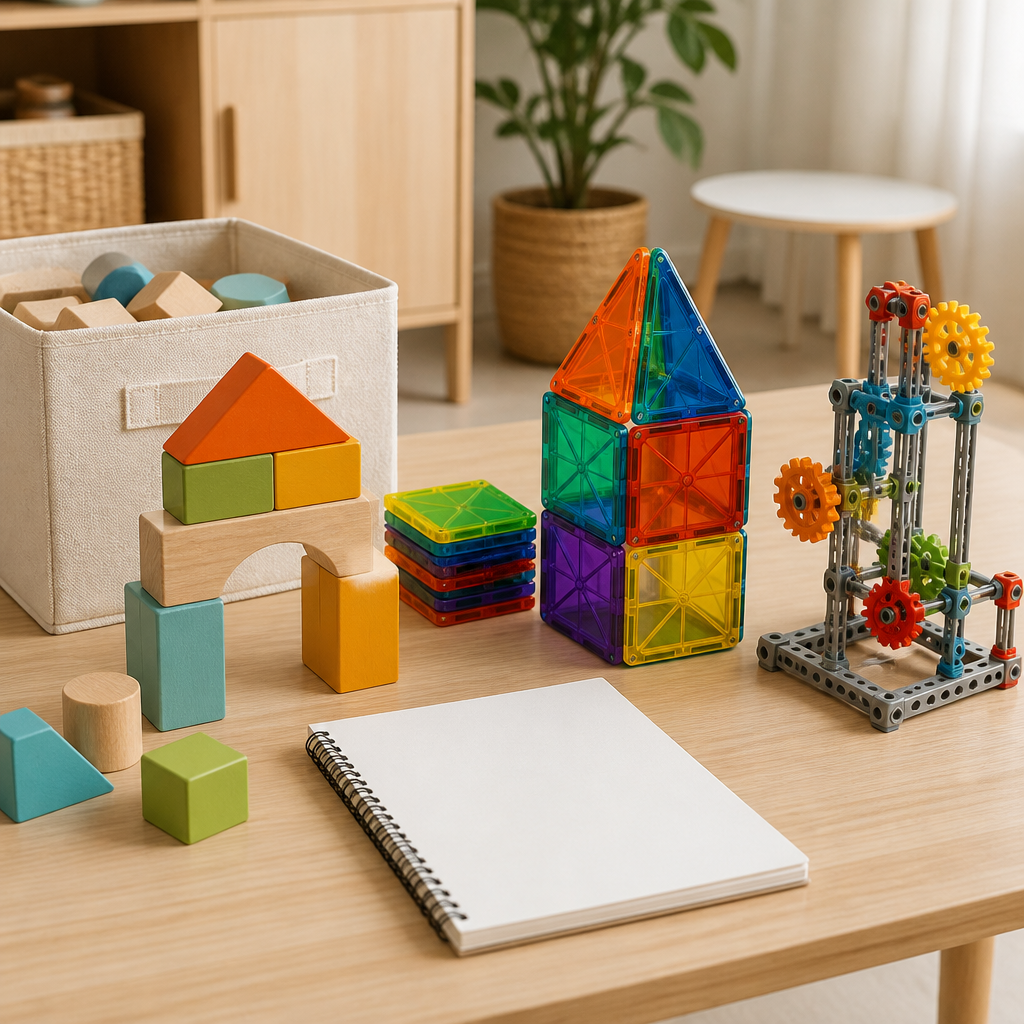
- Different toy types build different skills. Blocks, magnetic tiles, engineering kits, and construction sets do not teach exactly the same thing. Some strengthen fine motor control, while others encourage logic, pattern recognition, and early STEM thinking.
- You do not need the most expensive set. Parents looking for affordable educational construction toys online can still find durable, meaningful options. Higher price does not always mean higher educational value.
- Educational toys are helpful supplements, not magic solutions. A child may become more confident with problem-solving through building play, but toys alone will not fix school struggles in Maths or Science. If learning gaps are already affecting confidence, extra academic support may still be useful.
Where To Buy Educational Building Toys In Singapore
When parents ask where to buy educational building toys for kids, the answer usually comes down to three practical options: physical toy shops, educational retailers, and online stores. Each one has its strengths, and each comes with trade-offs.
Physical toy shops and educational retailers
A physical shop is helpful when you want to check the size, material, and sturdiness in person. That matters a lot for younger children, especially if you are buying blocks, magnetic tiles, or toddler construction sets. Many parents prefer this because it is easier to judge whether the pieces are too small, too sharp, or too complex.
The downside is usually price and range. In-store selection can be smaller, and premium brands may feel expensive. Still, for first-time buyers, being able to see and touch the toy often prevents regret later.
A set that looks big online can turn out to be surprisingly tiny in real life. A toy that seems sturdy in photos may feel flimsy once you handle it.
Online stores and marketplaces
For busy families, online shopping is often the easiest route. After work, when you are juggling school dismissal, dinner, and tuition schedules, it is much easier to compare options from your phone than to visit several shops.
This is also where many parents search for affordable educational construction toys for children online. The convenience is real, but so is the risk of buying based on nice photos alone. Tutors often notice that parents are not just looking for “cheap” toys, they are trying to avoid disappointment.
Read carefully. Check whether the pieces connect well, whether magnets are secure, and whether replacement parts are available. A cheap set that breaks after two weeks is not really affordable.
What to check before buying
Before clicking checkout, it helps to slow down and look at a few basics.
In many homes, the toy with the best learning value is simply the one a child returns to without being pushed.
The Best Types Of Educational Building Toys
Not all building toys support learning in the same way. When parents ask about the best educational building toys for kids, it helps to think in categories, not just brands.
Building blocks for foundational learning
Classic blocks are still some of the most useful options for young children. They support balance, counting, sorting, comparison, and imagination. A child stacking towers is not “just playing”. They are learning cause and effect, hand control, and how structures work.
If you are looking for learning building blocks for kids in Singapore, choose sets with varied shapes, manageable weight, and enough pieces for open-ended play. A block set becomes much more valuable when children can build houses, bridges, patterns, and pretend-world scenes instead of just copying one picture on the box.
Magnetic tiles for spatial reasoning and creativity
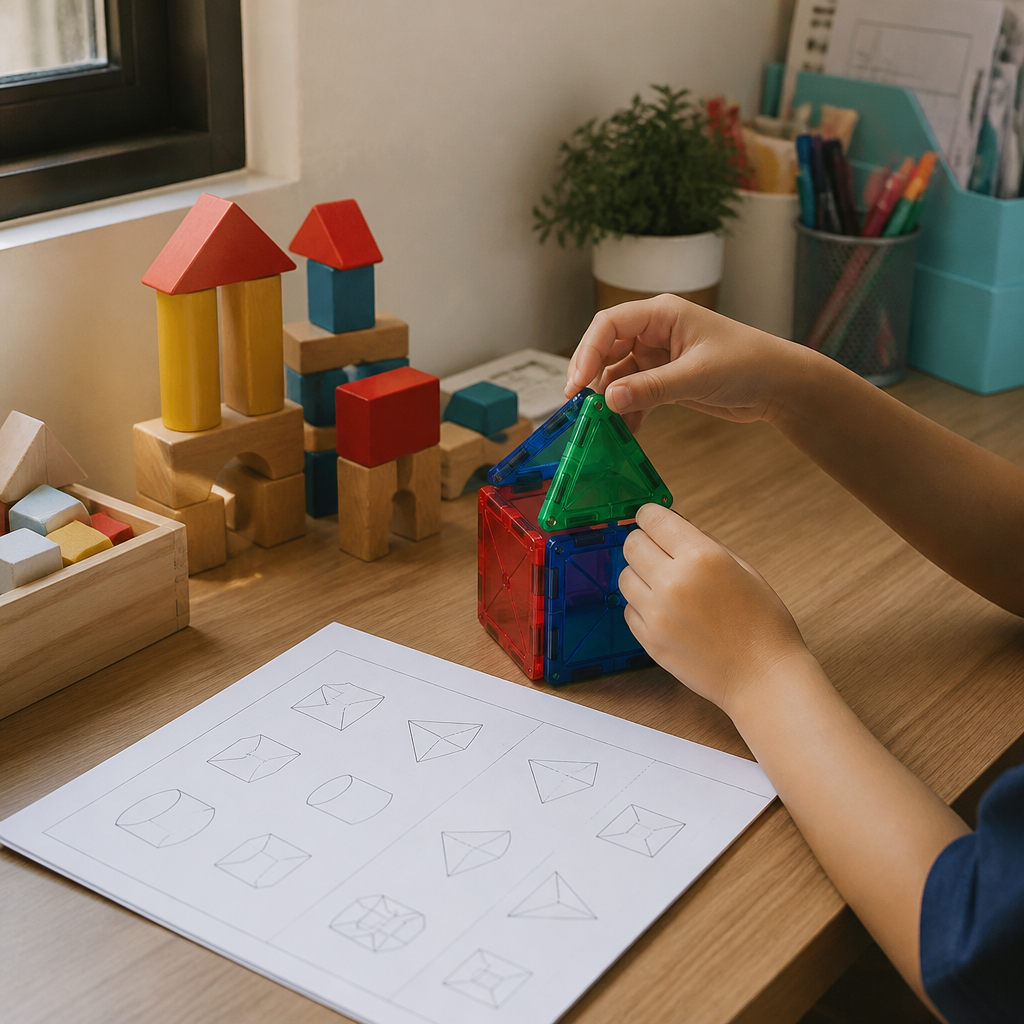
Magnetic tiles are popular for good reason. They let children explore symmetry, 2D and 3D shapes, and simple engineering ideas through trial and error. A preschooler may begin with flat patterns, then move on to cubes and simple towers. An older child may start testing which designs collapse and which stay standing.
These are especially useful on rainy days in Singapore when outdoor play is limited. Instead of defaulting to a tablet, you can set out a tray of tiles and let your child experiment. The learning happens through the building itself.
Construction sets and engineering kits
For older children, nuts-and-bolts sets, gear-based kits, and simple engineering toys can build patience and sequencing. These tend to suit children who enjoy figuring out how parts fit together. A common pattern among students is that some love technical building because it gives them a clear sense of progress, while others get discouraged if there are too many steps.
Some of these are great for parents looking for STEM building toys for preschoolers or lower primary children, especially beginner sets with oversized parts and simple mechanisms. Still, the toy only helps if it invites effort without overwhelming the child.
Here is a simple way to think about the differences.
How Building Toys Support Learning At Home
Parents often want to justify the purchase beyond “my child likes it”. That makes sense, especially when toy prices can add up quickly. The best educational building toys support learning in ways that are practical and easy to see.
They introduce STEM ideas naturally
Building toys can introduce early STEM ideas without making children feel pressured. A bridge that keeps collapsing teaches structural stability better than a long explanation. A marble run teaches slope and motion. A gear set introduces sequence and mechanism.
This does not replace formal teaching, but it can create a strong hands-on foundation. This matters for children who resist worksheet-style learning. Sometimes the issue is not ability. It is simply that the idea clicks better when they can touch and test it.
They strengthen fine motor skills and persistence
Small connectors, stacking, fitting, and aligning all help strengthen fine motor control. That matters for younger children who are still developing pencil grip and hand coordination.
It matters emotionally too. Building toys quietly teach children to try again after something collapses, redesign a structure, or slow down enough to follow steps. For many parents, this is very relatable. After a long school day, some children get frustrated quickly and give up after one failed attempt. Open-ended building play can gently build frustration tolerance and persistence without the pressure of school performance.
They combine creativity with logic
A good building toy gives children room to imagine freely while still dealing with real constraints. A tower must balance. A vehicle needs its wheels in the right place. A structure needs enough support.
That mix of creativity and logic is exactly what makes building toys so useful for child development.
They encourage language and social interaction
One benefit parents sometimes overlook is conversation. When children build with siblings, classmates, or adults, they naturally explain ideas, negotiate roles, and describe what they are trying to make. A simple activity like building a zoo or a car park can lead to useful language practice: bigger, smaller, under, beside, stable, taller, faster.
This is especially helpful for younger children who learn best through talk and play. Even independent builders often narrate their own thinking out loud, which strengthens planning and sequencing in a very natural way.
How To Choose By Age, Safety, And Learning Value
The smartest purchase is not always the most advanced one. It is the one your child can use safely and meaningfully.
Toddlers and preschoolers
For younger children, larger pieces are usually the safer and more practical choice. If you are searching for safe educational building toys for toddlers in Singapore, focus on chunky blocks, soft construction toys, and sturdy magnetic sets designed for early years. Avoid anything with very small detachable pieces.
Look out for safety guidance from trusted references such as HealthHub and the Consumer Product Safety Office Singapore. Packaging claims can be helpful, but most parents know it is still worth checking the size, edges, and durability for yourself.
Lower primary children
At this stage, children usually enjoy more challenge, but they still benefit from open-ended play. Sets that allow both free building and guided models often work well. A child may follow the instruction booklet once, then start inventing their own designs later.
This is also a good age to notice how your child likes to learn. Some children are drawn to imaginative scenes. Others enjoy systems, sorting, and technical construction. Buy for the child in front of you, not for the trend everyone else seems to be buying.
Older children
Older primary school children may enjoy engineering kits, robotics-style building sets, or more advanced construction systems. These can support logical thinking and perseverance, but there is a balance to watch.
If the toy feels too much like extra schoolwork, your child may avoid it. A useful test is simple, does your child return to it willingly after the first week? If yes, it is probably a good fit.
How To Buy Without Wasting Money
Even when parents know where to buy educational building toys for kids, budget still matters. Some sets look educational but offer very little replay value.
What makes a toy worth the price
A worthwhile toy usually has a few clear qualities.
- Multiple ways to build. The more flexible the toy, the more likely it is to stay interesting over time.
- Durable parts that fit well repeatedly. If pieces stop connecting properly after a few uses, the toy quickly becomes frustrating.
- Room for your child to grow into it. Toys with layered difficulty often give better value than one-stage sets
- Enough pieces to create meaningful structures. If there are too few parts, children often lose interest quickly.
A basic, high-quality block set can easily be more useful than a themed set with decorative pieces and only one design option. One may look simpler at first, but it often lasts much longer in real family life.
When cheaper options are fine
There is nothing wrong with exploring affordable educational construction toys online if you buy carefully. Read local reviews, check return policies, and skip listings that are vague about size or material.
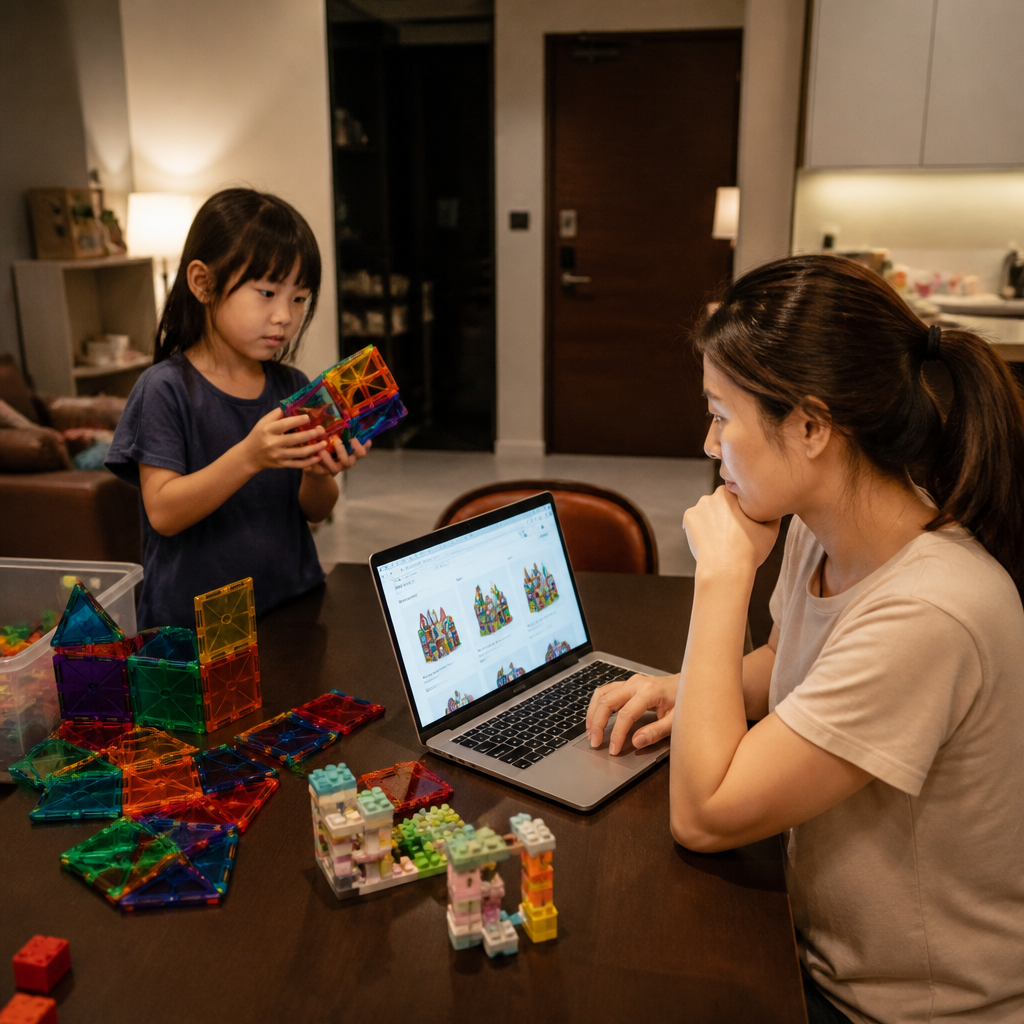
For first-time buyers, starting small can be the smarter move. Buy one mid-range set, observe how your child actually uses it, then expand later if the interest is real. That often works better than spending a large amount on a complicated set that barely gets touched.
Think beyond the toy itself
Storage matters more than many parents expect. If pieces are always getting lost under the sofa, even a good set becomes annoying to use. A toy that is easy to bring out and pack away is much more likely to become part of your child’s routine.
It also helps to think about clean-up time before buying. A set with hundreds of tiny parts may sound exciting, but if it creates stress every evening, it may not suit your household. In smaller flats or shared bedrooms, compact sets with simple storage boxes are often more realistic.
If your child enjoys hands-on learning but still struggles with maths confidence, reasoning, or focus during homework, toys can support growth, but they may not be enough on their own. In that case, some families choose to pair playful learning at home with structured support through a tutor. If that sounds helpful, you can request a tutor here for age-appropriate guidance at home.
Smart Buying Tips For Singapore Parents
The best choice depends not only on the toy itself, but also on how your family actually lives.
Buy for your home rhythm
A large engineering set may look impressive, but if your child only has 20 minutes of free time on weekdays, it may sit untouched. In many Singapore homes, weekdays are already packed with homework, enrichment, and bedtime routines.
Sometimes a simpler toy that can be used in short bursts ends up being the better buy. Less ambitious does not mean less educational.
Use toys to reduce passive screen time
During school holidays or wet weekends, building toys give children something active to do with their minds and hands. But accessibility matters. If the toy is packed away in a difficult box or stored too high up, children are less likely to choose it over a screen.
One practical habit is to rotate only one or two building sets into easy reach at a time. That keeps the choice manageable and often makes old toys feel fresh again.
Watch how your child actually plays
Some parents buy based on what sounds educational, then feel disappointed when the child does not engage. It helps to observe first. Does your child line up objects, build vertically, enjoy pretend play, or like figuring out how things work?
Those clues often tell you more than any marketing label. For families browsing the best educational building toys shop in Singapore, that is worth remembering. The best shop is not just the one with the biggest range. It is the one that helps you find a toy that suits your child’s temperament, age, and learning style.
Frequently Asked Questions
What are the best educational building toys for young children?
For younger children, simple blocks, chunky construction toys, and beginner magnetic tiles are often the best place to start. They are easier to handle, safer for little hands, and flexible enough for open-ended play. A toddler who stacks, knocks down, and rebuilds is already learning problem-solving, coordination, and cause and effect.
Where can Singapore parents buy STEM building toys for preschoolers?
Look for reputable educational toy retailers, established local toy stores, and online sellers with clear safety information, age labels, and genuine user reviews. If you are shopping for STEM building toys for preschoolers in Singapore, avoid listings that focus only on appearance without explaining skill level, materials, or durability.
Are expensive building toys always better for learning?
No. Some expensive sets are excellent, but others cost more because of branding or packaging. A more affordable open-ended toy can offer far more learning value than a costly set with limited replay use. What matters most is how often your child returns to it and how many ways it can be used.
How do I know if a building toy is actually educational?
A useful question is whether the toy encourages problem-solving, creativity, spatial thinking, or persistence. If your child can build in many ways, test ideas, make mistakes, and try again, the toy likely has good educational value. If it only works one way and loses its appeal after one session, the learning value is usually lower.
Can building toys help with school performance?
They can support useful underlying skills such as concentration, reasoning, and confidence with patterns and structure. But they are supplements, not substitutes for proper academic support. If a child is struggling significantly in school, especially in Maths or Science, targeted help may still be needed alongside hands-on play.
Conclusion
Finding the best place to buy educational building toys for kids is not just about choosing a popular product. It is about finding toys that fit your child’s age, safety needs, curiosity level, and everyday routine at home. The strongest options are usually open-ended, durable, and genuinely engaging, whether they are blocks, magnetic tiles, construction sets, or beginner STEM kits.
For Singapore parents, the goal is not to turn playtime into another classroom. It is to give children meaningful ways to think, build, imagine, and persist, especially during school holidays, rainy days, and quiet moments at home. Good building toys can support creativity, spatial reasoning, fine motor development, and problem-solving, but they work best as part of a balanced home environment.
If your child enjoys hands-on learning but still needs more support with confidence in maths, logical thinking, or school learning routines, you can also request a tutor today. Sometimes the right mix is both, playful learning through well-chosen toys and age-appropriate guidance at home.