


Introduction
If your child is reaching Primary 1 age, chances are you have already heard the same anxious questions again and again. What if the school is oversubscribed? What if we are not within the “safe” distance? What if it all comes down to luck?
You are not alone in feeling this way. For many Singapore parents, the stress of Primary 1 registration is not just about filling in a form. It is the uncertainty, especially around balloting, that makes the whole process feel heavy.
The good news is that Primary 1 balloting in Singapore is not just one big random draw. It follows a clear order. Schools first look at registration phase, then category priority, then citizenship, and in some cases home-school distance. Balloting usually happens only when there are still more applicants than vacancies within the same priority group.
This guide walks through how primary school balloting works in Singapore, what happens if a school is oversubscribed, how vacancies shrink across phases, how distance may affect your chances, and how to read ballot risk without getting pulled into rumours.
Key Takeaways
- Balloting does not happen for every school or every phase. It usually happens only when applications exceed available places within a specific phase or priority group, not automatically just because a school is popular.
- Primary 1 balloting is not fully random from the start. Before any ballot happens, schools first consider registration phase, category priority, citizenship priority, and sometimes distance. This means your chances depend on where you fall in the process, not just on luck.
- Vacancies matter as much as popularity. A school may be in high demand, but if many places remain in your phase, there may be no ballot. Another school may look less famous but become risky because few places are left by the time your phase opens.
- Earlier phases affect later families. The Primary 1 registration phases matter because places taken up earlier reduce what is left for later applicants. This is why two parents can look at the same school and come away with very different conclusions.
- Distance can help, but it does not guarantee success. Home-school distance may matter, especially within 1km, 1km to 2km, and outside 2km, but living near a school does not automatically secure a place if many similar applicants are competing.
- Oversubscription is about numbers, not rumours. Instead of reacting to parent chat groups, look at vacancies, likely demand, your eligibility phase, your distance band, and realistic backup options.
- A backup school is a practical plan, not a sign of defeat. Thinking ahead is one of the most sensible ways to approach P1 registration in Singapore without making rushed decisions under stress.
How Primary School Balloting Actually Works
When parents ask how primary school balloting works, many picture a single lucky draw for everyone. That is one of the most common misunderstandings.

Balloting only happens when a group is oversubscribed
A ballot is only needed when the number of applicants is more than the number of places available within a specific group. If there are enough places for everyone in that group, there is no ballot.
For example, imagine a school has 40 places left in a particular phase. If 32 eligible children apply, everyone gets in. No ballot. But if 55 children apply and they all fall within the same priority grouping being considered at that point, then a ballot may be needed.
That is why a school can be seen as popular without every family facing ballot risk. It depends on when you apply and which priority category you fall under.
Priority rules come before any ballot
Before any ballot happens, applicants are usually considered in this order:
Only when there are still too many applicants after these layers are applied does balloting take place.
So yes, there is a random element at times, but it comes later. The process is structured first, random only if needed.

Why Some Schools Become Oversubscribed
A common parent question is what happens if a school is oversubscribed in Singapore, and why this happens in the first place.
Demand rises while vacancies shrink
Every school has a fixed number of Primary 1 places. Once applications in a given phase or priority group exceed that number, oversubscription happens.
This often affects schools with strong reputations, convenient locations, alumni appeal, or a long history of being highly sought after. But popularity alone does not tell the full story. Sometimes a school becomes risky simply because very few places are left by the time a later phase opens.
A school may begin with a healthy total intake, but later applicants are not competing for that full number. They are competing for what remains. That is where many parents get caught off guard.
Earlier phases shape later chances
This is why the Primary 1 registration phases matter so much. The phase does not just affect when you apply. It affects how many vacancies are still available when your turn comes.
A parent may think, “This school has a large intake, so maybe still okay.” But if many places were already taken up in earlier phases, the later picture can look very different.
Tutors often notice that parents feel calmer once they stop asking only, “Is this a popular school?” and start asking, “How many places are likely to be left in our phase?” That shift makes the situation much easier to read.
What Examiners Of The Process Actually Look At First
If you want to understand Primary 1 balloting in Singapore, focus on what happens before the ballot. That is where the real sorting happens.
Phase priority comes first
Different registration phases exist for different groups of applicants. The key point is simple. Earlier eligible groups are considered first, and that directly affects what is left for later families.
You do not need to memorise every detail here to understand the pressure. A family applying in a later phase is not entering the same competition as a family applying earlier. They are entering a smaller pool of remaining vacancies.
This is why one parent may say, “There was no ballot at that school,” while another says, “Very hard to get in.” Both may be right, just from different phases.
Citizenship and category priority may also matter
In some situations, citizenship priority can affect who gets considered first before a ballot is needed. The same goes for category-based priority.
That means the school is not simply looking at all applicants as one identical group. There are layers before the random draw even becomes relevant.
For anxious parents, this is a helpful mindset shift. Instead of asking only, “Is this school popular?” try asking:
- How many vacancies are likely left in our phase?
- What priority group are we in?
- Would distance matter in our situation?
Those questions are much more useful than relying on hearsay.
How Distance Affects Your Chances
Distance is one of the most talked-about parts of Primary 1 registration, and also one of the most misunderstood.
Distance bands can matter when places are tight
The usual distance bands parents hear about are:
Distance priority can come into play when there are more applicants than vacancies and the school needs to separate families within the same broader priority group.
In practical terms, this means distance may improve your position compared with another family in the same phase or category.
Living within 1km does not guarantee a place
This is where many parents get tripped up. They hear “within 1km” and assume they are safe.
But distance only helps within the context of available vacancies and competing applicants. If too many families in the same priority grouping also live within 1km, balloting can still happen among them.
A common pattern among parents is to treat distance as a guarantee when it is really an advantage. That sounds like a small difference, but it changes how you plan. Distance can improve your chances, but it does not remove uncertainty.
A Simple Way To Think About Your Chances
One reason balloting feels confusing is that parents often try to predict outcomes using only one factor. In reality, your chances are shaped by a combination of things happening at the same time.
A more useful way to think about it is this:
- Phase tells you when you enter the process.
- Vacancies tell you how many seats are left when you enter.
- Priority rules tell you who is considered before you or alongside you.
- Distance may help separate applicants within the same tier.
- Balloting happens only if there are still too many applicants after all that.
This framework helps parents avoid overreacting to one piece of information. For example, being within 1km sounds strong, but if your phase opens with very few places left, risk may still be high. On the other hand, being in a slightly less favourable distance band may still be manageable if many vacancies remain.
What Happens When A School Is Oversubscribed
This is the moment many parents dread. The school is oversubscribed, the numbers look tight, and stress levels rise quickly.
The school works through the priority order
When a school is oversubscribed in Singapore, it does not simply throw all names into one box.
It first allocates places based on the relevant order of priority, which may include phase, category, citizenship, and distance where applicable. Only if there are still more applicants than places within the same priority tier does balloting happen.
Here is the simplest way to think about it:
This distinction matters. It explains why some families never even reach the ballot stage, while others do.
Oversubscription does not mean you made a bad choice
Parents sometimes blame themselves when they see oversubscription numbers. Maybe you feel you should have chosen differently or prepared earlier.
But oversubscription can happen even when a family has made sensible decisions. It simply means demand exceeded supply in that part of the process.
What matters next is staying practical. A calm backup plan is often wiser than clinging emotionally to a single outcome.
How To Read Ballot Risk Calmly
By the time registration approaches, many parents have already heard ten different versions of the same school story from neighbours, relatives, or WhatsApp chats. This is often where panic grows faster than facts.
Look at vacancies, not just school reputation
A famous school is not automatically a ballot disaster for every family. A quieter school is not automatically safe either.
Try to read ballot risk through these grounded questions:
- How many places are likely left by your phase? This tells you more than the school’s total intake.
- Are you entering in a phase with heavier competition? Some phases naturally come with tighter pressure.
- Which distance band are you in? Your address may help, but only within the bigger context.
- Is this school one that commonly sees pressure in your stage? Past patterns can help you judge whether the school is usually manageable or highly competitive.
This is far more useful than reacting to comments like “last year impossible” or “my friend got in easily.” Those stories may be true, but they are not your exact situation.
Have a realistic backup without treating it as failure
Some parents resist planning a second-choice school because it feels like giving up. In reality, it is one of the smartest ways to approach P1 registration.
A backup school is not a sign of defeat. It is a practical way to reduce last-minute panic.
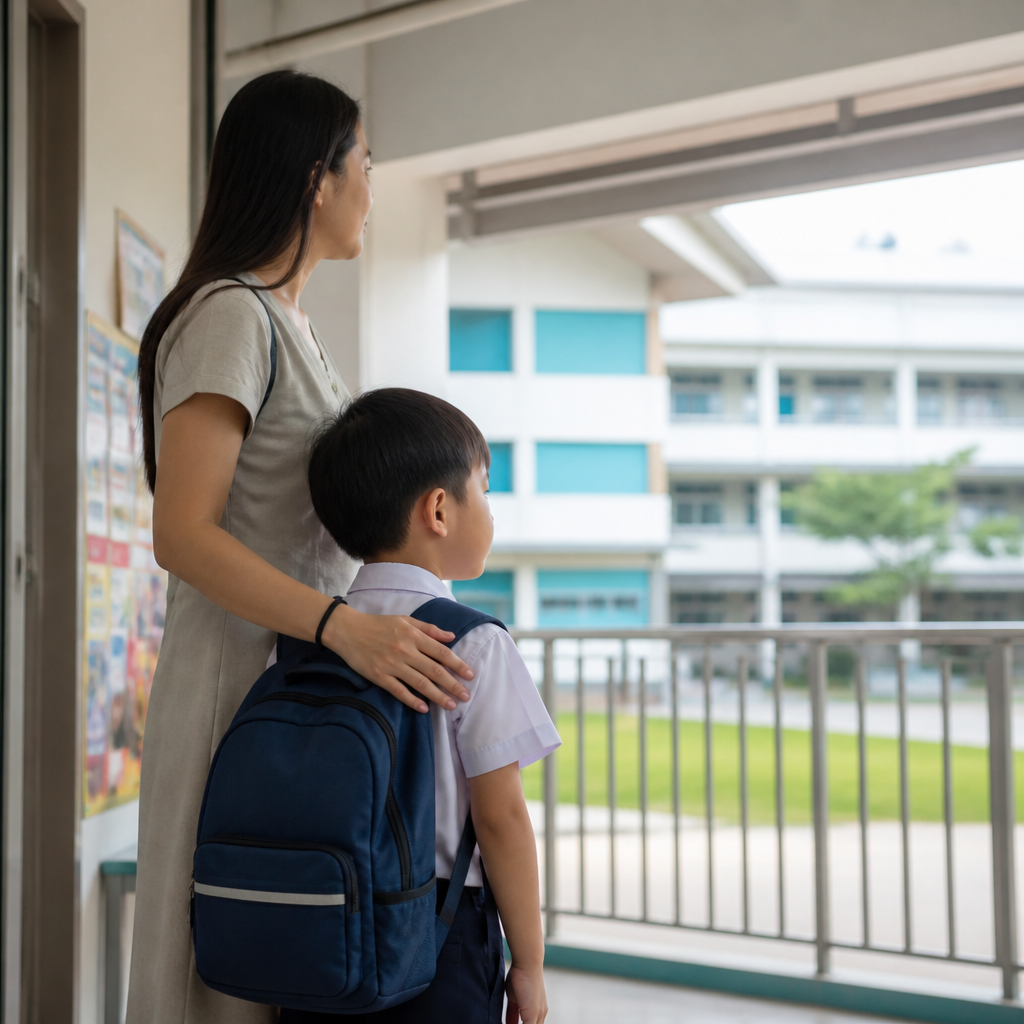
It also gives you room to compare schools more thoughtfully. Instead of scrambling under pressure, you can look at travel time, school culture, after-school care arrangements, and whether the environment feels suitable for your child’s temperament. Those practical details often matter far more in daily life than parents expect.
If you are also thinking ahead to your child’s adjustment into Primary 1, academic confidence matters more than many parents realise. If you would like extra academic support as your child prepares for Primary 1, learn more about our primary school tutors who can help build confidence and ease the transition. For broader support options, you can also explore our primary school tuition resources.
Common Misunderstandings About P1 Balloting
A lot of fear comes from half-true advice. Clearing up a few myths can make the process feel much more manageable.
“Balloting means it is all luck”
Not quite. Luck may come in only after the process has already narrowed applicants by phase, priority, citizenship, and sometimes distance. So the process is not random from the beginning.
“If a school is popular, everyone will face a ballot”
Also not true. Some families may get in earlier through their phase or category without any ballot at all. Others may face a ballot later because fewer vacancies remain.
“Within 1km means guaranteed entry”
This is one of the most common misconceptions. If many applicants in the same group are also within 1km, a ballot may still happen among them.
“A backup school means you are settling”
Not necessarily. Many parents who navigate registration well are not the most aggressive, but the most realistic. They understand that a child’s school journey is long. Primary 1 registration matters, but it is not the only thing that shapes what comes next.
For official details, parents should always check the latest information from the Ministry of Education’s P1 registration page and compare schools using the MOE SchoolFinder, because requirements and school data should always be verified directly.
Frequently Asked Questions
Does every school in Singapore have Primary 1 balloting?
No. Balloting only happens when the number of applicants exceeds the number of available places within a specific phase or priority group. Many schools and many phases do not require balloting at all.
Is Primary 1 balloting completely random?
No. Before any ballot happens, applicants are first considered according to the relevant registration phase, category priority, citizenship priority, and distance priority where applicable. The random part only comes in if there are still too many applicants after those rules are applied.
If I live within 1km, am I safe?
Not always. Living within 1km can improve your position, but if too many families in the same priority grouping also live within 1km, balloting may still happen. Distance helps, but it is not a guarantee.
Why do earlier phases matter so much?
Earlier phases matter because they reduce the number of vacancies left for later applicants. A school may seem to have many total places, but later-phase families are only competing for what remains at that point.
How can I improve my chances without becoming overly stressed?
The most practical approach is to assess ballot risk realistically. Look at likely vacancies, your applicable phase, your distance band, and backup options. That is usually more effective than depending on hearsay or assuming your preferred school will definitely work out.
Conclusion
So, how does primary school balloting work in SG? The clearest answer is this: balloting is not automatic, and it is not one giant random draw. It only happens when applications exceed available places within a specific phase or priority group. Before any ballot takes place, schools work through priority layers such as phase, category, citizenship, and distance where relevant.
For parents, the most helpful way to think about ballot risk is not emotionally, but practically. Check likely vacancies, understand how earlier phases affect later availability, note your distance band, and prepare a sensible backup option. That does not make the process fully predictable, but it does make it much easier to navigate without panic.
As your child gets ready for Primary 1, some families also find it helpful to build confidence early so the school transition feels less overwhelming. If you would like extra academic support as your child prepares for Primary 1, learn more about our primary school tutors who can help build confidence and ease the transition.