


Introduction
When your child is heading into Secondary 1, or moving to a new school, one practical question tends to come up very quickly, how much are secondary school fees in Singapore?
It sounds like it should be a simple answer. Then the first bill comes in, and suddenly there is the school fee, miscellaneous fees, maybe a one-time charge, and a few school-related costs you did not fully account for at the start.
For many parents, that is the stressful part. It is rarely just about one number. Once you add transport, pocket money, books, uniforms, devices, and CCA-related spending, the real concern becomes the full monthly picture. This guide walks through secondary school fees in Singapore for government and government-aided schools, what the main fee categories usually mean, how charges differ for Singapore Citizens, Permanent Residents, and international students, and what to check before school starts.

Because fee amounts and policies can change, always verify the latest information on MOE’s school fees page and the individual school’s website through the MOE SchoolFinder.
Key Takeaways
- School fees and miscellaneous fees are not the same thing. The basic school fee is only one part of the monthly cost. Most families will also pay miscellaneous fees, which is why the actual bill often feels higher than expected.
- Singapore Citizens usually pay the lowest fees. In government and government-aided secondary schools, the base school fee is heavily subsidised for Citizens. Even so, parents should still budget for recurring miscellaneous charges and other school expenses.
- Permanent Residents and international students pay more. If you are comparing MOE secondary school fees for PRs or foreign students, the difference can be substantial compared with Citizen rates.
- Monthly billing is only part of the story. Parents often prepare for GIRO deductions, then get caught off guard by books, uniforms, exam-related items, camp charges, or elective programme costs billed separately.
- Secondary 1 usually comes with higher start-up costs. Even if recurring monthly fees look manageable, January can feel expensive because of uniforms, stationery, calculators, school shoes, and transport changes.
- Transfers can create billing confusion. A mid-year move may involve pro-rated charges, delayed billing updates, or overlapping payment questions, so it helps to clarify details with the school office early.
What Secondary School Fees Usually Include
When parents ask about secondary school fees in Singapore, they are often referring to one of two things, the basic school fee, or the total monthly amount after miscellaneous fees are added.
For government and government-aided secondary schools, MOE publishes fee categories based mainly on student status. In day-to-day budgeting, it helps to separate costs into two broad groups.
Basic school fees
These are the core MOE school fees, and they depend largely on your child’s citizenship or residency status. This is where the biggest difference usually shows up between Singapore Citizens, Permanent Residents, and international students.
For many families, the relief comes here. Secondary school fees for Singapore Citizens in government and government-aided schools are usually the lowest because of subsidies. The base school fee may look very small compared with the rest of what a family spends during the school years.
For PR families, the picture is different. MOE secondary school fees for Permanent Residents are noticeably higher than Citizen rates, and international student fees are higher again. This is why phrases like “government school is affordable” can be a little misleading if nobody mentions who the fee is affordable for.
Miscellaneous fees
This is the part that catches many parents off guard. Even when the school fee itself is low, the amount actually payable each month usually includes standard miscellaneous fees as well. These often cover student services and school operating-related items.
So if another parent says, “Secondary school fees are cheap,” they may only be talking about the base fee. If your own monthly deduction looks higher, it often means you are seeing the full payable amount, not just the school fee line.
A more useful budgeting question is, “What is the full monthly amount I should expect to pay?”
How Fees Differ By Residency Status
When families compare school costs, they often focus on the school name. In reality, the biggest pricing factor is usually your child’s residency status.
Singapore Citizen fees
For Singapore Citizen students in government and government-aided secondary schools, the base school fee is the most subsidised. That is why many parents feel reassured when they first check MOE fee schedules.
Still, this is where expectations need a bit of balance. A low school fee does not mean the overall monthly cost of schooling is low. There is still transport, meals, class fund contributions, assessment books, and occasional school-related activity charges.
The subsidised fee helps a lot, but it does not remove the broader cost of secondary school life in Singapore.
Permanent Resident fees
For PR families, the school fee portion is significantly higher than for Citizens. This is one of the biggest budgeting gaps parents notice when comparing notes with friends.
Two children can both be in government schools, yet the monthly amount payable can look very different simply because one is a Citizen and the other is a PR. If you are a PR parent, it is safer not to estimate costs based on what a Citizen family pays.
International student fees
For international students, the difference is larger again. Families relocating to Singapore are sometimes surprised by this, especially if they assume government schools will be priced at the same level as local Citizen students.
Sometimes the fees may still feel manageable depending on what the family is comparing against, but the key point is simple, international student fees are not the same as Citizen fees. Because these rates can change, it is best to check the latest official fee page rather than rely on older blog posts, forum comments, or school chat groups.
Why The Actual Monthly Bill Feels Higher
This is probably the most common source of confusion. Parents hear one figure, then see another amount deducted, and naturally wonder what happened.
What miscellaneous fees usually cover
Miscellaneous fees are standard charges collected on top of school fees. They may support services or operational items across the school system. The exact breakdown can change, so the official MOE schedule remains the best place to confirm details.
From a parent’s point of view, what matters most is this, these are usually recurring charges. They are not optional in the same way enrichment classes are optional. They are part of the ordinary cost of attending school.
Why parents underestimate the total
The misunderstanding often starts in casual conversation. Someone says, “My child’s school fee is very low.” Another parent hears that and assumes the monthly payment must be similarly low.
Then the bill arrives, and it includes the miscellaneous portion too.
Tutors often notice a similar pattern in school planning generally, parents prepare for the obvious cost, but the smaller recurring items are what slowly add pressure. This is especially true in Secondary 1, when January can feel financially heavy. On top of monthly fees, there are new uniforms, books, files, PE attire, art materials, and sometimes digital learning needs.
Even if the school fee itself looks manageable, the first-term outflow may still feel substantial.
School-specific charges are separate
Not every school-related payment appears in standard MOE fee tables. Some schools may have charges linked to camps, learning journeys, elective programmes, or special activities.
These may not be monthly, but they still matter for the yearly budget. A common pattern among students is that the official fee looks manageable on paper, but the real family spending feels higher once these school-triggered extras come in.
In some cases, the timing matters as much as the amount. A camp fee or programme charge may not be huge on its own, but if it lands in the same month as textbook purchases or transport top-ups, the combined outflow can feel much heavier than expected.
A Simple Breakdown Parents Can Use
To make secondary school costs easier to understand, it helps to look at them as separate buckets rather than one lump sum.
What this means for family budgeting
A parent may look only at the published school fee and feel reassured at first. Then by the time GIRO deductions, EZ-Link top-ups, canteen money, and start-of-year purchases are added, the monthly school-related spend feels quite different.
That does not automatically mean school has become unaffordable. Very often, it simply means the real cost is broader than the fee table. Many families feel stressed not because the costs are impossible, but because the timing catches them off guard.

One practical way to plan is to separate your budget into recurring monthly costs and occasional school costs. Monthly costs may include fees, transport, and pocket money. Occasional costs may include uniforms, camps, enrichment materials, or replacement items. This simple split makes it easier to see what is predictable and what needs a buffer.
Why comparing schools by fees alone can mislead
For most government and government-aided schools, the MOE fee structure is more standardised than many parents expect. So moving from one typical government school to another does not necessarily create a dramatic difference in the base fee.
What may vary more is convenience, transport cost, subject combinations, or school-specific spending patterns. A school that is farther away may quietly cost more each month in transport and time, even if the official school fee is similar.
If your child needs extra support adjusting to secondary school subjects or workload while you are planning these costs, you can learn more about our secondary school tutors or contact us here.
What To Expect At Secondary 1 Or During A School Transfer
The first bill is only one part of the story. The transition itself often comes with financial surprises, even for parents who thought they had planned carefully.
Secondary 1 start-up costs
A typical Secondary 1 student does not just need school fees paid. There is often a long list in the first few weeks, uniforms, PE attire, books, stationery, calculator, art materials, files, shoes, and transport adjustments.
That is why some parents feel confused. They searched for secondary school fees in Singapore, saw a modest figure, and then found January surprisingly expensive. The issue is not that the published fee was wrong. It is that the published fee was only one part of the school-entry cost.
Parents may also need to prepare for practical items that are easy to overlook, such as a school bag, water bottle, name tags, or a laptop or tablet if the school requires digital learning support. Individually these may seem minor, but together they can noticeably raise the first-month cost.
Mid-year transfer costs and admin timing
When a child transfers schools, billing can take some time to settle. There may be questions about when fees begin, whether charges are pro-rated, or how miscellaneous fees are applied.
It helps to clarify these directly with the school office instead of assuming the previous billing pattern will continue unchanged. Parents who delay asking often end up more frustrated later when trying to reconcile deductions.
It is also sensible to ask whether new uniforms, books, or subject materials are needed immediately. A transfer may not only change the fee timeline, but also create fresh one-off purchases that were not part of the original plan.
Fee assistance and affordability concerns
Some families hesitate to ask about financial support because they worry it reflects badly on them. In reality, school costs can become heavy, especially when there are multiple children, unstable income, or a sudden change in circumstances.
If the monthly or start-of-year cost feels difficult, it is worth checking the latest support schemes through official channels and the school. Asking early is usually less stressful than waiting until arrears build up.
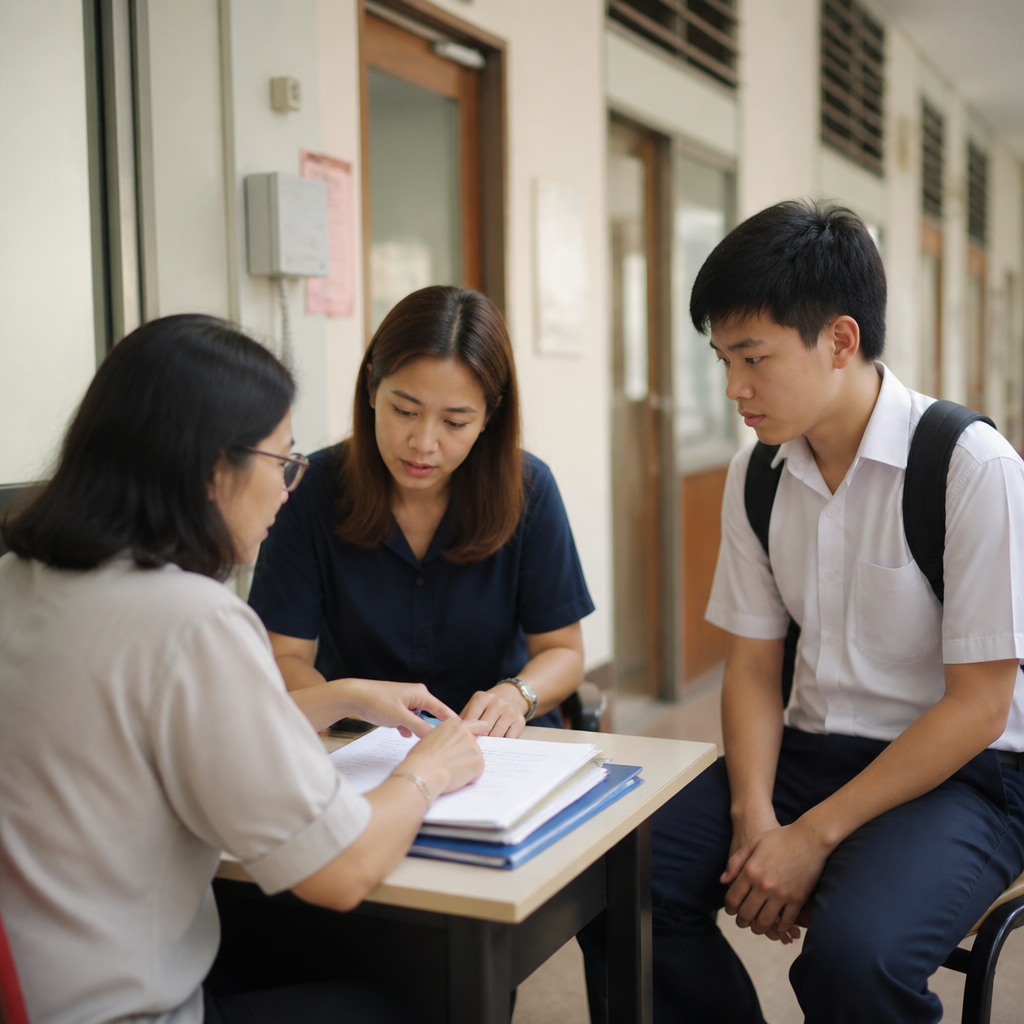
Even if you are not sure you qualify, it is still worth asking what options exist. Schools are generally familiar with these concerns, and early clarification can help families avoid unnecessary anxiety.
Common Misunderstandings Parents Should Avoid
The government secondary school fee structure in Singapore can look straightforward on paper, but a few misunderstandings come up again and again.
“Government school means the same price for everyone”
Not true. Citizenship status matters a lot. A Citizen family and a PR family can both have children in similar schools and still face very different fees.
“The published fee is the total amount I will pay every month”
Usually not. Parents need to factor in miscellaneous fees at minimum, and often several other school-related costs beyond that.
“If my child’s friend pays less, our bill must be wrong”
Not necessarily. The difference may come from residency status, billing timing, fee revisions, or school-specific items. Before panicking, compare the actual fee components, not just the final amount.
“Fees never change once my child enters school”
MOE fee policies and rates can change over time. That is why even experienced parents should recheck updated figures instead of relying on what applied to an older sibling a few years earlier.
This matters even more when families are budgeting carefully around school costs, transport, and wider household expenses.
Frequently Asked Questions
Are secondary school fees in Singapore the same for government and government-aided schools?
In broad terms, the MOE fee structure for government and government-aided schools is similar and centrally guided, especially for standard fee categories. Still, parents should check each school’s website for school-specific charges or programme-related costs.
How often are secondary school fees billed?
School fees are commonly billed monthly, often through GIRO arrangements. Other costs, such as books, uniforms, camps, or special activities, may be charged separately and may not follow the regular monthly pattern.
Why does my child’s monthly deduction seem higher than the school fee I saw online?
This usually happens because the published figure refers to the base school fee, while the actual deduction includes miscellaneous fees as well. In some months, there may also be additional school-related charges.
Do foreigners and Permanent Residents pay much more than Singapore Citizens?
Yes. This is one of the biggest differences in secondary school fee planning. Singapore Citizens receive the most subsidy, Permanent Residents pay more, and international students pay the highest rates among these groups.
Where should I check the latest official fee amounts?
Always verify with MOE’s fees page and the school’s profile or website through the MOE SchoolFinder. Fee amounts and policies can change, so official sources are the safest place to confirm the latest information.
Conclusion
So, how much are secondary school fees in Singapore? The practical answer is this, it depends first on your child’s residency status, and then on whether you are looking only at the base school fee or the full monthly amount including miscellaneous fees.
For Singapore Citizens, the base fee is usually the lowest. For PRs and international students, the cost rises significantly. On top of that, every family should budget for miscellaneous fees and separate school-related expenses such as books, uniforms, transport, and occasional programme charges.
The safest approach is to treat MOE fee tables as your starting point, not your entire budget. Check the latest figures on MOE’s school fees page, review school details through the MOE SchoolFinder, and ask the school directly if your child is entering Secondary 1 or transferring mid-year.
If your child needs extra support adjusting to secondary school subjects or workload, learn more about our secondary school tutors or contact us here.