


Introduction
By the time your child reaches Primary 1 or Primary 2, this question usually becomes very real. School ends early, work does not, and suddenly every afternoon needs a plan. For many Singapore parents, the stress is not just about finding a place for their child to go. It is about finding something that is affordable, practical, and calm enough for a child who is already tired from the school day.
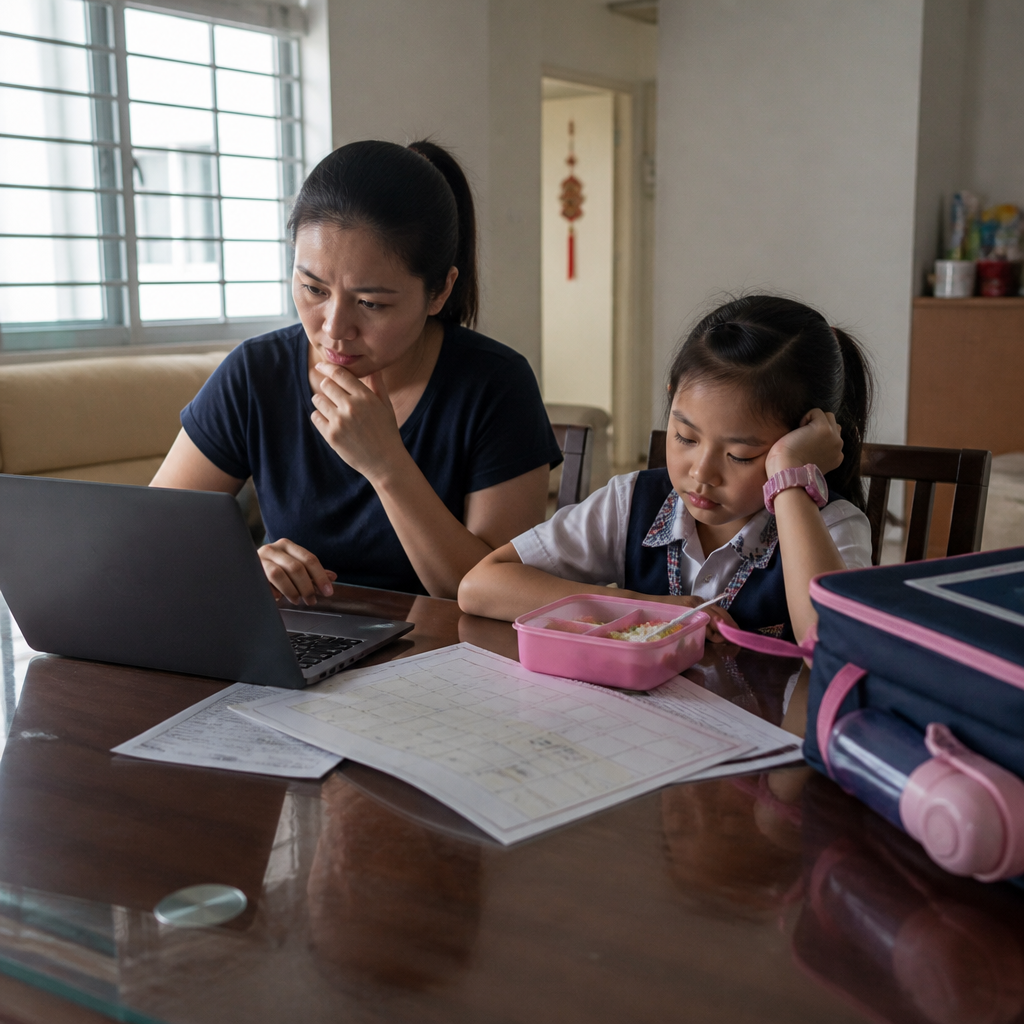
If you are wondering how much student care in Singapore costs, the short answer is that it varies quite a bit. The final amount depends on the type of centre, where it is located, whether subsidies apply, and the extra charges that can quietly push the bill up.
For many families, the bigger worry is not the headline monthly fee. It is the full cost of after-school student care for primary school children, including registration, meals, transport, holiday programmes, and late pickup penalties. This guide breaks it down in a practical way, so you can compare options clearly and decide what is affordable, workable, and worthwhile for your child in 2026.
Key Takeaways
- Monthly fees vary widely. Basic school-based or subsidised centres may cost much less than private or premium centres, but the final bill depends on add-ons like meals, transport, and holiday care. A centre that looks cheap at first glance may not stay cheap once the extras are included.
- The cheapest option is not always the most practical. A lower-fee centre may become costly in real life if it is far from school, closes too early, or offers very limited homework supervision. Convenience often affects both your budget and your stress level.
- Subsidies can change the picture significantly. For eligible families, especially those who qualify for working-parent or lower-income support, out-of-pocket fees can drop meaningfully. This is why published fees and actual fees paid can look very different from one family to another.
- Look beyond the monthly fee. Registration charges, deposits, uniforms, insurance, enrichment, and late pickup penalties can add up faster than many parents expect. Always ask for a full fee schedule before enrolling.
- Location matters. School-based centres, neighbourhood operators, and city-fringe private centres can differ noticeably in price and convenience. A centre near your child’s school may save money on transport and reduce daily transitions.
- Your child’s age and temperament matter too. A child who is easily overwhelmed may do better in a calmer centre, even if it costs a bit more, while a highly independent child may not need a premium programme with many extras.
- Compare student care with other support options. For some families, a mix of shorter-care arrangements and home-based homework support may be more cost-effective than full student care every weekday.
Typical Student Care Fees In Singapore
When parents ask how much student care is in Singapore, they usually hope for one simple number. In reality, there is a range. Average monthly student care fees in Singapore can start from the lower hundreds at subsidised or school-linked options and rise to several hundred dollars more for private or premium centres.

Typical monthly fee ranges by centre type
Here is a simple comparison for planning purposes. Actual fees vary by operator and location, so it is always worth confirming directly with the centre.
These are broad guide ranges, not fixed national rates. A centre in a mature estate near a popular primary school may charge differently from one in a quieter neighbourhood.
What affects the fee most
A centre can look affordable on paper and still feel expensive in daily life. For example, if the fee is $320 a month but the centre closes at 6.30pm and your work often runs late, repeated late pickup penalties can quickly narrow the gap between that and a $420 centre with longer hours.
Homework support also matters more than many parents expect. Some centres mainly supervise children while they sit with their work. Others make sure worksheets, reading logs, and correction work are actually checked. Tutors often notice that children who leave student care with half-done work often end up facing a second round of stress at home. If your child regularly unravels at night over unfinished corrections, stronger homework support may be worth paying for.
Another factor is staffing ratio and programme style. A centre with lower fees may still be excellent if routines are clear and staff are attentive. On the other hand, a more expensive centre is not automatically better if children spend long hours waiting between activities. The question is not just what the centre charges, but what your child’s afternoons actually look like there.
What Is Included In Student Care Fees, And What Costs Extra?
This is where many parents get caught off guard. The monthly fee is only one part of the total cost of after-school care.
Common one-time charges
Many centres ask for upfront payments before your child even starts.
- Registration fee, often around $50 to $150.
A centre may advertise $380 monthly fees, but you may still need to pay a $100 registration charge during enrolment. This is common, and it should be factored into your first-month budget.
- Deposit, often one month of fees.
Some centres treat this as security against sudden withdrawal. If your child leaves without enough notice, the deposit may not be fully refundable, so it is worth checking the withdrawal terms carefully.
- Insurance, materials, or uniform charges.
These may not look like much one by one, but together they can add another $30 to $100 or more at the start. Small fees have a way of piling up.
Common recurring add-ons
A more useful question is not just how much student care costs, but what the real monthly bill looks like.
A common pattern among families is this: one centre looks cheaper at first, but by the second month, the gap has shrunk because meals, holiday care, and school pickup were never included.
It also helps to ask whether exam-period revision, project materials, or ad hoc outings are billed separately. These may not be huge charges individually, but they matter when you are comparing two centres that seem similar on the surface.
Student Care Subsidies In Singapore: What You May Actually Pay
For some families, the most important figure is not the published fee but the actual amount payable after support. This is where student care subsidy eligibility for working parents in Singapore becomes highly relevant.
Basic subsidy and additional support
Student care subsidies in Singapore may be available for eligible children attending approved centres. Support levels can depend on factors such as the mother’s working status and household income. Policies can change, so parents should check the latest information from MSF and the centre itself.
A simple example makes this easier to picture. If a centre charges $400 a month and your family qualifies for subsidy support, the out-of-pocket amount may fall quite a bit. For some households, that difference changes the decision from stressful to manageable.
Sample out-of-pocket examples
These are illustrative examples only.
This is why parents can give very different answers to the same question. One family may pay under $200 after support, while another pays more than $700 for a private centre with no subsidy.
Important reminder on eligibility
It is easy to come across old fee discussions online, but those may not reflect current rules. Subsidy eligibility may depend on current employment and household details, and centre approval status matters too. Always confirm the latest requirements directly with official sources and the centre before deciding that a fee is affordable.
A practical tip is to ask the centre what documents are needed and how long approval usually takes. That helps you plan for the first month or two, especially if you may need to pay the full fee first before any adjustment is reflected.
School-Based, Community, Private, Or Premium: What Are You Paying For?
Not all student care fees buy the same thing. Often, the main difference is not “better” or “worse” in a broad sense. It is fit, for your child, your routine, and your stress level.
School-based and MOE-linked options
When comparing MOE-linked student care centres across Singapore, school-based options are often among the most convenient. Your child does not need extra transport after dismissal, and that can reduce both cost and transition stress.
For a Primary 1 child who is still settling into school life, this matters more than many adults realise. A tired seven-year-old who has already spent the morning managing classroom routines may find another transfer to an off-site centre quite draining. In that situation, a simpler programme may still be the better choice if the daily rhythm feels smoother.
You can review general after-school care information via MOE.
Anchor operator and community-based centres
These centres often sit in the middle for families looking for value. Fees may be more manageable, and subsidies may apply more clearly. They can suit parents who need dependable supervision, meals, and basic homework support, without paying for extras their child may not use.
Private and premium centres
Private centres vary a lot. Some are excellent and practical. Others charge premium rates mainly because of location or bundled enrichment.
This is where parents sometimes feel torn. A premium centre can sound more structured, more academic, or more personalised, which feels reassuring on paper. But younger children do not always do well with tightly packed after-school schedules. Sometimes what helps most is not more programming, but a snack, a breather, and calm homework guidance.
How Location Affects Student Care Costs
Parents often compare student care fees by location because location affects both price and usefulness. A centre can be affordable and still become impractical if pickup turns into a daily headache.
Neighbourhood differences
In general, centres in heartland areas may be more budget-friendly than centres in central or city-fringe locations, though this is not a strict rule. Rental, staffing, and local demand all influence fees.
A centre near a popular primary school in a dense estate may have long waitlists and less pricing flexibility. Another centre a few bus stops away may cost less, but then the question becomes whether that extra travel is realistic for your child, every single weekday.
Convenience can save money too
There is a hidden cost to inconvenience. If a centre is cheaper by $80 a month but requires separate transport, or forces you to arrange backup pickup whenever CCA runs late, the real savings may disappear.
This becomes even more obvious from Primary 3 onwards, when some children start juggling homework, school activities, and occasional tuition. A common pattern among students is that a badly timed after-school routine leaves everyone tired and irritable by night. Some families end up paying for student care and extra tuition because homework was not properly done during care hours.
If you are comparing student care with other ways to support your child after school, learn more about home tutors for homework support, subject help, and confidence-building at home.
What “Affordable” Student Care Really Means
Many parents search for the best affordable student care centres in Singapore, but affordability is not just about the lowest sticker price. It is about value for your specific child.
What to look for in an affordable centre
A truly affordable centre usually has these qualities:

- Clear fee structure. You should be able to see exactly what you are paying for. If a centre is vague about holiday fees or transport charges, budgeting becomes harder and unpleasant surprises become more likely.
- Reliable supervision. Affordable should not mean chaotic. A child who spends hours loosely supervised, forgets worksheets, and comes home with untouched homework may cost you more later in stress and extra academic support.
- Reasonable homework support. This does not mean tuition-level teaching. It means someone checks whether work is attempted properly, instead of being rushed through or left buried in the school bag.
- Operating hours that match your life. A centre that closes too early can create weekly panic, especially if both parents work full-time or commute from different parts of Singapore.
Budget tiers parents can compare
Here is a practical way to think about the range.
Sometimes the best affordable student care centres in Singapore are not the fanciest ones. They are the centres where children settle in, get their work done, eat on time, and go home less overwhelmed.
One useful way to compare centres is to estimate the annual cost, not just the monthly fee. A $350 centre with modest extras may remain affordable across the year, while a $300 centre with frequent add-ons may end up costing more overall. Looking at the full-year picture often makes the decision clearer.
Frequently Asked Questions
Is student care worth the cost for primary school children?
For many families, yes, especially if it fills a real weekday care gap and takes some pressure off the evenings. It tends to feel worth it when the centre provides reliable supervision, meals, and workable homework support. It feels less worthwhile when children still come home with unfinished work, high fatigue, or daily resistance.
Are school-based student care centres always cheaper?
Often, but not always in a way that matters once all extras are counted. A school-based option may save on transport and simplify pickup, which can make it better value even if the published fee is only slightly lower than an outside centre.
Can working mothers get subsidy for student care in Singapore?
There may be subsidy support for eligible families, and this is something worth checking carefully. Because support levels and requirements can change, confirm the latest details with approved centres and official sources such as MSF.
Why do some student care centres seem cheap at first but expensive later?
Usually because the advertised fee does not include everything. Meals, holiday programmes, deposits, registration, transport, and late pickup penalties can raise the real monthly cost quite a bit. Ask for the full fee schedule in writing so you can compare centres properly.
Should I choose student care or home-based homework support instead?
That depends on your child and your family routine. Some children benefit from the structure and social rhythm of student care. Others do better going home earlier and having focused support there. If your main concern is unfinished homework or weak subject understanding rather than childcare hours, home tuition may be a more targeted use of your budget.
Conclusion
So, how much is student care in Singapore in 2026? For most families, the realistic answer ranges from a few hundred dollars to well above $1,000 a month, depending on centre type, subsidies, location, and extras. Average monthly student care fees tell only part of the story. The real decision comes down to your actual out-of-pocket cost, daily convenience, and whether the centre genuinely helps your child feel safe, settled, and supported after school.
If you are comparing options, ask for the full fee breakdown, not just the monthly headline number. Check subsidy eligibility carefully. Think about pickup timing, meals, school holiday coverage, and whether homework support is real or simply supervised sitting time. Most importantly, choose based on what your child can realistically handle after a long school day.
Fees, subsidies, and approved-centre details may change, so do verify the latest information with MSF, MOE, ECDA, and the individual centre before deciding. If you are also weighing student care against home-based academic support, you can explore our home tutors for homework help, subject support, and confidence-building at home.