


Introduction
It is a scene many parents know too well. Your child is already tired, the homework pile is not getting smaller, and the moment writing comes up, the mood changes. Silence. Frowning. Maybe a few tears. Maybe that familiar, “I don’t know what to write.”
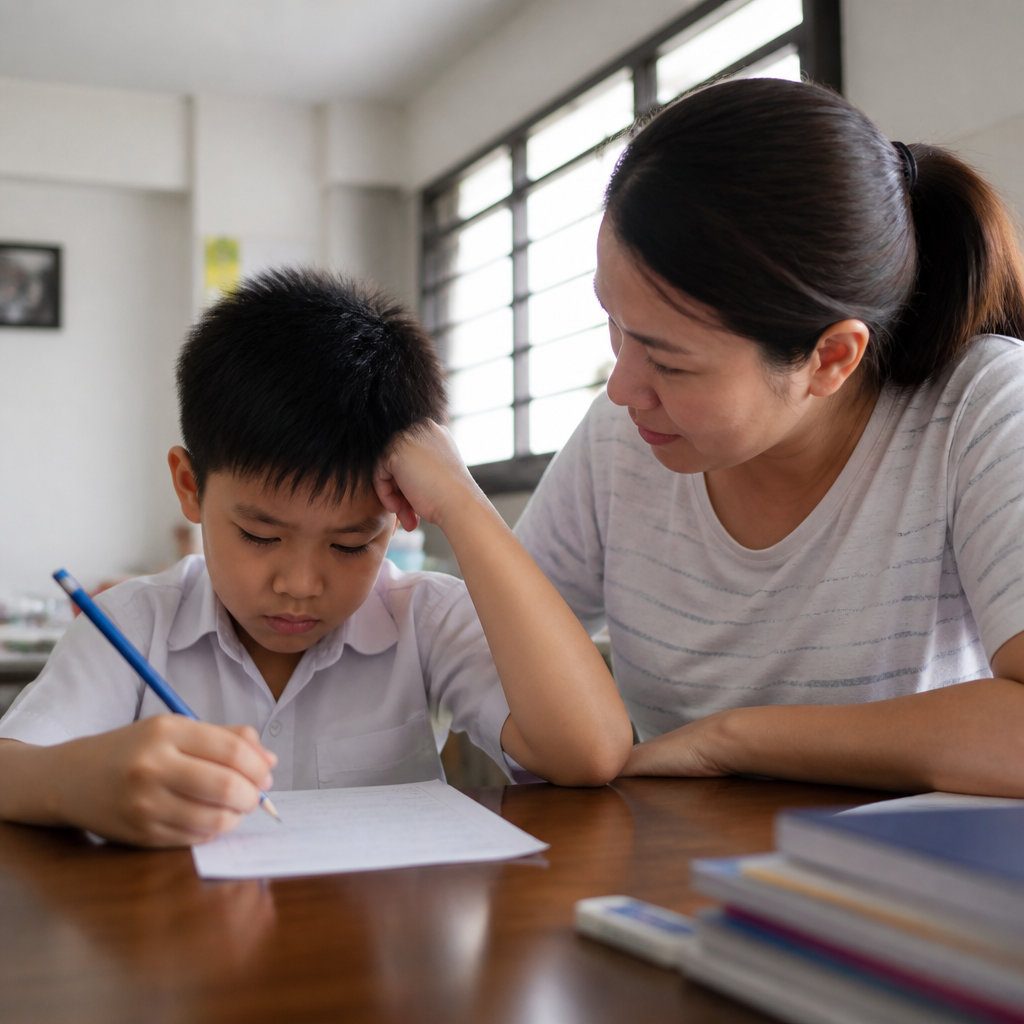
For many Singapore parents, this is not really about laziness. It is about fear, tiredness, and the expectation that writing will end in correction.
If you have been looking for ways to improve your child’s writing skills, it helps to start from a place many people miss. Confidence often comes before quality. A child who feels safe enough to try will usually write more. A child who writes more, without shutting down each time, will slowly improve.
This article looks at how parents can support writing at home in a low-pressure way, and when home support may be enough, versus when outside help, such as an English tutor, may be a better fit.
Key Takeaways
- Confidence often comes before improvement. Many children do not resist writing because they cannot do it. They resist because they expect criticism, pressure, or a long tiring task. When the emotional barrier drops, effort usually rises.
- Short home routines work better than long writing sessions. Ten calm minutes after a snack can do more for writing practice at home than forcing a full page at 9.30pm. Small wins are easier to repeat, and repetition is what builds skill.
- Talking helps children write. When children say their ideas aloud first, writing feels less like being tested and more like recording something they already know. This is especially useful for children who freeze at the blank page.
- Overcorrecting can shut children down. If every line is marked for grammar, spelling, and handwriting, children may become more careful, but not more confident. Selective feedback is often more effective.
- Reading and conversation support writing naturally. Strong writing skills for kids often grow from hearing useful phrases, noticing how people describe things, and learning to express opinions in daily life, not only from composition drills.
- Some children need more than parent support. If tension at home is high, progress is slow, or your child freezes whenever writing starts, a suitable tutor may help break the pattern and rebuild confidence.
- The best support depends on your child’s temperament. Some children improve with a parent-led routine. Others respond better to a neutral adult, especially when the parent-child homework dynamic has become stressful.
Why Writing Feels So Hard For Some Children At Home
Before looking at home support versus tuition, it helps to understand why writing becomes such an emotional issue in the first place.
Fear of being wrong starts before the pencil moves
A common pattern among students is this. They stare at the paper, say, “I don’t know what to write,” then manage one line and erase it twice. Very often, the issue is not a lack of ideas. It is fear of making mistakes.
Children who have been corrected heavily can start believing that writing only counts if it is neat, grammatically perfect, and impressive from the first sentence. That is a very hard standard for any child to carry.
This often shows up in primary school, when English work starts to feel more visible. A child may answer questions aloud in class quite comfortably, yet still avoid writing because written mistakes remain on the page. They can be marked, checked, and compared.
Tiredness often gets mistaken for unwillingness
Many families are squeezing English practice around school, CCA, dinner, showers, and unfinished worksheets. By the time writing begins, your child may have nothing much left in the tank.
A child who can chat happily at 5pm may completely shut down at 9pm. In that state, even simple writing feels heavy. Tutors often notice that what looks like refusal is sometimes just mental exhaustion.
When parents struggle with improving writing at home, timing can matter more than effort. Sometimes the problem is not that your child hates writing. It is that your child hates writing when already drained.
Some children have learned that writing means correction
Children notice patterns quickly. If every writing attempt leads to red marks, rewriting, or a lecture about careless mistakes, many will start protecting themselves by doing less.
From a tutor’s point of view, this is very familiar. The child is not always weak in English. Often, the bigger issue is weak writing confidence.
That is why one question matters early on. Are you trying to improve output first, or willingness first? At home, willingness usually has to come first. Once a child stops bracing for criticism, the actual teaching becomes much easier.
Short, Low-Pressure Routines Work Better Than Long Writing Sessions
When parents ask how to improve children’s writing skills, it is tempting to think more writing automatically means better writing. In reality, the way practice is done matters just as much as how often it happens.

Why long sessions often backfire
A 45-minute writing session after a full school day may sound productive. In real life, it can easily turn into procrastination, argument, and tears.
The child delays. You get frustrated. The notebook starts to represent conflict instead of learning.
That does not mean children should never work on longer pieces. It means confidence is usually built through repeated small wins first. A child who can complete short tasks calmly is more likely to cope with longer compositions later.
What short routines look like in real life
A helpful writing routine at home can be very simple.
- Ask your child to write three sentences about something that happened today.
The goal is not perfect grammar. The goal is to get words onto paper without panic.
- Let your child choose from two easy prompts.
“Write about recess or your PE lesson” is often easier than “Write anything you want.”
- Stop while the mood is still calm.
If your child writes five useful sentences in ten minutes, that is a good session.
Small routines feel less threatening. Over time, they quietly improve children’s writing because writing starts to feel familiar instead of dramatic.
A simple weekly pattern parents can try
If you are unsure how to make this practical, think in terms of a light routine rather than a full study plan. For example, one day can be a short personal recount, another day can be sentence expansion, and another can be oral planning followed by a few written lines. This keeps practice varied without making it feel like endless composition work.
The main point is consistency. Children often gain confidence faster from three calm ten-minute sessions than from one stressful hour on Sunday.
When a tutor may be better than pushing longer at home
If even short routines still end in resistance, a neutral adult may help. Some children simply respond better when the task is no longer tangled up with the parent-child homework dynamic.
In that situation, a home tutor for primary school writing skills may not be about adding pressure. It may be about creating an emotional reset.
If you want to compare options, you can view English support here: English tuition in Singapore
Build Confidence With Focused Feedback, Not Constant Correction
Parents often worry, “If I do not correct all the mistakes, won’t bad habits stay?” That concern is understandable. Still, there is a big difference between helping and overwhelming.
What overcorrection looks like
Some children hand over six sentences and get comments on spelling, punctuation, grammar, vocabulary, handwriting, and content all at once. By the end, nearly every line has been changed.
The message they often take away is not, “I learned a lot.” It is, “What I wrote was bad.”
That kind of feedback may produce cleaner work for the moment, but it can reduce willingness to write next time. Children start writing less because less writing means fewer mistakes to be pointed out.
Choose one focus instead of fixing everything
A more manageable home approach is to pick one main focus for each session.
This is one of the most practical ways parents can help with writing without becoming a full-time marker.
Praise needs to be specific to feel real
Children can tell when praise is vague. “Good job” often washes over them. “I like that you explained why you felt angry” lands better because it shows exactly what worked.
Parents trying to improve writing at home sometimes underestimate how much specific encouragement changes effort. Children tend to repeat what gets noticed. If you see clearer sequencing, a stronger ending, or a more vivid detail, say so plainly.
A useful balance is this: notice one thing done well, then suggest one next step. That keeps feedback honest without making the page feel covered in failure.

Talking Before Writing Makes The Blank Page Less Scary
Many children who say, “I don’t know what to write,” can actually talk quite a lot. The struggle is often not thinking. It is moving from thoughts to written words.
Conversation reduces the blank-page problem
Before writing, spend two or three minutes talking. Keep the questions easy and concrete.
- What happened first?
- Who was there?
- What made you happy, annoyed, or scared?
- What do you remember most clearly?
A parent may feel this slows things down. In practice, it often removes the hardest part, which is getting started. Once a child has said the idea aloud, writing feels less like a test and more like recording something already known.
Why this works for weaker writers
A writing tutor for weak English composition students often spends time drawing out ideas verbally before asking for written work. Not because the child cannot think, but because written expression is slower and more intimidating.
At home, the same principle helps. A child who struggles to produce one sentence independently may suddenly write three after a short conversation. Talking lowers the pressure.
Use ordinary daily life, not only school tasks
Do not wait for composition homework before practising expression. Daily family conversations matter more than many parents realise.
Ask your child about the MRT ride, a science experiment, or why they liked a particular hawker stall dish. These ordinary moments quietly build vocabulary, sequencing, and comfort with expression. All of that supports writing development.
You can also help by giving simple sentence starters such as “First…”, “I felt…”, or “The most surprising part was…”. These small prompts make it easier for children to turn spoken ideas into written ones.
Support Writing Through Reading And Everyday Conversation
A child’s writing does not improve only during writing time. It is also shaped by what they hear, read, and notice every day.
Reading gives children usable language
Children who read regularly often write more easily because they have absorbed sentence patterns and descriptive language. This does not mean forcing difficult books. If the reading is enjoyable and consistent, it still helps.
You may notice your child borrowing phrases from stories after a while. That is not necessarily a bad thing. It often means language is becoming available.
Daily conversation matters more than many parents realise
Busy families sometimes assume only worksheets count as English practice. But a child who regularly explains opinions, retells events, and talks through experiences is already building foundations for better writing.
If your child says, “School was boring,” you can gently ask, “Which part was boring?” or “What happened during that lesson?” That small push towards clearer expression helps later when they need to write in fuller sentences.
Model answers can help, but comparison can hurt
Some children are surrounded by model compositions and polished sample paragraphs. These can be useful, but weaker writers often compare themselves and feel defeated. They start thinking good writing must sound advanced from the beginning.
That is where balance matters. Exposure to good English helps, but too much comparison can make normal writing attempts feel worthless. For the current primary English syllabus context, parents can refer to the MOE primary curriculum syllabus. If school-based writing expectations are causing stress, keep perspective. Not every home writing session needs to feel like exam practice.
When Home Support Is Enough And When A Tutor May Help More
Not every child needs a tutor. At the same time, not every parent has the time or emotional energy to carry writing practice alone. The more useful question is, what does your child need right now?
Here is a simple way to compare the two.
Group tuition or one-to-one support?
Some children manage well in a small group. Others need direct attention. A one-to-one writing tutor for primary students in Singapore can be especially helpful for children who freeze easily, need patient prompting, or feel embarrassed in front of peers.
If you are comparing tutor options, do not focus only on who seems like the best English composition tutor on paper. Fit matters more. A calm tutor who can draw out ideas gently may help more than someone impressive but intense.
Signs that it may be time to get outside help
Parents sometimes wait too long because they hope things will improve once the child matures. Sometimes that happens. But if the same pattern has been repeating for months, it may be worth changing the support structure.
Consider extra help if your child regularly avoids writing, becomes distressed before even starting, or receives repeated school feedback about weak expression. In those cases, outside support is not a sign of failure. It may simply be a more effective way to rebuild momentum.
If you would like to compare tutors based on your child’s temperament and writing needs, you can enquire here: Contact us for private home tuition
Frequently Asked Questions
How often should my child do writing practice at home without getting overwhelmed?
For many primary school children, two to four short sessions a week is enough to start. Ten to fifteen minutes can work better than one long weekend session. If your child is already stretched by school and CCA, consistency matters more than intensity.
What should I do if my child cries or shuts down every time writing starts?
It may help to step back from full writing tasks first. Try talking, oral retelling, or asking for just one sentence. If the emotional resistance is strong and keeps repeating, it may be time to consider a writing tutor who can rebuild confidence without the parent-child tension.
Do I need to correct grammar mistakes every single time?
No. Correcting everything usually discourages weaker writers. Choose one focus for that session, such as clearer ideas or one recurring grammar mistake. For many children, that is a more effective way to improve writing over time.
Can reading really help if my child already says they hate writing?
Yes, especially if the reading is enjoyable and not too difficult. Reading gives children natural exposure to vocabulary, sentence flow, and story structure. A common pattern among students is that writing becomes less intimidating once they have more language in their heads.
When should I stop pushing at home and look for a tutor instead?
Consider extra help if writing practice causes regular conflict, your child shuts down even with short tasks, or school feedback suggests persistent weakness. If you are comparing options for English tuition in Singapore, look for someone who can support confidence as well as language skills.
Conclusion
When parents search for how to improve children’s writing skills, the hope is usually for better sentences, fewer mistakes, and stronger school results. Those goals matter. But at home, the first win is often much simpler. It is helping your child feel less afraid of writing.
A shorter routine, a calmer tone, a quick conversation before writing, and more selective feedback can sometimes do more than another forced page of practice. Tutors often notice that once fear drops, effort starts to rise.
Some families can build that confidence well at home. Others find that a neutral adult helps break the stress pattern faster. There is no shame in that. If you are weighing parent-led support against tuition, it helps to compare teaching style, patience, and suitability, not just credentials.
You can also check the broader exam context at the SEAB PSLE page, while keeping in mind that confident writing grows through everyday support, not only exam pressure. If you would like to compare our tutors and find a suitable English or writing match for your child, visit our private home tuition contact page.