


Introduction
It is 8.45pm, homework has just ended, the school bag is still open, and your child is already looking tired. Then comes the next reminder, music practice. You ask nicely. They groan. You mention the lesson this weekend. They say they are too tired. Very quickly, something that was supposed to build joy and confidence starts feeling like one more nightly battle.
That is why so many parents wonder how to support a child learning music without becoming the “practice police”. In Singapore, where tuition, CCA, school projects, and exam periods can already fill up the week, music lessons can either become a meaningful long-term skill or another source of stress at home. Very often, the difference is not talent. It is the kind of support a child receives.
This guide is for parents who want practical ways to encourage music practice at home, even if you are not musically trained yourself. The goal is not perfection. It is to help your child build steady habits, confidence, and enjoyment over time.
Key Takeaways
- Small, steady practice works better than long, forced sessions. A tired child who practises 10 to 15 focused minutes regularly often progresses better than one who is pushed into a stressful one-hour session once a week.
- Your role is support, not constant correction. Many children shut down when every mistake is pointed out at home. Encouragement, structure, and calm reminders usually help more.
- The home environment matters more than many parents realise. A quiet corner, a predictable routine, and fewer distractions can make music practice feel manageable instead of chaotic.
- Communication with the music teacher is valuable. If your child resists practice, forgets instructions, or seems discouraged, a quick update to the teacher can lead to clearer and more suitable expectations.
- Motivation often comes after action, not before it. Children do not always feel like practising first. Starting with a short, easy task often helps them settle.
- Busy school terms require flexibility. During tests, CCA peaks, or project-heavy periods, reducing practice volume may protect your child’s confidence and keep music sustainable.
- Confidence grows when music stays emotionally safe. If your child links music only with nagging or disappointment, progress may slow even if lessons continue.
Help Your Child Start Without Daily Conflict
When parents ask how they can support children learning music, what they often mean is, “How do I help without making my child dread both the instrument and me?” That worry is very real. Many children are not rejecting music itself. They are resisting the transition, from play to practice, from rest to effort, from school mode to one more responsibility.
Start by lowering the emotional temperature
One common mistake is starting practice with pressure. “We paid for lessons, so you must practise properly” may be true, but it rarely helps a tired child at the end of the day. Tutors often notice that resistance grows faster when the atmosphere becomes tense before the instrument is even touched.
A softer opening usually works better. “Let’s do just one song first” can feel much easier to hear than “Go practise now.” That small shift reduces defensiveness. Over time, children are more willing to begin when they do not feel they are walking straight into criticism.
Separate support from control
Children usually respond better when parents provide structure without hovering over every minute. Sitting beside your child throughout, correcting every finger position, or asking them to restart again and again can make practice feel like an exam. This is especially risky if you are not fully sure what the teacher expects.
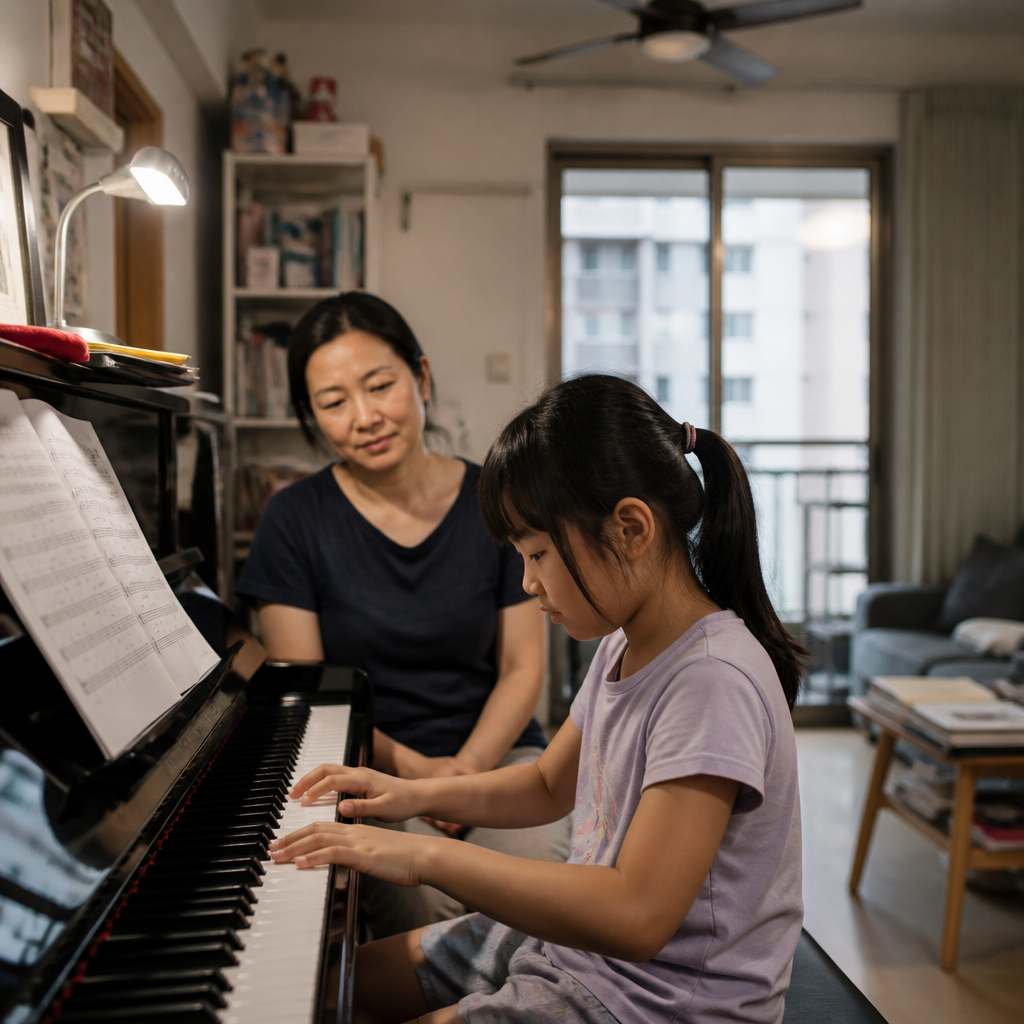
A more helpful role is often simpler. Remind your child of the timing, help set up the music stand, or ask what the teacher wanted revised. Then step back unless your child needs you. For many beginner music students, emotional safety matters more than perfect supervision.
Notice what is really causing resistance
Sometimes the issue is not discipline at all. It may be fatigue, confusion, embarrassment, or fear of getting it wrong. A common pattern among students is that they avoid the pieces that sound messy because those pieces remind them they are not yet good at them. If your child keeps replaying only the easiest section, that is often not stubbornness. It is self-protection.
When you notice this, curiosity helps more than accusation. Asking, “Which part feels difficult today?” usually opens more doors than, “Why are you always avoiding this song?” The child feels understood, not judged, and that changes the whole tone of practice.
Make Music Practice Work In Real Life
Parents often want practical advice on how to help children practise music at home, especially when weekdays are packed. Between school dismissal, enrichment, dinner, spelling revision, and bedtime, ideal plans often fall apart by midweek.
Keep the routine short enough to survive real life
In Singapore, many children are balancing music with tuition, CCA, and school homework. A routine that looks impressive on paper but cannot be sustained is not a good routine. Ten to twenty minutes on a school day may be far more realistic than aiming for forty-five minutes and fighting about it every night.
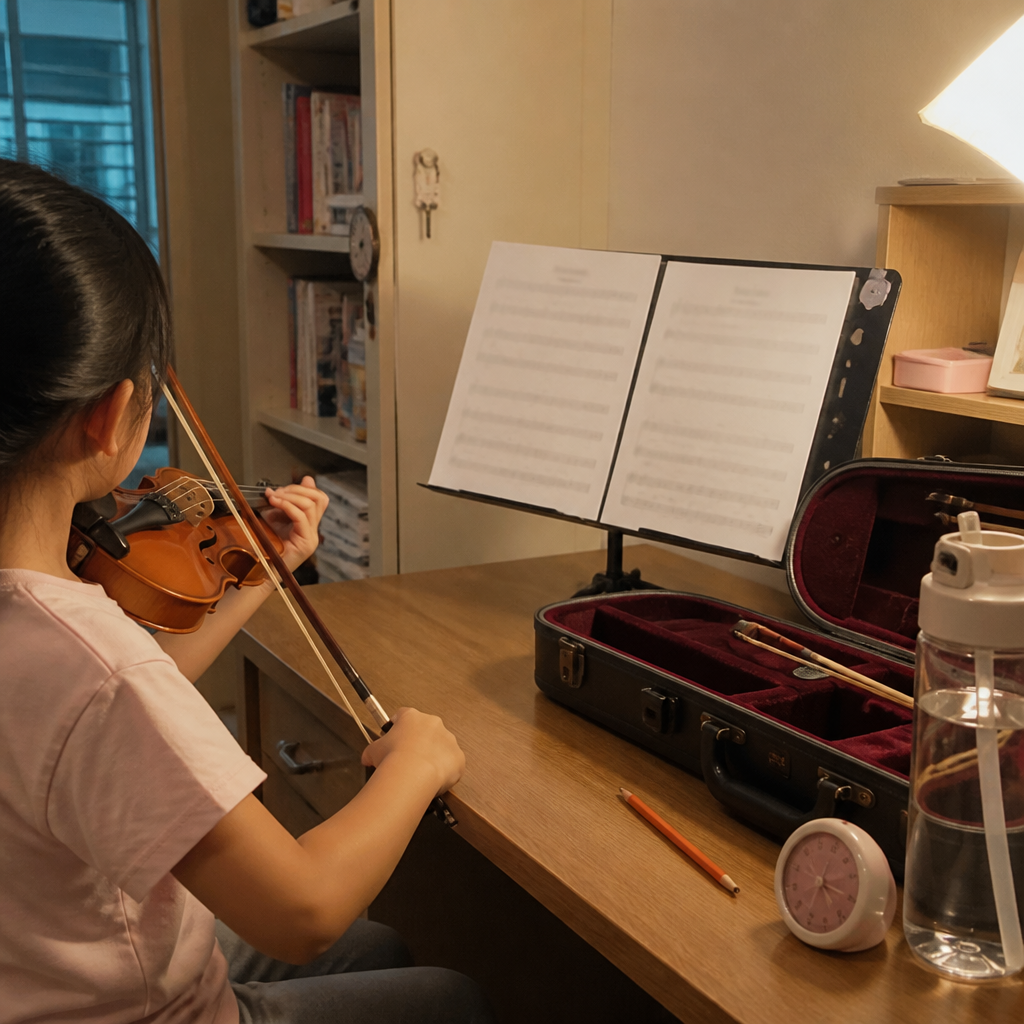
A short session can still be useful. Scales, one tricky bar, and one full run-through may be enough to keep momentum going. Consistency beats dramatic effort, especially when family life is already full.
Anchor practice to an existing habit
Children remember routines more easily when music is tied to something already fixed, after dinner, after shower, before screen time, or on Saturday morning before going out. When practice floats around the day without a clear slot, it often gets pushed later and later until everyone is exhausted.
This is one of the most effective ways to build good music practice habits for children. The routine should feel ordinary and expected. Not harsh, just predictable.
Make the first minute easy
Many children resist starting more than they resist practising. So reduce the friction. Keep the instrument accessible. Put books in order. Clip the correct page beforehand if needed. If your child plays violin, make sure the shoulder rest and rosin are easy to find. If they learn piano, leave the bench ready.
A surprisingly common reason practice gets delayed is simple setup stress. When children already feel mentally full, even searching for worksheets can become one more reason to avoid beginning.
Here is a quick way to think about it:
One more useful idea is to give the session a simple shape. For example: two minutes to warm up, five minutes on the hardest section, and three minutes to end with something familiar. Children often cope better when practice has a beginning, middle, and end instead of feeling endless. Even young learners can understand, “First we warm up, then we fix one part, then you play your favourite piece.”
Create A Calm Space For Learning Music At Home
Another overlooked part of supporting music learning is the home environment. Children do not need a perfect studio. But they do benefit from a space that quietly tells them, this is where focused effort happens.
Calm matters more than fancy equipment
A child practising beside a loud television or in the middle of family conversations will naturally struggle to concentrate, especially at beginner level. You do not need expensive upgrades. Even a simple corner with decent lighting, a suitable chair, and fewer interruptions can improve focus.
If your child practises in the living room, total silence may not be realistic every day. Still, lowering the TV volume, delaying noisy chores for a short while, or asking siblings not to interrupt can make a real difference.
Remove distractions that trigger conflict
Phones, snacks, toys, and unrelated worksheets nearby can pull children off-task very quickly. Then the parent starts nagging, and practice becomes unpleasant for everyone. A cleaner practice space reduces the number of small battles.
This matters especially for younger children. If they get distracted after every line of music, the issue may not be motivation alone. The environment may be inviting their attention elsewhere.
Let the space signal progress, not pressure
Some homes unintentionally turn the practice corner into a stress zone. Report books, correction notes, and achievement charts pile up nearby. The child starts associating the area with being judged.
A more supportive setup is simpler. Music books, a pencil, water, and maybe a notebook for teacher comments are often enough. If your child enjoys it, a small sticker chart for completed sessions can serve as a gentle reminder that effort counts.
You can also make the space feel more welcoming by keeping it tidy and predictable. Children settle faster when they know where everything belongs. That small sense of order can reduce excuses, lower frustration, and make independent practice easier over time.
Support Music Lessons Beyond The Weekly Class
When thinking about ways parents can support child music lessons, many families focus only on whether the child practised enough. But what happens between lessons matters just as much as the lesson itself.
Stay in touch with the teacher
You do not need to be heavily involved in every lesson. But if your child is resisting practice, forgetting instructions, or feeling lost, tell the teacher. A short message can help the teacher adjust expectations, write clearer notes, or break tasks into smaller goals.
This is especially helpful for beginner music students. Many children nod during class but leave without fully understanding what to work on. At home, they then repeat the wrong thing and become discouraged.
Clarify what good practice actually means
Some parents assume longer practice always means better progress. Not necessarily. If your child spends thirty minutes repeating the same mistakes, that is not productive. Ask the teacher what matters most right now. Is it rhythm, posture, hand shape, or memorising only the first section?
Once the goal is clear, home practice feels less vague. Children cope better when they know what “done” looks like. That clarity also reduces arguments because the session has a visible endpoint.
Watch for lesson overload
Not every child is suited to multiple enrichments at the same time. A child attending school, tuition, two CCAs, and weekend music lessons may simply be overloaded. In that situation, poor practice is not always a motivation problem. It may be a capacity problem.
If music matters to your family, it may help to reduce pressure elsewhere for a season. Not forever, just enough to let your child breathe. Families across Singapore often realise this only when every evening starts feeling like a race.
If your child is stretched thin academically too, gentle support can help them manage both schoolwork and enrichment without losing confidence. You can learn more about our tutors here: Private Home Tuition Support.
Motivate Your Child Without Overpushing
Parents looking for ways to motivate children to learn music consistently are often walking a fine line. Push too little, and practice fades. Push too hard, and music becomes emotionally loaded.
Praise effort that is specific
General praise like “good job” is pleasant, but specific encouragement helps children understand what progress looks like. “You kept the beat more steadily today” or “I noticed you went back to fix that difficult part” helps them connect effort with improvement.
This tends to work better than praising talent alone. Children who hear only “you are so musical” may feel shaken when things get hard. Children who hear “you stayed patient through a tricky section” learn that struggle is a normal part of learning.
Keep enjoyment in the picture
Not every session needs to be all corrections and technical work. A child who practises scales and fixes mistakes every day without ever playing something they enjoy may slowly lose heart. Where possible, let them end with a favourite piece, a familiar song, or a short performance for family.
Enjoyment is not the opposite of discipline. Often, it is what makes discipline sustainable. Children are more likely to keep learning music when they still feel some ownership and pleasure in the process.
Do not use music as a weapon
Be careful with statements like “If you don’t practise, no more lesson” or “You are wasting our money.” Parents usually say this out of frustration, but children may hear it as rejection. Music then becomes tied to shame instead of growth.
A steadier message works better: “We are learning how to keep a routine, even when it is hard.” That keeps the focus on habit, not humiliation, and helps protect trust.
A simple motivational tool is to let your child track completed sessions visually. This does not need to be a reward-heavy system. A calendar tick, sticker, or short note can help children see that progress comes from repeated effort. For some children, that visible record is encouraging because it shows they are doing more than they think.
Keep Music Habits Going During Busy School Terms
This is where many families struggle most. Music routines often collapse during spelling tests, weighted assessments, or major exam preparation in the household. Knowing how to build good music practice habits for children also means knowing when to adapt.
Reduce, do not disappear
During exam periods, some families stop music entirely for weeks. Sometimes that is necessary. But quite often, a lighter version works better than a complete break. Two short sessions a week may be enough to maintain familiarity.
That matters because restarting after a total stop can feel harder than keeping a small routine alive. A shorter plan can protect both skill and confidence.
Review the calendar honestly
A practical Sunday check-in can help. Which days have tuition? Which evenings end late because of CCA? Which day is actually realistic for music this week? Without this planning, parents often expect practice to happen daily and then feel disappointed when real life gets in the way.
This is one of the more realistic ways Singapore families can support music lessons. Schedules can be genuinely crowded, and planning ahead helps music fit into family life instead of constantly competing with it.
Protect the relationship, not just the routine
If every practice session ends in tears, the routine needs adjusting. A child can recover from a few lighter weeks. It is much harder to recover from months of resentment. Long-term music learning depends on your child still feeling safe enough to try, fail, and try again.
This balance can be easier to see at a glance:
For broader support with balancing school demands, enrichment, and confidence-building routines, you can also explore Singapore Tuition Teachers.
Frequently Asked Questions
What if I am not musically trained? Can I still support my child well?
Yes. Many parents who help most at home are not teaching technique at all. They are setting routines, reducing distractions, encouraging effort, and keeping communication open with the music teacher. Your child does not need you to be an expert. They need you to be steady and supportive.
How often should my child practise music at home without burning out?
It depends on age, level, and schedule, but regular short sessions are usually more effective than rare long ones. A beginner may do well with 10 to 15 minutes several times a week. The more useful question is often not “What is ideal?” but “What can our family sustain calmly?”
My child only practises right before the lesson. Should I be worried?
Usually, that is not enough. Last-minute practice may help them get through the lesson, but it does not build memory, technique, or confidence very well. If this keeps happening, the issue may be routine design rather than attitude. Shorter, earlier sessions through the week are usually more helpful.
Should I sit with my child during music practice every time?
For some younger children, yes, especially at the beginning. But sitting with them does not mean correcting every note. You may simply help them start, keep them on task for a few minutes, and then step back. Older children often do better with more independence and light check-ins.
What should I do if my child wants to quit music?
First, find out why. Some children want to stop because they are overwhelmed, bored with the current pieces, or discouraged by slow progress. Others may truly have lost interest. Before making a final decision, speak with the teacher, reduce pressure for a few weeks, and see whether a lighter routine or different repertoire helps. Sometimes the child wants relief, not an ending.
Where can I find reliable arts education information in Singapore?
You can explore official resources at the Ministry of Education Singapore and arts education materials through the National Arts Council. These are useful if you want a broader view of arts learning and education pathways in Singapore.
Conclusion
Learning music can be deeply rewarding, but it is rarely smooth every single week. There will be evenings when your child is tired, distracted, or discouraged. There may also be periods when school demands crowd everything else out. That does not mean music is failing. More often, it means your child needs support that is calm, realistic, and consistent.
When parents think about how to support children learning music, the most helpful actions are often the least dramatic. Keep the routine manageable. Create a practice space that feels calm. Stay in touch with the teacher. Encourage effort more than perfection. Adjust expectations during busy seasons. Most of all, protect your child’s confidence while they are still learning how to learn.

If your child also needs gentle academic support to balance schoolwork, enrichment, and confidence-building routines, learn more about our tutors here: Contact Our Tutors.