


Introduction
You know that feeling. Your child comes home after a paper saying, “I knew how to do it,” then the script comes back and the marks were lost to a skipped keyword, a careless sign error, or one part of the question left blank. For many Singapore families, that is the most frustrating part of exam season. It is not always about not studying enough. Sometimes, it is about avoidable mistakes that keep showing up under pressure.
That is why so many parents and students search for how to avoid mistakes in exams, not just how to study harder. The real issue is often not effort alone. It is misreading a question, rushing a familiar topic, losing marks through weak checking habits, or freezing when the paper feels harder than expected.

If this sounds familiar, you are not alone. Many families have experienced that moment of opening a script and realising the wrong unit was used, one part was skipped, or the answer did not match what the question asked. The good news is that exam mistakes can be reduced with the right habits. This guide shares practical, Singapore-specific strategies for Primary and Secondary students, along with ways parents can support without turning revision time into another battle.
Key Takeaways
- Mistakes are often patterns, not random bad luck. A student who keeps losing marks through skipped keywords, careless copying, or poor time control usually needs a better exam routine, not just more practice papers. Spotting these patterns early makes revision more focused and less frustrating.
- Primary and Secondary students make different types of errors. Younger children often struggle with attention, question interpretation, and working too quickly, while older students may lose marks through overconfidence, stress, and weak exam technique. The support they need should match their stage.
- Checking only works when students know what to check for. Telling a child to “check properly” is too vague. Effective checking means looking for common personal error patterns such as sign mistakes, units, missing inference, or unanswered sub-parts. A short checklist is usually more useful than a general reminder.
- Study habits before the exam affect accuracy during the exam. Some of the best habits for reducing mistakes in tests include timed practice, correction review, and learning to spot command words and mark allocation. Accuracy is built during revision, not just during the paper itself.
- Parents can support without increasing pressure. Calm routines, short review conversations, and targeted help usually work better than repeated scolding after every test. Children improve faster when mistakes are treated as fixable habits rather than personal failures.
- A tutor can help when mistakes keep repeating. If the same errors appear across school papers, homework, and revision, a good tutor can diagnose whether the issue is content gaps, exam technique, weak attention, or anxiety. You can learn more about our tutors if you want more targeted support.
Why Students Lose Marks Even When They Studied
A common misunderstanding is that mistakes only happen because a student did not study enough. In reality, many students lose marks because their knowledge does not transfer smoothly into exam conditions.
Content knowledge is not the same as exam accuracy
A child may know fractions at home, then make three avoidable errors in a 45-minute paper. A Secondary student may memorise Science definitions but still miss marks because the answer did not use the exact keywords needed. In Singapore classrooms, this happens often because school exams and national exam preparation reward both knowledge and precise answering.
A common pattern among students is this: they understand the topic, but the answer that appears on paper is incomplete, imprecise, or off-task.
Here is how that often shows up across subjects:
Stress changes how students think on the spot
It is 9.30pm, your child has already had school, CCA, homework, and perhaps tuition, and you are trying to squeeze in one more revision paper. The next day, the same tiredness follows them into the test. Under stress, students often rush familiar questions, skip instructions, and panic when one section feels hard.
Tutors often notice the same thing. Students who “know their work” sometimes perform below expectation because they are mentally overloaded. That is why improving exam accuracy before major school exams must include rest, pacing, and realistic revision habits, not just more drilling.
Another overlooked factor is transition pressure. A student may cope well in normal homework conditions but struggle once there is a countdown clock, invigilator, and the feeling that every mark matters. That shift can make even capable students second-guess themselves. Recognising this helps families respond more usefully. Instead of assuming the child was careless on purpose, it is often better to ask what part of the exam setting caused the slip.
Build Better Habits Before The Paper Starts
If you want to understand how to avoid mistakes in exams, the work begins before the student even enters the exam hall. Accuracy is built during revision, not magically switched on during the test.
Build a mistake log, not just a stack of done papers
Many students complete practice papers but learn very little from them. They look at the score, feel discouraged, then move on. That feels productive, but it often is not. A better habit is to track recurring mistakes in a simple notebook or document.
For example, a Primary 5 student’s list may include:
- Forgot units in Math.
- Missed words like “smallest” in problem sums.
- Copied spelling wrongly from the passage.
- Left one MCQ blank because they moved too quickly between pages.
A Secondary 3 student’s list may include:
- Did not define a key term in Geography.
- Skipped an algebra sign when expanding.
- Gave too much general knowledge and too little source evidence in Humanities.
- Ran out of time for the final 8-mark question because earlier answers were too long.
This is one of the best study habits for reducing mistakes during tests because it makes revision more precise. Instead of saying “be more careful”, the student starts to see what careful actually means for them.
Practise under realistic timing
A child who always does revision slowly at the dining table may struggle when the school paper is timed. Timing affects accuracy. Rushing creates mistakes, but working too slowly can also create mistakes because panic comes later.
Try short, realistic blocks. A Primary student can practise one section with a timer and then review errors immediately. A Secondary student can do one full paper section after school or on weekends, especially for Math, Science, and Humanities. The aim is not to exhaust the student. It is to make exam pacing feel familiar.
Train command-word awareness
Many marks are lost because students answer the wrong task. “Explain” is not the same as “state”. “Compare” needs similarities and differences. “Use evidence from the source” means the answer cannot be pure opinion.
This matters across MOE-aligned school assessments and national exam preparation. Parents can encourage children to circle command words during practice. It is a small habit, but it often reduces unnecessary errors and helps students answer with the right depth.
A useful extension is to review returned scripts by asking, “What did the question actually ask you to do?” This trains students to connect mistakes to task interpretation, not just to missing content. Over time, they become less likely to write a correct-sounding answer that still fails to score well.
How Primary School Students Can Reduce Careless Mistakes
For younger children, careless mistakes are often linked to attention, reading habits, and immature checking routines. When parents ask how to avoid careless mistakes in primary school exams, the answer is usually not “just make them do more papers”.
Finishing fast is not the same as doing well
A Primary 3 or Primary 4 child may believe finishing early means doing well. In fact, that habit can be costly. They may skip one line in a problem sum, miss punctuation in English, or write the correct working but shade the wrong option.
Younger students usually need visible, repeatable habits:
For example, after solving a Math question, the child can pause and ask, “Did I answer how many, how much, or which one?” That tiny pause catches more errors than many parents expect.
Younger children need specific checking instructions
“Go and check again” is often too abstract. A Primary student may simply stare at the page and say they already checked. More useful checking sounds like this:
- “Look only for missing units.”
- “Check whether every sentence starts with a capital letter.”
- “See if every Science answer uses the question words.”
This is one of the most practical ways to improve exam accuracy before major school exams like year-end papers and PSLE preparation years. Children check better when the task is concrete.
Parents should avoid turning every mistake into a lecture
Many parents feel anxious because marks matter, especially as upper primary approaches. But when every wrong answer leads to frustration, some children start hiding mistakes or rushing because they want to “get it over with”.
A calmer response usually works better. If a child loses marks because they did not read “not”, focus on the habit to fix, not the scolding.
“Next time, circle words like not, except, and most likely.”
This is much more useful than, “You always make careless mistakes.”
What Secondary Students Need To Watch Out For
Secondary students face a different challenge. Their mistakes are not always “careless” in the childish sense. Often, they come from complexity, workload, and poor adaptation to exam demands.
Overconfidence can lead to incomplete answers
A Secondary 2 student may glance at a Literature or History question and assume they know what to write. Then they give a broad answer without enough evidence. A Secondary 4 student may feel confident in E-Math and lose marks through a sign error in line three that ruins the entire solution.
Older students often check less than younger students because they feel they are “done”. Ironically, they need better checking discipline, not less. A useful habit is to leave a symbol next to uncertain answers during the paper. That gives the student a target for review later instead of pretending everything is equally secure.
Time pressure becomes more serious in upper secondary
At Secondary level, especially in upper secondary, paper demands increase. Students may face structured response questions, source-based questions, multi-step Math problems, and longer Science explanations. Exam technique matters much more.
For example:
- In Math, spending too long on one difficult question can cost easier marks later, even when the student knows them.
- In Biology or Chemistry, vague phrasing can lose method marks even when the concept is partly right.
- In English Paper 2, students may understand the passage but answer with lifted lines that do not fit the question.
Older students need planned pacing. If a section is worth 20 marks, they should have a rough sense of how much time it deserves. This is especially important in WA and common tests where time feels short and students go in underprepared.
Anxiety can look like laziness
Some teenagers appear careless, but the issue is really exam stress. They procrastinate, avoid corrections, or say “I don’t know” quickly because they fear seeing more mistakes. In tutor sessions, this often shows up when a student can explain the concept verbally but blanks out when faced with a timed question.
That is where targeted support can help. If your child’s errors keep repeating across subjects or papers, a tutor can identify whether the problem is content, pacing, or confidence. If you need personalised support, you can learn more about our tutors.
What To Do During The Exam
Students often ask for quick tricks, but good exam performance usually comes from a few repeatable actions done consistently.
Read the question twice, answer once
This sounds basic, but it prevents many lost marks. The first read gets the general meaning. The second read catches what the examiner is really asking.
In a Science question, “state” and “explain” lead to different answer lengths. In Math, “leave your answer in simplest form” matters. In English, “what does the phrase suggest” is different from “what is the phrase”. That second read only takes a few seconds, but it can save marks.
Let mark allocation guide answer depth
One overlooked way to improve exam accuracy is teaching students to notice marks. A one-mark answer should not become a long paragraph. A four-mark explanation cannot be just one short line.
This is very relevant in upper primary open-ended questions and secondary written papers. Students who ignore mark allocation often misjudge how much to write and where to spend time.
Use a short final checking routine
The best checking routines are short and personal. Students do not need a dramatic end-of-paper ritual. They need a quick scan for the errors they make most often.
A student who has two minutes left should not re-read the whole paper blindly. They should scan for their most common error types.

How Parents Can Help Without Adding Pressure
Parents often feel torn. Push harder, and the child may become more anxious. Step back, and it feels like you are not doing enough. That is why parent support matters so much when trying to reduce exam mistakes.
Focus on patterns, not just marks
If your child scored 72 instead of 80, the conversation should not stop at “why did you lose 8 marks?” Look at the type of errors. Were they due to carelessness, weak understanding, or poor time management?
If half the lost marks came from not reading the full question, the home strategy is different from a child who genuinely does not understand fractions or inference. Specific diagnosis reduces family tension because the problem becomes more solvable.
Keep home revision calm and short
Long lectures after a bad paper usually do not improve accuracy. A 10-minute review can be more effective. Ask:
- Which question did you actually know but still get wrong?
- What happened there?
- What will you do differently next time?
That kind of conversation teaches reflection. Just as importantly, it helps children feel safe admitting mistakes instead of hiding them.
Watch the revision load
Too many practice papers can backfire. Tired students make more errors, not fewer. This is common in exam season when school gives revision worksheets, tuition adds homework, and parents print extra assessments.
A better balance is fewer papers, reviewed properly. Quality correction often improves exam accuracy more than quantity alone.
Frequently Asked Questions
Why does my child keep making careless mistakes even after lots of practice?
Because practice alone is not enough if the same habits keep repeating. Many students need targeted correction, such as learning to read command words, slow down in key steps, or check for their personal error patterns instead of doing more papers blindly.
How can I tell if the problem is carelessness or weak understanding?
Look at the script closely. If your child used the right method but copied wrongly, skipped a keyword, or misread the question, that points to exam technique or attention. If they could not start the question or applied the wrong concept throughout, the issue is more likely weak understanding.
How early should students start working on exam accuracy before PSLE or O-Levels?
Do not wait until the final few weeks. Accuracy habits should be built throughout the year, especially after each WA or school paper. By the time PSLE or O-Level preparation intensifies, students should already know their common mistakes and how to check for them.
Can tuition help reduce exam mistakes, or is it only for weak students?
Tuition can help both struggling and average students when the issue is recurring exam errors. A good tutor does more than reteach content. They can spot patterns such as weak time management, vague answering, and ineffective checking habits. If that sounds relevant for your child, you can learn more about our tutors.
Where can parents check official information about Singapore exams and learning approaches?
For broader information about Singapore education and learning approaches, parents can refer to MOE’s Learn for Life page. For national examination information, SEAB is the official source.
Conclusion
Learning how to avoid mistakes in exams is not about becoming perfect. It is about becoming more aware, more deliberate, and more consistent. For Primary students, that often means slowing down, reading carefully, and using simple checking habits. For Secondary students, it usually means stronger time management, better command-word awareness, and more disciplined review under pressure.
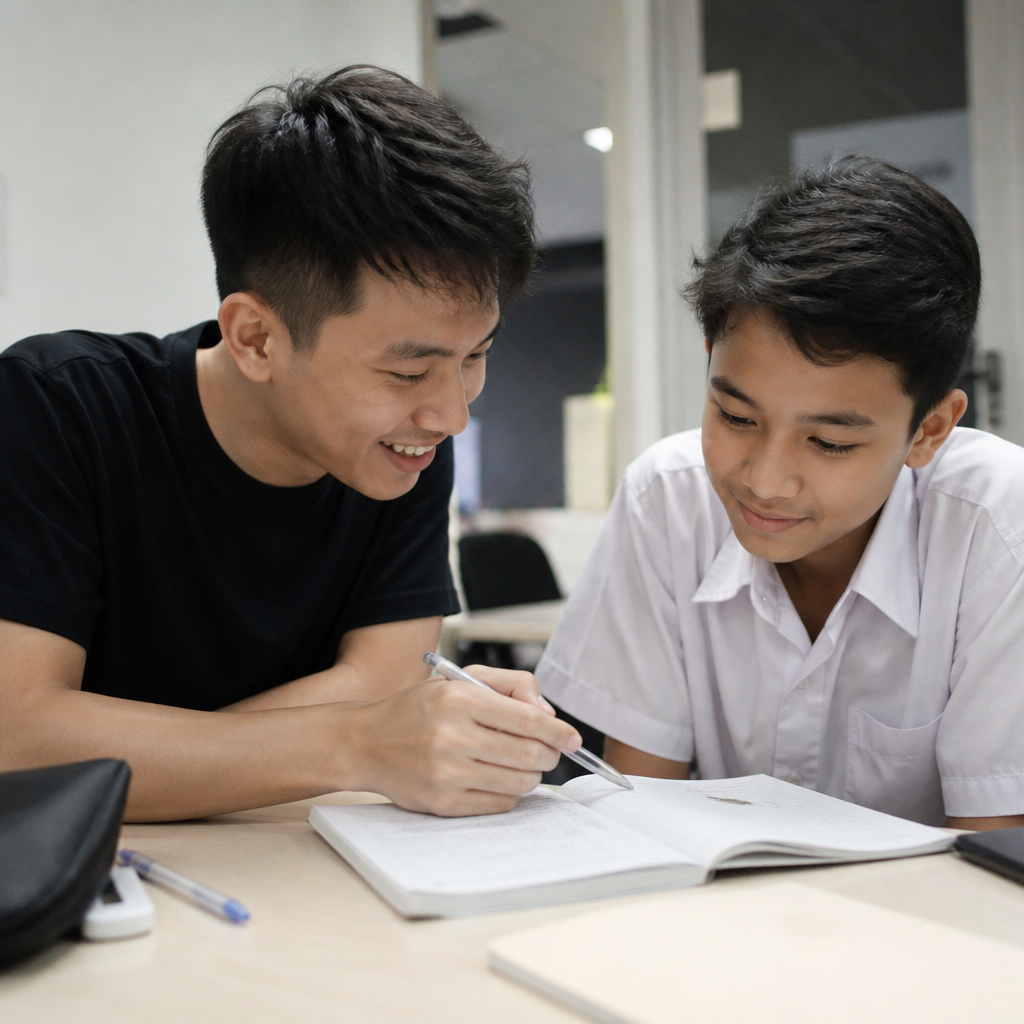
Parents do not need to solve everything overnight. The most effective support is often calm, specific, and pattern-focused. When mistakes are treated as clues instead of personal failures, students improve faster and with less stress. Small changes such as keeping a mistake log, checking for one error type at a time, and reviewing scripts calmly can make a noticeable difference over a school term.
If your child keeps losing marks through repeated exam errors and you want more personalised guidance, you can learn more about our tutors or visit Singapore Tuition Teachers.