


Introduction
Some weeks just feel like a never-ending rush. You go from school to tuition, squeeze in homework, reply to messages late, and suddenly it is bedtime again. Then the weekend comes, and instead of resting, you are trying to catch up on everything you could not finish earlier.
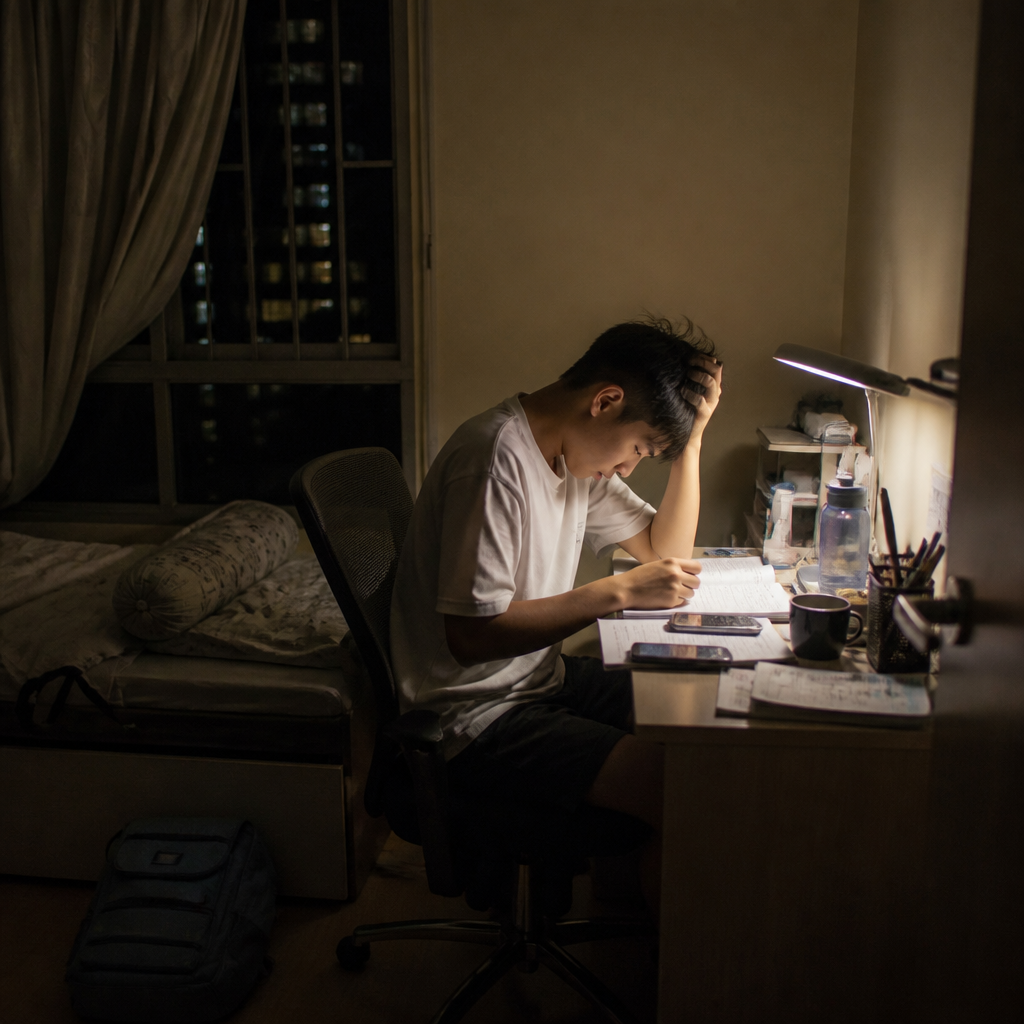
If that sounds familiar, you are not alone. Figuring out how to balance your life as a student in Singapore can feel frustrating because almost every part of your week seems important. School matters. Tuition may feel necessary. CCA has commitments. Friends want your time. Family has expectations. Somewhere inside all that, you still need sleep, proper meals, and a bit of space to breathe.
If you have been feeling tired all the time, dragging yourself through homework, or watching your weekends disappear into catch-up work, it does not automatically mean you are lazy or bad at managing time. Quite often, it means your routine is simply too full to sustain. That is the part many students miss.
This guide is about building a version of balance that actually works in Singapore school life. Not perfect balance, and not equal time for everything every day, but a routine you can keep up for weeks without constantly feeling exhausted, guilty, irritated, or behind. Whether you are in secondary school or JC, the goal is the same, create a sustainable student routine that supports both academic progress and your well-being.
Key Takeaways
- Balance is not equal time for everything. A balanced student life means your routine is sustainable across several weeks, not that school, rest, friends, and family all get the same number of hours every day. In Singapore, where school schedules can already be packed, this distinction matters a lot.
- Constant tiredness is a warning sign. If you are sleeping poorly, dreading study sessions, snapping at people, or spending every weekend catching up, your current routine may be overloaded rather than “not disciplined enough”. Many students misread burnout as a motivation problem.
- Protect the basics first. Sleep, meals, short recovery breaks, and some time away from schoolwork are not rewards for finishing everything. They are what make it possible to keep going, focus in class, and retain what you study.
- Tuition should reduce pressure, not pile onto it. When tuition closes real learning gaps, it can make the week lighter. When it leaves you with no time for homework or rest, it may be doing the opposite. The right support should improve your schedule, not crowd it further.
- Exam seasons are intense, but they should not feel like your whole year. Knowing how to avoid burnout during exam preparation in Singapore means accepting heavier weeks at times, while not normalising months of exhaustion and emotional strain.
- Speak up before you break down. A clearer conversation with parents, teachers, or tutors often works better than saying “I’m stressed”. Explain what part of the week feels unsustainable and what kind of help you need, so the adults around you can respond usefully.
- Small adjustments matter more than dramatic resets. You do not need a brand-new life plan. Often, balance improves when one or two draining parts of the week are changed early enough, before stress becomes a bigger problem.
What Balance Really Looks Like For Students In Singapore
A lot of students imagine balance as doing everything well at the same time. Study hard, attend tuition, stay committed to CCA, reply to friends, spend time with family, exercise, sleep early, and somehow stay calm through all of it. On paper, that sounds ideal. In real Singapore student life, it often turns into guilt.
Balance is about sustainability, not perfection
If Monday to Friday already feels like a sprint, Saturday becomes makeup work, and Sunday turns into panic, your life is not balanced just because you are technically “keeping up”. A routine only works if you can repeat it without slowly wearing yourself down.
Take a Secondary 4 student rushing from school to CCA twice a week, fitting in two tuition classes, then doing homework close to midnight. From the outside, it may look productive. But if that student is tired every morning, losing focus in class, and feeling guilty during every break, the routine is costing too much.
That is why learning how to balance student life is not really about squeezing more in. It is about being honest about what kind of week you can actually survive without becoming constantly drained.
Different seasons can look different
Balance in Term 1 will not look the same as balance before O-Levels, A-Levels, or major school exams. Some periods are naturally heavier, and that is normal. The Singapore Examinations and Assessment Board and the Ministry of Education provide official exam information and school updates, but your day-to-day balance still depends on how your commitments are affecting you.
A more academic season is expected. Living in emergency mode for months is not.
One useful way to think about this is to stop asking, “Can I survive this week?” and start asking, “Can I live like this for the next six weeks?” A routine that only works through panic, caffeine, and guilt is usually not a routine you can trust for long.
Signs Your Routine Is No Longer Healthy
Many students only react when grades drop badly or they break down before an exam. Usually, the warning signs start much earlier, and they can look small enough to ignore.
The common signs students ignore
Poor balance often shows up in ordinary, everyday ways:
- Feeling tired even after sleeping. You wake up already annoyed because you know the day will be packed again.
- Dreading study sessions. You open a worksheet and feel heavy before reading the first question.
- Irritability. A simple question from a parent can suddenly feel unbearable because your brain has no space left.
- Loss of motivation. Even subjects you used to enjoy start feeling flat when your week becomes too full.
- Weekends disappearing into catch-up work. Instead of resetting, you spend them trying to recover academically and mentally before Monday arrives again.
These are not always signs of laziness. Quite often, they mean the pace of your week has gone beyond what you can handle well.
What tutors often notice before students do
Tutors often notice a familiar pattern before students fully recognise it themselves. A student says, “I studied a lot, but nothing is going in.” In class or tuition, they make careless mistakes in topics they actually know. They forget instructions, struggle to start open-ended questions, or stare at notes without processing them.
That is often not just a content problem. It can be fatigue.
For students looking for study-life balance tips in Singapore, this matters. Many secondary school and JC students assume they need to push harder the moment they feel behind. But if the real issue is exhaustion, pushing harder can make concentration worse, not better.
Another sign is when free time no longer feels restful. You may finally get an hour to yourself, but instead of relaxing, you feel guilty the whole time. That usually means your stress has followed you into your breaks, which is often a sign that your week needs adjusting.

What To Protect In Your Week If You Want Real Balance
When life gets crowded, students often sacrifice the wrong things first. Sleep gets cut. Meals become rushed. Breaks feel undeserved. Family time disappears. Then everything starts feeling sharper, heavier, and more emotional.
Sleep is not optional recovery
That late-night homework session can feel productive, especially when deadlines are near. But if it leads to foggy mornings, poor memory, and a bad mood the next day, the cost is real.
A JC student may stay up to revise chemistry until 1am, only to spend the next morning in lectures barely absorbing anything. More hours were spent working, yes, but the whole next day became weaker. Good time management for students in Singapore is not only about fitting revision in. It also means protecting enough sleep to think clearly.
Meals, breaks, and breathing space matter more than students admit
Skipping dinner to continue studying might sound responsible. Often, it backfires. A hungry, tired brain becomes slower and more frustrated. Even a short break between school and revision can change the whole evening.
Coming home, showering, eating properly, and resting for 20 minutes may help you study more calmly than forcing yourself to start immediately while already mentally fried. These small pauses are not wasted time. They often help you return to work with better focus.
Protect at least one part of the week that feels human
This does not need to be dramatic. It could be dinner with family without notes on the table. It could be one hour on Sunday evening where you are not thinking about school. It could be a short walk after tuition instead of rushing straight into the next task.
These moments are not luxuries. They are often what stop the whole week from feeling like one long academic blur.
For some students, this also means protecting a small social life. You do not need to be out all the time, but having one conversation with a friend that is not about grades or deadlines can make the week feel less suffocating.
How To Manage School, Tuition, CCA, And Homework Without Constant Catch-Up
This is where many students struggle most. The real question is not only how to manage a school and tuition schedule in Singapore. It is also whether your current mix of commitments is still helping you.
Ask whether each commitment is solving a problem or creating one
Tuition can be useful when it gives clarity. If you are constantly confused in Additional Math and a weekly lesson helps you understand the topic faster, that can reduce stress across the week.
But tuition becomes counterproductive when it leaves no space for school assignments, self-study, or rest. A student may attend three tuition classes, then spend weekdays rushing homework and Sundays trying to revise independently. At that point, the issue is not effort. The issue is that every hour is already occupied.

This is especially relevant for students trying to balance CCA, homework, and tuition. If CCA is intense during competition season and school workload is rising, adding another tuition class is not always the answer.
A quick comparison can make this easier to spot:
Watch for hidden overload
Some routines look reasonable on paper because each activity seems justified. School is necessary. CCA is meaningful. Tuition is for improvement. Homework is compulsory. Family obligations matter. But when all the justified things pile up, the week becomes unsustainable.
A common pattern among students is this, they only realise the overload when they can no longer revise properly, even though they seem busy all the time. If you regularly end the day too tired to even begin revision, or if every Sunday becomes recovery from the week instead of preparation for the next one, something needs adjusting.
If you need subject support but want it to lighten rather than worsen your week, it may help to explore focused guidance instead of overloading yourself with too many classes. You can learn more about our tutors if you are looking for support that fits your actual workload.
A simple weekly review can help. At the end of each week, ask yourself three things: What drained me most? What actually helped? What kept getting pushed aside? Those answers often reveal whether your schedule is balanced or just crowded.
How To Avoid Burnout During Exam Preparation
Exam periods in Singapore can make balance feel unrealistic. School gives extra papers, teachers move faster, tuition intensifies, and everyone around you starts sounding anxious. That pressure is real.
Heavier periods are normal, but constant survival mode is not
Before major exams, your week will probably become more academic. That is expected. The problem starts when temporary mugging mode stretches on for months and becomes your normal state.
Burnout often does not look dramatic at first. It can look like reading the same notes again and again without remembering anything. It can look like crying over small mistakes, losing patience with people, or feeling strangely detached from results that used to matter to you.
That is why avoiding burnout is not just about studying earlier. It is also about noticing when intensity has crossed into damage.
Reduce pressure by being more selective, not just more hardworking
During exam periods, many students respond to stress by adding more. More assessment books, more tuition, more late nights. Sometimes the wiser move is narrowing your focus.
If your sciences are stable but your humanities essays are collapsing, spreading equal energy everywhere may not be the best choice. If one tuition class is genuinely helping and another leaves you more confused and drained, that difference matters. Balance during exams comes from choosing what gives the highest value, not blindly increasing everything.
It also helps to define what a “good enough” day looks like during peak periods. Maybe it means completing two important tasks well, eating properly, and sleeping at a reasonable time. That is often more sustainable than planning six hours of revision and ending the day discouraged because you only managed half.
How To Ask For Help Before Things Get Worse
A lot of students wait too long because they do not want to sound weak, dramatic, or ungrateful. So they keep saying “I’m fine” until they are clearly not fine.
Be specific about what feels unsustainable
Saying “I’m stressed” is true, but it is often too vague to get useful help. A clearer explanation usually works better.
“By Thursday, I’m already too tired to finish my school homework properly because tuition takes both evenings.”
“I’m okay with CCA, but this month the combination of CCA and test revision is making me lose sleep.”
“I don’t think I need more classes. I think I need help with one subject so the rest of my week is less crowded.”
That kind of explanation helps parents, teachers, or tutors see the real issue, not just the emotion.
Who to talk to, and what each person can help with
When you are overwhelmed, it helps to know that different people can support different parts of the problem.
Practical Ways To Rebuild A More Sustainable Week
You do not need a total life reset. Most students do better when they make a few realistic changes and then see whether the week starts to feel lighter.
Remove one repeated drain first
Pick the part of your routine that keeps causing damage. Maybe it is the tuition slot that leaves you with no time for school homework. Maybe it is the habit of starting work too late after scrolling on your phone and then sleeping too little. Maybe it is a weekend packed so tightly that you never really recover.
For some students, the problem is not a lack of effort. It is one repeated drain that keeps affecting everything else. Once that part changes, the whole week can feel more manageable.
Build in a little slack
A balanced life has some breathing room. If every hour is tightly spoken for, one extra worksheet, one school event, or one bad day can throw everything off.
You do not need a perfect planner, but you do need some margin. A week that only works when nothing goes wrong is not truly balanced. This applies whether you are a secondary school student trying to keep up with homework or a JC student managing lectures, tutorials, and revision.
Accept that balance will not always look impressive
Sometimes healthier choices look less productive from the outside. Sleeping earlier, cutting one extra class, taking a proper dinner break, or leaving part of Sunday less crowded may feel like you are doing less.
But if it helps you think better, stay calmer, and keep up steadily, it is often the stronger choice. That is the trade-off many students only understand after they have pushed themselves too hard for too long.
A practical starting point is to plan your week around fixed commitments first, then leave small buffers before filling the rest. That way, your schedule has room for travel time, unexpected homework, or simply a slower day when your energy is low.
Frequently Asked Questions
Is it normal to feel tired all the time in secondary school or JC?
Some tiredness is normal, especially during busy periods. Constant tiredness is different. If you are regularly exhausted, moody, unmotivated, and always catching up, your routine may be too packed rather than simply normal student life. It is worth looking at your weekly schedule, sleep, and workload before assuming you just need more discipline.
How do I know if tuition is helping or making things worse?
Ask yourself whether tuition gives you clarity and reduces confusion during the week. If it helps you complete schoolwork faster and feel more confident, it may be useful. If it leaves you with less sleep, more rushing, and no time for independent revision, it may be adding pressure instead. Good tuition support should make your academic life more manageable, not more chaotic.
What if my parents think I just need to be more disciplined?
Try not to argue in broad, emotional terms. Explain your week clearly. Show which days are overloaded, what you are sacrificing, and what the actual result has been, such as poor sleep, constant fatigue, or unfinished work. Specific examples usually work better than emotional statements alone, especially when parents are worried about grades and long-term outcomes.
How can I balance life during exam season when everything is intense?
Do not aim for perfect balance in the middle of peak exam preparation. Aim for survivable balance. Keep sleep from collapsing completely, protect short meal and rest breaks, and focus on the work that matters most instead of trying to do everything at maximum intensity. During exam season, selective effort is often more effective than nonstop effort.
Conclusion
Learning how to balance your life as a student in Singapore is less about becoming perfectly organised and more about noticing when your routine is quietly wearing you down. If you are trying hard but still feeling exhausted, irritated, guilty, or constantly behind, that does not automatically mean you need more discipline. It may mean your week needs adjusting.
Real balance is not equal time for every part of life every day. It is a routine that supports learning, rest, emotional steadiness, and enough breathing space to keep going. Protect the basics. Pay attention to early warning signs. Be honest about whether tuition and other commitments are helping or crowding your life further. And speak up before stress turns into burnout.
If you need academic support that fits into a sustainable routine instead of making your week heavier, you can learn more about our tutors or visit our website.