


Introduction
If your school days have started to feel like one long blur of lessons, homework, CCA, tuition, revision, and rushing from place to place, you are definitely not the only one. Many students in Singapore are not lazy, careless, or lacking discipline. They are simply stretched. By the time you get home, eat dinner, shower, and finally unzip your bag, it is already late, and that familiar panic starts creeping in.
That is why learning how to be more productive as a student is not about squeezing every last drop out of your day or turning yourself into a study machine. Real productivity is about feeling more in control. It means using your time better, making your workload feel less messy, and cutting down the last-minute rush before deadlines, weighted assessments, and exam periods.

This guide walks through practical study habits and time management strategies that actually work when school, homework, tuition, and long commutes are all piling up.
Key Takeaways
- Productivity is about control, not cramming more hours. A good system helps you finish important work with less panic, instead of making every day feel packed from morning to night. Students who feel “busy all the time” often need better structure, not more pressure.
- A realistic task list works better than an ambitious one. If your to-do list has 14 items after a full school day, you will probably avoid all of them. Shorter lists are easier to start, easier to finish, and less mentally draining.
- Short focus blocks are often more useful than long study sessions. After school or CCA, concentration is usually limited. A solid 25 minutes of focused work can beat two distracted hours at the desk.
- Phone distractions need friction, not just self-control. Keeping your phone next to you and hoping you will resist it rarely works, especially when you are tired. Small changes to your environment can protect your attention.
- Batching similar tasks saves mental energy. Grouping worksheets, memorisation, admin tasks, and bag-packing reduces the stop-start feeling that wastes time and makes evenings feel more chaotic.
- Sleep protects productivity. Staying up to finish everything may feel responsible, but the next day usually becomes slower, messier, and harder to manage. Rest is part of effective studying.
- A good routine should survive busy weeks. The best study routine for secondary school students or JC students is not the strictest one, but the one you can keep even during heavy school periods.
Know What Actually Needs To Be Done First
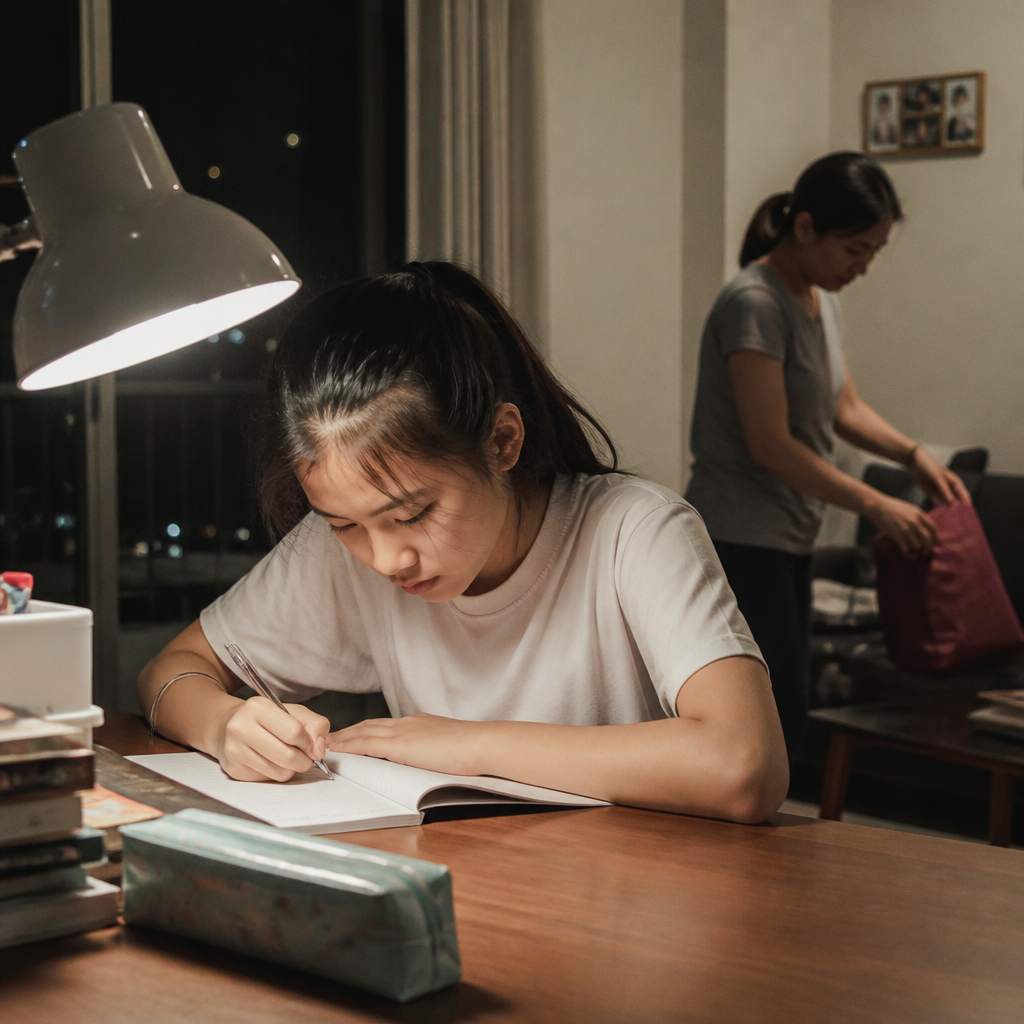
A lot of students feel unproductive not because they are doing nothing, but because everything feels equally urgent. Math worksheet, Chemistry corrections, GP essay, CCA reflections, tuition homework, class reminders, upcoming weighted assessment, all of it sits in your head at the same time. That kind of mental clutter is tiring.
Stop relying on memory
The first habit is simple, but it makes a huge difference. Get everything out of your head and into one place. Use a notebook, notes app, Google Calendar, or planner, but keep it to one main system.
When reminders are scattered across different chats, school portals, scraps of paper, and your memory, things get missed. Or worse, you keep checking everything because you are afraid you forgot something.
If your English teacher announces a draft deadline in class, your tuition teacher gives extra comprehension practice, and your CCA teacher asks for a submission by Friday, write all three down straight away. Do not assume you will remember later, especially on a packed weekday.
When tasks are visible, your brain stops treating everything like an emergency. That is one of the simplest ways to improve student time management.
Sort by urgency and effort
Not every task deserves the same amount of attention. A worksheet due tomorrow is not the same as optional extra revision for a topic being tested next month. A 15-minute admin task should not sit on your list for five days and quietly add stress.
Here is a simple way to sort things:
A common pattern among students is starting with the easiest subject every day just to feel productive. It feels satisfying for a while, but the harder and more urgent work keeps getting pushed back. That is where stress starts building.
Build A Daily Routine You Can Actually Keep
Many routines fail for one simple reason. They are built for an imaginary version of you, the one who gets home full of energy, never gets distracted, and can study for three straight hours.
Real student life in Singapore rarely looks like that, especially with school, CCA, tuition, and travel all taking up time.
Build around your actual timetable
A realistic routine starts with the fixed parts of your day. Put in school hours, travel time, meals, shower time, CCA, tuition, and sleep first. Only after that should you plan homework and revision.
The best study routine for secondary school students is usually not exactly the same every day. On a CCA day, maybe your target is just one homework block and packing your bag for tomorrow. On a non-CCA day, you may have enough energy for two focus blocks and one lighter review session.
For JC students, the rhythm can feel different. There may be fewer worksheets than in lower secondary, but much more content-heavy work and deeper revision. Good time management for JC students often depends on energy, not just the clock. After a long tutorial day, forcing yourself to do difficult Economics essay planning at 10.30pm may backfire. A lighter task, like summarising lecture notes, may be the smarter choice.
Keep your weekday targets smaller than you think
After a full school day, aiming for five major tasks usually looks good on paper and fails in real life. A more realistic plan might be:
- Finish one urgent assignment. This stops deadlines from snowballing later in the week.
- Review one subject for 25 to 40 minutes. That is enough to stay consistent without draining your evening.
- Prepare for the next day. Packing your bag, checking your timetable, and setting priorities can save a surprising amount of stress.
That may sound modest, but sustainable beats impressive. Tutors often notice that students who keep small, steady routines cope better than those who keep trying to restart extreme schedules every few days.
Use Short Focus Blocks Instead Of Waiting For The Perfect Mood
A lot of work gets delayed because students think they need a long, uninterrupted evening to be productive. On many weekdays, that simply does not happen. Waiting for the perfect mood often turns into scrolling, snacking, tidying notes, and then suddenly realising it is already 10pm.
Short blocks are easier to start
If you are tired, tell yourself you only need to work for 25 minutes. Pick one clear task, such as “finish two A Math questions” or “annotate one poem”, instead of vague plans like “study A Math” or “do Literature”.
Specific tasks are easier to begin. That matters a lot for students trying to avoid procrastination while studying at home. Procrastination is not always laziness. Sometimes the task feels too big, too vague, or too uncomfortable to start. A short, clear block lowers that barrier.
Match the block to the task
Different types of work need different types of focus. This is where many students waste energy by treating every task the same.
After dinner, for example, 30 minutes of Science corrections, a short break, then 20 minutes reviewing Chinese vocabulary can be far more productive than sitting at your desk for 90 minutes while half your attention stays on your phone.
An experienced tutor will often notice this pattern. Students say they “studied for three hours”, but when you ask what they actually completed, the answer is not much. Desk time and productive time are not the same thing.
Reduce Phone Distractions Before They Take Over
Almost every student underestimates how much attention a phone steals in tiny pieces. A quick check becomes 12 minutes. One notification breaks concentration. A message pulls you into another task. Then getting back into the work feels harder than before.
Make distraction less convenient
If your phone is right beside your worksheet, you are relying too much on willpower. It is usually better to make distraction slightly harder.
- Put your phone in another room. Even a small distance makes mindless checking less automatic.
- Turn off non-essential notifications. If every app can interrupt you, focus never gets a proper chance.
- Use app timers. These can help you notice when “just five minutes” is quietly becoming half an hour.
- Keep only the tabs you need open. Too many tabs make your brain feel scattered.
- Log out of social media during work blocks. One extra step can sometimes be enough to stop a distraction.
The goal is not punishment. It is to make staying on task easier than drifting away from it.
Choose a study environment that fits the task
Some students focus well at home. Others work better in the school library, a quiet corner at home, or a nearby public library. If your house gets noisy in the evening, or younger siblings keep interrupting you, your environment may be part of the struggle.
For memorisation, your desk may be fine. For written homework that needs concentration, a quieter setting may help more. Even one small change, like clearing your table before you begin, can make starting feel less heavy.
Singapore’s emphasis on holistic learning and long-term development, reflected in programmes like Learn for Life, also reminds students that productivity should support sustainable learning habits, not frantic output during stressful weeks.
Batch Similar Tasks To Reduce Daily Chaos
A big drain on productivity is constant switching. You finish a worksheet, then search for files, then reply to a class message, then pack your bag, then return to revision, then remember a form you forgot. That stop-start pattern drains more energy than most students realise.
Batch similar tasks together
Grouping similar tasks helps your brain stay in one mode for longer.
This is especially helpful when managing homework and tuition. If you have tuition twice a week, it often works better to batch tuition homework on one planned evening instead of letting it compete randomly with school assignments every day.
End the night by setting up tomorrow
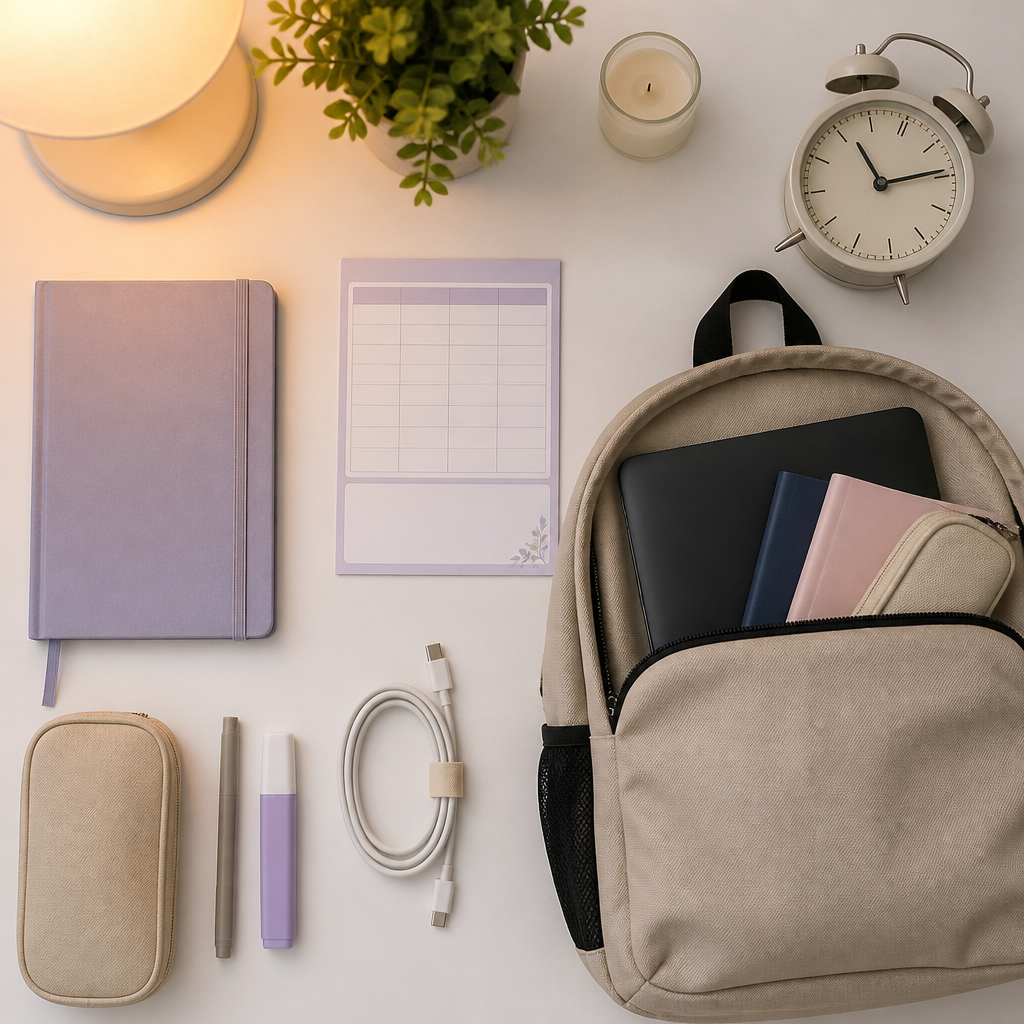
Productive students often seem calmer not because they work more, but because they prepare earlier. Before sleeping:
- Check tomorrow’s timetable.
- Pack your bag.
- Place needed worksheets on top.
- Charge your devices.
- Note your top two or three tasks for the next day.
That last step matters a lot during heavy weeks. If you already know tomorrow’s priorities, you waste less time deciding what to do after school.
If you need extra academic support while managing a busy school schedule, learn more about our home tutors in Singapore.
Protect Sleep And Stop Overloading Your Evenings
When work piles up, the first thing many students cut is sleep. It feels sensible in the moment. Sleep later, get more done. But the next day, focus drops, simple homework takes longer, and everything feels harder than it should.
Sleep is part of productivity
If you are serious about becoming a more productive student, sleep cannot be treated like an optional extra. Rest supports concentration, memory, patience, and speed. A tired brain is slower at almost everything.
This becomes especially obvious during assessment periods. Students who sleep too little often become less efficient, more emotional, and more easily distracted. They may still spend a lot of time studying, but the quality of that time drops sharply.
Mental well-being also affects focus more than many students realise. If stress is building up, practical support and healthy routines matter, as explained by HealthHub’s youth mental well-being resources.
Learn to say no to unnecessary extras
Sometimes the issue is not poor discipline. It is overcommitment. If you already have school, CCA, tuition, travel time, and regular homework, adding too many extra projects or commitments can leave no room to breathe.
Being productive is not about filling every hour. It is about protecting enough time to do important things properly. If your evenings are overloaded, no planning method will fully fix that.
A balanced routine also means accepting trade-offs. Some weeks, your social life may be lighter. Other weeks, your revision target may need to shrink because school workload is heavier. Flexibility is not failure. It is often what keeps a routine going.
Stay Productive During Busy School Periods
Some weeks, everything lands at once, common tests, project work, CCA events, tuition homework, and school deadlines. During these periods, productivity has to become more selective.
Shrink your priorities
When your schedule gets crowded, do fewer things better. Focus on:
- Urgent deadlines.
- Tested topics.
- Weak subjects that need immediate attention.
- Essential rest.
This is how students in Singapore stay productive during exam season, not by following a perfect routine, but by trimming distractions and narrowing priorities. During a heavy week, your usual extra reading or enrichment worksheets may need to pause for a while.
Watch for fake productivity
Busy periods often trigger fake productivity habits. Colour-coding notes for an hour, rewriting headings neatly, or making long revision plans can feel useful without moving the real work forward.
If a task is not helping you complete homework, revise key content, or prepare for the next day, ask whether it truly deserves your limited time. Tutors often notice this before major exams. Some students are constantly “working” but rarely finishing the right tasks. They are exhausted, yet still behind. Usually, the issue is not effort. It is poor task selection.
Frequently Asked Questions
How do I become more productive if I get home very late after school or CCA?
Lower your weekday expectations. On late days, aim to complete one urgent task, one short review block, and prep for the next day. Trying to force a full study schedule after a long CCA session usually ends in frustration. A smaller plan that you can actually finish is far more useful.
What is the best study routine for secondary school students?
The best study routine for secondary school students is one that fits their real school week. Most students do better with shorter weekday study blocks and a slightly longer catch-up or revision session on weekends. If a routine ignores CCA, tuition, travel time, and tiredness, it usually will not last.
How do I avoid procrastination while studying at home?
Start with a small, specific task and remove easy distractions before you begin. “Complete question 1 to 3” is much easier to start than “study Chemistry”. It also helps to keep your phone away from your desk, clear your study space, and use a fixed study spot so your brain starts linking that space with work.
How can JC students manage time better?
Useful time management for JC students starts with planning by energy level, not just by time. Put deeper work into your sharper hours, and use lower-energy periods for lighter review, admin, or reading. It also helps not to overload every evening, because burnout makes consistency much harder.
Is productivity just about studying more hours?
No. Real productivity means using your study time better so you can reduce last-minute panic and keep up with school more consistently. More hours do not always mean better results, especially if those hours are distracted, rushed, or built on too little sleep.
Conclusion
If you have been wondering how to be more productive as a student, the answer is usually not a dramatic life overhaul. It is a set of small focus habits that reduce chaos. Keep one clear task list. Prioritise what is urgent. Use short focus blocks. Put some distance between yourself and your phone. Batch similar tasks. Prepare for the next day before sleeping. Protect your sleep, and do not overload your evenings just to feel hardworking.
Productivity should make school life feel more manageable, not more intense. The goal is not to pack every hour with work. It is to use your time well enough that homework, tuition, revision, and deadlines stop piling up into last-minute panic.
If you need extra academic support while managing a busy school schedule, learn more about our home tutors in Singapore. You can also visit Singapore Tuition Teachers for more student support resources.