


Introduction
It can be painful to watch your child hold back while other children seem to jump in so easily. Maybe your preschooler clings to you outside enrichment class. Maybe your primary school child whispers the answer at home but stays silent in class. Maybe your lower secondary child avoids CCA interactions, oral presentations, or even simple chats with relatives.
If you are searching for how to build confidence in shy children, you are probably not looking for pressure or labels. You want practical, gentle ways to help without making your child feel even more self-conscious. The reassuring part is this: shyness does not mean your child cannot become confident. With safe repeated experiences, steady encouragement, and the right support at home and in school, shy children can learn to speak up, participate more comfortably, and trust their own voice.
Key Takeaways
- Shyness is not the same as inability. A shy child may have strong ideas, empathy, and academic ability, but still struggle to show these openly in class or social settings.
- Confidence grows through small wins. Tiny acts, such as greeting a cashier or answering one question in class, often work better than pushing for dramatic change.
- Pressure can backfire. Forcing a child to perform in front of others may increase shame and make them withdraw even more.
- Home routines matter. Role-play, effort-based praise, and predictable social practice can become powerful confidence-building habits.
- School support makes a difference. Gentle teacher communication and realistic participation goals usually work better than public calling-out.
- Age changes the way shyness shows up. Preschool children may cling or freeze, while older children may avoid speaking or social roles.
- Some children need more than encouragement. If fear is intense or interferes with daily life, it may be time to seek extra support.
Understanding Shyness Before You Try To Fix It
Before doing anything, it helps to pause and look at what is actually happening. Not every quiet child has low self-esteem. Some children simply take longer to warm up. Some are sensitive to noise, unfamiliar people, or being watched. Some are comfortable one-to-one but freeze in groups.
Others are not just shy, they are deeply worried. They may be mentally rehearsing what to say, fearing embarrassment, or expecting something to go wrong. That difference matters, because the support needs to fit the child.
Normal shyness versus deeper distress
A shy child may stay quiet at first, then slowly join in once they feel safe. A socially anxious child often wants to join but feels flooded by fear. A common pattern is that a child speaks confidently at home, so adults assume they are choosing not to speak elsewhere. Usually, that is not what is happening. Many shy children are not refusing, they are stuck.
How shyness can look at different ages
Shyness does not look the same at every stage. That is why advice that helps one child may completely miss the mark for another.
Seeing the pattern more clearly helps you respond with more patience and less guesswork.
Help Your Child Feel Safe Before You Ask Them To Perform
Many parents mean well but accidentally add pressure. “Say hello properly.” “Why are you so quiet?” “Your cousin is younger and can speak louder than you.” These moments are common, but they usually make a shy child feel more exposed, not more confident.
Start with safety, not performance
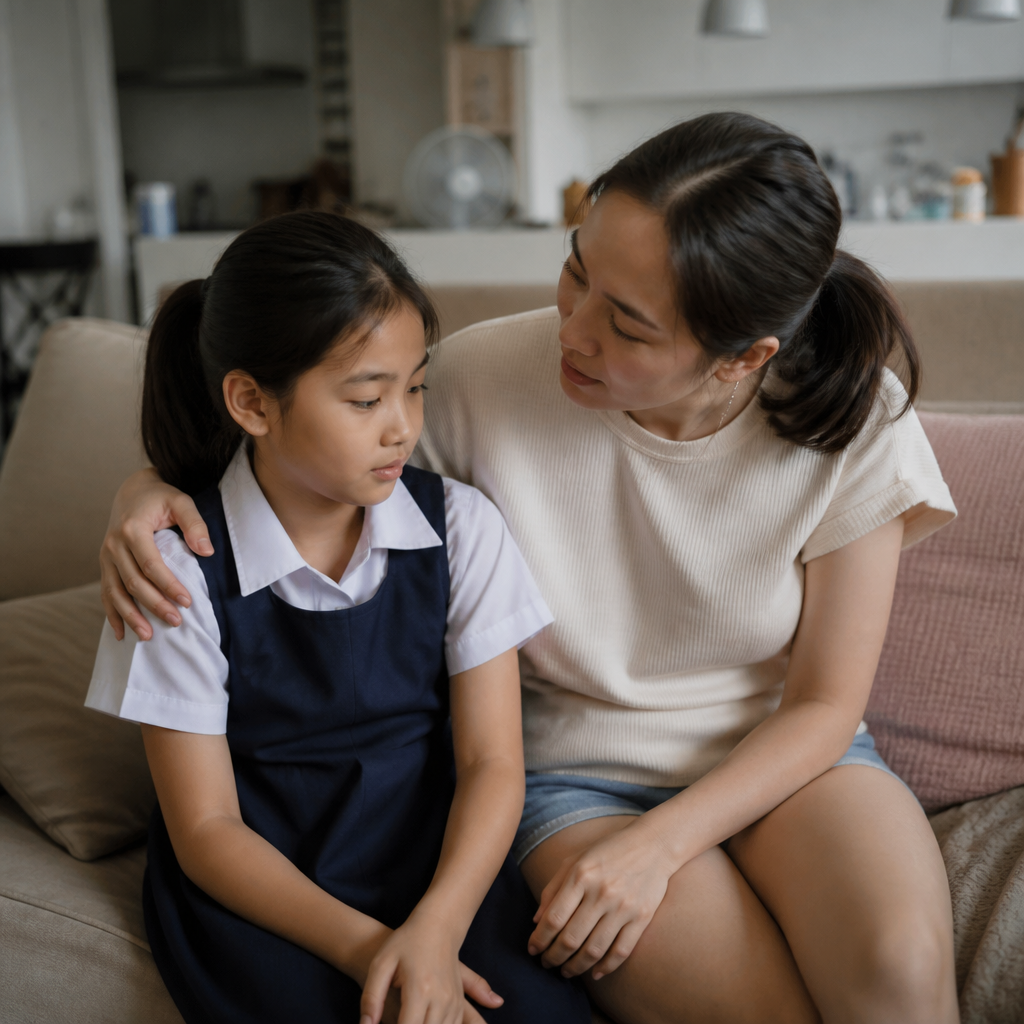
Confidence starts with safety, not with volume. If your child senses criticism, they will focus on avoiding mistakes instead of trying. When they hesitate, respond to the feeling first. A simple “That looked hard” often lands better than “There’s nothing to be scared of.”
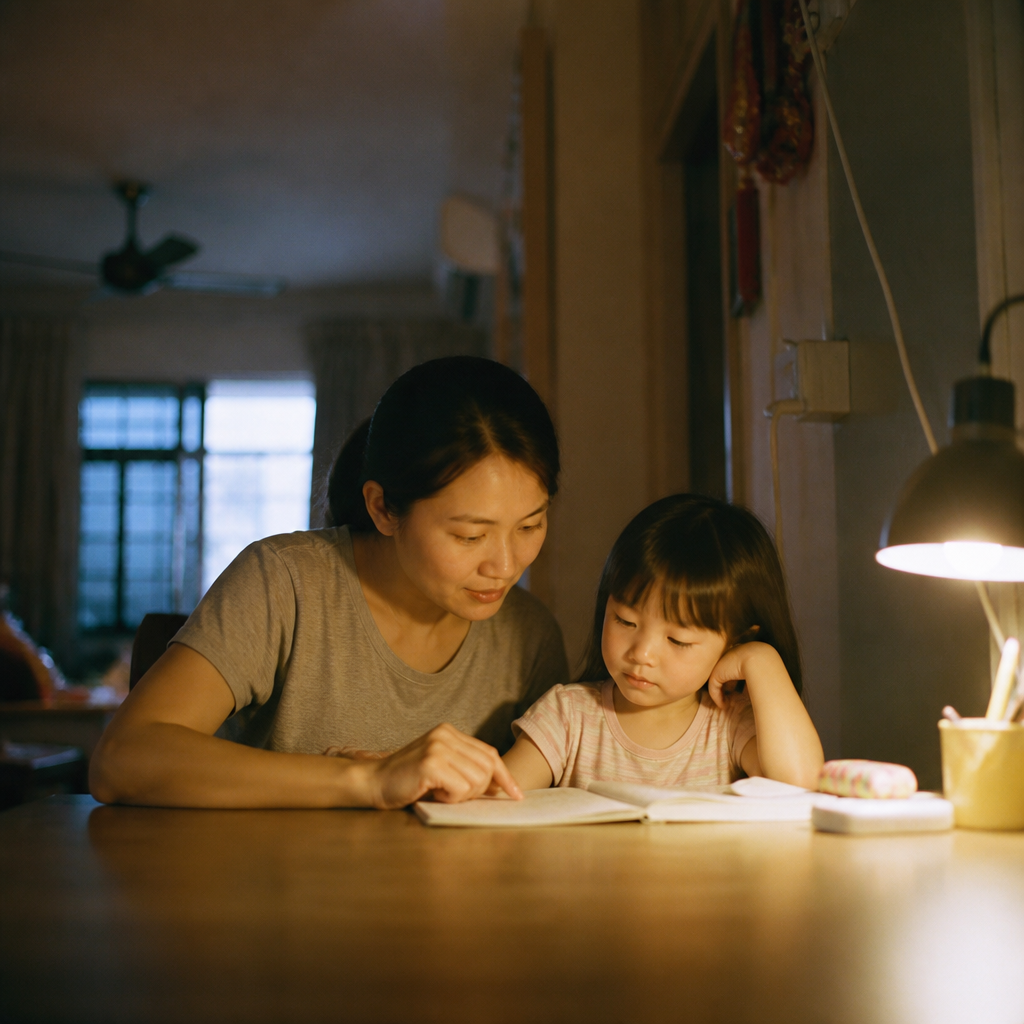
At home, some of the best ways to improve self-esteem in shy kids are very ordinary. Let them finish speaking without rushing in. Ask for their opinion at dinner and give them time to answer. Children who are often interrupted can slowly start believing their voice does not matter.
Praise effort in a specific way
General praise can slide off a shy child. Specific praise is often more powerful.
Try saying:
“You looked at Auntie and said hi even though you felt shy.”
“You answered the teacher in a soft voice today. That was a brave step.”
That kind of praise teaches your child what courage actually looks like. Real confidence often includes nervousness.
Build confidence through repetition
Many parents hope for one big turning point. In reality, confidence usually grows through repeated manageable experiences.
Greeting one neighbour. Ordering a drink at the hawker centre. Asking one question during tuition. These moments may look small from the outside, but they build familiarity. And for shy children, familiarity matters a lot.
If your child would benefit from calm one-to-one academic support while building comfort in speaking and participating, you can learn more about our tutors here.
Confidence-Building Activities For Shy Children At Home
Home is often where shy children feel most relaxed. That makes it the best place to practise without embarrassment. The goal is not to turn every moment into training. It is to create light, predictable, low-pressure chances to speak.
Role-play everyday situations
Role-play helps because it removes some of the unpredictability shy children fear. You can pretend to be a teacher, classmate, librarian, cashier, or relative. Let your child practise short phrases like “Can I join?” or “I don’t understand this question.”
This works especially well for repeated school situations. A child who freezes during show-and-tell can rehearse introducing one object at home. A lower secondary student nervous about oral presentations can practise the opening lines until they feel more familiar.
Use low-stakes speaking games
Some of the best confidence-building activities for shy children at home do not feel like therapy at all. They just create a clear reason to speak.
Create calm before speaking
Sometimes confidence drops because a child is already overloaded. A rushed morning, tiredness, and repeated scolding can leave very little emotional energy for social risk-taking.
A calmer start to the day, fewer last-minute confrontations, and more predictable routines can make a bigger difference than another pep talk. A child who feels less overwhelmed often finds it easier to speak.
Helping A Shy Child Speak Up In Class
Class participation worries many parents. For shy children, the problem is often not knowledge. They may know exactly what to say but cannot get the words out in time.
Work with the teacher quietly
If you want to help a shy child speak up in class, it helps to speak to the teacher privately and specifically. “He is very shy” is true, but it is not always useful. A clearer message is, “She knows the work but freezes when called on suddenly,” or “He can answer one-to-one but not in front of the whole class.”
That gives the teacher something concrete to work with. A thoughtful teacher may give advance notice before asking your child to read, pair them with a kind classmate, or allow smaller participation steps first. The goal is not permanent avoidance. The goal is a gentler path into participation.
Set realistic speaking goals
This is where many well-meaning adults aim too high. Smaller goals usually work better:
- Answer one known question this week.
- Read one sentence aloud during group work.
- Tell the teacher privately if homework is unclear.
Quiet students often become more vocal only after many low-pressure successes. That slow build is still progress.
Notice what else may be draining confidence
Sometimes shyness is only part of the picture. A child who is struggling academically may stay silent because they are scared of being wrong. A child stretched by long school days and activities may simply have no emotional energy left.
For school-related guidance, parents can also refer to the Ministry of Education Singapore.
Supporting Socially Anxious Children Without Overprotecting Them
Some children are shy. Some are anxious. Some are both. When distress is strong, the balance becomes more delicate.
Comfort them without always rescuing them
This is hard for parents, because rescuing feels loving. You speak for them, order for them, explain on their behalf, and excuse them from every uncomfortable situation. The relief is immediate. But over time, the child may start believing they cannot cope alone.
A gentler approach is to stay close while reducing help gradually. Stand beside them while they ask a question. Next time, stand a little further away. Later, let them do it independently and tell you how it went.
Be careful with labels
Even affectionate labels can stick. “He’s the shy one.” “She never talks.” Children hear that, and it can become part of how they see themselves.
Try describing the moment instead of defining the child. “He takes time to warm up.” “She feels nervous in new situations, but she gets more comfortable.”
Protect recovery time, not avoidance
Not every social activity needs to become a lesson. Some shy children genuinely need quiet time after school, especially after crowded classrooms or stressful presentations.
For broader child wellbeing guidance, parents can visit HealthHub Singapore.
Ways To Improve Self-Esteem In Shy Kids At Every Stage
Self-esteem and shyness are often linked, but not always in obvious ways. Building self-esteem means helping a child experience themselves as competent, valued, and able to cope.
Preschool: confidence through familiarity
At this age, confidence often grows through routine. Let your child carry a small bag, greet one teacher with a wave, or choose their snack. A preschooler who clings at class often needs the same calm arrival routine each week.
Primary school: confidence through contribution
Primary school children compare themselves constantly. If your child is quiet, they may already feel invisible. Give them chances to contribute in meaningful ways, helping pack for an outing, reading instructions while baking, or teaching a younger sibling a game.
Lower secondary: confidence through identity
Older children are much more aware of peer judgment. At this stage, calm respectful conversations work better. Ask which situations feel hardest, such as group discussions, CCA bonding, or presenting in class.
Confidence can also grow through strengths. A teen may be quiet socially but strong in art, music, coding, or a niche role in CCA. Confidence is not the same as being outgoing.
When To Seek Help For A Shy Child In Singapore
Many parents hesitate here. They do not want to overreact, but they also do not want to miss signs that something deeper is going on.
Signs it may be more than temperament
- Persistent and impairing. Your child struggles to participate in school, make friends, or speak to familiar adults over a long period.
- Accompanied by physical distress. There are frequent stomach aches, headaches, crying, panic, or sleep problems before social situations.
- Getting worse over time. Your child becomes more avoidant, isolated, or negative about themselves.
Who parents can speak to
Start with the adult who regularly sees your child in the difficult setting. That may be the form teacher, preschool teacher, or school counsellor. If concerns are broader, a paediatrician can help assess whether a referral is needed. In some cases, a child psychologist may be appropriate.
Frequently Asked Questions
Is shyness always a problem that needs fixing?
No. A shy temperament is not automatically a problem. Support becomes more important when shyness causes distress, limits participation, or affects friendships, learning, or daily life.
Why does my child talk so much at home but freeze in school?
This is very common. Home feels safe and familiar, while school can feel exposing and unpredictable. If the silence in school is persistent, it helps to speak with the teacher about when it happens and how severe it seems.
Should I force my child to join more group activities to build confidence?
Not force, but do not let fear decide everything either. One manageable activity, with preparation beforehand and realistic expectations, is often more helpful than pushing too hard.
How long does it take to build confidence in a shy child?
Usually longer than parents hope, and that is normal. Confidence tends to grow gradually through repeated safe experiences.
Can one-to-one support help a shy child become more confident?
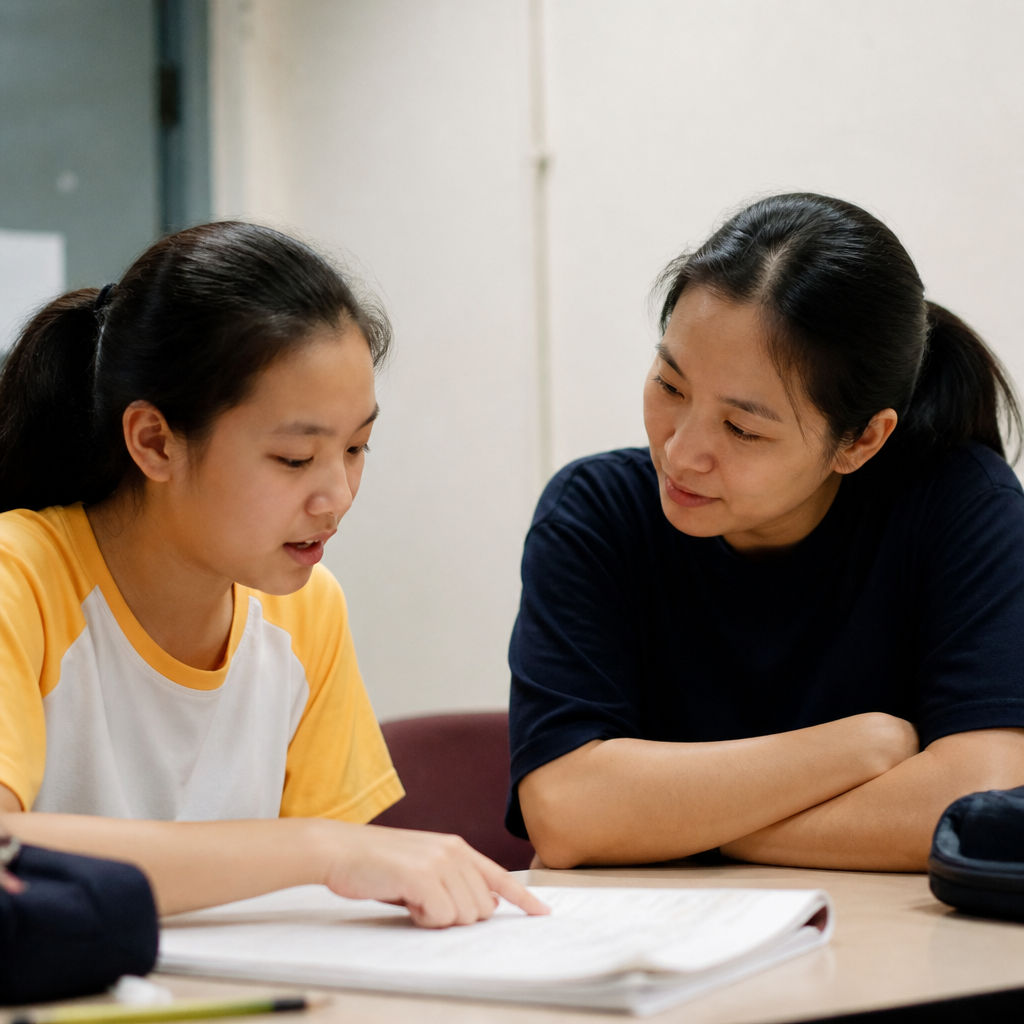
For some children, yes. A calm and patient one-to-one setting can reduce the fear of embarrassment and give them room to ask questions, think aloud, and practise speaking. If your child needs gentle academic support that also builds participation and comfort in learning, you can explore options at Singapore Tuition Teachers.
Conclusion
Learning how to build confidence in shy children is rarely about making them louder or changing who they are. It is about helping them feel safe enough to try, speak, join in, and recover when things feel hard.
For some children, that means more practice at home. For others, it means better support in class, less pressure around speaking, or a closer look at whether anxiety is getting in the way. Small routines, specific praise, role-play, teacher communication, and age-appropriate challenges can make a real difference over time.
And if academic confidence is part of the picture, especially when your child is afraid to answer, ask questions, or participate, you can learn more about our tutors if your child would benefit from gentle one-to-one academic support that builds confidence, participation, and comfort in learning.