


Introduction
You look at the map and the school seems so near. Maybe your agent said it is “confirm within 1km”. Maybe another parent in the same estate told you their child qualified last year. On the surface, it feels straightforward. But once Primary 1 registration enters the picture, many parents realise that “nearby” and “within 1km” are not always the same thing.
The 1km distance band matters because when a school is oversubscribed, home-school distance can affect priority. It is not the only factor, but it is one of those details that can quietly shape your options. A wrong assumption here can create false confidence, and that is often what causes the most stress later on.
The safest way to approach this is simple. Use recognised tools such as OneMap as a starting point, then verify what you are seeing against the latest official MOE Primary 1 registration guidance.
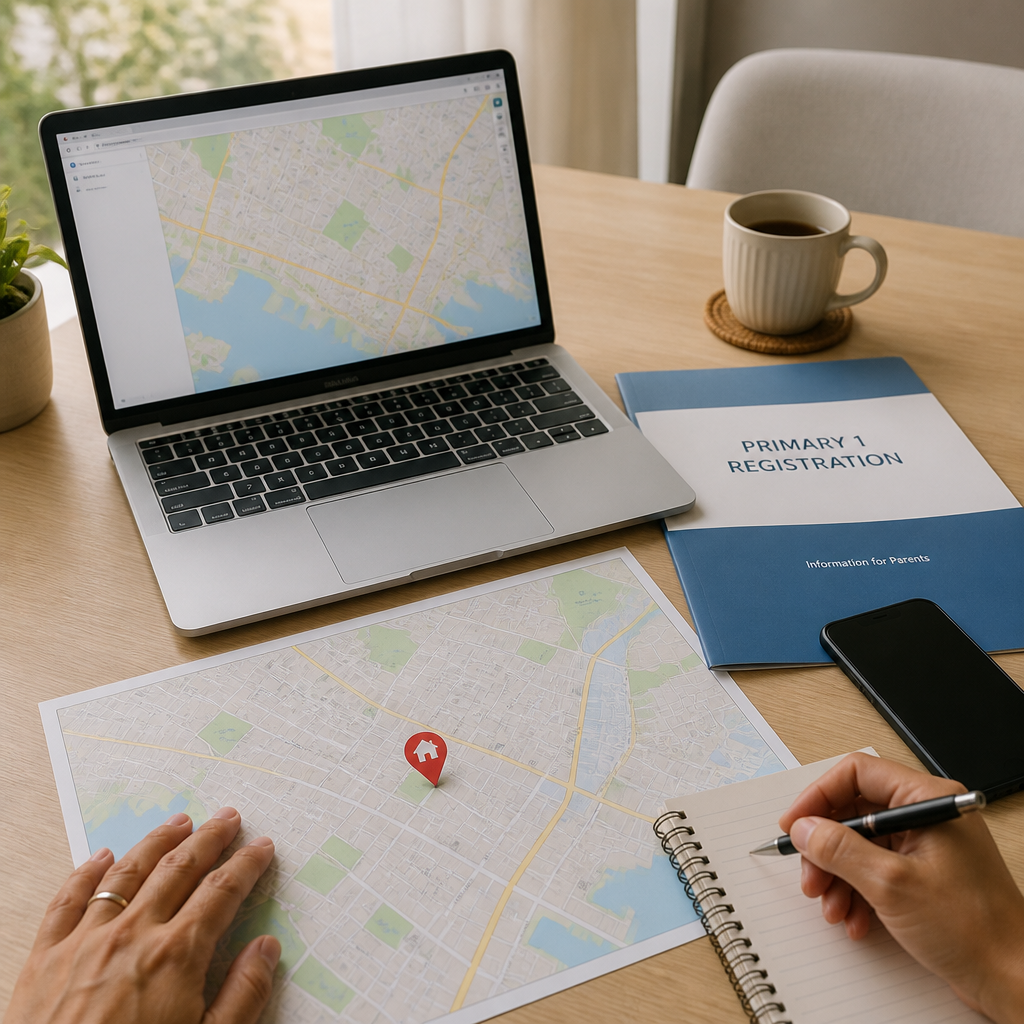
This guide focuses specifically on how to check if a primary school is within 1km in Singapore, without drifting into the full P1 registration process. The goal is to help you avoid guesswork, use the right address details, and know what to do if your home seems very close to the boundary.
Key Takeaways
- Use exact address details, not rough estimates. A nearby block, condo entrance, or street-level impression can be misleading. For Primary 1 registration, small address differences can affect whether a home falls within the 1km band.
- Start with recognised tools such as OneMap. If you want to check which primary schools are within 1km of your home in Singapore, OneMap is a practical first step, but it should not replace MOE’s latest official rules and systems.
- Do not rely on walking or driving routes. The shortest route your child walks to school is not the same as the distance basis used for Primary 1 registration. This is why informal map checks often create confusion.
- Boundary cases need extra caution. If your address appears very close to 1km, recheck every detail carefully. A unit in a large condo or a neighbouring HDB block may not fall in the same distance band as another unit nearby.
- Use the address that is valid for registration. A recent move, an uncompleted move, or a grandparent’s address can create complications. What another family did in a previous year may not apply now, so always check the latest MOE rules.
- Distance is only one factor, but it can still matter. There is no need to panic, but there is also no reason to assume. If the result is uncertain, prepare backup school options early instead of waiting until the last minute.
Why The 1km Distance Band Matters For P1 Registration
The reason so many parents search for how to check if a primary school is within 1km is easy to understand. The 1km band can matter when a school has more applicants than places available. In those moments, distance stops feeling like a technical detail and starts feeling very real.
Distance matters most when a school is oversubscribed
Not every school reaches this point, but popular schools often do. When that happens, a home that is clearly within 1km may be treated differently from one that is just outside.
This is where parents can get caught off guard. A family may spend months feeling sure because the school is “only five minutes away by car”, only to realise later that this was never the right way to judge it. By then, the emotional disappointment often feels bigger because expectations were built too early.
Why “it looks close” is not enough
This is one of the most common traps. Parents zoom into a map, eyeball the area, and conclude the school should be close enough. Others rely on a condo brochure or property listing that says “within 1km to popular school”.

That kind of wording may be useful for marketing, but it is not the same as MOE’s framework for primary school registration. Tutors often notice that families feel the most unsettled when they planned around an assumption instead of a proper check. Distance checking works best when you treat it as verification, not estimation.
Start With The Right Tools
If you want the best way to check P1 school distance eligibility, begin with recognised Singapore tools instead of informal guesses. For most parents, OneMap is the most practical place to start.
Use OneMap as your first check
OneMap includes school-related map functions that many parents use as a practical Primary 1 distance checker in Singapore. It gives you a more structured way to check a school against a specific residential address.
When using it, enter the full address carefully. That means the correct block number, street name, development name if needed, and postal code where relevant. In dense estates, a small detail can point to the wrong location, and that can change the result more easily than many parents expect.
Check the exact school, not just the neighbourhood
Another common mistake is checking whether the estate is near a school cluster instead of checking the exact school itself. In mature estates, several primary schools may sit close together, but each school has to be checked individually.
A parent may assume that because their flat is near “the school area”, all nearby schools are equally within reach. That is not how this works. One school may fall within 1km while another nearby does not.
Use MOE guidance as the final reference point
OneMap is useful, but it is still only the first step. MOE’s official P1 registration guidance is the reference point parents should follow, and the latest information is on the MOE website.
Rules and verification requirements can change. What another parent did a few years ago may no longer be enough now. If you are serious about checking whether your home address is within 1km of a school in Singapore, MOE’s current guidance should be your final reference.
A Simple Way To Do Your Check
For parents who want a practical routine, it helps to follow the same sequence each time instead of jumping between screenshots, listings, and chat messages.
1. Identify the exact home address you intend to use for registration.
2. Search that address in OneMap and confirm the pin is correct.
3. Check the exact primary school name, not just the surrounding area.
4. Review the result calmly, especially if it appears close to the 1km boundary.
5. Cross-check with current MOE guidance before making plans based on the result.
This simple process does not guarantee your preferred outcome, but it does reduce avoidable mistakes. For many families, that alone removes a lot of unnecessary anxiety.
Address Details That Can Change Your Result
This is the part many parents underestimate. When checking whether a primary school is within 1km, the exact residential address matters more than most people think.
Block number, postal code, and registered address all matter
A difference of one block can affect the result. In some HDB estates, one block may fall within 1km while another nearby block may not. The same issue can happen in large private developments where different towers sit across a wide compound.
That is why it is safer to use the address that will actually be relevant for registration, not a nearby landmark, not the side gate of the condo, and not the entrance that looks closest to the school.
Large condominiums can be especially confusing
Parents living in big condos often assume the whole development shares the same distance status. That may not be a safe assumption. A unit in one part of the project may sit differently from a unit in another part.
This is why sales brochure lines such as “within 1km to top primary school” should be treated carefully. They may sound reassuring, but marketing language is not the same as a registration determination.
New developments and updated addresses need extra care
Freshly completed projects, renamed developments, or newly issued postal codes can make things less clear. If your address is very new, make sure it appears correctly in the map system and that your registration documents reflect the same address you are using.
For families who have just collected keys and are trying to sort out school plans quickly, this can be easy to overlook. But when address records are not aligned, problems can surface later.
What Not To Rely On
Sometimes clarity comes faster when you know what to ignore. Parents often do not make mistakes because they are careless. They make them because the wrong shortcuts feel so reasonable.
Do not use walking distance or driving time
A school can be a short walk away but still not fall within the 1km band used for registration purposes. On the other hand, a route may feel inconvenient because of roads or crossings, yet the address may still qualify within that band.
That is why travel time can be misleading. “It only takes seven minutes to walk there” sounds persuasive, but it does not answer the actual registration question.
Do not trust property portals or agent claims alone
Property listings often mention nearby schools because that helps sell homes. Some may be broadly accurate in a lifestyle sense, but that is not the same as an official distance check for P1 registration.
A common pattern among parents is stopping too early because a listing sounded certain enough. That confidence can backfire if the wording was general or based on non-official assumptions.
Do not rely on another parent’s past experience
“My friend used this address and got in” may sound helpful, but the details may not match your situation. The registration year, address status, school demand, or MOE requirements may be different.
Treat these stories as background context, not proof. Useful for awareness, yes. Strong enough to plan around, no.
If your child is also preparing for the adjustment into Primary 1, some families find it helpful to strengthen routines early through primary school tuition. Academic support does not affect distance eligibility, of course, but it can make the transition feel less overwhelming.
What To Do If Your Home Is Near The 1km Boundary
This is usually the most stressful situation. The map suggests your address is close, maybe very close, but not clearly inside or clearly outside. When that happens, caution is more useful than confidence.
Recheck every address detail slowly
Boundary cases are not the time for shortcuts. Re-enter the full address. Confirm the block number and postal code. Make sure you are checking the school by its exact name. If you recently moved, confirm which address is actually relevant under the latest rules.
Many errors happen when tired parents are checking late at night and telling themselves, “Should be okay lah.” That is understandable, but it is also exactly how small mistakes slip through.
Assume uncertainty until it is clearly verified
If the result appears borderline, do not tell yourself you are definitely within 1km unless the basis is clear and consistent with official guidance. Uncertainty is still uncertainty, even when the school seems almost next door.
This mindset may feel less comforting in the moment, but it protects you from bigger disappointment later.
Prepare backup options early
This article is not about school selection strategy, but one practical point matters. If your address sits near the boundary, prepare backup school options early instead of emotionally locking into only one result.
That does not mean giving up on your preferred school. It simply means staying realistic. Families usually cope much better when they have a Plan B ready, rather than scrambling after a surprise.
Special Situations Parents Should Handle Carefully
Some situations sound simple in conversation but become more complicated once you look at the details.
Moving house is not just a map question
If you are in the middle of moving, the issue is not only whether the new home is within 1km. You also need to check whether that address is the valid residential address for registration under the latest MOE rules.
This is why “We are moving soon anyway” is not enough on its own. Timelines, occupancy, and documentation may matter, so always refer back to current MOE guidance.
A grandparent’s address should be treated carefully
Some parents wonder whether using a grandparent’s address helps if it is closer to a school. This is exactly the kind of situation where hearsay can create problems.
Rules and conditions can change, and what worked for another family may not apply to yours. Do not build your school plans around assumptions about an alternative address.
Neighbouring blocks and “same estate” assumptions are risky
Even within the same cluster of flats, distance results may differ. A parent may hear that “everyone in this estate is within 1km” and assume their own unit qualifies too.
That assumption can be risky. Estate-level confidence is not the same as checking your own exact address against the exact school.
A Quick Checklist Before You Decide
Before you conclude that a school is within 1km, run through this short checklist:
- Have you used the exact residential address relevant for registration?
- Did you check the specific primary school, not just nearby schools in the area?
- Are you relying on OneMap or another recognised source, rather than a property ad?
- Have you reviewed the latest MOE guidance for any address-related conditions?
- If the result looks close, have you treated it as borderline rather than confirmed?
A checklist like this may seem basic, but it helps prevent the most common errors. In school registration matters, simple discipline often matters more than clever shortcuts.
Frequently Asked Questions
Is OneMap enough to confirm that my home is within 1km of a primary school?
OneMap is a very useful starting tool, and many parents use it as a practical Primary 1 distance checker in Singapore. But it should not be your only step. Always cross-check with the latest official MOE guidance, because final assessment for registration follows MOE’s rules and systems.
If my condo is within 1km, does that mean all units in the condo qualify?
Not necessarily. Large developments can be tricky because different blocks or towers may sit in slightly different positions. It is safer to check the exact residential address carefully instead of assuming the whole condo shares one distance status.
Can I use Google Maps walking distance to judge whether I am within 1km?
No. Walking routes and driving routes are not the right basis for this purpose. A route may feel short in daily life but still not match the registration distance category. If you are checking whether a primary school is within 1km, avoid relying on travel time or road routes.
What if my address seems right on the 1km boundary?
Recheck everything carefully, including the exact address, school name, and any recent changes to your residence details. Then refer to the latest MOE guidance and avoid assuming you are safely within the band. If the result still feels uncertain, it is wise to keep backup options in mind.
Can I rely on what another parent did last year?
No. Their address situation, registration year, and applicable rules may be different from yours. The best way to check P1 school distance eligibility is to use recognised tools and current MOE information instead of informal advice.
Conclusion
Checking whether a primary school is within 1km of your home sounds simple, until you are the parent doing it for Primary 1 registration. Then every detail suddenly feels heavier. A nearby block is not the same as your block. A condo marketing line is not the same as official guidance. A short walk is not the same as the distance basis used for registration.
If you were searching for how to check if a primary school is within 1km in Singapore, the safest approach is clear. Use recognised tools such as OneMap, enter the exact residential address carefully, avoid informal estimates, and verify against the latest MOE guidance. If your home appears close to the boundary, double-check rather than assume, and keep expectations realistic.
And while you are preparing your child for the Primary 1 transition, if you want extra academic support, you can also contact our private home tuition team.