


Introduction
If you have ever left a daycare visit feeling both hopeful and uneasy, you are not alone. Many parents know this feeling well: you want to trust that a centre will care for your child kindly, but you are also quietly wondering what happens during the hard moments. Not the polished tour, but the rushed morning, the difficult transition, the meltdown before lunch, or the time your child needs a little more patience than others.
Finding the right daycare for a child who needs extra support can feel deeply personal and, honestly, overwhelming. In Singapore, many parents are not just looking for a childcare spot. They are looking for an inclusive daycare where their child will be understood, included, kept safe, and given space to grow at their own pace.
The reassuring part is this: you do not need to rely on marketing language alone. A supportive childcare setting is not defined by warm slogans. It shows up in staffing, routines, communication, flexibility, and how educators respond when a child is overwhelmed, slow to warm up, sensory-sensitive, or needs closer guidance. This guide will help you compare options calmly and know what to look for in a daycare or specialised childcare setting in Singapore.
Key Takeaways
- Inclusive care is about daily practice, not labels. What matters is how teachers handle transitions, emotional regulation, sensory needs, and communication differences in real classroom situations.
- Staffing and responsiveness matter more than glossy facilities. Look for calm adults who are available, observant, and able to step in early before a child becomes overwhelmed.
- Not every child needs the same type of setting. Some children do well in a mainstream childcare centre with strong teacher support, while others may need a smaller group, a part-time arrangement, or closer collaboration with therapists.
- Ask specific questions during centre visits. Questions about meltdowns, parent updates, and support strategies usually reveal more than polished general answers.
- Affordability should be weighed against fit. When comparing affordable daycare options for children with developmental delays in Singapore, look beyond fees alone.
- A trial period can reveal more than a brochure. Early patterns in drop-off, regulation, and communication matter more than promises.
- You do not have to figure everything out alone. If your child may need more personalised learning support alongside preschool or daycare, compare suitable preschool tutor options to build confidence and support daily routines at home through this support page.
What Makes A Good Inclusive Daycare
Not every supportive centre uses the same language. Some may not describe themselves as specialised, yet they may still offer better support than a centre with stronger marketing. What matters is how inclusion looks in everyday practice.
Teacher-child ratio and real availability
A centre may technically meet licensing requirements, but your child’s actual experience depends on whether educators are available when support is needed. The toughest moments often happen during arrival, clean-up, toileting, transitions, and group instruction. A child who needs reminders, reassurance, or help regulating emotions can get overlooked if teachers are stretched too thin.
During a visit, notice whether teachers seem rushed. If one child is crying, another is refusing snack, and a third is wandering away, how do staff respond? Calm, coordinated adults are a good sign. If the environment feels constantly reactive, your child may struggle even if the centre means well.
Predictable routines and structured environments
Children with additional needs often cope better when the day feels predictable. That does not mean harsh or rigid. It means clear routines, visual supports, and adults who prepare children for what comes next.
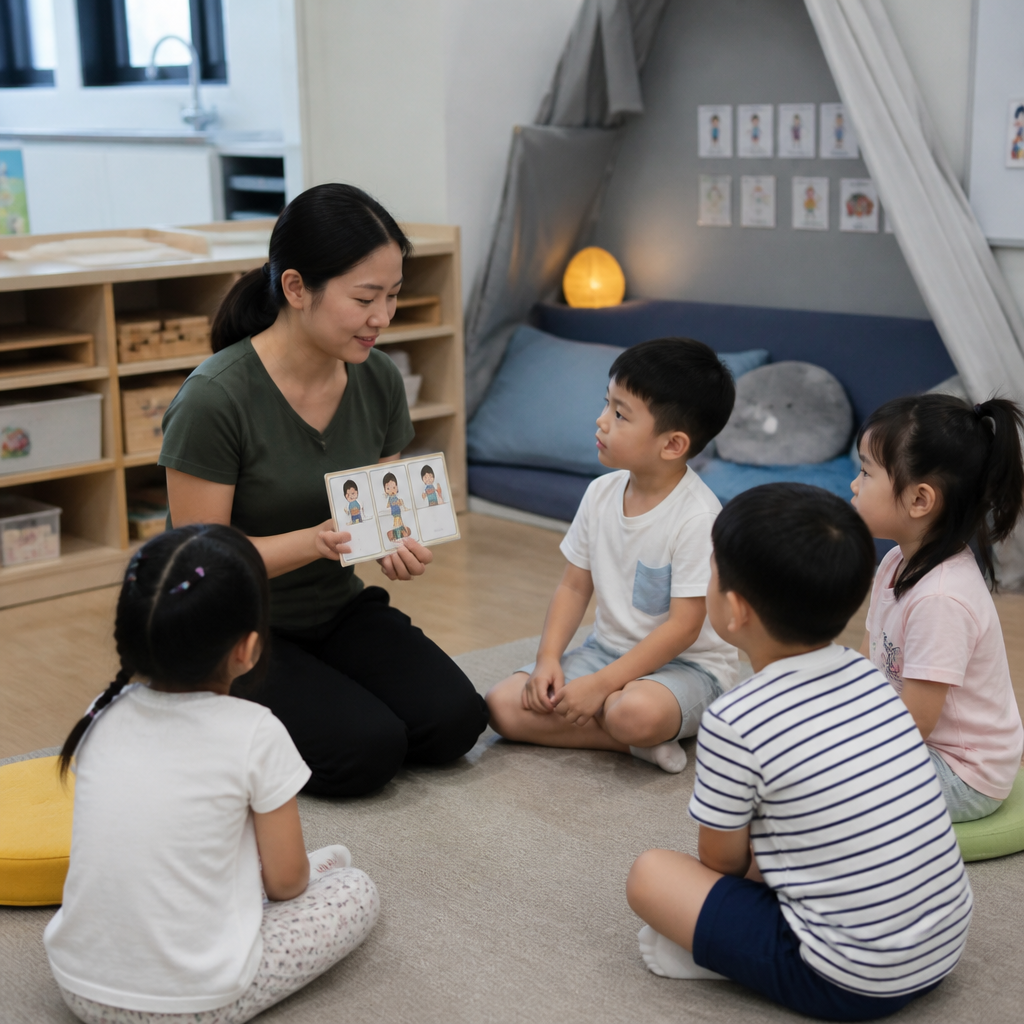
A teacher who says, “After snack, we will wash hands and go outside. Here is the picture card,” is creating security. In a less structured setting, instructions may change often and children are expected to simply follow along. Some children can do that. Others feel lost, dysregulated, or anxious. In an inclusive childcare environment, structure helps children participate with less stress.
Patience, flexibility, and respectful language
A truly inclusive daycare does not describe children as “difficult” just because they need more time, movement breaks, or alternative ways to join activities. Listen carefully to how staff speak. Do they talk about support, readiness, and working together? Or do they focus mostly on compliance and whether a child can “keep up”?
That difference matters more than it may seem at first. Respectful language is often one of the clearest signs of genuine inclusion.
Comparing Mainstream And More Specialised Childcare Options In Singapore
Many parents start by asking whether they need a mainstream childcare centre, a more specialised daycare setting, or some combination of daycare plus intervention support. The answer depends on your child’s needs, your family schedule, and the quality of support available, not just the label on the centre.
To make this easier to compare, here is a simple overview.

Mainstream centres with inclusive practices
Some mainstream childcare centres do a very good job supporting children who need more guidance. These can work well if your child benefits from peer modelling, can participate with some adaptations, and has teachers who are willing to collaborate with parents and therapists.
The benefit is social inclusion and a more typical group environment. Children may learn routines, language, and play skills by watching peers. The trade-off is that support may depend heavily on the specific teaching team.
More specialised or support-aware settings
When parents search for daycare with trained staff for special needs children in Singapore, they are often hoping for a setting with stronger understanding of developmental differences, communication needs, or sensory regulation. These centres may be better equipped for children who need more individual prompting, smaller groups, or more adapted routines.
Still, more specialised does not automatically mean better for every child. Fit matters more than labels.
Part-time combinations
A part-time daycare arrangement can be a practical middle path for children who need closer attention. Some families combine shorter daycare hours with early intervention, therapy sessions, or home-based support. This can reduce fatigue, especially for children who become overwhelmed by long days, crowded spaces, or frequent transitions.
What To Look For When Comparing Daycare Options In Singapore
If you are researching specialised daycare or inclusive childcare in Singapore, focus less on broad promises and more on the centre’s day-to-day systems. The right environment usually reveals itself in the details.
Communication with parents
You should not have to guess how your child is coping. Good centres communicate clearly without sounding alarmist. They tell you what worked, what was difficult, and what patterns they are noticing.
A helpful update might sound like this:
He settled better after we let him hold a familiar object during circle time.
Transitions after outdoor play are still hard, but visual cues seem to help.
That kind of feedback allows home and school to support the child consistently. By contrast, vague comments like “today was okay” or repeated complaints without collaborative problem-solving can wear families down very quickly. Strong parent-school communication often separates a merely accepting centre from a truly inclusive one.
Willingness to work with therapists or specialists
Some children already see speech therapists, occupational therapists, developmental paediatricians, psychologists, or early intervention teams. A supportive daycare does not need to replace these professionals. It should, however, be open to working with them where appropriate.
That may mean reading therapist recommendations, trying classroom strategies, or allowing observations if arrangements are possible. The best centres do not become defensive when outside support is mentioned. For broader early intervention and support information, parents can refer to SG Enable.
Safety without over-restriction
Safety matters greatly, especially for children who may bolt, climb impulsively, mouth objects, or struggle to sense danger. But safety should not come at the cost of constant punishment or exclusion. Ask how the centre keeps children safe during movement, transitions, and outdoor play. Also ask what happens when a child is dysregulated.
A calm sensory corner, close supervision, and preventive support are very different from frequent scolding or removal from activities. Inclusive daycare should help children feel secure while still allowing meaningful participation.
How To Compare Cost, Convenience, And Support
Cost is a real concern. Many families are trying to find affordable daycare in Singapore without sacrificing the support their child needs. This is where comparison needs honesty, because the cheapest option can become costly in other ways.
Fee structure versus hidden costs
A lower monthly fee may look manageable at first, but ask whether the centre can realistically support your child without frequent early pick-ups, repeated requests for shorter hours, or suggestions for additional one-to-one help. If you are constantly missing work because the placement is not stable, the true cost rises quickly.
Location and travel load
A centre with excellent support may still be a poor fit if the journey leaves your child exhausted before the day even begins. For younger children with sensory sensitivities, long travel times can affect regulation, eating, and transitions.
Full-day versus part-time needs
If you are considering part-time daycare, ask yourself whether your child is struggling because the environment is unsuitable, or because the day is simply too long right now. Those are different issues.
Some children bloom in shorter, better-supported sessions. Others need full-day care but with stronger structure and communication. Parents can also check childcare resources and service information at ECDA for Parents.
Questions To Ask During Centre Visits
A centre tour can be reassuring, but it can also be misleading if you only hear polished answers. Go in with practical questions tied to your child’s daily needs.
Questions worth asking
- How do you support a child who needs longer to settle at drop-off?
- What do you do if a child becomes overwhelmed during group activities?
- How do teachers communicate concerns with parents?
- Have you supported children with communication, sensory, behavioural, or developmental differences before?
- Can you work with recommendations from therapists or specialists if needed?
What you are listening for is not perfection. You are listening for specific, thoughtful, experience-based answers.
Green flags during a visit
Watch for teachers kneeling to a child’s eye level, using calm tones, and giving simple choices. Notice whether the classroom has visual cues, cosy corners, and routines that seem understandable. These small moments often tell you more than a brochure ever will.
Red flags to take seriously
Be cautious if staff seem dismissive, defensive, or overly focused on whether your child will be “manageable”. Another red flag is when every concern is framed as your child needing to adjust, with no mention of how the environment can adapt too.
How To Decide If A Daycare Is The Right Fit
Even after tours and calls, the final decision can still feel uncertain. That is normal. The goal is not to find a perfect centre. It is to find a setting where your child can be safe, respected, and supported well enough to participate and grow.

Trust patterns, not one-off promises
A warm principal and a lovely first visit are encouraging, but try to assess patterns. Is communication consistent? Do teachers remember what you shared? Are they asking thoughtful follow-up questions? Can they describe support strategies clearly?
Experienced educators often notice the same thing: children progress best when the adults around them are consistent, observant, and calm, not just kind in a general way.
Consider a trial period carefully
If the centre offers a gradual start or trial arrangement, that can be very helpful. Use that time to observe more than whether your child cries at drop-off. More telling signs include whether recovery becomes easier, whether teachers can co-regulate calmly, and whether your child starts anticipating routines with less distress.
Think about support beyond daycare
Sometimes the right answer is not choosing between daycare or support, but combining both thoughtfully. If your child may need more personalised learning support alongside preschool or daycare, compare suitable preschool tutor options to build confidence and support daily routines at home through this preschool support page or reach out directly via this contact page.
Frequently Asked Questions
How do I know if my child needs a more inclusive daycare setting?
You may notice that your child needs more support with transitions, communication, group routines, sensory regulation, or emotional calming than a typical classroom can comfortably provide. That does not mean something is wrong with your child. It may simply mean the environment needs to fit them better.
Are inclusive daycare centres only for severe behavioural or developmental needs?
No. Inclusive daycare can support children with a wide range of profiles, including those who are bright and curious but struggle with regulation, flexibility, waiting, or social communication. The real question is whether the centre understands behaviour support in a respectful and responsive way.
Can an affordable daycare in Singapore still provide good support for children with developmental delays?
Yes, but it needs careful comparison. Affordability does not automatically mean poor quality, and higher fees do not guarantee better support either. Look closely at staffing, communication, teacher experience, daily routines, and whether the placement feels sustainable for your child and family.
Should I choose full-time or part-time daycare if my child needs more one-to-one attention?
That depends on your child’s stamina, regulation, and current support needs. A part-time arrangement can work well if full days lead to overload or if your child is also attending therapy or intervention sessions.
What if a centre says they can accept my child, but I am still unsure?
Acceptance alone is not enough. Ask follow-up questions about staffing, routines, communication, and how they respond during difficult moments. If the answers remain vague, it is reasonable to ask for a short transition plan or trial period.
Conclusion
Choosing an inclusive daycare is rarely a quick checklist decision. For many Singapore parents, it is a careful balancing act between support, cost, convenience, emotional safety, and whether the adults in the room truly see your child with patience and respect.
The best daycare for children with additional needs is not simply the one with the nicest brochure or the broadest promise. It is the one that can offer structure without rigidity, safety without shame, and communication without blame.
If you are still weighing options, take your time to visit, ask specific questions, and notice how staff speak about children who need more support. And if your child may benefit from more personalised help alongside daycare, you can compare suitable preschool tutor options to build confidence and support daily routines at home by reaching out through this contact page.