


Introduction
It is easy to say, “Just do your best,” but in Singapore, exam season rarely feels that simple. By the time PSLE, N-Levels, O-Levels, IP exams, promos, or A-Levels draw near, many families are already tired. There may be tuition after school, unfinished homework at 10pm, CCA commitments, and the constant background noise of comparison, classmates discussing grades, relatives asking about school, and students quietly wondering if they are already falling behind.
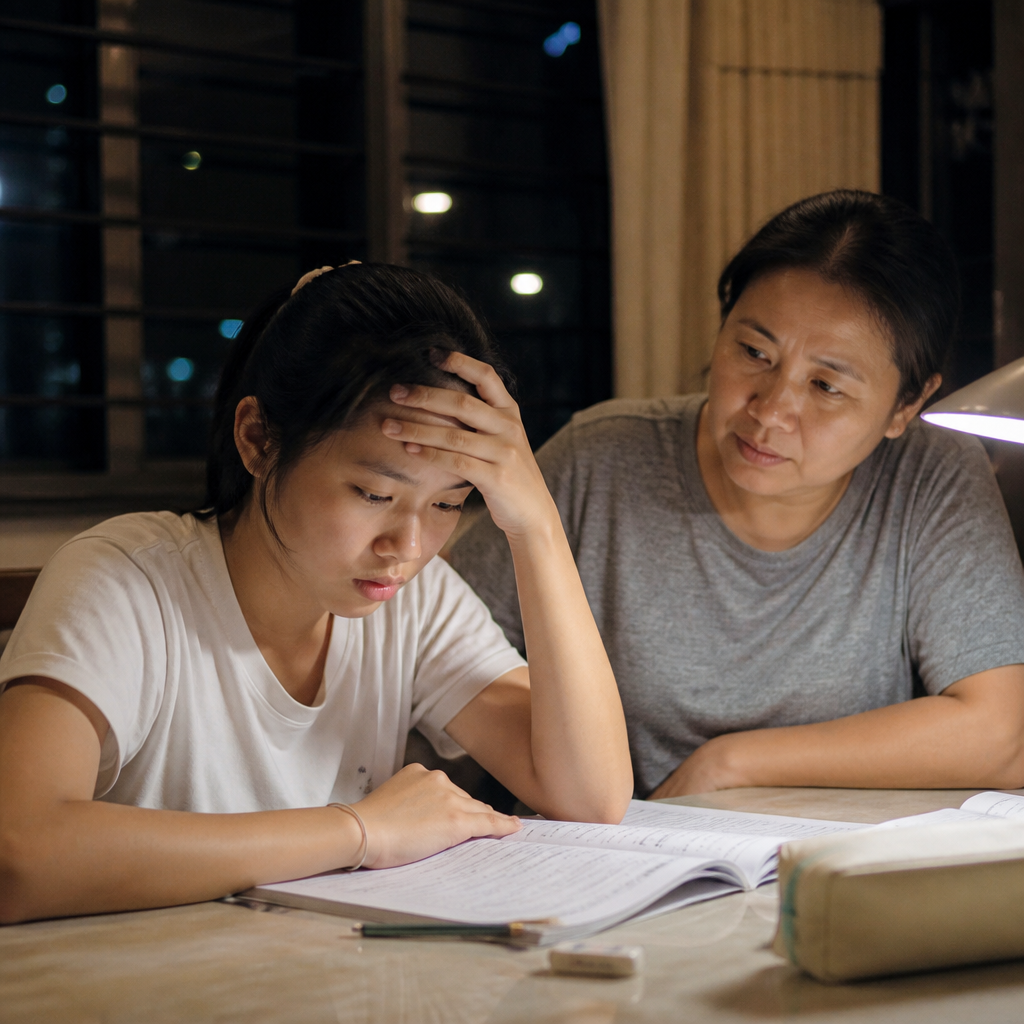
If you are searching for how to deal with exam stress and anxiety, you are probably not looking for vague advice. You want to know what stress looks like, when it becomes unhealthy, and what actually helps before, during, and after exams. The good news is that exam stress can be managed. Some nerves are normal, but when fear starts affecting sleep, concentration, appetite, mood, or willingness to study, that is a sign the approach needs to change, not just the effort level.
Key Takeaways
- Not all exam stress is bad. Mild nerves can help students stay alert and focused during revision or in the exam hall. But ongoing panic, sleep disruption, shutdowns, or avoidance often point to unhealthy anxiety that needs support.
- Stress looks different at each school level. Primary school children may become clingy, tearful, or complain of stomach aches. Secondary school and JC students are more likely to withdraw, procrastinate, become irritable, or insist they “don’t care” when they actually feel overwhelmed.
- Home pressure matters more than many parents realise. Even well-meaning comments like “Don’t waste all the tuition money” or “Your cousin already finished revising” can increase fear and make students shut down.
- Revision plans must be realistic, not idealistic. A timetable that ignores school fatigue, CCA, travel time, and weak topics often backfires. Students end up feeling defeated because the plan was never sustainable in the first place.
- Staying calm during the paper is part of exam performance. Breathing, resetting after a blank moment, and managing time pressure can help students recover instead of spiralling.
- After exams, the conversation at home still matters. Immediate post-paper analysis, comparisons, and blame often prolong stress, especially for students who are already ashamed or disappointed.
- Sometimes academic support reduces anxiety. When stress comes from weak foundations, targeted help can rebuild confidence. Families who need that support can learn more about our tutors.
Why Exam Stress Feels So Intense In Singapore
In Singapore, exam stress is not only about one test. It is often about what that test seems to represent. A Primary 6 child may hear adults talk about “future options.” A Secondary 4 student may feel O-Level results will decide everything. A JC student may carry the fear of disappointing parents after years of effort, school expectations, and tuition.
That is why exam anxiety can feel bigger than the paper itself. Students are often reacting not just to questions on a page, but to the meaning attached to those questions.
Normal nerves vs unhealthy anxiety
A little nervousness before an exam is common. A student may feel restless the night before, worry about one difficult chapter, or want reassurance. That does not automatically mean something is wrong.
Unhealthy anxiety looks different. It lingers for days or weeks, spills into ordinary routines, and starts affecting function. A child who usually studies steadily may freeze and stare at the worksheet. A teenager who revised for months may suddenly avoid opening notes. A JC student may sit at the desk for three hours and absorb almost nothing because panic is crowding out concentration.
The difference is not whether the student is worried. It is whether the worry is taking over daily life.
To make that easier to spot, here is the contrast many parents struggle with:
Why Local Exam Pressure builds so quickly
Singapore’s education culture can magnify pressure. Students hear score discussions in class, see friends compare answer keys on Telegram, and feel the weight of school expectations, tuition schedules, and family sacrifices. Even capable students can become anxious when their environment constantly signals that every mark matters.
Tutors often notice the same pattern. Students who seem “lazy” are not always lazy. Some are overwhelmed. When they feel they can no longer meet expectations, they stop engaging because avoidance feels safer than trying and failing publicly.
What Exam Anxiety Looks Like At Different Ages
The signs of exam stress are not always obvious. They also look different in primary school, secondary school, and JC. That is one reason parents sometimes miss what is happening. They are looking for panic, but stress often shows up in smaller, messier ways first.
Primary school children often show stress through behaviour and the body
Younger children may not say, “I am anxious about exams.” Instead, stress comes out through stomach aches, headaches, crying before school, trouble sleeping, clinginess, irritability, or harsh self-talk after small mistakes. A P4 or P5 child may tear a worksheet after getting two questions wrong. A P6 child may keep asking, “What if I cannot go to the school I want?”
At this age, children absorb adult emotions quickly. If the household becomes tense every time marks are mentioned, they may start fearing not just the exam, but your reaction to it.
Teenagers often hide stress behind withdrawal or anger
Secondary school students are usually harder to read. Instead of crying openly, they may become sarcastic, sleep very late, overuse their phones, avoid certain subjects, or insist they “don’t care.” Some become unusually angry. Others go quiet and stop talking about school entirely.
When that happens, pushing harder is rarely the first solution. A teen who is already ashamed may hear every reminder as criticism. It helps to start with observation rather than accusation.
“I noticed you’ve been avoiding your Chemistry papers. Are you feeling stuck with the topic?”
“You are wasting time again.”
One opens a door. The other usually shuts it.
JC students may look unmotivated when they are actually exhausted
JC stress can become especially intense because the pace is fast and the stakes feel high. Some students are not panicking because they are careless. They are panicking because they are mentally exhausted. A common pattern among students is that exhaustion gets mistaken for poor attitude.
By this stage, comments like “You are old enough to manage yourself” may increase isolation. A JC student may need quieter support, regular meals, protected sleep, and help cutting down non-essential commitments during crunch periods.
What Helps Before The Exams Start
The best way to manage exam stress is to act before panic peaks. Last-minute comfort helps, but prevention matters more.
Build a revision plan that can actually be followed
Parents often ask how to help a child with exam stress when the timetable is already packed. The answer is not to squeeze in every possible worksheet. It is to make the plan survivable.
A realistic study schedule accounts for school fatigue, CCA days, tuition, and travel time. If your child reaches home at 7pm twice a week, those are not ideal slots for heavy memorisation or difficult problem-solving. Use lighter tasks then, such as reviewing corrections, revising vocabulary, or testing one chapter. Save demanding work for fresher periods, like Saturday morning or a quieter afternoon.
Students also need a sense of progress. A plan that only lists unfinished topics can feel crushing. Include smaller wins, such as completing one weak chapter, correcting one practice paper properly, or reviewing mistakes from the previous week.
One simple method is to divide revision into three categories: strong topics, moderate topics, and weak topics. Strong topics need maintenance, not endless repetition. Moderate topics need regular practice. Weak topics need the clearest teaching and the most structured review. This prevents students from spending all their time on familiar chapters just to feel productive while avoiding the areas causing the most anxiety.
Protect sleep, breaks, and emotional bandwidth
Sleep is not a luxury during exam season. A student who studies until 1am but cannot think clearly the next day is not gaining an advantage. Sleep loss affects memory, concentration, mood, and emotional control, which means it can make exam anxiety worse even when the student is technically spending more time at the desk.

Breaks matter too. A short walk, shower, stretch, or snack break can reset a tired brain better than forcing another 40 minutes of distracted reading. Parents sometimes worry that breaks will lead to more procrastination, but the bigger risk is mental fatigue that turns revision into low-quality time.
It also helps to reduce comparison. If your child is already anxious, hearing “Your cousin finished all the TYS papers” is unlikely to motivate. It usually deepens dread and makes revision feel like a test of worth rather than a process of learning.
A practical rule is to protect the basics first: sleep, meals, hydration, and a manageable routine. Students often underestimate how much skipped meals, too much caffeine, and irregular sleep can intensify shakiness and panic.
When tuition reduces stress instead of adding to it
Sometimes the real issue is not discipline but weak foundations. A student who fears Maths or Chemistry may not need more nagging. The student may need someone to reteach core concepts clearly and patiently.
That trade-off matters. If tuition simply adds more hours without addressing the actual gaps, it can increase pressure. But when it rebuilds understanding, it often restores confidence. If your family is considering extra help, you can learn more about our tutors or visit Singapore Tuition Teachers.
How To Stay Calm During PSLE, O-Levels, And Other Major Exams
Even well-prepared students can panic in the exam hall. Staying calm during exams is partly about emotional control, not just content knowledge.
What to do when the mind suddenly goes blank
The blank-mind moment is common. A student sees the first question, feels the heart race, and suddenly forgets everything. In that moment, telling yourself “Don’t panic” rarely works. A better move is to reset the body first.
Loosen your grip on the pen. Take one slower breath out than in. Plant both feet on the floor. Then look for the easiest accessible question and start there. That small recovery matters. Once a student gets one answer down, the brain often settles enough to continue.
This is especially useful for PSLE, O-Level, and A-Level students who tend to panic when the paper feels unfamiliar at first glance. The goal is not to feel perfectly calm. It is to keep functioning even when nerves show up.
Manage time pressure without spiralling
Many students lose marks not only because they lack knowledge, but because anxiety distorts pacing. They get stuck trying to perfect one answer and then rush the rest.
A practical habit is move and return. If a question is blocking progress after a reasonable attempt, leave space and go on. This helps students avoid burning too much time in one place while panic builds. For language papers and humanities, some students panic because others start writing quickly. For Maths and Science, panic often appears when they spot an unfamiliar-looking question. It helps to remember that difficult questions are difficult for many candidates, not just one student.
Another useful habit is to do a quick scan of the paper at the start, if the exam format allows it. Seeing the full paper can reduce the shock of meeting a hard question early. Students can mentally note where the easier marks may be and avoid the feeling that the entire paper is impossible.
How parents can lower stress at home
This is where many loving families struggle. Parents worry because they care, but worry can come out as repeated reminders, sharp comments, or tense silence. If you want to help a child with exam anxiety, the emotional atmosphere at home matters as much as the study plan.
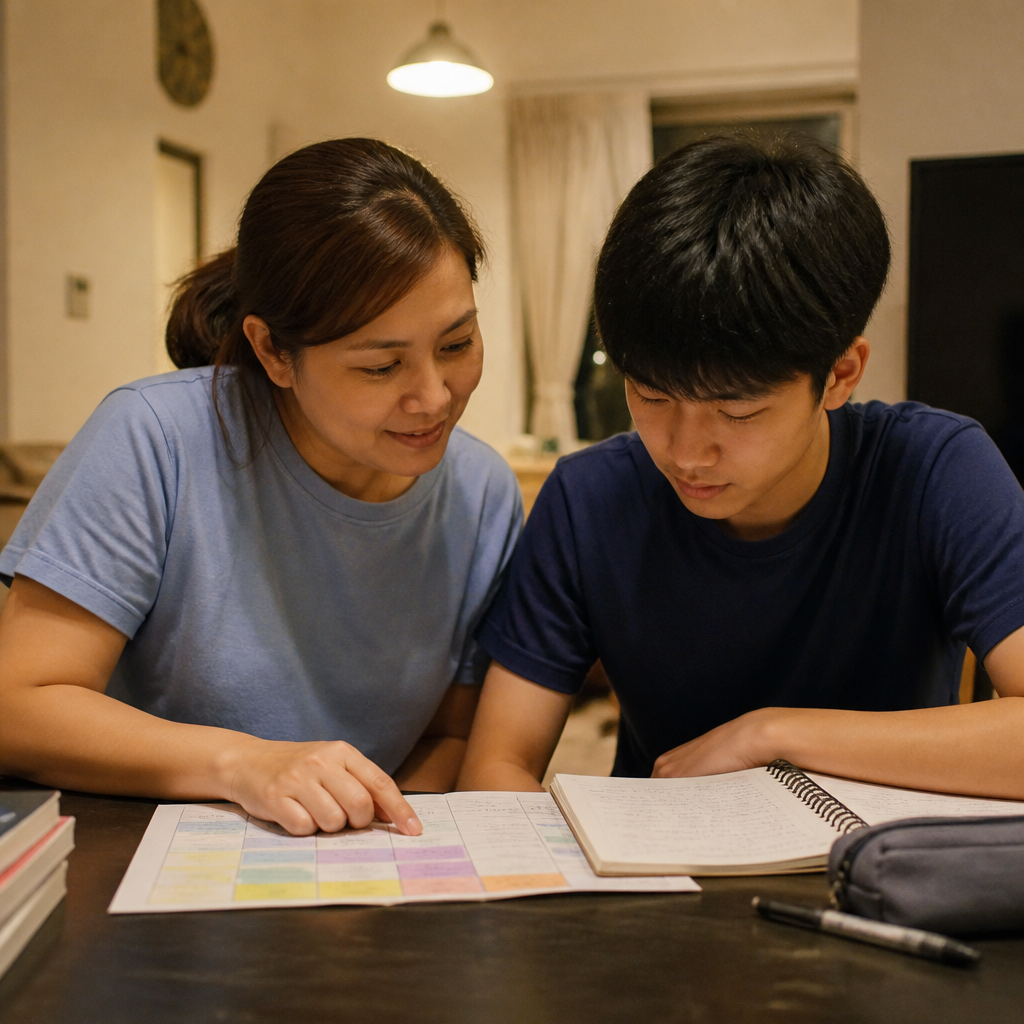
Create a calm study environment
A stress-free study environment is not only about furniture and lighting. The emotional climate matters just as much as the desk setup.
A calmer home may mean reducing background TV noise, protecting a regular study slot, limiting interruptions from relatives, and avoiding heated discussions about marks within earshot. It also means not turning every meal into an academic review session. A child who cannot eat dinner without being quizzed may start dreading family time, which adds another layer of stress to an already difficult season.
For younger children, visible structure helps. For example, 25 minutes of revision, 5 minutes of movement, then a switch in subject can work better than demanding two straight hours at the table. For older students, a quieter form of support may work better, such as checking in once at night rather than hovering throughout the evening.
Use language that steadies rather than shames
What parents say, especially when a child is already fragile, can either steady the situation or worsen it. Many children do not need more reminders that exams matter. They already know.
Children and teens often remember tone more than exact words. The goal is not to be soft about everything. It is to be steady. Pressure without emotional safety often produces fear, not discipline.
What To Do After The Exam, And When To Seek Extra Help
Stress does not always disappear when the paper ends. Some students replay every answer, scroll unofficial discussions, and punish themselves before results are even out.
Handle the post-exam period carefully
If your child walks out of the exam upset, resist the urge to immediately dissect the paper. A student who already feels they have done badly usually does not need a post-mortem in the car. Start with emotional regulation first. Food, rest, water, and space often help more than analysis.
When results arrive, acknowledge effort and patterns, not only numbers. If a child improved from repeated failures to a borderline pass, that progress matters. If results are poor, avoid shame-based reactions. Shame often narrows learning because the student becomes more focused on self-protection than correction.
It also helps to limit unhealthy post-paper habits. Constantly checking answer discussions, comparing estimated scores, or replaying mistakes late into the night can keep the body in stress mode. Once the paper is over, attention should shift to recovery and the next task.
Know when anxiety needs more than home support
There are times when home strategies are not enough. Speak to a school counsellor, GP, or mental health professional if anxiety is causing severe sleep problems, panic attacks, persistent physical complaints, refusal to attend school, loss of appetite, prolonged withdrawal, or talk about hopelessness.
You can read more about student well-being at MOE’s student well-being resources and mental health support at IMH mental health resources.
Frequently Asked Questions
Is exam stress normal, or should I be worried?
Some exam stress is normal. What usually matters is whether your child is still functioning. If the stress starts affecting sleep, eating, school attendance, mood, or the ability to study at all, it is no longer something to brush aside as “just nerves.” When overwhelm lasts for a sustained period, support should go beyond “try harder.”
How do I know if my child is anxious or just avoiding revision?
Sometimes it is both, and that is what makes this so confusing for parents. Anxiety often leads to avoidance because the task feels threatening. If your child wants to do well but freezes, procrastinates, complains of physical discomfort, or becomes distressed when starting work, anxiety may be a major factor rather than simple laziness.
How can parents in Singapore help a child cope with exam stress?
Start by lowering unnecessary pressure at home. Use realistic schedules, protect sleep, stop comparison, and focus on one weak area at a time. Many parents assume motivation is the main issue, but sometimes a child is already trying and simply feels overwhelmed. If the child is lost academically, targeted teaching may reduce stress more effectively than repeated scolding.
What if my teenager refuses help?
Teens often reject help that feels controlling. That does not always mean they want to be left alone completely. Try offering choices instead of instructions. For example, ask whether they want help planning the week, reviewing one subject, or finding external support. Quiet consistency usually works better than confrontation.
Can tuition make exam anxiety worse?
It can, if it adds overload without solving the real problem. That is why more support is not always better support. But when tuition is targeted, paced appropriately, and focused on rebuilding weak foundations, it can improve confidence and reduce fear around the subject.
Conclusion
Learning how to deal with exam stress and anxiety in Singapore is not about eliminating every nerve. It is about helping students function, recover, and feel supported in a high-pressure environment. For primary school children, that often means reassurance and predictable routines. For secondary school students, it means reducing shame and giving practical structure. For JC students, it may mean protecting rest and recognising that exhaustion can look like poor attitude.
If you are a parent, your calm matters. If you are a student, struggling does not mean you are weak or unprepared for life. Sometimes the next step is better routines, sometimes better emotional support, and sometimes stronger academic guidance in the subjects causing the most fear. If targeted help could ease the pressure by improving confidence and foundations, you can learn more about our tutors.