


Introduction
It is 8.45pm, you have just stepped through the door after a long workday, and your child still has homework untouched in the bag, spelling to revise, and maybe a Math worksheet sitting there like a silent argument waiting to happen. You ask them to start studying, and within minutes, the dragging feet, blank stares, tears, or pushback begin. By the time anything gets done, everyone is tired and frustrated.
If you have been wondering how to get your kids to study without turning every evening into a fight, you are far from alone. For many working parents in Singapore, the issue is not simple laziness. More often, it is a messy mix of tiredness, school stress, weak routines, distractions, and sometimes learning struggles that show up as resistance.
The encouraging part is this, getting children to study is often less about scolding harder and more about building a calmer system at home. When the routine feels predictable, expectations are clearer, and support matches your child’s age and temperament, study time becomes less of a daily showdown and more of a habit.
Key Takeaways
- Look for the real reason behind the resistance. A child who refuses to study may be tired, overwhelmed, confused by the work, or emotionally shut down. The right response depends on the real cause, not just the behaviour you see.
- Build a predictable after-school rhythm. Children cope better when studying happens at a familiar time and in a familiar sequence. This matters even more in a busy household where parents come home late and evenings can feel rushed.
- Use short, specific goals instead of repeated nagging. “Finish 5 Science MCQs before your break” works better than “Go and study properly.” Small wins reduce resistance and help children get started.
- Adjust your approach based on age. Lower primary children need structure and presence, upper primary children need growing independence, and secondary students often need more autonomy and less hovering.
- Create a study space that lowers friction. A distraction-free setup, prepared materials, and fewer interruptions can make a surprisingly big difference to homework battles and revision habits.
- Praise effort and process, not just marks. Children who only hear comments about results may avoid studying because it feels like a test of self-worth. Specific praise builds confidence and study stamina.
- Get extra help when conflict or confusion keeps repeating. If every session ends in tears, shutdown, or “I don’t know” despite effort, outside support may help. You can learn more about our tutors if your child needs gentle academic support to build confidence and calmer study habits.
Why Your Child May Be Fighting Study Time, Not Just “Being Lazy”
Before deciding how to help your child study at home, it helps to pause and ask what is really going on. Many parents sit in that uncomfortable space between guilt and worry. You do not want to nag, but you also worry that if you stop pushing, your child will fall behind. That tension is very real, especially around WA or EOY periods in Singapore schools.
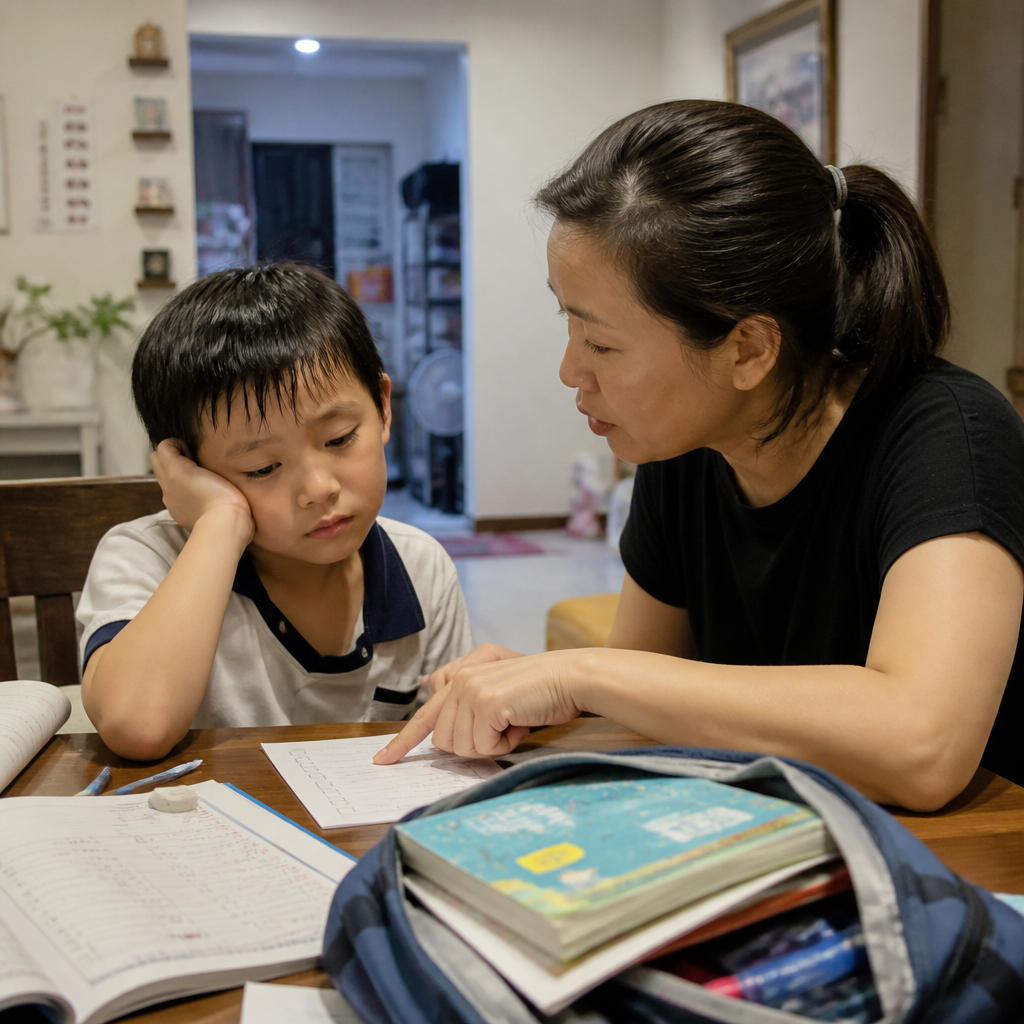
Tiredness often looks like defiance
A Primary 3 child who has gone through school, student care, and enrichment may look stubborn at 7pm, but often they are simply mentally drained. A Secondary 2 student coming home after CCA may snap when asked to revise, not because they do not care, but because they have nothing left in the tank.
This is why a child can seem perfectly fine scrolling a phone but suddenly become “too tired” to study. Passive entertainment asks very little from the brain. Studying asks for attention, memory, and effort. That does not mean your child is pretending. It often means their brain is reaching for the easiest option after a long day.
Motivation gaps and learning gaps are not the same
From the outside, both can look exactly the same. Your child delays, says “Later lah,” or shrugs and says, “I don’t know.” But the reason matters.
If your child understands the work and still keeps putting it off, the answer may be stronger routines and better ways to motivate your child to study without nagging. If your child struggles with instructions, misreads questions, or forgets concepts quickly, the issue may be a skill gap rather than an attitude problem.
Tutors often notice that children get labelled “lazy” when they are actually confused. Once work starts feeling like something they are bound to fail at, avoidance becomes a way to protect themselves.
Stress and fear often hide behind procrastination
An upper primary child preparing for PSLE may spend a lot of time sharpening pencils, rearranging notes, or asking for snacks instead of starting revision. It can look like poor discipline, but sometimes it is fear.
A common pattern among students is this, the more worried they are about doing badly, the harder it becomes to begin. Over time, children who seem unmotivated are sometimes just scared of proving to themselves that they are “bad” at a subject.
When you notice this pattern, pushing harder straight away can backfire. The first job is to make study time feel manageable again.
Build An After-School Routine That Makes Studying Easier
If evenings feel chaotic, your child may be reacting to the chaos as much as the studying itself. A strong home study routine for busy working parents in Singapore does not need to be complicated. It just needs to be clear, realistic, and repeatable.
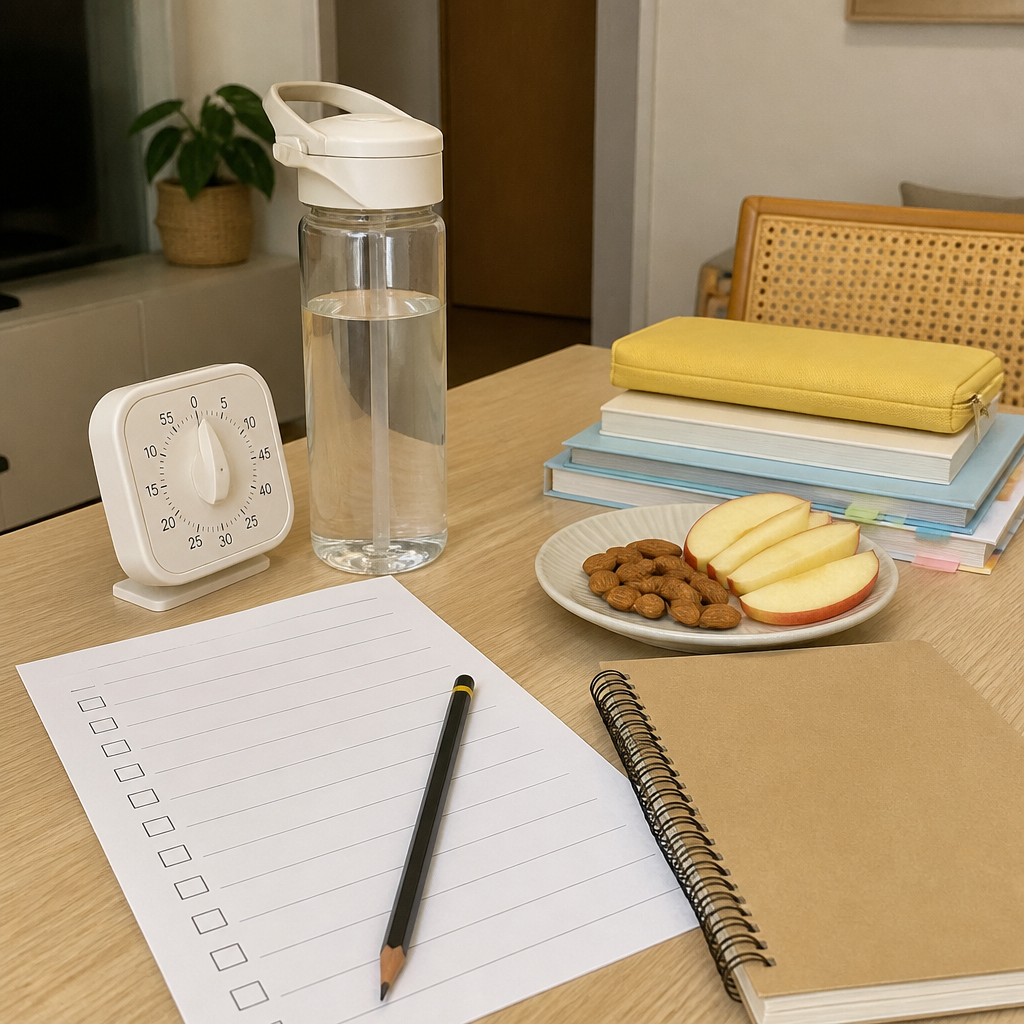
Keep the sequence consistent
Children settle better when the order of things stays familiar. The exact timing may differ from home to home, but the flow matters.
For lower primary children, a visible checklist can help a lot. Instead of repeating, “Why are you still not studying?” you can simply point to the next step.
Match study time to energy, not idealism
Many parents picture a long evening study session, but real family life often includes tuition, CCA, commuting, and children who are already tired. If your child comes home drained, forcing a long block immediately may trigger the same battle every night.
A shorter focused session is often more realistic. A Primary 5 child may manage one block before dinner and another after. A secondary school student may prefer to shower and eat first, then settle down. Effective study is not the same as long study.
Plan for working-parent realities
If you only get home after 8pm, your child may need a routine that does not depend on you being physically there. A simple written note with clear tasks can reduce uncertainty and lower the chance of your child waiting until you arrive before starting.
You can also use simple anchors such as “start homework after snack” or “begin revision at 7.30pm after shower.” These cues are easier for children to remember than a long list of instructions. For many families, this kind of structure is what turns homework from a nightly argument into something more predictable.
Reduce Nagging And Help Your Child Start
Nagging usually begins with good intentions. One reminder becomes five, then ten, and by the end of the night everyone is upset. If you want your child to study more peacefully, reducing verbal friction can make a big difference quite quickly.
Replace vague instructions with tiny clear tasks
“Go study” sounds simple, but to a tired child it can feel huge and endless. Starting becomes easier when the task is small and specific.
Small tasks reduce resistance because they do not feel endless. They also help children learn what focused work actually looks like.
Use calm scripts that do not invite a fight
The way something is said matters. Some phrases immediately trigger shame or defensiveness.
“Why must I always ask you?”
“Every day also same problem.”
“If you continue like this, you will fail.”
A calmer approach often works better.
“You look tired. Let’s start with 10 minutes only.”
“Which one feels easier to begin with, English or Math?”
“I’m not asking for perfect work now, just a start.”
That last line matters especially for anxious children. It tells them they do not have to feel ready or confident before beginning.
Use short breaks without losing momentum
Some children work better when they know a break is coming. A simple pattern such as 15 to 20 minutes of work followed by a 5 minute break can feel much less threatening than one long session. The key is to keep the break short and predictable so it does not turn into another battle.
Younger children may respond well to a timer. Older students may prefer to finish one task before taking a break. Either way, breaks work best when they are planned, not negotiated in the middle of frustration.
Praise effort in a specific way
Children usually know when praise is vague or automatic. What helps more is specific feedback about what they did well.
- “You started even though you didn’t feel like it.”
- “I noticed you checked your mistakes without me reminding you.”
- “Your focus was better today, especially at the start.”
Specific praise reinforces the behaviour you want to see again. Over time, that builds confidence and study stamina.
Create A Study Space That Lowers Friction
Sometimes the battle starts before the studying even begins. A missing worksheet, a noisy TV, a buzzing phone, or a younger sibling running around can derail the whole session.
Aim for low distraction, not picture-perfect
You do not need a beautiful study corner. You need a stable place with decent lighting, basic stationery, and fewer interruptions. In many Singapore homes, space is limited, so practicality matters more than appearance.
A dining table can work perfectly well if the rules are clear. During study time, no TV, no toys on the table, and no device unless it is needed for schoolwork.
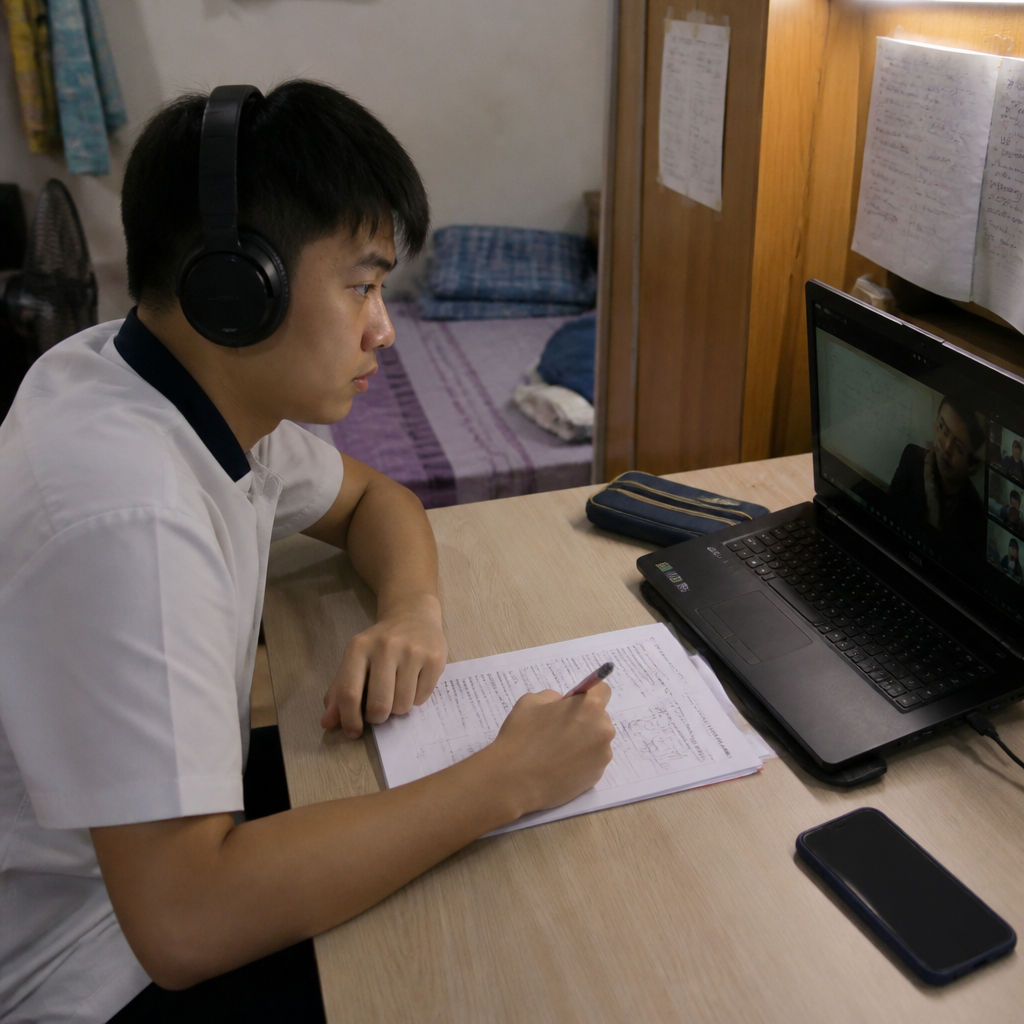
Prepare materials before the session starts
Tutors often notice that many children lose momentum in the first few minutes because they are searching for books, login details, correction tape, or chargers. That little bit of chaos creates easy excuses to avoid starting.
- Put homework books in one tray.
- Keep sharpened pencils ready.
- Save or print needed materials earlier.
- Place water nearby.
These are small adjustments, but they remove the friction that often leads to arguments.
Protect the first 10 minutes
The first 10 minutes can shape the whole session. If your child sits down and immediately gets interrupted, corrected, or criticised, study time starts to feel stressful before it has even begun.
A quiet start often works better than close hovering. Let your child settle first. If they are prone to drifting, check in after a few minutes with one simple question such as, “What are you starting with?” That keeps you involved without turning the moment into pressure.
Adjust Your Approach By Age
Parents often ask how to get a child to study independently. The tricky part is that independence cannot be rushed. What helps a Secondary 3 student may completely fail with a Primary 1 child.
Lower primary children need more structure
For Primary 1 to 3, many children still need help getting started, estimating time, and staying on task. Expecting full independence too early often creates frustration on both sides.
Upper primary children need guided independence
Primary 4 to 6 is when pressure often rises, especially before PSLE. Children need more responsibility, but they still benefit from checkpoints. If they say they “studied” but cannot explain what they revised, they may be doing passive reading rather than real revision.
Secondary students need ownership with support
Teenagers usually push back when they feel watched too closely. Asking, “What is your plan for tonight?” often lands better than, “Why are you not studying?” At the same time, sharp drops in motivation, hidden test papers, or constant exhaustion should not be brushed aside.
Know When Resistance Means Something More
Not every study battle is solved by a better routine. Sometimes a child is resisting because they genuinely cannot cope.
Watch for signs of academic struggle
Look out for patterns like frequent forgetting after revision, extreme slowness on basic work, avoiding one subject in particular, crying during corrections, or memorising model answers without understanding.
These signs often point to confusion, weak foundations, or low confidence, not simple laziness.
Consider outside help when conflict keeps repeating
If schoolwork is causing nightly arguments, outside support can sometimes restore calm, not just improve structure.
A tutor may help if:
- Your child responds better to a neutral adult.
- You do not have time to supervise consistently.
- There are ongoing learning gaps in one subject.
- Homework sessions keep ending in tears or arguments.
This does not mean you have failed. In some homes, tuition simply removes the emotional baggage that has built up around revision. If you want gentle academic support rather than more pressure, you can learn more about our tutors. For broader guidance on supporting your child’s learning journey, the Ministry of Education’s parent resources can also be helpful.
Stay firm, but humane
There is a difference between lowering standards and adjusting support. Your child can still be expected to study, but the method may need to change. Some children need shorter sessions. Some need reteaching. Some need more sleep before they can focus. Some need fewer lectures and more structure.
Frequently Asked Questions
What if my child only studies when I sit beside them?
This is very common, especially in lower primary. Start by sitting in for the first 5 to 10 minutes, then step away for one small task. You might say, “I’ll be back after you finish these three questions.” Gradually increase the amount they do alone. Independence is usually built in stages, not demanded overnight.
How do I encourage my child to revise for exams at home when they are already tired from school?
Keep revision short and focused. During WA or EOY periods, tired children often cope better with 15 to 25 minute bursts than one long block. Ask for one specific task, such as correcting a Science paper or memorising five Chinese 词语, instead of telling them to revise everything. On heavy CCA days, a lighter review may be more realistic.
My child says they studied, but results are still poor. Why?
Studying is not always effective studying. Many children reread notes, highlight too much, or copy answers without really processing them. If your child cannot explain a concept in their own words or apply it to a new question, they may be doing passive revision. That is why helping your child study effectively at home matters just as much as getting them to sit down.
What if screens are the main reason my child keeps delaying?
If devices are a constant source of conflict, make the rule clear before study time begins. Put phones outside the study area, switch off non-school notifications, and agree on when screen time is allowed again. It is easier to enforce one consistent rule than to argue about the phone every 10 minutes. For older children, involving them in setting the rule can reduce pushback.
Should I stop nagging completely?
Not exactly. Children still need reminders, especially when routines are still new. The goal is not silence, but fewer and clearer prompts. A calm instruction, a visible checklist, and a fixed routine usually work better than repeated emotional chasing.
How do I know if my child needs a tutor or just better discipline?
Look at the pattern. If your child knows the work but keeps avoiding it, start with structure and consistency. If your child is confused, falling behind, or every revision session turns into distress, outside support may help. A tutor is not a magic fix, but for some families it reduces conflict and gives the child a more neutral learning relationship.
Conclusion
If you have been struggling with how to get your kids to study without daily battles, the answer is rarely more pressure alone. In many Singapore homes, the evening fights are really about tiredness, unclear routines, study methods that do not fit the child, or stress that has been building quietly over time.
Once you identify the real reason, reduce friction at home, and set smaller, calmer expectations, studying often becomes easier to start and easier to sustain. The change may be gradual, and that is normal. Lower primary children usually need more hands-on structure. Upper primary children often need guided independence. Secondary students tend to need more ownership, alongside careful attention if motivation drops sharply.
Across all ages, the long-term goal is not fear-based compliance. It is a home environment that supports steadier study habits and protects your relationship with your child at the same time.
If the conflict is persistent and your child needs gentle support to rebuild confidence, improve routines, and manage schoolwork more calmly, you can learn more about our tutors. For additional parent guidance on education in Singapore, you can also explore MOE’s Learn for Life programmes.