


Introduction
If you have ever sat beside your child after dinner, looked at an English worksheet, and wondered why this feels so much harder than it should, you are not alone. Many parents in Singapore know this scene well. A child can chat comfortably in English, read a passage aloud, and still struggle badly with comprehension, composition, or oral answers in school.
That mismatch is what makes Primary School English so frustrating. It is not just about speaking English every day. School English expects a child to read carefully, think clearly, and express ideas precisely, often under time pressure.
The reassuring part is this. Improving Primary School English does not mean turning home into another classroom. What usually helps more is a steady, realistic routine that targets the exact area your child is weak in, whether that is vocabulary, grammar, comprehension, oral communication, or composition. In Singapore, it also helps to understand what the MOE English syllabus expects, and how school assessments and PSLE English components shape the way children are tested.
Key Takeaways
- Focus on the exact weak skill first. A child who struggles in composition needs different support from one who loses marks in comprehension or oral. Improvement is faster when practice matches the real gap.
- Small daily English habits work better than long, stressful sessions. Ten to fifteen focused minutes can be more effective than a tired two-hour weekend battle.
- Lower primary, middle primary, and upper primary need different strategies. A P1 child needs exposure and confidence, while a P6 child needs more exam-aware practice for PSLE English.
- Composition and comprehension improve through guided discussion, not just worksheets. Many children roughly know the answer but cannot express it clearly. Talking through ideas matters.
- Busy parents can still help without over-teaching. Reading together, discussing one picture, or reviewing one corrected mistake can build skills steadily.
- Tuition is not always the first answer, but it can help when a child is consistently stuck. If home support still leads to repeated low marks, low confidence, or daily tension, targeted help may be worth considering.
Understand What Primary School English Tests In Singapore
Before deciding what to practise, it helps to know what Primary School English in Singapore is really testing. Many parents assume English is mainly about spelling and grammar. In school, it goes much further than that.
A child is expected to understand, organise, and communicate ideas clearly. According to the MOE syllabus, English learning includes listening, reading, viewing, speaking, writing, and representing. You can view the current syllabus at MOE’s official website. By upper primary, these skills show up in more formal assessment formats, and for P6, the PSLE English paper includes components such as writing, language use and comprehension, oral communication, and listening comprehension. Parents can check the latest exam information at SEAB.
Why some children “know English” but still score poorly
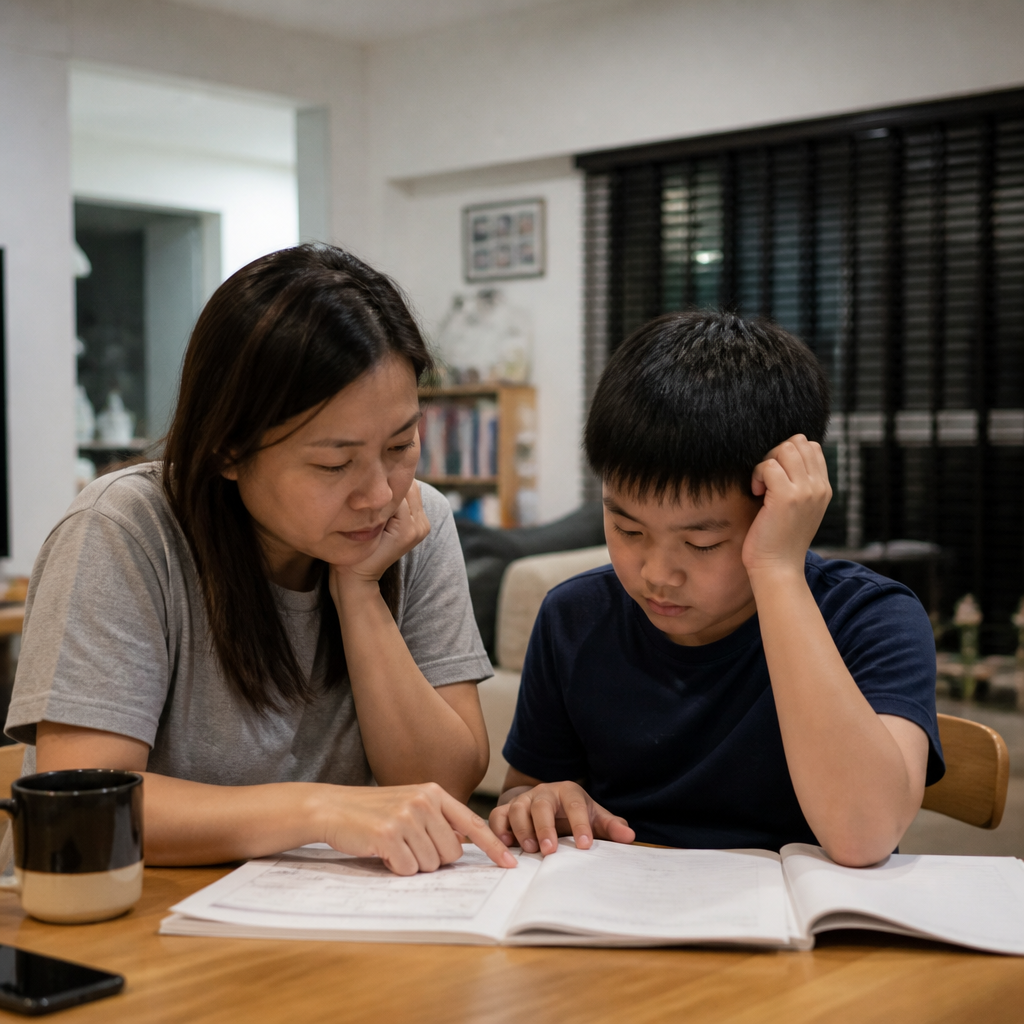
This catches many parents off guard. A child may speak English at home, watch English shows, and still do badly in school English. Usually, the problem is not exposure alone. The issue is precision.
A child may understand a passage generally but miss what the question is really asking. Another may have plenty of ideas for composition but struggle to sequence them properly. Oral marks can also dip, not because the child is quiet in daily life, but because exam speaking expects complete answers, clear pronunciation, and relevant ideas under pressure.
Tutors often notice this pattern. A child may sound fine in casual conversation, but the moment an answer needs structure, evidence, or explanation, the weakness becomes obvious.
Match your home strategy to the English component
One of the biggest mistakes is doing random practice and hoping something sticks. If your child keeps losing marks in synthesis and transformation, more composition worksheets will not solve it. If oral confidence is low, silent revision will not do much either.
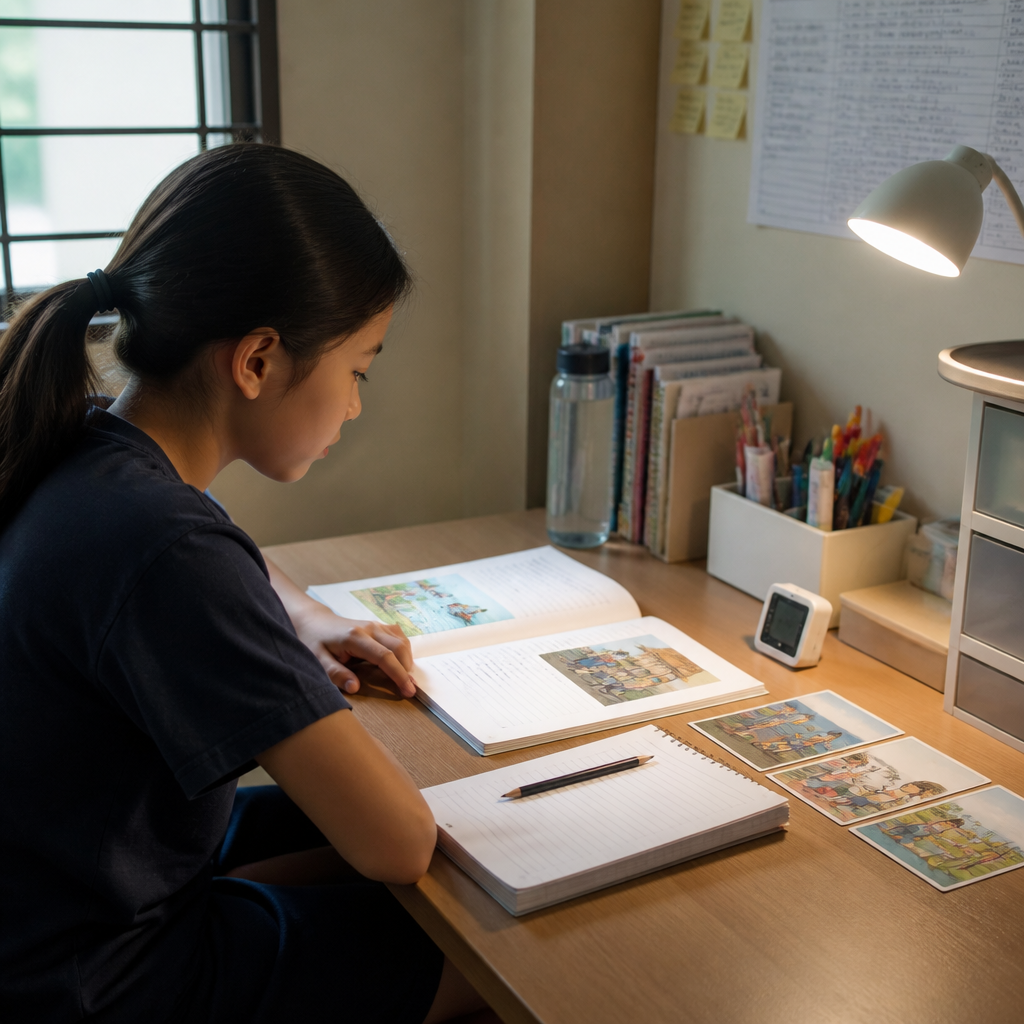
Targeted practice works better because it deals with the actual weakness, not just the subject name “English”.
Here is a simple way to think about it:
If you need help identifying which English component is dragging results down, you can learn more about suitable support options here: English tuition in Singapore.
Improve Primary School English At Home Without Daily Fights
Most parents are not short on concern. They are short on time, energy, and sometimes patience after a long day. That is why overly ambitious plans often collapse by the third day.
A simpler routine usually works better. It feels lighter, but it is often more sustainable and far less likely to turn English into another nightly battle.
Practical English practice tips for busy parents
These are often the habits that fit real weekday life best:
- Use a 10-minute reading chat instead of a full lesson. Ask your child to read one page, then discuss one question such as why a character acted that way.
- Review one corrected mistake, not the whole worksheet. If your child mixed up “their” and “there”, focus on that pair and ask for two fresh sentences.
- Turn daily routines into oral practice. On the way to school, ask your child to explain one thing they are looking forward to and why.
- Keep a simple family word wall or notebook. When your child comes across a useful word, add it and talk about when someone might feel or use it.
A common pattern among students is that they improve more from small repeated attention than from heavy revision done only when marks drop.
What often backfires at home
More work does not always mean more progress. Some children become resistant because home starts to feel like nonstop correction. Others memorise model answers without understanding them, which looks productive until the question changes.
Another trap is answering too quickly for the child. It feels helpful in the moment, especially when everyone is tired. But when that happens too often, the child does not learn how to think through language independently.
When a child says, “I don’t know,” the real issue is often not zero understanding. It is that they do not yet know how to organise the answer.
A short pause, a guiding question, or asking your child to explain their choice can reveal far more than rushing to correct.
Use Different Strategies For Lower, Middle, And Upper Primary
A P1 child and a P6 child should not be coached in the same way. This is where many parents get stuck. The method may feel reasonable, but it does not match the stage the child is at.
Lower primary: P1 to P2
At this stage, the focus should be on confidence, reading fluency, sentence building, and listening. Children who rush, guess words, or avoid speaking in full sentences usually need stronger foundations, not harder books.
A useful routine is shared reading for ten minutes, followed by a simple speaking task. Ask what happened first, next, and last. That may sound basic, but it builds sequencing, which later supports both composition and comprehension.
Try not to over-correct every sentence. If every attempt gets interrupted, some children stop trying altogether. Natural modelling often works better.
Middle primary: P3 to P4
This is where many parents start worrying about English composition. The jump can feel sudden. Writing is no longer just about forming sentences. It becomes about developing ideas, organising events, and adding detail.
Many children at this stage do not know what to add. Their writing is correct but bare. Talking through the scene first helps. Ask what they saw, heard, felt, or did next.
Comprehension also becomes less direct. A child who reads fluently may still struggle because the answer is no longer sitting obviously in one line. This is also a good stage to teach children to explain their thinking aloud. When they can say why they chose an answer, parents can spot whether the problem is vocabulary, inference, or simply rushing.
Upper primary: P5 to P6 and PSLE preparation
By upper primary, weak habits start showing up more clearly in marks. Thin answers, careless grammar, repetitive composition openings, and oral hesitation become harder to hide.
PSLE preparation should still be calm. If your child is doing many papers and scores are not moving, doing even more papers may not be the answer. Often, the real issue is that no one has stopped to identify the pattern.
At this stage, review matters as much as practice. A child who keeps a short error log of repeated mistakes, such as missing key words in comprehension questions or using weak endings in composition, often improves faster than one who simply completes more assessment books.
Build Better Composition Skills Step By Step
Composition is one of the most stressful parts of Primary School English for many families. A child stares at the picture, says “I don’t know what to write”, and the whole session stalls.
Usually, the block is not laziness. It is difficulty turning ideas into clear, connected writing.
Start with oral storytelling before writing
Before asking for a full composition, ask your child to tell the story aloud in three parts: beginning, problem, ending. If the story can be spoken clearly, writing becomes less intimidating.
This helps because the child is not dealing with everything at once. First the ideas, then the sentences.
Teach detail, not just length
Some children think a good composition is simply a long one. That often backfires. Long but repetitive writing still feels weak.
What matters more is relevance, clarity, sequencing, grammar, and development of the key moment. If your child writes, “I was very scared,” help them add one more meaningful layer instead of just another line. Ask what caused the fear, what the child noticed, and what happened immediately after. That kind of guided expansion is usually more useful than telling a child to “write more”.
Build a usable vocabulary bank
Long vocabulary lists can look impressive, but they are often poorly used. It is better to collect words and phrases your child can actually apply.
A small bank organised by familiar themes can be much more useful than memorising many “good words” with no context. The goal is not fancy writing. It is natural, accurate writing.
Strengthen English Comprehension For School Exams And PSLE
Comprehension can be especially frustrating because a child may read the passage, seem to understand it, and still lose many marks. Often, the issue is not reading alone. It is question analysis, answer precision, and evidence selection.
Why comprehension answers go wrong
Some children under-answer. They give one point when the question needs two. Others lift too much from the passage without selecting the exact idea. Some miss emotional or inferential clues because they focus only on surface meaning.
Tutors often notice that comprehension mistakes are rarely random. They usually fall into patterns.
Practical ways to improve comprehension
A better approach is usually to slow down.
- Underline the key demand in the question. “How” and “why” do not ask for the same kind of answer.
- Check answers against the mark allocation. This helps children see when one point is not enough.
- Use “prove it from the passage” conversations. Ask which line led them to that answer.
- Review corrections by type. Group mistakes into inference, vocabulary in context, factual detail, or careless copying.
One more useful habit is to ask your child to paraphrase the question before answering it. This slows down impulsive reading and helps them notice exactly what is being asked. For many children, that single step reduces avoidable mistakes.
For upper primary children who remain stuck despite repeated school practice, individual guidance can make a difference. If you want targeted support matched to your child’s weak components, you can explore one-to-one help here: private home tuition support.
When It May Be Time To Consider English Tuition
This decision can feel emotionally loaded. Some parents worry they are not doing enough. Others worry their child is already stretched and tuition will only add more pressure.
Both concerns are understandable.
Signs that home support may not be enough
Not every child needs tuition. But sometimes the pattern becomes hard to ignore. Repeated low marks across several terms, strong effort with weak results, growing frustration during English homework, or daily parent-child conflict can all be signs that home support is no longer enough on its own.
Sometimes the child does not need “more English”. The child needs clearer diagnosis, better correction, and more confidence.
What to look for in an English tutor
The best English tutor for a primary school student is not simply the one with the most worksheets. Fit matters.
A lower primary child may need warmth and language-rich interaction. A P6 child may need sharper exam awareness and correction habits. Good support should strengthen school learning, not overload it. If you want to learn more about available support, you can start here: find a suitable tutor.
A Realistic Weekly English Plan For Busy Families
What works on paper is not always what works in a real household. A sustainable routine matters more than an ideal one that never happens.
Sample weekday routine
- Monday: 10 minutes of reading aloud and discussion.
- Tuesday: 10 minutes of vocabulary and sentence use.
- Wednesday: 15 minutes of comprehension correction.
- Thursday: 10 minutes of oral practice.
- Friday: 15 minutes of composition planning.
Weekend adjustment for older children
For P5 to P6, one timed practice section on the weekend can help, but keep it focused. A full paper every weekend may sound disciplined, but tired children often end up reinforcing careless habits instead of improving.
A better balance is one targeted practice block, followed by review. The review is where much of the learning happens. Even fifteen minutes spent discussing why an answer lost marks can be more valuable than rushing into the next worksheet.
Frequently Asked Questions
How do I know if my child is weak in English or just careless?
Look at the pattern over time. If mistakes show up across grammar, vocabulary, comprehension, and writing, it is more likely to be a skill issue. If your child generally understands but keeps losing marks through rushing, skipping words in the question, or weak checking, then carelessness may be the bigger problem.
How much English practice should a primary school child do each week?
For most children, short and regular practice works better than long sessions. Around 10 to 15 minutes on weekdays and one slightly longer focused session on the weekend is usually more manageable and more sustainable, especially when school and CCA are already tiring.
What is the best way to help a child who hates composition?
Start with speaking instead of writing. Let your child talk through the story, the sequence, and the feelings first. Many children do not actually hate composition itself. They hate the feeling of facing a blank page without a clear starting point.
Should I send my child for English tuition before PSLE?
Not automatically. If your child is coping reasonably, responding to school feedback, and staying fairly confident, tuition may not be necessary. But if PSLE is nearing and the same weak areas keep showing up despite regular home support, targeted tuition may provide the structure your child needs.
Can parents really improve Primary School English at home in Singapore?
Yes, especially when the support is specific and consistent. You do not need to recreate school at home. A calmer routine built around reading, discussion, corrections, and oral practice can steadily strengthen your child’s English over time.
Conclusion
Knowing how to improve Primary School English in Singapore starts with seeing English for what it really is, a set of connected but different skills. Reading, comprehension, writing, oral communication, grammar, and vocabulary do not always improve at the same pace.
Once you identify where your child is weak, support becomes much more manageable. A short reading discussion, one corrected comprehension answer, a few useful vocabulary words, or one oral response can often do more than a pile of unfinished assessment books.

Just as importantly, progress does not come from pressure alone. Children often improve when practice feels steady, specific, and emotionally manageable. If your child is still struggling despite regular effort at home, especially in composition, comprehension, or oral confidence, extra one-to-one support may help break the cycle. If you would like to learn more about our tutors, you can explore suitable home tuition support here: contact us for private home tuition.