


Introduction
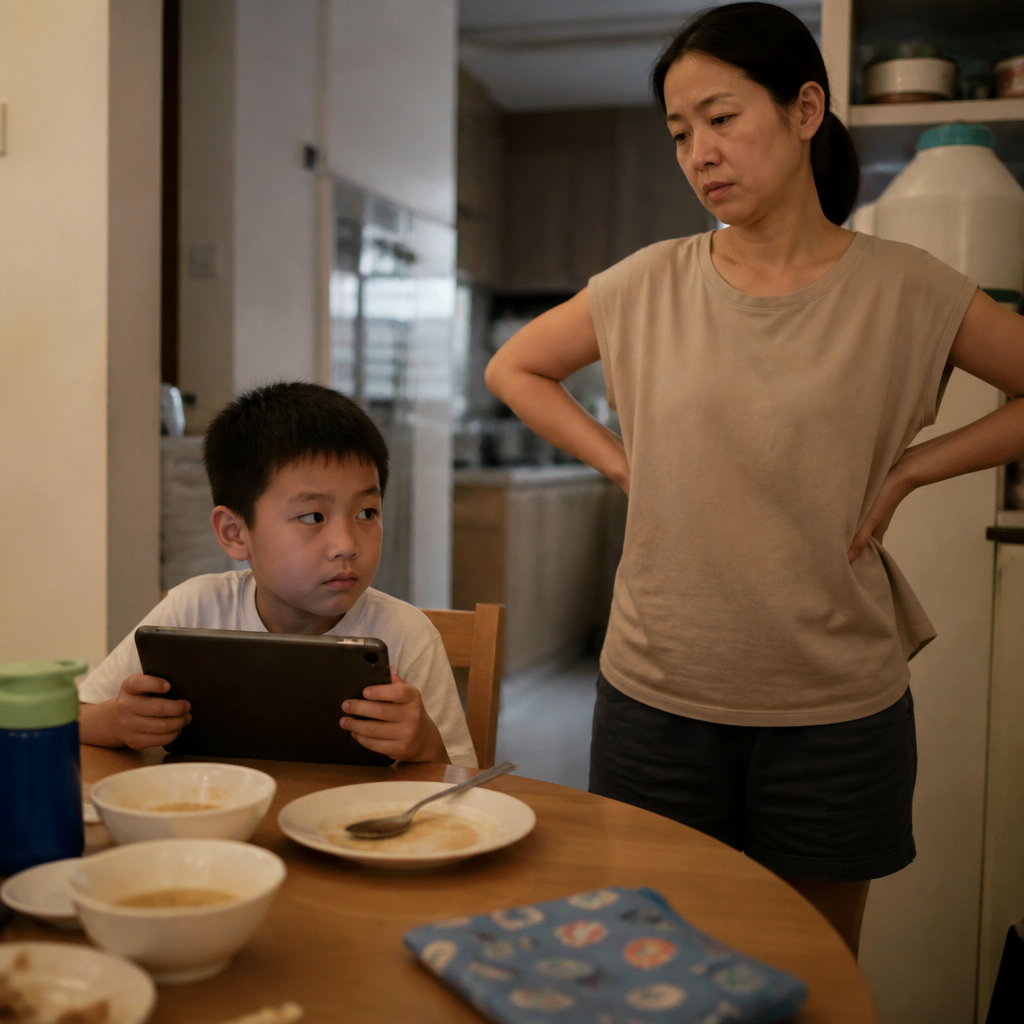
By 7.30pm, many Singapore parents are already running on fumes. Dinner is half-cleared, your child still has spelling, Math corrections, maybe a tuition worksheet, and somehow the tablet is still in their hand. You say, “Time’s up.” They say, “Just five more minutes.” Suddenly, a normal weekday turns into a power struggle.
If you are wondering how to manage screen time for kids without sounding angry every day, you are not alone. Screens are woven into school, homework, family chats, entertainment, and decompression. The goal is not to make screens the enemy. It is to create a healthier rhythm at home, so your child can use devices without sleep, mood, schoolwork, and family life constantly suffering.
In Singapore, where children juggle school, tuition, CCA, enrichment, and tired evenings, screen time management needs to feel practical, calm, and realistic. Most parents are not looking for perfection. They just want fewer arguments, clearer routines, and a home that feels less tense by the end of the day.
Key Takeaways
- Focus on balance, not perfection. A healthy approach is not about banning screens completely. It is about making sure screen use does not crowd out sleep, homework, movement, family time, and emotional regulation.
- Not all screen time is the same. A school research task, a family video call, and passive YouTube scrolling affect children differently. Looking at purpose and timing helps parents respond more fairly.
- Clear rules work better than repeated nagging. Children argue less when they know the routine before the device comes out.
- Age matters, but context matters too. Instead of clinging to one number, watch sleep, mood, focus, and self-control.
- Gradual reduction is often more successful than sudden bans. Small, consistent changes usually last longer because they are easier for families to maintain.
- Screen-free anchors keep the home calmer. Meals, homework blocks, and bedtime can become non-negotiable no-screen moments.
- Sometimes screen struggles are really about something deeper. Homework avoidance, stress, loneliness, poor sleep, or emotional overload can all hide behind “too much screen time”.
Why Screen Time Becomes A Daily Fight In Singapore Homes
It is easy to feel guilty about this issue. Some parents worry they are too strict. Others worry they have already “lost control”. In reality, managing kids’ screen time is hard because modern family life makes it hard.
Screens are mixed into school, rest, and social life
A child may use a laptop for Student Learning Space work, message classmates about homework, watch a science explainer on YouTube, then drift into gaming or scrolling. That is why questions about how much screen time kids should have rarely have a neat answer. Not all device use serves the same purpose.
A Primary 4 child doing Math practice on a learning app is not the same as that same child watching random gaming videos for an hour. A Secondary 2 student on a group chat discussing project work is different from doom-scrolling at midnight. When everything gets lumped together as equally bad, children often feel misunderstood, and that is when defensiveness kicks in.
Tired evenings make arguments worse
The worst screen time fights usually happen when parents are just back from work, children are tired from school and CCA, and nobody has much patience left. In many homes, screens have quietly become the easiest transition tool. A child comes home overstimulated, grabs a device, and finally goes quiet. Parents get a short window to cook, answer work messages, or settle a younger sibling. The screen is not only entertainment, it has become a coping mechanism for everyone.
Start By Looking At What The Screen Is Doing
If you want to manage screen time well, start by asking better questions than “How many hours?” Ask what the screen use is replacing, and what it is doing to your child.
Separate educational, social, and recreational screen use
A useful way to think about screen time is by category:
A common mistake is letting “educational” screen use run without much supervision. Later, parents realise the homework tab has been open for 40 minutes while the child is actually watching videos or chatting.
Watch for signs the balance is off
Screen time may be becoming too much when you see:
- Bedtime delay and difficulty winding down
- Morning tiredness and irritability before school
- Homework resistance unless a device is promised after
- Poor focus during slower tasks like reading or written work
- Irritability when devices are removed
- Less outdoor play or family conversation
- Difficulty stopping after agreed time
These signs matter more than blindly chasing one ideal number.
How To Manage Screen Time For Kids By Age
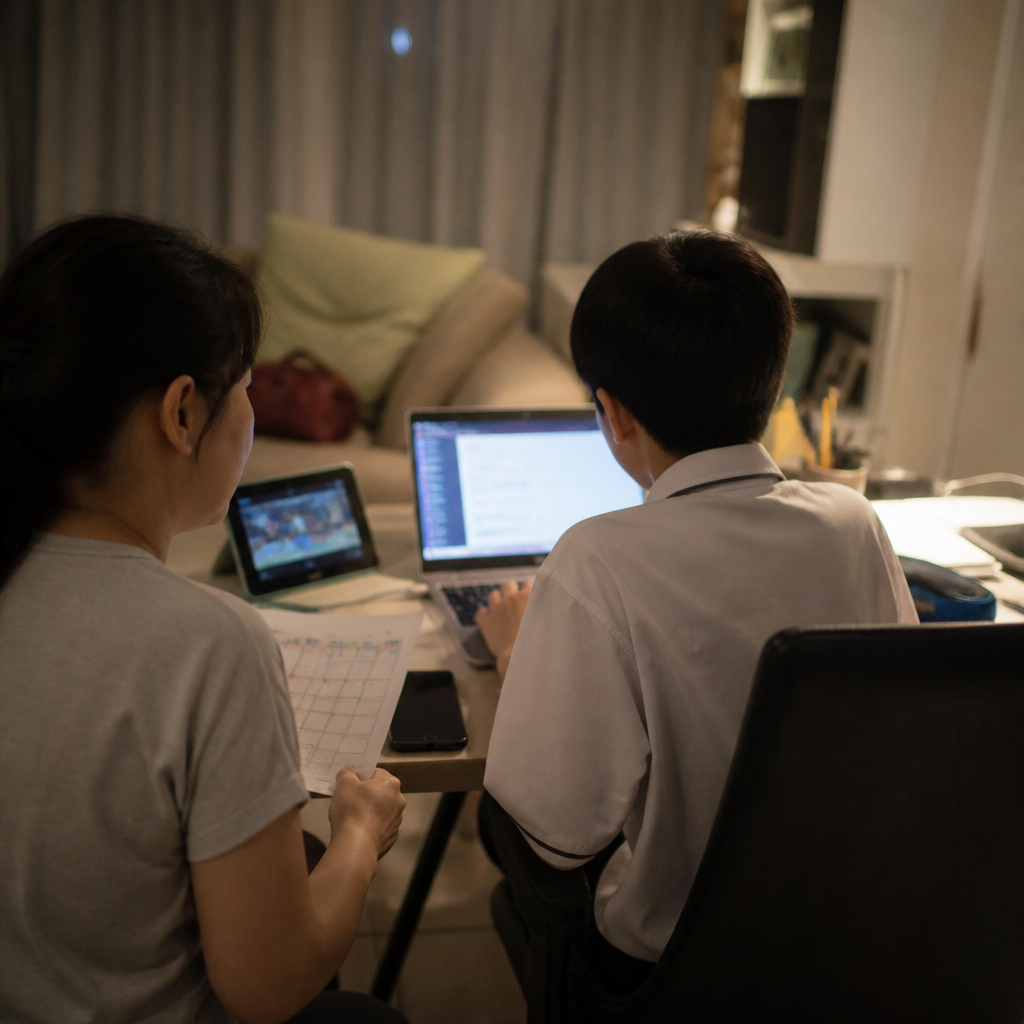
What works for a K2 child will not work for a 14-year-old. Healthy screen habits need to match a child’s age, maturity, and daily routine.
For preschool and lower primary, structure matters most
For younger children, self-control is still developing. They usually cannot manage devices in moderation without adult help. This is where routines matter more than lectures.
If a 6-year-old gets screen time only after dinner, shower, and bag packing, there is less room for bargaining. If the screen appears randomly whenever the child whines, the whining gets stronger because it sometimes works.
This age group often responds well to visible endings. A timer, a verbal countdown, and a consistent next activity can reduce meltdowns.
For primary school children, balance homework and decompression
For parents trying to reduce screen time for primary school children in Singapore, the challenge is often this: children genuinely need downtime after school, but screens are the easiest option.
A better routine might be snack, 20 minutes of rest without fast-paced screens, a homework block, then limited recreational screen time if the evening is on track. This respects the child’s need to decompress while still protecting school routines, revision time, and sleep.
For teenagers, involve them in the rules
Teens need boundaries, but they also need some say in them. A blanket ban often drives secrecy. A better approach is collaborative limits. For example, agree that the phone stays outside the bedroom after 10.30pm, but the teen can choose when to use recreational screen time earlier in the evening. This teaches self-management instead of only obedience.
Overall
Instead of treating screen time as one fixed number, parents can look at whether the device use is affecting the child’s sleep, homework, mood, outdoor play, and family interaction. A short learning app session after homework is different from an hour of passive video scrolling before bed. For younger children, tighter limits and more adult guidance are usually needed. For older children and teenagers, the focus should shift toward routines, accountability, and whether screen use is affecting school or sleep.
Set Clear Rules Before The Device Comes Out
Many daily arguments happen because the rule is announced too late. If the device is already in your child’s hand, the negotiation has already started.
Use practical rules that tired parents can actually keep
The most effective screen time rules are simple enough to follow on busy weekdays:
Decide the ending before the beginning
Before the screen starts, say exactly what the limit is. “You can play for 25 minutes until I start serving dinner.” Or, “One episode only, then spelling corrections.” Children often argue less when the ending is not personal. Instead of “I said stop because I’m angry,” the message becomes “This was the agreed timing.”
Create A No-Screen Routine That Feels Livable
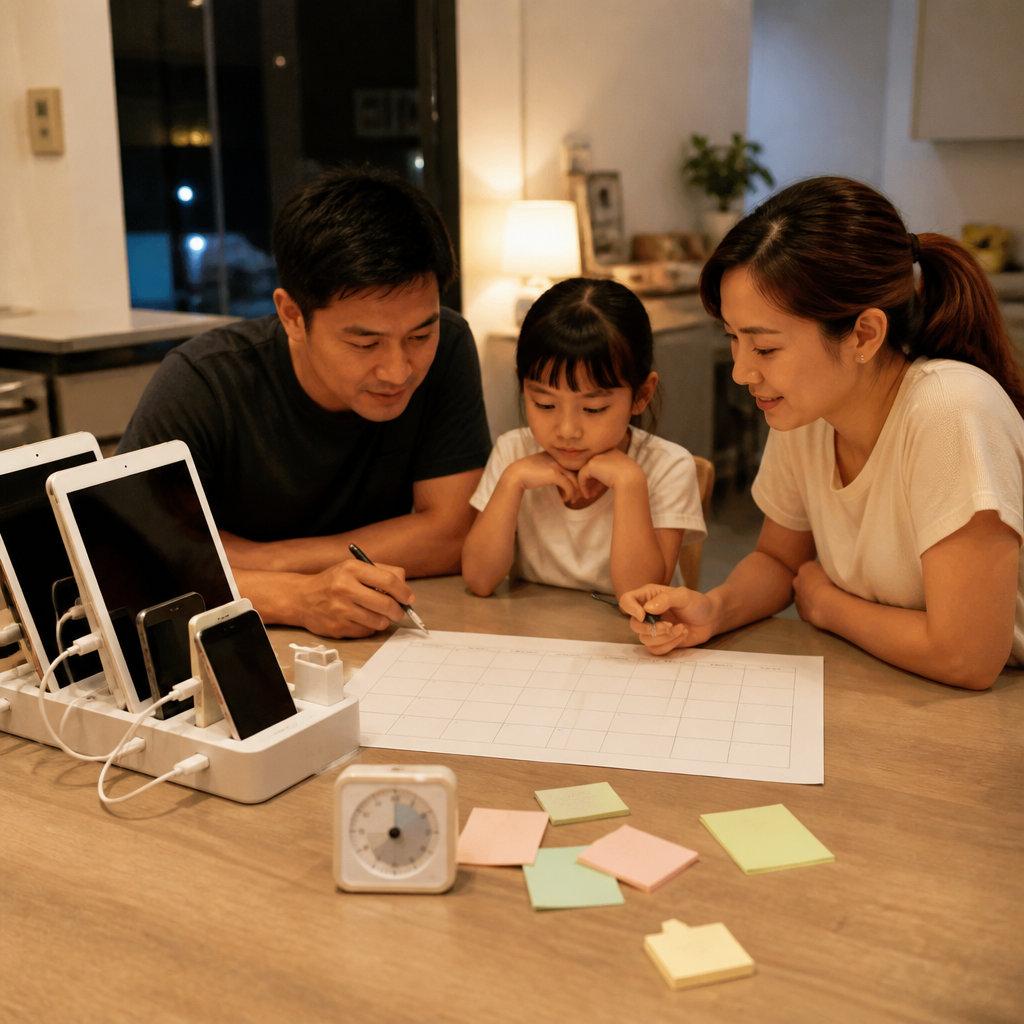
If you are trying to create a no-screen routine at home, do not aim for a perfect schedule. Aim for screen-free anchors that make family life smoother.
Use predictable screen-free anchors
A healthy screen time routine for children at home usually includes a few firm no-screen moments:
- During meals
- During homework blocks
- One hour before bed
- During morning school prep
Anchors are useful because they reduce case-by-case arguments. The rule is not “Mummy feels like saying no today.” The rule is “We do not use screens during this part of the day.”
Build realistic screen-free alternatives for after school
Children cannot stop using screens if nothing else feels manageable. Practical screen-free activities for kids after school in Singapore do not need to be elaborate.
- A short outdoor walk downstairs
- Drawing at the dining table
- Building toys or simple puzzles
- Reading magazines or comics
- Simple chores like folding laundry or helping with dinner prep
- Music practice for children who still have the energy for it
The right option depends on your child’s energy. Some need movement. Others need silence. The best alternative is usually the one a child can start with the least friction.
Reduce Screen Time Without Triggering Bigger Battles
Trying to cut from three hours to zero overnight usually ends badly. If your child is used to a lot of screen use, reduction works better when it is gradual and predictable.
Reduce in steps, not punishments
One of the best ways to reduce screen time is to trim the routine in stages. If your child currently watches videos right after school and again before bed, start by protecting bedtime first. Once that feels normal, work on the after-school block.
Parents often get further with one steady change than with one angry speech.
Handle “just five more minutes” calmly
That phrase can be strangely triggering because parents have usually heard it a hundred times. Try not to turn it into a character battle.
“I know you want more time. The answer is still no. We agreed on the stopping point.”
Then move to the next routine step quickly. For younger children, countdowns help. For older children, a timer plus a transition expectation works better, such as “When this ends, plug it in and start your shower.” The calmer and more repetitive the response, the less emotional fuel the argument gets.
Remember That Parents Are Part Of The Screen Culture Too
Children notice adult habits more than adult lectures. If a parent says “No phones at dinner” while scrolling through work chats, the rule feels hollow.
Show that adults follow boundaries too
Modelled habits can be simple:
- Put phones away during meals
- Use a common charging area at night
- Avoid having the TV always on in the background
- Say out loud when you choose an offline activity
This matters because children often experience screen limits as unfair unless they see family-wide norms.
Notice when the screen issue is actually something else
Sometimes the device is not the main problem. It may be covering:
- Homework avoidance
- Stress or burnout
- Loneliness
- Poor sleep
- Online safety concerns
- Difficulty regulating emotions
A child labelled “addicted to screens” is sometimes actually overwhelmed by schoolwork and using devices to avoid feeling incompetent. If screen habits are also affecting homework focus, routines, or confidence in school, learn more about our tutors for gentle academic support that fits your family’s pace, contact us here. Some families also find it helpful to explore broader parenting support resources at MSF and child wellness guidance at HealthHub.
Frequently Asked Questions
How much screen time should kids have?
There is no one rigid number that works for every child and every day. A more useful question is whether screen use is affecting sleep, mood, homework, outdoor play, and family connection. Look at the overall pattern, not just the clock.
What are the best ways to manage device use for young children?
Younger children usually do best with routine-based limits rather than on-the-spot negotiation. Fixed timing, screen-free meals, bedtime boundaries, and clear transitions tend to work better than repeated warnings.
How do I handle a child who gets angry every time I remove the device?
Stay calm and avoid debating once the limit has been reached. Acknowledge the feeling, but keep the boundary. “I know you’re upset. Screen time is over now.” Then move quickly into the next routine.
What are realistic screen-free activities for kids after school in Singapore?
Think short and manageable, not idealistic. Walking downstairs, drawing, reading comics, helping with dinner, board games, Lego, music practice, and simple conversation can all work.
When should I worry that screen time is affecting school?
Take a closer look if your child keeps delaying homework, cannot focus without checking devices, sleeps too late, or becomes increasingly inconsistent with school routines. If academic stress is part of the pattern, you can also browse resources at Singapore Tuition Teachers.
Conclusion
Learning how to manage screen time for kids is not about winning a daily battle. It is about creating a home rhythm that children can live with, and that parents can realistically maintain. In Singapore families, where school demands, tuition, online learning, games, and tired evenings all collide, the answer is rarely a harsh ban. It is clearer rules, calmer routines, age-appropriate expectations, and a better understanding of what the screen is doing in your child’s life.
If your child’s device habits are beginning to affect homework, bedtime, mood, or school consistency, you do not have to solve everything alone. If screen habits are also affecting homework focus, routines, or confidence in school, learn more about our tutors for gentle academic support that fits your family’s pace by contacting us here.