


Introduction
If you have ever listened to your child speak quite normally at home, then watched them suddenly clam up during oral practice, you will know why PSLE English Oral feels so stressful. On paper, it seems simple enough. But once a child starts rushing, mumbling, or giving one-line answers, many parents are left wondering what exactly went wrong.
If you have been worrying about how to prepare for PSLE English Oral, you are not alone. For many Singapore parents, the oral exam feels especially hard to gauge because it is not as visible as a written paper. A composition can be checked at the dining table. Oral is different. Your child may sound fine at home, then freeze in front of the examiner, rush through the passage, or answer in a way that feels flat and underdeveloped.
The good news is that preparing for PSLE Oral does not have to mean drilling model answers every night. In fact, that often makes children sound even stiffer. What usually helps more is steady, practical home practice that builds clarity, fluency, confidence, and the habit of developing ideas naturally. Even if you are not an English teacher, you can still support your Primary 6 child well.
This guide is written for parents who want realistic, Singapore-specific help, from understanding what the PSLE English Oral exam tests to setting up weekly routines, practising Reading Aloud and Stimulus-Based Conversation, and handling the final week calmly. As formats may change, do check the latest guidance from MOE and SEAB.
Key Takeaways
- Start earlier than the final week. Around three months before the exam is a sensible time to begin, because oral skills improve through repeated speaking, not last-minute memorising. Children usually need time to get used to hearing their own voice, slowing down, and expanding their answers naturally.
- Know what the exam is really testing. PSLE Oral is not just about speaking English. It looks at Reading Aloud and Stimulus-Based Conversation, including clarity, pronunciation, fluency, expression, response development, and personal opinion. Once this is clear, home practice becomes more focused and less random.
- Home practice works best when it is short and regular. A focused 10 to 20 minutes a few times a week often works better than one long, tense weekend session that ends in frustration. Short sessions are easier to sustain on busy school nights and less likely to trigger resistance.
- Many children lose marks from delivery, not lack of ideas. They may know what to say but still rush, sound monotone, freeze under pressure, or stop at one-line answers without elaborating. Oral practice needs to cover both content and speaking habits.
- Do not over-script answers. If a child memorises polished responses about school, family, or community topics, examiners can usually tell when the answer sounds unnatural or disconnected from the prompt. Flexible speaking is more useful than recitation.
- The final week should be about confidence, not panic. Last-minute PSLE English Oral revision at home should focus on calm warm-ups, familiar practice, sleep, and speaking naturally, not cramming new phrases. A relaxed child often performs better than an over-drilled one.
- Some children need extra support. If your child is consistently nervous, struggles with pronunciation, or keeps giving flat responses despite practice, more structured oral guidance can help. The goal is not perfection, but steady improvement and confidence under exam conditions.
What The PSLE English Oral Exam Tests And Why Children Still Underperform
Parents often ask when to start PSLE Oral preparation for P6, but before timing comes understanding. If you are not clear on what the oral paper is assessing, home practice can quickly become random or overly focused on fancy vocabulary.
The two main components
PSLE English Oral generally includes two parts: Reading Aloud and Stimulus-Based Conversation.
To make this easier to scan, here is what each part is really asking from your child.
In Reading Aloud, a child who reads every word correctly but sounds robotic may still not do as well as expected. In Stimulus-Based Conversation, a child may understand the topic but still lose marks if the answer stops too quickly or feels memorised.
Why marks are lost even when a child knows the topic
This is where many parents feel confused. Your child may have talked about recycling, school rules, or family outings before, yet still perform weakly in the exam.
A common pattern among students is that they know the topic, but cannot deliver it naturally under pressure. Tutors often notice that oral marks are lost in familiar ways.
Over time, many tutors notice the same thing. Children who read a lot do not always speak well. Children who score decently in writing may still struggle to elaborate aloud. That is why PSLE English Oral practice at home should focus on actual speaking habits, not only content.
A Simple 3-Month Home Timeline For PSLE Oral Preparation
If you are wondering how to help your P6 child prepare for PSLE Oral in Singapore, the most manageable approach is to spread it out. Oral preparation feels much less overwhelming when it fits into normal weeks, even with homework, CCA, and tuition.
About three months before the exam
This is the stage for building habits. Keep practice short, around 10 to 15 minutes, three or four times a week.
Focus on reading one short passage aloud each session, discussing one visual or everyday topic, and correcting only one or two things at a time. If you correct everything at once, many children become self-conscious and stop speaking freely.
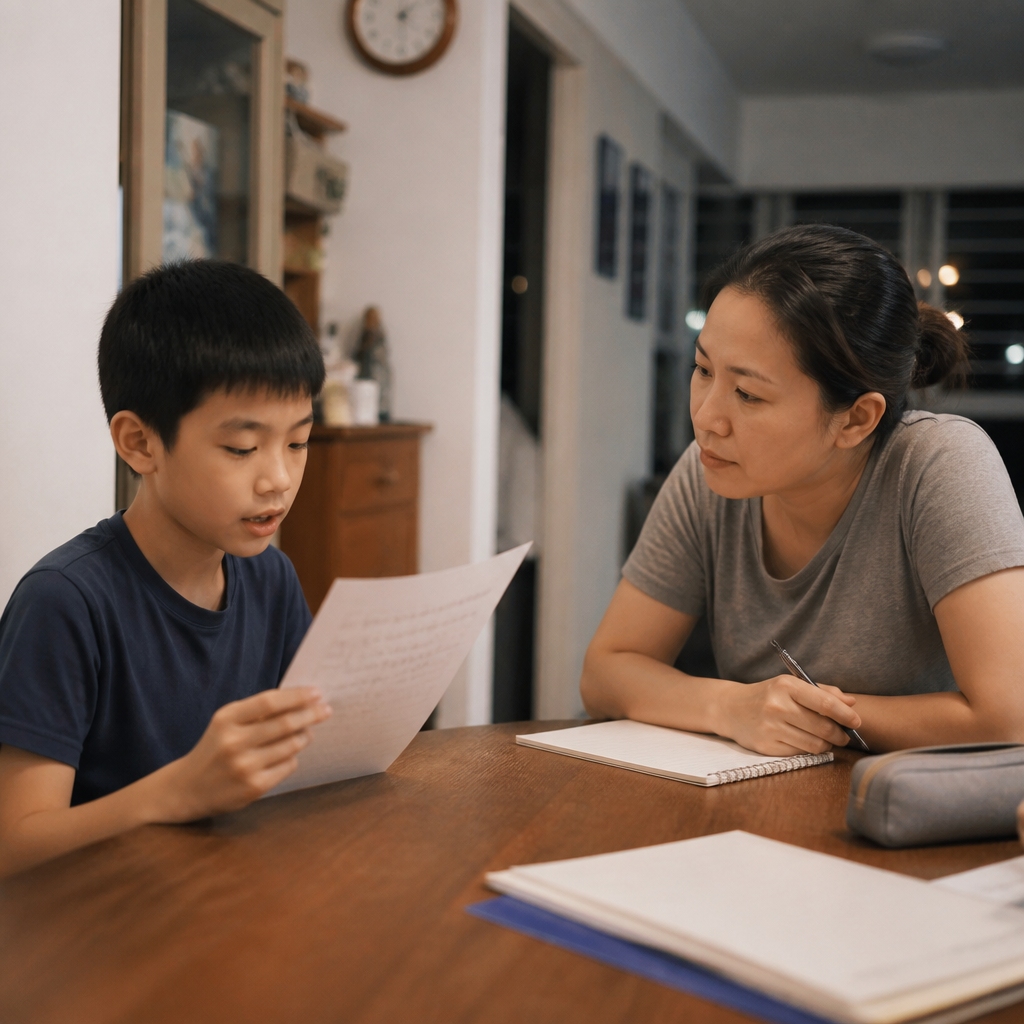
A Tuesday evening after dinner can be enough. Ask your child to read a short newspaper paragraph aloud. On Thursday, use a photo of a playground or hawker centre and ask two oral-style questions. It does not need to feel like a full mock exam to be useful.
About one to two months before the exam
Now practice can become a little more exam-like. Increase to 15 to 20 minutes, four times a week if your child can cope.
This is a good time for full Reading Aloud practice with timing, more varied Stimulus-Based Conversation topics, follow-up questions that push for elaboration, and recording selected responses. Hearing themselves speak often helps children notice rushing, mumbling, or weak development more clearly than repeated reminders from a parent.
Sometimes children think they are elaborating when they are not. The moment they hear themselves say, “I agree because it is good,” they start to understand what is missing.
The final two weeks
By this point, resist the urge to flood your child with model answers. The goal is fluency and confidence, not stuffing in more content at the last minute.
Keep sessions focused on familiar oral topics, reading clearly and calmly, answering naturally in complete thoughts, and managing nerves. It also helps to practise small exam habits: sitting upright, taking one breath before speaking, and pausing briefly before answering a follow-up question. These tiny routines can make a nervous child feel more in control.
If your child seems shaky and home practice keeps ending in tears or conflict, more structured support can help. If your child needs guided oral practice, you can learn more about private home tuition support or explore PSLE tuition options.
How To Improve Reading Aloud At Home
Many parents assume this part is just about pronunciation. In reality, Reading Aloud is also about expression, phrasing, and not sounding breathless or mechanical.
What to practise during Reading Aloud
Use short passages from English assessment books, school materials, or suitable articles. Focus on clear pronunciation, natural pausing, steady pace, and tone that matches meaning.
Children do not need to become dramatic. But they do need to sound like they understand what they are reading. A passage about a meaningful school event should not sound exactly the same as a passage about a warning or problem.
Common mistakes parents often hear
The most common issues are easy to miss if you are only checking whether the words are correct.
A useful home fix is to model one sentence first, then ask your child to echo it. If the line is about a family enjoying breakfast at a hawker centre, read it once with warmth and natural pauses. Let your child hear what alive reading sounds like before attempting the whole passage.
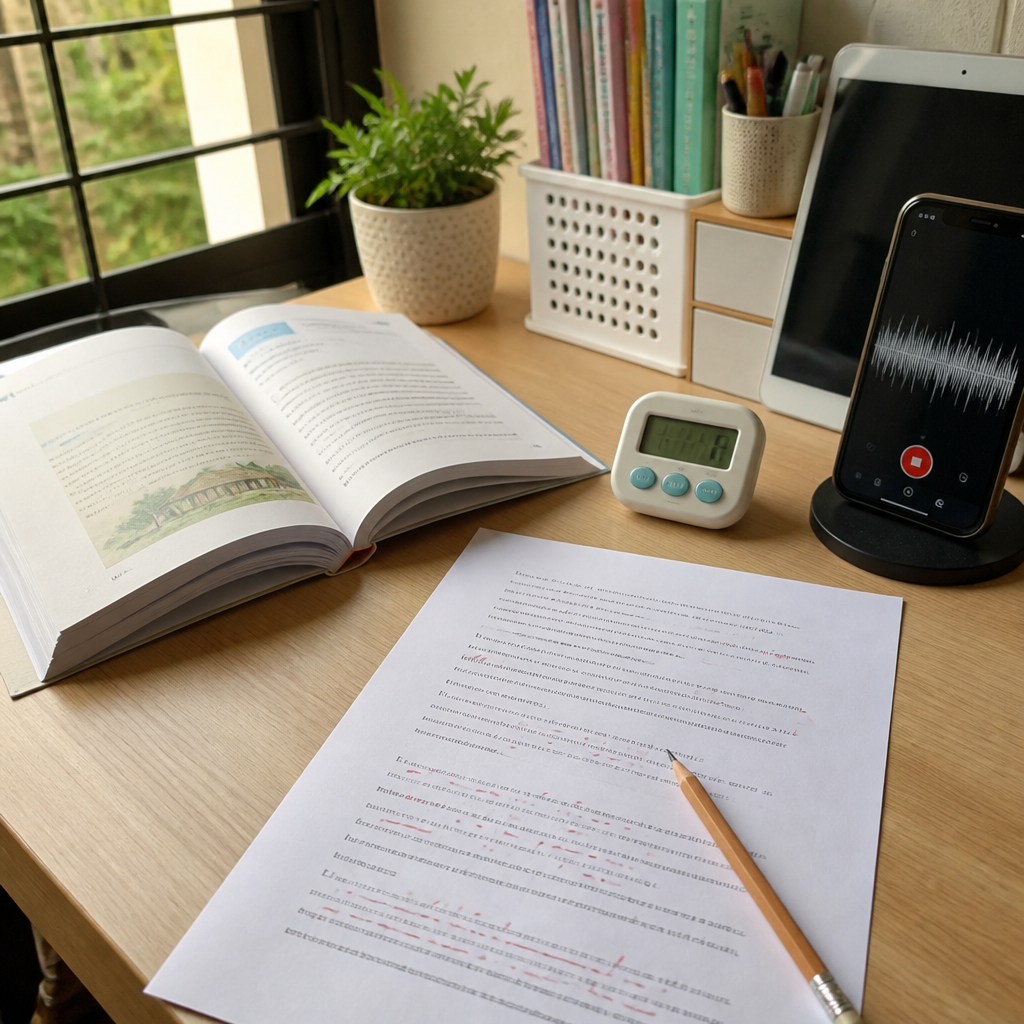
Another simple method is to mark the passage lightly with slashes for pauses and circles around words that need emphasis. This helps children who rush through punctuation or flatten every sentence. You are not trying to turn the passage into a performance. You are simply helping your child notice where meaning changes.
How To Practise Stimulus-Based Conversation At Home
For many children, this is the harder section. They may chat freely at home but give painfully short answers in oral practice. That gap can be frustrating for parents, especially when you know your child has thoughts but somehow cannot bring them out on the spot.
Start with the picture, not the perfect answer
In PSLE Stimulus-Based Conversation, the visual prompt is there to spark ideas. Before answering any question, train your child to notice details.
Ask what is happening in the picture, who is involved, where the scene might be, and what issue or theme the examiners may want to discuss. This slows the child down in a good way. Instead of jumping into a weak answer, they first build something to say.
If the picture shows a hawker centre, your child might notice families eating together, trays left uncleared, or healthy food choices. That observation stage gives them more to work with later.
Teach your child to go beyond one-line answers
A practical home prompt is simple: say one point, add a reason, then add an example.
Weak answer: “Yes, because the food is nice.”
Stronger natural answer: “Yes, I do. Hawker centres have many food choices, so my family can all pick something we like. For example, my grandparents may want porridge while I prefer chicken rice, so it is convenient for family meals.”
That is not a memorised script. It is simply a fuller thought. The difference matters. A child who learns to extend one idea naturally is usually more stable in the exam than a child trying to recall polished lines.
Useful Singapore-based topics to rotate at home
Use realistic prompts such as school canteen habits, community spaces like libraries or parks, neighbourhood cleanliness, family activities during weekends, kindness in public places, healthy living, and digital device use at home.
These topics work because they connect to real life. A child usually speaks more confidently about taking the MRT, helping at a family gathering, or visiting a hawker centre than about something distant and abstract.
You can also ask follow-up questions that gently stretch thinking, such as “Why do you think this matters?”, “Would everyone agree with you?”, or “What should students do in this situation?” These are useful because oral examiners often move beyond the first answer. A child who gets used to follow-ups at home is less likely to panic when the conversation shifts.
Home Practice Routines That Work For Busy Families
A lot of parents feel inadequate here. Maybe your own spoken English is fine but you do not know how to teach oral. Or maybe every practice session turns into correction after correction. That usually backfires.
A practical weekly routine
Here is a manageable routine that many families can stick to without making the whole week feel like exam season.
Short, regular sessions tend to work better because they reduce tension. Once oral practice becomes a nightly battle, even good advice stops landing.
How to correct without making your child shut down
It is easy to get impatient, especially late at night when everyone is tired. But harsh correction can make a child more self-conscious, and that often shows up immediately in their speaking.
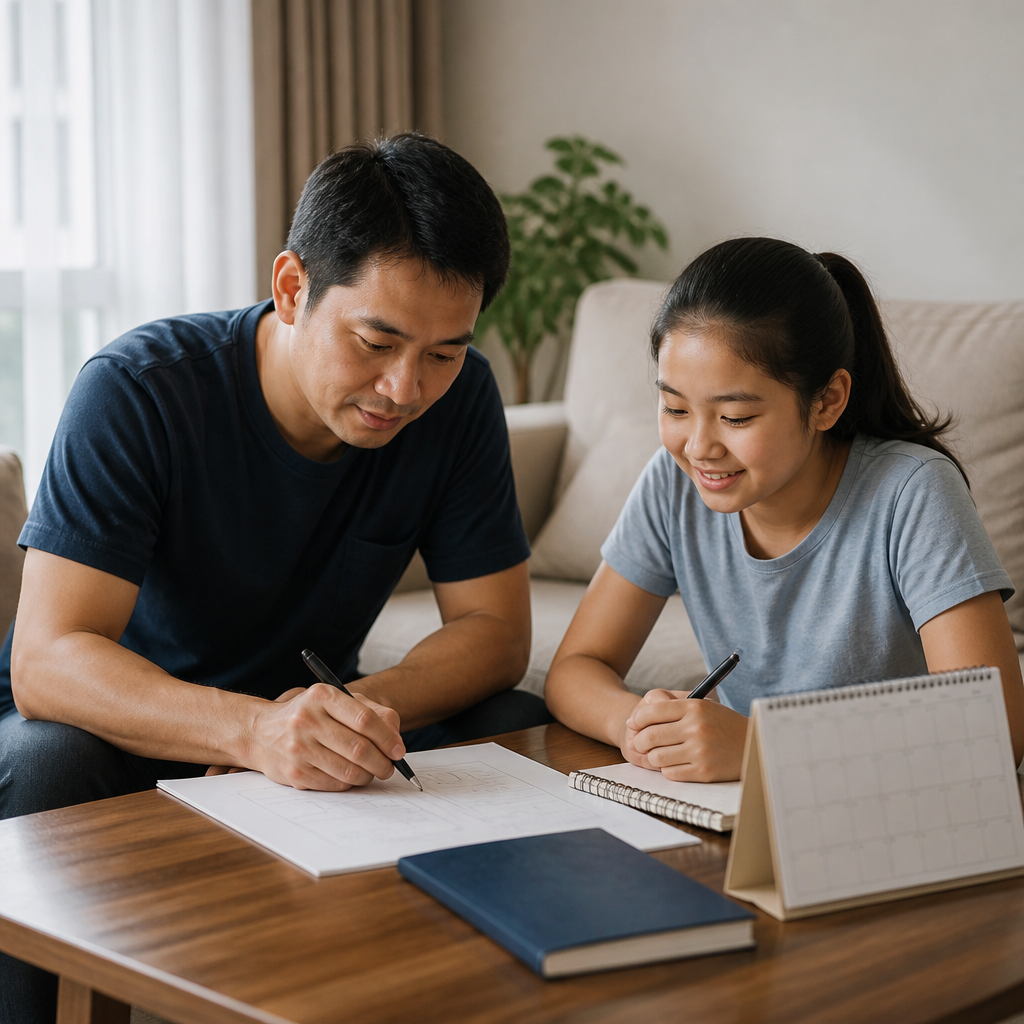
Instead of saying, “Wrong, that sounds terrible,” try gentler prompts like these:
- Say that again more slowly.
- That idea is good, now add one example.
- You read the words correctly, but can you make it sound more natural?
Children speak better when they feel safe enough to try again. That is one of the most overlooked parts of effective oral practice.
A helpful rule is to choose just one main correction per round. If your child has pronunciation, pacing, and content issues all at once, fix only the most important one first. Too much feedback can make children feel that every sentence is wrong, which lowers confidence quickly.
Frequently Asked Questions
When should I start preparing my child for PSLE Oral?
A good target is around three months before the exam. If your child is already a confident speaker, shorter practice may be enough. If your child tends to freeze, rush, or give very brief answers, starting earlier gives more time to build comfort.
How long should each home oral practice session be?
For most Primary 6 children, 10 to 20 minutes works well. Longer sessions often lead to fatigue, especially after school, homework, and CCA. Short, regular practice usually beats one long weekend drill.
My child keeps giving one-line answers during PSLE oral practice, how can I fix this?
Prompt for one more layer. After an answer, ask, “Why?” or “Can you give an example from your life?” If your child says, “I like going to the park because it is fun,” guide them to continue by describing what they do there or why it matters to them.
Should I make my child memorise model answers for common PSLE English Oral topics?
No, not fully. Useful phrases and topic exposure can help, but memorised answers often sound unnatural. Children may also panic if the examiner asks the question in a different way. Aim for flexible speaking, not recitation.
What if my child is very nervous on the actual day?
Keep the morning simple. Avoid last-minute drilling, make sure your child has enough rest, and remind them to listen carefully before answering. A calm routine often helps more than one final intensive practice session. Even confident children can feel nervous, so the aim is not to remove all nerves but to stop nerves from taking over.
What if I am not confident teaching PSLE English Oral at home?
You do not need to be an English specialist to help. Listening, prompting, and encouraging fuller responses already make a difference. If your child needs more targeted support with pronunciation, fluency, or confidence, structured help from a tutor can be useful. Also remember to check the latest school instructions and official updates at MOE and SEAB.
Conclusion
Learning how to prepare for PSLE English Oral is really about helping your child speak with more clarity, confidence, and natural development of ideas. The strongest home practice is not the most intense. It is the most consistent. A few months of steady Reading Aloud practice, regular Stimulus-Based Conversation, gentle correction, and realistic Singapore-based topics can go a long way.
If your child is nervous, keeps giving flat responses, or seems unable to transfer ideas into spoken answers, do not assume they are not trying. Oral performance is often affected by pressure, habit, and confidence as much as language ability. Keep practice calm, avoid over-scripting, and focus on helping your child sound like themselves, just more prepared.
If your child needs more structured oral support, you can learn more about PSLE tutors and home tuition help.