

Introduction
If you have ever caught your child squinting at the whiteboard during meet-the-teacher sessions, leaning so close to homework that their nose is almost touching the page, or dragging through revision after a long school day, you are not overreacting. Many parents in Singapore are trying to figure out how to prevent myopia in children without turning every evening into a battle over screens, books, and posture.
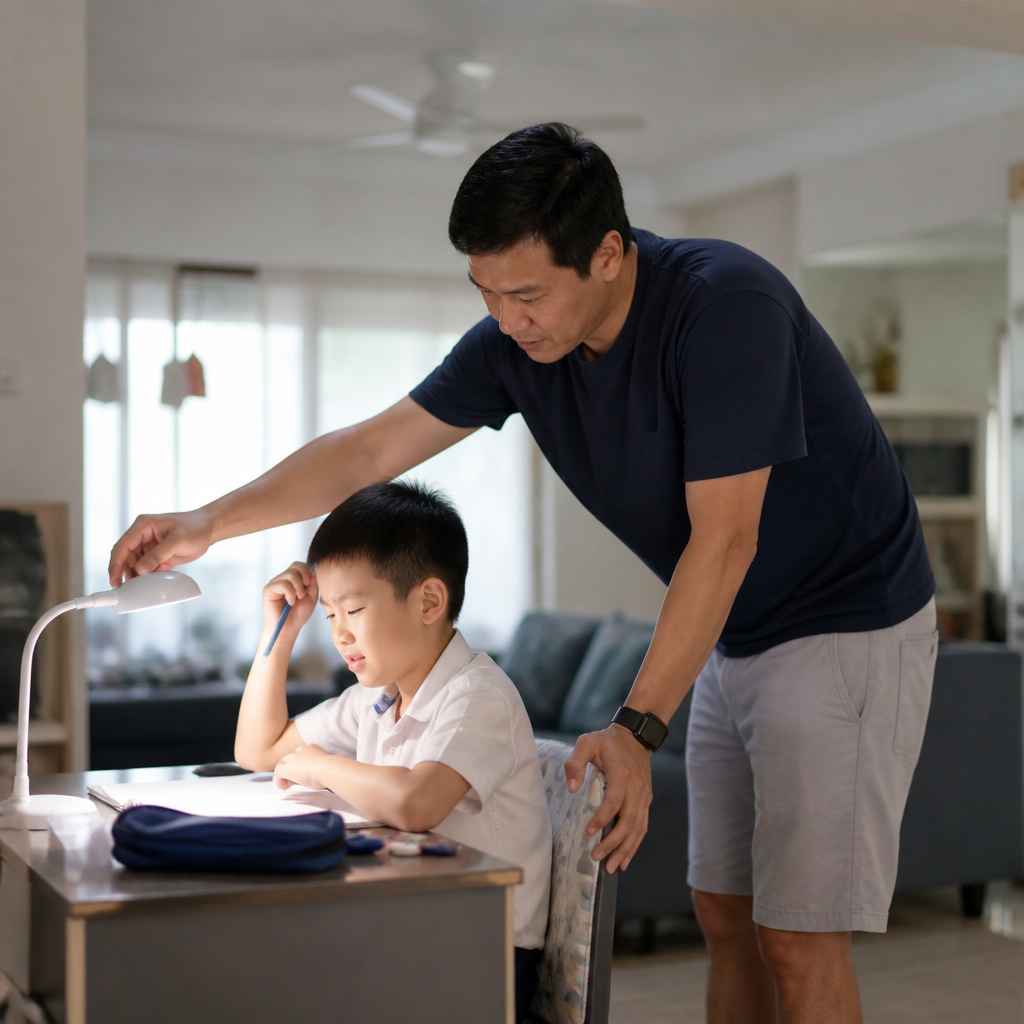
The worry is real. A child’s day can already be packed with lessons, digital assignments, enrichment, tuition, and late-night homework in a small study corner at home. Even in caring, well-organised families, it is easy to fall into routines that put a lot of strain on young eyes.
The encouraging part is this, myopia prevention is not just about banning devices. It often comes down to daily habits, regular breaks, outdoor time, comfortable reading conditions, and noticing when something has changed. This guide shares practical ways to support your child’s eye health in Singapore, while recognising the reality of school pressure, packed schedules, and tired evenings. It is not a medical substitute, but it can help you make steadier day-to-day choices to reduce eye strain and support healthier vision habits.
Key Takeaways
- Outdoor time matters more than many parents realise. Regular time outside is one of the most practical protective habits for children’s eyes, especially in a school system where many hours are spent indoors. Even short, consistent outdoor sessions after school or on weekends can make a difference.
- Screen time is only one part of the picture. If your child reads, writes, and revises for long stretches without breaks, eye strain can still build up even with limited device use. Near work includes textbooks, worksheets, assessment books, and tablets used for school.
- Small study habits add up. Reading distance, posture, lighting, and break routines are some of the best daily habits for reducing myopia risk in children, especially during busy school terms. These are often easier to improve than parents expect.
- Pushing longer study hours can backfire. Tired children often lean too close, rub their eyes, and lose focus, which makes revision less effective and puts more strain on their eyes. Better-quality study time usually helps more than simply extending the hours.
- Watch for subtle warning signs. The signs of worsening eyesight in primary school children are not always dramatic. Avoiding reading, sitting too near the TV, frequent headaches, or copying poorly from the board can all be clues.
- Regular eye checks help you act early. If you are unsure when to bring your child for an eye check in Singapore, do not wait until exam results drop or complaints become frequent. Early checks can help you respond before school confidence is affected.
- Support matters beyond eye care. If unclear vision is affecting school confidence or concentration, gentle academic support can reduce stress while you address the eye issue properly. A child who feels less overwhelmed is often more willing to follow healthier routines too.
Build Better Eye Habits At Home
Many parents imagine prevention has to mean a strict, perfect routine. In reality, the changes that work best are usually the ordinary ones repeated daily. Preventing myopia is often less about a grand plan and more about what happens after school, during homework, and before bed.
Build short eye breaks into study sessions
A familiar weekday scene in Singapore, your child gets home, eats quickly, then moves from homework to assessment books to tuition worksheets. By 9pm, they are still doing near work. They may look hardworking, but their eyes have had very little rest.
Encourage brief breaks between tasks. After 30 to 40 minutes of reading or writing, ask your child to stand up, walk to the window, stretch, or get a drink. Looking into the distance, even for a short while, gives the eyes a break from prolonged near focus.
This does not need to feel disruptive. A Primary 4 child revising Science can finish one section, then spend two minutes watering plants at the corridor before returning. That small reset is often more realistic than expecting a tired child to regulate themselves once they are already drained.
A simple family rule can help: breaks happen automatically, not only when a child complains. When rest is built into the routine, it feels normal rather than negotiable. That can be especially useful during exam periods, when children are more likely to push through discomfort just to finish one more paper.
Make reading and homework distance easier to maintain
Children rarely say, “I am holding my book too close.” They simply drift closer when they are tired, rushing, or struggling to see clearly. Over time, that becomes automatic.
Set up the environment so the right distance feels natural. A table and chair at the proper height often help more than repeated scolding. If your child studies on the bed, on the floor, or hunched over a coffee table, they are much more likely to bend too close.
In many Singapore homes, space is tight, so perfection may not be possible. Still, a small, stable desk corner is better than constant lap work.
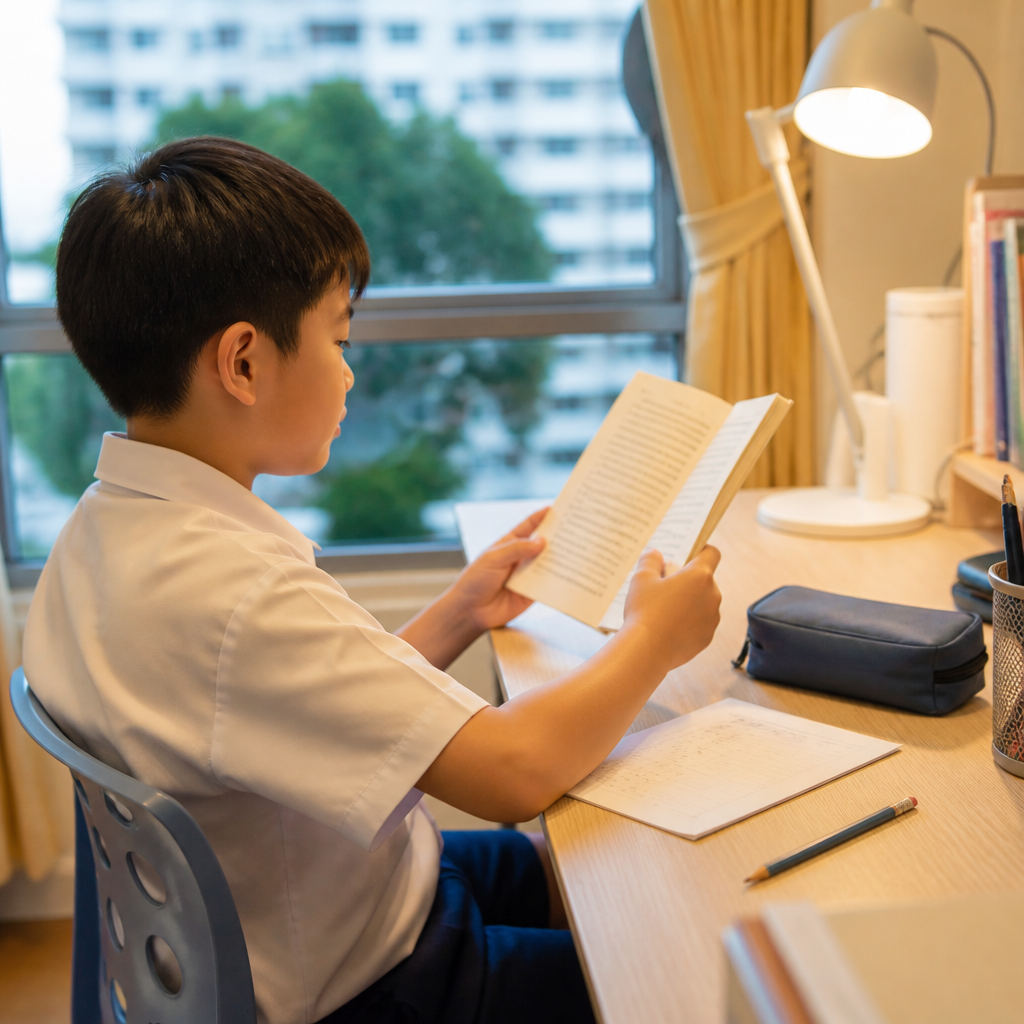
If siblings share a study area, try to keep the space uncluttered enough that books and worksheets can sit flat. When children are squeezed into awkward positions, they tend to tilt, hunch, and bring their faces closer without noticing.
Do not confuse longer study hours with better learning
Some parents feel guilty if they cut short revision time. But a child forcing through another hour while rubbing their eyes, blinking excessively, and losing focus is not necessarily learning well.
Tutors often notice this. A child may sit through a 90-minute lesson, but the final stretch is full of careless copying, poor concentration, and face-to-page posture. Rest is not laziness. It protects both learning quality and eye comfort.
In practice, a shorter and more focused session often works better than a long, tired one. If your child is fading badly, a pause, a shower, or an earlier bedtime may do more for both school performance and eye comfort than insisting they keep going.
Improve The Study Setup, Lighting, And Posture
Parents often focus on devices first, but the physical study setup matters just as much. If you are looking for the best daily habits to help prevent myopia in kids, this is one of the most overlooked areas.
Before changing everything at once, it helps to look at the study setup as a whole.
Improve lighting without making the space harsh
Dim study corners encourage children to lean in. On the other hand, harsh glare can also make reading uncomfortable. The goal is simple, clear, comfortable lighting.
If your child studies in the evening, check whether the overhead light alone is enough. In many homes, the dining table becomes the homework area, and shadows from the child’s own body or hand can make books harder to see. A well-positioned lamp can help, but it should not shine directly into the eyes or reflect strongly off glossy worksheets.
A simple home check works well. Sit where your child sits and look at the page. If the text seems shadowed, dull, or glaring, the setup probably needs adjusting.
Watch posture without turning it into constant nagging
“Sit properly” is one of those phrases children stop hearing after the tenth time. The advice is not wrong. The problem is that tired children often cannot hold good posture in an uncomfortable setup.
Try correcting the setup before correcting the child. If feet are dangling, the table is too high, or the chair is too deep, posture will collapse. A child doing Chinese spelling in that position will end up with their face very close to the page no matter how often you remind them.
A more helpful approach sounds like this:
“Let’s shift your chair in, straighten the worksheet, and sit back before you start.”
It is specific, immediate, and easier for a child to follow.
Keep reading in moving vehicles to a minimum
This may sound old-fashioned, but it still matters. Children in Singapore often use travel time to read in cars, buses, or the MRT on the way to school or tuition. The intention is understandable, especially during exam periods, but sustained close reading in a moving vehicle can be uncomfortable and tiring for the eyes.
If the journey is short, let it be a visual rest period instead. Looking outside, chatting, or simply taking a break may be better than squeezing in one more worksheet.
Balance Screens With Other Near Work
Parents often ask how to reduce screen time for children’s eyesight, but focusing only on devices can create a blind spot. A child may have limited entertainment screen time and still spend most of the day on near work, from textbooks and notebooks to tablets for school tasks and tuition materials.
Treat total near work as the issue, not just screens
A Primary 5 child might use a laptop for homework, then switch to paper revision, then read before bed. To a parent, screen time may look under control. But the eyes have still spent hours focused up close.
That is why prevention should include all close-up activities. Instead of only asking, “How long on the iPad?”, it may be more useful to ask, “How many hours has my child spent doing near work today without enough rest?”
This wider view also helps parents avoid mixed messages. A child who is banned from games but then spends the whole evening on assessment books is still under heavy visual demand. The goal is not only less leisure screen time, but a healthier overall pattern of work, rest, and distance viewing.
Reduce passive, unnecessary screen exposure
Not every screen use carries the same value. A school assignment or online class may be necessary. Scrolling videos while lying on the sofa, very close to the face, is easier to cut back.
If you are trying to reduce screen time for your child’s eyesight, start with the low-value habits. Meals can be screen-free. Tablets do not need to be in bed. A phone does not have to fill every waiting period. A common pattern among students is that these short bursts of close-up screen use feel harmless, but together they add up.
Avoid turning eye care into punishment
If every reminder about screens becomes a fight, children may hide device use or resist all advice. Blanket bans can sound strong, but they are often hard to sustain in real family life.
Try replacing them with clear reasons and workable alternatives. “After 30 minutes on the tablet, let’s take a break and go downstairs for a short walk” usually lands better than “No more screen because your eyes will spoil.”
Families managing school pressure may also find that calmer routines reduce friction overall. If eye strain is already affecting concentration or confidence in schoolwork, supportive academic help can make the day feel less overwhelming. You can explore one-to-one support here: private home tuition in Singapore.
Make Outdoor Time More Realistic In Singapore
Among the most practical strategies, outdoor time deserves special attention. For parents looking for outdoor activities that may help reduce childhood myopia in Singapore, the key is consistency, not perfect planning.
Think in workable chunks, not idealised schedules
Many parents hear “more outdoor time” and immediately think, “But when?” Weekdays are packed. There is homework, tuition, dinner, showers, and the next day starts early.
So make it smaller and more realistic. Twenty to thirty minutes at the playground after school. A walk to buy breakfast on Saturday morning. Time at the park before tuition instead of staying indoors with a phone. It does not have to be a full sports programme to count.
For a child with CCA on some days and tuition on others, one regular weekday outdoor slot and a longer weekend outing may be far more sustainable than aiming for daily perfection and giving up.
Choose outdoor habits your child will actually keep doing
The best outdoor routine is the one your family can repeat. Some children love cycling or football. Others prefer scooter rides, catch at the void deck, a nature walk, or helping grandparents with plants downstairs.
What matters is not whether the activity looks impressive. What matters is whether your child will keep doing it.
Weather can make planning harder in Singapore, so flexibility helps. If the afternoon is too hot or rainy, a later walk, sheltered play area, or weekend morning outing may be easier to maintain than abandoning the habit altogether.
Be careful not to replace all play with extra worksheets
This is a common trap during high-pressure periods. A child comes home, has one free hour, and adults quickly fill it with extra Math practice. It feels productive in the moment, especially before weighted assessments. But if every spare pocket becomes more near work, eye strain and mental fatigue can build together.
Sometimes the more protective choice is to let that hour stay outdoors.
Spot Warning Signs Early
Good habits matter, but so does noticing when something may already be changing. Many parents are unsure about the signs of worsening eyesight in primary school children, especially when kids do not complain clearly.
Watch behaviour, not just verbal complaints
Children often adapt before they report a problem. They may move closer to the TV, hold books nearer, tilt their head, squint, or lose interest in reading because it feels tiring. Some become unusually slow with homework, not because they are lazy, but because seeing comfortably takes more effort.
In class, a child may not announce that the board looks blurry. Instead, they copy from friends, miss instructions, or come home saying school was confusing. Sometimes a dip in confidence shows up before a direct complaint about eyesight.
Notice physical signs after schoolwork
Frequent eye rubbing, headaches, watery eyes, excessive blinking, and complaints of tired eyes after homework are worth noticing. These do not automatically confirm myopia, but they are signs that something should not be ignored.
A familiar evening scene, your child starts Chinese composition and within ten minutes says they are tired, puts their face close to the paper, then becomes irritable. Parents sometimes read this as poor attitude. Sometimes it is visual discomfort showing up as resistance.
Know when not to wait too long
If your child repeatedly says they cannot see well, struggles to copy from the board, or shows several of these behaviours, do not let it drag on for months. Prevention also means acting early when warning signs appear.
Get Eye Checks And Practical Support Early
Even the best home habits do not replace proper professional advice. For parents wondering when to bring a child for an eye check in Singapore, it is usually better to act sooner if you notice a pattern.
When an eye check is worth arranging
This quick summary can help if you are unsure whether it is time to follow up.
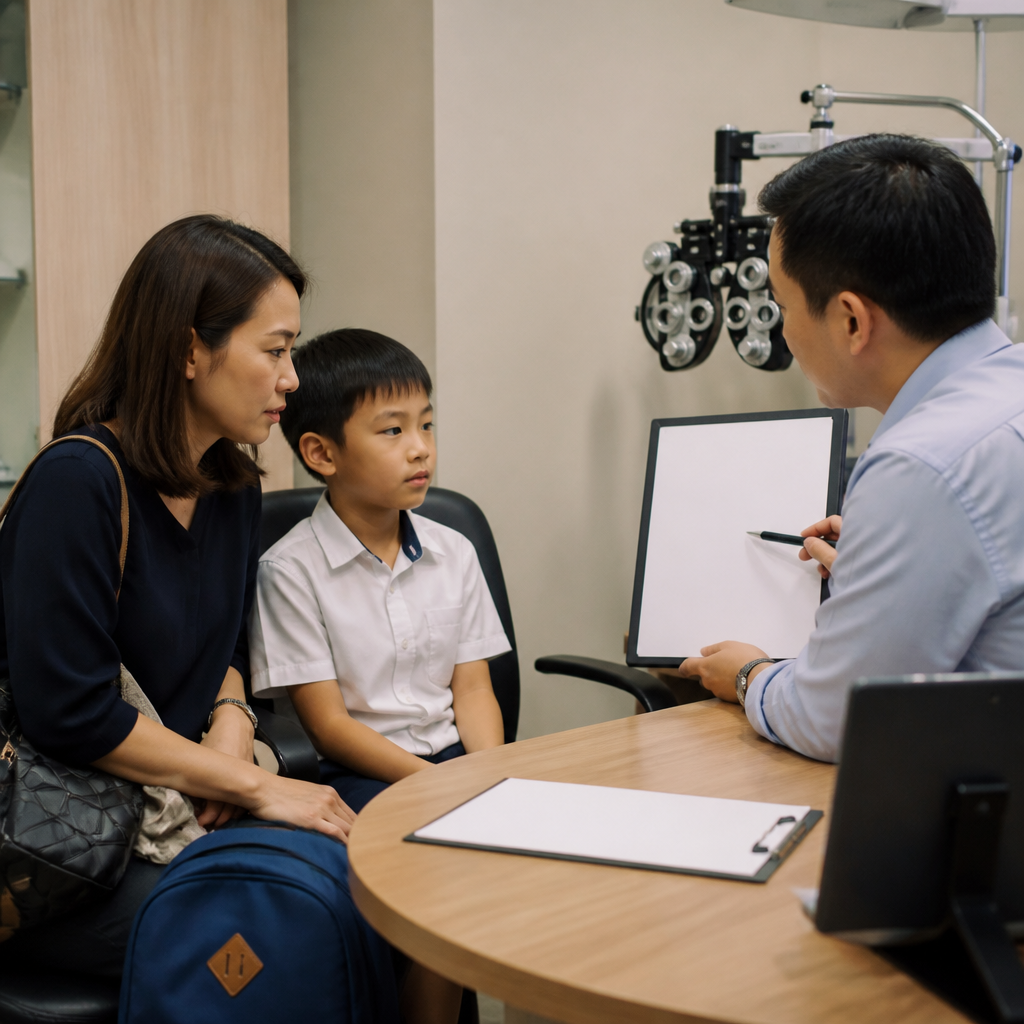
Bring your child for an eye check if they are squinting, complaining about blurry distance vision, sitting unusually close to screens, having repeated headaches during schoolwork, or showing a sudden drop in willingness to read. It is also sensible to follow through if a teacher mentions that your child seems unable to see the board clearly.
If there is a family history of myopia, many parents choose to stay more watchful, especially during the primary school years when near work increases sharply.
For reliable public health information, you can refer to MOH Singapore and HealthHub.
Prevention is not perfection
Some parents blame themselves once their child develops myopia. That guilt can become heavy, especially if the child has had tuition, enrichment, and lots of academic demands. But prevention is about reducing risk and supporting healthier habits, not guaranteeing an outcome.
A child can have good routines and still need professional eye care. What matters most is responding early, adjusting the daily environment, and not brushing off changes as just tiredness.
Frequently Asked Questions
My child’s timetable is already so packed. How can I fit in outdoor time without adding more stress?
More is generally better than none, but consistency matters most. If weekdays are tight, start with realistic pockets such as 20 to 30 minutes after school or before dinner, then add longer outdoor time on weekends. It does not have to be elaborate to be meaningful.
Is reading books actually better than using a tablet for eyesight?
Books avoid some screen-related issues, but they are still near work. If your child reads with poor lighting, bends too close, or continues for long stretches without breaks, eye strain can still build up. It is usually more helpful to improve all close-up habits rather than treating books as automatically safe and screens as automatically bad.
What are the signs of worsening eyesight in primary school children that parents often miss?
Common signs include squinting, sitting too near the TV, holding books very close, frequent headaches, eye rubbing, losing interest in reading, or saying they cannot see the board well. Sometimes the clue is less obvious, such as slower homework, copying mistakes, or lower confidence in class.
Should I wait until after exams before bringing my child for an eye check in Singapore?
If there are repeated complaints of blurry vision, noticeable squinting, headaches during schoolwork, or signs that seeing at a distance is becoming difficult, it is worth arranging a check. Waiting until major exam periods are over can make things harder if the problem is already affecting daily learning.
Conclusion
Figuring out how to prevent myopia in children in Singapore is rarely about one single rule. It is usually a collection of daily choices, enough outdoor time, regular visual breaks, better reading distance, comfortable lighting, less unnecessary close-up screen use, and early attention to warning signs.
In busy families, the challenge is not a lack of care. It is that schoolwork, tuition, revision, and tired evenings make healthy routines easy to neglect. So try not to aim for a perfect household. Aim for a steadier one.
A child who studies in a better setup, takes short breaks, spends more time outdoors, and gets checked when something seems off is already in a stronger position.
If your child is struggling to keep up with schoolwork because of eye strain, reduced confidence, or difficulty seeing clearly, learn more about our tutors for supportive one-to-one academic help that fits your child’s pace: find a private tutor in Singapore.