


Introduction
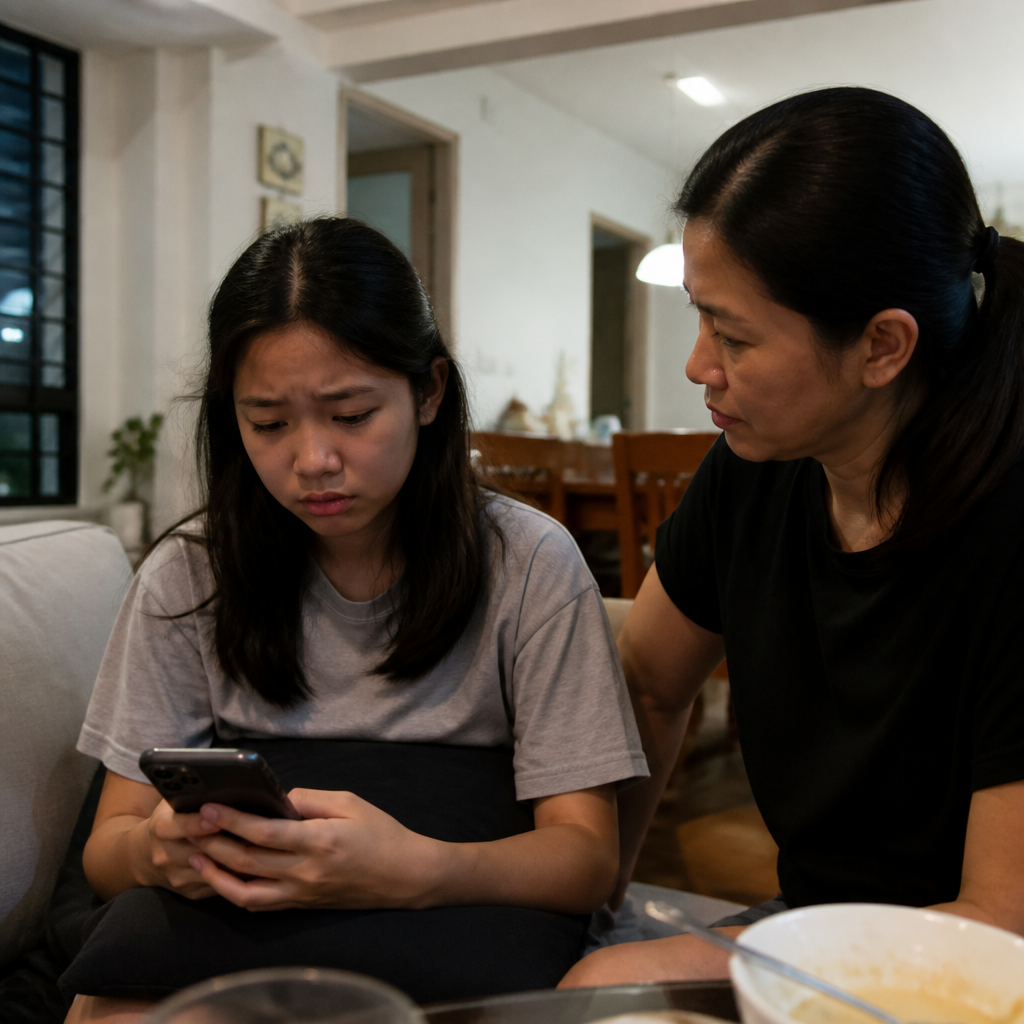
It often starts in a way many parents will recognise. Your child is quieter than usual after dinner. Their phone keeps lighting up, but they do not want to look at it in front of you. Maybe they suddenly do not want to go to school, or they insist they are “just tired” when you can tell something is off. A class WhatsApp chat turns nasty. A screenshot gets forwarded. A rude comment appears on Instagram, Telegram, TikTok, or a gaming platform, and suddenly home no longer feels calm.
If you are searching for how to stop cyber bullying, you probably do not want vague reminders to “monitor screen time.” You want to know what to do next. In Singapore schools, cyberbullying often happens through class chats, shared photos, anonymous accounts, gaming messages, and online learning spaces, especially when school relationships spill onto screens after hours. Knowing how to respond early means keeping evidence, involving the right adults, and supporting your child without making them feel blamed or exposed.
Key Takeaways
- Take it seriously early. Cyberbullying rarely feels “small” to the child receiving it. A few mocking messages in a class Telegram group can quickly affect sleep, focus, and willingness to attend school. Early action often stops things from snowballing.
- Save evidence before blocking. Screenshots, usernames, dates, chat logs, and links matter. Without them, it becomes much harder for schools, parents, or platforms to act clearly and fairly.
- Do not retaliate online. Angry replies, public call-outs, or parents confronting other children in chats often make things worse. They can widen the audience and make resolution harder.
- Use platform tools properly. Blocking, muting, reporting, and privacy settings are often the fastest first line of protection while adults work on the bigger issue in the background.
- Involve the school when schoolmates are involved. If the cyberbullying comes from classmates, CCA peers, or school-related group chats, the school needs to know.
- Support your child emotionally, not just technically. A child may say “it’s okay” while quietly dreading school and falling behind in homework. Feeling believed and protected matters as much as reporting the incident.
- Build safer online habits after the incident. Preventing future cyberbullying on social media includes reviewing group chat boundaries, privacy settings, screen habits, and who gets access to photos or personal information.
Spot The Problem Before It Grows
Many parents hope the issue will blow over if nobody reacts. Sometimes that happens. Very often, it does not. Cyberbullying tends to grow because it is easy to repeat, easy to screenshot, and easy for bystanders to join in without seeing the hurt on the other side.
Notice the signs that online harm is already affecting your child
The messages may be online, but the impact usually shows up offline first. A child who used to leave their phone around may suddenly hide it. Another keeps checking notifications with a tense expression, then says “nothing” when asked. Some become unusually irritable before school, especially if the bullying involves classmates in a school or CCA chat.
Schoolwork may slip too. That is common. A child who has spent the evening worrying about being mocked in a group chat is not mentally ready to revise Science or finish an English composition. Tutors often notice this pattern. A student seems distracted, forgetful, and unusually quiet, but the real issue is not laziness. It is emotional overload.
Other signs can be more subtle. Your child may ask to skip CCA, avoid group projects, or suddenly lose interest in activities they used to enjoy. Some become clingier at home. Others shut down completely. When online bullying is tied to school relationships, the stress rarely stays on the screen.
Do not dismiss “just joking” too quickly
A common mistake is assuming that harsh memes, edited photos, or repeated teasing are harmless because other children say it was “for fun.” But if your child is being singled out, mocked repeatedly, threatened, excluded in public chats, or embarrassed through screenshots, this is not ordinary banter.
That matters especially in Singapore school settings, where class WhatsApp and Telegram groups can become extensions of the classroom. The damage does not end when the phone is put down. It follows the child into school the next morning, affecting friendships, participation, and confidence.

A useful question for parents is simple: would this still seem funny if it were said face to face in front of a teacher? If the answer is no, it should not be brushed aside online either.
Save Evidence First, Then Block And Report
When parents panic, the instinct is to delete everything and protect the child from seeing more. That reaction is understandable. Still, before messages disappear, evidence needs to be secured.
What evidence to save
If you are figuring out how to stop cyber bullying, this is one of the most important steps.
Store the evidence in one folder on your phone or computer. If needed, email it to yourself so it is not accidentally deleted. If the content is especially serious, keep a simple written timeline too. That makes it much easier when speaking to a teacher, school counsellor, or platform support team.
Why retaliation usually backfires
Telling your child to “reply and stand up for yourself” can sound empowering. In reality, online spaces are rarely fair. A single angry reply can be screenshotted, taken out of context, and used against them.
The same goes for parents jumping into a student chat to scold children publicly. It may feel satisfying in the moment, but it often creates a bigger mess. A calmer approach is safer. Save evidence, block if necessary, and report through the platform.
If you need support in helping your child settle after the incident, especially when confidence and concentration have dropped, gentle one-to-one help can make a difference. You can learn more about academic support at home here: Private Home Tuition Support.
Use Platform Tools The Right Way
Different platforms work differently, but the first protective steps are usually similar. This is where many families wonder what parents can do about cyber bullying online without overreacting or taking away every device.
Tighten privacy and safety settings
Blocking is not weakness. It is a boundary. If your child is receiving abusive DMs on Instagram, hurtful comments on TikTok, or mocking messages on Telegram, block the account after evidence is saved. On gaming platforms, turn off direct messages from strangers or restrict chat to known friends.
Privacy settings matter too. If your child’s account is public, anyone can comment, tag, or share content more widely. A private account reduces exposure. Review who can add them to group chats, who can view stories, and who can comment on posts.
This is a practical part of preventing cyberbullying on social media. It does not solve every problem, especially when the bully is a schoolmate, but it reduces access and slows the spread.
Leave harmful groups when needed
Some children feel trapped in class or CCA chats because they do not want to miss homework updates, training timings, or school notices. That is a real concern. Leaving a chat can feel risky if school information is still flowing there.
If the group has turned hostile, screenshot the harmful content first, then consider muting, archiving, or leaving after speaking to a trusted adult. Where the chat is school-related, ask the form teacher or CCA teacher for guidance instead of forcing the child to navigate it alone. A student should not have to stay in a toxic online space just to receive tomorrow’s Maths worksheet.
In some cases, creating a smaller, practical chat for homework or project coordination can reduce dependence on a larger group that has become unkind. The point is not to isolate your child, but to make sure school communication does not come bundled with harassment.
Support Your Child Without Making Them Shut Down
This is often the hardest part. A parent may be furious, frightened, or deeply hurt on behalf of the child. But if the first response is too intense, the child may stop talking.
Start with belief, not interrogation
A child who says, “They were posting about me again,” is already taking a risk by speaking up. If the first response is “What did you do first?” or “Why didn’t you block them earlier?” the child may hear blame instead of support.
Try something simpler.
“I’m glad you told me. Let’s look at this together.”
That kind of response lowers panic and keeps the conversation open. This matters especially for older children and teens, who often worry that adults will confiscate their phones, contact the school immediately, or make the problem more public.
Watch for emotional fallout, not just screen behaviour
Knowing how to help a child facing cyber bullying means looking beyond the device. Some children lose appetite. Some cannot sleep because they keep replaying the messages. Others become unusually perfectionistic, trying to perform better at school so classmates will stop targeting them.
Exam periods can make this worse. A student preparing for PSLE, O-Levels, or school weighted assessments may already be stretched. Add humiliation in a class chat and you may see tears over simple homework, refusal to go for tuition, or complete withdrawal during revision.
What helps is steady support, not nonstop questioning. Sit nearby during homework. Offer a break without turning it into a lecture. If the child is falling behind because of stress, a calm tutor can sometimes provide structure without the emotional friction that builds up at home. For families who need that kind of support, this may help: Home Tuition for Academic Support.
It also helps to restore a sense of normal routine. Regular meals, sleep, school attendance where possible, and one or two safe activities can remind a child that the bullying is serious, but it does not define their whole life.
Report Cyberbullying Clearly In Singapore Schools
Many children hesitate to report because they fear being called oversensitive or becoming a bigger target. That fear is real. Even so, when school relationships are involved, reporting is often necessary.
Know who to tell
If the cyberbullying involves schoolmates, class chats, CCA groups, or school-related online platforms, tell a trusted adult in school. This may be the form teacher, year head, school counsellor, or CCA teacher.
A common pattern among students is this, the online issue gets treated as “just drama,” but by the next day it is affecting who they sit with, who they work with, and whether they even want to attend school. If a Secondary 2 student is mocked in a class Telegram chat and screenshots are being circulated among classmates, this is no longer just an online issue. It affects classroom safety, group work, attendance, and emotional wellbeing in school.
Schools in Singapore also support cyber wellness education. Parents can read more at MOE’s Cyber Wellness page.
Make the report easier to act on
These steps make it easier for adults to respond clearly and fairly.
If possible, ask what immediate support can be put in place while the matter is being looked into. That may include seating arrangements, supervision during group work, or a point person your child can approach if things flare up again.
If the situation includes threats, sexual content, or more serious exploitation concerns, further support may be needed. Families can also refer to MSF’s Break the Silence resources.
What Parents Can Do Without Escalating The Situation
Parents often feel torn between protecting their child and avoiding a bigger blow-up. That tension is real, especially when you know the other children are classmates and tomorrow everyone will be in school again.
Contact the school before confronting other families
If the bullying clearly involves schoolmates, contact the school early rather than sending emotional messages to other parents first. Direct parent-to-parent confrontation can spiral quickly, especially when everyone only has partial screenshots and their own child’s version.
A concise message to the school usually works better. Share what happened, attach evidence, and ask for guidance on next steps. This keeps the process documented and gives the school room to address the issue properly.
If the online conflict did not involve schoolmates at all, such as strangers on a gaming platform, school involvement may be less relevant. In that case, the focus shifts to reporting the account, tightening online safety, and emotional support at home.
Avoid punishments that feel like blame
Some well-meaning parents respond by confiscating the child’s phone completely. In some cases, a short digital break may help. But if it feels like punishment, the child may feel doubly hurt, first bullied, then cut off from friends and support.
A better approach is collaborative. Review app settings together. Decide which chats to mute. Remove harmful followers. Keep communication open. The goal is safety, not shame.

It can also help to agree on a simple plan for the next few days: who your child should tell if something new appears, when to hand over screenshots, and which apps need closer supervision for now. Clear steps reduce panic.
Build Safer Habits For The Long Term
Stopping one incident is not the same as reducing future risk. Once the immediate crisis settles, families need habits that protect without becoming overly controlling.
Create digital habits that fit real student life
Children in Singapore often rely on devices for homework updates, project discussions, online learning tasks, and CCA coordination. So the goal is not “no phone,” but safer use.
A few practical boundaries can help:
- Limit school and class chat notifications at night. A child does not need a flood of sarcastic messages at 11.30pm before a test the next morning.
- Review who is allowed to follow, message, or add them into groups. Many problems start because access was left too open.
- Talk about screenshots explicitly. A message sent privately can still be forwarded to a class group within seconds.
These conversations work best when they are regular and calm, not only after a crisis.
Teach what healthy online friendship looks like
Children sometimes stay in harmful spaces because they do not want to seem dramatic. Help them recognise warning signs, repeated mocking, pile-ons, fake accounts, pressure to share embarrassing photos, exclusion games, and “jokes” that only hurt one person.
Knowing how to stop cyber bullying in Singapore schools is not only about reacting well. It is also about helping children spot unhealthy online dynamics earlier, before the damage becomes deep.
Parents can model this by asking practical questions: Does this friend respect boundaries? Do they stop when asked? Do they share private messages without permission? These are simple checks, but they teach children that kindness online is not vague. It is visible in behaviour.
Frequently Asked Questions
Should my child reply to defend themselves?
Usually, no. A short, calm boundary may be appropriate in some cases, but long emotional replies often get screenshotted and shared. Save evidence first, then block, report, and involve adults if needed.
When should I tell the school about cyberbullying?
Tell the school when the people involved are classmates, schoolmates, CCA peers, or when the online issue is affecting school attendance, concentration, or safety. If the harm stays online at night but shows up in the classroom the next day, the school needs to know.
What if my child begs me not to do anything because they are scared it will get worse?
Start by acknowledging that fear. Many children worry adults will make things worse or react too strongly. Let your child know you will not act recklessly, but explain that repeated, threatening, or spreading bullying still needs adult intervention.
Is blocking enough to stop cyberbullying?
Not always. Blocking helps reduce access, but if the bully is a schoolmate, the problem may continue through group chats, fake accounts, or in-person fallout. Blocking is a useful first step, but it is not always the whole solution.
Can cyberbullying really affect studies and confidence that much?
Yes. A child who feels watched, mocked, or unsafe online may struggle to sleep, revise, or concentrate in class. It is common to see incomplete homework, sudden loss of motivation, or emotional outbursts that seem unrelated until the online issue comes to light.
Conclusion
Learning how to stop cyber bullying is not about finding one perfect response. It is about taking calm, practical steps in the right order. Save evidence. Avoid retaliation. Block and report harmful accounts. Involve the school when classmates or school-related chats are involved. Most of all, make sure your child feels believed, protected, and not blamed for what happened.
For many Singapore families, cyberbullying does not stay on the screen. It spills into homework time, class participation, tuition routines, sleep, and confidence. If your child is feeling overwhelmed or falling behind after online bullying, learn more about our tutors for gentle academic support and confidence-building at home at Singapore Tuition Teachers. You can also explore our main site here: Singapore Tuition Teachers Home.