


Introduction
If you are searching for how to study for A Levels in Singapore, chances are the stress has already started to creep in at home. Maybe your child is sitting at the dining table night after night, notes spread everywhere, looking busy but not much calmer. Maybe JC1 already feels heavier than expected, or JC2 has turned into a blur of lectures, tutorials, MYEs, prelims, consultations, tuition, and unfinished revision.
For many parents in Singapore, the worry is quiet but constant. You can see the effort. You can also see the uncertainty.
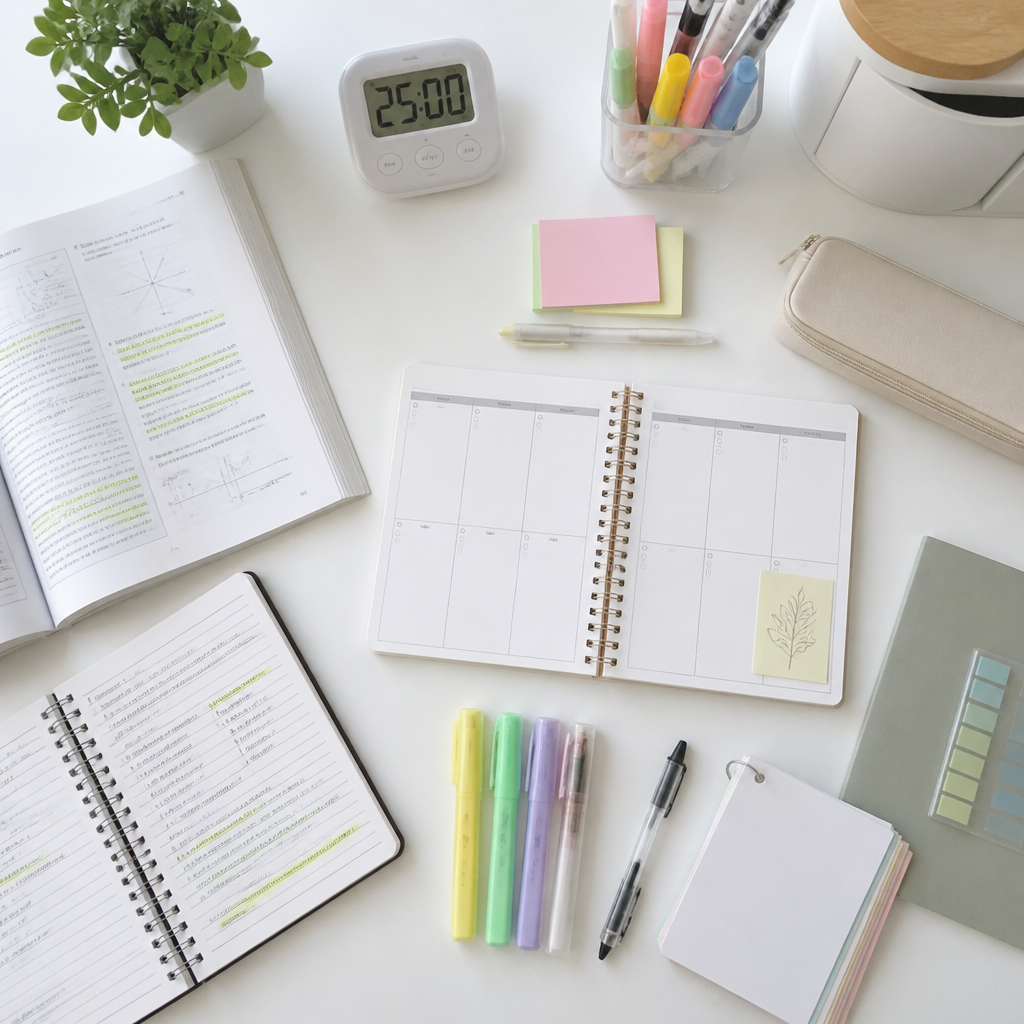
The good news is this, learning how to prepare for A Levels is not about blindly studying longer. In Singapore’s A-Level system, progress usually comes from studying in the right phase, for the right purpose, using the right materials. H1, H2, GP, and sometimes H3 subjects test different skills. Students often underperform not because they are lazy, but because they mix up content review, practice, and exam technique.
This guide breaks down how to study for A Levels across the full JC journey, from JC1 foundation building to JC2 revision after MYEs and prelims, and finally the last stretch before written papers.
Key Takeaways
- Build your JC1 foundation early. A-Level revision becomes much harder when JC1 gaps are dragged into JC2. Weak basics in core H2 topics often show up later as “careless mistakes” or blank-outs under time pressure.
- Study by weakness, not by comfort. Many students keep revising topics they already know because it feels productive. Real improvement usually comes from identifying the exact chapters, question types, and exam habits that are pulling grades down.
- Treat MYEs and prelims as diagnosis, not destiny. Weak mid-year or prelim results can still be recovered. The key is targeted revision, not restarting every subject from page one.
- Use different methods for different subjects. Content-heavy subjects like Biology, History, and Economics need active recall and argument training, while Math, Chemistry, and Physics need worked practice, error review, and timing control.
- Past-year papers and TYS only work when reviewed properly. Finishing papers is not the same as learning from them. The real gains come from analysing recurring mistakes, weak concepts, and exam-technique gaps.
- Parents can support without increasing pressure. A calm home environment, fewer grade-interrogation conversations, and sensible tuition decisions often help more than constant reminders.
- A timetable matters, but strategy matters more. A revision timetable for JC students is useful, but students still need clear priorities for content mastery, timed practice, and rest.
Build A Strong JC1 Foundation Before Panic Starts
JC1 often gives students a false sense of time. At first, it can feel manageable. Then promos appear, Project Work deadlines pile up, CCA gets busy, and suddenly the cracks show.
What JC1 is really for
JC1 is not just a warm-up year. It is where students build the base for H1 and H2 subjects, especially cumulative ones like H2 Math, Chemistry, Physics, Biology, Economics, and History. When a student keeps saying, “I’ll fix it next year,” next year often becomes much harder because new topics assume old understanding.
Tutors often notice the same pattern. A student may seem “fine” in school because they can follow tutorials and nod along in class. Then they sit down with a full paper alone and struggle badly. Familiarity is not mastery. Seeing worked examples is very different from producing answers independently under exam conditions.
What JC1 students should focus on
Instead of trying to master everything at once, focus on three habits:
- Consolidate weekly, not only before tests. After a week of H2 Chemistry on chemical bonding, spend time rewriting the topic into your own summary and doing a few tutorial questions without notes.
- Track confusion early. If vectors in H2 Math already feel shaky in Term 2, flag it immediately. Waiting until JC2 usually makes the problem bigger.
- Separate “I read it” from “I can do it.” A Biology student may reread notes on respiration and feel prepared, but still freeze when asked to explain ATP yield in a structured question.
A realistic JC1 study system
A strong JC1 study system does not need to be complicated. Keep one file or digital note for each subject with the same few categories.
One practical way to make this work is to spend 15 to 20 minutes at the end of each week updating these notes. That small routine is often enough to stop weak topics from becoming major revision problems later.
When promos end and JC2 begins, revision should not rely on memory alone. It should be built on evidence.
For students already feeling stuck in one or two subjects, targeted support can help before gaps grow. If you want subject-specific guidance, exam practice help, or weak-topic recovery, you can explore JC A-Level tuition support.
In JC2, Prioritise Instead of Restarting Everything
This is where many students panic. MYEs come back with mixed grades, maybe a D for one subject, an S for another, and a decent B in the one they spent the least time on. Suddenly, everything feels urgent.
Identify weak subjects and weak topics properly
Not all weak grades mean the same thing. A low score can come from different problems, and each one needs a different response.
A common pattern among students is this, they describe a whole subject as weak when the real issue is much narrower. “My Chemistry is weak” is vague. “Electrochemistry application questions and organic synthesis planning are weak” is useful.
What to do after weak MYEs
Do not restart every subject from Chapter 1. It feels hardworking, but it often wastes precious time.
A better sequence looks like this:
- Review papers carefully.
- Group mistakes by type.
- Pick the few topics or skills causing the biggest mark loss.
- Relearn only what is necessary before returning to practice.
A student who failed H2 Math may not need the whole syllabus again. Sometimes the real problem is a cluster of topics like integration techniques, differential equations, and vectors, plus weak time management.
Use a timetable at a high level
An A-Level revision timetable for JC students should reflect priorities, not guilt. The goal is not to fill every hour just to feel in control.
Each week should include:
- Content repair for weak topics.
- Untimed practice to rebuild confidence.
- Timed practice to build exam control.
- Review time to analyse mistakes.
A simple weekly structure can help. For example, students might use two sessions for weak-topic repair, two for timed practice, one for reviewing mistakes, and one lighter session for GP reading or essay planning. If students need specific daily-hour guidance, that is better covered elsewhere. At this stage, clarity matters more than squeezing in more tasks.
Use Revision Methods That Match Each Subject
One major mistake in A-Level prep is using one revision style for every subject. That rarely works, and it often leaves students feeling busy but not better.
Content-heavy subjects: Biology, History, Economics
These subjects punish passive rereading.
For Biology, active recall matters more than neat notes. After revising immunity, close the notes and explain the process out loud or write it from memory. If definitions are shaky, exam phrasing often collapses under pressure.
For History, knowing events is not enough. Students need to compare factors, weigh arguments, and stay close to the question. One common problem is dumping memorised examples without directly answering what is being asked.
For Economics, content must be tied to application and evaluation. Many students know definitions and diagrams but still write generic conclusions. The jump in grades often comes from sharper explanation and better judgement, not just more content.
Calculation-heavy subjects: H2 Math, Chemistry, Physics
These subjects reward repeated, deliberate practice, but only when mistakes are reviewed honestly.
For Math, students often do many questions without categorising errors. Was the problem conceptual, algebraic, or due to misreading? If the same mistake appears three times, it is no longer just careless. It is a pattern.
For Chemistry, success depends on both memory and application. Organic Chemistry, electrochemistry, and equilibria can unravel quickly if one concept is weak. School papers are useful because they often test unfamiliar combinations, while the TYS helps students see standard Cambridge patterns.
For Physics, many lose marks not because they know nothing, but because their explanation is too vague. Formula use has to be tied to physical meaning, not just substitution.
GP and the broader exam context
GP is often neglected because it feels harder to “memorise for”. But A-Level GP tests reading, argument, language control, and relevance. Essay and comprehension skills improve through regular feedback and timed practice, not last-minute idea lists.
A practical GP routine can be simple: read one quality article, note two examples that could be used in essays, and write one paragraph or one AQ plan each week. That is usually more effective than collecting dozens of examples that never get used properly.
Students and parents can refer to official exam information from SEAB and the JC system overview at MOE.
Use TYS, School Papers, Notes, And Consultations Properly
Many students already have the right materials. The issue is that they use them in the wrong order.
School notes are for learning, not endless rereading
School notes help when understanding a topic for the first time or clarifying gaps. Once a topic is familiar, repeatedly rereading notes creates an illusion of progress. Better to use notes briefly, then move into self-testing.
TYS and past-year papers are for pattern recognition
The TYS is valuable because it shows common question styles and recurring standards. But if students do paper after paper without reviewing mistakes, they often plateau.
A better approach is simple. Attempt a paper or selected topical questions, mark carefully, record every error, and identify whether the issue was content, method, wording, or time. That review process is what turns practice into improvement.
Error logs are where improvement becomes visible
An error log does not need to be fancy. It simply needs to be honest.
- Topic. This shows which chapters keep causing trouble.
- Question type. Some students are weak only in data response, planning questions, or application-heavy problems.
- What went wrong. This forces real diagnosis.
- Correct method. Students need to see what a better answer looks like.
- What to watch out for next time. This makes the log useful later.
Even a one-page notebook or spreadsheet is enough. The value is not in presentation. It is in making sure the same mistake does not quietly repeat for months.
Consultations work best when specific
Walking into consultation and saying, “I don’t understand this subject” rarely helps much. Walking in with three exact questions does.
“Why is my evaluation weak in this Economics essay?”
“I can do integration when the method is obvious, but how do I identify the method faster?”
“Why did my Biology explanation lose two marks even though the concept seems correct?”

If school support is not enough and the problem is highly subject-specific, tuition can be one possible option for focused help in weak topics or exam technique. Families who want to learn more can contact our tutors here.
After Prelims, Recover Without Panicking
Prelims are emotionally brutal for many JC2 students. A poor result in March feels one way. A poor result close to written papers feels much heavier.
Weak prelims do not mean A-Levels are lost
Every year, some students improve significantly after prelims because school papers are often harder and because prelims finally reveal what is actually wrong. The weak result is not the whole story. The bigger risk is panicking and changing strategy every few days.
How to improve after prelims
The same logic still applies after prelims, only faster and more selective.
Focus on:
- High-frequency topics.
- Question types you keep missing.
- Exam technique issues that can still be corrected.
- Memorisation gaps that directly affect marks.
This is not the season for making perfect notes from scratch. It is the season for triage.
Balance content mastery, practice, and technique
Some students spend all their time memorising and never time themselves. Others do endless timed papers with major concept gaps. Both approaches can fail.
The last revision phase works best when it includes:
- Quick content refresh for weak areas.
- Timed practice under realistic conditions.
- Immediate correction and reflection.
- Repeated exposure to previously failed question types.
One useful rule after prelims is to keep revision materials narrower, not wider. Students usually benefit more from revisiting the same high-yield mistakes until they are fixed than from chasing every new paper available online.
What To Do In The Final Stretch Before Written Papers
The final stretch often feels the most intense. Sleep gets cut, stress gets louder, and revision becomes less rational.
What helps in the last phase
The best last-minute A-Level study tips are usually the least glamorous:
- Revise condensed weak-topic summaries, not full files.
- Redo previously wrong questions.
- Practise paper navigation and time allocation.
- Memorise precise phrasing for definitions, explanations, and key frameworks where needed.
A student doing H2 Biology the week before the paper should not be rewriting the entire syllabus. A student doing H2 Math should not be attempting only brand-new monster questions if basic recurring mistakes are still unresolved.
What often backfires
Some last-minute habits feel productive but usually make things worse.
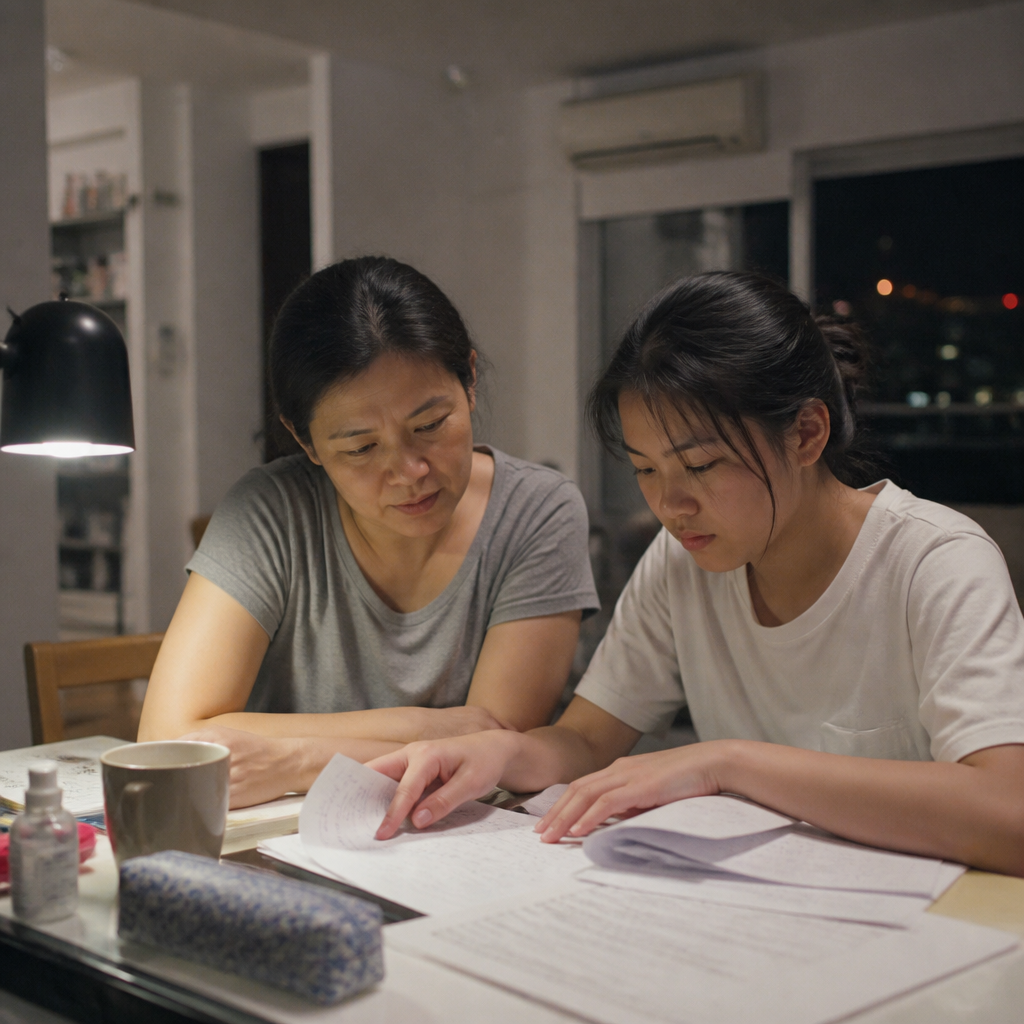
It is a familiar scene in Singapore homes, the student is up past midnight, the parent is asking whether everything is finished, and both are getting more anxious by the minute.
How Parents Can Support JC Students Without Making Home Feel Like Another Exam Hall
Parents are often trying their best. But under stress, even well-meant concern can start to sound like pressure.
Recognise stress early
Not all stress looks dramatic. Some students become irritable. Some go quiet. Some sit with notes open for hours but absorb nothing. Others suddenly want more tuition for every subject, not because it is useful, but because they are afraid.
If you are wondering how parents can support A-Level students in Singapore, watch for patterns, not just grades:
- Reduced sleep.
- Sudden hopeless comments.
- Inability to start work.
- Repeated crying, anger, or shutdowns after small setbacks.
What support looks like at home
A calm study environment matters more than many parents realise.
- Reduce unnecessary interruptions.
- Keep meal times predictable.
- Avoid late-night grade discussions.
- Ask process-focused questions instead of “How many marks?”
Sometimes a small shift in wording changes the whole mood of a conversation.
Instead of “Why did you only get a C?”
Try “Which part of the paper pulled you down, content or technique?”
Manage tuition frequency wisely
More tuition is not always better. Some students genuinely need targeted help. Others are already overloaded and cannot review what is taught. If every weekday becomes school plus tuition plus homework, revision quality may collapse.
A good tuition decision is usually narrow and purposeful, such as fixing one persistently weak H2 subject, getting feedback on GP essays, or rebuilding exam technique. It should not become a panic purchase.
A Simple A-Level Exam Preparation Checklist
Student checklist
- Know your weak topics clearly.
- Use materials in order.
- Prepare for the actual paper style.
- Bring questions for consultation.
- Refine condensed revision notes.
- Practise under time pressure.
Parent checklist
- Watch stress levels, not just grades.
- Keep home calm.
- Support routines that reduce friction.
- Review tuition load honestly.
- Talk about the next step, not only the latest mark.
Frequently Asked Questions
How early should JC students start A-Level revision in Singapore?
JC1 students should start building revision habits from the first year, even if it is light and topic-based. Formal full-syllabus revision usually intensifies in JC2, but students who wait until after prelims often end up spending too much time repairing old gaps.
How do I know if I need more practice or more content review?
Look closely at the mistakes. If your child does not understand why the answer works, the issue is probably content. If they understand after seeing the solution but still could not produce it under time pressure, they likely need more targeted practice and exam technique work.
Can weak prelim results still improve before A-Levels?
Yes, but usually not through panic revision. Students often improve after prelims when they identify high-impact weak topics, review past mistakes properly, and focus on the question types that keep costing marks.
Is tuition necessary for A-Level preparation?
Not always. Some students do well with school support, consultations, and disciplined self-review. Tuition can help when a student needs targeted feedback, weak-topic recovery, or more structured guidance, but it should solve a specific problem rather than simply add more pressure.
What is the best way to revise for both H2 subjects and GP at the same time?
Use different revision modes. H2 content-heavy or calculation-heavy subjects often need topic repair plus paper practice, while GP needs regular writing, reading, and feedback. Trying to revise GP the same way as H2 Biology or H2 Math usually leads to poor returns.
Why am I studying every day but my A-Level grades are not improving?
Daily study does not always mean effective study. If grades are stuck, check whether you are mostly rereading notes, avoiding weak topics, or skipping proper paper review. Improvement usually starts when revision becomes more targeted, not simply longer.
Conclusion
Learning how to study for A Levels in Singapore is really about building the right system for each phase of JC. In JC1, the goal is foundation. After MYEs and prelims, the goal is prioritisation and weak-topic recovery. Near written papers, the focus shifts to exam technique, timed practice, and calm consolidation.
For students, this means avoiding blind revision and studying based on evidence from scripts, mistakes, and recurring weak areas. For parents, it means supporting without making home feel like another paper. A strong A-Level strategy is rarely about doing everything. It is about doing the right things, in the right order, with enough consistency to let improvement show.
If you need targeted support for a weak H1 or H2 subject, exam technique feedback, or more structured revision help, you can learn more about our tutors here.