

Introduction
You know the feeling. Your child has spent hours with the notes open, highlighted half the page, and still walks into the History exam feeling unsure. Then the paper comes out, the source-based question looks unfamiliar, and everything suddenly feels scrambled. In many Singapore schools, this is a very familiar struggle, especially when History has to compete with CCA, homework, weighted assessments, and every other subject fighting for attention.
If you have been wondering how to study for History without wasting time on endless rereading, the shift is simple. History is not just a memory subject. It is a subject about using what you know.
Scoring better in History means learning content in a way that helps your child apply it. Yes, they need to remember timelines. But they also need to explain significance, compare factors, handle sources, and write clearly under time pressure. That matters whether they are in lower secondary, preparing for O-Level elective or pure History, or coping with the heavier demands of JC History.
This guide breaks down practical, exam-focused ways to revise smarter, write better, and avoid common mistakes. Since exam formats and syllabus details may change, always check your school materials and the latest updates from MOE and SEAB.
Key Takeaways
- Study History by topic, not by chapter rereading. Passive reading can feel productive, but it often leaves students unable to recall examples or explain causes during exams. Organising each topic into timelines, factors, and outcomes makes the content easier to retrieve.
- Memorise for use, not for display. Knowing a date alone will not earn many marks. Events need to be tied to cause, consequence, and significance so they can be used in essays and source-based answers.
- Practise source-based skills separately from content revision. Many students know the chapter well but still lose marks because they cannot infer, compare, or evaluate sources clearly under exam pressure.
- Essay marks come from argument and evidence together. If an essay becomes a story of what happened instead of an answer to the question, content knowledge will not translate into strong results.
- Different levels need different revision styles. The way lower secondary students revise is not exactly the same as what O-Level or JC students need, because the depth of explanation and evaluation changes.
- Timed practice matters more than perfect notes. A neat file of summaries may feel satisfying, but if a student keeps running out of time in class tests, the revision method needs to include writing practice.
- Consistency beats panic revision. A realistic weekly study plan is far more effective than trying to memorise an entire topic two nights before the exam.
Understand What The History Exam Is Really Testing
A lot of students assume History is mainly about memorising facts. That is only part of the picture. Examiners are testing how well students can use knowledge, not just whether they can repeat it.
What lower secondary students should focus on
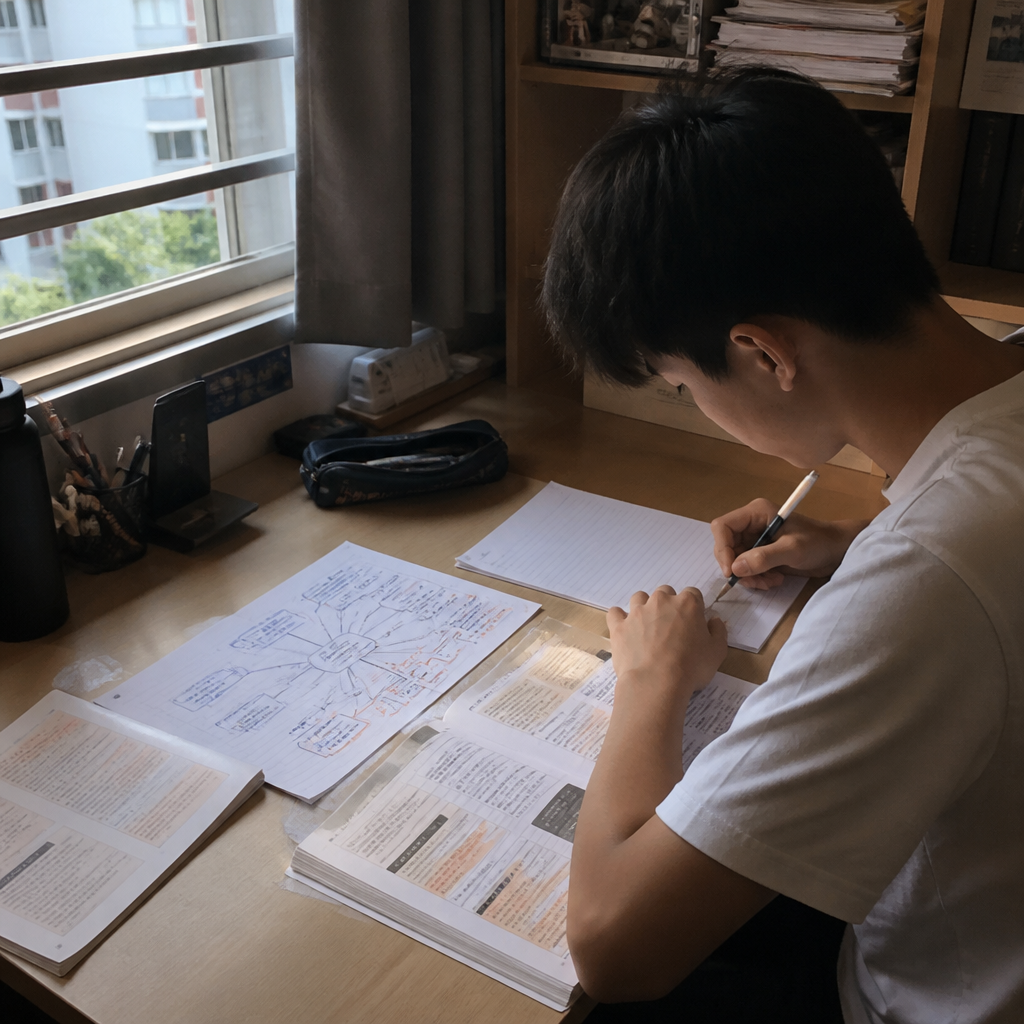
At lower secondary, the goal is to build foundations. Students are learning how events connect across time, how to identify cause and consequence, and how to write short but clear explanations. If they only copy notes and memorise definitions, they may scrape through a small test, but they often struggle later when questions become more analytical.
A more useful habit is to ask after every lesson, “What changed, why did it happen, and why does it matter?” That small shift makes a big difference. If a student studies a war or political development, they should not stop at the event name. They need to link it to who was involved, what triggered it, and what followed after. That is what prepares them for upper secondary History.
What O-Level students are tested on
For O-Level elective or pure History, students usually face both content knowledge and source-based demands. This is where many get frustrated. They memorise a whole chapter, recognise the topic, and still cannot answer the paper well. Usually, the problem is not laziness. It is a mismatch between how they revised and what the exam actually asked for.
Tutors often notice the same pattern. A student revises for recall, but the exam rewards interpretation and argument. If your child is doing upper secondary History, revision needs to match the paper. Build content banks for essays, and separately practise source-based questions such as inference, comparison, reliability, usefulness, and assertion tasks.
What JC History students need to do differently
JC History is a real jump. Content is broader, arguments need more nuance, and essays require sharper evaluation. Vague lines like “this was important because it changed things” stop working very quickly.
JC students often know more than they show. The issue is that their essays stay descriptive. That is where marks slip away. At this level, revision should include thematic comparison, stronger judgement, and the discipline to choose the best evidence rather than the first example that comes to mind.
Study History Content Without Drowning In Notes
Many students make History harder than it needs to be. They reread the textbook, highlight everything, and end up with pages of notes that still do not stick. Content-heavy subjects need structure.
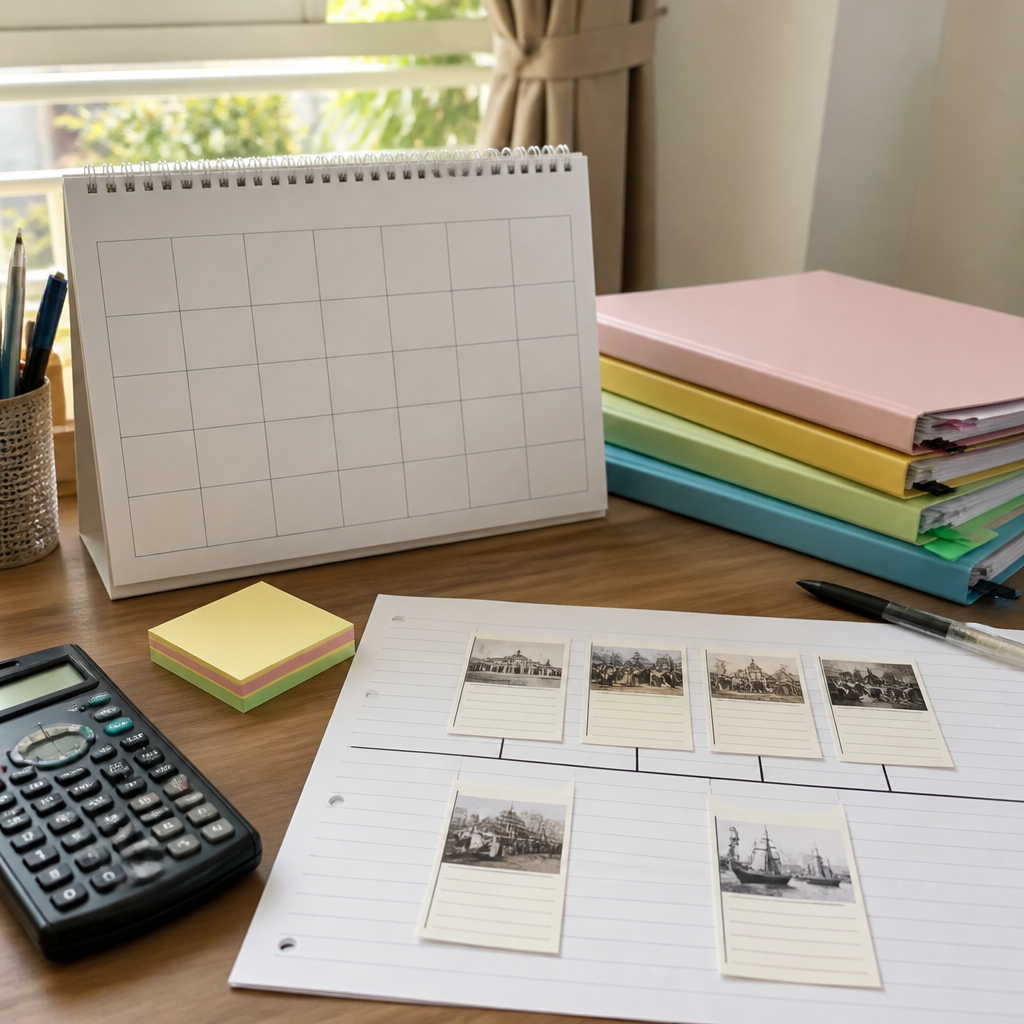
Turn each topic into a one-page story map
For each chapter, create a one-page summary with four parts: background, key events, reasons, and impact. Keep it tight. If the notes become too long, they stop being useful.
This works because exam questions rarely ask for the whole chapter. More often, they ask why something happened, how important a factor was, or what the consequences were. A one-page map makes those links easier to see and easier to recall.
Group facts under factors, not just dates
One of the most effective ways to memorise History is to group facts under categories like political, economic, social, leadership, foreign pressure, or military reasons. Random facts are hard to retrieve. Grouped facts are easier to use.
A student facing an essay on why a government rose or failed should be able to pull up grouped reasons, not just scattered lines from the notes. This also helps with comparison, which becomes more important in upper secondary and JC.
Use active recall instead of rereading
Close the notes and test from memory. That could mean speaking out loud, writing a short answer, or using flashcards with prompts.
Many students avoid this because it feels uncomfortable. That discomfort is useful. If they cannot recall it without looking, they do not know it well enough for the exam.
If you need more guided support, you can explore History tuition or reach out through this contact page for help with revision strategy and exam practice.
Memorise Dates And Events Without Blind Cramming
Dates matter in History, but not every date matters equally. A common mistake is trying to memorise every single year in the notes. That usually leads to overload, then panic.
Memorise anchor dates first
Anchor dates are the major turning points that help students place other events in sequence. Once those are secure, smaller developments become easier to remember around them.
Instead of forcing ten scattered dates into memory at once, anchor the topic around three or four major milestones. Then ask what happened before, during, and after. Sequence creates memory.
Tie dates to meaning
A date without context disappears quickly. A date linked to a major shift stays longer. If a student remembers that a certain year marks the start of war, a leadership change, or a treaty that altered international relations, the number becomes meaningful.
This is why blind memorisation often disappoints. Some students can recite dates at home but freeze in the exam because they never learned how to use those dates in an argument.
Build mini timelines repeatedly
Write short timelines from memory, then check them. Repeat this over several days, not just once in one sitting. A five-minute timeline drill can be far more effective than a long cramming session that leaves the student exhausted.
For O-Level students especially, this fits better into real school life. Revision does not always need to be long. It needs to be regular.
Improve Source-Based Skills And Stop Losing Easy Marks
Source-based questions scare many students because the source looks unfamiliar. That reaction is normal. The encouraging part is this, source skills usually improve with focused practice.
Read the question before reading the source closely
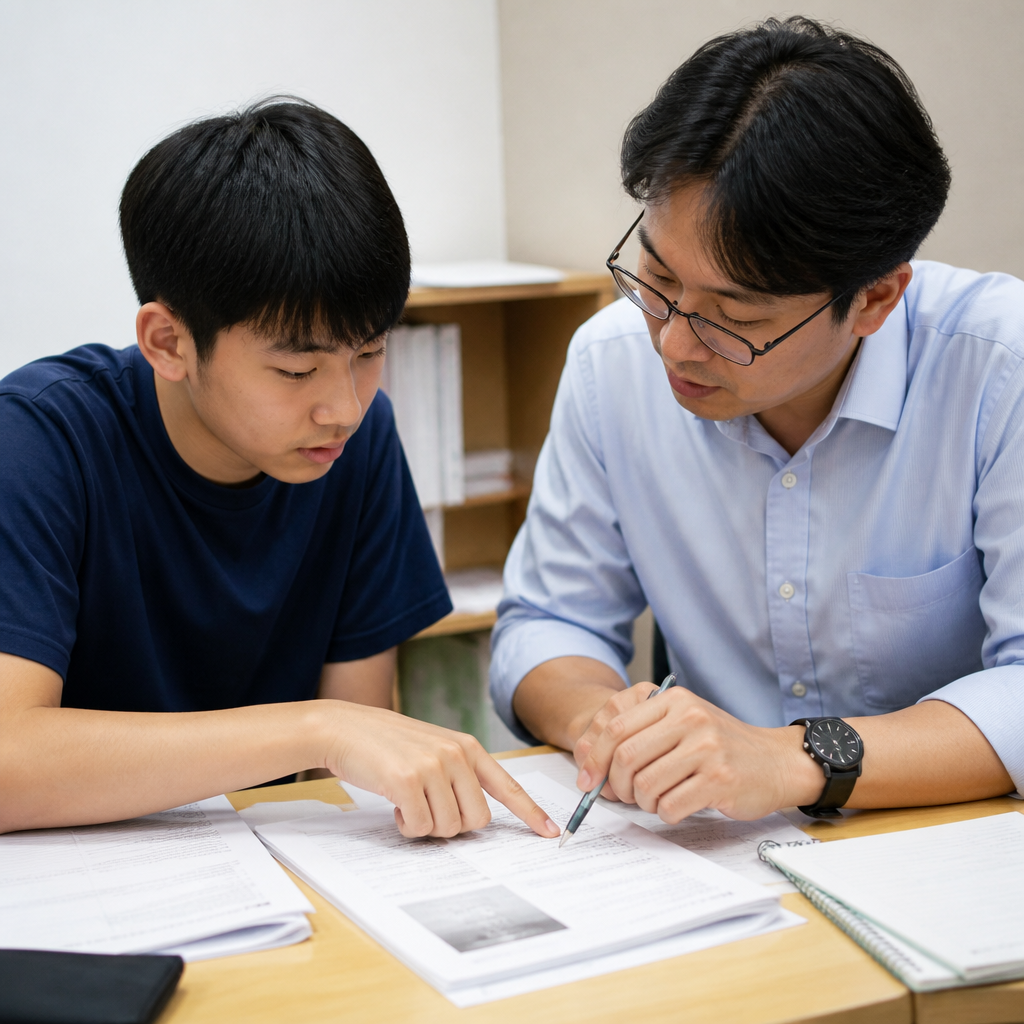
Many students still read the source first and get lost in the details. The question should guide the reading. Is the task about inference, comparison, reliability, usefulness, or purpose? That changes what the student should look for.
If the question asks about purpose, summarising content alone will not help much. If it asks whether two sources agree, separate paragraphs without direct comparison will not score well. The task must shape the answer.
Use evidence and explanation together
A very common mistake is copying a quote and stopping there. Another is giving a vague explanation without evidence. Strong source-based answers need both.
Weak approach: quote the line and move on.
Better approach: quote briefly, then explain what that line suggests about the source’s message, perspective, or intention.
That second step is where many marks sit.
Use contextual knowledge carefully
Students often know contextual knowledge but insert it without linking it to the source. That rarely helps. Context should support the explanation of why a source is reliable, limited, biased, or significant.
A common pattern among students is relying too heavily on memorised model answers. This can feel safe, but it backfires when the wording changes. It is much more effective to adapt to the exact source and question in front of them.
Practise with short, focused drills
Not every source-based practice session needs to be a full paper. In fact, shorter drills are often better for building confidence. A student can take one source and spend ten minutes identifying message, tone, provenance, and one useful quote. Another day, they can compare two sources and write only the agreement point and evidence.
This kind of focused practice helps students isolate weak skills. If they always lose marks on reliability, they should train that skill directly instead of doing random full papers and hoping it improves on its own.
Write Better History Essays Even If You Already Know The Content
One of the most frustrating results in History is this, the student studied hard, recognised the question, and still scored lower than expected. In many cases, the issue is not weak content. It is weak essay control.
Answer the question, not the topic
If the question asks “How far do you agree,” the essay must weigh factors. If it asks why something happened, the paragraphs must explain causation. If it asks which factor was most important, the student needs judgement, not just a list.
Many essays drift into storytelling because students are afraid of leaving things out. But markers reward relevance, not volume.
Build paragraphs around arguments
A strong paragraph starts with a clear point, supports it with specific evidence, and explains how that evidence proves the point. Where needed, it should also compare with another factor or show a limitation.
This is where content becomes marks. Naming a policy or event is not enough. The student has to show how that evidence supports the argument.
Practise planning before writing full essays
If full essays feel draining, start with five-minute plans. Pick a question, write a stand, list three factors, and note one example for each. This builds speed and sharpens judgement.
Often, that is the real difference between average and stronger performers. The stronger student is not always the one who memorised more. It is often the one who can choose relevant evidence faster and organise it better under pressure.
Review teacher feedback after every test
A simple but underused strategy is to keep a mistake log. After each class test or school exam, write down what went wrong. Was the issue weak examples, missing explanation, poor judgement, or running out of time? Patterns usually appear very quickly.
Once a student knows the pattern, revision becomes more efficient. Instead of vaguely deciding to “study harder,” they can fix one recurring weakness at a time.
Build A History Revision Routine You Can Actually Sustain
Revision advice can sound good on paper but fall apart on a busy school week. A child gets home late from CCA, still has other homework waiting, and by night time the brain is already tired. So the method has to be realistic.
Lower secondary revision routine
Keep it simple and steady. Two short sessions a week can be enough if they are active. One session can be used to review class notes and make a one-page topic map. The second can be used for oral recall or short written testing.
At this stage, consistency matters more than intensity.
O-Level and upper secondary revision routine
A practical way to revise secondary school History is to split revision into three tracks.
It is important not to spend all the time on just one track. A student who only memorises content may struggle in source-based sections. A student who only practises sources may lack depth in essays.
JC revision routine
JC students need more comparison and more depth. Revising by theme and issue usually works better than revising by lecture title alone. After each topic, ask what debates, turning points, and comparisons could appear.
A practical week might include one thematic summary, one timed source response or essay outline, and one review of teacher feedback. Feedback matters a lot at JC level because the same weakness in argument can keep repeating if it is not corrected early.
A simple weekly plan that works
For students who need a starting point, a basic weekly structure can help. For example, Monday can be for one topic summary, Wednesday for source-based practice, and Saturday for one essay plan or timed paragraph. This keeps History active across the week without turning it into an overwhelming daily burden.
The exact schedule can change, but the principle stays the same: small, repeated contact with the subject works better than one long, exhausting session.
Frequently Asked Questions
How many hours a week should I spend studying History?
It depends on your level and how weak the subject currently is. For many students, two to four focused hours a week outside homework can be enough during normal school periods, especially if that time includes active recall and practice. Near major exams, more time may be needed, but reading notes for hours without testing recall is usually not the best use of effort.
My child memorises the chapter but still fails source-based questions. Why?
This is very common, and it can be quite discouraging. Source-based skills are different from content recall. The student may know the topic but still struggle to read the question carefully, choose the right evidence, or explain the source clearly. If this keeps happening, it usually means revision should shift towards targeted source-based practice, not just more memorisation.
Is it better to make notes or do practice papers for History?
Both matter, but once the basic notes are done, practice usually gives a better return. A lot of students feel productive rewriting notes again and again, but that does not always improve exam performance. Moving on to recall drills, essay plans, and source-based practice tends to make revision much more exam-focused.
How early should I start revising for O-Level History if I want better marks?
Earlier is usually better because it gives room for spaced revision. A solid O-Level History study plan works best when topics are reviewed weekly and practice is built in steadily. Last-minute cramming may help a student recognise facts, but it rarely builds the writing control needed for stronger marks.
Do I need tuition for History if my child already studies hard?
Not always. Some students improve once they change their revision method and use school feedback more carefully. But if your child knows the content and still cannot apply it in essays or source-based questions, extra guidance can help. You can learn more through this page if you want support with revision strategies, source-based practice, essay planning, and exam confidence.
Conclusion
When students want to study History more effectively and score better, the answer is usually not to memorise more blindly. It is to revise with purpose. Learn each topic through timelines, factors, and outcomes. Memorise dates as anchors, not isolated numbers. Practise source-based questions as a separate skill. Build essays around argument, not narration. Most of all, use a revision routine that can actually survive real Singapore school life.
Whether your child is in lower secondary, preparing for O-Level elective or pure History, or handling JC History, the same principle applies. Content only becomes marks when a student can use it well under exam conditions. Keep checking the latest school guidance and official syllabus updates from MOE and SEAB. If you want more personalised help, you can also reach out through this contact page.