


Introduction
It often starts with a familiar scene. Your child is at the table late at night, workbook open, calculator beside them, and that frustrated line comes out again, “I studied already, but I still don’t get Physics.” For many Singapore families, that moment feels all too familiar. The effort is there, the time is being spent, but the results do not seem to move.
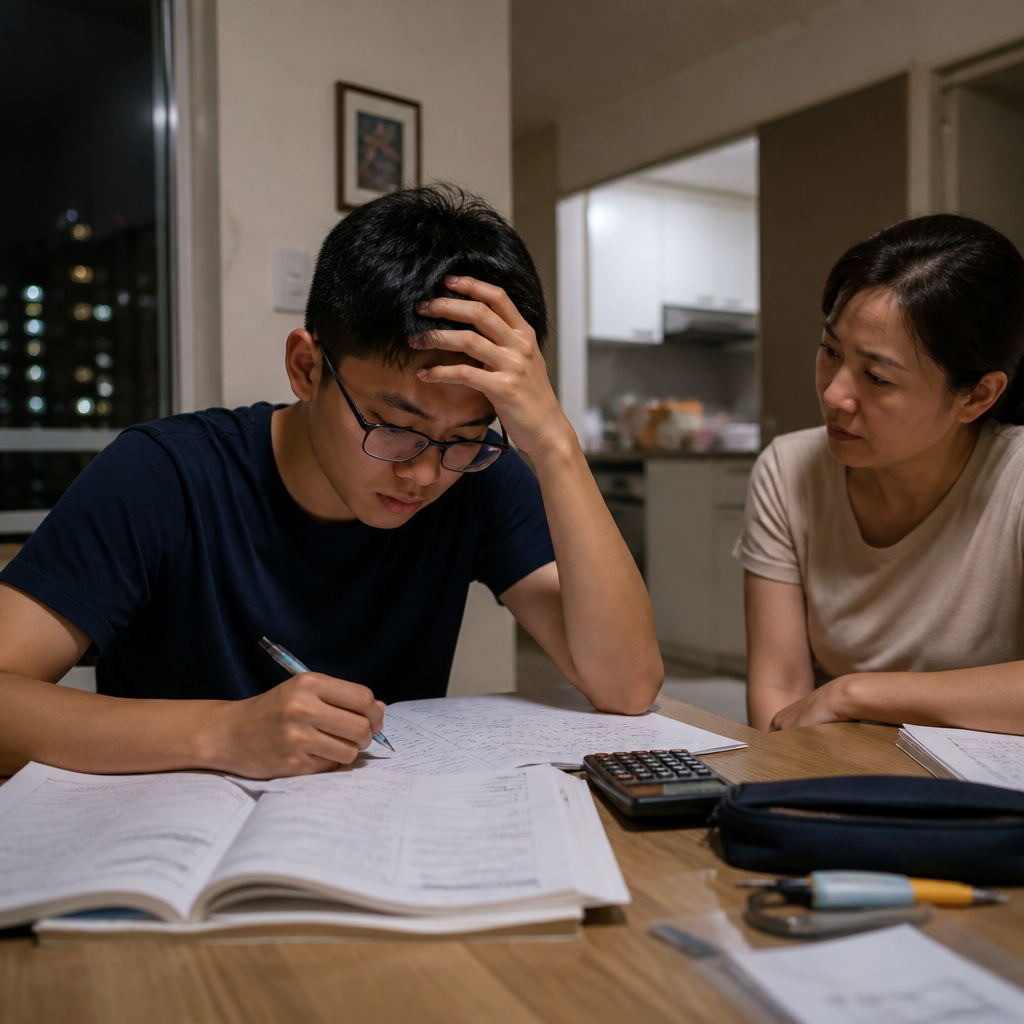
That is what makes Physics so draining at Secondary school level. A student can memorise formulas, finish homework, and still freeze in a test the moment the question looks slightly unfamiliar. Knowing how to study Physics properly matters far more than simply studying longer.
For many households, the struggle shows up after a long school day. It is 9.30pm, CCA ended late, homework is not done yet, and Physics revision turns into rushed copying instead of real learning. This guide looks at how to study Physics at home, what weaker students often get wrong, how parents can support revision without turning into the “home tutor”, and when tuition may be the more useful next step. If you are trying to improve home study for Secondary school or O-Level Physics, this will help you see what tends to work, and what usually does not.
Key Takeaways
- Physics needs understanding, not just memorising. Many students think studying means copying notes and remembering formulas, but Secondary school Physics questions often test whether they can apply ideas to new situations. A child who only memorises equations may still struggle badly when the question is phrased differently.
- Short, focused home revision works better than random cramming. A 30 to 45 minute session with concept review and targeted questions usually helps more than two distracted hours after a tiring school day. This is especially true for students balancing school, CCA, and multiple subjects.
- Weak students often study the wrong way. Re-reading notes feels productive, but it does not expose confusion. Attempting questions, checking mistakes carefully, and explaining concepts aloud is far more effective for building real understanding.
- Parents can support Physics revision without teaching the subject. What matters most is helping with routine, accountability, and spotting patterns such as careless mistakes, avoidance, or weak foundations. You do not need to reteach the chapter to be useful.
- Tuition is not always the first answer, but it can help when self-study keeps failing. If a child has repeated gaps, low confidence, or cannot study independently, structured support may be more useful than repeated nagging at home.
- Different tuition formats suit different learners. One-to-one home tuition, online lessons, and small-group classes each have trade-offs in attention, flexibility, cost, and teaching style. The best option depends on the child’s actual learning needs.
- The right support should match the student’s real problem. A child who forgets formulas needs something different from one who misunderstands concepts or panics during O-Level exam preparation.
Why Physics Feels So Hard At Home
A common misconception is that Physics is just “Math with science words”. That is exactly why many students underestimate it. In reality, Secondary school Physics demands several skills at once, concept understanding, formula use, unit awareness, graph reading, and careful question interpretation. According to the Science curriculum on MOE, students are expected to connect scientific ideas with reasoning and application, not simply repeat content.
Why memorising formulas is not enough
Many weaker students can recite formulas like speed equals distance over time, or pressure equals force over area, but they still cannot tell which one to use. Tutors often notice this pattern. The formula list is there, but the understanding underneath is shaky.
A student may know the formula for density, then panic when a question describes a floating object and asks for an explanation instead of a calculation. At home, this feels unfair to the child because they think, “But I revised already.” What really happened is that they revised symbols, not meaning.
Why home study often breaks down
On paper, home revision sounds straightforward. In real life, it rarely is. After school, there may be CCA, tests from other subjects, tiredness, and the temptation to avoid difficult chapters like electricity or moments. Physics gets pushed to the weekend, then to Sunday night, then quietly postponed again.
That is why learning how to study Physics at home is different from simply deciding to study. The problem is not only content. It is consistency, method, and knowing what to do when stuck.
What O-Level preparation actually demands
Once O-Levels draw nearer, the pressure changes. Physics exam preparation is not just about topical revision anymore. Students need to handle structured questions, data-based questions, explanation questions, and accurate calculations. Parents can check the latest examination information on SEAB.
If your child keeps losing marks because they “know but cannot answer”, the issue may not be effort alone. Very often, it is the study method.
How To Study Physics At Home Without Wasting Time
A lot of students ask how to study Physics, but what they are really asking is, “Why am I revising and still not improving?” Usually, the answer starts with changing how home revision is structured.
Use active revision instead of passive revision
Passive revision feels safe. Reading the textbook, highlighting notes, and watching someone else solve questions can feel productive. The trouble is that none of these really force the student to think.
Active revision is less comfortable, but much more useful. It includes:
- Attempting questions before looking at worked solutions.
- Explaining a concept aloud, for example why current stays the same in a series circuit.
- Writing out full answers for explanation questions instead of saying, “I know this.”
- Keeping a mistake book with common errors, such as forgetting unit conversion from cm to m.
A common pattern among students is this, they spend a long time “looking at” Physics without really doing Physics. Real improvement usually happens when they retrieve, apply, and correct.
Keep study sessions short and targeted
When a child is already tired, long revision sessions often become low-quality sessions. For many Singapore students juggling school and CCA, shorter blocks are simply more realistic.
A practical weekday routine may look like this:
That is manageable even on a busy weekday. It also reduces the dread that often builds up around Physics revision.
Balance topical revision with mixed practice
Topical study helps when foundations are weak. Mixed practice becomes more important once the basics are in place and exam readiness matters more.
For example, a Secondary 3 student struggling with forces may need a full week focused on that topic. A Secondary 4 student preparing for prelims usually cannot rely only on chapter-by-chapter revision. They need mixed papers so they can practise switching between concepts quickly.
If your child says every chapter feels “separate”, that often means they need help connecting ideas, not just covering more pages.
Common Mistakes Students Make When Studying Physics At Home
Parents often see the outcome, low marks, careless mistakes, unfinished papers, but not the habits causing it. Those hidden habits matter a lot.
Mistaking time spent for real understanding
Many students measure revision by time. Two hours at the desk sounds impressive. But what actually happened during those two hours?
If they copied notes, checked answers too early, or skipped difficult questions, the session may not have built much at all. Tutors often notice that weaker students avoid the exact questions they most need. If a question combines electricity and formula rearrangement, they may leave it blank and tell themselves they will “review later”. Later often never comes.
Copying answers instead of correcting errors
Copying the correct answer after getting it wrong is common, and on its own, it does very little. The better question is, can the student explain why they got it wrong?
A more useful correction process is to ask:
- Did I misunderstand the concept?
- Did I choose the wrong formula?
- Did I miss a unit conversion?
- Did I fail to explain clearly enough in words?
If a student loses marks in a light chapter question because they wrote “reflection” instead of “refraction”, that may look careless at first. In reality, it may reveal confusion between ideas that seem similar in notes but differ in application.
Chasing formulas before understanding the situation
Very weak students often look for equations before they understand what is happening in the question. They see numbers and immediately start searching for something to substitute into.
That habit causes trouble, especially in explanation questions and practical-style questions. A stronger habit is to pause and ask, “What is happening physically?” If an object is accelerating downhill, the student needs to picture force and motion first, then calculate. That concept-first approach is often what separates students who can apply Physics from those who only memorise it.
How Parents Can Help Without Teaching Physics
Many parents feel stuck here. You want to help, but Secondary school Physics may not be your strength, especially if the syllabus and exam style feel very different from what you remember. The reassuring part is this, effective parent support is usually not about reteaching the chapter.
Focus on the revision environment
Trying to become the Physics explainer at home can create tension very quickly, especially if your child is already discouraged. What often helps more is improving the study system around them.
That may mean:
- Setting a fixed Physics slot twice a week so revision does not keep getting postponed.
- Asking to see one corrected worksheet instead of ten unfinished ones.
- Checking whether mistakes are being reviewed, not just whether homework is “done”.
- Noticing which topics keep getting avoided, because avoidance often points to fear or weak foundations.
If your child keeps “revising” kinematics but never touches electricity, that tells you something important.
Ask better questions, not just “Did you study?”
“Did you study Physics?” usually leads to one-word answers and more frustration. More useful questions sound different:
- Which topic are you doing tonight?
- Which question type still confuses you?
- Show me one mistake you learned from today.
- Do you need help finding extra practice or explaining a chapter?
These questions shift the conversation away from policing and towards problem-solving. That change alone can lower tension at home.
Know when parent support is no longer enough
Sometimes the issue is not laziness or poor attitude. The child genuinely cannot bridge the gap alone. If every revision session ends in tears, resistance, or blank staring at worksheets, outside support may reduce conflict instead of adding pressure.
In such cases, exploring Physics tuition can be a practical next step, especially if the goal is to rebuild confidence before major school exams. The key is to see tuition as structured support, not a magic fix.
When Self-Study Is Enough And When Tuition Helps More
Not every student needs tuition. Some mainly need better revision habits. Others need a tutor because the learning gap has already widened too much. The key is being honest about which situation your child is in.
Here is a simple way to compare both.
A student scoring B4 and aiming for A2 may improve a lot through better planning, timed practice, and targeted review at home. But if your child keeps failing despite “studying” regularly, the issue may be deeper than routine.
Start before confidence collapses
Many parents only seek help after prelims go badly. That is understandable. Still, support is often more effective before confidence drops too far. A student who starts structured help earlier has more room to rebuild basics, especially in topics like electricity, forces, and energy.
Comparing Home Tuition, Online Lessons, And Small-Group Classes
When families compare support options, cost is usually the first thing they look at. That makes sense. But the better question is whether the format fits how your child learns.
A one-to-one Physics tutor is often suitable for students with major learning gaps, low confidence, or very specific weaknesses. Online tuition offers convenience and can work well for students who are already fairly independent. Small-group tuition can be a good middle ground, especially for students who learn by hearing other students’ questions.
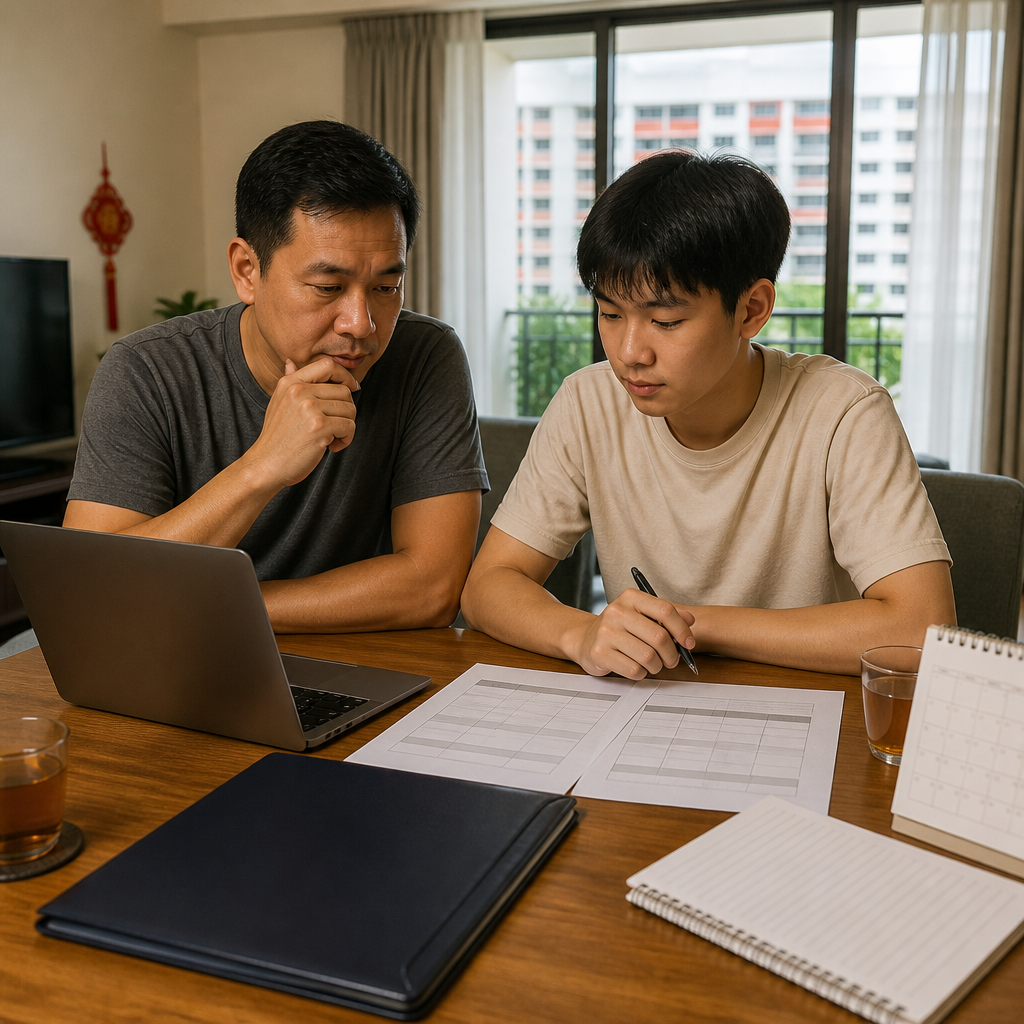
If you are comparing options now, a practical next step is to contact a tuition coordinator and describe your child’s actual revision needs, not just their latest grade. That usually gives a clearer picture of what kind of support may fit.
Frequently Asked Questions
How many times a week should my child study Physics at home?
For most Secondary school students, two to four focused sessions a week is more realistic than trying to revise daily. A child with weak foundations may need shorter but more regular sessions. Three 40-minute sessions often work better than one exhausted three-hour weekend block.
What if my child says they understand during revision, but still fail tests?
This usually means familiarity has been mistaken for mastery. Many students feel they understand a topic while reading notes, but cannot apply it when the question changes. They often need more question practice, error review, and explanation practice, not just more reading.
Is tuition necessary for O-Level Physics?
Not always. Some students do well with school materials, consistent home revision, and teacher consultation. But if your child has weak basics, poor confidence, or repeated poor results despite effort, tuition may provide the structure and personalised explanation they are missing.
How do I choose a good Physics tutor for a weak student?
Look beyond academic credentials alone. A good fit often comes down to whether the tutor can teach from weak foundations, explain concepts simply, and adapt to your child’s pace. For a struggling student, patience and clarity may matter more than speed.
Can parents help even if we are not good at Physics?
Yes. In fact, many of the most effective forms of support have little to do with solving Physics questions. You can help by setting routines, checking consistency, encouraging review of mistakes, and noticing when frustration is becoming a barrier to learning.
Conclusion
Learning how to study Physics at home is not about forcing longer hours or buying more assessment books. It is about matching the right method to the real problem. Some students mainly need better routines and more active revision. Others need outside support because their foundations are shaky, their confidence is low, or O-Level preparation has become overwhelming.
For parents, one mindset shift helps a lot. Try not to judge revision by how long your child sits at the table. Look instead at whether they can explain, apply, and correct mistakes. That is usually where the real picture shows up.
If you are deciding between self-study, online support, or a tutor, compare the fit carefully. The goal is not simply more lessons. It is the right kind of help for your child’s revision gaps and learning style. If you want to compare tutor options and find support that matches your child’s needs, you can start here: Contact a tuition coordinator.