


Introduction
It is a scene many Singapore parents know all too well. Your child can chat endlessly in English, explain a game in great detail, and negotiate for more screen time without missing a beat. Then Chinese homework comes out, and suddenly everything slows down. The silence, the frustration, the repeated reminders, it can make even well-meaning parents feel stuck.
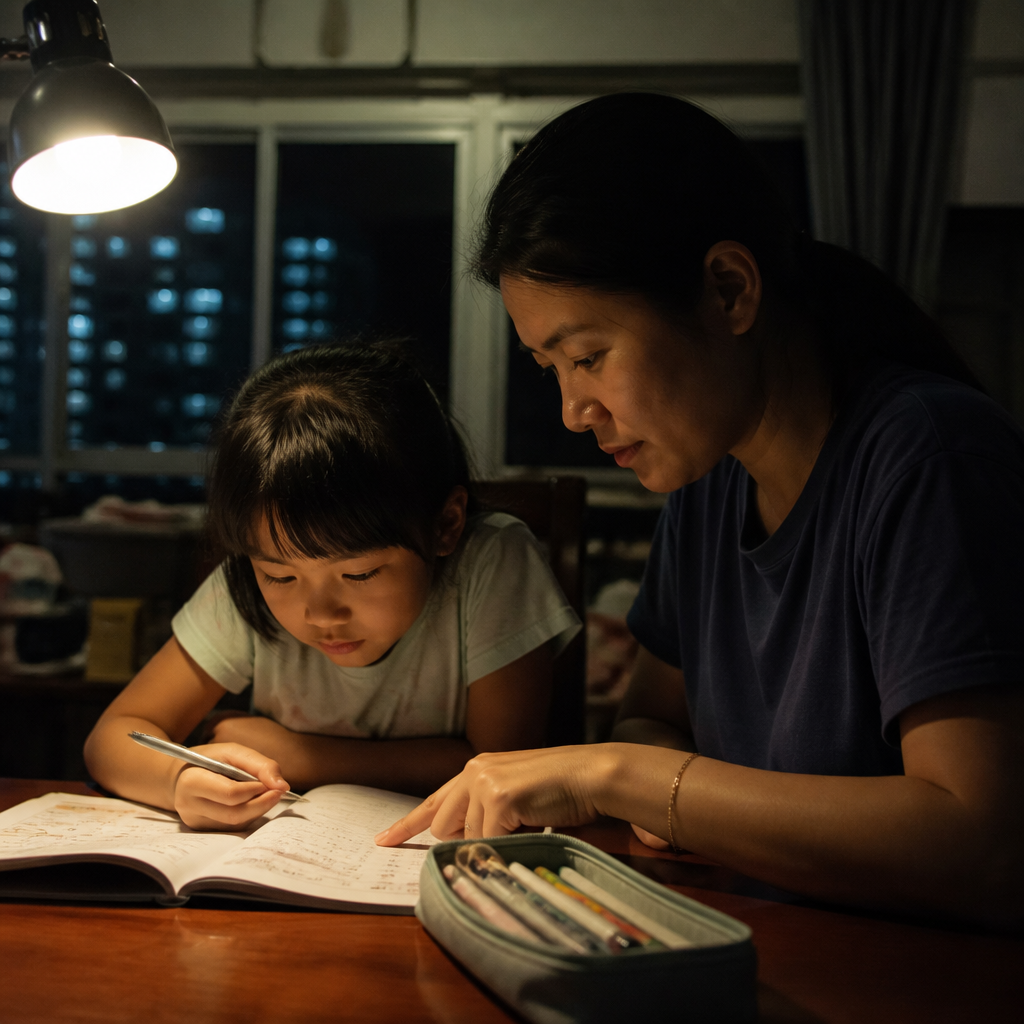
If you are wondering how to teach children Chinese at home, the good news is this: home support does not have to feel like a second classroom. In fact, one of the most effective ways to help children learn Chinese in Singapore is through short, steady, low-pressure routines that build vocabulary, speaking confidence, reading familiarity, and homework habits over time. For many children, especially those who speak mostly English, the aim at home is not perfection. It is regular exposure, emotional safety, and enough structure to make school Chinese feel less intimidating.
Key Takeaways
- Keep Chinese visible and heard every day. Small daily exposure works better than one long weekly session.
- Match your support to your child’s age and stage. Preschoolers need play and sound exposure, while older children need more structured vocabulary, reading, and oral practice.
- Speaking confidence often improves before test scores do. A child who dares to answer in Chinese is building a foundation for oral, composition, and comprehension.
- Do not turn every mistake into a correction session. Correct selectively, then recycle the same words naturally later.
- Homework help is not the same as spoon-feeding. Guide your child to understand instructions, break tasks into steps, and review errors calmly.
- Use low-stress routines instead of punishment. Chinese during meals, storybooks before bed, and quick vocabulary games are usually more sustainable than scolding.
- Get extra help when confidence is collapsing. If your child is falling behind or dreads Chinese, you can learn more about our tutors.
Make Chinese Part Of Home Life Without Daily Battles
For many families, the biggest issue is not laziness. It is tension. By the time everyone gets home, there is already Math homework, spelling, CCA, dinner, and plain exhaustion. Chinese becomes the subject that triggers tears because it feels slower, heavier, and harder than English.
That is why teaching Chinese at home in Singapore should start with environment, not worksheets.
Tutors often notice that children do not always dislike Chinese itself. Many dislike the feeling of being corrected, tested, or rushed every time Chinese appears. When the emotional pressure drops, some children become much more willing to try speaking, reading, or answering in short phrases.
Build short, repeatable routines
Children usually respond better when Chinese shows up in small, predictable ways. If every session feels like a major event, resistance builds quickly. Instead of announcing, “Today we are doing Chinese for one hour,” attach Chinese to routines that already exist.
Examples that work in real homes include:
- During dinner, ask one simple question in Chinese, such as “你今天在学校做了什么?”
- Before bed, read one short Chinese storybook page.
- On the way to school, revise three vocabulary words connected to daily life.
These moments feel lighter. Over time, Chinese stops feeling like a punishment block and starts feeling like part of normal family life.
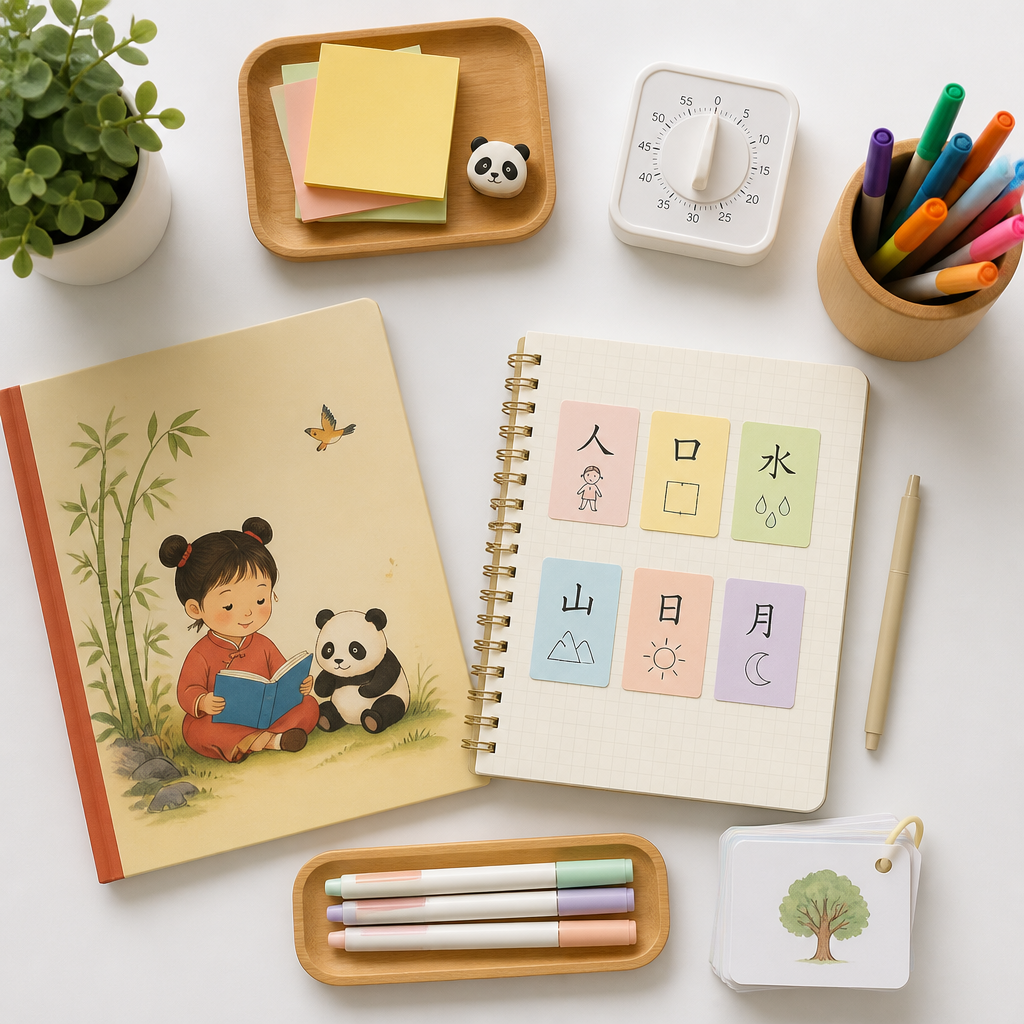
Reduce correction pressure
A common mistake is correcting every tone, every word, and every sentence. In real life, that often makes children shut down.
A gentler approach is selective correction. If your child says, “我今天去canteen买水,” you do not have to stop everything because one English word slipped in. You can simply respond, “哦,你今天去食堂买水.”
Child: “我今天去canteen买水。”
Parent: “哦,你今天去食堂买水。”
Make success feel reachable
Many children resist Chinese because they already expect failure. Start with tasks they can complete. Ask them to name three fruits in Chinese, not explain a difficult idea in full sentences. Confidence grows from repeated small wins.
Support Preschoolers Through Play, Sound, And Repetition
When children are very young, Chinese learning should feel warm, playful, and oral. This is not the stage for heavy copying or pushing perfect character recognition.
Focus on sound, rhythm, and familiar words
For preschoolers, the priority is listening and speaking exposure. Use words tied to real life so the language feels meaningful rather than abstract.
If your child is eating grapes, say “葡萄” while handing them over. If they are tired after childcare, say “你很累吗?” The point is repetition in context, not formal teaching.
Use songs, books, and repeated stories
Children remember sounds more easily than explanations. Nursery rhymes, action songs, and repetitive picture books are especially helpful because the same words keep returning.
Keep speaking pressure low
Some parents worry when the child refuses to answer in Chinese. At this age, understanding often grows faster than spoken output. Instead of demanding, “Say it in Chinese now,” offer choices like “你要苹果还是香蕉?” Even a one-word reply is progress.
Help Primary School Children Build Vocabulary, Reading, And Oral Skills
Primary school is where many parents begin to feel the strain. The child now has spelling, oral, comprehension, composition, and school assessments. MOE’s Mother Tongue expectations become more visible, and children who speak mostly English at home can start falling behind quickly. You can read more about Mother Tongue learning expectations at MOE’s official website.
Build vocabulary through topics, not random lists
Long word lists often look productive, but they are easy to forget because the words feel disconnected. Topic-based learning usually works better.
For example, if the week’s topic is school:
- Learn words such as 书包, 铅笔盒, 课室, and 操场.
- Use them in short spoken sentences.
- Spot them in a reading passage.
- Write one or two in simple sentences later.
This helps the child move from recognition to actual use.
A common pattern tutors see is that children may recognise a Chinese word when it appears in spelling or a worksheet, but struggle to use the same word in speech or writing. That is why vocabulary practice should not stop at memorisation. Children need to hear the word, say it, read it in context, and use it in a simple sentence.
Use simple activities that feel natural
Parents often ask for Chinese learning activities that do not feel fake or childish. Usually, the best ones are the simplest.
Try these:
- A vocabulary hunt at home, where your child finds five items and names them in Chinese.
- A picture description challenge using a family photo and three short Chinese sentences.
- A Chinese meal challenge where everyone says food names in Chinese during dinner.
Strengthen oral skills before pushing composition
Many weak writers are also weak speakers. If a child cannot say a sentence comfortably, writing it becomes even harder. So if you want to improve your child’s Chinese speaking skills, start with oral retelling.
After a short story, ask:
- 谁在故事里?
- 发生了什么事?
- 你觉得他为什么这样做?
At first, the answers may be broken or brief. That is fine. Expand them gently. Oral confidence is often the bridge to better composition.
Turn Homework Time Into Support, Not Conflict
Homework time is where good intentions often fall apart. It is late, everyone is tired, and one Chinese worksheet has somehow taken over the whole evening.
Start by clarifying the task
Children often look lost not because they know nothing, but because they do not understand what the question wants. Before supplying answers, help them identify the task type. Ask whether it is vocabulary meaning, sentence construction, comprehension from a passage, or tingxie revision.
Break work into smaller chunks
“Finish the whole Chinese assessment book now” sounds straightforward, but for a struggling child, it can feel impossible. Breaking work into smaller parts makes it easier to begin.
For example, spend 10 minutes reading the passage, 5 minutes underlining unknown words, and 10 minutes answering the first few questions before taking a short break.
Review mistakes calmly and specifically
It is very tempting to say, “You always forget your words,” or “Why are you so careless?” But that kind of frustration rarely teaches anything.
A more useful response is specific: “You wrote 请 instead of 情. Let’s look at how these two are used differently.” Specific feedback teaches. General scolding deepens dread.
If homework battles are becoming a nightly pattern and your child is losing confidence, extra support may be worth considering. You can explore Chinese tuition options here.
Guide Secondary Students With More Purposeful Practice
By lower Secondary, the struggle often changes shape. The child may know basic vocabulary but avoid speaking Chinese, write stiffly, and rely on memorised phrases that do not fit the question.
Shift from exposure to targeted practice
Secondary school Chinese requires more than naming objects. Students need to explain opinions, understand passages, respond to visuals, and write with more control. The Singapore Examinations and Assessment Board provides official exam-related information at SEAB.
At home, support should become more targeted:
- Discuss one school situation or issue in simple Chinese so your child practises expressing opinions.
- Practise short oral responses from pictures or video clips.
- Review common sentence patterns from school passages.
- Ask for summaries, not just word meanings.
Watch for quiet avoidance
Not every struggling student argues. Some simply avoid Chinese quietly. They choose English media, give one-word answers, and rush through homework. Look out for patterns such as refusing to read Chinese aloud, long pauses during simple oral questions, or overdependence on translation.
Know when home support is no longer enough
There is no shame in reaching a point where your child needs outside help. If Chinese has become a source of dread, or school feedback mentions weak oral, composition, comprehension, or spelling, timely support can prevent confidence from dropping further. If you want targeted help, you can learn more about our tutors.
Use Daily Family Life To Build Chinese Vocabulary And Speaking
Vocabulary and speaking are often treated as separate problems, but at home they can grow together. A word memorised in isolation is easily forgotten. A word used in a real sentence at the dinner table tends to stay longer.
Turn family routines into language practice
You do not need perfect Chinese to do this. Just choose recurring moments.
Morning routines like “刷牙了吗?” and “快点换衣服,” mealtime questions like “你要多一点饭吗?” and after-school prompts like “今天最开心的事情是什么?” all give repeated exposure to useful sentence patterns.
Recycle old words instead of always adding new ones
A common problem is too much new input and not enough revision. The child learns 10 new words this week, then forgets last week’s 10 completely. Vocabulary grows when old words keep returning in new situations.
Let children speak imperfectly
Parents sometimes wait for “correct” Chinese before encouraging speech. That often slows progress. If your child says broken sentences, respond warmly and model a better version. Speaking confidence is fragile.
Frequently Asked Questions
What if my own Chinese is weak? Can I still help my child at home?
Yes. You do not need to be fluent to support Chinese learning at home. You can still read simple books together, revise vocabulary, use basic daily phrases, and create regular exposure.
How much time should we spend on Chinese at home each day?
For most families, 10 to 20 minutes of focused, low-stress practice is more effective than one long forced session.
My child understands Chinese but refuses to speak it. What should I do?
This is very common in Singapore, especially in English-speaking households. Start with low-pressure prompts, either-or questions, and familiar topics. Avoid public correction or long lectures.
When should I consider a Chinese tutor?
Consider a tutor if your child is consistently falling behind, dreads Chinese lessons, cannot cope with homework, or needs focused support for oral, spelling, comprehension, or composition.
Will making my child copy characters repeatedly help?
Sometimes limited copying helps with memory, but too much often backfires. It works better when copying is combined with reading, speaking, meaning, and sentence use.
What should I do if Chinese homework always turns into crying or arguments?
Pause and look at the pattern. If every Chinese session ends in tears, the issue may not be laziness. Your child may feel overwhelmed, embarrassed, or afraid of making mistakes. Shorten the session, focus on one small task, and rebuild confidence before increasing the workload.
Conclusion
Learning how to teach children Chinese at home in Singapore is not about turning your home into a second classroom. It is about building small, steady habits that help your child hear Chinese more often, use it more bravely, and fear it a little less.
Preschoolers need playful exposure. Primary school children need vocabulary, reading, and oral routines. Secondary students need confidence, flexibility, and more targeted support. If your child speaks mostly English, forgets characters easily, resists Mother Tongue practice, or struggles with Chinese homework, you are not alone.
What matters most is not perfect pronunciation or long study hours. It is consistency, patience, and creating an atmosphere where Chinese feels possible.
If you need extra support, especially when your child is falling behind or needs more focused help for oral, comprehension, composition, or spelling, you can learn more about our tutors.