


Introduction
Standing at this crossroads can feel surprisingly stressful. One moment, you are comparing schools and exam pathways. The next, you are wondering whether one decision might affect your child’s confidence, future options, and even daily happiness for the next few years. If you have been searching for whether IGCSE or O Level is better in Singapore, the honest answer is simple, there is no universal winner for every child.

For some children, the structure and familiarity of the O Level route suit them better. For others, IGCSE offers flexibility, a broader international environment, and a learning style that feels less boxed in. The real question is not prestige. It is fit. When comparing IGCSE vs O Level for Singapore students, parents need to look at curriculum, assessment style, school environment, budget, and where the child is likely to go after secondary school.
Key Takeaways
- There is no single “better” option. The right choice depends on your child’s learning style, school setting, and post-secondary plans, not on brand name alone. A pathway that works beautifully for one student can feel deeply frustrating for another.
- O Level fits the local system more directly. For families aiming for familiar Singapore pathways such as junior college or polytechnic, O Level usually feels more straightforward and easier to navigate. The route is also more familiar to local schools, teachers, and parents.
- IGCSE often offers more subject flexibility. Many international schools let students mix subjects more freely, which can suit children with uneven strengths, such as strong sciences but weaker language-heavy subjects. That flexibility can help a child build confidence instead of feeling defined by one weaker area.
- Assessment style matters more than many parents expect. A child who memorises well under tight exam structure may cope better in one system, while a child who does better with broader application and varied papers may thrive in the other. This is often where the real difference shows up.
- Cost and school environment are part of the decision. This is not only about exams. International schools, class culture, language environment, and peer mix all affect whether a child settles and performs over several years.
- University recognition is usually possible for both, but routes differ. If you are wondering which is better for university admission, the answer depends more on the next qualification after secondary school, such as A Levels, IB, polytechnic, or foundation programmes.
- Always verify the latest admissions rules. Recognition policies, school entry requirements, and pathway options can change, so check current information from MOE and SEAB, as well as the schools or institutions your child may apply to.
How The Two Pathways Differ In Singapore
The biggest difference is context. In Singapore, O Levels are closely tied to the local education system, while IGCSE is usually offered through international schools. So this is rarely just exam versus exam. Very often, it is also local school culture versus international school culture.
To make the comparison easier to scan, here is the broad picture.
O Level connects more naturally to local progression
If your child is already in the mainstream local system, O Levels usually link more directly to post-secondary choices like junior college, polytechnic, or the Millennia Institute route. For many families, that familiarity feels reassuring. Teachers, school counsellors, and even other parents tend to understand how the route works.
That matters more than it may seem. When a child is already stretched by school tests, CCA commitments, and tuition on weekdays, a pathway that feels easier to understand can reduce family anxiety. Parents are often calmer when the next step feels visible, and children pick up on that calm too.
IGCSE may suit families seeking flexibility or an international environment
IGCSE often appeals to parents who want broader subject combinations, a less localised school culture, or smoother progression into IB, international A Levels, or overseas foundation routes. This can matter for expatriate families, returning Singaporean families, or children who may continue studying outside Singapore later.
Still, flexibility is not the same as ease. Some students do best when expectations are very clear and tightly structured. Others perform better when they have more room to think independently. That is why this choice should not be made based on reputation alone.
What The Curriculum Feels Like Day To Day
When parents ask about the difference between IGCSE and O Level curriculum in Singapore, they are usually asking something more practical, what will school actually feel like for my child each day?
O Level tends to feel more standardised and exam-focused
The Singapore-Cambridge O Level system is well known for being rigorous and exam-oriented. In many schools, the teaching pace is tight, with clear preparation towards tested formats. Students often become very familiar with question types, mark allocation, and common exam traps.
This suits children who benefit from routine and repeated drilling. Tutors often notice that such students improve steadily once they understand how exam questions are phrased and what examiners are looking for. At the same time, weaker students can feel boxed in. If they fall behind by Secondary 3, the pace may start to feel unforgiving, and catching up can become emotionally tiring.
IGCSE often allows more variation across schools
IGCSE is not one single school experience. Different international schools may offer different boards, subject combinations, and internal approaches. In practical terms, that means more room for customisation, but also more need for parents to ask careful questions.
One school may offer stronger coursework support, while another may still be heavily exam-driven despite being international. A child who enjoys humanities, project work, or broader discussion-based classes may find the IGCSE environment more natural. Another child may actually miss the clarity and discipline of the local system.
That is why comparing IGCSE and O Level in Singapore needs to go beyond the exam label. The school experience matters just as much as the qualification name.
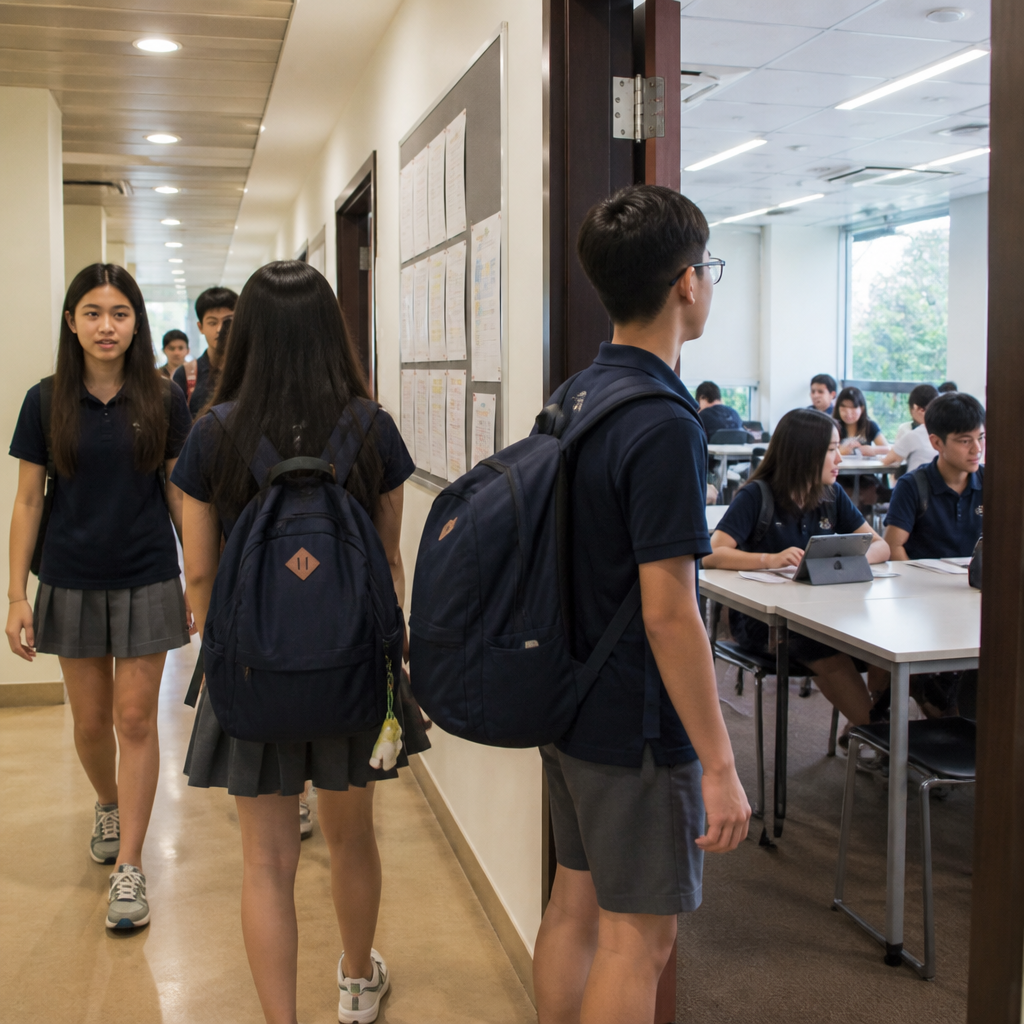
Which Exam Style Suits Your Child Better?
This is one of the most common parent questions, and also one of the easiest to oversimplify. If you are asking which is easier, IGCSE or O Level, the honest answer is that difficulty depends heavily on the subject and the child.
“Easier” depends on the learner
Some children cope well with highly structured, precise answering. Give them clear marking expectations, and they know how to respond. These students may find O Level more manageable. Others struggle with rigid wording and do better when they can explain ideas more flexibly. They may find certain IGCSE papers less intimidating.
A common pattern among students is this, “I studied a lot but still lost marks.” Often, the issue is not effort. It is mismatch. The child may be revising in a way that does not suit the assessment style. Memorising model answers can help for a while, but both systems eventually expose shallow understanding.
Subject differences matter more than labels
Math may feel comparable in some areas, while English or humanities can feel quite different depending on paper style, marking, and expectations. Science subjects may also differ in practical assessment, data interpretation, and the balance between recall and application.
So when parents ask whether one route is easier, a better question is this, easier for what kind of learner? A child who is bilingual but not especially strong in high-pressure local language expectations may cope differently across pathways. A child who freezes in narrow-answer formats may also show very different results.
Pressure, Grading, And Academic Confidence
The way a child is assessed shapes confidence just as much as the content itself.
O Level often feels high-stakes in the Singapore context
In Singapore, O Level is often experienced as a major milestone. The emotional weight is real. By Secondary 4, some families start to feel as if every school exam is a preview of the final outcome. Some children become more disciplined under this pressure. Others become anxious, especially when school teachers, tuition teachers, and parents all intensify expectations at the same time.
This is where well-meant help can backfire. A child already juggling remedial classes, homework, and CCA may not benefit from simply piling on more practice papers every night. Sometimes the issue is not lack of effort. It is poor recovery, weak exam technique, or a growing fear of failure.
IGCSE may feel broader, but not necessarily lighter
Some parents assume international exams are automatically less demanding. That is not always true. IGCSE can still be rigorous, especially in schools with strong academic cultures. The pressure may just show up differently, through coursework expectations, broader reading, or subject combinations that demand stronger self-management.
If your child tends to need close structure, external deadlines, and clear exam formatting, IGCSE can feel deceptively loose at first. If your child shuts down under highly compressed local exam stress, IGCSE may feel more workable. The key is not which route sounds more impressive. It is whether your child can sustain the workload without constant conflict at home.
What Each Pathway Can Lead To
Parents often worry most about where each path leads. That concern is understandable. Secondary choices should not close doors unnecessarily.
O Level offers clearer local progression routes
For many Singapore families, O Levels offer more straightforward progression into local post-secondary options such as JC, polytechnic, or other established pathways. If your child is likely to stay within the local system, this route is easier to map out and discuss with school staff.
You can review local secondary course information on MOE’s secondary courses page and examination details at SEAB’s GCE O-Level page. Admissions requirements and school-level policies can change, so it is always worth checking the latest details before making decisions.
IGCSE can support international progression well
If your child may move toward IB, international A Levels, overseas pre-university programmes, or foundation courses, IGCSE can be a strong fit. So when asking which is better for university admission, it is more accurate to ask, better for which next step?
Universities usually look at the full academic pathway, not just the secondary qualification alone. In most cases, IGCSE or O Level is not the final qualification used for direct university entry anyway. The next stage matters greatly. A child taking IGCSE and then IB may be on a very different route from a child taking O Level and then polytechnic.
A practical way to think about it is to work backwards. If your child is likely to aim for a local diploma route, local A Levels, or a familiar Singapore progression ladder, O Level may feel more efficient. If your family expects relocation, overseas applications, or a school environment built around international progression, IGCSE may align better. The exam itself matters, but the surrounding pathway matters more.
School Environment And Cost Often Decide More Than The Exam Name
Parents sometimes focus so much on the qualification that they overlook the daily reality of the school setting. But that daily reality often determines whether a child settles, resists, or slowly loses confidence.
Local schools and international schools can feel very different
A local secondary school may offer familiar routines, strong bilingual expectations, and a more Singaporean peer environment. International schools often offer smaller class cultures, different pastoral systems, and a more mixed student community. Some children thrive in one and wilt in the other.
Think about your child at 7.15am on a Monday, tired, school bag packed, maybe already bracing for tests and CCA. Does this child need stronger structure, or more flexibility? Does your child draw energy from familiar expectations, or from a less rigid environment? Even a strong curriculum can fail if the child never really settles into the school culture.
Budget and support load are real considerations
International school fees are a major factor for most families. Beyond school fees, there may also be transport, activity, and tutoring costs. O Level routes can also involve substantial spending on enrichment and tuition, especially in exam years, but the overall financial picture is often very different.
If your child needs subject support while you evaluate the best-fit pathway, compare our IGCSE tutor options and O-Level tutor options to find help that matches their learning needs and academic workload. Sometimes, seeing how a child responds to one curriculum style can make the bigger decision clearer, without assuming one path automatically guarantees better results.
It is also worth thinking about hidden support demands. Some children in either pathway need close parental supervision, regular tutoring, or emotional coaching during exam periods. A route that looks ideal on paper may become exhausting if the family cannot realistically sustain the time, money, and energy required over two or more years.
Questions To Ask Before You Decide
When parents ask whether their child should take IGCSE or O Level, they are often hoping for a simple answer. Usually, the better approach is to narrow the decision through a few practical questions.
Look at your child’s real learning behaviour
It helps to set aside the idealised version of your child who “could do well if only they tried harder.” Look at the real one in front of you. Does your child need heavy supervision to complete revision? Do they cope well with exam pressure? Are they stronger in analytical writing, structured problem-solving, oral discussion, or independent project work?
A child who constantly leaves work incomplete may struggle in a setting that demands high self-direction. A child who knows the content but crumbles under narrow exam pressure may suffer in a more rigid route. Honest observation is usually more useful than hopeful projection.
Check progression details before falling in love with a school
Before committing, ask each school what subjects are offered, what the progression options are after graduation, and what support exists if the child struggles. Ask about language requirements, internal promotion standards, counselling support, and how frequently students move on to different destinations.
Recognition policies, admissions requirements, and pathway options may change over time. Always verify the latest information with MOE, the school, and any later-stage institutions you may be targeting. That small step can prevent a lot of confusion later.
Frequently Asked Questions
Is IGCSE recognised in Singapore?
Yes, IGCSE is generally recognised in Singapore, especially within international school and international pre-university pathways. Recognition for specific progression routes can vary by institution and programme, so it is best to check the latest entry requirements directly with the school or institution rather than rely on old assumptions.
Is O Level better than IGCSE for Singapore students?
Not automatically. For families staying within the local system, O Level may feel more straightforward because it aligns more clearly with familiar Singapore pathways. For children heading toward international pathways, or who fit better in an international school environment, IGCSE may be more suitable. The better option depends on fit, not status.
Which is easier, IGCSE or O Level exams?
There is no universal answer. Some students find O Level clearer because of its structured expectations and predictable exam style. Others find IGCSE more manageable because of the way questions are framed or how subjects are offered. Difficulty depends on the subject, school, and the child’s strengths.
Can my child go to university with either pathway?
Usually yes, but not directly on the basis of the secondary qualification alone in most cases. What matters more is the next stage, such as A Levels, IB, a polytechnic diploma, or a foundation programme. It helps to look at the full progression route rather than focus only on the exam name.
What should parents compare first: curriculum or school environment?
Compare both together. A strong curriculum fit can still fail in the wrong school environment. If your child dislikes the culture, cannot cope with the workload style, or does not receive suitable support, even a respected pathway may become a poor choice.
Conclusion
So, when it comes to IGCSE vs O Level in Singapore, which is better? For most families, the better answer is not one system over the other, but the system that fits the child, their learning style, emotional readiness, budget, and post-secondary plans.

O Level often makes more sense for families who want clearer local progression and a familiar Singapore academic route. IGCSE can be a strong option for children who benefit from greater subject flexibility, an international school setting, or progression toward global pathways. What matters most is not just the academic content, but how your child will live and learn within that system every day.
If your child needs subject support while you evaluate the best-fit pathway, compare our IGCSE tutor options and O-Level tutor options, or contact us for personalised guidance.