


Introduction
Standing in a bright preschool lobby with your child clinging to your leg, it is very easy to feel torn. One centre feels warm and cosy. Another sounds stronger academically. A third is simply easier for morning drop-off before work. In that moment, most parents are not just thinking about how to choose a preschool. They are quietly wondering whether one wrong decision might make the next few years harder than they need to be.

That is why the right questions to ask when choosing a preschool matter so much. A good tour is not just about whether the classroom looks pretty. It is about what you ask, what you notice, and what your child is likely to experience on a very ordinary Tuesday morning. For parents comparing nursery, childcare, and kindergarten options in Singapore, the best preschool questions help you look past brochures and get a clearer feel for daily life, teacher support, safety, routines, and overall fit.
This guide gives you a practical, Singapore-focused checklist so you know exactly what to ask during a preschool visit and how to compare your options calmly.
Key Takeaways
- Ask about daily life, not just marketing points. A polished tour can sound impressive, but the real test is what happens during arrival, meals, toileting, nap time, transitions, and emotional meltdowns. These ordinary moments often tell you more than a display wall of artwork.
- Look for fit, not just reputation. A well-known preschool may still be the wrong match if your child needs a gentler transition, more movement, or stronger language support. The best preschool for one family may not be the best one for yours.
- Use the same preschool tour questions at each centre. Asking the same core questions helps you compare curriculum, fees, routines, and care quality more fairly. It also stops you from being swayed only by a nicer lobby or a more confident sales pitch.
- Notice how staff answer difficult questions. When you ask about biting, separation anxiety, toilet accidents, or parent concerns, honest and specific answers often reveal more than polished sales talk. Clear examples usually signal real experience.
- Understand fees in full. Registration, deposits, uniforms, enrichment, meal charges, transport, and late pick-up rules all affect affordability, not just the monthly fee. A centre that looks cheaper upfront may cost more over time.
- Picture your child’s actual experience. Imagine your child arriving sleepy, refusing lunch, or feeling overwhelmed. The right preschool should have practical systems for those everyday challenges, not just ideal-case routines.
- A tour should leave you informed, not pressured. If you still feel unclear after visiting, keep asking. When choosing a preschool in Singapore, clarity matters more than speed.
Questions To Ask About Curriculum And Learning
When parents ask about curriculum, they are often asking something more personal underneath it all. Will my child be happy and learning, without being pushed too hard too early? In Singapore, that tension is very real. Some families worry a play-based programme may be too light. Others fear a highly academic setting may wear a young child down long before Primary 1 even starts.
What does a typical learning day look like?
This is one of the most useful questions to ask during a preschool tour because it shifts the conversation from nice-sounding ideas to actual daily life. Ask to see a sample timetable. Does the day include story time, outdoor play, free play, guided activities, meals, rest, and transitions? Or does it lean heavily on worksheets and table work?
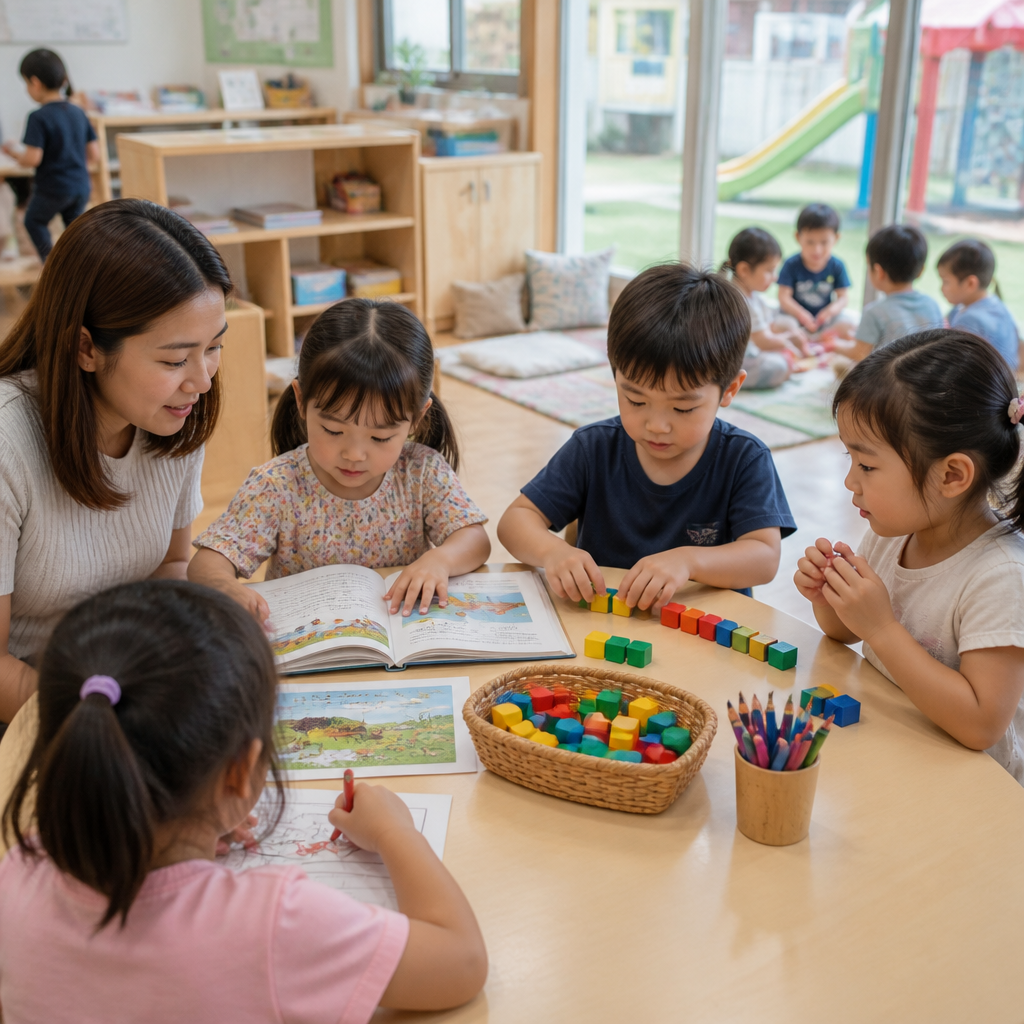
A principal may describe the curriculum as holistic, but if children spend long stretches seated and completing paper tasks, that tells you something important. For a highly active four-year-old who already struggles to sit still, that setup may create daily friction instead of meaningful learning.
How do you support early literacy, language, and numeracy?
You do not need a centre to promise advanced reading. What matters more is how foundations are built. Ask whether teachers use songs, storytelling, conversations, picture books, sound awareness activities, and hands-on counting. Or are children expected to memorise and produce visible results too quickly?
Many parents compare preschools based on who teaches reading earlier. But tutors often notice that children who are rushed can become resistant. Later, this may show up as dislike of books, weak comprehension, or dependence on drilling. A better question is whether the preschool is building confidence, curiosity, and readiness well.
How is Mandarin or bilingual exposure handled?
For many families, this is one of the most important questions to ask a preschool principal in Singapore, especially if grandparents speak Mandarin or if the child will later need to cope with Mother Tongue in primary school. Ask whether language exposure is daily, how much is conversational, and whether it happens naturally through songs, routines, and interaction rather than only during formal lesson slots.
If your child is shy or mostly exposed to English at home, find out how teachers encourage participation without embarrassing them. A common pattern among students is that language confidence grows more steadily when children feel safe enough to try, even imperfectly.
Questions To Ask About Teachers, Ratios, And Care
A beautiful classroom can make a strong first impression. Still, most parents know instinctively that the adults matter more than the decor. During a preschool visit, ask questions that help you understand not just staffing numbers, but how children are cared for when things do not go smoothly.
What is the teacher-child ratio, and who is consistently in the classroom?
When choosing a childcare centre or preschool in Singapore, ask whether there is one main teacher, multiple teachers, assistant teachers, or regular staff rotation. A ratio may sound reasonable on paper, but if there is frequent turnover or many unfamiliar relief staff, young children may struggle to feel secure.
This matters even more for children who are sensitive, slow to warm up, or still adjusting to group settings. A child who cries every morning may settle better with stable, familiar adults than in a centre with changing faces every few weeks.
How do teachers handle separation anxiety, tantrums, or conflicts?
This question often reveals the centre’s real culture. Ask for examples. If a child screams during drop-off for two weeks, what would the teachers do? If another child grabs toys or bites, how is that managed? If your child refuses to join group time, do teachers force participation or support gently?
Listen for calm, practical answers. You want to hear about comfort, redirection, routines, and communication, not shame or harshness. In early childhood education, emotional safety is part of learning, not something separate from it.
What training and experience do the teachers have?
You do not need to interrogate every qualification, but it is completely reasonable to ask about staff experience with your child’s age group. Teaching K1 is different from caring for a toddler group. Ask whether teachers have experience with toilet training, speech delay concerns, bilingual exposure, or children who need more time to adjust.
For official information on preschool regulation and oversight, parents can refer to ECDA.
What To Ask About Daily Routine, Meals, Nap, And Toileting
This is where many practical regrets begin. A preschool may sound excellent until you realise nap arrangements do not suit your child, lunch timing clashes badly with your family routine, or toilet support is weaker than expected. Some of the best questions to ask when choosing a preschool come down to these everyday details.
How are meals handled?
Ask whether meals are prepared in-house or catered, whether the menu rotates, and how the centre handles picky eating, allergies, or children who eat slowly. If your child tends to get overwhelmed in noisy group settings, ask whether teachers actively support eating or simply clear the table when time is up.
A child who skips lunch repeatedly may become cranky and dysregulated by afternoon. What looks like a behaviour issue can sometimes be a mealtime issue instead.
What are nap arrangements like?
Not all children nap well in school. Some sleep only with a parent nearby. Others stop napping early and become restless during long rest periods. Ask where children sleep, how long rest time lasts, what happens if a child does not sleep, and how comfort is provided.
For working parents using full-day childcare, this can affect evenings at home too. A child who naps too late may not sleep until very late at night, and that quickly becomes exhausting for the whole household.
How is toilet training supported?
This is one of the most important preschool questions for parents of younger nursery children. Ask whether children must be fully toilet trained before enrolment, how accidents are handled, whether teachers remind children to go, and how spare clothes are managed.
You want a centre that treats accidents matter-of-factly, not as misbehaviour. Shame around toileting can create setbacks very quickly, especially for children who are already anxious about school.
To make these practical areas easier to compare, it helps to look at them side by side.
Questions To Ask About Safety, Hygiene, And Parent Communication
Parents sometimes feel awkward raising safety concerns because they do not want to seem distrustful. But this is exactly the stage to ask. A preschool is not only a learning space. It is where your child will spend many hours each week.
What are the safety and health procedures?
Ask how the centre handles illness, fever, falls, injuries, medication, and emergency contact. Find out how pick-up authorisation works, whether visitors are screened, and what happens during emergencies. You can also ask about cleaning routines, especially for shared toys, toilets, and eating areas.
The answer should be specific. “We take safety seriously” is not enough. Clear procedures are usually more reassuring than polished promises.
How do you communicate with parents?
Some centres send daily updates through apps. Others share only major incidents or weekly summaries. Neither approach is automatically better, but you need to know what to expect. If you are a working parent who may miss drop-off and pick-up most days, regular communication becomes even more important.
Ask what happens if your child has a difficult day. Will someone tell you if your child cried for an hour, refused food, or had repeated conflicts? Honest updates are useful. Constantly hearing “everything was fine” when your child clearly dreads school can leave parents feeling even more lost.
Can parents raise concerns easily?
A good question to ask a preschool principal is how feedback is handled. If you feel your child is not settling, not eating, or becoming anxious, whom do you speak to? How quickly are concerns followed up? Preschool fit is not just about enrolment day. It is also about whether problems can be worked through constructively after your child starts.
How To Compare Preschools Without Getting Overwhelmed
By the third or fourth tour, many parents feel mentally overloaded. Every centre says it is nurturing. Every brochure mentions holistic development. Fees vary, but not always in obvious ways. This is where a simple preschool checklist can help.
Ask for the full fee picture
When comparing preschool fees, always ask for the total cost, not just the monthly fee. Clarify registration charges, deposits, uniforms, insurance, meal fees, enrichment add-ons, field trips, transport, and late collection penalties.
A centre that looks cheaper at first may become more expensive once all extras are included. For dual-income families managing tight weekday schedules, even late pick-up charges can become a real stress point.
Compare convenience honestly
Convenience is not a shallow factor. A wonderful preschool that requires a difficult daily commute may create constant family strain. Ask yourself what mornings will realistically look like when your child is tired, it is raining, and you still need to get to work.
Many parents feel guilty choosing a more convenient centre over a better-sounding one. But for a young child, calmer mornings and more consistent attendance may matter more than a slightly fancier programme.
Use the same questions at each centre
Bring the same list of preschool tour questions to every visit. Ask about daily routine, teacher stability, nap, discipline, language exposure, communication, and fees in the same order. This makes comparison much easier later, especially when the centres begin to blur together in memory.
It can also help to write down your child’s likely pressure points before each visit. For example, if your child is sensitive to noise, ask specifically about class size, indoor transitions, and whether there is quiet space. If your child has food allergies, ask exactly how meals and snack substitutions are managed. A checklist becomes much more useful when it reflects your real family needs, not just generic concerns.
If your child may need extra early learning support after preschool hours, you can also explore our preschool tutors for gentle school-readiness help at home.
A simple comparison view can also keep things clearer when emotions start taking over.
What Parents Should Know Before Enrolling
A preschool can be perfectly good and still not be right for your child. That is one of the hardest parts of this decision. Parents sometimes keep searching for the best centre, when the more useful question is really this: best for what kind of child, and what kind of family life?

Ask how transitions are handled
One thing parents should know before enrolling in preschool is that the first few weeks can be rough even in a good environment. Ask whether there is a gradual settling-in process, shorter initial days, parent accompaniment options, or extra support for clingy children.
If the answer suggests children are expected to adjust quickly with little flexibility, that may be difficult for sensitive children. A strong centre understands that transition is part of care, not a side issue.
Notice red flags during the tour
Watch how staff speak to children. Do they kneel to eye level or call across the room sharply? Do classrooms feel tense or calm? Are children allowed to move, talk, and explore within reasonable boundaries? Is outdoor play a real part of the programme or just a brochure phrase?
Also notice whether your questions are welcomed. If you feel rushed, dismissed, or pressured to sign quickly, pause. Good centres know parents need space to compare and think clearly.
Think about your child, not other people’s children
One child thrives in a busy, energetic environment. Another wilts in it. One enjoys structured routines. Another needs more warmth and flexibility before participating confidently. Choosing a preschool often becomes clearer when you stop asking, “Is this a top centre?” and start asking, “Can I picture my child here, on a difficult day, being understood?”
It is also worth discussing practical expectations at home before enrolment. Who will handle drop-off if your child resists? What is the backup plan if the centre calls because of fever? If grandparents help with pick-up, are they comfortable with the location and timing? These questions do not change the quality of the preschool, but they do affect whether the arrangement will feel sustainable after the first week of excitement wears off.
Frequently Asked Questions
What are the most important questions to ask when choosing a preschool?
Start with daily routine, teacher-child ratio, discipline approach, meals, nap time, toilet training support, communication with parents, safety procedures, and total fees. These questions usually give the clearest picture of your child’s real experience, not just the centre’s marketing.
What should I ask during a preschool tour in Singapore if my child is shy?
Ask how teachers help children who are slow to warm up, whether there is a transition period, how they handle children who do not speak up in class, and how they encourage participation without forcing. A shy child often needs patient relationship-building more than extra pressure.
How do I compare preschools fairly after visiting several centres?
Use one written preschool checklist for every visit. Record answers on curriculum, routines, ratios, fees, location, communication, outdoor play, language exposure, and settling-in support. Without written notes, centres can blur together quickly, especially after several tours.
Is a more academic preschool always better?
Not necessarily. Strong early academics can look impressive, but if the approach creates stress, resistance, or low confidence, the long-term effect may not be positive. In the early years, language-rich interaction, emotional security, and consistent routines often matter just as much as visible academic output.
Should I only consider ECDA-licensed centres?
For childcare and preschool settings in Singapore, checking whether a centre is properly regulated is wise. Parents can refer to ECDA and also review information on MOE Kindergarten where relevant, especially if comparing different preschool types such as childcare centres and MOE Kindergartens.
Conclusion
The best questions to ask when choosing a preschool are the ones that help you imagine your child’s real day, not just the version shown on a brochure or tour route. Ask about curriculum, but also ask what happens when a child cries, refuses lunch, has a toilet accident, or needs more time to settle. Ask about fees, but also about routines, staffing stability, safety, language exposure, and how the centre works with families.
For parents in Singapore, choosing a preschool or childcare centre can feel emotional because the decision affects not just learning, but daily family life, work schedules, and your child’s sense of security. A useful tour should leave you with clarity, not more confusion.
If you would like extra support for your child’s early learning and school readiness, learn more about our preschool tutors.