

Introduction
If you have ever picked your child up from preschool and wondered, “What did they actually learn today?”, you are definitely not alone. Some parents see artwork, songs, and playtime, then worry it is not enough. Others see worksheets and tracing, then wonder if things are becoming too academic too soon.
The truth usually sits somewhere in between. In Singapore, preschool is not just about ABCs and 123s. Children learn language, early numeracy, social skills, routines, motor development, play, music, art, and self-help habits such as packing up, washing hands, and following instructions.
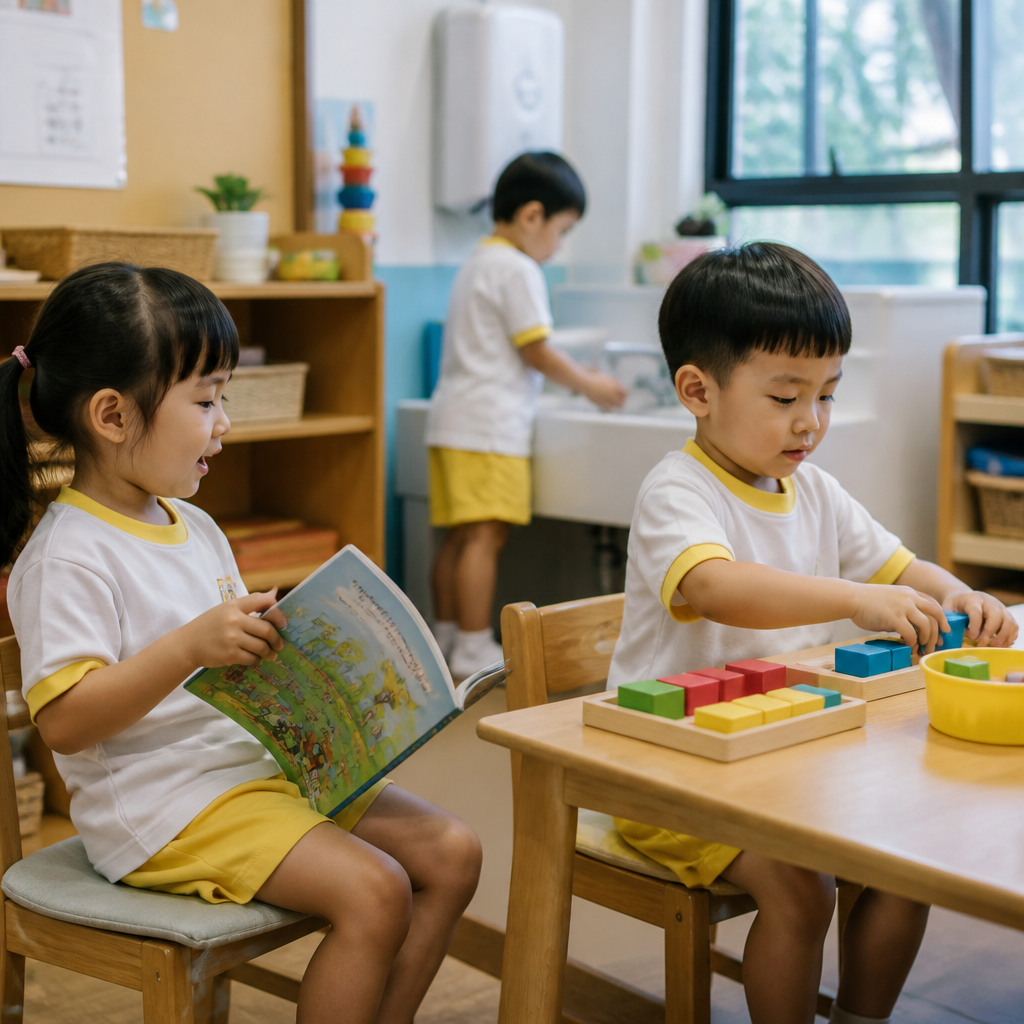
These everyday experiences matter more than they may seem at first. They shape how a child learns, how a child copes in a classroom, and how confidently a child steps into Primary 1. So when parents ask what children learn in preschool, the better answer is often this: preschool teaches children how to learn, how to relate to others, and how to manage simple daily tasks, alongside early academic foundations.
Key Takeaways
- Preschool is not only about academics. Children learn language and numbers, but they also build social confidence, self-control, and independence through everyday routines and play.
- Daily activities are part of the curriculum. Circle time, snack time, outdoor play, music, art, and clean-up routines all teach important habits and skills.
- Language learning starts early and naturally. Many preschool classes in Singapore include English and Mother Tongue exposure through songs, stories, conversations, and themed activities.
- Early numeracy is hands-on. Before formal maths, children usually learn counting, sorting, patterns, shapes, and comparing quantities through games and classroom tasks.
- Motor and self-help skills matter. Holding a pencil, using scissors, opening containers, packing a bag, and waiting for a turn are all part of being ready for Primary 1.
- Preschool prepares children for classroom life. A big part of school readiness is helping children listen, participate, follow routines, and cope with group learning.
- Extra support should match development, not pressure. The goal is confidence and steady progress, not early burnout.
What Preschool Teaches Beyond ABCs And 123s
A lot of parents ask what children actually learn in preschool because they want something concrete. They want to know what really happens between morning drop-off and dismissal, not just broad phrases like “holistic development”.
In real classrooms, preschool subjects for Nursery and Kindergarten are usually woven into the day rather than taught like formal primary school lessons. A child may listen to a story in the morning, count toy animals during play, sing action songs before snack, practise handwashing, and do a simple art activity linked to a theme like transport, animals, or community helpers.
Language, numbers, routines, and play happen together
This is one of the biggest surprises for parents. Preschool learning is often integrated, which means one activity can build several skills at once.
During a theme on food, children may learn new English vocabulary, hear Mother Tongue words related to fruits or meals, count oranges or grapes, draw their favourite food, practise taking turns during pretend cooking play, and wash their hands before snack.
Nothing here looks like a formal textbook lesson, but a great deal of learning is taking place.
Nursery and Kindergarten do not look exactly the same
Nursery children usually spend more time on sensory exploration, simple routines, songs, movement, and getting comfortable in a group setting. Kindergarten children often have a little more structure, longer listening periods, and more focused exposure to pre-reading, pre-writing, and early numeracy.
This is where parents sometimes compare too quickly. One child may bring home more worksheets than another, but more paper does not always mean better learning. A child may know letter names yet still struggle to express a simple idea, sit through a story, or ask for help politely.
How Preschool Builds Language And Early Literacy
When parents think about preschool learning before Primary 1, language and literacy usually come first. Most parents want to know if their child can recognise letters, say sounds, and get ready for reading.
Preschool does build these foundations, but usually in stages. It is not only about drilling phonics or tracing the alphabet again and again.
Listening, speaking, and vocabulary come first
A child who can understand simple instructions, answer questions, speak in fuller sentences, and retell a short story is often in a stronger position than a child who has memorised many words without really understanding them.
In preschool, language learning often happens through:
- Storybooks and picture discussion
- Songs, rhymes, and action chants
- Show-and-tell or sharing time
- Conversations about weather, feelings, family, or class themes
- Picture cards, role play, and dramatisation
Tutors often notice that children who seem “behind” in reading are sometimes actually struggling more with listening, vocabulary, or confidence in speaking. When those foundations improve, literacy often becomes less stressful too.
Early reading and writing are introduced gently
Children may learn to recognise letters, hear beginning sounds, match sounds to letters, and trace or write simple words. But readiness varies from child to child.
Some children are eager to write their names at four. Others still hold a pencil awkwardly at five and need more fine motor practice first. That does not automatically mean something is wrong.
English and Mother Tongue exposure in Singapore preschool
A key part of preschool in Singapore is bilingual exposure. Many preschools use English as the main classroom language alongside Mother Tongue lessons or activities such as Mandarin, Malay, or Tamil.
Children may sing songs, learn simple greetings, name common objects, or listen to short stories in their Mother Tongue. Some warm up quickly. Others stay quiet for a long time while still absorbing the sounds and rhythm. That is very common, especially when the language is not used much at home.
If your child needs more support with early literacy, numeracy, or Chinese exposure, a gentle one-to-one pace can sometimes help without overwhelming them. You can learn more about our preschool tutors or contact us here.
What Children Learn In Preschool For Early Numeracy
Another major part of preschool learning in Singapore is early numeracy. This does not mean children are expected to do formal upper primary-style problem sums. Preschool maths is much more concrete and hands-on.
Counting is only the beginning
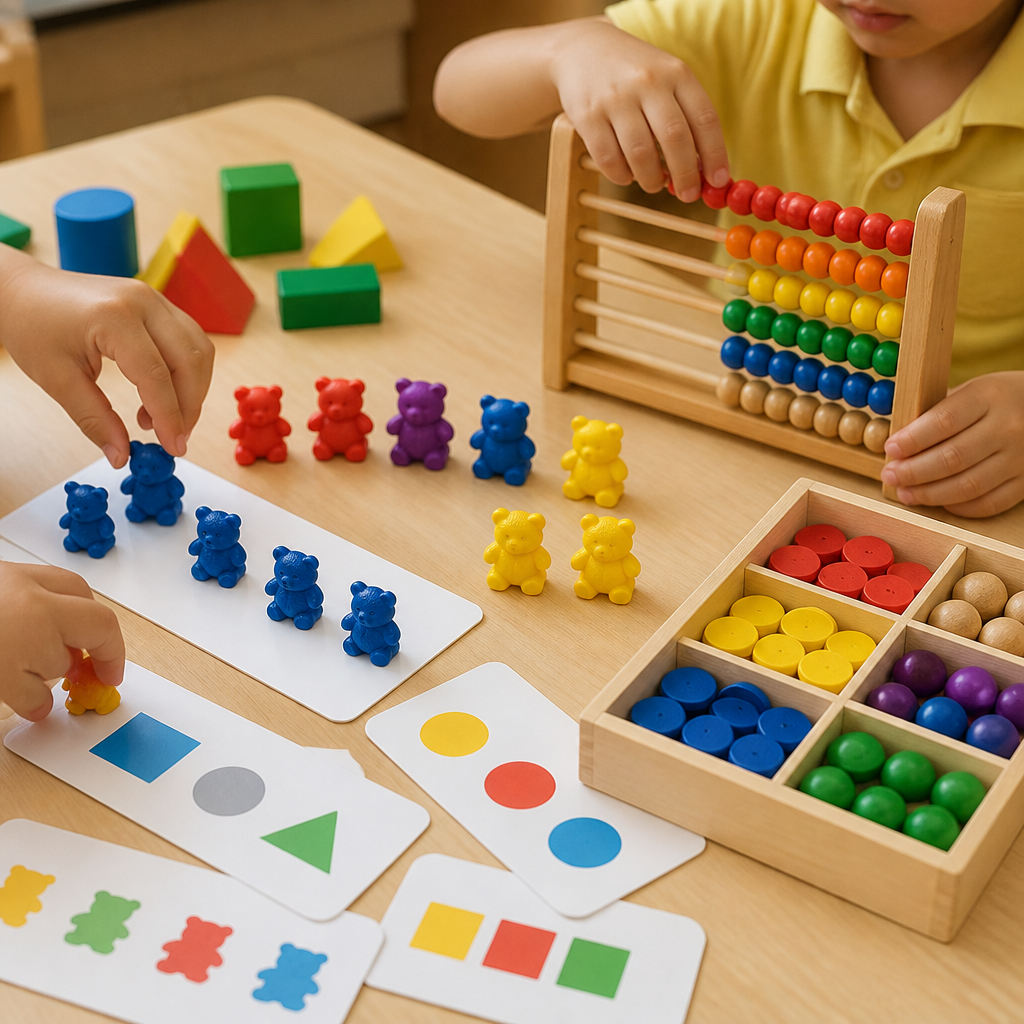
Many children can chant “one to twenty” but do not yet understand quantity. In preschool, teachers help children connect number words to real objects. A child may count five blocks, place three bears into a box, or compare which group has more marbles.
Early numeracy often includes:
- Counting objects meaningfully
- Recognising numbers
- Sorting by colour, size, or type
- Comparing more and less
- Making patterns
- Understanding shapes
- Exploring simple measurement ideas
- Sequencing and ordering
That is why a simple task like arranging sticks from shortest to longest matters. It builds observation, comparison, and reasoning.
Numeracy often appears during play and routines
A snack activity can turn into a maths lesson very naturally. “Take two crackers.” “How many apple slices do you have?” “Who has more?” During attendance, children may count how many classmates are present. During block play, they may talk about tall, short, big, and small.
This is one reason preschool can be misunderstood. Parents may look in and think the children are “just playing”. But guided play is often where real number understanding starts to take shape.
Important Preschool Skills Parents Often Overlook
When families think about what children learn in preschool, they usually focus on reading, writing, and counting. But teachers and tutors often notice that the children who cope best in Primary 1 are not always the ones who started academics the earliest.
Very often, the smoother transition comes from children who can manage themselves in a classroom.
Social and emotional skills
Preschool teaches children to wait for their turn, share materials, join group activities, express feelings with words, cope with small disappointments, listen when another person is speaking, and ask for help appropriately.
These are not “soft extras”. They affect classroom life every single day.
> A child may know many sight words but still cry when a classmate takes a crayon first. Another child may count well but shut down the moment they are corrected.
That is why social and emotional readiness matters just as much as early academic ability.
Self-help and independence
Many Singapore parents are surprised by how much independence matters in Primary 1. Preschool helps children practise practical tasks that make school life smoother.
These may seem basic to adults, but they can make a huge difference to how secure a child feels in school.
Attention and follow-through
Another overlooked skill is being able to sit, listen, and complete a simple task. Not for long stretches like an older child, but long enough to follow a short story, finish a drawing, or carry out a two-step instruction.
That is a big part of how preschool prepares children for primary school.
What To Expect From A Typical Preschool Day In Singapore
Parents often ask what a preschool day actually looks like because they want something practical to picture. While schedules differ from centre to centre, most preschool days follow a familiar rhythm.
Morning routines and group time
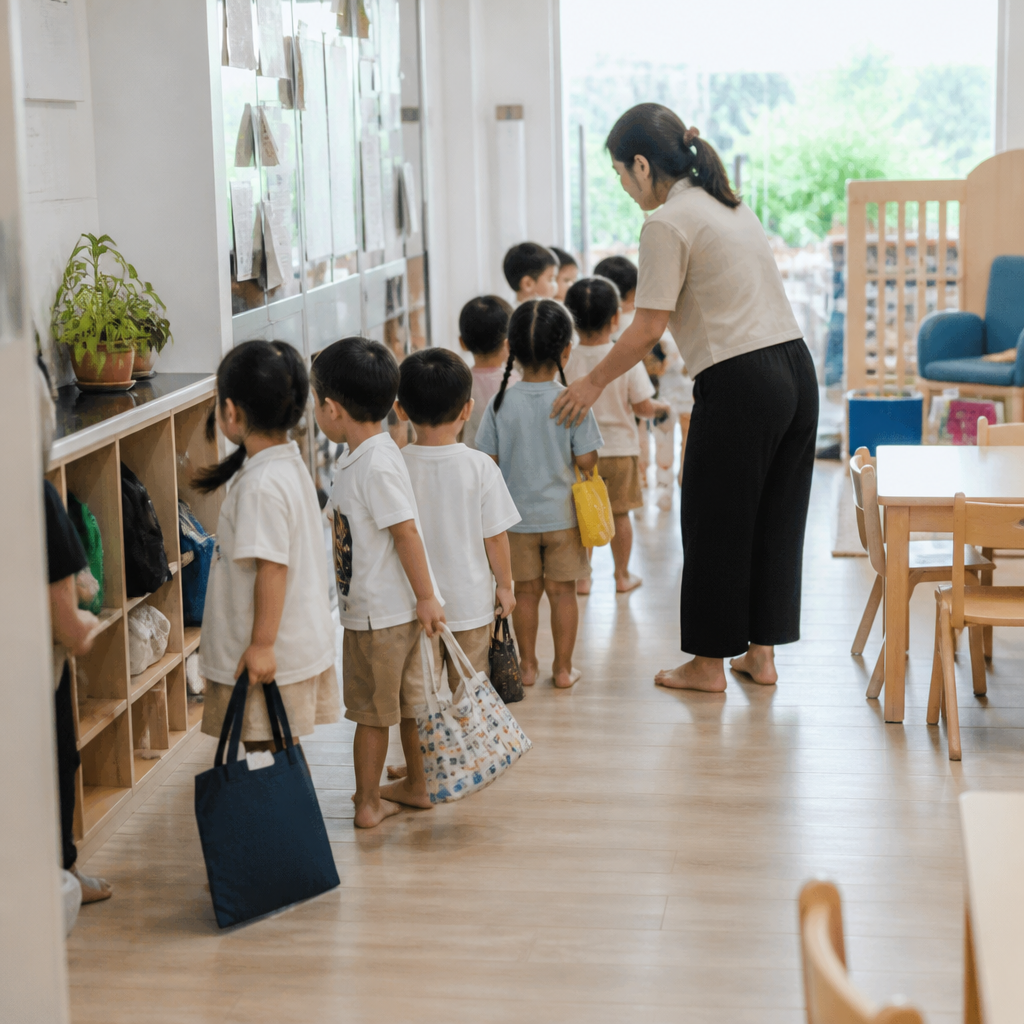
Children usually begin with arrival routines such as greeting teachers, putting away bags, and settling into the classroom. This may be followed by circle time, where they sing songs, talk about the date or weather, discuss the day’s theme, or listen to instructions.
That short routine teaches more than it seems. Children are learning to transition, pay attention, participate, and feel part of a group.
Learning centres, teacher-guided activities, and play
The day often includes a mix of structured and open-ended experiences. There may be a literacy corner with books and picture cards, a numeracy table with counting items, art and craft tasks, sensory trays, pretend play areas, and teacher-led small group work.
A theme on transport, for example, may include reading a bus story, making a paper traffic light, counting toy cars, and acting out road safety rules. This helps children connect ideas across different areas of learning.
Meals, rest, outdoor play, and clean-up
Snack and lunch are not just breaks. Children practise manners, independence, and routines. Outdoor play supports balance, coordination, spatial awareness, and confidence. Clean-up teaches responsibility and respect for shared spaces.
Some parents feel uneasy when a preschool seems to spend “so much time” on these routines. But these routines are part of the curriculum too. Learning how to line up, wait, wash up, and return materials properly is part of learning how school works.
Why Music, Art, Movement, And Outdoor Play Matter
A common misconception is that music, movement, art, and outdoor time are extras. In reality, they are central to early childhood development.
Fine motor skills support later writing
Before children can write neatly, they need hand strength, finger control, and coordination. Preschool builds this through drawing and colouring, tearing and pasting paper, threading beads, using tongs, playdough, and simple cutting with scissors.
A child who resists writing may not be lazy. Sometimes the hand simply gets tired quickly.
Gross motor skills support body control and confidence
Running, hopping, balancing, climbing, and jumping help children develop coordination and body awareness. This matters in class too. Children with weaker body control may find sitting upright, managing space, or moving safely in a group more difficult than expected.
Music and art build more than creativity
Songs and movement activities support memory, rhythm, listening, and language. Art helps children express ideas, make choices, and strengthen concentration.
For a fuller understanding of Singapore’s early years approach, parents can refer to the ECDA Nurturing Early Learners Framework and the MOE Kindergarten Curriculum Overview.
How Preschool In Singapore Prepares Children For Primary School
Parents often think school readiness means reading early, writing neatly, and doing sums. Those things are part of the picture, but they are not the whole picture.
Readiness includes classroom behaviours
A Primary 1 child needs to cope with group instructions, transitions, waiting, classroom expectations, and a more demanding routine. Preschool helps build that readiness gradually.
Children learn to respond when their name is called, listen to instructions in a group, complete simple tasks independently, manage belongings, move between activities, speak to adults appropriately, and keep going when work feels difficult.
Academic readiness is built through strong foundations
A child does not need to finish a Primary 1 assessment book at age five to be ready.
A better sign is whether the child can understand stories, communicate needs, recognise basic print, count meaningfully, and engage with simple classroom tasks. Strong foundations usually matter more than early acceleration.
Pushing too hard can create resistance
Sometimes families, with the best intentions, overload preschool children with enrichment and workbook practice. The child may seem advanced for a while but become tired, resistant, or anxious.
The goal is not early pressure. It is steady confidence at a healthy pace.
Frequently Asked Questions
Does my child need to read before entering Primary 1?
Not necessarily. Some early literacy foundation helps, such as recognising letters, enjoying books, and understanding simple instructions. But full reading fluency is not the only sign of readiness. Confidence, listening skills, and independence matter too.
Why does my child’s preschool seem to do more play than worksheets?
Usually because that is how young children learn best at this stage. Preschool learning often happens through stories, songs, hands-on activities, play, routines, and teacher-guided discussion.
Is preschool Mother Tongue exposure enough if we hardly use it at home?
It depends on the child and how much exposure they get. Some children pick up vocabulary quite naturally in school, while others need more listening and speaking practice outside class. Gentle support usually works better than turning the language into a daily battle.
My child is okay with letters and numbers, but struggles to share or take turns. Should I be worried?
This is more common than many parents think. A child may be strong academically but still find group situations difficult. It is worth supporting these areas early because they affect classroom adjustment and daily participation in Primary 1.
Conclusion
So, what do children learn in preschool in Singapore? Usually much more than parents first expect. They learn language and literacy, early numeracy, motor skills, music, art, outdoor habits, social interaction, classroom routines, and self-help skills.
These are not separate from school readiness. They are school readiness.
If you have been wondering what preschool children learn in Singapore schools, the short answer is this: they learn how to function, communicate, explore, and grow in a classroom community, while building the foundations for later reading, writing, and maths. That is why preschool subjects for Nursery and Kindergarten often look broad and activity-based rather than heavily academic.
For parents, the most reassuring perspective is this. A child does not need to master everything early. What matters more is steady development, confidence, and a supportive pace. If you would like extra support for your child’s early literacy, numeracy, or Chinese exposure, learn more about our preschool tutors or get in touch here.