


Introduction
Results day can feel brutal. One moment, your child is hoping at least one of their planned routes will still work. The next, they are staring at a result slip that seems to change everything. If you are searching for what happens if you fail O Levels in Singapore, the first thing to hear is this: poor O-Level results do not mean a student has no future.

What it usually means is simpler, and harder. The family needs to pause, breathe, and work out what options are still realistically open.
In Singapore, weak O-Level results can affect entry into junior college, many polytechnic courses, and some direct next-step plans a student may have been counting on. That can trigger panic very quickly. A teen may shut down, cry, get angry, or act as if they do not care. Parents may swing between sympathy and frustration, especially after years of school fees, tuition, reminders, and late-night revision support.
All of that is real. So is the fact that there are still pathways after poor results. Retaking the O Levels, ITE, selected post-secondary options, and private education may all be worth exploring, depending on the student’s grades, learning profile, and emotional readiness.
Key Takeaways
- Poor O-Level results are serious, but not the end. A weak result slip can close some preferred routes, especially JC or certain polytechnic courses, but it does not mean there are no options left. Many students still move forward through a different route and do well later.
- Do not make decisions in the first emotional hour. The first few days matter. Families need time to check actual eligibility, speak to teachers or ECG counsellors, and avoid panic choices driven more by shame than fit.
- Retaking can help, but only if the problem is fixable. If the student had clear weaknesses, such as poor content mastery, weak exam habits, or a disrupted exam year, a retake may work. If burnout and very weak foundations were the bigger issue, repeating the same approach may fail again.
- ITE can be a strong recovery route. For some teens, a more applied environment and clearer structure help them rebuild confidence much faster than another exam-heavy year. It can be a practical path, not a dead end.
- Polytechnic may still be possible for some students. Depending on the grades and course requirements, some options may remain open. Others may need to enter through ITE first and progress later.
- Private education needs careful checking. A private diploma or foundation route may suit some families, but fees, recognition, progression, and student maturity all matter. It should never be chosen just to avoid embarrassment.
- Parent response shapes what happens next. Calm fact-checking, realistic planning, and emotional steadiness usually help far more than blame, comparison, or threats. A child who feels safe enough to be honest is easier to guide well.
What Failing O Levels Usually Affects
When people ask what happens if you fail O Levels, they often mean something broader than failing one subject. They are usually asking what happens when the overall result is weak enough that the original post-secondary plan may no longer work.
Your original pathway may need to change
A student who hoped for JC may realise that route is no longer realistic. Another may discover that the polytechnic courses they wanted are no longer within reach. For many families, this is the hardest part emotionally.
The pain is not just about grades. It is also about a broken plan, a shaken sense of identity, and the awkwardness of having to explain things to relatives or friends. That is why results day can hit harder than expected.
A teen who looked calm throughout the O-Level year may suddenly fall apart after collecting their slip. Others become defensive. They may say, “Never mind lah,” or “I don’t care anyway,” even when they care very deeply.
Eligibility needs to be checked carefully, not guessed
A common mistake is assuming that bad results mean every door is shut. That is not always true. Another common mistake is the opposite, assuming a route is still available without checking the actual requirements.
Families should review official information at MOE’s post-secondary admissions page and exam details at SEAB’s GCE O-Level page.
If your child passed some subjects but did poorly overall, there may still be options worth exploring. Broad assumptions can lead families in the wrong direction. The student may not get their first-choice path, but a workable next step may still exist.
What To Do In The First Few Days After Poor O-Level Results
The first few days matter more than many families realise. This is often when panic leads to poor decisions.
Let the emotions settle before making a big choice
It is very hard to think clearly when everyone is upset. A parent may want immediate answers. A teen may want to hide in their room or make a drastic decision just to escape the shame.
Neither reaction is unusual.
Give it a short cooling-off window. That does not mean pretending nothing happened. It means pausing long enough to move from shock to planning. Even one or two calmer conversations can change the tone of everything that follows.
Check what was passed, not just what was failed
When families see multiple poor grades, they sometimes stop reading the result slip carefully. But that slip also shows where the student still has usable strengths.
Maybe the humanities were weak but one science was decent. Maybe Math was poor, but the student managed a pass in a language and one content-heavy subject. That pattern matters.
Future routes often depend on which subjects were passed and how the results are spread out, not just the disappointment of the overall picture. A student with uneven results may still have more options than the family first thinks.
Speak to school staff or ECG support
One of the most practical things to do after failing O Levels in Singapore is to reach out to the school, form teacher, subject teachers, or ECG counsellor. They can help the student understand realistic options and avoid misinformation from friends, Telegram chats, or half-remembered rumours.
A short conversation with someone who knows the system well can prevent a lot of unnecessary panic.
Identify what actually went wrong
Not every poor result comes from laziness. Tutors often notice that students struggle for very different reasons. A common pattern among students is that the visible problem is not always the real one.
Some had weak foundations from Secondary 2 onwards and simply could not keep up by Secondary 4. Some studied long hours but relied too much on memorising model answers without understanding. Some were so burnt out from school, CCA, and tuition that revision became passive and ineffective. Others froze badly in exams despite knowing some content.
The next step should match the real problem, not the parent’s first assumption. If the issue was exam technique, the solution will differ from a case where the student had been lost in core subjects for years.
Should Your Child Retake The O Levels?
For some families, retaking feels like the obvious answer. Sometimes it is. Sometimes it is not.
Can you retake O Levels as a private candidate in Singapore?
Yes, students can register as private candidates for the GCE O-Level examinations, but families should always check the latest requirements directly at SEAB.
The more important question is not whether retaking is possible. It is whether it is wise for this particular student.
When retaking can be a good idea
A retake year may make sense when the student had clear, fixable issues.
In cases like these, a retake can be a meaningful second chance, especially if the student is willing to study differently, not just harder. If your child needs steady support to rebuild confidence and strengthen key subjects, you can explore private home tuition support or read more about O-Level tuition options.
When retaking may not be the best move
Retaking is often over-romanticised. Another year does not automatically produce better grades. If the student is deeply exhausted, has very weak foundations across many subjects, or resisted structured study all year, the same exam route may simply recreate the same pain.
A teen who already felt defeated by textbook-heavy learning may need a different environment, not another round of the same one. Hope matters, but it has to be realistic hope.
Why ITE Can Be A Strong Pathway
Among the alternative pathways after poor O-Level results, ITE is one of the most misunderstood. Some families still talk about it with fear or embarrassment, and that stigma can cloud decision-making.
Why ITE may suit some students better than another exam year
Not every student thrives in a traditional academic setting. Some do much better when learning becomes more applied, structured, and skills-based.
A teen who struggled through abstract content in secondary school may become more engaged when the course feels connected to real tasks and clearer expectations. This is not about settling. It is about fit.
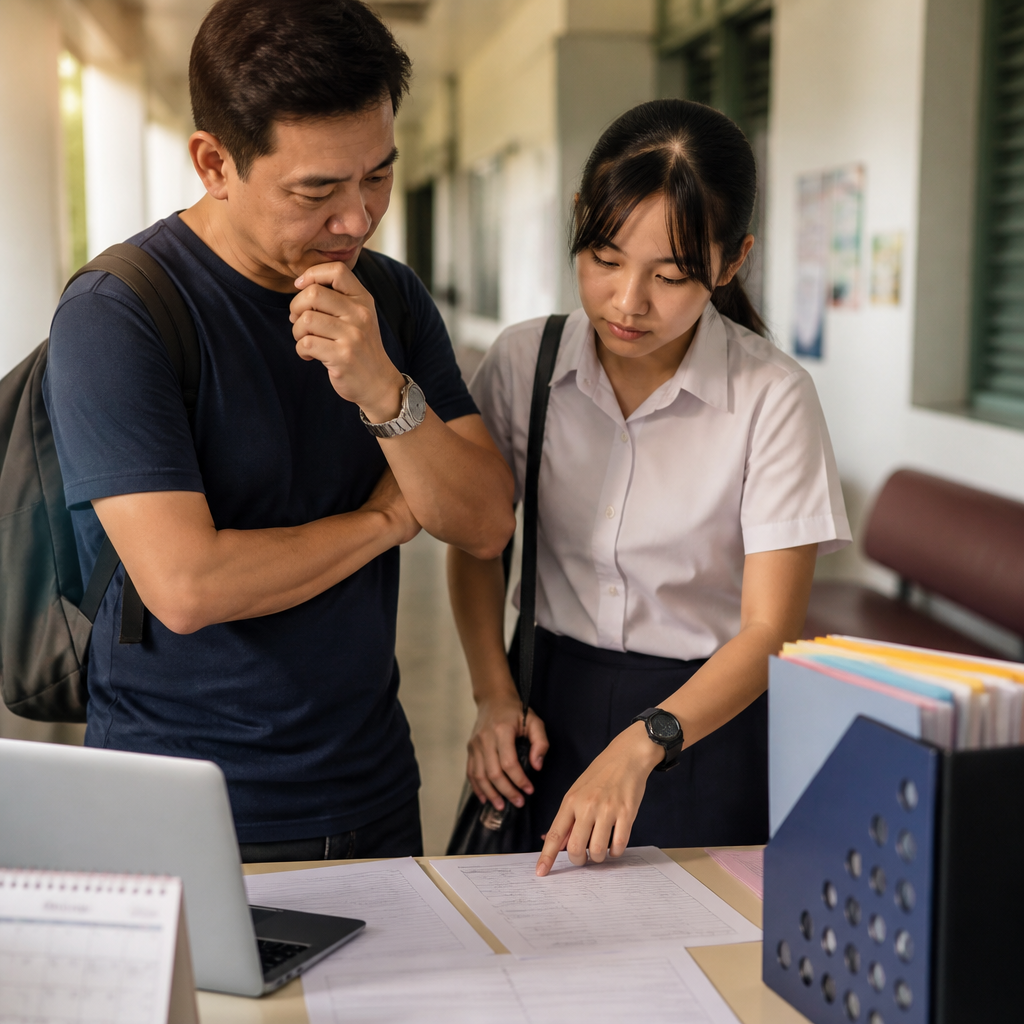
Many students regain confidence once they stop being measured only by O-Level style performance.
How to think about Higher Nitec versus a private diploma
When families compare Higher Nitec with a private diploma after O-Level failure, the conversation should not be based on status alone.
Higher Nitec can be a strong route for students who need a more guided environment and practical progression. The structure can help students who previously drifted, especially those who struggled to manage large amounts of independent revision.
A student who performed badly because they needed clearer routines may do very well there. Another who was overwhelmed by constant written exams may benefit from coursework and practical learning. Progression remains possible, and for the right student, it can be a healthier rebuilding phase than jumping into another high-pressure setting too soon.
Could Polytechnic Still Be Possible?
This is one of the first questions families ask, and understandably so. The answer is sometimes yes, but it depends on the overall results and course requirements.
Some courses may still be open
Even after weak O-Level results, some students may still qualify for selected options. Others may find that their original diploma choices are out of reach, but a narrower set of courses remains possible.
That is why careful checking matters. Use official admissions information from MOE rather than relying on outdated advice from older siblings or tuition classmates.
Polytechnic later may still be possible through another route
For students whose results are too weak for direct polytechnic entry now, that does not always mean polytechnic is gone forever. In some cases, ITE first and then progression later may be the more realistic route.
That path may feel disappointing at first, especially if the student’s peers are moving directly into JC or poly. But emotionally difficult does not mean wrong. Some students enter polytechnic later with better maturity, stronger habits, and clearer direction than they had at 16.
Private Education: Useful For Some, Risky For Others
Private education often enters the conversation quickly after poor results, especially when parents are worried their child is falling behind. That urgency can lead to rushed sign-ups.
What to check before choosing a private route
Private diplomas or foundation programmes may work for some students, but caution is necessary.
A child who needs daily structure, emotional rebuilding, and regular monitoring may flounder in a setting that expects them to manage everything alone.
Private education is not a guaranteed rescue plan
Families sometimes treat private education as a clean workaround to poor results. That can backfire. If the student’s deeper issue is inconsistent effort, weak study discipline, or burnout, a private route may only hide the problem for a while.
That is why alternative pathways should be judged by suitability, not speed, pride, or appearances.
How Parents Can Support A Teen After Failing O Levels
Few moments test a parent-child relationship quite like poor O-Level results. By the time you get home, everyone is tired, embarrassed, and worried about what comes next.
What usually makes things worse
Harsh comparison is one of the fastest ways to make a teen shut down. Saying, “Your cousin also had tuition and still did well,” may come from panic, but it rarely creates clarity. Threats such as “Now you’ve ruined your future” do not help either.
A child who already feels ashamed often hears these words as proof that they have become a disappointment.
Another common mistake is forcing an immediate decision. That can produce a path chosen out of humiliation rather than fit.
What practical support looks like
If you are wondering how parents can support teens after failing O Levels, start with steadiness. Sit down, review the result slip carefully, list the possible pathways, and create a timeline for decisions.
Book conversations with school staff. Ask your child what the O-Level year actually felt like for them, not just what you observed from outside.
Sometimes a parent thought the issue was laziness, but the child had been quietly lost for months. Sometimes the parent assumed the child was coping because they attended school and tuition faithfully, but the learning had stopped sinking in long ago.
Good support is not soft. It is calm, factual, and matched to the child in front of you.
Frequently Asked Questions
If my child failed multiple O-Level subjects, is their future badly affected?
Their future may change, but it is not over. Poor results can affect direct entry to JC and many polytechnic options, so the original plan may no longer work. The family then needs to look carefully at realistic alternatives such as retaking, ITE, selected courses still available, or private education.
Is retaking always better than going to ITE?
No. Retaking only makes sense when the student has a good chance of improving through a different and more effective approach. If the student is burnt out, weak across many subjects, or poorly suited to another exam-heavy year, ITE may be the stronger option.
Can a student still reach polytechnic later if they do not qualify now?
Yes, that may still be possible for some students. A later progression route through ITE can be a practical option. Families should check the latest official information rather than assuming the current result permanently closes off all future progression.
Should we choose a private diploma quickly so my child does not waste time?
Usually no. A rushed private enrolment can be expensive and unsuitable if the student is not ready. Check recognition, fees, progression routes, and how much academic structure the programme actually provides before deciding.
How long should we take before deciding the next step?
Do not drag things out for months without action, but do not force a major decision in the first emotional day either. A short, focused period to gather facts, speak to school staff, and compare pathways is often the most sensible approach.
Conclusion
If you came here asking what happens if you fail O Levels, the clearest answer is this: life does not stop, but the family does need to regroup.
Poor overall O-Level results can affect JC plans, many polytechnic choices, and a student’s confidence, especially when multiple subjects went badly. Still, there are real next steps.
Retaking may help if the weaknesses are clear and fixable. ITE can be a practical, confidence-restoring path. Some polytechnic options may still exist, and private education may suit some students if chosen carefully.
The main thing is not to let shame make the decision. Check the facts, speak to teachers or ECG staff, and choose a route that matches the student’s readiness, learning style, and actual strengths. If your child needs steady support to rebuild confidence and strengthen key O-Level subjects, you can learn more about private home tuition.