


Introduction
When a school notice says your child is going on a learning journey, it is easy to pause for a moment. Is this just a school trip? Will they be missing lessons? Is it actually useful, or mainly a day out?
If you have searched for what a learning journey is, you are probably trying to make sense of all that. In Singapore schools, a learning journey is usually more than a fun outing. It is a planned educational experience designed to connect classroom learning to real places, real people, and real situations.
A visit to a museum, heritage site, science-related venue, nature area, or community space may be used to help students observe, ask questions, reflect, and apply what they have learnt in school. This is part of how schools support holistic education and experiential learning in Singapore.
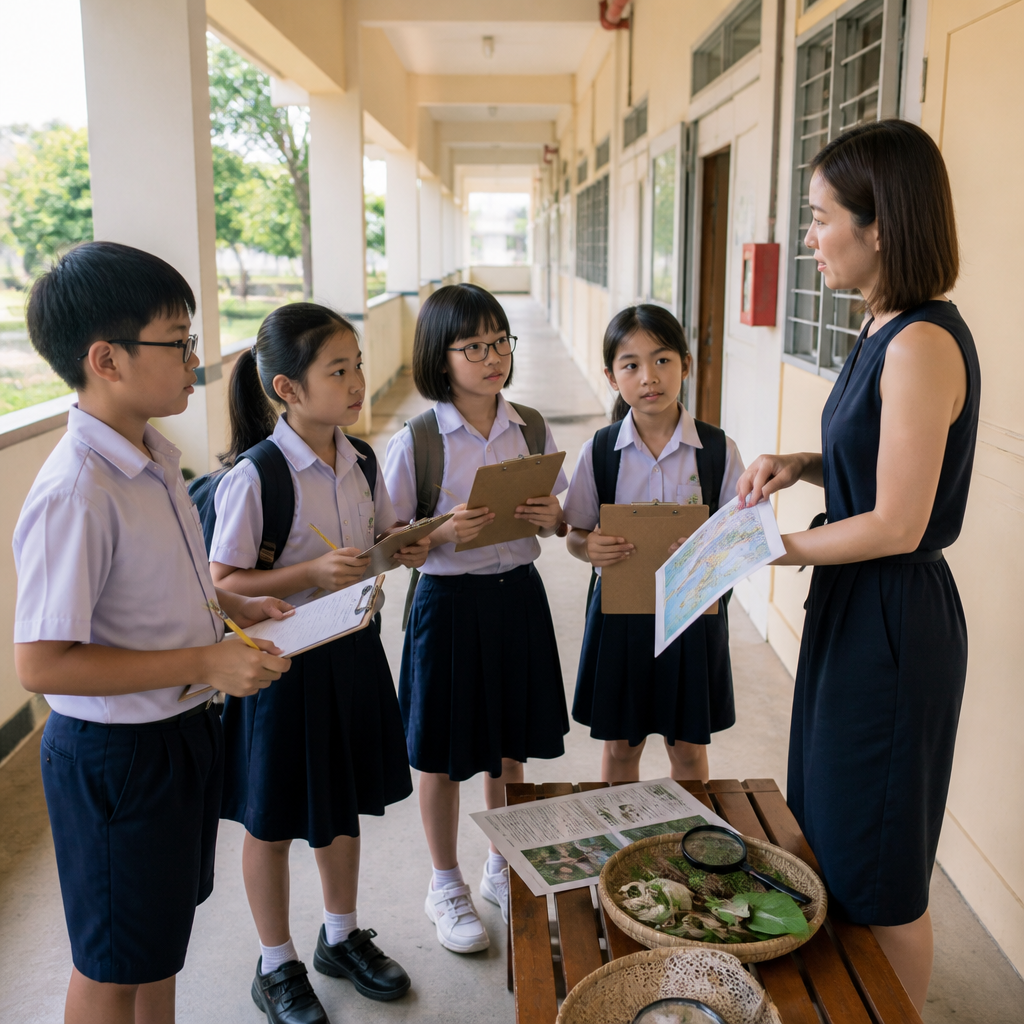
Because schools may organise these programmes differently, it is always wise to check the latest school circulars and official information from sources like MOE’s Learning for Life Programme page. Even so, understanding the purpose behind a school learning journey can help parents and students feel much more prepared.
Key Takeaways
- A learning journey is not just a school outing. It is usually planned around clear educational goals. Students are expected to connect classroom topics to real-life settings through observation, discussion, and reflection, rather than simply enjoy a day out.
- Schools use learning journeys to support experiential learning. Instead of only reading from textbooks, children get to see, hear, and sometimes interact with what they are learning. That direct experience often makes lessons more memorable and easier to understand later.
- Primary school parents will encounter learning journeys most often. Many younger students visit museums, community spaces, nature sites, or heritage locations as part of English, Social Studies, Science, Mother Tongue, or character development lessons.
- Not every learning journey looks the same. One school may focus on heritage and values, while another may tie the activity to science inquiry, environmental awareness, or a Learning for Life Programme. The venue matters, but the learning purpose matters more.
- There are practical concerns worth checking. Cost, transport, supervision, attire, consent forms, and whether the activity is compulsory can vary. Parents should read school notices carefully instead of assuming all learning journeys follow the same format.
- The learning does not end when the bus ride home starts. Reflection worksheets, class discussion, show-and-tell, journals, or follow-up assignments are often part of the full learning journey experience. These activities help students process what they observed.
- Some children need help connecting the outing to schoolwork. A child may enjoy the trip but still struggle to explain what was learnt. In such cases, extra support at home or from a tutor can help bridge the gap between experience and academic understanding.
What A Learning Journey Means In Singapore Schools
The simplest answer is this: a learning journey in Singapore schools is a structured off-site learning experience with a teaching purpose. The destination matters, but the learning design matters even more.
A normal excursion or recreational outing may focus mainly on exposure or enjoyment. A learning journey, on the other hand, is usually linked to what students are learning in class, what the school wants them to notice, and how teachers want them to reflect afterwards. That is why children may come home with observation sheets, discussion questions, sketch tasks, or group presentations.
The key difference is intention
Sometimes the easiest way to understand it is by comparison.
Imagine two visits to the same museum. In one case, children walk through exhibits, take photos, and head home. In another, the teacher prepares students beforehand, asks them to identify how people lived in old Singapore, gets them to compare kampong life with modern HDB living, and follows up with a writing task. The second example is much closer to a true learning journey.
That is why the phrase can sound formal. Schools are not only arranging transport and supervision. They are trying to create a meaningful learning experience outside the classroom.
Why schools use this term
The term reflects a broader educational idea in Singapore: learning is not confined to worksheets, notes, and exams. Schools often use learning journeys to support holistic development, values education, curiosity, social awareness, and the application of knowledge in real contexts.
This links closely to MOE’s broader language around experiential learning and programmes such as Learning for Life initiatives, though each school may design activities differently. For parents, this means the educational value often lies in the planning before and after the visit, not just in the venue itself.
Why Schools Use Learning Journeys For Student Development
Many parents wonder whether these activities are really necessary, especially when school weeks are already packed with spelling, revision, CCA, tuition, and project work. That concern is understandable. On a weekday morning, when your child is already tired and still has homework waiting at night, a trip out can feel like a disruption.
But the purpose becomes clearer when you look at what learning journeys are meant to build.
Learning becomes more concrete
Children, especially in primary school, often understand better when they can see things in context. A Primary 3 student reading about Singapore’s past may vaguely memorise facts. The same child, after walking through a heritage gallery and seeing old household items, transport systems, or photographs, may suddenly understand that history is about real lives, not just model answers.
This is one reason the benefits of learning journeys for primary school students can be significant. Younger children tend to respond strongly to visual and sensory experience, and that often helps them remember ideas more deeply.
Students practise observation and questioning
A good learning journey trains students to notice details. In class, some children are passive. They wait for the “correct answer” and rarely ask questions. During a visit to a science centre, water treatment facility, or nature park, they may begin wondering how systems work, why something is designed that way, or what changes over time.
Tutors often notice a similar pattern. Some students can memorise content but struggle to apply it because they do not really observe the world around them. Learning journeys can strengthen this habit of paying attention, which supports both academic learning and general thinking skills.
Growth goes beyond academics
Schools also use these experiences to build confidence, social behaviour, independence, and awareness of the wider community. For a shy child, speaking up during a group task outside class can be a meaningful step. For another child, learning how to follow public rules respectfully in shared spaces is part of character development too.
They can also help children become more adaptable. A student who is used to fixed classroom routines may need to listen carefully, move with a group, manage belongings, and respond to unfamiliar settings. These may seem like small things, but they are part of growing up and functioning well in real environments.
So while parents often focus first on the academic value, a learning journey is not only about content knowledge. It also teaches students how to behave, participate, and respond in real environments.
How Learning Journeys Support Experiential Learning
If you are trying to understand how learning journeys support experiential learning in Singapore, it helps to think of them as a bridge between theory and lived experience. Students are not only told information. They interact with it, see it in action, and think about what it means.
A common pattern among students is this: when there is no structure, they remember the fun parts but miss the learning point. When there is too much structure, they rush to complete tasks and barely notice what is around them. The strongest learning journeys usually balance both.
Before the journey, teachers set the lens
The best learning journeys usually begin before students leave school. Teachers may introduce the topic, explain what to look out for, and give guiding questions. A class learning about local heritage might be asked to notice how communities lived, worked, and adapted over time. A science-related visit may focus on systems, change, or environmental responsibility.
Without this preparation, some children experience the outing as entertainment only. They return saying, “It was fun,” but cannot explain the learning point.
During the journey, students learn through direct encounter
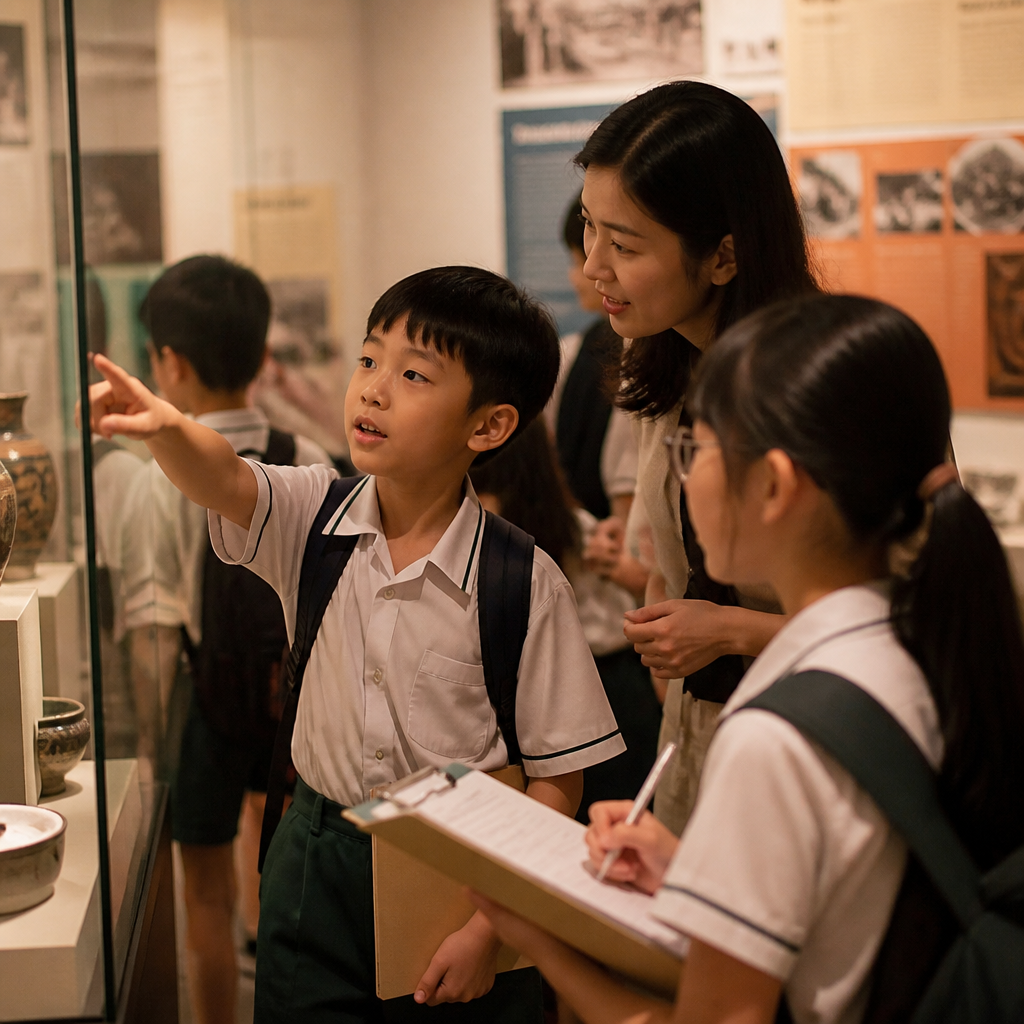
This is the heart of experiential learning. At the National Museum, students may examine artefacts and think about Singapore’s past. At a community garden, they may observe plant growth and sustainability practices. At a water-related venue or science centre, they may connect textbook ideas to real processes.
These are strong examples of school learning journeys in Singapore because they involve active noticing, guided discussion, and real-world context, rather than passive sightseeing.
After the journey, reflection turns experience into learning
Reflection is what separates a meaningful learning journey from a simple day out. A teacher may ask students to write a paragraph, discuss observations in groups, present findings, or connect the visit to a chapter they have studied. Some schools include journal entries or drawing-based reflection for younger pupils.
This final step matters. A child may enjoy seeing old photographs, but the actual learning happens when they compare past and present, explain what changed, and think about why those changes matter.
Common Examples Of Learning Journeys In Singapore
Parents often want concrete examples, not just educational language. So what do school learning journeys in Singapore actually look like?
Primary school examples
Primary schools often focus on high-interest, age-appropriate venues. Common choices include museums, heritage spaces, parks, farms, community institutions, and science-related locations. A lower primary class might visit a local heritage site to support language or Social Studies learning. An upper primary class may go to a museum and complete worksheets on Singapore’s development, daily life in the past, or national identity.
Venues such as the National Museum of Singapore often support school programmes, and parents can browse school-related offerings at the National Museum’s schools and educators page.
Secondary school examples
Secondary school learning journeys are often more discussion-based. Students may visit historical sites, industrial or environmental locations, arts venues, or community organisations. A Geography-related outing may involve urban land use observation. A Literature or Humanities class may attend an exhibition and analyse social themes. Values education and civic awareness can also be woven in.
JC examples
At JC level, learning journeys may become more specialised. Students may visit research, policy, heritage, or arts-related venues tied to subject learning or broader intellectual exposure. The approach is usually less about simple observation and more about analysis, perspective-taking, and connecting ideas across disciplines.
Still, for most families, the most frequent encounter is in primary school, where the purpose is often to spark curiosity early and make learning feel real.
What Parents And Students Can Expect
For many parents, the practical concerns come first. Is it safe? Is it compulsory? Will there be enough teachers? Will my child miss classwork? Those are fair questions, especially when children are young, anxious, or not very independent outside familiar routines.
School notices usually cover key details
Most schools will send information on the date, venue, reporting time, attire, transport, meals if relevant, and any payment required. Consent forms may be needed. Some learning journeys are part of the regular curriculum, while others may be enrichment-based. Whether attendance is compulsory can depend on how the school structures it, so it is best to check the official notice rather than assume.
Because school arrangements can change, parents should refer to the latest school communication and relevant official sources, not outdated online discussions.
Safety and supervision are usually planned for
Schools generally carry out risk assessments, group students carefully, and send teachers or accompanying adults to supervise. Younger children may be paired with classmates and reminded about toilet breaks, road safety, and staying with the group.
If your child tends to wander, panic, or shut down in crowded places, it helps to alert the teacher early rather than only worrying privately at home. That small step can make the experience smoother for everyone.
Some children need help processing the experience
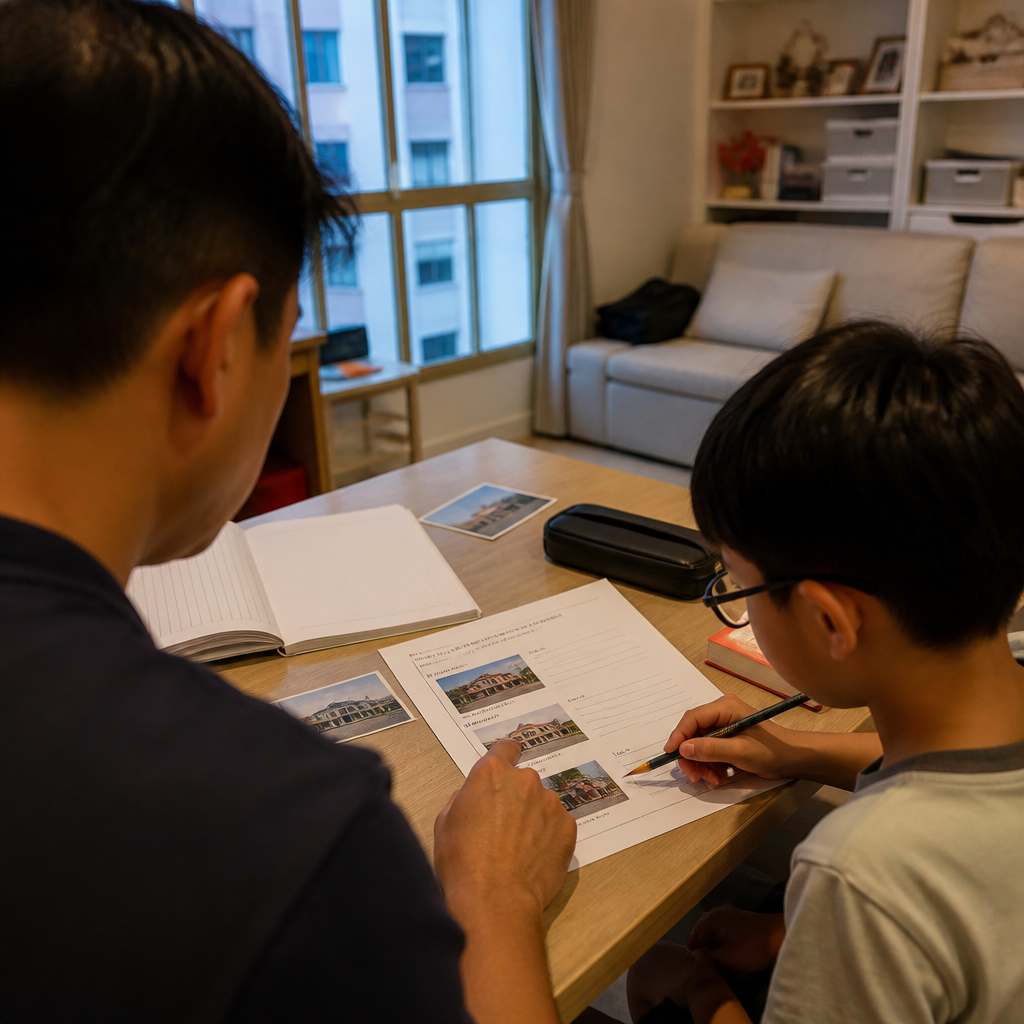
Not every child comes back able to explain the educational value. This does not mean the learning journey failed. Some children simply need prompting. Ask specific questions like, “What was one thing you saw that matched what you learnt in class?” instead of “Did you have fun?” That small shift often leads to a better conversation.
Parents can also help by revisiting the topic casually at home. If the class visited a heritage site, ask your child to describe one object they remember and why it mattered. If they went to a science venue, ask what process or system they saw. These short conversations reinforce the link between the outing and school learning without turning the experience into another stressful test.
If your child often enjoys school activities but struggles to connect them back to English writing, comprehension, Science open-ended questions, or oral expression, you can also explore extra support through our tutors to help build confidence and real-world understanding.
What Children Are Really Learning Beyond The Venue
When parents ask what a learning journey is really about, the deeper answer is that it teaches students how to connect knowledge, experience, and reflection. The venue is only one part of the process.
Classroom application matters
A child who visits a heritage site may later write better composition details because the setting feels more real. A museum visit can strengthen vocabulary, oral discussion, and comprehension of Social Studies ideas. A science-related outing may support open-ended answering because the child has actually seen a process or system instead of trying to imagine it from a diagram.
This is one of the less obvious benefits of learning journeys for primary school students. The gain is not always immediate marks. Sometimes it appears later in richer understanding, stronger examples, and better confidence in class.
Reflection develops thinking skills
Good reflection asks children to compare, explain, infer, and respond. Those are valuable academic habits. Yet there is a balance to strike. If schools overload the trip with too many worksheets, children may become more focused on finishing tasks than actually observing. If there is too little structure, the trip may feel enjoyable but shallow.
Strong learning journeys balance both: enough guidance to focus attention, and enough space for curiosity to grow.
Misconceptions parents often have
A common misconception is that a learning journey must look very serious to be useful. In reality, enjoyment can help memory. Another misconception is that if children are not tested on it, it does not matter. But many school experiences contribute indirectly to language development, confidence, and general knowledge, which often show up later in class performance.
Another misunderstanding is that only “academic” venues count. In practice, community spaces, environmental sites, and arts venues can all be educational if the learning goals are clear. What matters is not whether the place looks formal, but whether students are guided to observe, think, and reflect.
Frequently Asked Questions
Is a learning journey compulsory in Singapore schools?
It depends on how the school has organised the programme. Some learning journeys are part of the curriculum and treated as regular school activities. Others may be optional enrichment. If the notice is not clear, it is best to check with the form teacher rather than guess.
Are learning journeys worth the cost?
In many cases, yes, especially when the activity is clearly tied to learning goals and thoughtfully organised. The value is not just the venue ticket. It also includes guided observation, discussion, transport planning, supervision, and follow-up learning. If cost is a concern, it is better to speak to the school early than to stay silent and let your child miss out.
What if my child says the learning journey was “just for fun”?
That is very common, especially for younger children. Fun and learning are not opposites. Ask more specific questions, such as what they noticed, what surprised them, or what matched their textbook chapter. Very often, there was more learning than their first answer suggests.
How can I help my child benefit more from a learning journey?
A short conversation before and after the outing can make a real difference. Before the trip, ask what topic the class is studying and what they expect to see. After the trip, ask your child to explain one thing they saw and one thing they learnt. If they struggle to connect the experience to school subjects, gentle academic support can help reinforce the lesson.
Where can I check official information about school programmes?
For broader context on holistic education and school programmes, you can refer to MOE’s official programme information. For venue-specific school resources, some institutions like the National Museum also publish school programme details at the National Museum website. Schools may still implement activities differently, so the final reference point should always be your child’s school notice.
Conclusion
So, what is a learning journey in the Singapore school context? It is a planned educational experience that helps students connect classroom learning to the real world through observation, participation, and reflection. Unlike a simple school trip, a learning journey usually has clear learning goals, teacher guidance, and follow-up discussion or tasks.
For parents, it helps to see these activities as part of how schools build not just knowledge, but curiosity, awareness, confidence, and deeper understanding. For students, especially in primary school, learning journeys often make abstract lessons feel more real and memorable. Whether the destination is a museum, heritage site, science venue, or community location, the purpose is to help children learn beyond the textbook.
Because schools may design programmes differently, do check the latest school and MOE information when details matter. And if your child needs extra help connecting school learning to real-world understanding, building confidence, or keeping up with classroom expectations, you can learn more about our tutors.