


Introduction
If you are trying to enrol your child into a local school in Singapore, the first few steps can feel confusing very quickly. One person says your child needs a test. Another says school placement is straightforward. Then you start reading forums and leave with even more questions than before. For many international parents, that is exactly when one question keeps coming up: what is AEIS?
In simple terms, AEIS is a central admissions test for certain international students who want to enter Singapore government and government-aided schools. It is one of the main routes into the local school system for families who are not applying through the usual citizen or permanent resident pathways.
For families unfamiliar with Singapore’s education system, the confusion often goes beyond the test itself. Parents worry about who needs to take AEIS, whether their child is eligible, how difficult the English and Maths papers are, and what happens after passing. There is also uncertainty around school placement, because passing does not mean you can freely choose any school.

This guide explains what AEIS is, who it is for, how the admissions process works, what the English and Maths papers look like, and how to think about preparation at both Primary and Secondary levels. Where details may change, always verify the latest information with MOE and SEAB.
Key Takeaways
- AEIS is an entry route for some international students. It is used for admission into selected Singapore government and government-aided schools, not a general school transfer test for every child. This matters because some parents assume all foreign students must take it, when in reality the route depends on the type of school they are targeting.
- Passing AEIS does not guarantee a school of your choice. Placement depends on available vacancies, so parents need to prepare emotionally for limited options even after a good result. This is one of the biggest misunderstandings families have at the start.
- Primary and Secondary applicants are assessed differently. The English and Maths test format varies by level, so preparation has to match the child’s intended entry point. A younger child may struggle more with instructions and basic word problems, while an older student may face heavier comprehension demands.
- Timing matters more than many parents realise. If you are wondering when foreign students should take AEIS in Singapore, the answer depends on age, intended level, readiness, and official application windows. Missing a test cycle can delay school entry plans.
- Readiness is not just about content knowledge. Many children know some Maths or English, but struggle with Singapore-style question wording, time pressure, and unfamiliar school expectations. This is why strong students from overseas do not always find the process easy.
- Tuition can help when gaps are specific and visible. If your child is weak in exam technique, English comprehension, or problem sums, targeted support can be more useful than simply doing more worksheets at home. The goal is not more practice for its own sake, but the right kind of practice.
- Always check the latest official details. Eligibility, test arrangements, and school placement processes may change, so parents should confirm current requirements directly with MOE and SEAB rather than relying on old forum posts or second-hand advice.
What AEIS Means And Who It Is For
When parents ask what AEIS is, they usually want the practical meaning, not just the acronym. AEIS stands for Admissions Exercise for International Students. It is meant for international students who wish to seek admission to certain mainstream local schools in Singapore at Primary or Secondary levels.
Who AEIS is meant for
AEIS is generally relevant for children who are not Singapore Citizens or Permanent Residents and who want to enter a government or government-aided school. It is not the route for every school type in Singapore. International schools and private schools, for example, have their own admissions processes and entry requirements.
A common misunderstanding is that AEIS works like a direct application to a specific school. It does not. The child first applies for the admissions exercise, sits the required assessments, and if successful, may be posted to a school with available vacancies.
That difference matters more than many parents expect. Some families assume that once their child passes, they can simply choose a school near home or one with a stronger reputation. In reality, school posting depends on vacancies. That can be hard to accept, especially when housing, transport, or sibling arrangements are already being planned.
Why Singapore uses AEIS
Singapore’s local schools follow a structured curriculum and a fairly demanding pace. AEIS helps assess whether an incoming international student can cope with the academic expectations at the intended level. It is not only about whether the child is bright. It is also about whether the child can access lessons delivered in English, handle Maths in a Singapore-school style, and adjust to classroom routines.
Tutors often notice this gap very clearly. A child may have done well overseas, yet still struggle because the curriculum sequence, exam style, and language demands feel different. That is why understanding the purpose of AEIS early helps families prepare more realistically, and with fewer wrong assumptions.
Eligibility, Age Requirements, And The Best Time To Apply
Before thinking about revision or tuition, parents need clarity on AEIS eligibility. This is where many families lose time. They start preparing seriously, only to realise later that there is an age or level mismatch.
What parents should check first
Eligibility usually depends on factors such as:
- Your child’s age for the intended level, which affects whether they can apply for a particular Primary or Secondary entry point.
- The year of admission sought, because each admissions cycle is tied to a specific intake period.
- Whether the child meets the stated entry requirements, including any conditions set by MOE.
- Whether the child is applying for Primary or Secondary entry, since the assessment format and expectations differ.
Because these details can change, always check the latest official guidance at MOE’s AEIS page. It is safer than relying on social media groups or outdated blog posts.
A parent with a 10-year-old child, for example, may assume Primary admission is straightforward. But the suitable entry level is not simply based on what the child completed overseas. Age and official criteria matter, and local school placement has to fit the available structure in Singapore.
When foreign students should take AEIS
If you are asking when foreign students should take AEIS in Singapore, it helps to think about three things together.
Families relocating to Singapore often underestimate how disruptive a move can be. If your child has just changed country, housing, routine, and sleep schedule, sitting for a high-stakes admissions test immediately may not be ideal, even if the timeline looks neat on paper.
AEIS and S-AEIS: what is the difference?
Parents often hear both terms and assume they are interchangeable. They are related, but they are not the same exercise. AEIS is the main admissions exercise, while S-AEIS is a supplementary exercise for certain levels and timings, subject to MOE’s arrangements.
The main point is simple. If your child misses one round, there may sometimes be another opportunity, but not necessarily for every level or every intake plan. Always confirm current availability from MOE rather than assuming both options are open.
What Parents Should Confirm On Official AEIS Pages
After checking your child’s basic eligibility, the next step is to confirm the practical details for the correct admissions cycle. This helps parents avoid preparing for the wrong test window, misunderstanding the paper format, or assuming school placement works like a normal school application.
- Application period and test dates, including whether AEIS or S-AEIS is available for your child’s intended level.
- Test format and assessed subjects, so preparation matches the correct Primary or Secondary entry point.
- Documents and registration requirements, including any information needed during application.
- School posting rules, especially the fact that placement depends on available vacancies.
- Next steps after results, including reporting instructions if your child is offered a school place.
What The AEIS English And Maths Papers Look Like
Once parents understand the admissions route, the next question is usually about the papers themselves. The AEIS test format is one of the biggest sources of anxiety because many families do not know what “Singapore standard” really feels like in practice.
Primary-level assessment

For Primary-level candidates, the focus is generally on English literacy and Maths readiness appropriate to the entry level. The English component is not just about basic vocabulary. Children may need to show they can understand instructions, comprehend short passages, and work with grammar or usage in a structured way.
Maths at this level can be surprisingly challenging for international students, especially if they are not used to word problems. A child may know how to add, subtract, multiply, or divide, but still get stuck because the real hurdle is understanding what the question is asking.
This is why parents searching for AEIS tips for primary school often find the process more demanding than expected. The issue is not only content. It is also exam language, pacing, and familiarity with how questions are framed.
Secondary-level assessment
At Secondary level, English and Maths demands are naturally higher. English may require stronger comprehension, vocabulary control, and the ability to process more complex texts. Maths can involve broader topics, more multi-step reasoning, and greater independence under timed conditions.
A common pattern among students is this: they may understand the Maths concept, but still lose marks because they misread the scenario. Once time pressure enters the picture, small misunderstandings can quickly become major score losses.
Why format awareness matters
Parents sometimes react to uncertainty by buying many assessment books. That is understandable, but more practice is not always better practice. If the child is training at the wrong level, wrong style, or wrong difficulty, confidence can drop instead of improve.
A better approach is to first understand the expected format from official sources such as SEAB, then match preparation to the child’s actual entry goal. That saves time and helps parents avoid working hard in the wrong direction.
It also helps to remember that AEIS is not designed to reward random drilling. Students usually do better when they become familiar with instruction language, common question structures, and the pace of a formal paper. Even a capable child can underperform if the format feels unfamiliar on test day.
How To Prepare For AEIS At Primary Level
For younger children, AEIS preparation needs to be steady and realistic. Many parents feel torn here. They do not want to overpush, but they also worry about wasting a precious admission chance. That tension is very common.
Start with diagnosis, not drilling
If you are wondering how to prepare your child for the AEIS exam in Singapore, start by identifying where the real gap is. Find out whether your child mainly struggles with:
- Understanding English instructions, which can affect both English and Maths performance.
- Reading comprehension, especially when short passages contain unfamiliar vocabulary or require inference.
- Sentence structure and vocabulary, which can make written English tasks feel harder than everyday conversation suggests.
- Arithmetic accuracy, where careless mistakes or weak number sense reduce confidence quickly.
- Word problem interpretation, a common issue for children who know the concept but cannot unpack the language.
- Time management, because some children can do the work but not within the pace expected in a formal test.
A younger child may complete simple computation quickly but freeze at a short problem sum because phrases like “left”, “altogether”, or “how many more” are not immediately clear. In that case, giving harder Maths worksheets may not solve the actual problem. Language support and guided problem-solving may be more useful.
Practical ways to build readiness
Parents looking for tips to pass AEIS for primary school often hear broad advice like “practise more” or “read more English books”. Those ideas are not wrong, but they are too general on their own.
One useful habit is to keep revision sessions short but consistent. Younger children often respond better to 20 to 30 minutes of focused work than to long weekend marathons. Regular exposure helps them build confidence without making AEIS feel frightening or exhausting.
When home support is not enough
Sometimes the parent-child revision dynamic becomes tense very quickly. A child starts crying over corrections, or every worksheet turns into a struggle at the dining table. When that happens, it does not automatically mean the child is lazy or resistant. It may simply mean the child needs a calmer third party to teach and rebuild confidence.
Parents exploring support can learn more about our tutors or visit our AEIS tuition page.
How To Prepare For AEIS At Secondary Level
Secondary applicants usually face a different challenge. The content may be more advanced, but the bigger issue is often adjustment. A student might look independent on the outside, while still feeling deeply unsettled by the move, the pressure, and the fear of failing before even entering school.
Common readiness gaps
At this stage, many students are tripped up by one of these patterns:
- Strong calculation skills but weak English comprehension in Maths questions.
- Acceptable spoken English but weak formal written understanding.
- Content knowledge that is uneven because the home-country syllabus covered topics in a different sequence.
- Poor pacing under timed conditions, where students know more than their final score shows.
A typical pattern tutors often notice is the student who says, “I know this topic,” but still loses marks because the question asks for reasoning in a slightly unfamiliar way. That is common in Singapore-style assessments, where application matters as much as memorisation.
Why some students still struggle after practising
From a tutor’s perspective, one recurring issue is false confidence from untimed practice. At home, a child may eventually reach the answer after hints, pauses, and retries. In the actual assessment, there is no such buffer.
Another issue is over-reliance on memorised methods. That can backfire when the paper presents a familiar concept in an unfamiliar context. Secondary students need flexibility under pressure, not just repetition.
A practical preparation method is to alternate between skill-building and timed review. One session can focus on weak topics in detail, while another can simulate test pressure. This balance helps students improve accuracy without becoming dependent on unlimited time.
When tuition may help
Parents often ask about the best AEIS tuition for international students in Singapore. In reality, the better question is whether the support fits the child’s actual gaps. A student with weak comprehension needs different help from one who mainly struggles with exam pacing.
Good AEIS support should identify whether the difficulty is language, Maths concepts, question interpretation, or confidence under pressure. It should also stay realistic. No tutor can guarantee school placement, and any promise that sounds too certain should be treated carefully.
What Happens After Passing AEIS
Passing AEIS can feel like the finish line, but it is really the start of the next stage. This is where many parents need a more grounded picture, because success in the admissions exercise does not remove every uncertainty.
School posting and vacancies
If your child passes, MOE may post them to a school with available vacancies. This is a crucial point. Passing does not mean open access to any preferred school, neighbourhood, or programme.
That can be disappointing, especially if parents were hoping to align school location with work commute or siblings’ schedules. It helps to prepare for this possibility early, rather than being caught off guard later.
Adjustment after entry
Even after successful admission, the transition can still be tough. Local schools in Singapore can move quickly. There may be homework routines, classroom expectations, school-based assessments, and co-curricular rhythms that feel very different from what your child knew before.
Some international students cope academically but feel socially lost at first. Others settle socially quite well but struggle with English-heavy subjects. Passing AEIS shows readiness for entry, not instant ease in every area.
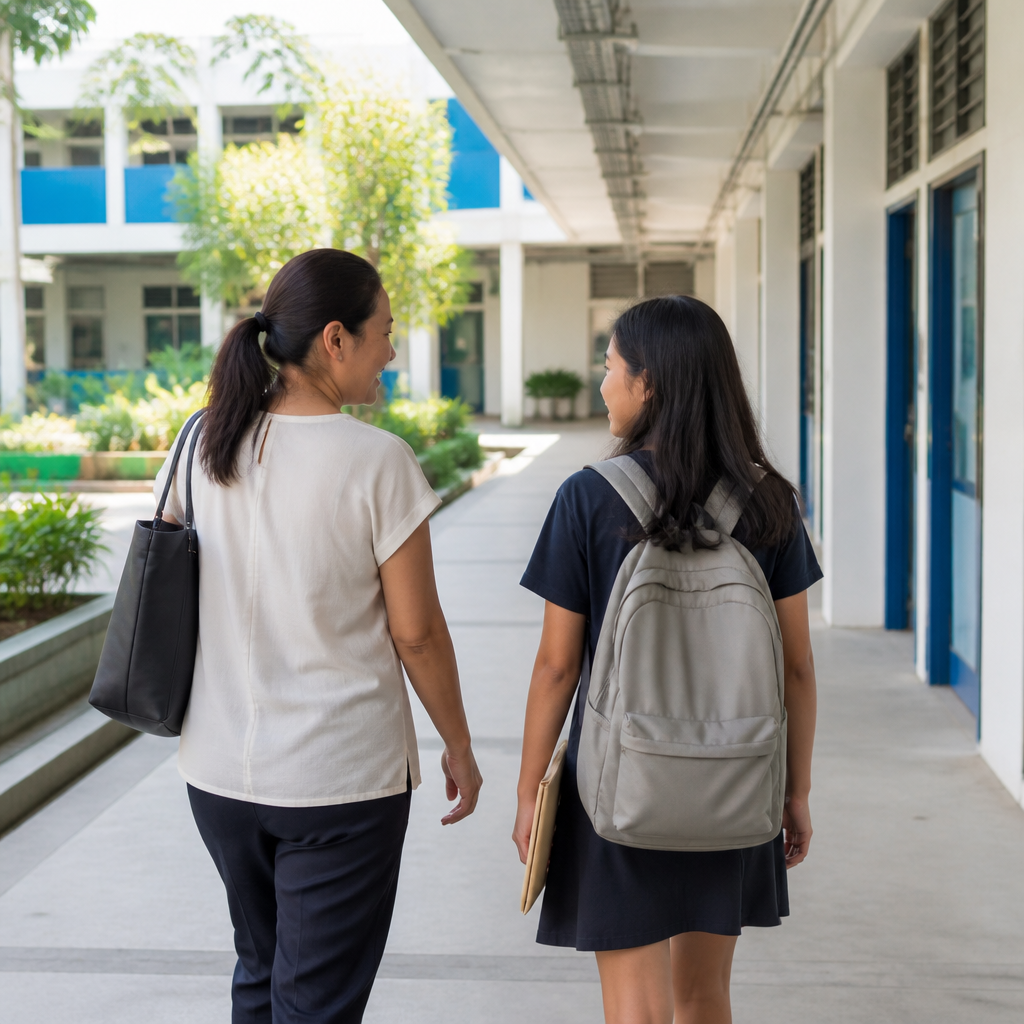
Practical next steps for parents
Once posted, parents should clarify reporting details, school requirements, and any bridging support needed. Check directly with the school and MOE for current instructions rather than assuming the process is the same for every student.
This is also a good time to decide whether your child needs continued academic support for the first school term. A child who barely cleared entry may benefit from guided help with English comprehension or Singapore-style Maths so that the first few months do not become discouraging.
Frequently Asked Questions
Is AEIS compulsory for all foreign students who want to study in Singapore?
No. AEIS is relevant for certain international students seeking admission to government and government-aided schools. It is not the admission route for all school types in Singapore, and international schools usually have their own entry process.
If my child passes AEIS, can we choose the school we want?
Not necessarily. School placement depends on available vacancies. Parents should be prepared for limited posting options even after a successful result, especially if they are hoping for a specific location or school profile.
Is S-AEIS easier than AEIS, or just another chance?
Many parents search this because they are hoping for a simpler route. It is better to think of AEIS and S-AEIS as different admissions exercises at different times, subject to MOE arrangements. Do not assume one is an easier shortcut. Always check the latest official details before planning.
How early should we start preparing for AEIS if we are moving to Singapore soon?
That depends on your child’s current English and Maths level, familiarity with Singapore-style questions, and relocation timeline. A child with strong foundations may only need focused adjustment practice, while another may need more time to close language and curriculum gaps.
Does every child need tuition to pass AEIS?
No. Some children prepare well with structured home support. Others need extra help because the gaps are too specific, or because revision at home has become stressful and unproductive. If you are considering support, look for targeted help rather than broad promises.
What happens if my child does not pass AEIS?
If your child does not pass AEIS, review the official options available for the next admissions cycle and consider whether S-AEIS or another school route may be suitable. It is also important to identify whether the main issue was English comprehension, Maths content, timing, or unfamiliarity with Singapore-style questions before preparing again.
Conclusion
So, what is AEIS? It is a structured school admissions route for certain international students seeking entry into Singapore government and government-aided schools. For parents, the key things to understand are who needs to take it, whether your child is eligible, what the English and Maths assessments involve, when to apply, and what school posting after passing may realistically look like.
The process can feel intimidating at first, especially if you are new to Singapore’s education system. Still, it becomes much more manageable once you separate the questions clearly: eligibility, timing, test format, readiness, and next steps after passing. Keep checking the latest information with MOE and SEAB, and remember that preparation works best when it is level-specific, realistic, and matched to your child’s actual gaps.
If you would like tailored support for your child’s AEIS readiness, including English and Maths guidance for Primary or Secondary entry, learn more about our tutors.