


Introduction
You look at the weekly timetable, the school bag, the homework, the class WhatsApp messages, and then someone mentions phonics, coding, speech and drama, or Math enrichment. Very quickly, one simple question pops up, does my child really need enrichment?
If you have been wondering this, you are not alone. In Singapore, many parents asking what an enrichment class is are really trying to figure out something more practical. Will this genuinely help my child, or am I just squeezing one more thing into an already full week?

That uncertainty is very real. Enrichment often gets mentioned together with tuition, remedial support, PSLE preparation, and all sorts of classes that seem to overlap. Some look academic. Some look playful. Some talk about confidence, creativity, or stronger foundations. No wonder it can feel hard to tell what enrichment actually means, and whether your child needs it now, later, or not at all.
In simple terms, an enrichment class usually helps a child build skills, deepen learning, or grow interest beyond what school covers, instead of only fixing weak marks. The key is not choosing the “best” class in general. It is choosing the kind of support that fits your child’s age, needs, and energy level.
Key Takeaways
- Enrichment is broader than tuition. It usually extends learning, builds interest, or develops skills like language, reasoning, confidence, or creativity, rather than only drilling school content. This is why a child can benefit from enrichment even if school results are still acceptable.
- Not every child needs enrichment at the same time. A preschooler struggling with speech confidence, a Primary 3 child needing stronger reading habits, and a Secondary student under exam pressure may need very different forms of support. Timing matters as much as the class itself.
- Tuition and enrichment serve different purposes. When marks are falling because of school content gaps, tuition may be more targeted. When a child needs exposure, stronger foundations, or joyful practice, enrichment may be a better fit.
- Overscheduling can cancel out the benefits. A child who is constantly tired after school, CCA, and homework may gain very little from even a good class if there is no mental space left to learn. In many families, reducing one activity improves learning more than adding another.
- Good enrichment has clear goals, even if it feels fun. A phonics class should improve sound blending, a speech and drama class should build verbal confidence, and a math enrichment class should stretch thinking, not just keep children busy.
- The right choice depends on readiness, not peer pressure. Just because classmates attend coding, abacus, or Chinese enrichment does not mean your child will benefit in the same way at the same stage. A class that suits one child can be a poor fit for another.
- Support can change over time. Some families start with centre-based enrichment in preschool or lower primary, then later move to more exam-focused help, including one-to-one support from a tutor, when academic demands become more specific.
What Enrichment Class Means In Singapore
When parents ask what an enrichment class is, they are usually trying to separate it from normal school learning. In Singapore, enrichment generally refers to structured classes outside school that help a child develop skills, confidence, or exposure in a specific area.
That area can be academic, like English, Math, Chinese, phonics, science, or writing. It can also be developmental, like speech and drama, public speaking, coding, creative writing, or abacus for number fluency. The main difference is that enrichment is not always about catching up on school worksheets. Very often, it is about building a stronger base or stretching a child beyond the standard classroom pace.
What enrichment looks like by age
The form it takes often changes with age, and this is where many parents find the most clarity.
For preschool children, enrichment often centres on readiness and confidence. A K1 child in phonics may be working on sound recognition, blending, and early reading habits. A shy child in speech and drama may be practising eye contact, speaking clearly, and following instructions in a group.
By primary school, enrichment becomes more skill-based. This may look like English composition enrichment, higher-order Math problem solving, Chinese oral practice, or science exposure through experiments and explanation. This is often the stage where parents start paying closer attention, because school expectations become more obvious.
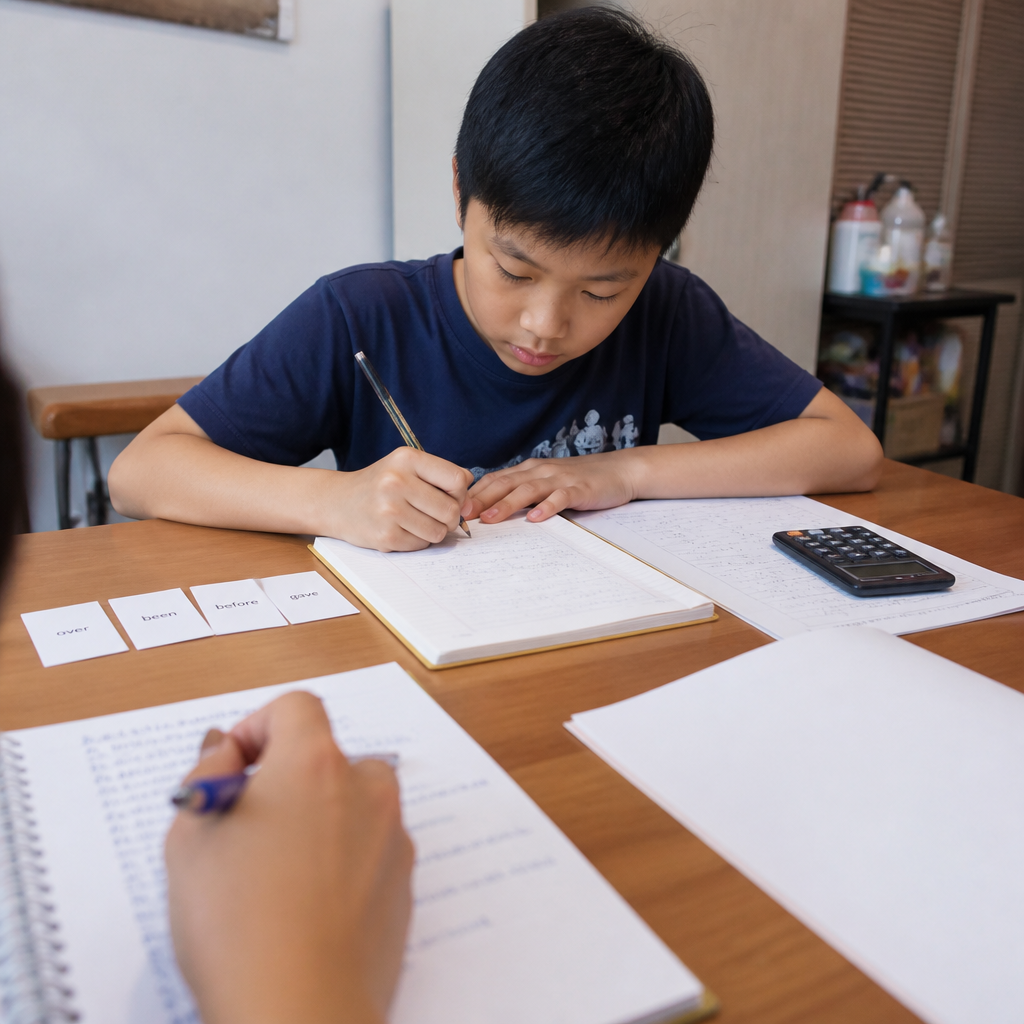
At secondary level, enrichment tends to split in two directions. Some classes stay developmental, such as writing, debate, or coding. Others start overlapping with tuition, especially once exam pressure rises.
What good enrichment is meant to do
A good enrichment class is not just “extra work”. It should have a clear purpose.
A child who reads slowly may benefit from English enrichment that steadily strengthens vocabulary and comprehension habits. Another child may score well for routine Math but freeze when questions are phrased differently. In that case, math enrichment may be useful because it stretches flexible thinking.
Tutors often notice that the value of enrichment does not always show up first in test scores. Sometimes it appears in daily behaviour instead. A child starts volunteering answers. Reading becomes less of a battle. Chinese oral responses sound less stiff. Those changes matter too, especially in a system where confidence often affects performance.
Enrichment vs Tuition vs Remedial Support
This is where many parents get stuck. The difference between tuition and enrichment is not just class size or location. It is really about purpose.
Tuition usually focuses more directly on school performance. It follows the syllabus more closely, helps with weak topics, prepares for tests, and targets marks. Remedial support is even more focused. It is meant to help a child catch up when they have already fallen behind.
Enrichment works a little earlier in the process. It often strengthens the child before problems become severe, or builds skills that school may not have enough time to develop deeply.
How this looks in real family situations
Sometimes the difference becomes clearer when you picture the actual problem.
A Primary 2 child may be passing school Math, but doing every sum mechanically and getting confused when the question looks unfamiliar. In that case, Math enrichment may help by stretching thinking before formal exam pressure becomes heavier.
Now think about a Primary 5 child already losing marks in fractions, average, and model drawing. That situation may call for tuition instead, because the issue is no longer broad exposure. The child needs targeted correction linked to school demands.
English often works the same way. A preschool or lower primary child with weak phonics, limited vocabulary, and low confidence reading aloud may benefit from enrichment first. But if a Primary 6 student is already struggling badly in comprehension and composition before PSLE, more direct exam-focused help may be the better fit.
Where remedial support fits in
Remedial support is not the same as enrichment. It is usually for children with clear learning gaps that are already affecting school performance.
For example, if a child still cannot recognise basic Chinese characters at the level expected in class, they may need structured catch-up work rather than a broad enrichment programme. A common pattern among students is that the wrong type of support can make them feel worse, not better.
To make this easier to scan, here is the difference in plain terms.
This distinction matters because the wrong support wastes time and energy. A child with major gaps may feel even more lost in a fast-paced enrichment class. A child who is simply under-challenged may find remedial work discouraging.
If your child’s needs become highly specific and exam-driven, some families later move from centre-based programmes to more customised one-to-one support. If that stage comes, you can learn more about our tutors and explore whether personalised home tuition suits your child better.
When Enrichment Classes Are Worth It
A very reasonable question is whether enrichment classes are worth it for children. The honest answer is, sometimes yes, sometimes no. It depends less on the class brand and more on your child’s profile.
It is easy to feel pressure when other children seem to be doing phonics, coding, abacus, Chinese enrichment, and science enrichment all at once. But more classes do not automatically mean better development.
When enrichment is often helpful
Enrichment tends to be helpful when a child needs one of the following:
- Stronger foundational skills. A Primary 1 child who can read but reads without fluency may benefit from English enrichment that builds comprehension habits gradually.
- Confidence in expression. A child who knows the answer but whispers during oral practice may benefit from speech and drama or language enrichment.
- Stretch beyond school pace. Some children are not weak, they are simply under-stimulated. They may enjoy enrichment that introduces non-routine problems or more open-ended thinking.
- Joyful exposure before formal pressure. Preschool enrichment can be especially useful when it introduces language, numbers, or social communication without turning learning into drill work too early.
When enrichment may not be the right move
There are also times when enrichment may not be worth it, at least not for now.
A child who is already exhausted from school, homework, and CCA may not absorb much from another class. Parents sometimes mistake this for laziness, when it is really overload. In those situations, adding support can backfire.
Another warning sign is unclear goals. If the only reason for joining is “everyone else is doing it”, the class can easily become timetable filler.
For older children, especially in upper primary and secondary, broad enrichment may also be less useful when the real issue is exam technique, weak topic mastery, or poor revision habits. Then, targeted support usually matters more.
A practical way to decide is to ask what success would look like after one school term. Better reading fluency? More confidence speaking? Stronger problem-solving? If you cannot describe the hoped-for outcome, it may be too early to commit.
Benefits Of Enrichment For Child Development
The benefits of enrichment classes are real, but they show up best when the class fits the child. In the early years especially, development is not just about getting ahead academically. It is also about language growth, attention, confidence, problem-solving, and enjoying learning.
Language, thinking, and confidence
A good phonics or English enrichment class can improve more than reading accuracy. Children often become more willing to sound out unfamiliar words, talk about stories, and express ideas more clearly. That confidence matters later in show-and-tell, oral exams, comprehension, and writing.
Math enrichment can also support development, not just marks. Some children start seeing patterns more clearly, explaining their reasoning, and handling challenge without panicking. Many students struggle not because they know too little, but because unfamiliar questions make them tense.
Social and emotional growth
Group-based enrichment can help in quieter ways too. A child learns to listen, wait, speak up, work with peers, and try again after making mistakes. Speech and drama is a good example. Parents may sign up hoping for stronger communication, then notice their child is also becoming more comfortable taking risks in front of others.
Still, there is an important balance here. Enrichment should not send the message that your child is never doing enough. Children feel that pressure very quickly. Even a useful programme can start to feel heavy if every class is framed around fear of falling behind.
Another benefit parents sometimes overlook is routine. A well-run weekly class can create steady practice without daily conflict at home. Instead of constant nagging, the child gets guided exposure in a structured setting, which can reduce tension between parent and child.
How To Choose The Right Enrichment Class
When parents search for how to choose the right enrichment class in Singapore, they are often hoping for a tidy checklist. Real life is usually messier than that. The best choice depends on age, goals, learning gaps, and schedule.
Match the class to your child’s actual need
Start with one question, what problem are we trying to solve?
If your preschooler struggles to recognise sounds and words, phonics may be a clearer fit than coding. If your Primary 3 child dreads Chinese speaking tasks, oral-focused language enrichment may be more helpful than another worksheet-heavy class. If your child has ideas but cannot organise them in writing, an English class that teaches idea generation and sentence building may suit better than one focused only on memorising model compositions.
Popularity is not the same as suitability. A class that works beautifully for one child can be a poor fit for another.
Check teaching style, not just subject
Two math enrichment classes can feel completely different. One may be thoughtful and engaging. Another may just be tuition in disguise, with more worksheets and a nicer label.
Look at how lessons are conducted. Are children encouraged to think and respond? Or mostly expected to copy? Is the pace suitable? Does the teacher notice individual struggles? For younger children especially, emotional readiness and attention span matter just as much as content.
Be honest about schedule and stamina
Sometimes the real issue is not the class itself, but the timing.
It is late in the evening, your child still has corrections and unfinished homework, and tomorrow is another long day. In that situation, even a good enrichment class may simply be too much. One well-chosen class often helps more than three rushed ones.
Review after a term
Give it some time, then look for practical signs. Is your child more confident? Is there less resistance? Are you seeing clearer reading, stronger reasoning, or better verbal expression?
Not every result appears in test marks immediately. But if, after a reasonable period, nothing seems to be improving, it is perfectly fine to stop, switch, or rethink.
What Enrichment Looks Like At Different Ages
The answer to what an enrichment class is changes slightly depending on age. What suits a five-year-old may be completely wrong for a Secondary 2 student.
Preschool
At preschool level, enrichment should be light, engaging, and developmentally appropriate. Phonics, speech and drama, simple Chinese exposure, and early numeracy are common. The goal is usually confidence and foundational readiness, not academic pressure too early.
Primary school
This is where the question becomes especially relevant for many families. Primary school enrichment often includes English writing, comprehension, Math reasoning, Chinese oral and vocabulary, science exposure, coding, and abacus.
Lower primary children may benefit more from habit-building and confidence. Upper primary is different. By P5 and P6, weighted assessments and PSLE pressure often make parents pause and ask whether enrichment is still the right tool, or whether more targeted tuition is now needed.
Secondary school
At secondary level, enrichment is usually most useful when it develops a genuine skill or interest, such as advanced writing, public speaking, or coding. For academic subjects, the line between enrichment and tuition often becomes thinner because school demands become more exam-oriented.
Some families reduce enrichment later on and move towards focused support tied more closely to school results and exam skills. That shift is not a failure. It is simply a response to changing needs.
Frequently Asked Questions
Is enrichment class necessary for every child in Singapore?
No. Some children benefit a lot, especially when the class matches a real developmental or academic need. Others are coping well with school alone, or may need rest more than another lesson. If your child is already stretched, adding more is not always the helpful move.
Can enrichment replace tuition?
Sometimes it can, but not always. If your child mainly needs stronger foundations, confidence, or broader exposure, enrichment may be enough for now. If there are already clear school-topic gaps or exam struggles, tuition is usually more targeted.
How many enrichment classes should a child attend?
There is no ideal number that applies to every child. For one child, one weekly class is enough. For another, even one may feel too heavy during busy school periods. It helps to watch your child’s energy, mood, and ability to cope, instead of comparing with other families.
What if my child dislikes the enrichment class?
First, try to tell the difference between normal adjustment and a real mismatch. Some children need a few weeks to warm up to a new setting. But if your child stays anxious, shut down, or consistently drained, the class may not suit their readiness or learning style.
Where can parents check broader education guidance in Singapore?
For general education information, you can refer to the Ministry of Education Singapore and parenting resources at Parenting for Life. These can help you stay grounded while making decisions that fit your own child.
Conclusion
So, what is an enrichment class in Singapore? It is usually a structured programme outside school that helps a child build skills, confidence, interest, or stronger foundations beyond the standard classroom. It is not the same as tuition, and it is not automatically necessary just because other children are attending.
The best decision is often the calmer one, not the more competitive one. Look at your child’s age, actual learning needs, emotional readiness, and weekly stamina. A well-matched enrichment class can be valuable. A poorly matched one can create stress without much real progress.
And if your child’s needs later become more specific, especially around school performance, exam preparation, or targeted subject support, some families find that personalised help works better than centre-based programmes. You can explore options and learn more about our tutors, or visit our homepage for more support.