


Introduction
If your child has just started JC, this scene may feel familiar. They sit down to do GP, stare at an essay question on media, science, politics, or education, and then say, “But what am I even supposed to write?” Many parents hear the same thing and wonder why this subject feels so much harder than expected.

If you have been asking what General Paper in JC is, you are not alone. Many students enter junior college thinking GP is just “English again”, then feel blindsided when they see essay questions about media, politics, science, education, or social issues. Parents also often wonder why this subject feels so broad, and why it seems to cause stress even for students who did reasonably well in secondary school English.
In Singapore’s A-Level pathway, General Paper, often called GP, is a core subject that tests how well students think, argue, read critically, and express ideas clearly. It is not just about grammar, and it is not a subject you can survive by memorising a few model essays the night before. GP asks students to engage with the world, make sense of current affairs, and explain their views with maturity.
This guide explains what General Paper is in junior college in Singapore, what students learn, whether it is compulsory, why some struggle, and what support may help from JC1 to JC2.
Key Takeaways
- GP is more than English. It tests thinking, argument, comprehension, and awareness of real-world issues, not just language accuracy.
- It matters in the A-Level journey. General Paper is a core JC subject and affects a student’s overall academic profile.
- Students learn both writing and reading skills. In GP, they build essay arguments, analyse passages, answer application questions, and improve language clarity.
- Secondary school English and JC GP are not the same. GP is broader, more abstract, and more content-aware.
- Many students struggle because the subject feels too wide. Often, the issue is not laziness, but a gap in habits, exposure, and exam technique.
- Support can help when the problem is identified early. Some students benefit from school consultations, structured reading habits, or GP tuition.
What General Paper In JC Actually Means
When people search for what General Paper in JC means, they are usually trying to figure out whether GP is an English subject, a humanities subject, or some kind of current affairs paper. The honest answer is that it sits across all three.
General Paper in junior college is an A-Level subject that develops a student’s ability to think critically, communicate clearly, and engage with real issues. In practical terms, students are expected to write essays on broad topics and answer comprehension questions that test interpretation, analysis, and application of ideas.
A simple definition of GP in Singapore
If you want the simplest answer, GP is a subject about ideas and communication. Students discuss topics such as media, technology, education, the environment, politics, culture, ethics, and science. They are not expected to become experts in every area. What they are expected to do is read widely, form balanced opinions, and explain those views clearly.
That is why GP often feels unfamiliar at first. A student may wonder why they are suddenly expected to discuss censorship or artificial intelligence when they came from a science stream. That confusion is normal. GP is meant to push students beyond subject silos.
Why GP matters in junior college
GP matters because JC is not only about memorising content. It is also about learning how to think independently. In many schools, teachers use General Paper to help students become more mature readers and writers, capable of handling nuanced issues instead of giving one-line opinions.
Over time, students who take GP seriously often become more confident in discussions, interviews, and university-style writing. That does not mean GP is easy. It means the subject is doing more than many students first assume.
Is General Paper Compulsory In Junior College?
A very common parent question is whether General Paper is compulsory in junior college. In the typical JC route leading to the Singapore-Cambridge GCE A-Level examinations, GP is generally taken as a core subject by students. It is a standard part of the JC curriculum for many students in the A-Level track.
Why parents often ask this
Usually, this question comes up when a student already feels overloaded. GP starts to look like the “extra” subject that keeps dragging marks down. Naturally, parents wonder whether it can be dropped, replaced, or treated less seriously.
That instinct is understandable. But GP is not a small side subject. In most JC settings, it is part of the A-Level structure and should be taken seriously from JC1. Leaving it until JC2 often creates panic, because GP improvement usually depends on habits built over time, such as reading, summarising, and practising writing.
Check the latest official information
While GP is generally compulsory in junior college, requirements and subject arrangements may evolve. Students and parents should verify the latest details through official sources such as MOE’s junior college overview and SEAB’s GCE A-Level information, or check directly with the school.
What Students Learn In JC General Paper
Parents often ask what students actually learn in JC General Paper, especially when the notes look like a mix of news articles, essay outlines, and comprehension practices. The answer is broader than many expect.
Essay writing and argument building
A key part of GP is learning how to build an argument. This is different from simply stating an opinion. A student may believe social media does more harm than good, but GP requires them to explain why, consider exceptions, and support the argument with relevant examples.
In class, students often learn how to interpret essay questions carefully. A common mistake is answering the question they wish had been set, instead of the one actually asked. A student may memorise points about technology, then mishandle a question about whether technology has made people less thoughtful. The topic looks familiar, but the argument required is much more precise.
Comprehension and application question skills
GP also includes comprehension, where students read passages closely and answer questions on meaning, tone, inference, and language. Application questions can feel especially tough because students must connect passage ideas to their own society in a thoughtful and relevant way.
This is where many students freeze. They understand the passage, but when asked to discuss how an issue applies to Singapore, they become vague. GP trains them to move beyond that with clear reasoning, direct links, and relevant local application.
Language clarity and mature expression
Good GP writing is not about sounding impressive for the sake of it. Some students try to use long words and complicated phrasing, then end up sounding unnatural or unclear. Clear, controlled writing usually does better than forced sophistication.
A student who was praised for creative writing in secondary school may realise that JC GP values precision, relevance, and intellectual maturity more than dramatic phrasing. Strong language helps, but strong judgement matters just as much.
How GP Differs From Secondary School English
One reason students feel lost in JC1 is that GP is often mistaken for a continuation of O-Level English. There is overlap in language skills, but the demands are not the same.
Broader content and deeper thinking

Secondary school English often focuses more directly on comprehension, situational writing, continuous writing, and language use. GP, on the other hand, expects students to engage with larger issues and defend their views with a more mature structure.
That shift can feel abrupt. A student who used to score well through decent language and straightforward examples may discover that GP essays need sharper evaluation. Saying “education is important because it helps people get jobs” is too thin at JC level unless the point is developed properly and linked back to the exact question.
Less memorising and more adapting
Many students enter JC hoping to survive GP by memorising “good examples” and model paragraphs. That rarely works for long. GP questions are broad enough, and specific enough, that rigid memorisation can backfire.
A common pattern is this: a student prepares examples on climate change, then faces a question about whether individuals can do much to protect the environment. The content area is familiar, but the angle is different. Content knowledge matters, but flexibility matters more.
Why strong English students still struggle
A student who got a solid O-Level English grade may suddenly fail GP. Usually, the issue is not declining language ability. It is the jump in expectations.
Students may write fluent sentences, but their arguments remain generic. Or they have interesting ideas, but their writing is disorganised. GP exposes gaps that secondary school may not have revealed so clearly.
What The JC1 To JC2 GP Journey Looks Like
The JC General Paper journey usually feels very different in JC1 and JC2. Knowing that progression helps parents and students panic less when the first few months feel messy.
JC1 often feels messy at first
In JC1, many students are still asking what topics are tested, how much current affairs they need to know, and whether they are supposed to read the news every day. It is common to feel behind, especially after the first essay comes back covered in comments like “too descriptive” or “lacks evaluation”.
That stage is frustrating, but normal. GP often feels messy at first because students are learning both content exposure and exam method at the same time. A weak start in JC1 does not mean a student cannot recover, but it does mean the problem should be identified early.
JC2 becomes more exam-focused
By JC2, the focus usually becomes more exam-oriented. Students refine topic strengths, improve comprehension speed, and practise writing under timed conditions. This is when weak habits start showing more clearly.
A student who has barely read beyond school notes in JC1 may find it hard to suddenly produce mature, informed arguments in JC2. That is why early support can make a real difference.
How To Do Better In JC General Paper Exams
Families often search for how to score well in JC General Paper exams, hoping for a simple formula. GP does not reward shortcuts, but there are clear habits that make a real difference.
Read with purpose, not randomly
“Read more” is common advice, but vague advice is hard to follow. Reading works better when it is targeted. A student can pick a few recurring GP areas, such as media, education, science and technology, and social issues, then build familiarity through short, regular reading.
Ten to fifteen minutes spent summarising one article a few times a week is often more useful than panic-reading several pieces before an exam. The goal is not to become a walking news archive. It is to build usable examples, stronger vocabulary in context, and clearer thinking.
Practise relevance and explanation
Markers often see essays filled with examples that do not actually answer the question. Stronger GP answers are usually not those with the most facts, but those that stay relevant. If the question asks “to what extent”, the student must evaluate, not just list points.
When a teacher circles a paragraph and writes “so what?”, that usually means the student made a point but did not explain its significance. Learning to extend each point properly often lifts marks more than collecting more examples.
Build exam confidence gradually
Comprehension and application question skills can improve with repeated, guided practice. So can essay planning. Students who do short timed outlines, rewrite weak paragraphs, or review why certain answers missed the point usually improve faster than those who only re-read notes.
If a student is still floundering despite consistent effort, some families explore GP tuition for JC1 or JC2 support. A good fit can help clarify expectations, especially for students who need more personalised feedback on essays and comprehension. If that sounds relevant, you can learn more about our GP tutors here.
When GP Tuition May Help, And When It May Not
Tuition is not a magic fix, and it helps to be honest about that from the start. Some students improve with extra support, while others add tuition but change nothing about their own reading, revision habits, or writing discipline.
Signs extra support may be useful
A student may benefit from GP tuition if they repeatedly do not understand teacher comments, cannot generate ideas for essays, or keep writing vague application answers even after school practice. Another common sign is emotional shutdown, where the student stops trying because GP feels too subjective.
In such cases, structured guidance can help break the subject into manageable parts. Sometimes the value is not “more notes”, but clearer feedback and targeted practice.
When tuition alone will not solve the problem
If the deeper issue is low reading exposure, weak time management, or exhaustion from an overloaded schedule, tuition by itself may not solve much. A student attending extra classes while still refusing to read, revise, or rewrite work may stay stuck.
The best support is realistic, not magical. It should help the student understand the subject better, practise more effectively, and build confidence over time.
Frequently Asked Questions
Is General Paper harder than O-Level English?
For many students, yes. Not always because the language is harder, but because the thinking is broader and more demanding. GP requires more mature arguments, better issue awareness, and stronger judgement than secondary school English.
Does my child need to read the news every day to do well in GP?
Not necessarily every day, but regular exposure helps. A student who never reads beyond school worksheets often struggles to generate examples and discuss real-world issues with confidence.
Why is my child good at English but still weak in GP?
That happens quite often. GP is not only about language ability. A student may write fluent English yet still lose marks for shallow arguments, weak relevance, or poor question analysis.
Is General Paper compulsory in junior college for all students?
In the usual JC A-Level pathway, GP is generally a core subject. Still, students and parents should confirm the latest requirements with the school, MOE, or SEAB.
How early should a student get help for GP?
Earlier is usually better. If problems appear in JC1, that is the best time to work on reading habits, essay structure, and comprehension skills. Waiting until the final stretch of JC2 often creates more stress.
Conclusion
So, what is General Paper in JC? In Singapore, it is a core A-Level subject that goes beyond grammar and vocabulary. GP teaches students to think critically, build arguments, read with care, respond to real-world issues, and express ideas with clarity. It also explains why students who seem “fine in English” may still struggle once they enter junior college.
For parents, it helps to see GP not as a mysterious extra burden, but as a subject that develops communication and thinking skills needed throughout the JC years. For students, the good news is that GP becomes less confusing once they understand what it is actually testing. Progress usually comes from steady reading, focused practice, and timely feedback, not last-minute memorisation.
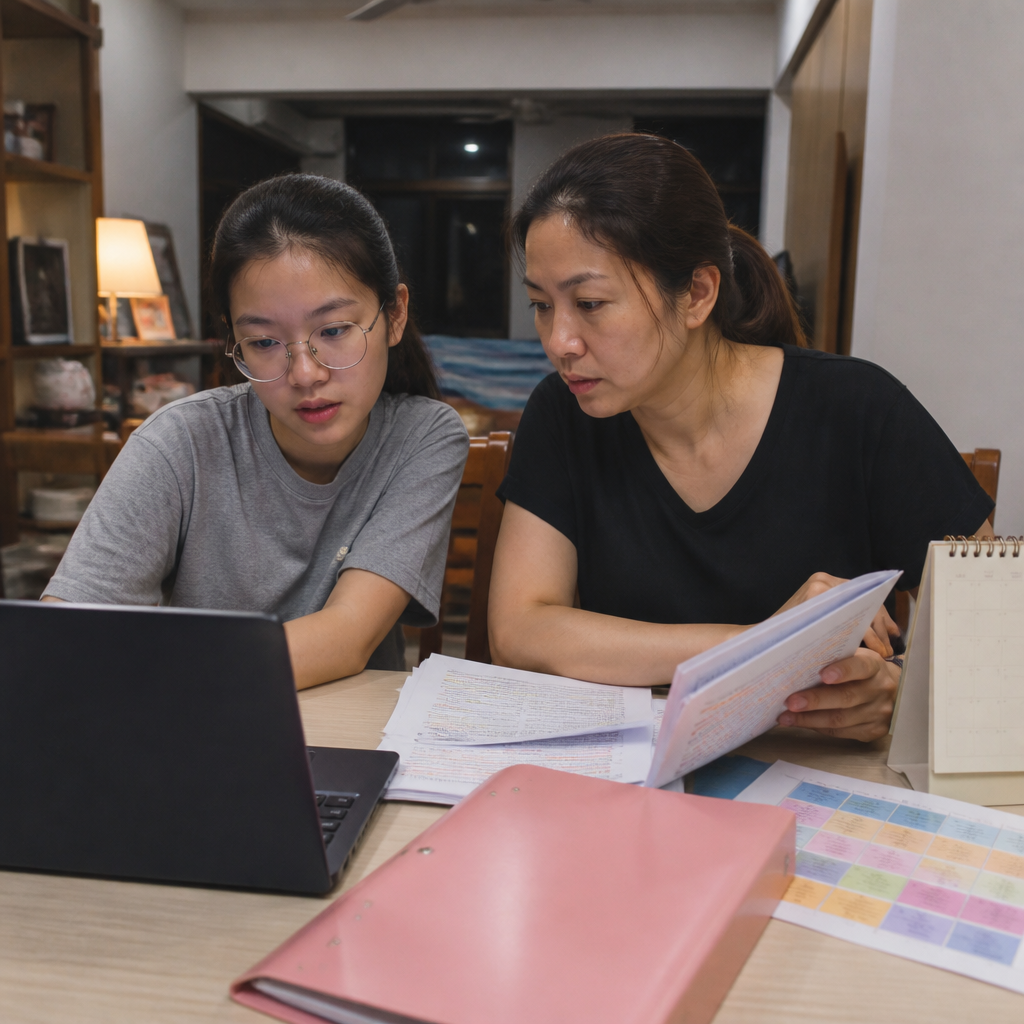
If your child needs extra support with essay writing, comprehension skills, or confidence in GP, you can explore our GP tuition or learn more about our GP tutors here. And as always, do check the latest syllabus and exam details with MOE, SEAB, or your school, since requirements can change.