


Introduction
If you have been asking what GEP is in Singapore primary school, you are probably sorting through a very familiar mix of curiosity, hope, and caution. Maybe a teacher mentioned screening. Maybe another parent brought it up in a WhatsApp group. Maybe your child learns quickly, asks unexpected questions, and finishes work fast, and now you are wondering whether the Gifted Education Programme is something you should seriously think about.
In simple terms, GEP in Singapore refers to the Gifted Education Programme in Singapore’s primary school system. It is meant for a specific group of learners whose needs may not be fully met by the regular classroom alone. It is not just for children who score well in school tests. It is for children who often show strong ability, unusual curiosity, and readiness for deeper, faster, and more independent learning.

Because policies and school practices can change, always refer to the latest information from MOE’s Gifted Education Programme page and MOE primary school information, as well as updates from individual schools.
Key Takeaways
- GEP is for a specific learner profile, not just top scorers. A child may do very well in exams and still not be the best fit for GEP. Another child may stand out because of reasoning ability, curiosity, and unusual ways of thinking.
- Primary 3 is usually the key stage for identification. When parents ask about GEP eligibility for Primary 3 students, they are usually referring to the screening and selection process that happens around Primary 3, though exact details may change over time.
- GEP learning is deeper and often faster-paced. Compared with mainstream primary school, there is usually more discussion, abstract thinking, open-ended work, and independent learning expected from the child.
- Fit matters as much as ability. If you are wondering whether GEP is suitable for your child, look beyond marks. A child who enjoys challenge, handles ambiguity, and recovers from setbacks may cope better than a child who depends heavily on structure and constant reassurance.
- Mainstream primary school is still a strong path. Not entering GEP does not mean a child is being left behind. Many children thrive in mainstream settings and continue to do very well academically and emotionally.
- Preparation should be light and sensible. If you are thinking about how to prepare for GEP screening, focus on language exposure, reasoning habits, and emotional steadiness rather than excessive drilling or high-pressure coaching.
- Tuition can support learning, but it cannot guarantee selection. A tutor may help a child strengthen thinking skills, confidence, or school workload management, but no tuition provider can honestly promise GEP entry or outcomes.
What GEP in Primary School Is Really For
When parents ask what GEP means in primary school, what they usually want to know is simple. Is GEP just a class for the best exam performers? The short answer is no.
What the Gifted Education Programme is meant to do
The Gifted Education Programme is intended to support children whose learning needs may differ from what a regular classroom usually provides. These children may grasp ideas quickly, make unusual connections, ask probing questions, or become restless when work feels too repetitive. In practice, GEP is designed to give them more depth, more complexity, and more room to think independently.
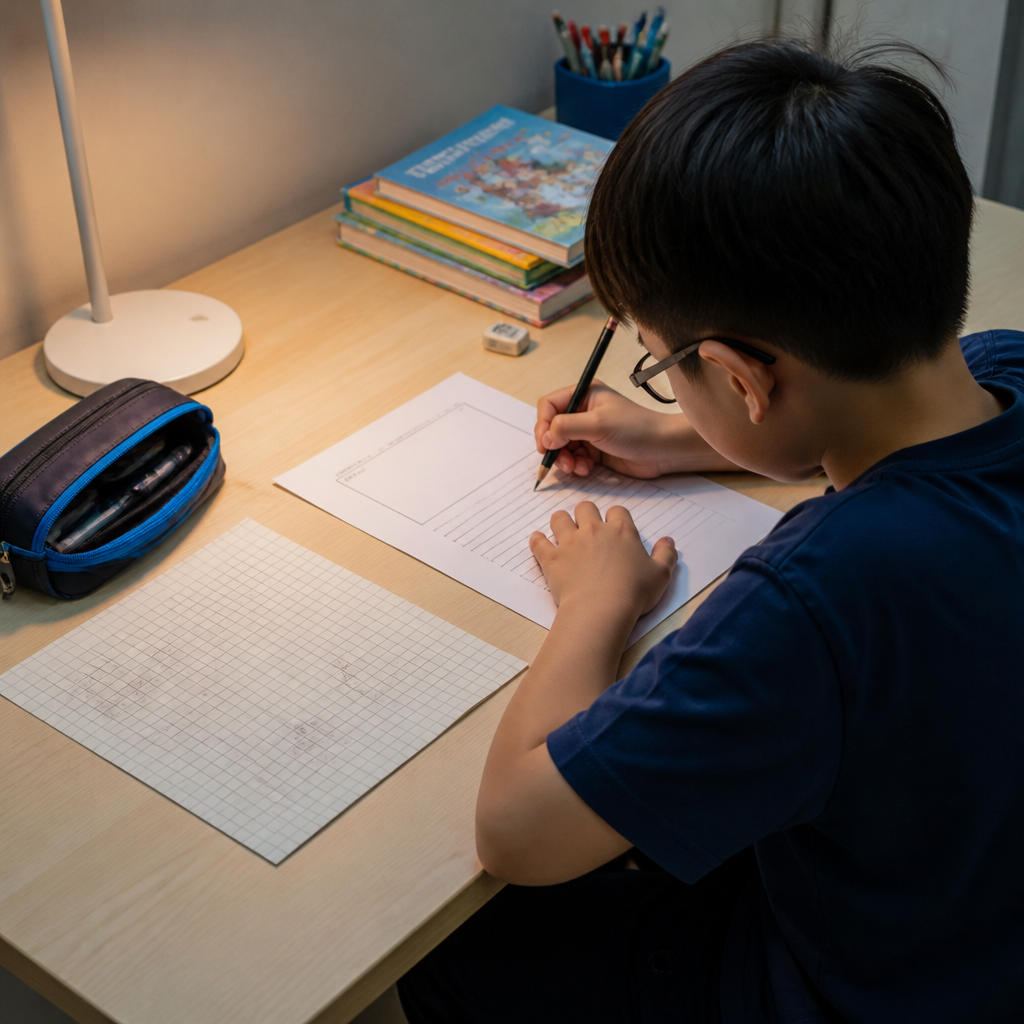
A common misconception is that GEP is just “harder school”. That is too simplistic. A more useful way to see it is this: GEP often offers a different type of learning experience. A mainstream class may focus on mastering the syllabus steadily and clearly. A GEP setting may go further into analysis, interpretation, and exploration.
Why it is not only about high marks
Some children score full marks because they are careful, well-drilled, and consistent. That is a real strength. But GEP looks beyond neat worksheet performance. Tutors often notice that some students appear like obvious candidates because they are always top in class, yet they are not necessarily the best fit for a learning environment that asks for more independence and comfort with uncertainty.
At the same time, some children selected for GEP are not always the ones collecting every prize in school. That is why GEP eligibility should not be reduced to class position or test scores alone. Ability profile, learning style, and readiness for a different classroom environment matter too.
How GEP Identification Usually Works in Primary 3
For many families, this is the part that creates the most stress. Once the topic comes up, parents start searching for how GEP selection works in Singapore or what the screening test looks like. It helps to slow down and approach this calmly.
The general Primary 3 process
Typically, identification for GEP takes place in Primary 3. Broadly, there is usually a screening stage followed by a more detailed selection stage for those who qualify to continue.
The exact format, schedule, and criteria can change over time. Because of that, it is wiser to check current MOE guidance than to rely on old forum posts, recycled notes, or second-hand stories from years ago.
What the stages generally assess
Without overclaiming exact current details, the process generally aims to identify strong ability in areas such as English and Mathematics, as well as broader reasoning. In parent-friendly terms, that often means a child may need to process language well, spot patterns, think logically, and handle unfamiliar question styles.
This is one reason over-drilling can backfire. A child may become very good at rehearsed formats yet freeze when faced with something unfamiliar. A common pattern among students is this: they can complete many practice papers confidently, then get rattled by one question that does not look like the usual type.
What parents should keep in mind
If your child goes through screening, emotional tone matters. A calm “do your best” approach usually helps more than making the test feel like a life-defining moment. Children pick up on parental anxiety very quickly. Once they sense that too much is riding on the outcome, even capable children may start overthinking simple questions.
It also helps to remember that identification is only one snapshot. It does not measure every strength your child has, and it does not predict every future outcome. Some children are ready for that environment at that stage. Others develop later and still go on to thrive academically.
For the latest information on GEP schools, screening, and identification, start with MOE’s official GEP page.
How GEP Differs From Mainstream Primary School
A major parent question is the difference between GEP and mainstream primary school in Singapore. This matters because the real issue is not just getting in. It is whether daily school life will actually suit the child.
Before looking at the details, here is a simple side-by-side view.
Pace, depth, and classroom style
In mainstream primary school, lessons usually focus on covering the syllabus clearly, building mastery, and preparing students for school-based assessments and eventually PSLE. In GEP, the pace can feel quicker in some ways, but the bigger difference is often depth. Children may be expected to discuss more, infer more, and handle less structured tasks.
For example, in a regular classroom, a comprehension task may focus mainly on understanding and answering accurately. In a more enriched setting, the child may also be expected to analyse tone, compare perspectives, or justify ideas in greater detail. In Mathematics, it may mean more non-routine problem solving rather than repeated practice of standard methods.
Academic expectations and independence
A child who is used to being guided step by step may find GEP more tiring than expected. Some children enjoy difficult work only when adults are nearby to scaffold every move. Once tasks become more open-ended, they feel uncomfortable.
That is why the difference between GEP and mainstream school is not just “harder content”. It can also be a difference in classroom culture. There is often more expectation that the child can think independently, cope with uncertainty, and keep trying when there is no obvious model answer.
The social environment matters too
Parents sometimes imagine that if all the children are bright, their child will automatically fit in. Not always. Some children feel energised by peers who think quickly and enjoy big ideas. Others feel intimidated, especially if they were previously “the smart one” in class and suddenly become average in a very strong group.
This social adjustment is worth taking seriously. Academic fit and emotional fit do not always move together. A child may love the lessons but struggle with comparison. Another may enjoy the peer group but feel worn down by the workload. Looking at both sides gives a more realistic picture.
Is GEP Suitable for Your Child?
This is the question that deserves the most honest attention. Whether GEP is suitable for your child cannot be answered by one report book alone.
Signs a child may thrive
Children who tend to do well in GEP often show more than academic strength. They may be deeply curious, willing to wrestle with difficult ideas, and less dependent on being told exactly what to do. They often tolerate frustration better than adults expect. Not happily, perhaps, but they recover and continue.
A child who reads widely, asks unusual questions at dinner, notices patterns for fun, or enjoys solving problems without immediate reward may find the environment stimulating. These are not guarantees, but they are meaningful clues.
Signs it may be a poor fit, even for a strong student
Sometimes the child is clearly bright but emotionally strained by challenge. A small mistake leads to tears. A difficult worksheet turns into shutdown. The child only feels secure when getting everything correct. In those situations, a more demanding environment may not build confidence; it may chip away at it.
Another common pattern is the high-performing child who succeeds mainly through repetition and adult support. Such a child may do extremely well in mainstream school and still feel overwhelmed in GEP if the learning style shifts too far from what has worked so far.
Questions to ask yourself as a parent
Before deciding whether to pursue or accept the pathway, it helps to reflect honestly on the difference between ability, readiness, and fear of missing out.
A useful rule of thumb is this: if the main reason for pursuing GEP is status, that is usually not a strong enough reason. If the reason is that your child genuinely seems under-stretched and excited by deeper learning, the conversation becomes more meaningful.
Benefits and Trade-Offs Parents Should Weigh
It is easy for GEP conversations to become prestige-driven. A better question is not “Is GEP impressive?” but “What would this actually mean for my child?”
Possible benefits of GEP
For the right child, GEP can be deeply affirming. Children who have felt bored or under-stretched may finally feel understood. They may enjoy richer discussion, more challenging tasks, and classmates who share similar intensity or interests.
The peer environment can matter a lot. A child who has been told to stop asking so many questions may feel relieved in a setting where such questioning is normal. That sense of intellectual belonging can be powerful and, for some children, genuinely meaningful.
Real considerations before deciding
There are trade-offs too. Work can feel heavier. Expectations can feel sharper. If your child already comes home drained from school, CCA, enrichment, and homework, a more demanding academic environment may not automatically improve well-being.
Social fit is another issue parents sometimes underestimate. Being among strong peers can motivate some children and unsettle others. A child who used to feel confident may suddenly compare constantly. This does not mean GEP is harmful. It simply means adjustment is real and should not be brushed aside.
There may also be practical considerations such as travel, timetable changes, and how your child handles a busier week. These details sound small, but they affect daily stress and family routines more than many parents expect.
Why mainstream school is not a lesser path
One of the healthiest reminders for families is this: GEP is not the only path to success. Mainstream primary school in Singapore can still provide strong academic foundations, leadership opportunities, and long-term success. Many children flourish there because the pace, support, and balance suit them better.
That perspective matters, especially in Singapore, where school choices can quickly become emotionally loaded. A child does not need a gifted label to be capable, motivated, or successful later on.
How to Prepare for GEP Without Overdoing It
Once screening is mentioned, many parents immediately search for how to prepare for the Gifted Education Programme in Singapore. The temptation is understandable. Still, too much pressure can do more harm than good.
Focus on habits, not panic preparation
Useful preparation looks less like cramming and more like broadening thinking. Exposure to rich reading, puzzles, discussion, and non-routine questions can help. Instead of making your child complete stack after stack of worksheets, you might talk through why a story character acted a certain way or ask your child to explain how they spotted a Maths pattern.
These moments build reasoning more naturally than brute-force drilling. They also help children become more flexible thinkers, which matters more than memorising a narrow set of question types.
What often backfires
Heavy coaching can create brittle confidence. Some children become dependent on familiar formats and hidden tricks. Once the question changes slightly, they lose their footing. Others start feeling that every practice session is a test of worth. By the time screening arrives, they are mentally exhausted.
If your child needs academic support, keep it grounded. If your child needs gentle help with subject understanding, confidence, or managing workload alongside school expectations, you can learn more about primary school tutors or contact a private home tuition team here. The goal should be stronger learning and steadier confidence, not promises about selection.
Keep perspective at home
Try not to let GEP become the family’s emotional centre of gravity. A child should not feel that one screening outcome determines how proud you are of them. Oddly enough, children often do better when home remains emotionally safe and ordinary.
That means keeping routines stable, speaking calmly, and remembering that one school pathway does not define your child’s future. Sleep, regular meals, and enough downtime before any assessment matter more than many families realise.
Frequently Asked Questions
Is GEP only for academically strong children?
Not exactly. Academic strength matters, but GEP is not simply a reward for scoring well. It is intended for children whose learning profile suggests they may need more depth, complexity, and independent challenge than mainstream lessons typically offer.
What does the GEP screening test usually assess?
Parents naturally want to know what to expect, especially when screening starts to feel like a big unknown. In general, the process has involved stages that look at English, Mathematics, and broader reasoning-related abilities. The safest approach is still to check current MOE information rather than relying on outdated preparation materials or forum discussions.
How do I know if GEP is suitable for my child?
Look at more than grades. Notice whether your child is curious, resilient, and comfortable with challenge. Also consider social fit, emotional readiness, and whether your child genuinely enjoys deeper learning or mainly likes being ahead.
How can I support my child for GEP screening without too much pressure?
There is no guaranteed formula, and that can be hard for parents to accept. The healthiest approach is to support strong literacy, thinking habits, and calm confidence. Too much pressure, too much drilling, and too much emotional weight around the screening can actually undermine performance.
What should parents know about GEP schools in Singapore before deciding?
Parents should know that policies, school implementation, and programme details may change. They should also know that GEP is not automatically the best option for every bright child. Always check the latest MOE and school information, and weigh both suitability and well-being before making the decision.
Conclusion
So, what is GEP in Singapore really about? It is a pathway within Singapore’s primary school system designed for a specific group of learners who may benefit from deeper, faster, and more independent learning. It is not simply a badge for top scorers, and it is not the only route to future success.
For parents, the key is to stay balanced. Understand how identification generally works in Primary 3. Learn the broad GEP eligibility context without getting trapped in rumours. Compare GEP and mainstream primary school in practical, day-to-day terms. Most of all, ask whether the environment suits your child’s learning style, resilience, and emotional needs.

If your child would benefit from extra support in core subjects, confidence-building, or managing school demands in a steady and healthy way, you can get in touch for primary school tuition support here.
Whichever path your child takes, GEP or mainstream, what matters most is not prestige. It is whether your child is learning well, coping well, and growing into a confident learner over time.