


Introduction
If you are comparing post-secondary options in Singapore and staring at different fee categories, it is easy to feel lost. One line shows a lower amount, another shows a much higher one, and somewhere in between sits the phrase “MOE Tuition Grant”. Many parents and students pause here and wonder, is this a subsidy, a loan, or something like a scholarship?
The confusion is very common. The Tuition Grant changes the final tuition fee you pay, but it also comes with terms that matter, especially for non-Singaporeans. In simple terms, the MOE Tuition Grant is a government subsidy for tuition fees at participating institutions in Singapore. It is not a cash payout to students, and it is not the same as a scholarship or a student loan. For some students, especially international students, accepting it may also mean taking on a service bond after graduation.

That is why it helps to look beyond the headline fee amount. Many families focus first on securing the course place, then only later realise that the grant conditions can differ based on citizenship, residency status, and institution type. This guide explains what the MOE Tuition Grant is, who it is for, how it works for polytechnic and university students, and what to check before accepting it.
Key Takeaways
- The MOE Tuition Grant is a subsidy, not a loan. It reduces the tuition fees charged by participating institutions in Singapore, but it does not mean the student receives money directly.
- It is different from a scholarship. A scholarship usually rewards merit and may cover fees or provide allowances, while the Tuition Grant is a broad fee subsidy with terms attached.
- Eligibility depends on student status and institution type. Singapore Citizens, Permanent Residents, and international students may face different fee levels and different grant conditions.
- International students should understand the service bond carefully. This can affect post-graduation plans, especially if your child hopes to work or study elsewhere immediately after finishing school.
- Polytechnic and university arrangements are not identical. The MOE Tuition Grant application process for polytechnic students can differ from what happens at autonomous universities.
- The cheapest-looking option is not always the simplest choice. A lower subsidised fee may look attractive, but families should weigh it against the bond, long-term plans, and other funding options.
- Always verify the latest terms directly. Check current details with MOE’s Tuition Grant Scheme page, MOE’s tuition fees page, and the institution itself.
What The MOE Tuition Grant Actually Means
When families ask what the MOE Tuition Grant is, the real question is usually much more practical: how much do we actually need to pay? The grant is best understood as a tuition fee subsidy provided by the Singapore government for eligible students studying in approved institutions. It lowers the billed tuition fee compared to the full unsubsidised rate.
This is why school websites often show more than one fee figure. One amount may reflect the subsidised fee with Tuition Grant support, while another shows the unsubsidised rate. If a family assumes the lower fee is automatic and unconditional, that can lead to misunderstandings later.
For local families, this may simply be part of comparing post-secondary costs. For international families, the decision often feels heavier. Tuition is only one part of the picture. There may also be accommodation, transport, and daily expenses to think about, along with questions about work opportunities after graduation.
Tutors often notice that families become most stressed when they realise the fee decision is not just about affordability today, but also about flexibility later. The MOE Tuition Grant can make study in Singapore more manageable, but it should be accepted only with a clear understanding of what comes with it.
Another useful way to think about it is that the grant changes the price of education, not the academic requirements of the course. A student still needs to meet admission standards, cope with coursework, and complete the programme successfully. The grant helps with cost, but it does not remove the need for realistic planning about workload, progression, and future employment.
It Is Not A Scholarship, And It Is Not A Loan
This is where many parents and students get stuck. Once you separate the purpose of each funding option, the difference becomes much easier to understand.
A scholarship is usually awarded based on academic results, leadership, talent, portfolio strength, or other selection criteria. It may cover tuition fees and sometimes provide allowances for living expenses, books, or overseas programmes. A student loan, on the other hand, is borrowed money that must be repaid later, usually according to a repayment schedule.
The MOE Tuition Grant is different from both. It is a subsidy on tuition fees. The student does not receive the money in a bank account, and it is not repaid in the same way as a normal education loan. But for some students, especially international students, the subsidy may come with a service obligation after graduation.
To make this easier to scan, here is the distinction at a glance.
That difference matters emotionally as well as financially. If the Tuition Grant is mistaken for “free money with no strings”, expectations can become unrealistic. If it is mistaken for debt, families may reject it too quickly. A clearer way to see it is this: it is a fee subsidy, and the real question is whether its conditions suit your child’s plans.
It is also possible for a student to use the Tuition Grant together with other forms of support, depending on the institution and the student’s circumstances. For example, a family may still consider bursaries, scholarships, or loans for the remaining amount after the subsidised fee is applied. That is why understanding the Tuition Grant properly is often the first step in building a wider funding plan.
Who Is Eligible For The MOE Tuition Grant In Singapore?
One of the most common parent questions is who is eligible for the MOE Tuition Grant in Singapore. The answer depends on both the student’s status and the institution.
Citizenship and residency affect fee levels
In Singapore, tuition fees are commonly grouped by categories such as Singapore Citizen, Singapore Permanent Resident, and International Student. The Tuition Grant works within these categories, which is why two students in the same course may face different fee amounts.
For Singapore Citizens, subsidised fees are usually the baseline many local families recognise. Permanent Residents may also receive subsidised rates, though often at a higher fee level than citizens. International students may receive Tuition Grant support in participating institutions too, but their terms can be more restrictive, particularly because of the service bond.
A common pattern among families is assuming that once a child gets admitted, the funding treatment will be the same for everyone in the cohort. It is not. That is often the first surprise.
Institution and course also matter
Not every school and not every programme works the same way. In general, the Tuition Grant applies within participating publicly funded institutions and approved courses, but exact eligibility can vary.
That is why it is risky to rely on old screenshots, forum comments, or second-hand advice. A student entering a polytechnic may face one set of application steps, while another entering an autonomous university may see a different grant and bond process.
If your child is still deciding between pathways, this is also a good time to look at academic fit, not just the fee line. Sometimes the money question becomes so urgent that families overlook whether the student is ready for the subject demands ahead. If they are already struggling while planning their next step, some families find it helpful to get extra support early rather than wait for results pressure to build. You can learn more at Singapore Tuition Teachers or get guidance through private home tuition support.
Previous subsidy usage can matter
Another practical point families sometimes miss is that subsidy support is not always unlimited across every stage of study. Depending on the institution and the student’s education history, previous use of subsidised places may affect what is available later. This is one more reason to confirm the latest rules directly with the school instead of assuming that every new admission automatically comes with the same grant treatment.
How The MOE Tuition Grant Works For Polytechnic Students
For many families, polytechnic is the first point where the Tuition Grant becomes a very real financial decision. It is no longer just a term on a website. It becomes part of the actual enrolment process.
How the subsidy works in polytechnics
At participating polytechnics, the Tuition Grant reduces the tuition fee payable for eligible students. This can make a meaningful difference across the full diploma period, not just for one semester. For international students, though, the subsidised fee usually comes with a bond requirement.
That bond is often where uncertainty starts. A parent may wonder why future employment is suddenly part of a school fee discussion. But because the subsidy lowers the cost significantly, Singapore ties it to a post-graduation work commitment for some non-citizens.
What the application process usually involves
The exact process can differ by school and intake, so it is important to follow the institution’s instructions. In broad terms, students may need to indicate whether they wish to take up the grant, complete the relevant forms, and, where applicable, complete bond documentation.
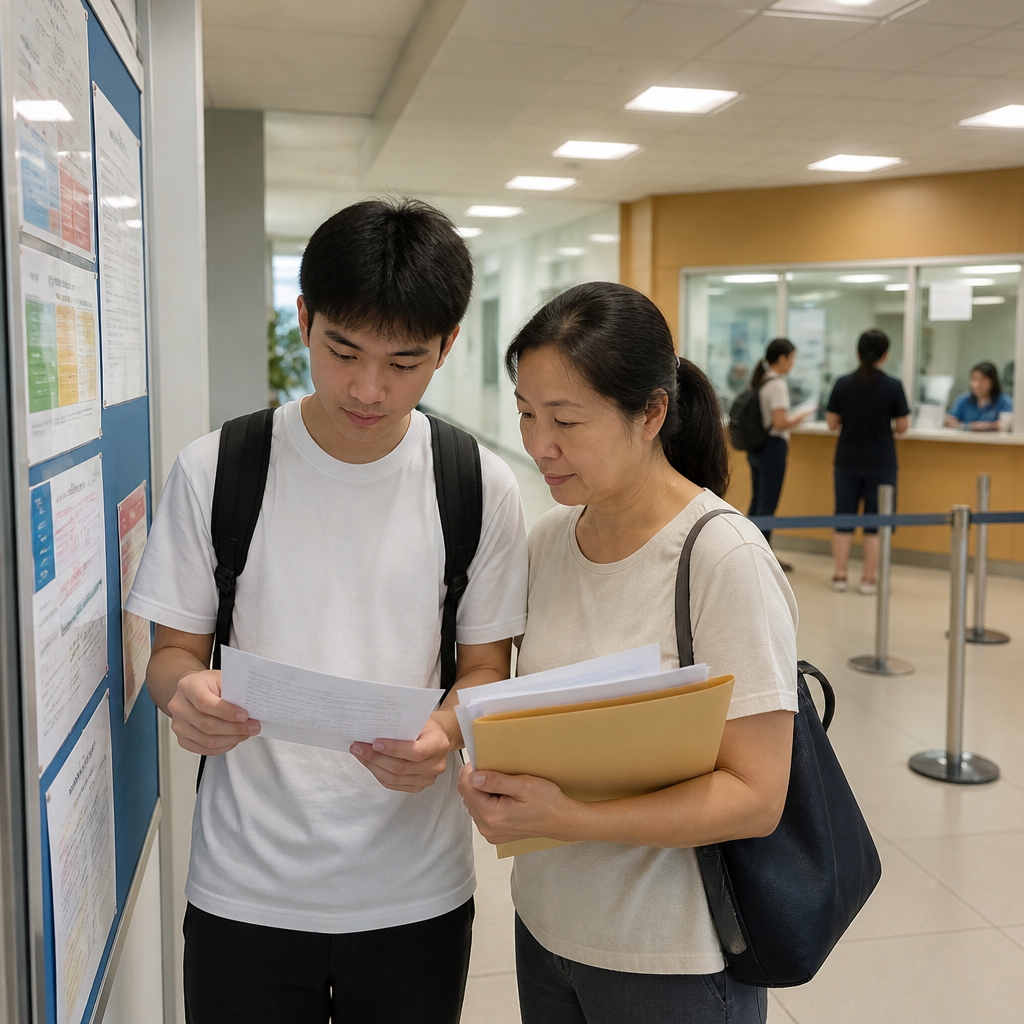
This is not paperwork to rush through when everyone is already tired. Families often spend so much energy on orientation matters, transport, laptops, and timetable concerns that the grant forms get pushed aside. Later, they realise they did not fully understand what they agreed to.
A simple overview helps here.
Declining the grant may mean paying much higher fees across the full diploma. That is why the decision deserves more than a quick glance.
For polytechnic students, it is also wise to think about progression. Some students plan to enter the workforce after the diploma, while others hope to continue to university later. The Tuition Grant decision at diploma level should still be understood in the context of those longer-term goals, especially if the family expects further study costs down the road.
How The MOE Tuition Grant Works For International Students In Singapore Universities
When families ask about the MOE Tuition Grant for international students in Singapore universities, they are usually weighing affordability against flexibility. University fees are substantial, so the grant can reduce costs significantly. At the same time, the service bond can feel more serious because students are thinking about degree-level career pathways.
Universities may differ from polytechnics
At autonomous universities, the structure can feel more formal and the numbers involved can be larger. The grant still functions as a tuition subsidy, but the exact amount saved and the exact obligations may differ from polytechnic arrangements.
Parents sometimes assume that if a student is strong enough to enter university, a scholarship will naturally replace the need to think about the Tuition Grant. In reality, many students are not on full scholarships. They may still depend on the grant to keep fees manageable.
Think beyond the first year’s invoice
A common trap is focusing only on the first bill. The more useful question is: what are we committing to for the full course, and what happens after graduation?
If a student hopes to study in Singapore and then immediately move elsewhere for work or further study, accepting the grant may affect that timeline because of bond obligations. Another student may already be open to starting a career in Singapore after graduation, in which case the grant may fit quite naturally.
Neither choice is automatically right or wrong. What matters is whether the decision matches the student’s likely path, the family’s financial reality, and their comfort level with the post-study commitment.
It also helps to compare the grant against realistic alternatives. If self-funding the unsubsidised fee would create major financial strain, the Tuition Grant may be the option that makes the degree possible. If the family can comfortably afford the full fee and wants maximum freedom after graduation, declining the grant may be worth considering. The right answer depends on circumstances, not just on the size of the discount.
How The MOE Tuition Grant Bond Works
This is often the part families worry about most, and understandably so. The service bond is not a small technical detail tucked away in the fine print.
The bond is a real work obligation
In practical terms, a service bond means the student agrees to work for a specified period after graduation, typically under the conditions stated in the bond terms. The exact rules matter, so do not rely on memory, hearsay, or outdated discussions online.
Some parents initially imagine the bond as something symbolic, almost like a soft expectation. It is not. It is a real condition attached to receiving subsidised tuition under the relevant scheme.
What this means for family planning
Think of the bond as part of the overall cost-benefit calculation. If the grant lowers fees significantly, that financial help may be worth the future work commitment. But if a student is highly likely to leave Singapore immediately after graduation, the family needs to consider whether accepting the grant really fits that plan.
This is where some students feel boxed in before they have even started school. That feeling is understandable. Teenagers often do not yet know exactly what they want after graduation.
A calmer way to look at it is this: the bond may not remove all flexibility, but it does reduce it. Families should ask whether the student is open to working in Singapore after graduation, whether the reduced fee is necessary for affordability, whether there are scholarship or self-funded alternatives, and whether they have read the actual institution and MOE terms carefully.
It is also sensible to discuss practical scenarios in advance. For example, what happens if the student later wants postgraduate study overseas, receives a job offer outside Singapore, or changes career direction? Even if the final answer depends on official bond terms, raising these questions early helps families make a more informed decision.
What Families Should Check Before Accepting The Tuition Grant
By this stage, the question is no longer just what the MOE Tuition Grant is. The more important question is whether accepting it makes sense for your family’s situation.
Compare the real fee outcomes
Look at the subsidised fee and the unsubsidised fee. Do not stop at the annual amount. Multiply it across the likely full duration of the diploma or degree. A difference that seems manageable in one year can become much bigger over time.
Check the student’s likely direction after graduation
If your child already says very clearly, “I want to build my career in Singapore,” the service bond may feel less intimidating. If they are unsure, it is better to have an honest conversation than to brush the issue aside. Uncertainty is normal, but it still needs to be part of the decision.
Read school-specific instructions carefully
This matters because grant terms, eligibility rules, participating institutions, and procedures may change. Check the latest details with the institution and official MOE pages such as MOE’s tuition fees page.
Do not decide under pressure alone
Sometimes a family is tired, overwhelmed, and simply wants to secure the place. That is completely understandable. Admission periods can be stressful, especially after a difficult results season. Still, accepting the Tuition Grant should be an informed decision, not a rushed click made just because everyone else seems to be doing it.
Keep records of what was accepted
A small but useful habit is to save copies of the fee breakdown, grant acceptance documents, and any bond-related forms or emails. Families often need to refer back to these later, especially when discussing future plans or clarifying what was agreed at the point of enrolment.
Frequently Asked Questions
Is the MOE Tuition Grant the same as a student loan?
No. The MOE Tuition Grant is a tuition fee subsidy, not borrowed money. It lowers the tuition fee charged by the institution. A student loan is separate and usually has to be repaid over time.
Can international students get the MOE Tuition Grant in Singapore?
In some participating institutions, yes. However, international students may have different conditions from Singapore Citizens and Permanent Residents, including a service bond. Always check the latest institution-specific rules before accepting the grant.
If my child accepts the Tuition Grant, do they have to work in Singapore?
For some students, especially international students, a service bond may apply. The exact terms depend on the scheme and institution. That is why families should read the current bond details carefully instead of relying on general summaries.
Is the Tuition Grant better than a scholarship?
They are not direct substitutes. A scholarship is usually merit-based and may offer wider support, while the Tuition Grant is a fee subsidy. Some students may receive one, the other, or both, depending on their situation.
How do polytechnic students apply for the Tuition Grant?
The application process usually involves following school instructions, confirming whether the grant is being taken up, and completing any required forms or bond documents. Because procedures may differ, rely on the polytechnic’s latest guidance rather than older examples online.
Conclusion
So, what is the MOE Tuition Grant in Singapore? It is a government tuition subsidy that reduces the amount eligible students pay at participating institutions. It is not a scholarship, and it is not a normal student loan. For international students in particular, it may come with a service bond, which means the lower fee should be weighed against future work commitments.
For families comparing polytechnics and universities, the key question is not just “Can we get the grant?” but “What does accepting it really mean for fees, obligations, and future plans?” That becomes especially important when citizenship or residency status affects both pricing and conditions.

Because policies and school procedures can change, always verify the latest details directly with MOE and the relevant institution before making a decision. And if your child needs help coping with subject demands while planning their post-secondary pathway, you can explore private home tuition support for steady academic guidance and confidence-building.