


Introduction
The question sounds simple, but many parents know it rarely feels that way. Maybe you have watched another child chat confidently, sit nicely for story time, or recognise letters already, and suddenly you are wondering if your own child is prepared enough. In Singapore, where even the early years can feel surprisingly pressured, it is easy to worry that your child is somehow “behind” before preschool has even begun.
The reassuring truth is this, preschool readiness is usually not about academic head starts. It is rarely about reading fluently, writing neatly, or memorising lots of content. In most infant care, childcare, nursery, and kindergarten settings, readiness is much more about whether a child can cope with simple routines, communicate basic needs, manage short separations, and begin learning alongside others.
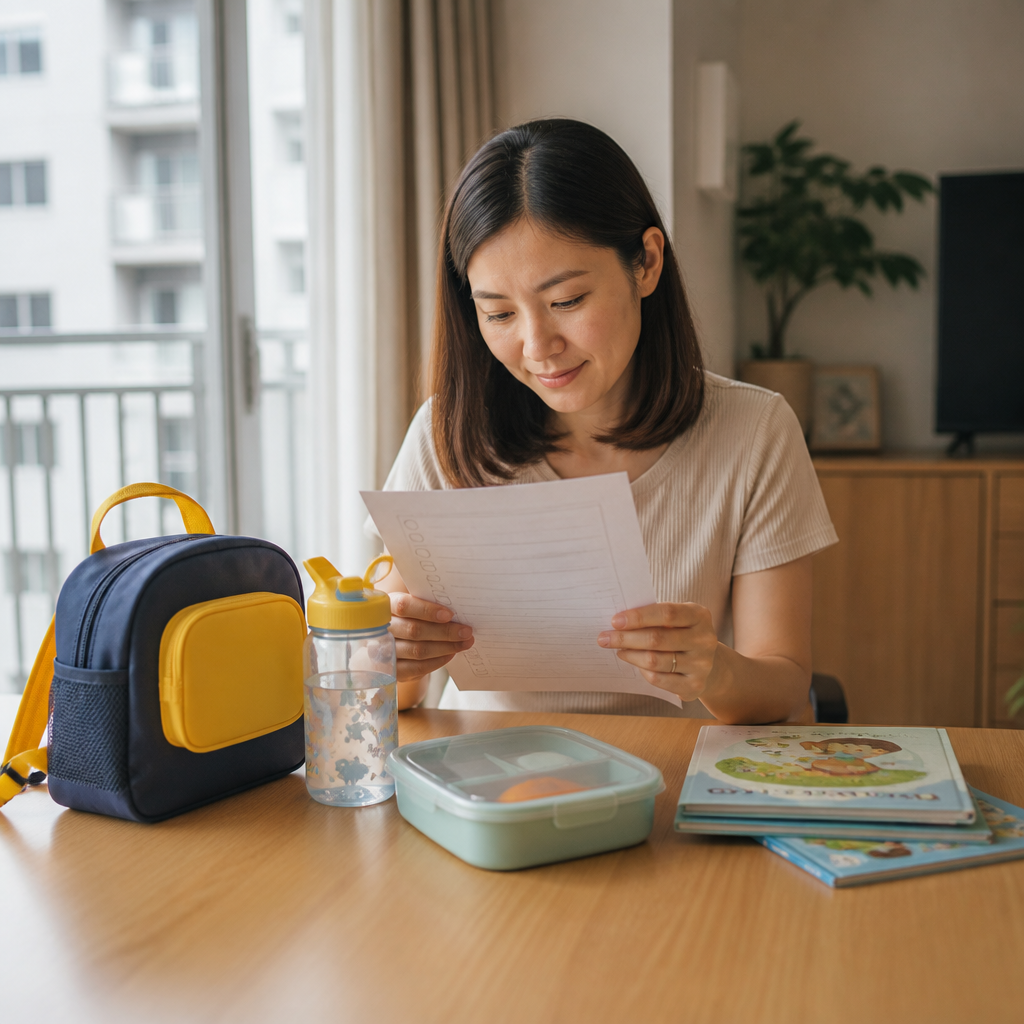
So if you are wondering what your child should know before preschool, it helps to think less about worksheets and more about everyday life. This guide is a practical, Singapore-focused preschool readiness checklist to help you prepare without unnecessary panic.
Key Takeaways
- Preschool readiness is not the same as academic advancement. Most children do not need to read, write, or count far before preschool starts. What matters more is basic communication, self-help skills, and comfort with simple routines.
- Emotional readiness often matters more than parents expect. A child who can separate with support, recover after crying, and accept comfort from another adult is often better prepared than a child who knows the alphabet but cannot cope with transitions.
- Simple self-help skills make school life much easier. Feeding themselves, trying to use the toilet or showing toilet awareness, washing hands, and carrying out small instructions can reduce stress for both child and teacher.
- Communication does not need to be perfect to be functional. Your child should be able to express needs in some way, whether through words, short phrases, gestures, or pointing.
- Social and emotional skills can be practised at home. Taking turns, waiting briefly, packing away toys, and joining short group activities can all be built through everyday routines and play.
- Expectations differ across infant care, childcare, nursery, and kindergarten. Age group, centre routines, and programme structure vary, so it is worth checking directly with the school and with official sources like ECDA or MOE Kindergarten.
- Readiness is a range, not a pass-fail test. Some children need more time, more repetition, or gentler transitions. That does not mean they are not ready.
Start With The Real Basics
When parents ask what a child should know before preschool, what they usually mean is, “Will my child cope?” That is the more useful question.
In a real preschool classroom, teachers are not expecting every child to walk in reading storybooks or writing their name. What helps most is a child who can begin joining everyday routines with support. Tutors often notice that parents worry most about academics first, but in the early weeks of school, it is usually the daily coping skills that matter more.
What teachers usually look for first
A realistic preschool readiness checklist for Singapore parents often includes these basics:
A child does not need to do all this perfectly. Shyness, hesitation, and short attention spans are still very normal at this age.
What your child does not need to master
This is the part many parents need to hear clearly. Asking what skills a child should have before nursery is not the same as asking how far ahead they should be academically.
Your child does not need to:
- Read independently
- Write sentences
- Complete worksheets neatly
- Know advanced counting
- Memorise colours, shapes, and months in multiple languages before entry
A common pattern among students is that children who are pushed too early into formal tasks can become resistant, even when they are perfectly capable. Gentle exposure is helpful. Pressure usually is not.
Build Communication Before Academics
A big part of preschool readiness is communication. Not perfect speech, and not polished conversation, just enough functional communication to get through the day.
Expressing needs clearly enough
One of the most useful things to teach toddlers before preschool begins is how to express basic needs. This can happen through:
- Single words, such as “drink”, “pain”, “toilet”, or “mummy”
- Short phrases, such as “I want help” or “don’t like”
- Gestures, such as pointing, bringing an item over, or nodding
Many preschool meltdowns are not really about “bad behaviour”. Often, a child is upset because they are not being understood. A child who wants water but cannot express it may cry or lash out. A child who can say “water please”, or even point clearly, usually has an easier time settling.
Following simple instructions
Preschool involves many one-step and two-step instructions throughout the day. Things like:
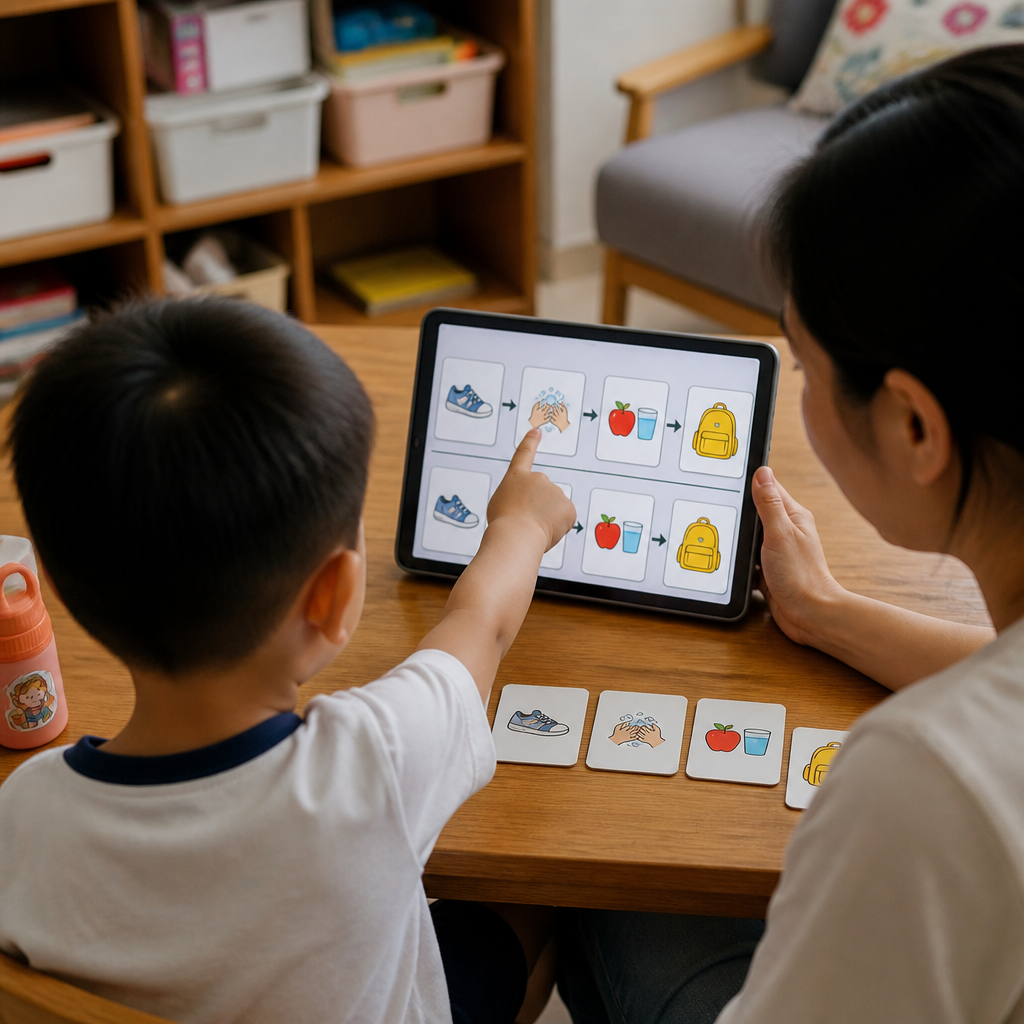
- Take your shoes off
- Put the book back
- Wash hands, then sit down
- Line up at the door
This does not mean your child must obey instantly every time. Toddlers are still toddlers. But regular exposure to short, clear directions makes school routines feel less unfamiliar.
At home, this can be practised in ordinary moments. “Put your cup on the table.” “Bring your diaper, then come here.” “Choose one toy, then keep the others.” Children usually respond better when instructions are short, concrete, and linked to real actions.
If your child is quiet, bilingual, or still catching up
In Singapore homes, language exposure can look very different from family to family. Some children hear English and Mandarin. Others hear English with Malay, Tamil, or a grandparent’s dialect. Some are very talkative at home but go completely quiet outside.
That alone does not mean they are not ready for preschool.
Still, if your child rarely responds to their name, does not seem to understand familiar instructions, or has very limited communication despite regular exposure, it may be worth raising those concerns early with a doctor or relevant professional. Early support is not about labelling. It is about making the transition easier if help is needed.
Focus On Self-Help Skills That Matter Daily
This is one area parents often underestimate. In actual preschool life, self-help skills matter every single day. A child who can do a few small things independently often settles faster and feels more confident.
Feeding, drinking, and basic independence
Teachers do help, especially with younger children. Still, some basic independence goes a long way.
Helpful skills include:
- Holding a spoon and trying to feed themselves
- Drinking from a cup or water bottle
- Sitting for a snack or meal for a short time
- Attempting to clean up after eating
Think about how often meals and snacks happen in a childcare day. If self-feeding has never been practised at home, school mealtimes can feel overwhelming. Starting small is enough. Even one self-fed portion each day builds familiarity.
Toileting or toilet awareness
Not every child entering preschool is fully toilet trained. That depends on age and setting. Some centres are used to supporting children still in diapers, while others may have clearer expectations. That is why it is worth checking directly with the preschool and referring to ECDA or MOE Kindergarten where relevant.
Even without full independence, these signs are useful:
- Indicating when a diaper is soiled
- Recognising the toilet
- Staying dry for short periods
- Sitting on the toilet without panic
- Attempting to pull pants up or down with help
Dressing and hygiene routines
No preschool teacher expects perfect dressing skills. But these small habits help the day run more smoothly:
- Removing shoes with assistance
- Washing hands with prompting
- Wiping hands or face
- Carrying their own small bag
- Helping with simple dressing tasks
If you need extra support with early routines, language, or school readiness, you can learn more about our preschool tutors or contact us.
Support Social And Emotional Readiness
For many parents, this is the hardest part. Your child may be clingy, shy, easily frustrated, or very attached to one caregiver. That does not mean they are not suited for preschool. It usually means the transition may need more patience.
Handling separation from caregivers
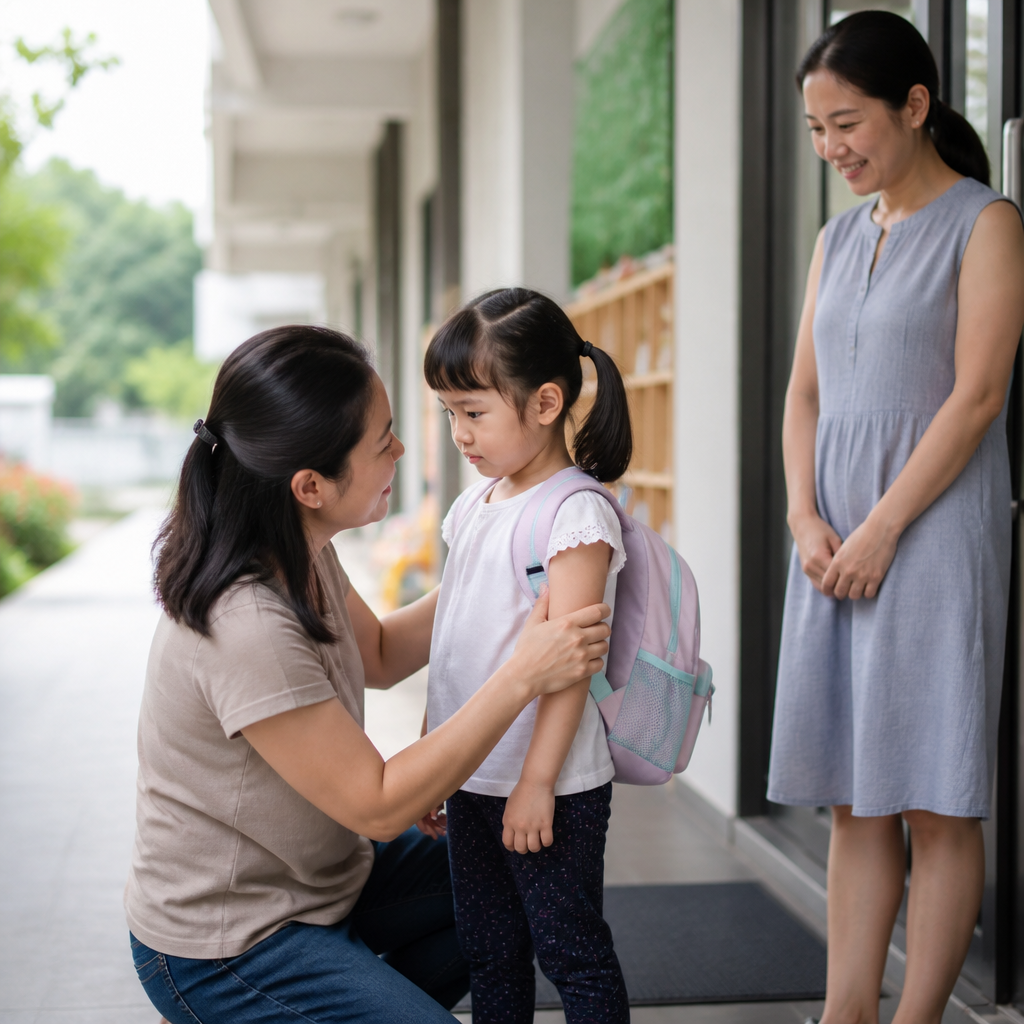
One of the biggest parts of preschool readiness is managing separation, even if there are tears at first. Many children cry during drop-off in the early days. What matters more is whether they can gradually settle with support.
Short practice separations at home can help:
- Leaving your child with a familiar grandparent for 20 to 30 minutes
- Having another caregiver handle snack or bath time
- Practising a consistent goodbye routine instead of sneaking away
The goodbye itself matters. Long, anxious departures often make things harder. Children pick up on hesitation very quickly. A calm, predictable routine usually feels safer.
Learning to be around other children
Not every toddler needs to be very social before school starts. Parallel play is still normal for younger children. But some helpful signs include:
- Noticing other children
- Tolerating being around peers
- Taking turns with support
- Not reacting aggressively every time a toy is shared
Playgrounds, library story sessions, and short playdates can all offer low-pressure chances to practise being around other children. The goal is not to force instant friendship. It is simply to make shared spaces, shared toys, and shared adult attention feel less unfamiliar.
Managing small frustrations
Preschool is full of little frustrations. Someone else gets the toy. The teacher says wait. Snack is not the preferred one. A game ends before your child wants it to.
A child does not need perfect self-control. But these early coping signs help:
- Accepting brief waiting
- Being redirected without escalating every time
- Recovering after disappointment
- Using words, gestures, or seeking comfort instead of only screaming
Prepare For Preschool Through Home Routines And Play
If you are wondering how to prepare your child for preschool in Singapore, the most useful answer is usually the simplest one, practise the shape of school life at home. Preparation does not need to look like formal lessons.
Build a simple preschool-like routine
Many children struggle not because they cannot cope, but because the school day feels unfamiliar. A loose routine before preschool starts can help:
- Wake up and eat at a more consistent time
- Change clothes after breakfast
- Have a short snack time sitting at the table
- Include one calm activity like books, drawing, or puzzles
- Practise tidying up after play
If your child will soon attend a morning programme, it can also help to shift bedtime and wake-up time gradually rather than suddenly. Even a small adjustment over one to two weeks can make the first school mornings less stressful.
Use play to teach readiness skills
If you are thinking about what to teach toddlers before preschool begins, play is often the best place to start.
Pretend school with soft toys. Practise greeting, sitting briefly, and packing away. Read storybooks about school, friends, and feelings. Play simple turn-taking games like rolling a ball or stacking blocks together. Sing songs with actions that involve listening and copying.
These everyday moments build attention, communication, and emotional comfort without making a child feel tested.
Prioritise language exposure over drilling
One common mistake is putting too much focus on flashcards while giving too little attention to real conversation. Preschool readiness grows through repeated daily language, naming actions, offering choices, encouraging requests, and reading aloud while pointing to pictures.
Children who hear language used meaningfully in everyday life often cope better than children who have memorised isolated content but cannot use it functionally.
A Realistic Preschool Readiness Checklist
A good preschool readiness checklist should reassure, not judge. It is simply a way to notice where your child is now and what can still be built over time.
If your child can do only some of these, that may still be enough. Readiness is not all-or-nothing.
It also helps to remember that readiness can look different at different ages. A younger child entering infant care may need much more hands-on support than a child entering nursery or kindergarten. That difference is normal. The right question is not whether your child can do everything alone, but whether they are gradually building the skills needed for their specific setting.
If concerns around speech, understanding, behaviour, social interaction, or developmental milestones are persistent and affecting daily functioning, it is worth speaking to a doctor or relevant professional. Early support is not a sign of failure. It can make preschool much easier and kinder for your child.
Frequently Asked Questions
Does my child need to know how to read before preschool?
No. For most children, reading is not a requirement for starting preschool. A far more useful sign of readiness is whether they can communicate basic needs, cope with simple routines, and try small self-help tasks. If your child already knows some letters or sounds, that is fine, but it is not the main thing teachers usually look for first.
What skills should a child have before nursery in Singapore?
A child entering nursery generally benefits from being able to express simple needs, follow short instructions, try feeding independently, manage some separation from caregivers, and cope with short group activities. Expectations vary by age and centre, so if you are unsure, it is always best to check directly with the preschool.
My child still cries when I leave. Is that a sign they are not ready?
Not necessarily. Crying at separation is very common, especially in the first few weeks. What matters more is whether your child can gradually settle with support from another adult. Consistent goodbye routines, short practice separations, and predictable pick-up timing often help more than repeated reassurance at the door.
What if my child is not toilet trained yet?
That depends on your child’s age and the preschool’s policies. Some childcare settings are used to supporting younger children who are still developing toilet skills. Even if your child is not fully trained, toilet awareness, comfort sitting on the toilet, and being able to signal discomfort are helpful starting points.
How can I help in the weeks before school starts?
Keep preparation simple and practical. Practise wearing shoes, washing hands, carrying a small bag, sitting for a short snack, and following one-step instructions. Read books about school, visit the centre if allowed, and talk about what the day may look like in a calm, positive way. Small routines repeated often are usually more effective than last-minute drilling.
How do I know if my child needs extra help before preschool?
If concerns around speech, understanding, behaviour, social interaction, or developmental milestones are persistent and affecting daily life, it is worth speaking to a doctor or relevant professional. Many concerns are easier to support when noticed early, and early help can make the transition to preschool smoother and less stressful for everyone.
Conclusion
If you have been worrying about what your child should know before preschool, the most comforting answer is often the most practical one. Preschool readiness is usually less about academic performance and more about everyday coping. Can your child express basic needs, follow simple routines, try small self-help tasks, manage short separations, and begin learning alongside others? Those are the skills that tend to matter most.
In Singapore, expectations can differ across infant care, childcare, nursery, and kindergarten, so it is always wise to check directly with your child’s centre and review official information from ECDA and MOE Kindergarten. Try not to treat readiness as a pass-fail test. Children develop unevenly, and many simply need gentle preparation rather than pressure.
If you would like extra support for your child’s early language, routines, or school readiness, learn more about our preschool tutors or contact us here.